The Quality Standards Resource Centre helps extend understanding of the strengthened Aged Care Quality Standards, which took effect from 1 November 2025. You can search for resources by using keywords, or filtering by standard, outcome and audience. Before using the Resource Centre, please read the terms of use.
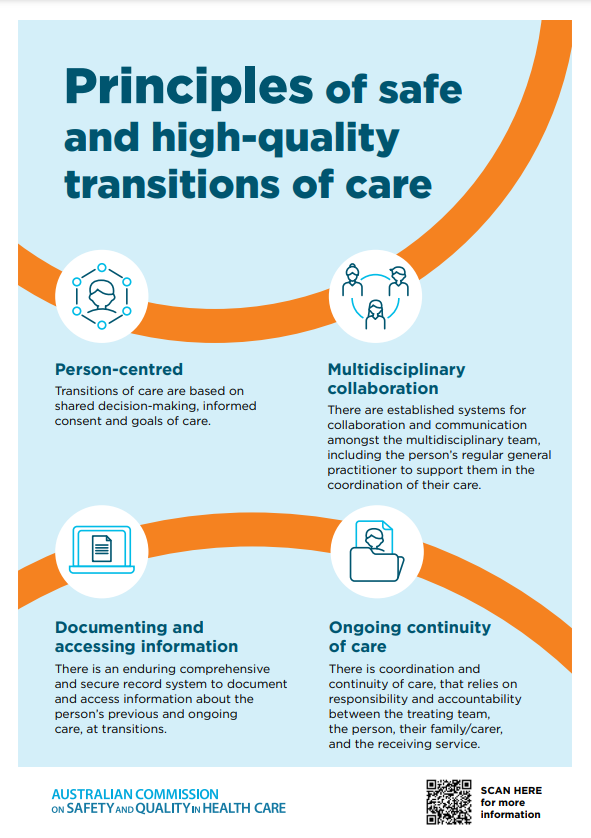
Poster - Principles of safe and high-quality transitions of care
This resource outlines the principles of safe and high-quality transitions of care. It highlights the importance of person-centred care, multidisciplinary collaboration, and clear communication between providers. It ensures coordination, accountability, and secure documentation to support continuity of care when transferring people between care settings. This resource may refer to information that will be updated from 1 November 2025 to align with the new Aged Care Act and Quality Standards.
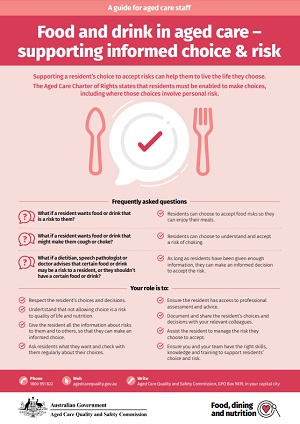
Food and drink in your aged care - supporting informed choice and risk - staff poster
This resource provides guidance for aged care staff on supporting older people's informed choices regarding food and drink, even when those choices involve personal risks. It encourages staff to respect resident autonomy, provide information on risks, document decisions, and ensure access to professional advice, promoting dignity and quality of life in care settings. This resource may refer to information that will be updated from 1 November 2025 to align with the new Aged Care Act and Quality Standards.
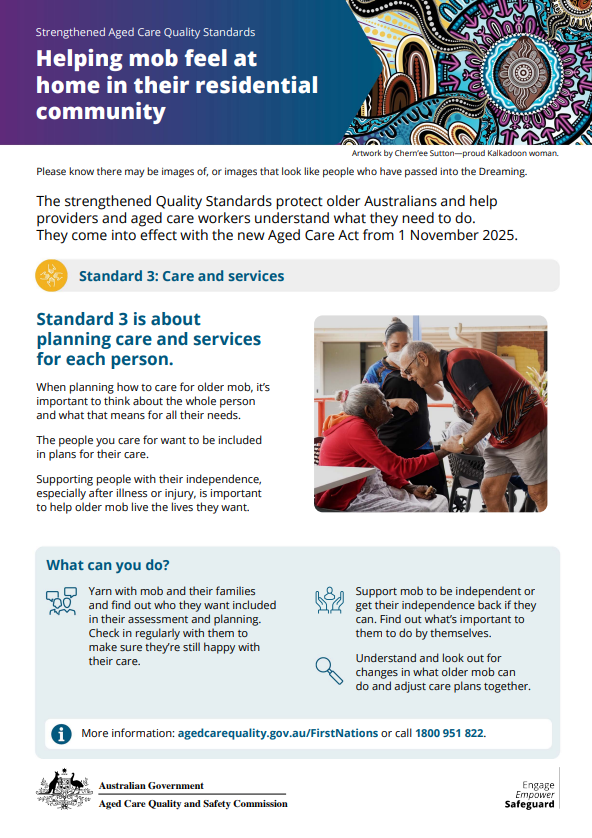
First Nations – Workplace poster – Standard 3 Care and services
These workplace standards posters demonstrate the strengthened Standards and what they mean for aged care providers and workers. You can print these out and display them around your workplace.
 First Nations – Workplace poster – Standard 3 Care and services (PDF 660.66 KB)
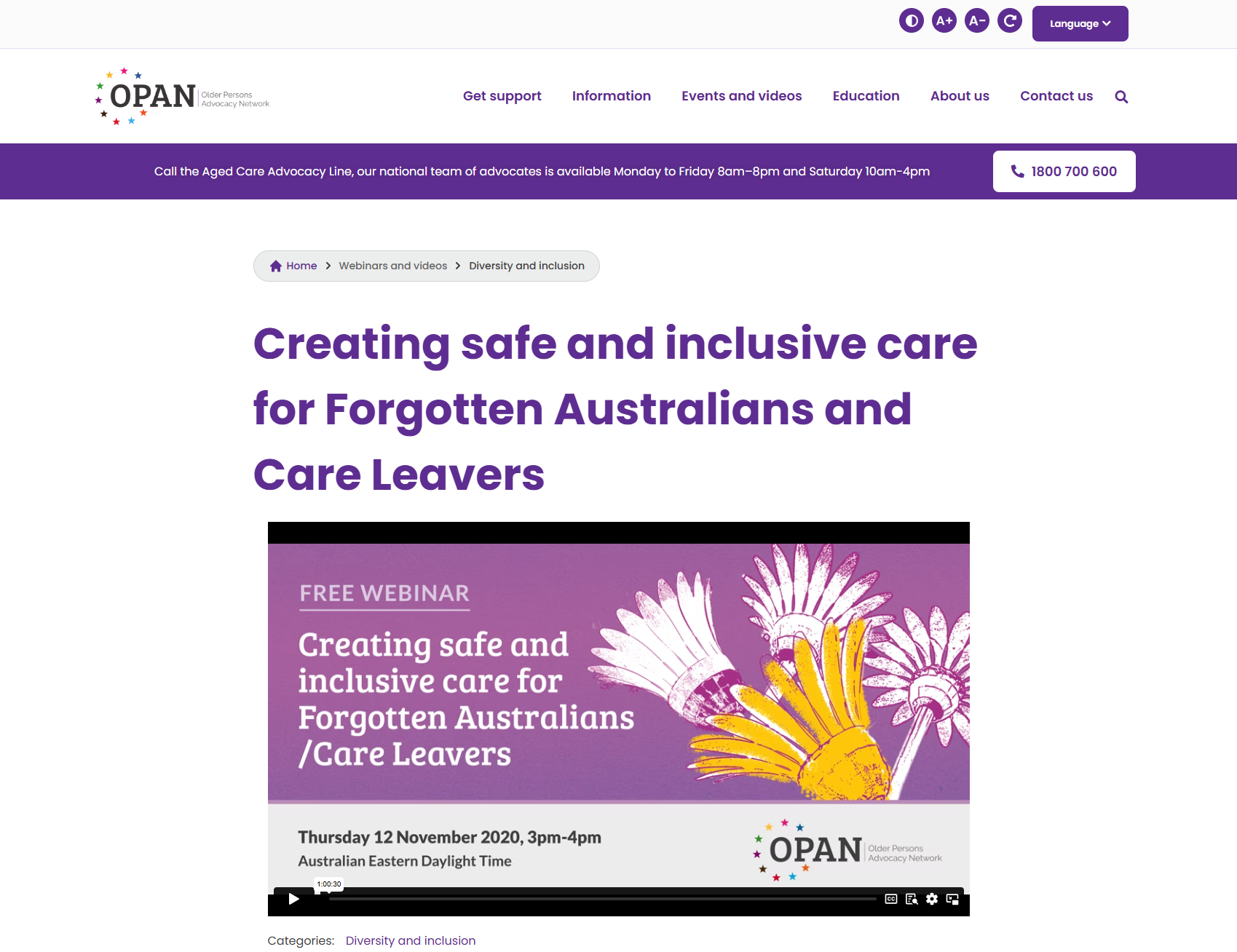
Creating safe and inclusive care for Forgotten Australians and Care Leavers
This resource provides guidance for creating safe, inclusive aged care for Forgotten Australians and Care Leavers, focusing on trauma-informed practices. It supports providers in recognising unique needs, avoiding re-traumatisation, and promoting respect and sensitivity in care environments.