The Quality Standards Resource Centre helps extend understanding of the strengthened Aged Care Quality Standards, which took effect from 1 November 2025. You can search for resources by using keywords, or filtering by standard, outcome and audience. Before using the Resource Centre, please read the terms of use.
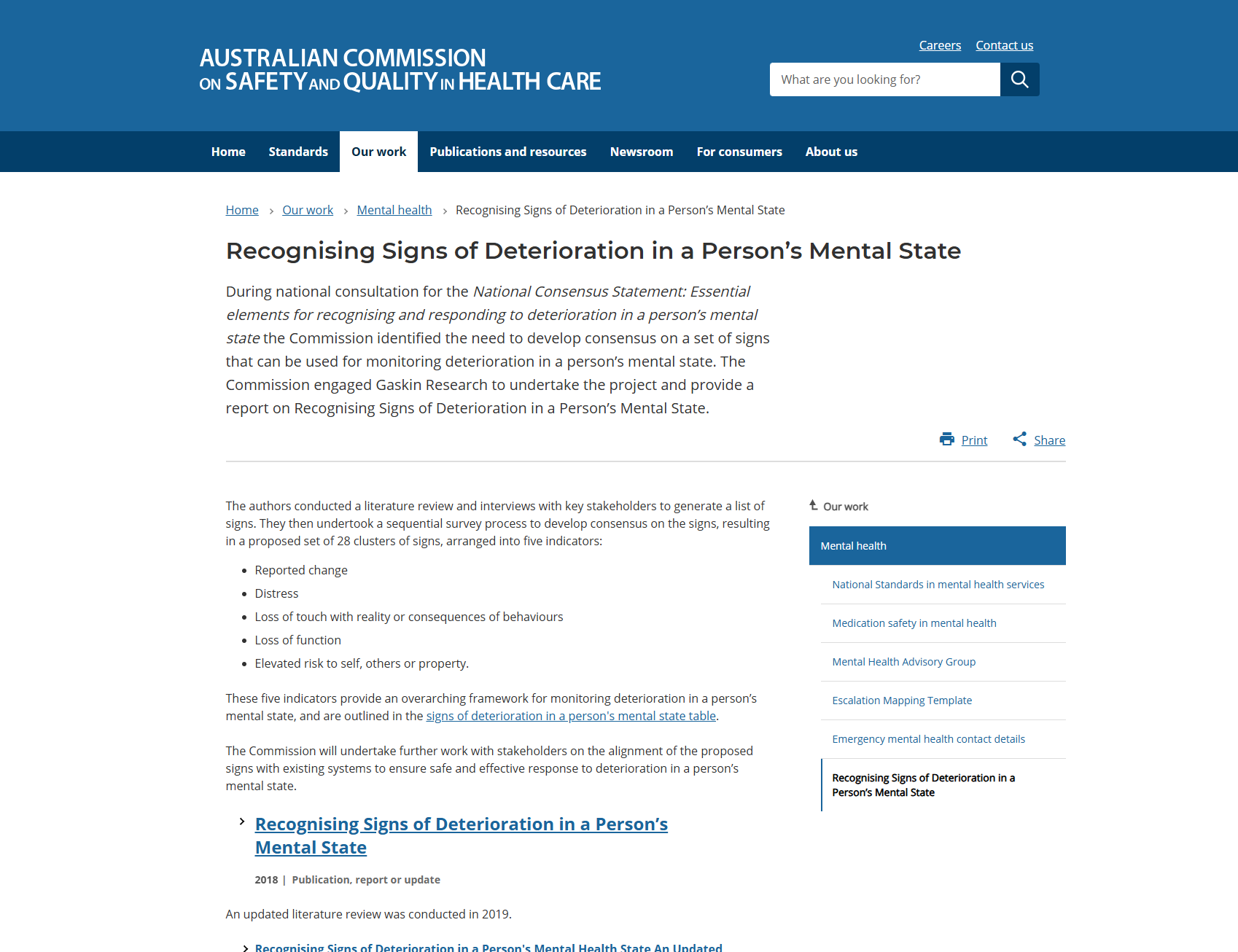
Recognising Signs of Deterioration in a Person’s Mental State
This resource provides a framework for recognising signs of mental state deterioration, organised into 5 key indicators: reported change, distress, loss of reality, loss of function, and elevated risk. It supports healthcare providers in monitoring mental health changes to enable timely and effective responses across care settings. This resource may apply to healthcare contexts outside of aged care. Please consider the applicability of this resource to your care setting.
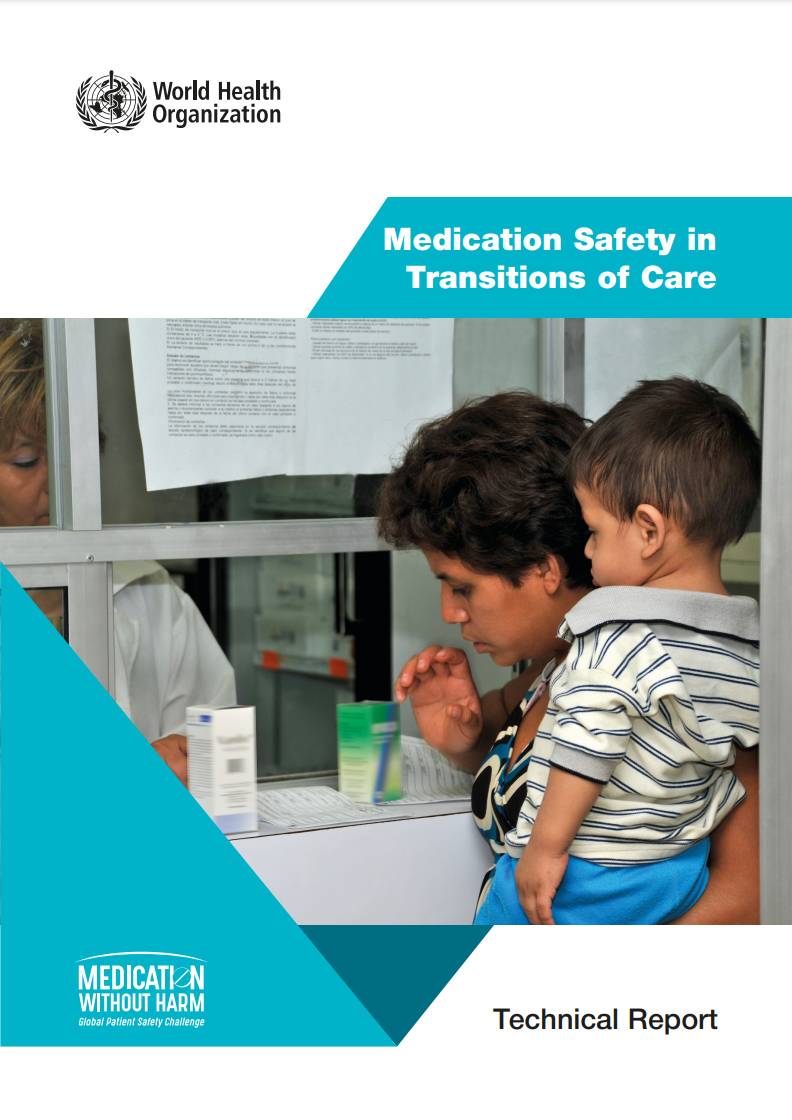
Medication safety in transitions of care: technical report
This resource outlines key actions to improve medication safety during transitions of care, focusing on reducing medication discrepancies and patient harm. It emphasises structured reconciliation, workforce training, patient engagement, and enhanced information systems.
This resource was developed internationally and therefore its applicability and usefulness may be limited.
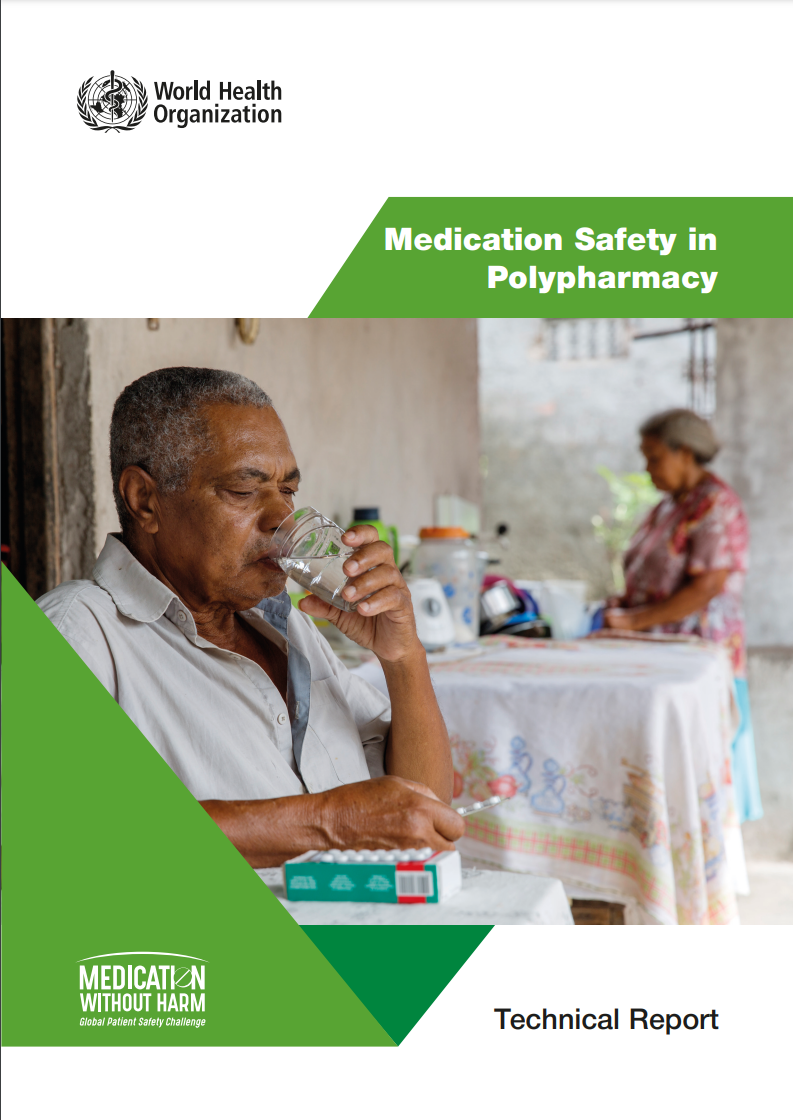
Medication safety in polypharmacy: technical report
This resource provides guidance on safe medication management in polypharmacy, focusing on patient-centred approaches, team collaboration, and systematic reviews for people with long-term conditions. It includes tools and case studies to support health professionals.
This resource was developed internationally and therefore its applicability and usefulness may be limited.
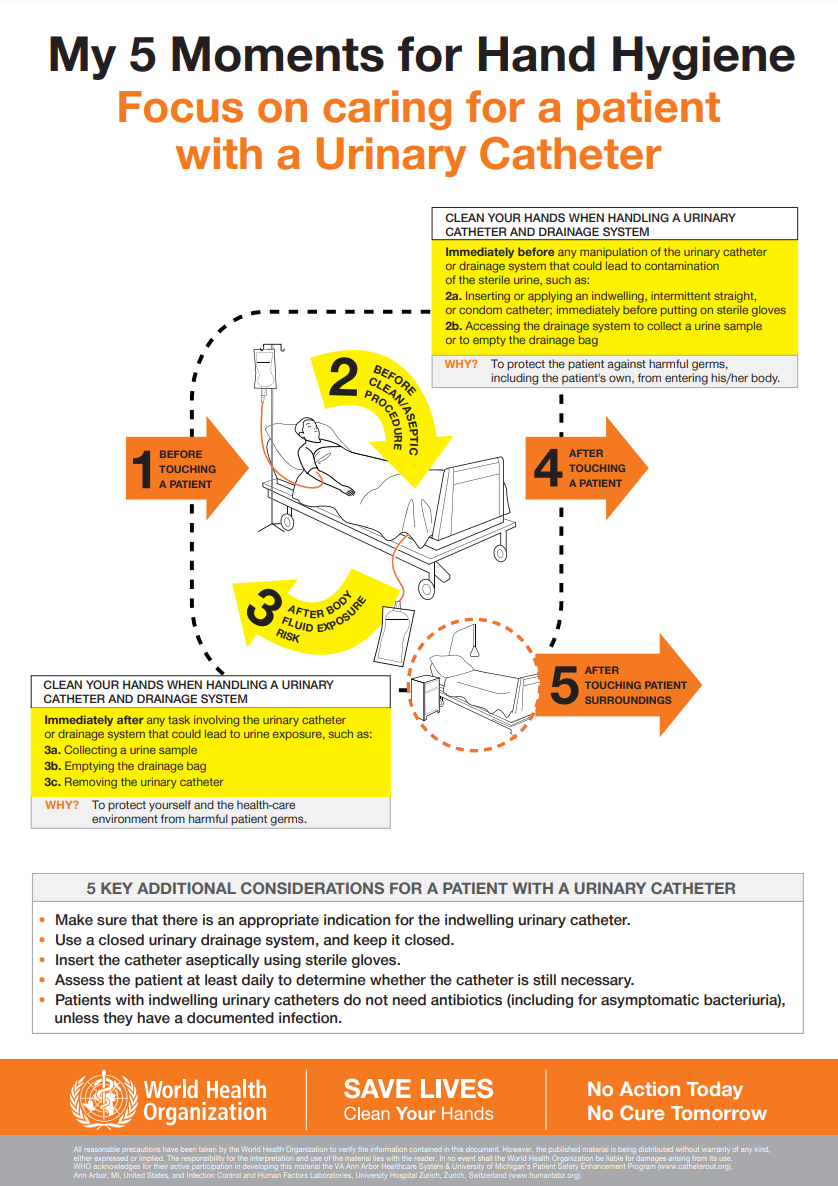
My 5 moments for hand hygiene: focus on caring for a patient with a urinary catheter
This resource outlines the ‘5 Moments for Hand Hygiene’ with specific considerations for patients with urinary catheters, aiming to minimise infection risks. It provides steps for appropriate hand hygiene before and after touching the patient, performing aseptic procedures, and handling catheter equipment.
This resource was developed internationally and therefore its applicability and usefulness may be limited.
National Consensus Statement: Essential elements for safe and high-quality end-of-life care
This resource outlines the National Consensus Statement on essential elements for safe and high-quality end-of-life care in Australia. It provides guiding principles, care processes, and organisational processes, focusing on person-centred communication, multidisciplinary collaboration, and culturally appropriate care. The statement is designed for healthcare workers, service executives, and policy makers to enhance end-of-life care delivery.
Standard and transmission-based precautions posters
This resource includes posters outlining standard and transmission-based precautions for infection control. It provides guidance on preventing healthcare-associated infections through hand hygiene, appropriate use of personal protective equipment (PPE), and environmental cleaning. These posters support staff in implementing best practices for infection prevention across care settings, including aged care facilities.
Preventing urinary tract infections: recognise dehydration poster
This provider poster is an educational tool is part of the Commission’s resource bundle to improve antibiotic use for urinary tract infections in aged care services.
 Preventing urinary tract infections (English) (PDF 268.48 KB)
Arabic - الوقاية من التهابات المسالك البولية (PDF 247.14 KB)
Chinese Simplified - 预防尿路感染 (PDF 379.59 KB)
Chinese Traditional - 預防尿路感染 (PDF 214.94 KB)
Croatian - Sprječavanje infekcija mokraćnog sustava (PDF 216.87 KB)
Dari - جلوگیری از عفونتهای مجاری ادراری (PDF 226.51 KB)
Dinka - Pɛ̈n Tuany ë lɛc (PDF 200.17 KB)
Farsi - پیشگیری از عفونت های مجاری ادرار (PDF 224.74 KB)
French - Prévention des infections urinaires (PDF 202.22 KB)
Greek - Πρόληψη Ουρολοιμώξεων (PDF 190.09 KB)
Indonesian - Mencegah Infeksi Saluran Kemih (PDF 200.34 KB)
Italian - Prevenzione delle infezioni del tratto urinario (PDF 200.45 KB)
Khmer - Preventing Urinary Tract Infections (PDF 208.03 KB)
Korean - 요로 감염 예방 (PDF 205.57 KB)
Pashto - د ادرارو د الرې د انتاناتو مخنیوی (PDF 225.71 KB)
Punjabi - ਪਿਸ਼਼ਾਬ ਨਾਲੀ ਦੀਆਂ ਲਾਗਾਂ ਦੀ ਰੋਕਥਾਮ ਕਰਨਾ (PDF 195.34 KB)
Somali - Ka hortaga Caabuqa Goobta Kaadi mareenka (PDF 211.32 KB)
Spanish - Prevención de las Infecciones del Tracto Urinario (PDF 201.38 KB)
Thai - การป้้องกัันโรคติิดเชื้้อในทางเดิินปััสสาวะ (PDF 202.81 KB)
Tamil - சிறுநீர்ப் பாதைத் தொொற்றுகளைத் தடுத்்தல (PDF 208.2 KB)
Turkish - İdrar Yolu Enfeksiyonlarının Önlenmesi (PDF 204.55 KB)
Urdu - پیشاب کے نظام میں انفیکشنوں کی روک تھام (PDF 228.26 KB)
Vietnamese - Đề phòng Nhiễm trùng đường Tiết niệu (PDF 193.49 KB)
Preventing urinary tract infections (English) (PDF 268.48 KB)
Arabic - الوقاية من التهابات المسالك البولية (PDF 247.14 KB)
Chinese Simplified - 预防尿路感染 (PDF 379.59 KB)
Chinese Traditional - 預防尿路感染 (PDF 214.94 KB)
Croatian - Sprječavanje infekcija mokraćnog sustava (PDF 216.87 KB)
Dari - جلوگیری از عفونتهای مجاری ادراری (PDF 226.51 KB)
Dinka - Pɛ̈n Tuany ë lɛc (PDF 200.17 KB)
Farsi - پیشگیری از عفونت های مجاری ادرار (PDF 224.74 KB)
French - Prévention des infections urinaires (PDF 202.22 KB)
Greek - Πρόληψη Ουρολοιμώξεων (PDF 190.09 KB)
Indonesian - Mencegah Infeksi Saluran Kemih (PDF 200.34 KB)
Italian - Prevenzione delle infezioni del tratto urinario (PDF 200.45 KB)
Khmer - Preventing Urinary Tract Infections (PDF 208.03 KB)
Korean - 요로 감염 예방 (PDF 205.57 KB)
Pashto - د ادرارو د الرې د انتاناتو مخنیوی (PDF 225.71 KB)
Punjabi - ਪਿਸ਼਼ਾਬ ਨਾਲੀ ਦੀਆਂ ਲਾਗਾਂ ਦੀ ਰੋਕਥਾਮ ਕਰਨਾ (PDF 195.34 KB)
Somali - Ka hortaga Caabuqa Goobta Kaadi mareenka (PDF 211.32 KB)
Spanish - Prevención de las Infecciones del Tracto Urinario (PDF 201.38 KB)
Thai - การป้้องกัันโรคติิดเชื้้อในทางเดิินปััสสาวะ (PDF 202.81 KB)
Tamil - சிறுநீர்ப் பாதைத் தொொற்றுகளைத் தடுத்்தல (PDF 208.2 KB)
Turkish - İdrar Yolu Enfeksiyonlarının Önlenmesi (PDF 204.55 KB)
Urdu - پیشاب کے نظام میں انفیکشنوں کی روک تھام (PDF 228.26 KB)
Vietnamese - Đề phòng Nhiễm trùng đường Tiết niệu (PDF 193.49 KB)
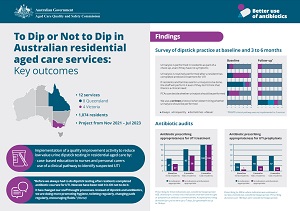
To Dip or Not to Dip in Australian residential aged care services - project findings
This visual abstract presents outcomes from a quality improvement project aimed at reducing low-value urine dipstick testing in aged care services. It included nurse education, implementing clinical pathways for UTI identification, and evaluating urinalysis practices and antibiotic prescribing. The findings demonstrate improved antibiotic prescribing appropriateness for UTIs over a 6-month follow-up period.
This resource may refer to information that will be updated from 1 November 2025 to align with the new Aged Care Act and Quality Standards.
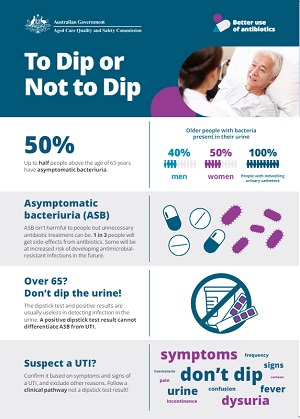
To Dip or Not to Dip - huddle tool A3 poster
This huddle tool poster provides guidance on appropriate use of urine dipstick tests in older adults. It explains that asymptomatic bacteriuria (ASB) is common and not harmful, but that unnecessary antibiotic treatment can be. It suggests confirming urinary tract infections (UTIs) through clinical symptoms rather than dipstick results.
This resource may refer to information that will be updated from 1 November 2025 to align with the new Aged Care Act and Quality Standards.
To Dip or Not to Dip - huddle tool A3 poster (PDF 393.96 KB)
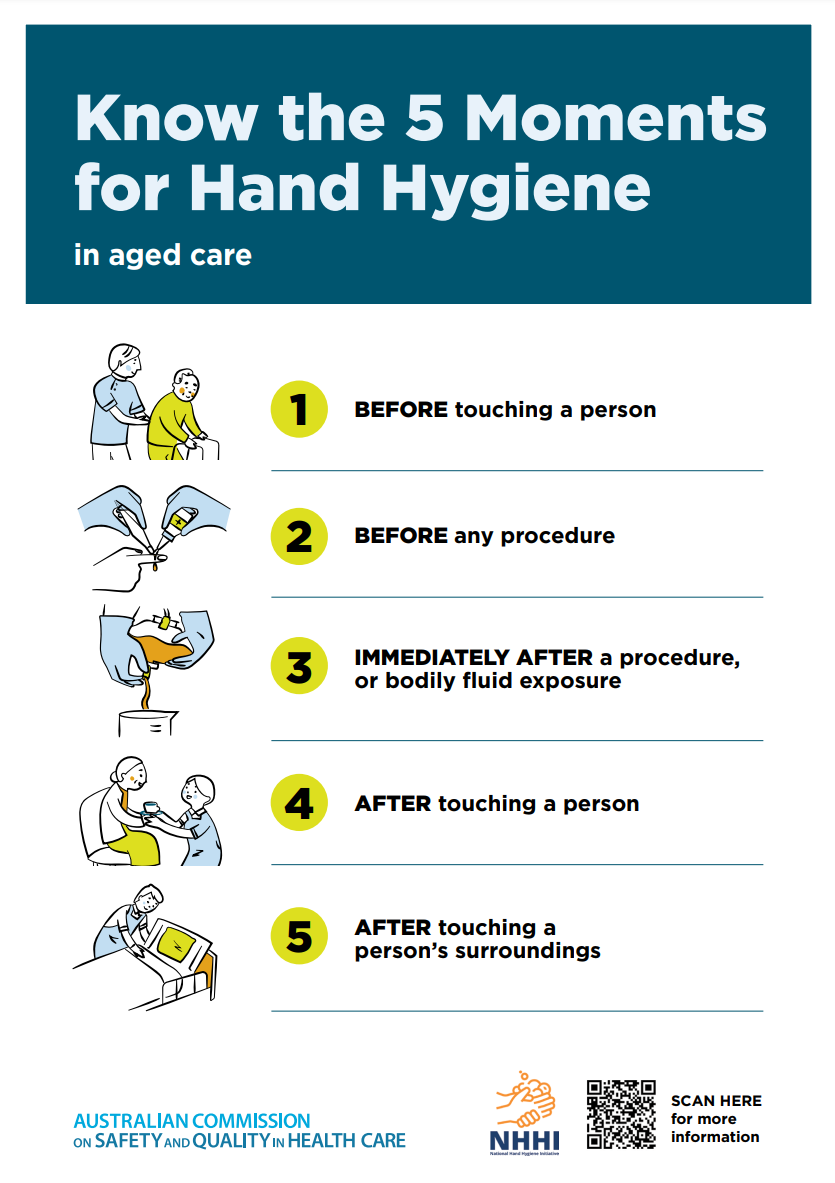
The 5 Moments for Hand Hygiene in aged care
This resource is a poster outlining the ‘5 Moments for Hand Hygiene’ in aged care settings. It provides clear guidance on when to perform hand hygiene: before touching a person, before a procedure, immediately after a procedure or bodily fluid exposure, after touching a person, and after touching a person's surroundings.
This resource may refer to information that will be updated from 1 November 2025 to align with the new Aged Care Act and Quality Standards.
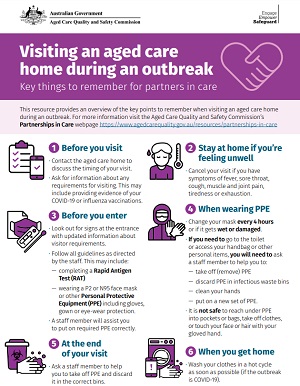
Visiting an aged care home during an outbreak - A3 poster
This A3 poster can be used by aged care facilities during an outbreak. It explains the key things for partners in care to remember when visiting an aged care home during an outbreak.
This resource may refer to information that will be updated from 1 November 2025 to align with the new Aged Care Act and Quality Standards.
Visiting an aged care home during an outbreak poster (PDF 323.5 KB)
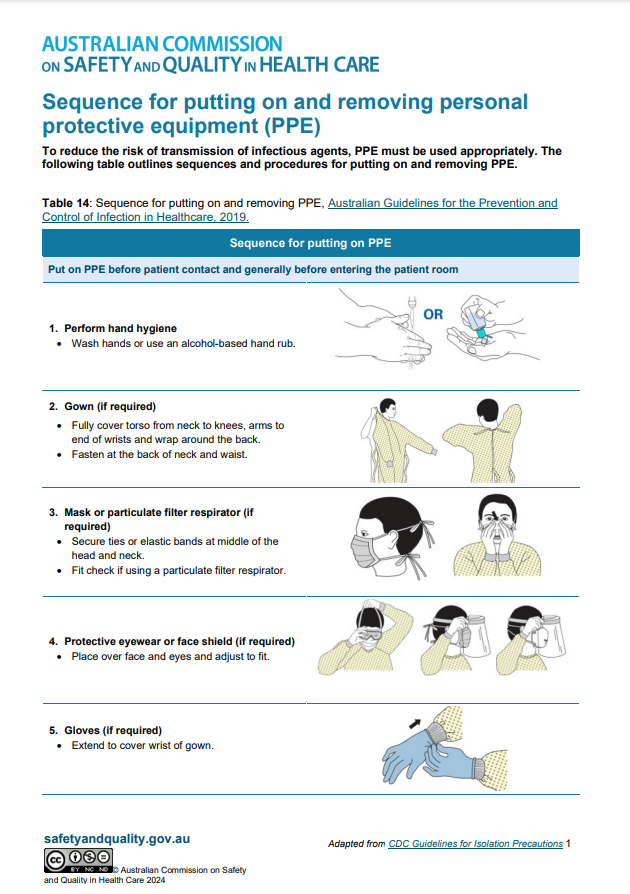
Sequence for putting on and removing personal protective equipment (PPE)
This poster outlines the correct sequence for putting on and removing personal protective equipment (PPE) to reduce the transmission of infectious agents. It provides step-by-step instructions for healthcare workers to ensure safe use of gowns, masks, gloves, and protective eyewear.
This resource may apply to healthcare contexts outside of aged care. Please consider the applicability of this resource to your care setting. This resource may refer to information that will be updated from 1 November 2025 to align with the new Aged Care Act and Quality Standards.
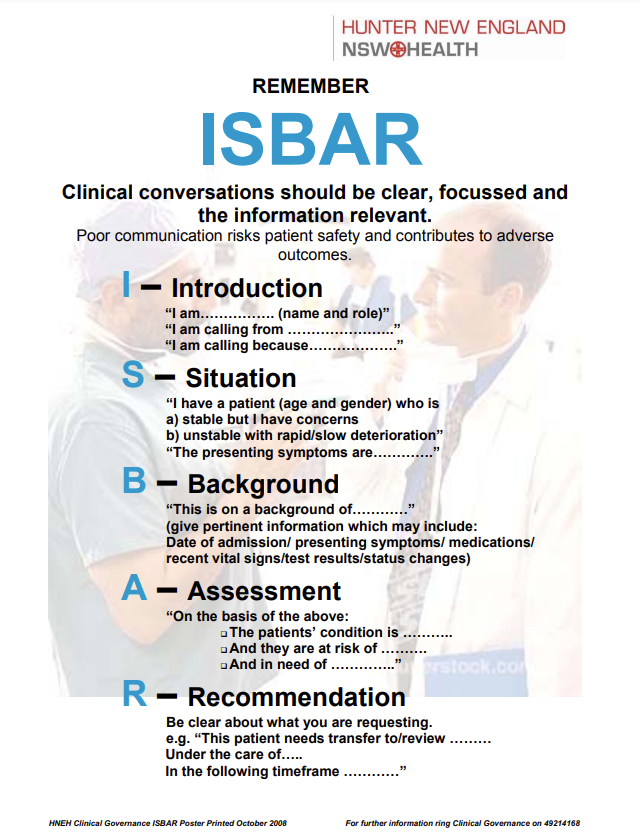
ISBAR Poster
This poster is a tool for improving clinical handover. It outlines the principles of ISBAR: Introduction, Situation, Background, Assessment, Recommendation. This supports clinical conversations to be clear, focused and relevant.
This resource may refer to information that will be updated from 1 November 2025 to align with the new Aged Care Act and Quality Standards.
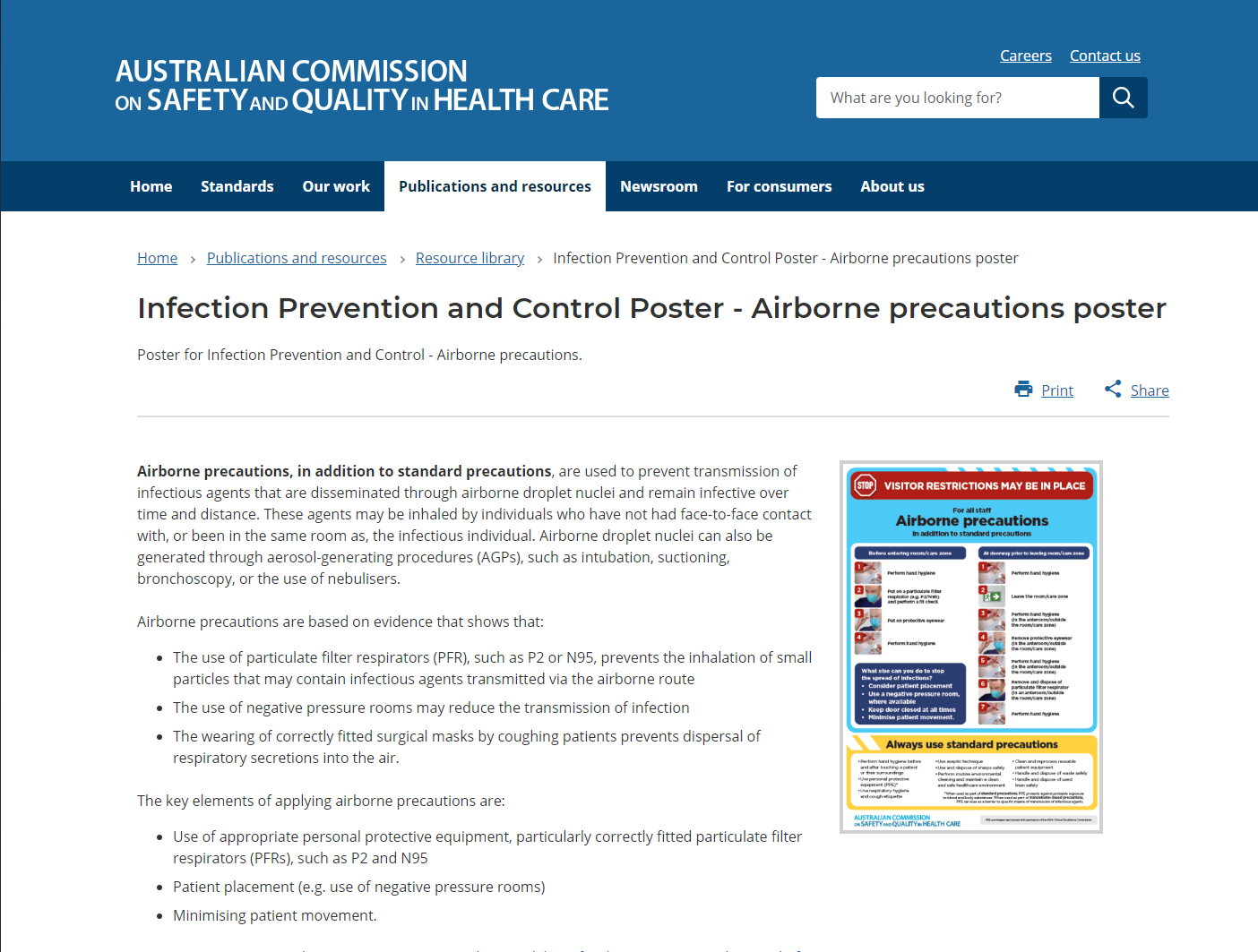
Infection Prevention and Control Poster - Airborne precautions poster
This poster outlines airborne precautions, in addition to standard precautions, for infection prevention and control. It provides guidance on preventing transmission of infectious agents through airborne droplet nuclei using personal protective equipment (PPE), negative pressure rooms, and limiting patient movement to reduce infection risks.
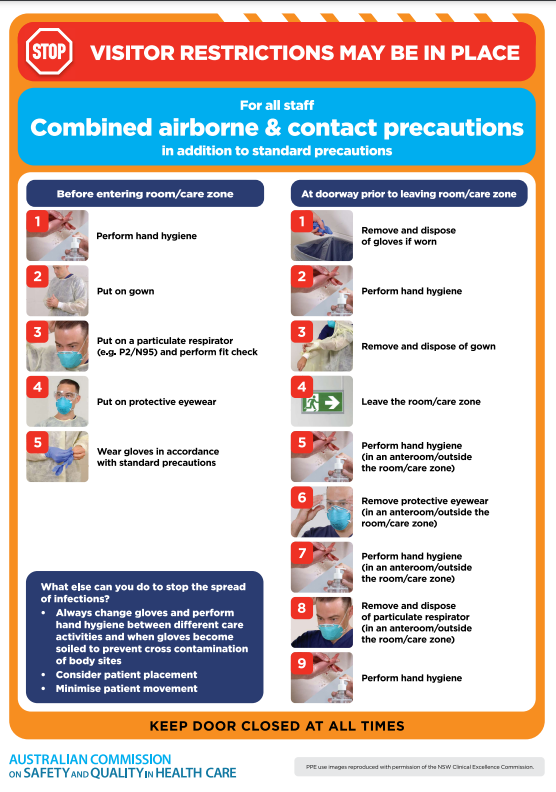
Infection Prevention and Control Poster – Combined airborne and contact precautions
This poster provides guidance on combined airborne and contact precautions for infection prevention and control. It includes information on using personal protective equipment (PPE) and other measures to minimise the spread of infectious agents transmitted through both airborne particles and direct contact.
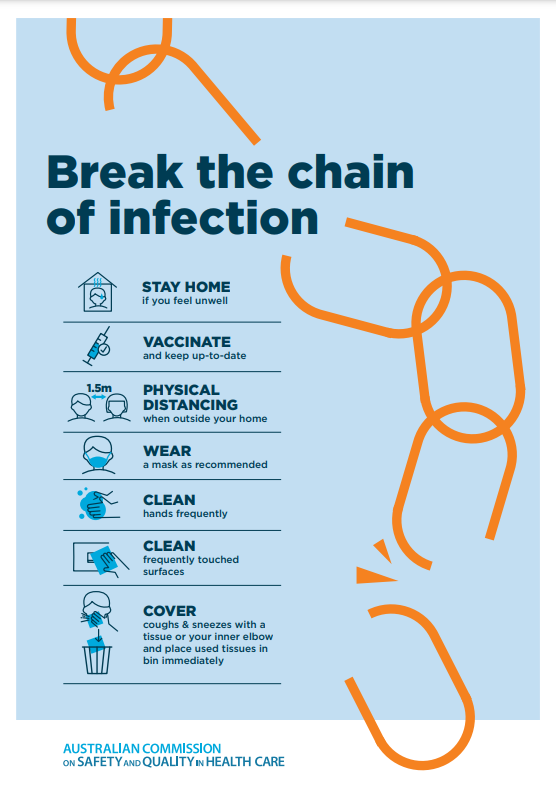
Break The Chain of Infection Poster
This poster outlines key steps to break the chain of infection, including staying home if unwell, physical distancing, frequent handwashing, cleaning surfaces, and covering coughs or sneezes. It aims to prevent the spread of respiratory infections and supports infection prevention practices in healthcare settings.
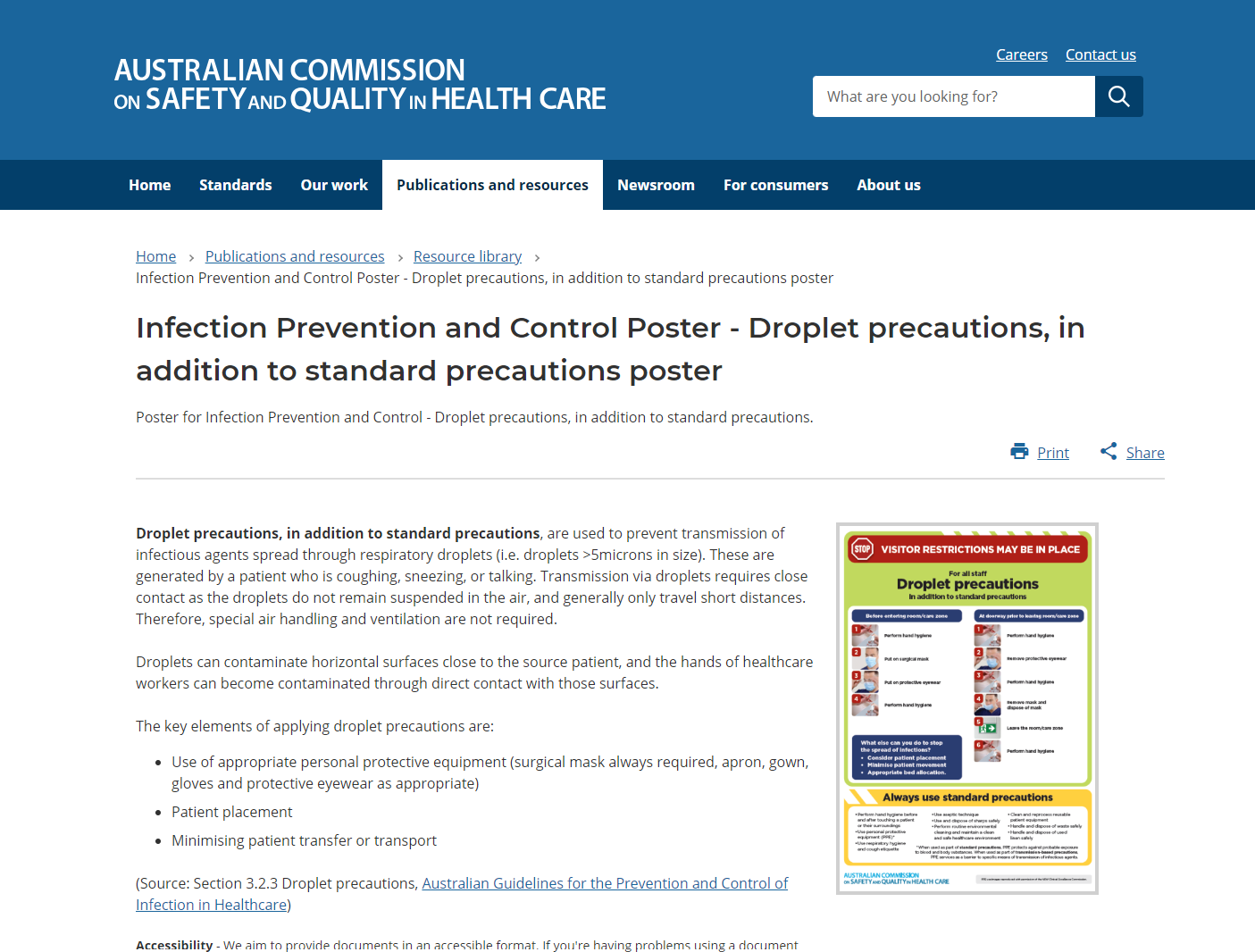
Infection Prevention and Control Poster - Droplet precautions, in addition to standard precautions poster
This resource is a poster on droplet precautions, in addition to standard precautions, for infection prevention. It outlines measures to prevent the transmission of infectious agents spread through respiratory droplets, such as using appropriate personal protective equipment (PPE), patient placement, and minimising patient transport. This resource may apply to healthcare contexts outside of aged care. Please consider the applicability of this resource to your care setting.
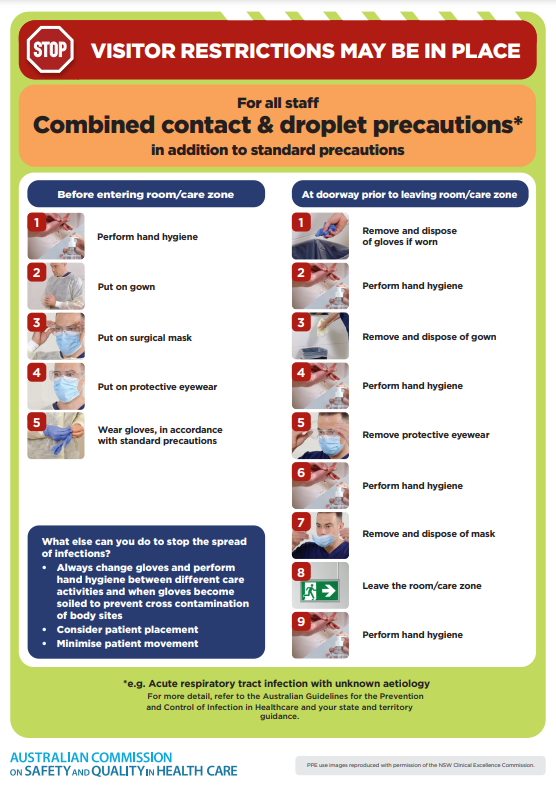
Infection Prevention and Control Poster – Combined contact and droplet precautions
This poster outlines combined contact and droplet precautions for infection prevention and control, in addition to standard precautions. It provides guidance on the use of personal protective equipment (PPE) and other measures to reduce the transmission of infectious agents through direct contact and respiratory droplets.
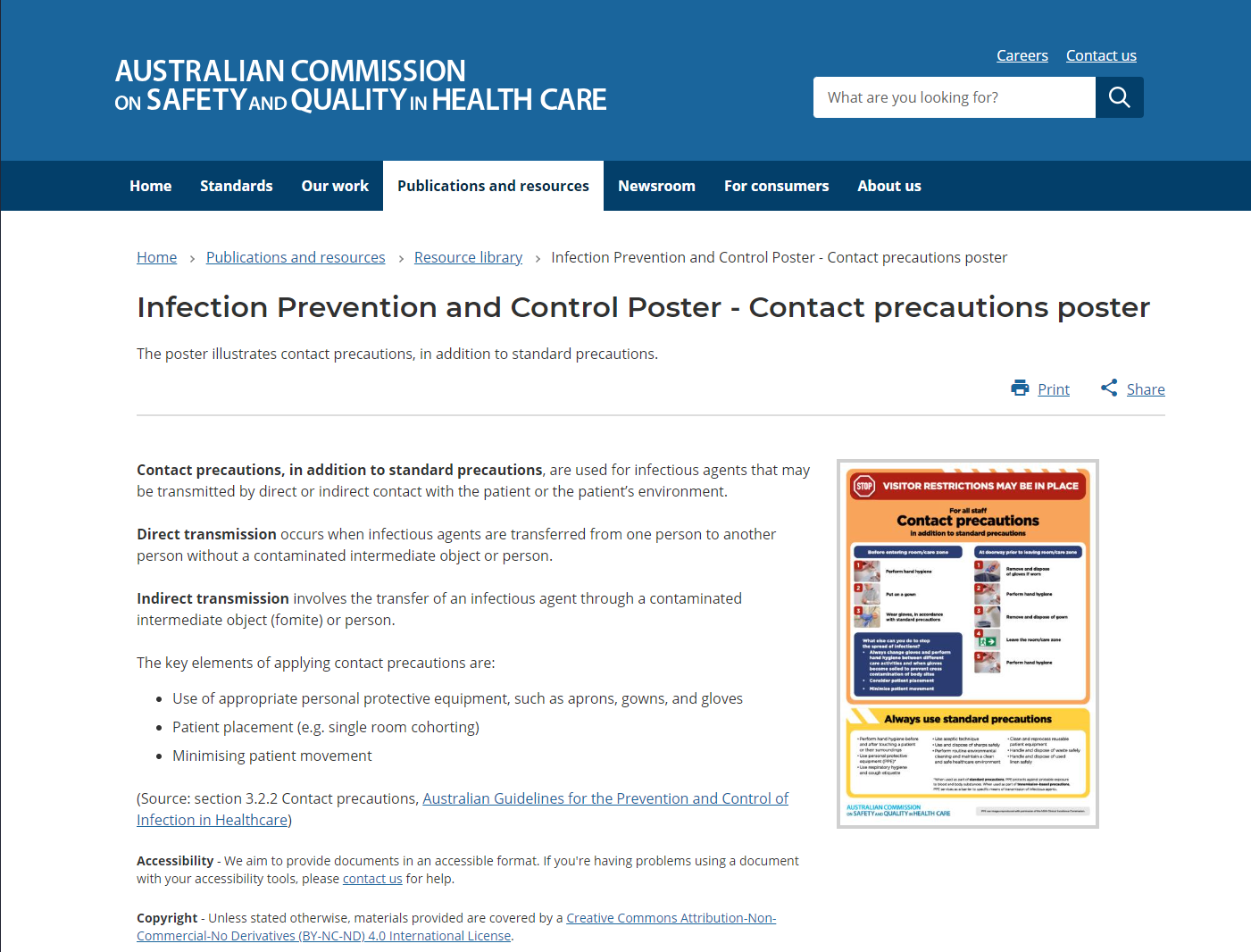
Infection Prevention and Control Poster - Contact precautions poster
This poster outlines contact precautions for infection prevention and control, in addition to standard precautions. It provides guidance on preventing the transmission of infectious agents through direct or indirect contact. Key elements include using personal protective equipment, proper patient placement, and minimising patient movement. This resource may apply to healthcare contexts outside of aged care. Please consider the applicability of this resource to your care setting.
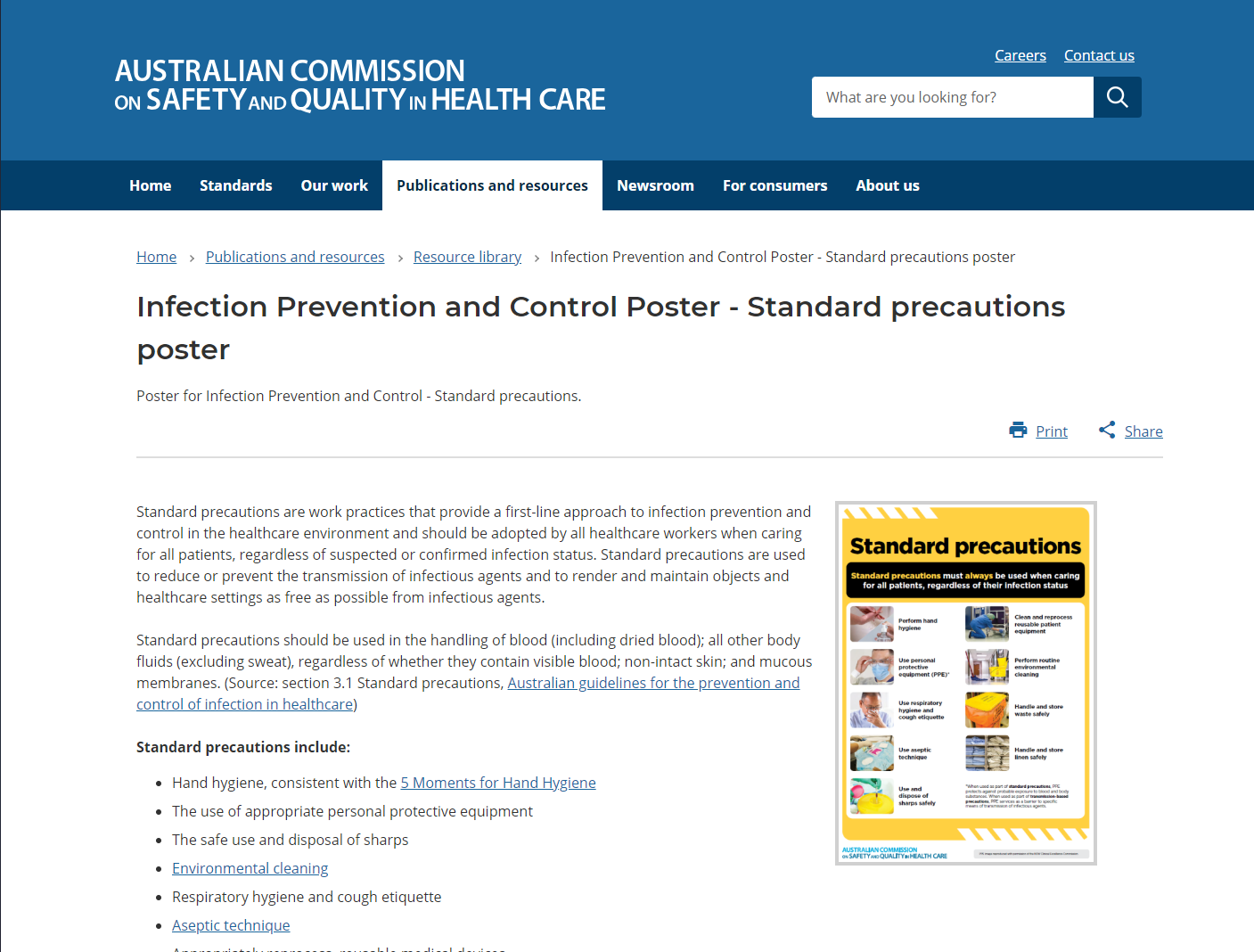
Infection Prevention and Control Poster - Standard precautions poster
This resource is a poster on standard precautions for infection prevention and control in healthcare. It outlines essential practices such as hand hygiene, personal protective equipment use, environmental cleaning, and waste management. The poster helps healthcare workers minimise infection risks and maintain safe care environments. This resource may apply to healthcare contexts outside of aged care. Please consider the applicability of this resource to your care setting.