The Quality Standards Resource Centre helps extend understanding of the strengthened Aged Care Quality Standards, which take effect from 1 November 2025. The Resource Centre will be updated to reflect key changes made to the draft strengthened Standards. You can search for resources by using keywords, or filtering by standard, outcome, audience and theme. Before using the Resource Centre, please read the terms of use.
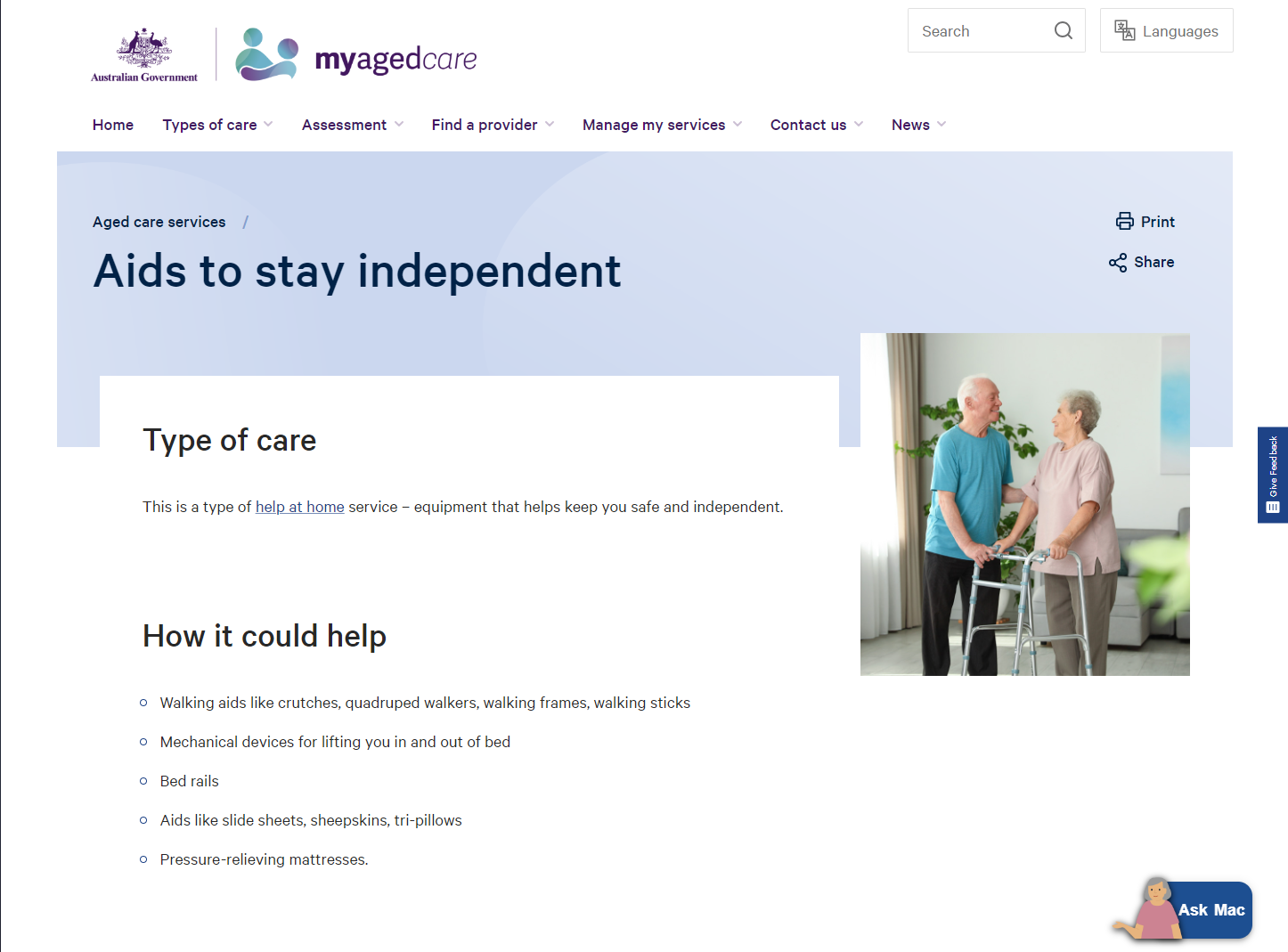
Aids to stay independent
This resource provides information on aids to help people stay safe and independent at home. It includes equipment such as walking aids, bed rails, and pressure-relieving mattresses. These services are available through the Commonwealth Home Support Programme or Home Care Packages, depending on eligibility, following an assessment.
Mobility aids
This resource provides an overview of mobility aids, including walkers, wheelchairs, lifting aids, and electric beds, to help people move safely and independently. It explains how these devices can help with daily tasks, manage pain, and reduce injury risks. The document also includes information on accessing aids through government programs or health professionals.
Aids, equipment and modifications through the Rehabilitation Appliances Program (RAP)
This resource provides information about the Rehabilitation Appliances Program (RAP), which offers aids, equipment, and home or vehicle modifications to help veterans stay independent. It explains the types of items available, such as mobility devices, personal care aids, and home accessibility modifications, and outlines the process for accessing these services through clinical assessments.
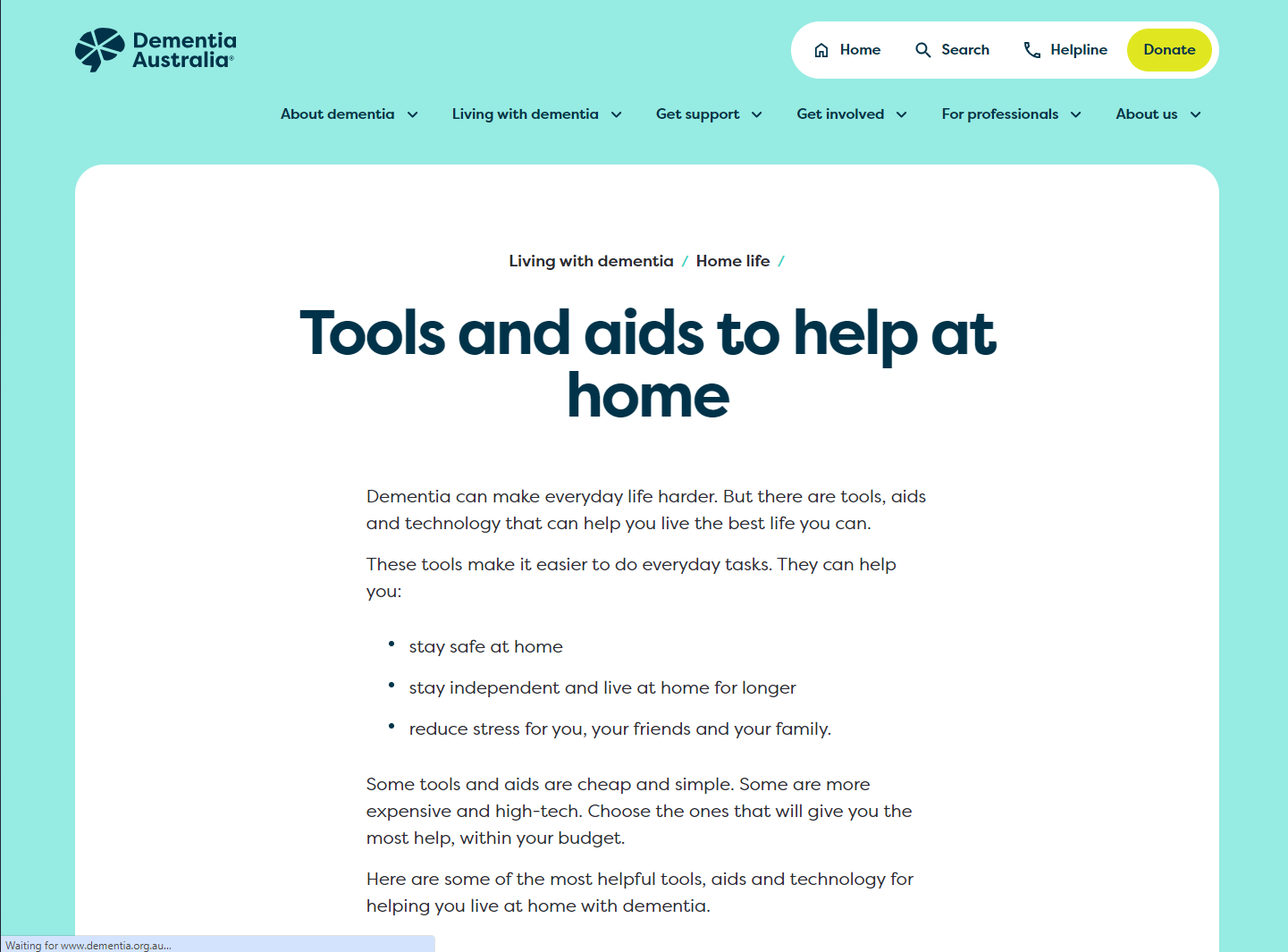
Tools and aids to help at home
This resource outlines tools, aids, and technology to help people with dementia live safely and independently at home. It includes medication reminders, safety devices, communication tools, and sensory aids. The document provides guidance on selecting appropriate tools to support daily tasks, reduce stress, and maintain quality of life at home.
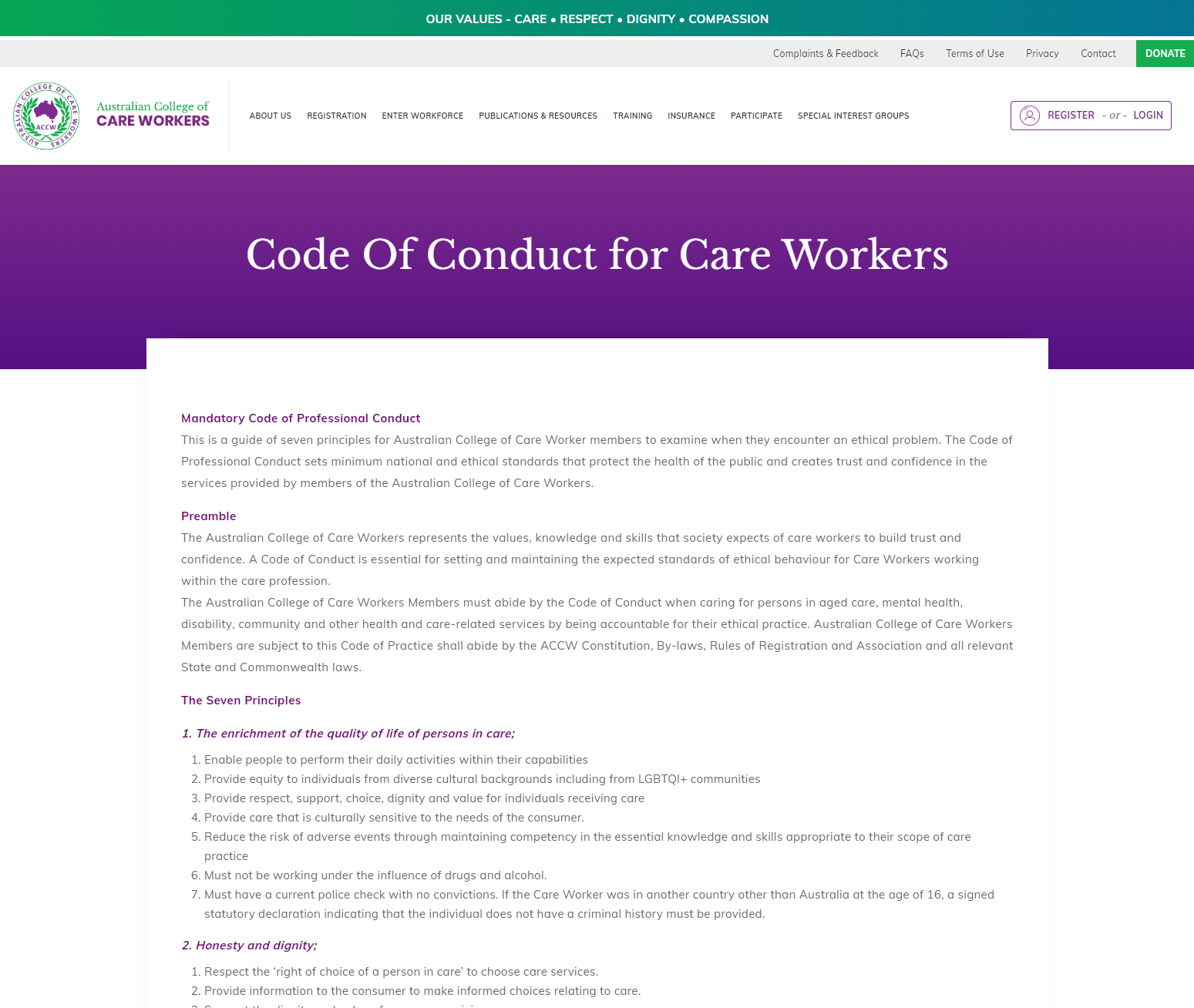
Australian College of Care Workers - Code of Conduct for Care Workers
This resource outlines the Code of Conduct for members of the Australian College of Care Workers. It includes 7 key principles that ensure care workers provide safe, ethical, and respectful care. The Code sets minimum standards for professionalism, accountability, and respect for people receiving care, promoting integrity and competency within the profession.
Work-related psychological health and safety: A systematic approach to meeting your duties
This guide offers a systematic approach to managing work-related psychological health and safety, particularly under work health and safety (WHS) and workers’ compensation laws. It provides businesses with a structured methodology for preventing psychological harm, intervening early when signs of stress appear, and supporting workers' recovery and return to work. Though the guide is an archived document, it can still offer useful background on managing psychosocial hazards but does not reflect recent changes in regulations.
Mental health tips for aged care workers and managers
This resource provides mental health tips for aged care workers and managers during the COVID-19 pandemic. It includes strategies to manage stress, anxiety, and overall mental wellbeing. The resource offers evidence-based advice on recognising when extra support is needed and how to maintain mental health, helping aged care staff navigate challenging times effectively.
Quality and safety in home services – 5 key areas of risk
This resource provides guidance for home service providers on managing key risks in aged care services. It identifies 5 critical areas: organisational governance, care planning and assessment, clinical care, support for vulnerable consumers, and management of Home Care Package funds
The Aged Care Infection Prevention and Control Guide
This resource outlines the basic principles of infection prevention and control and explains how to apply these principles using a risk-based approach. The guide supports implementation of the strengthened Aged Care Quality Standards. It is a supplementary resource for the Australian Guidelines for the Prevention and Control of Infection in Healthcare for aged care settings.
This resource may refer to information that will be updated from 1 November 2025.
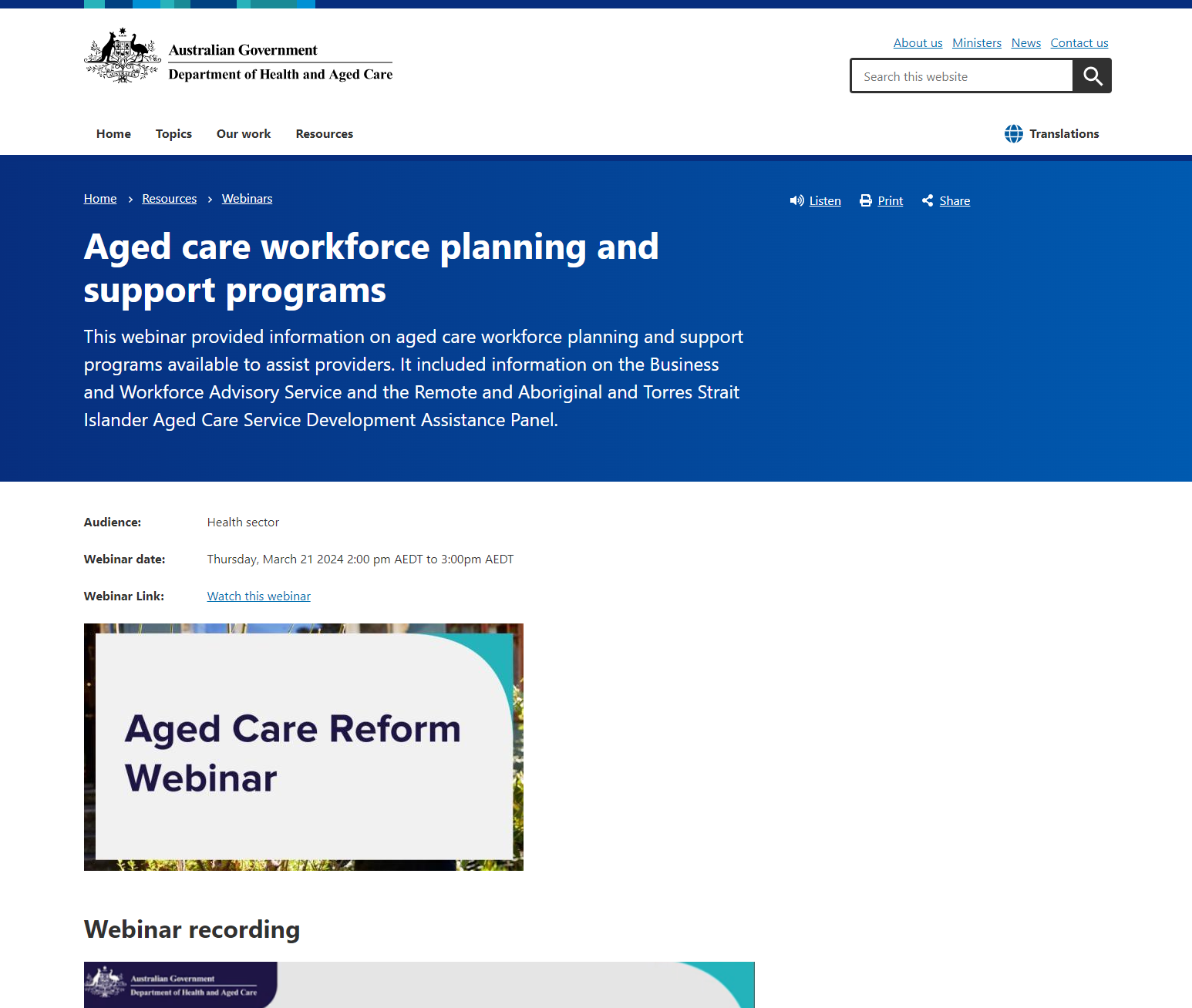
Aged care workforce planning and support programs
This resource provides information about aged care workforce planning and support programs available to help providers. It covers initiatives such as the Business and Workforce Advisory Service and the Remote and Aboriginal and Torres Strait Islander Aged Care Service Development Assistance Panel.
This resource may refer to information that will be updated from 1 November 2025 to align with the new Aged Care Act and Quality Standards.
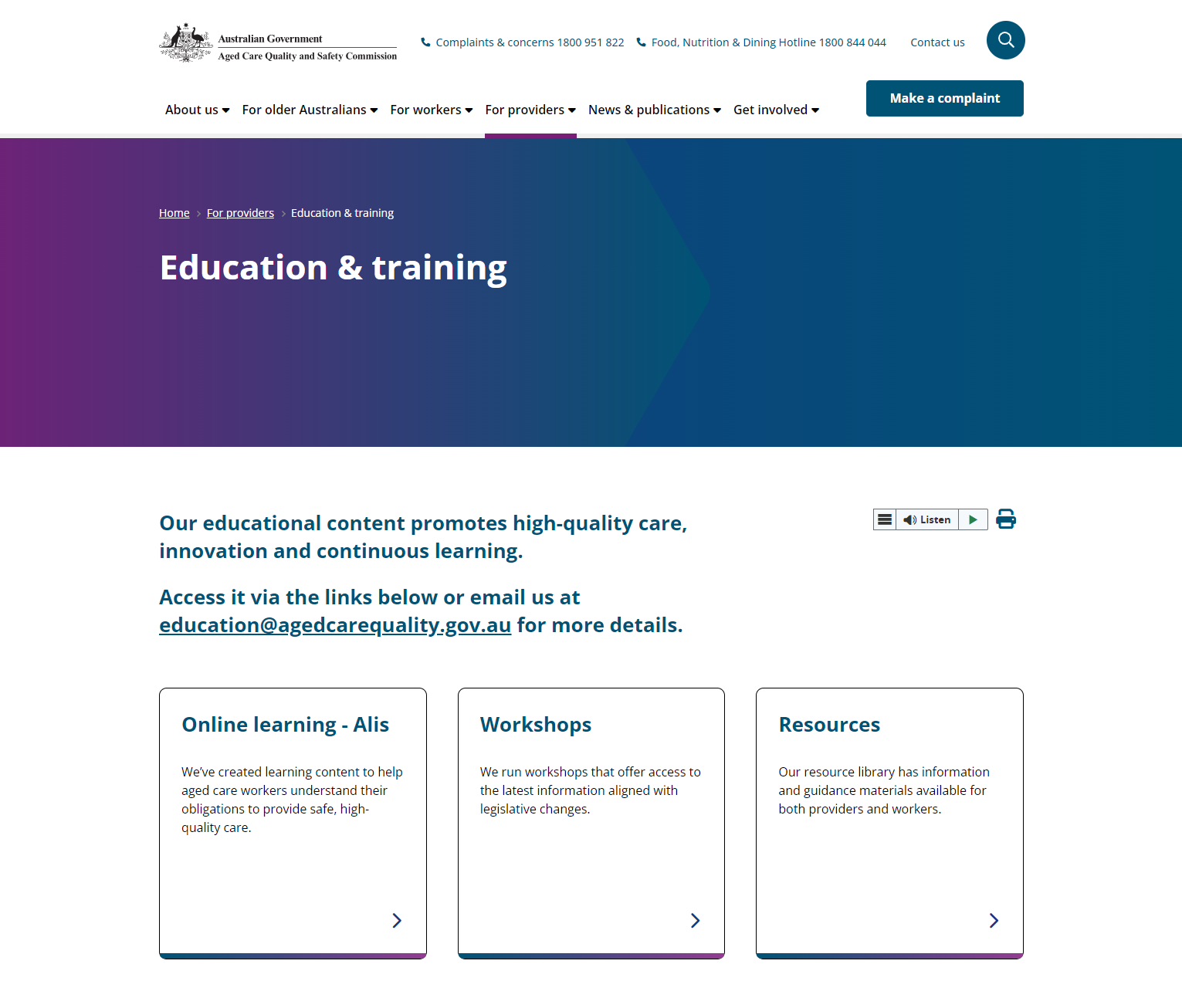
Education & training
This resource provides information on the educational content offered to aged care providers and workers. It includes online learning modules, workshops, and access to a resource library, aimed at promoting high-quality care and compliance with legislative changes. The content supports continuous learning and professional development.
This resource may refer to information that will be updated from 1 November 2025 to align with the new Aged Care Act and Quality Standards.
Environmental cleaning and infection prevention and control resources
This resource offers a range of environmental cleaning and infection prevention tools for healthcare settings, including guidelines for small organisations, cleaning audits, product selection, and emerging cleaning technologies. It supports aged care providers in maintaining clean, hygienic environments, helping them comply with infection control standards and ensure safety.
This resource may refer to information that will be updated from 1 November 2025 to align with the new Aged Care Act and Quality Standards.
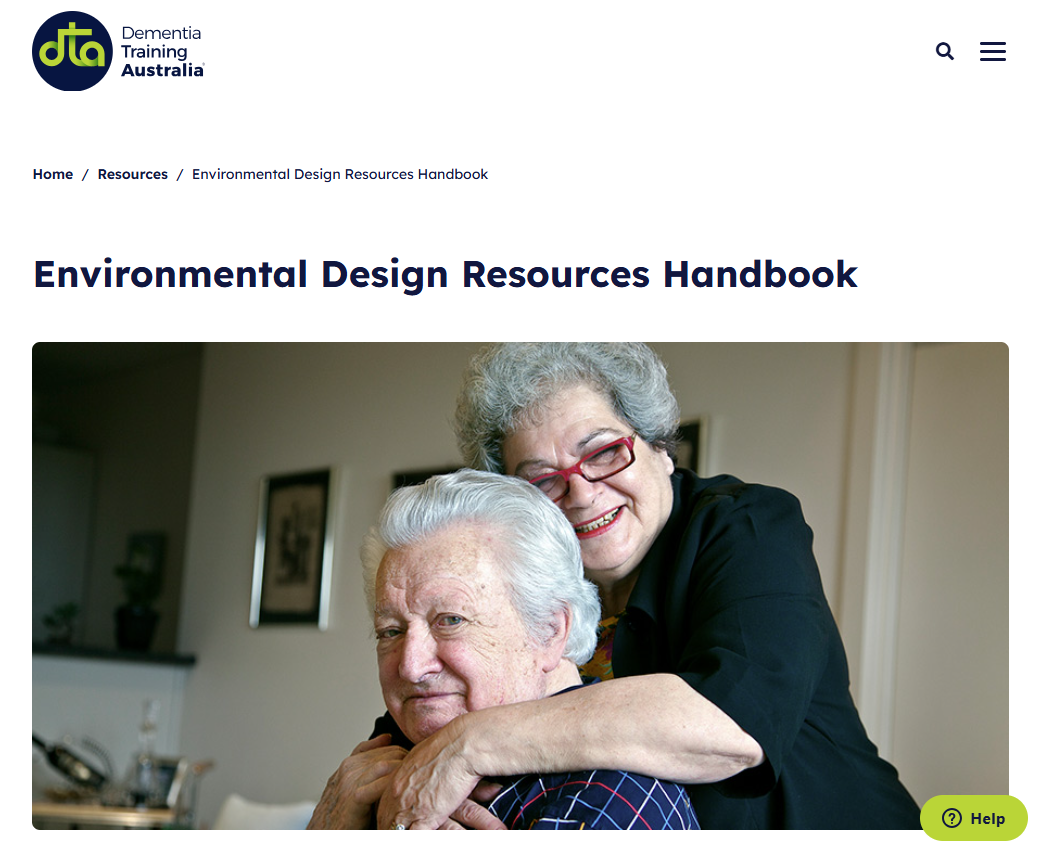
Environmental design resources handbook
This resource supports improvements to environments for people living with dementia. The resource includes information and background on the key design principles and environmental assessment tools. It also includes the Indigenous Aged Care Design Guide. The handbook can be accessed in full, or individually as 7 separate resources.
This resource may refer to information that will be updated from 1 November 2025 to align with the new Aged Care Act and Quality Standards.
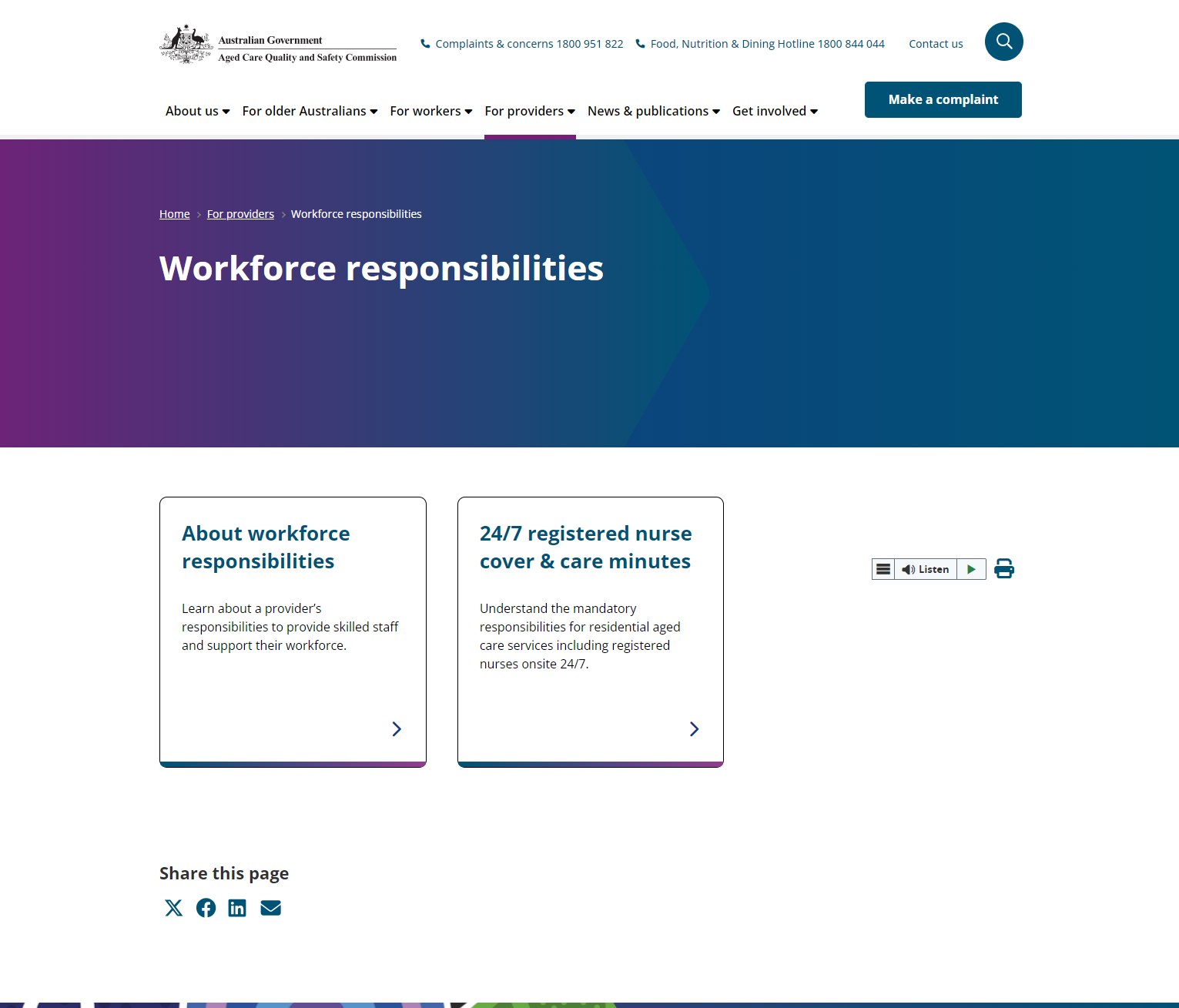
Workforce responsibilities
This resource outlines the workforce responsibilities of aged care providers, including the legal obligation to provide skilled staff and support their workforce. It details mandatory requirements such as 24/7 registered nurse coverage and care minutes for residential aged care services.
This resource may refer to information that will be updated from 1 November 2025 to align with the new Aged Care Act and Quality Standards.
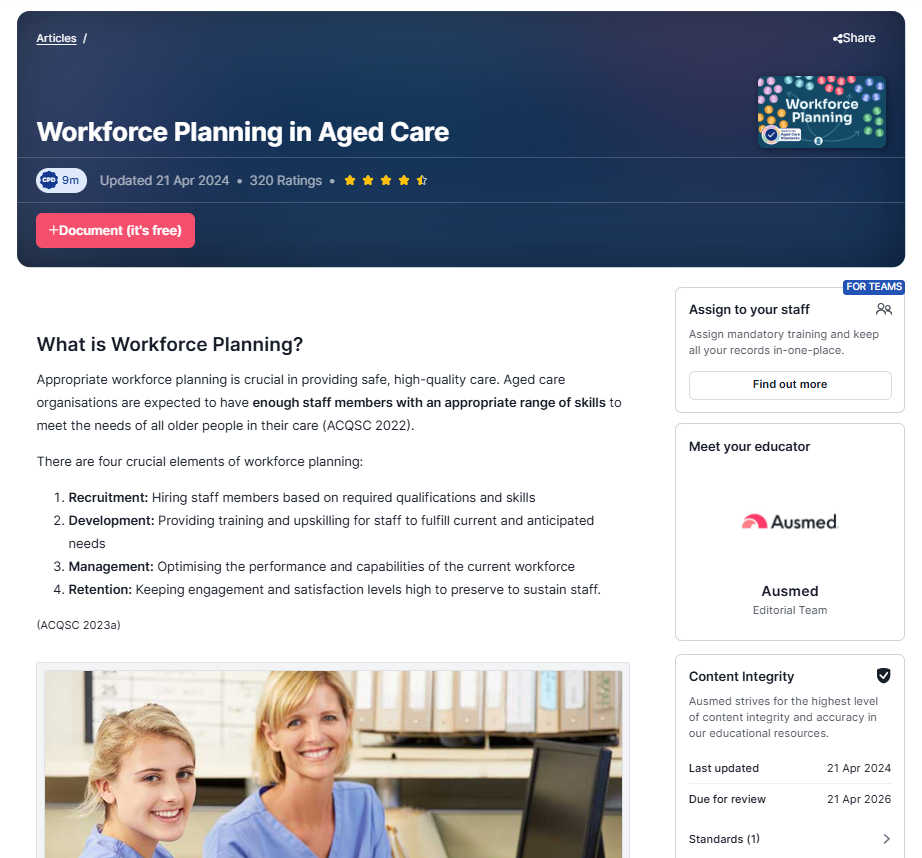
Workforce planning in aged care
This resource provides guidance about workforce planning in aged care. It includes information about workforce composition, current requirements and why it's important. It highlights the importance of the care experience, including continuity of care. This resource may refer to information that will be updated from 1 November 2025 to align with the new Aged Care Act and Quality Standards.
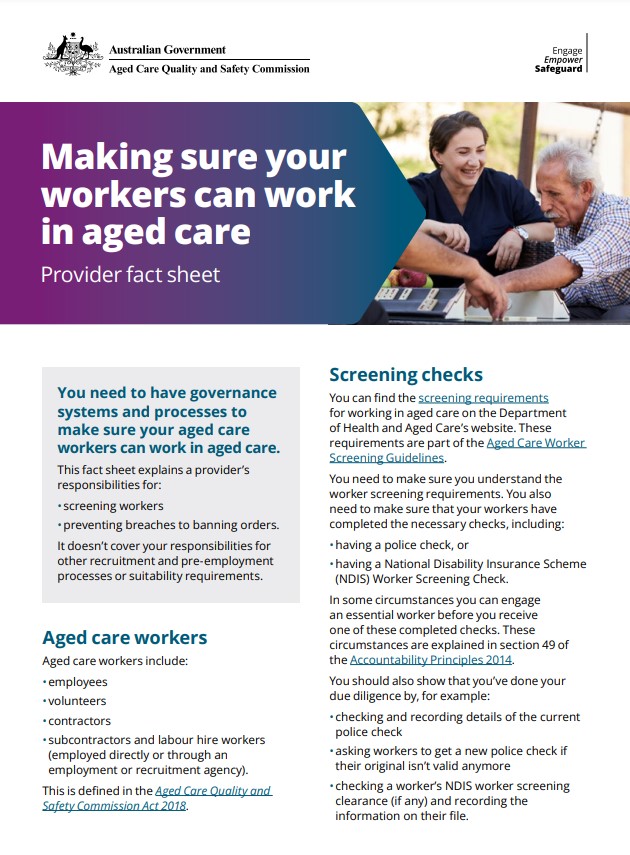
Making sure your workers can work in aged care
You need to have governance systems and processes to make sure your aged care workers can work in aged care.
This fact sheet explains a provider’s responsibilities for:
- screening workers
- preventing breaches to banning orders.
This resource may refer to information that will be updated from 1 November 2025 to align with the new Aged Care Act and Quality Standards.
 Making sure your workers can work in aged care (PDF 275.56 KB)
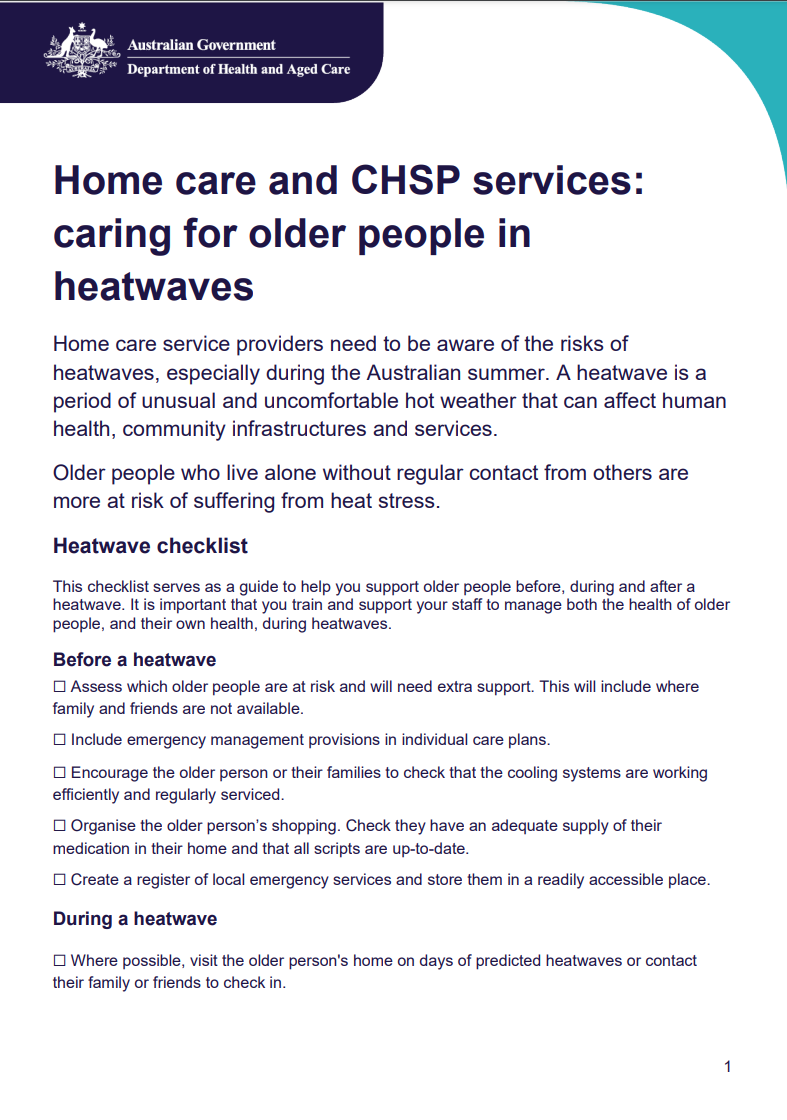
Caring for older people in heatwaves – Home Care and CHSP
This resource provides a checklist for home care and Commonwealth Home Support Programme (CHSP) providers to help them prepare for and manage the care of older people during heatwaves. It outlines steps to take before, during, and after heatwaves, ensuring the health and safety of those under their care.
This resource may refer to information that will be updated from 1 November 2025 to align with the new Aged Care Act and Quality Standards.
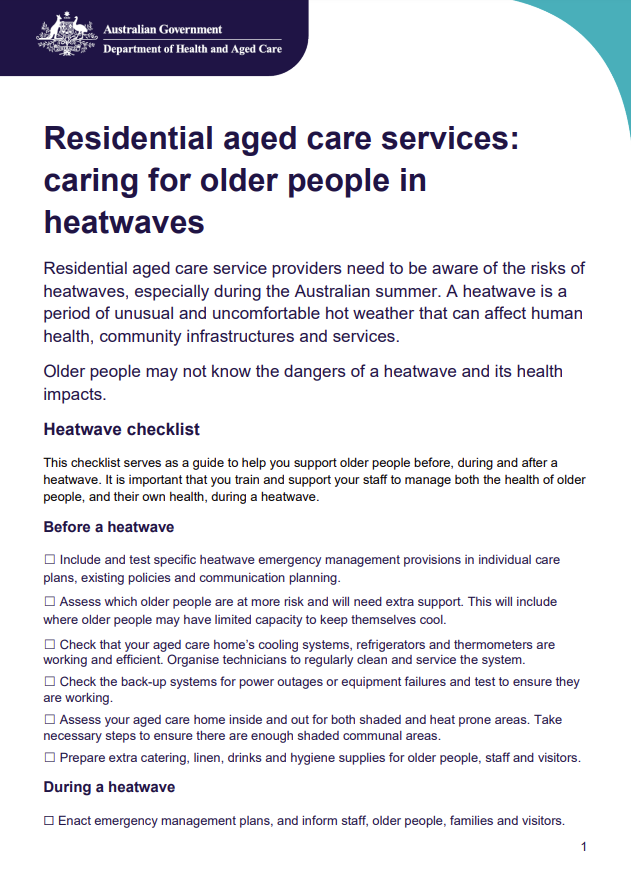
Caring for Older People in heatwaves – Residential Aged Care
This resource provides guidance to care for older people living in residential aged care services during a heatwave. The resource includes checklists to guide providers to support older people before, during and after a heatwave. It includes clinical assessment guidance and where to find more information about heatwaves.
This resource may refer to information that will be updated from 1 November 2025 to align with the new Aged Care Act and Quality Standards.
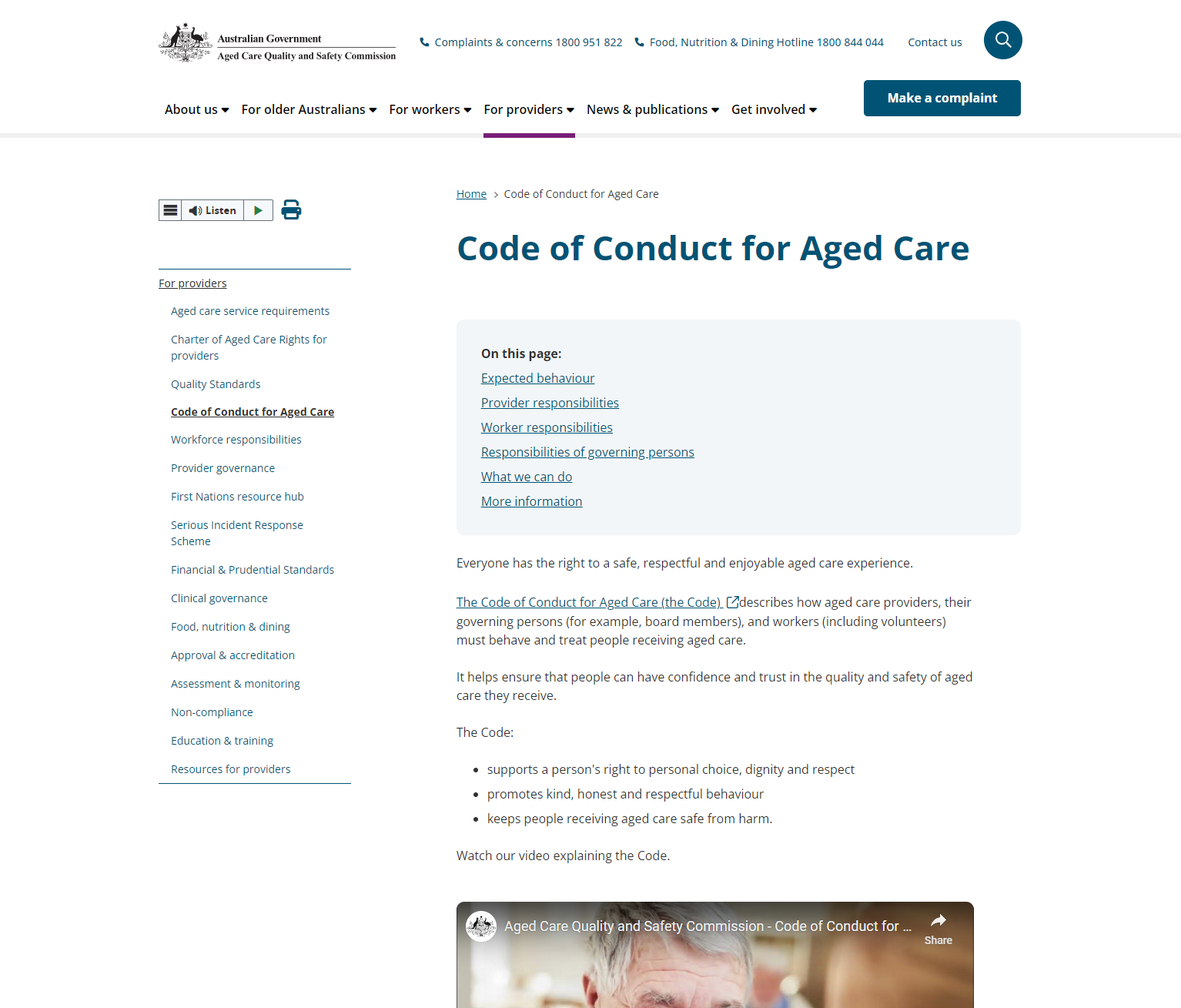
Code of Conduct for Aged Care
This resource outlines the Code of Conduct for Aged Care, which sets expectations for the behaviour of providers, governing persons, and workers. It promotes respect, safety, and quality in aged care services, ensuring people’s rights are protected. The Code includes guidance on handling concerns and preventing abuse or neglect.
This resource may refer to information that will be updated from 1 November 2025 to align with the new Aged Care Act and Quality Standards.
Code of Conduct for workers
This resource outlines the Code of Conduct for Aged Care workers, detailing expected behaviours such as respect, honesty, and integrity. It ensures people receiving care are treated with dignity, kept safe from harm, and supported. The Code applies to all aged care workers, including volunteers.
This resource may refer to information that will be updated from 1 November 2025 to align with the new Aged Care Act and Quality Standards.