The Quality Standards Resource Centre helps extend understanding of the strengthened Aged Care Quality Standards, which take effect from 1 November 2025. The Resource Centre will be updated to reflect key changes made to the draft strengthened Standards. You can search for resources by using keywords, or filtering by standard, outcome, audience and theme. Before using the Resource Centre, please read the terms of use.
Transitioning to Residential Aged Care: Loss and Grief
This resource explores the emotional impact of transitioning into residential aged care, focusing on loss and grief experienced by older people and their families. It highlights the common emotional challenges, such as fear, loss of independence, and guilt, and provides strategies to support emotional well-being during this difficult transition.
This resource may refer to information that will be updated from 1 November 2025 to align with the new Aged Care Act and Quality Standards.
Healthcare Identifiers and the Healthcare Identifier Service
This document explains the Healthcare Identifier Service, a national system for assigning unique healthcare identifiers to individuals, providers, and healthcare organisations. The service aims to improve patient safety, ensure accurate records, and facilitate secure data sharing across health, aged care, and allied health services. It includes privacy measures and public consultation outcomes for potential legislative improvements.
This resource may refer to information that will be updated from 1 November 2025 to align with the new Aged Care Act and Quality Standards.
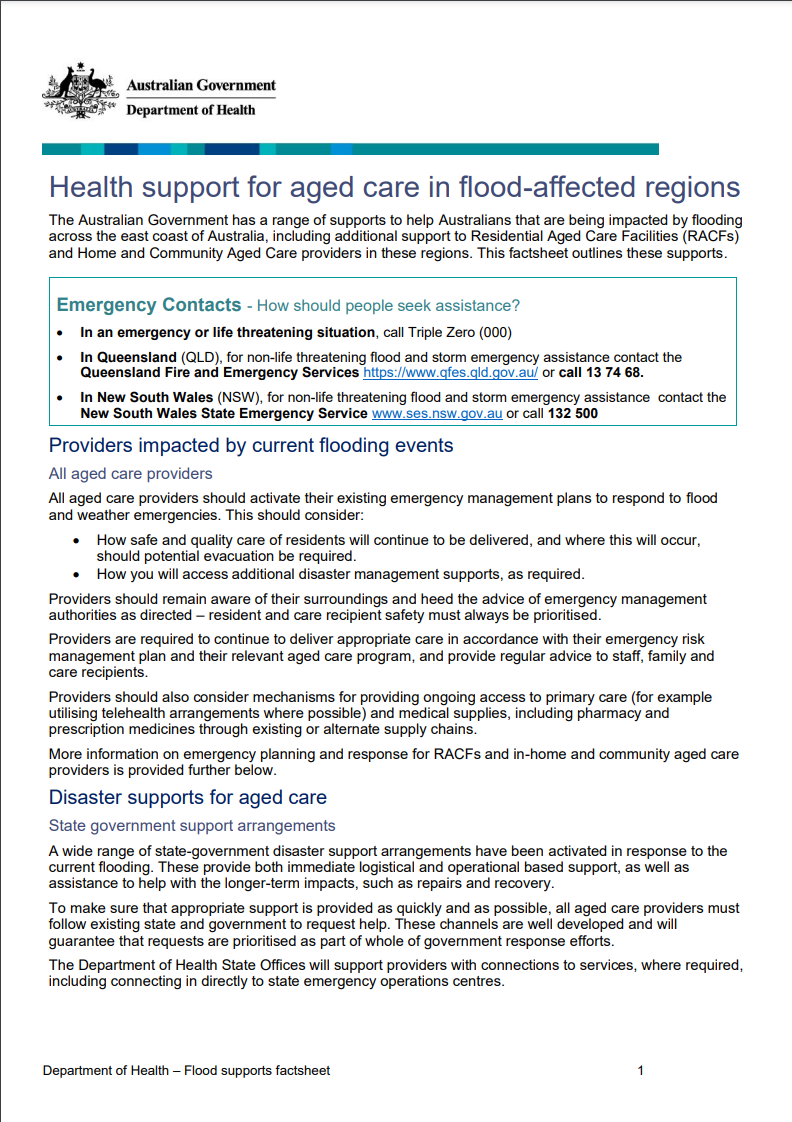
Health support for aged care in flood-affected regions
This resource outlines support available for aged care providers in flood-affected regions. It includes guidance on emergency management, workforce arrangements, access to medical supplies, and disaster relief funding. The document also provides state-specific emergency contacts and resources to help maintain service continuity during and after floods.
This resource may refer to information that will be updated from 1 November 2025 to align with the new Aged Care Act and Quality Standards.
Transitions of Care
This resource explains transitions of care, when responsibility for a person’s health care is transferred between providers. It covers the risks involved, such as medication errors and readmissions, and offers principles for safe and high-quality transitions across care settings, including aged care, to reduce harm and improve outcomes. This resource may refer to information that will be updated from 1 November 2025 to align with the new Aged Care Act and Quality Standards.
How Home Care Packages interact with other aged care programs
This resource explains how Home Care Packages interact with other aged care programs, such as the Commonwealth Home Support Programme, residential respite care, and the Transition Care Programme. It outlines how to coordinate services to avoid overlaps and provides guidance for accessing multiple programs without service duplication.
This resource may refer to information that will be updated from 1 November 2025 to align with the new Aged Care Act and Quality Standards.
Summer clinical alert: Caring for older people in hot weather
This resource provides a summer clinical alert for aged care providers, focusing on safeguarding older people during extreme heat. It includes guidance on identifying vulnerable people, creating action plans, monitoring hydration, and recognising heat-related illnesses. It helps providers prepare for heatwaves and protect those in care.
This resource may refer to information that will be updated from 1 November 2025 to align with the new Aged Care Act and Quality Standards.
Short Term Restorative Care Program
This resource outlines the Short Term Restorative Care (STRC) Program which offers early interventions aimed at reversing or slowing functional decline in older people to enhance their wellbeing. It provides care for up to 8 weeks in home or residential settings, helping people regain independence. STRC is part of a broader care system, alongside other aged care services.
This resource may refer to information that will be updated from 1 November 2025 to align with the new Aged Care Act and Quality Standards.
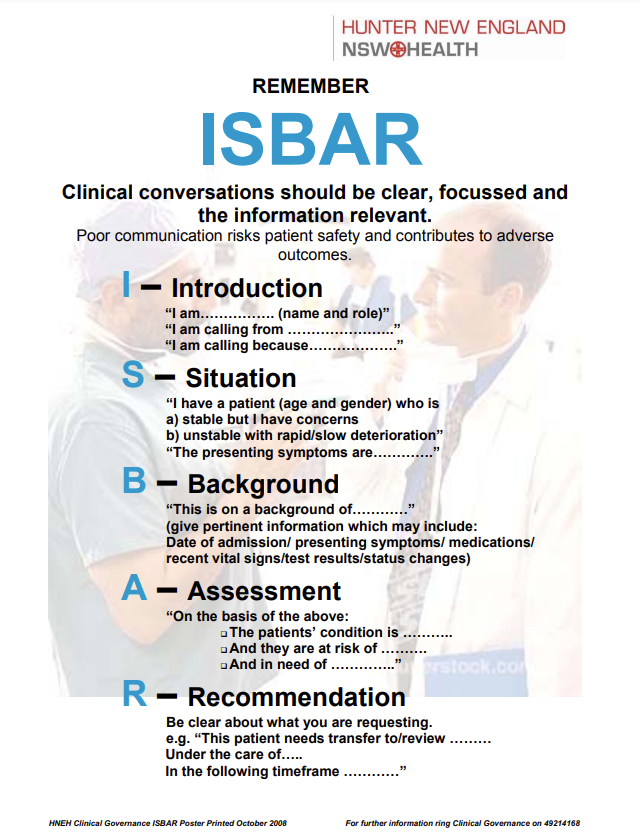
ISBAR Poster
This poster is a tool for improving clinical handover. It outlines the principles of ISBAR: Introduction, Situation, Background, Assessment, Recommendation. This supports clinical conversations to be clear, focused and relevant.
This resource may refer to information that will be updated from 1 November 2025 to align with the new Aged Care Act and Quality Standards.
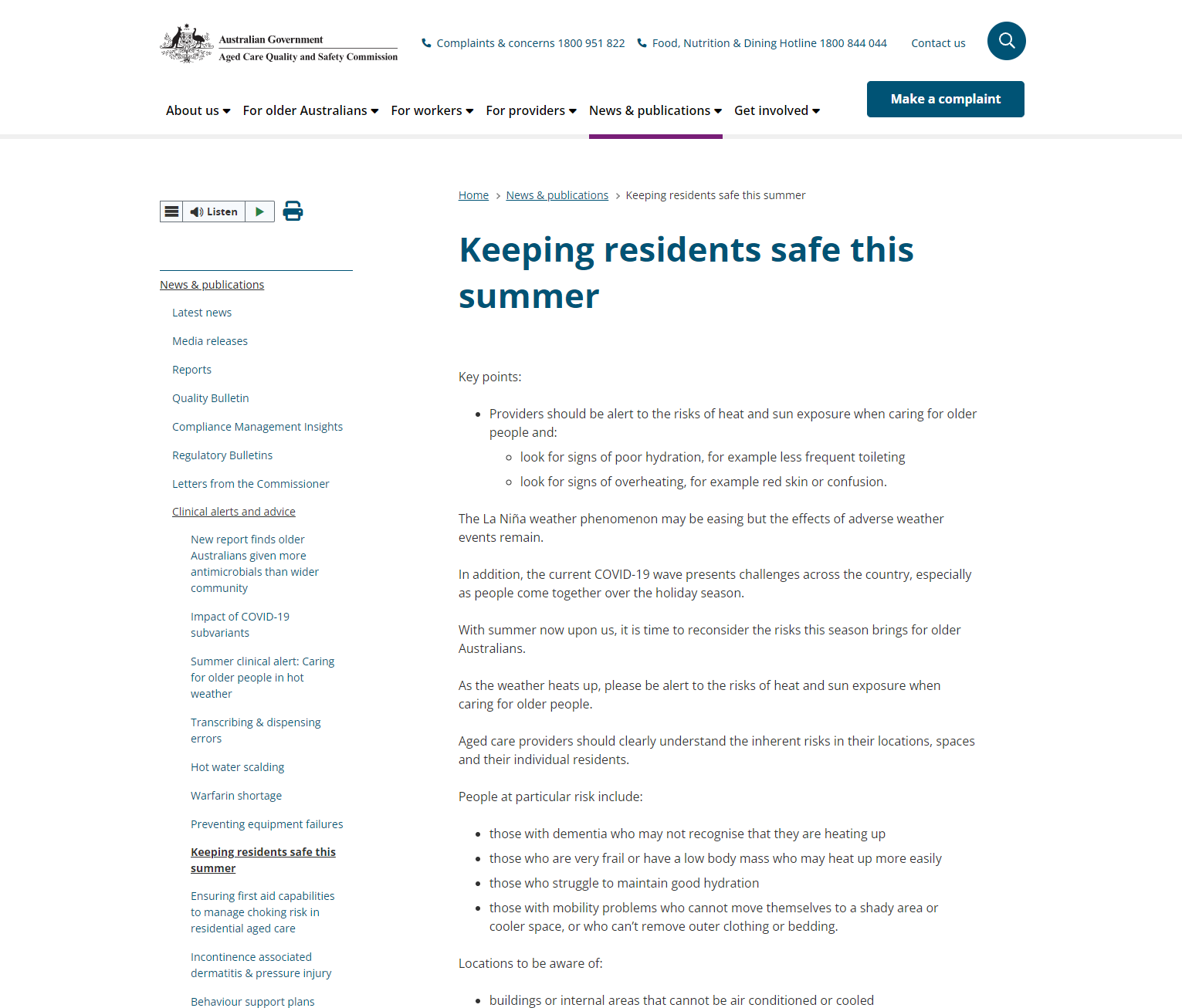
Keeping residents safe this summer
This resource offers guidance to aged care providers on keeping older people safe during summer. It includes strategies for managing heat exposure, hydration, and sun protection. It helps providers monitor vulnerable people, recognise signs of overheating, and implement preventative measures to ensure safety during hot weather.
This resource may refer to information that will be updated from 1 November 2025 to align with the new Aged Care Act and Quality Standards.
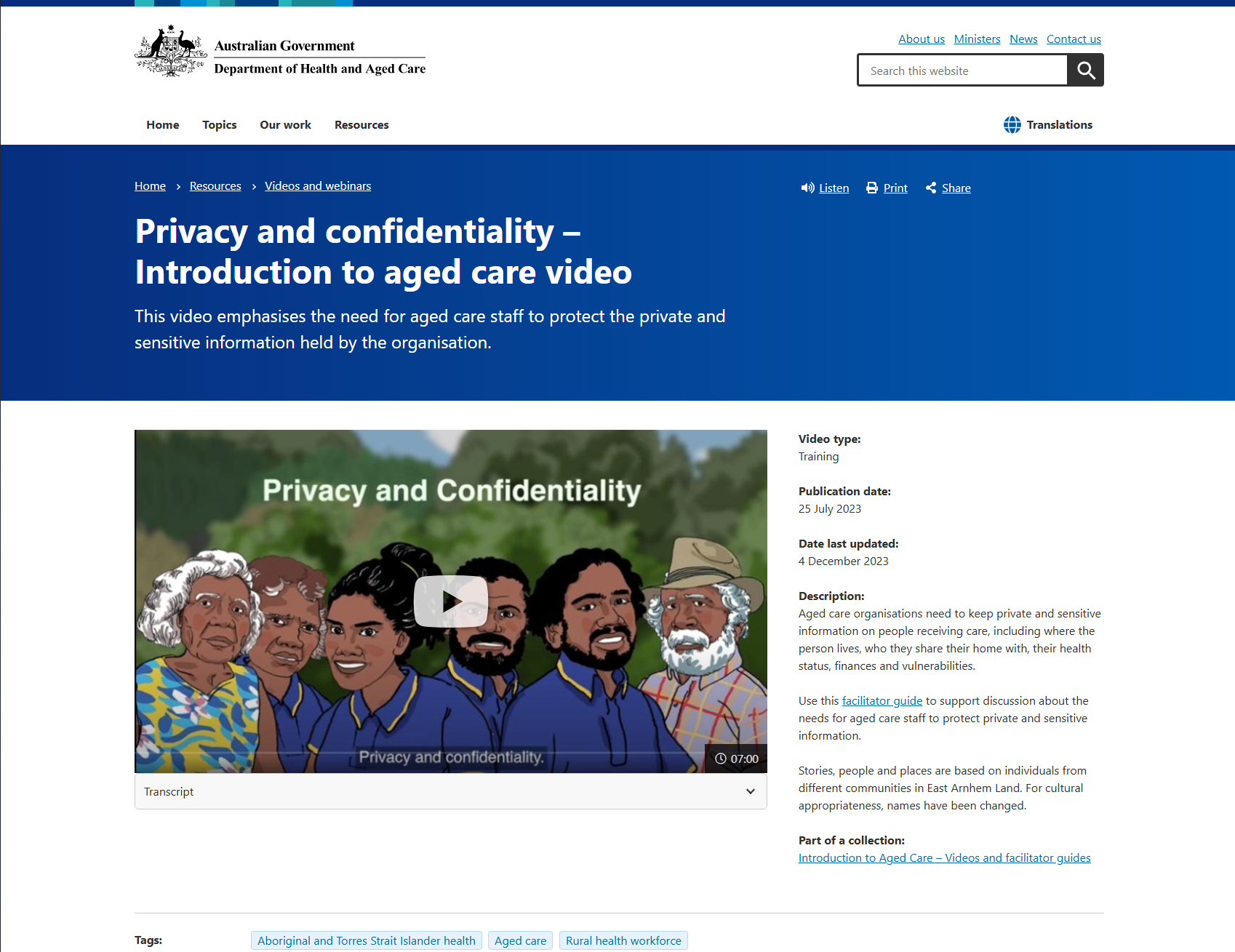
Privacy and confidentiality – Introduction to aged care video
This resource is a training video guiding aged care staff on the importance of maintaining privacy and confidentiality for people receiving care. It covers protecting personal information, proper handling of sensitive data, and safe sharing practices, aiming to make sure clients feel secure in sharing information.
This resource may refer to information that will be updated from 1 November 2025 to align with the new Aged Care Act and Quality Standards.
National Aboriginal and Torres Strait Islander Flexible Aged Care Program
This resource provides information on the National Aboriginal and Torres Strait Islander Flexible Aged Care Program. The program funds flexible and culturally appropriate aged care services for Aboriginal and Torres Strait Islander communities, mainly in rural and remote areas. It covers service provider requirements, funding processes, and adaptations to ongoing aged care reforms.
This resource may refer to information that will be updated from 1 November 2025 to align with the new Aged Care Act and Quality Standards.
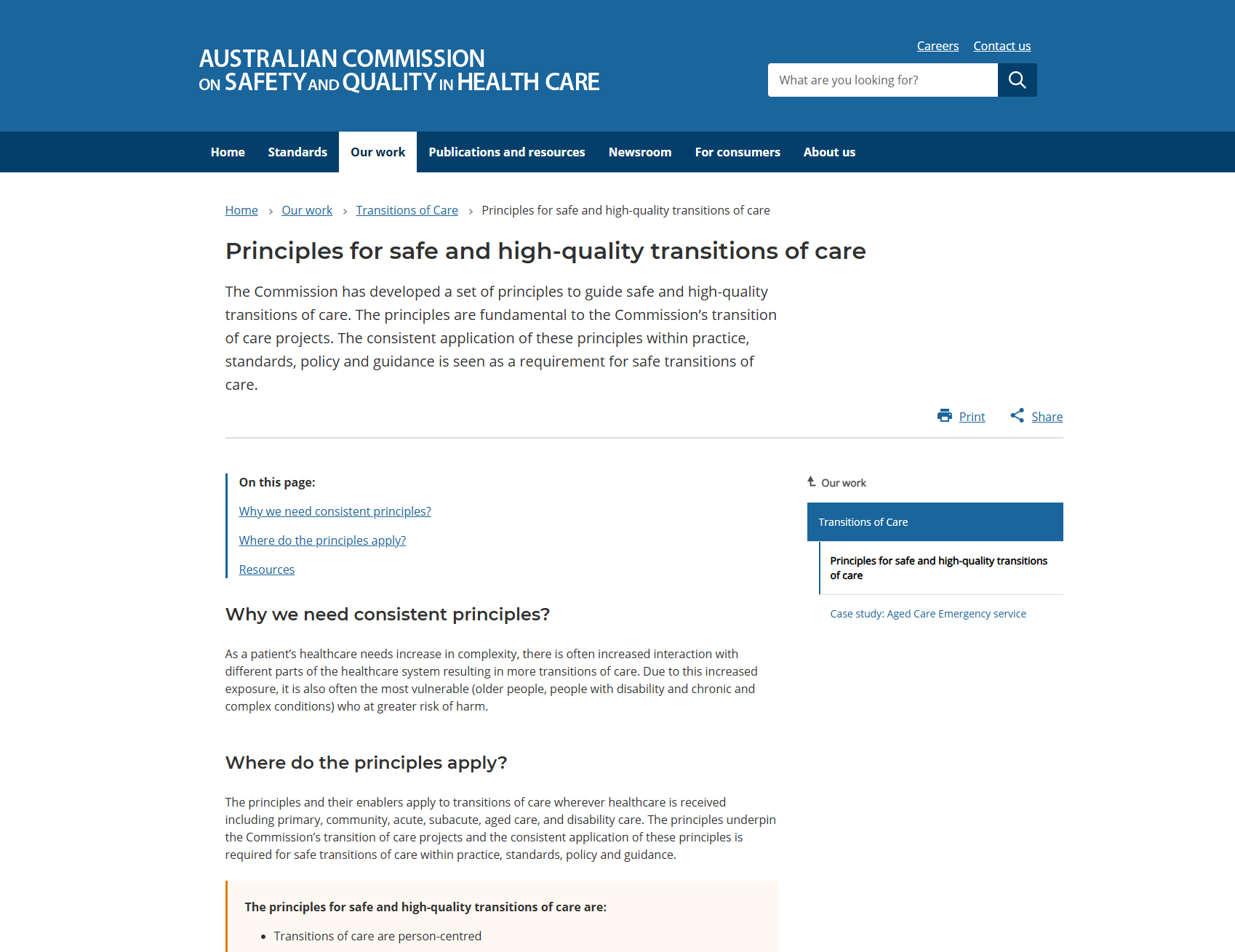
Principles for safe and high-quality transitions of care
This resource outlines essential principles to support safe and high-quality transitions of care for people across healthcare settings, including aged care. It emphasises person-centred approaches, multidisciplinary collaboration, secure record systems, and continuity of care, aiming to minimise risks during care transitions for vulnerable populations.
This resource may refer to information that will be updated from 1 November 2025 to align with the new Aged Care Act and Quality Standards.
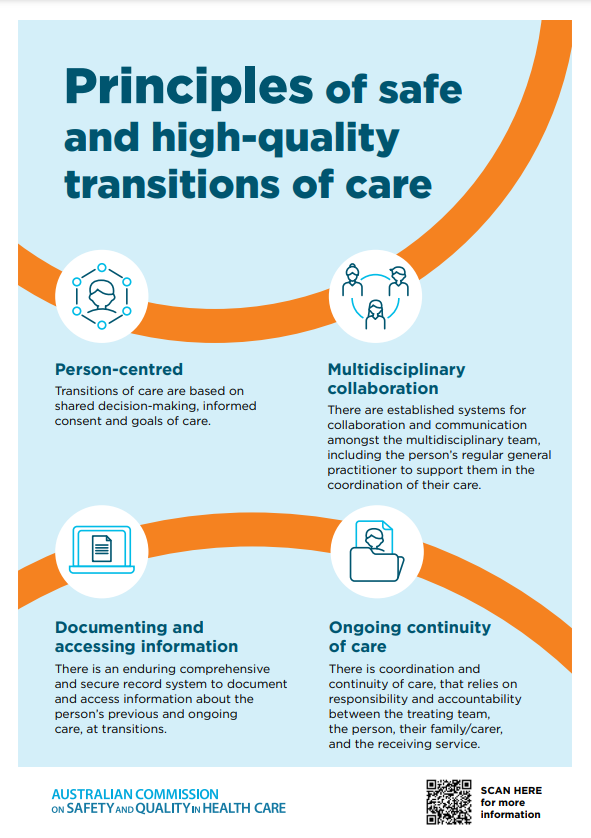
Poster - Principles of safe and high-quality transitions of care
This resource outlines the principles of safe and high-quality transitions of care. It highlights the importance of person-centred care, multidisciplinary collaboration, and clear communication between providers. It ensures coordination, accountability, and secure documentation to support continuity of care when transferring people between care settings. This resource may refer to information that will be updated from 1 November 2025 to align with the new Aged Care Act and Quality Standards.
National Consensus Statement - Essential elements for recognising and responding to acute physical deterioration
This consensus statement outlines essential elements for recognising and responding to acute physiological deterioration in healthcare settings. It covers clinical processes like vital signs monitoring, diagnosis, and rapid response systems, as well as organisational aspects such as leadership, education, and evaluation. It provides generic information that can be applied to the aged care setting.
This resource may refer to information that will be updated from 1 November 2025 to align with the new Aged Care Act and Quality Standards.
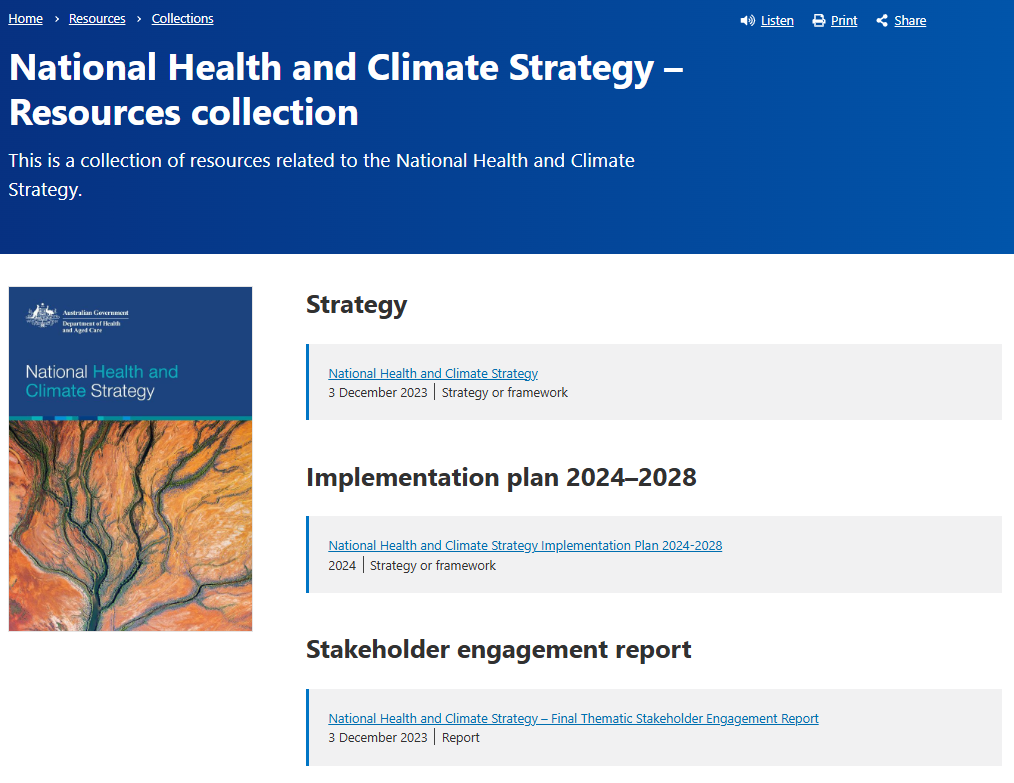
National Health and Climate Strategy – Resources collection
This is a collection of resources related to the National Health and Climate Strategy. The collection includes the strategy, implementation plan 2024-2028, stakeholder engagement report, governance information and publications.
This resource may refer to information that will be updated from 1 November 2025 to align with the new Aged Care Act and Quality Standards.
National Safety and Quality Health Service Standards (second edition)
This resource outlines the second edition of the National Safety and Quality Health Service (NSQHS) Standards. It aims to protect people from harm and improve healthcare quality. The 8 standards cover areas like clinical governance, infection control, and medication safety, supporting aged care providers in meeting safety and quality expectations.
This resource may refer to information that will be updated from 1 November 2025 to align with the new Aged Care Act and Quality Standards.
Governing for Reform in Aged Care Program
This resource outlines the Governing for Reform in Aged Care Program, designed to strengthen corporate and clinical governance capabilities for aged care leaders. It provides tools, online learning modules, webinars, and podcasts to support governance improvement and help leaders engage in reform efforts.
This resource may refer to information that will be updated from 1 November 2025 to align with the new Aged Care Act and Quality Standards.
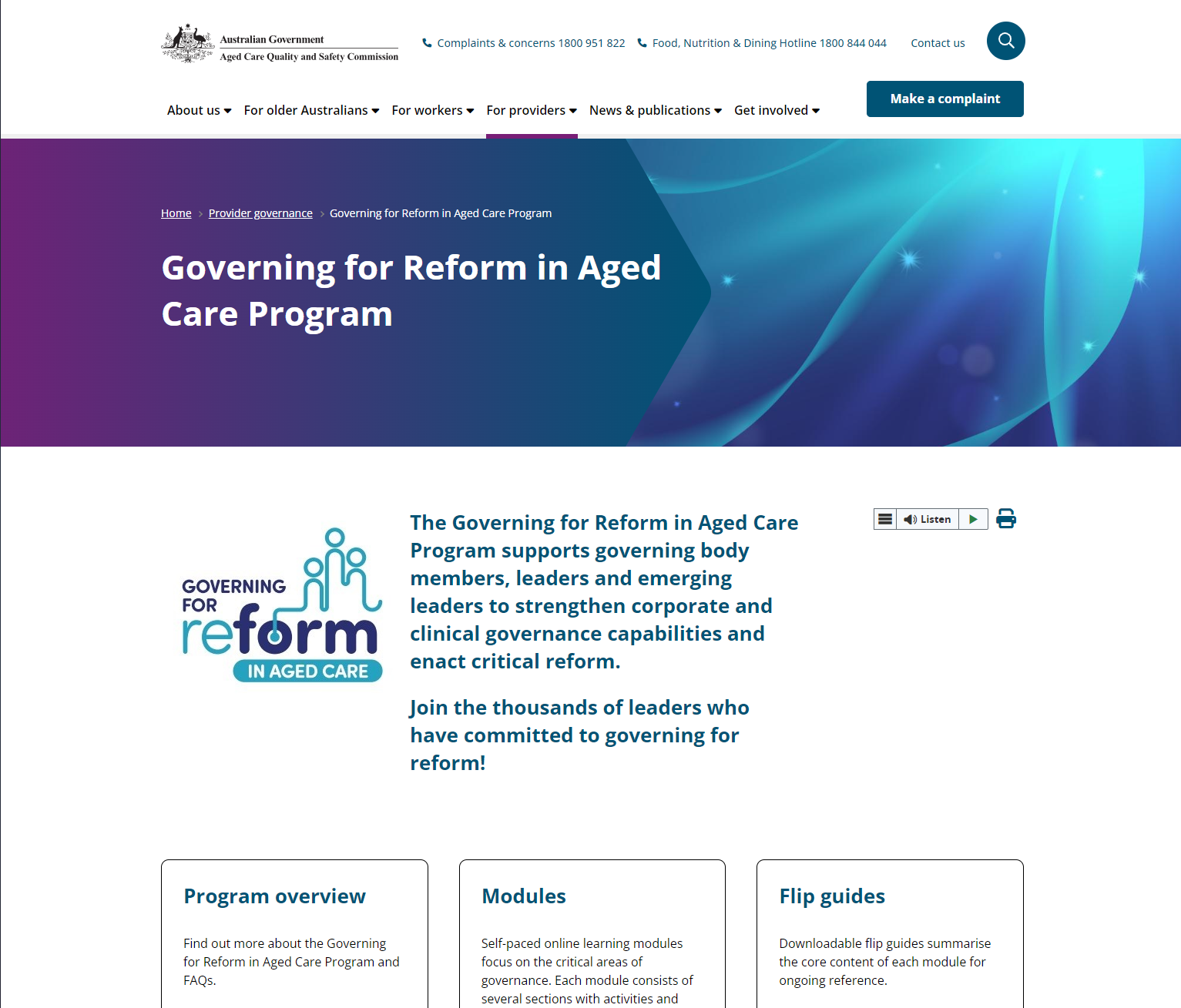
Support at Home program handbook
This resource outlines the design and key components of the Support at Home program, effective from 1 November 2025. It provides guidance for aged care providers on service delivery, budgeting, and assessment processes, helping older people remain independent at home. It also details regulatory requirements and transition from existing programs.
This resource may refer to information that will be updated from 1 November 2025 to align with the new Aged Care Act and Quality Standards.
Managing emergency situations
This resource outlines strategies for managing emergency situations, focusing on risk mitigation, preparedness, response, and recovery. It includes guidelines on emergency planning, crisis leadership, and community engagement, emphasising coordinated efforts across various sectors to handle natural or human-caused disasters.
Guidance and requirements may differ across states and territories. Users are responsible for considering their individual circumstances and specific state-based regulations and legislation.
National Model Clinical Governance Framework
This framework provides a consistent national approach to clinical governance in healthcare, focusing on governance structures, leadership, culture, safety and quality improvement systems, clinical performance, care environment, and consumer partnerships. It supports healthcare organisations in developing systems to ensure accountability, safety, quality of care, and continuous improvement, following the NSQHS Standards.
This resource may refer to information that will be updated from 1 November 2025 to align with the new Aged Care Act and Quality Standards.