The Quality Standards Resource Centre helps extend understanding of the strengthened Aged Care Quality Standards, which take effect from 1 November 2025. The Resource Centre will be updated to reflect key changes made to the draft strengthened Standards. You can search for resources by using keywords, or filtering by standard, outcome, audience and theme. Before using the Resource Centre, please read the terms of use.
Improving palliative care - Toolkit for health professionals
This toolkit supports health professionals in delivering palliative care for people with intellectual disabilities by providing resources, guidance on communication, and tailored care strategies. It aims to enhance service quality through understanding specific needs and collaborative care planning.
This resource was developed by a state/territory government or organisation and therefore its applicability and usefulness may be limited.
Palliative Aged Care Outcomes Program - Resources
This resource offers tools and guidelines for palliative care outcome measurement, including assessment scales for symptom severity, frailty, and daily living activities. It supports clinicians and managers in implementing standardised data collection to improve care quality in aged care settings.
This resource was developed by a state/territory government or organisation and therefore its applicability and usefulness may be limited.
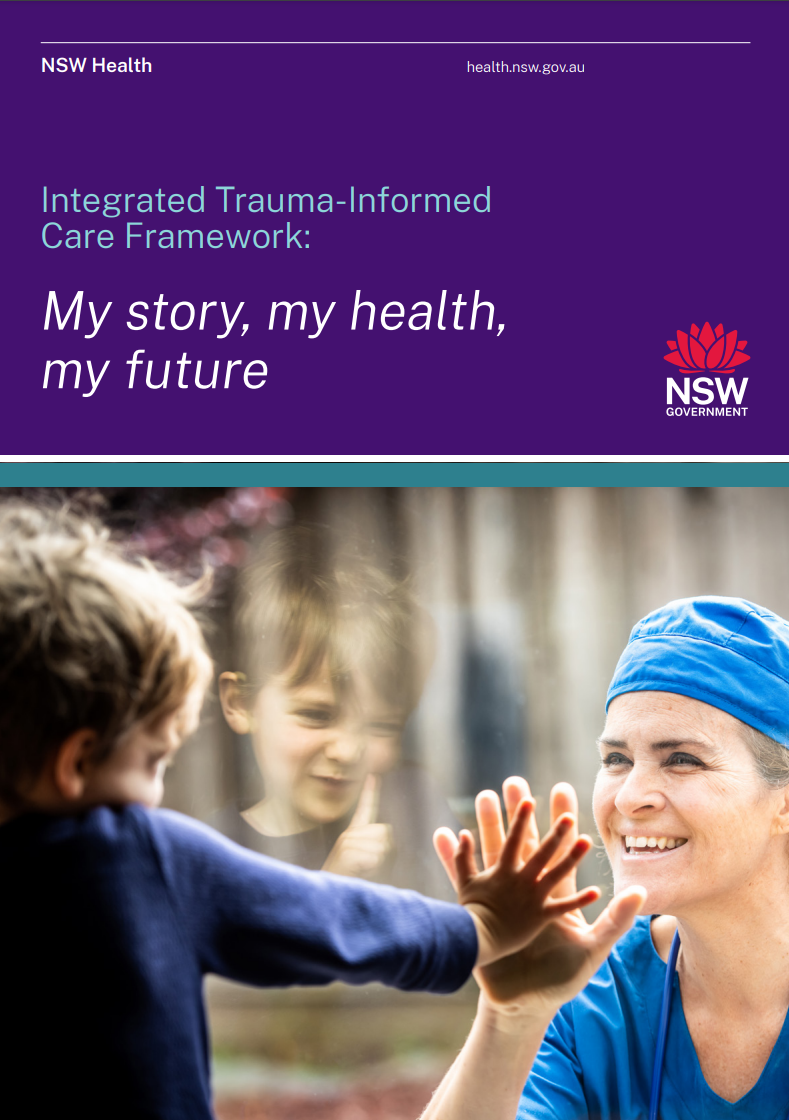
Integrated Trauma-Informed Care Framework: My story, my health, my future
This framework integrates trauma-informed care across NSW Health services, enhancing support for clients, families, and carers by guiding staff in trauma-sensitive practices and systemic change. It focuses on preventing re-traumatisation and fostering healing, especially for vulnerable populations.
This resource was developed by a state/territory government or organisation and therefore its applicability and usefulness may be limited.
Dementia-friendly environments - Staff education and support
This resource offers guidance for staff support in dementia care, covering person-centred approaches, workplace culture change, training, and physical environment improvements. It includes strategies to enhance job satisfaction, staff wellbeing, and dementia-friendly care practices.
This resource was developed by a state/territory government or organisation and therefore its applicability and usefulness may be limited.
Dementia-friendly environments - Personal enjoyment
This resource provides guidance on fostering personal enjoyment for people with dementia, encouraging meaningful activities based on life history and familiar roles. It includes ideas for sensory engagement, physical activity, and social connection in home-like settings.
This resource was developed by a state/territory government or organisation and therefore its applicability and usefulness may be limited.
Dementia-friendly environments - Interior design
This resource provides guidance on interior design elements that create a familiar, practical, and dementia-friendly environment. It includes strategies for lighting, colour, furniture, and surfaces to enhance safety, wayfinding, and comfort in care settings.
This resource was developed by a state/territory government or organisation and therefore its applicability and usefulness may be limited.
Assistive technology
This resource outlines standard infection control precautions, developed for VIC, including practices like hand hygiene, PPE use, and safe disposal of sharps. It is applicable across healthcare settings.
This resource was developed by a state/territory government or organisation, and therefore its applicability and usefulness may be limited.
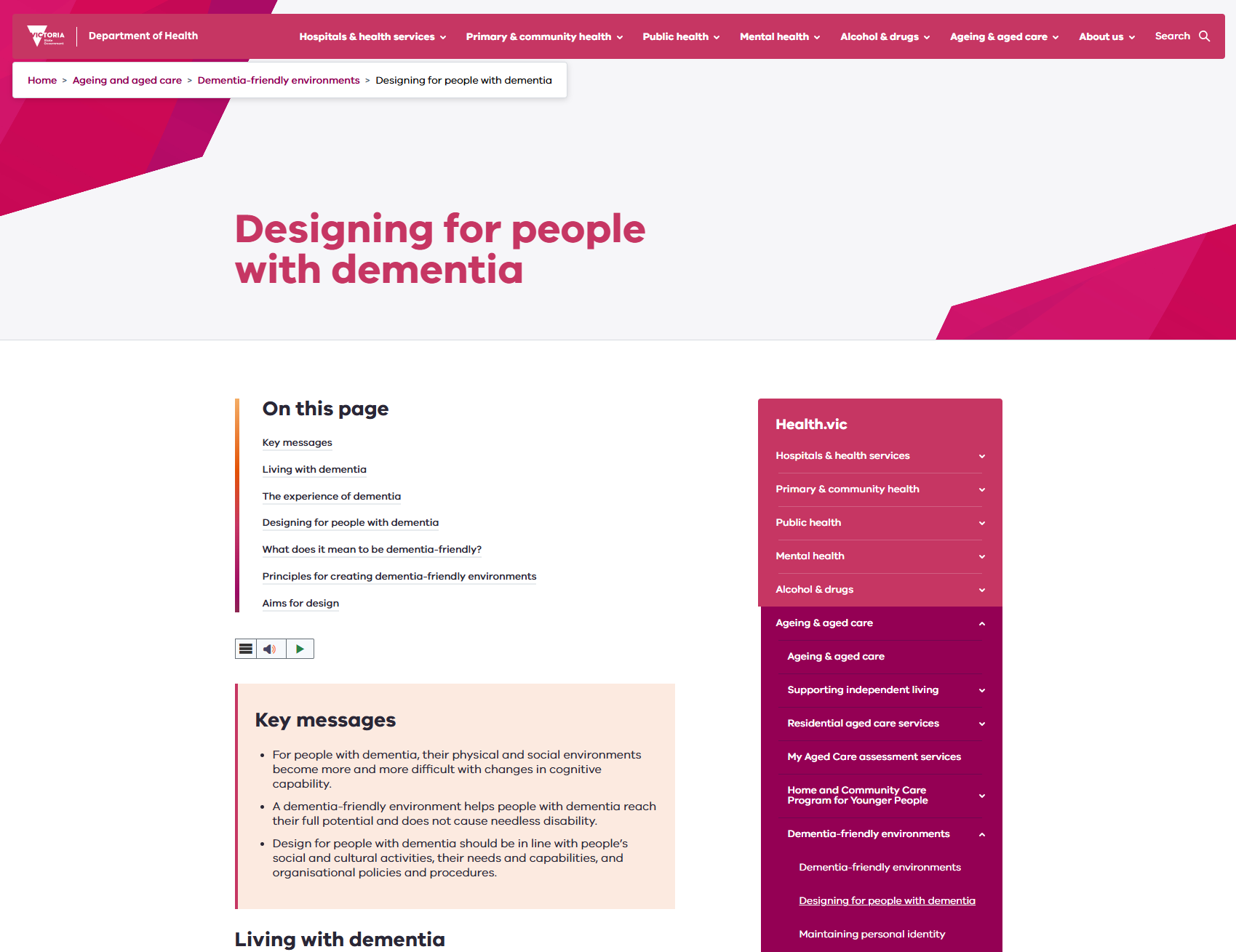
Dementia-friendly environments - Designing for people with dementia
This resource provides design principles for creating dementia-friendly environments that support comfort, independence, and a sense of home. It includes guidance on optimising lighting, safety, social connection, and personalised spaces to enhance quality of life.
This resource was developed by a state/territory government or organisation and therefore its applicability and usefulness may be limited.
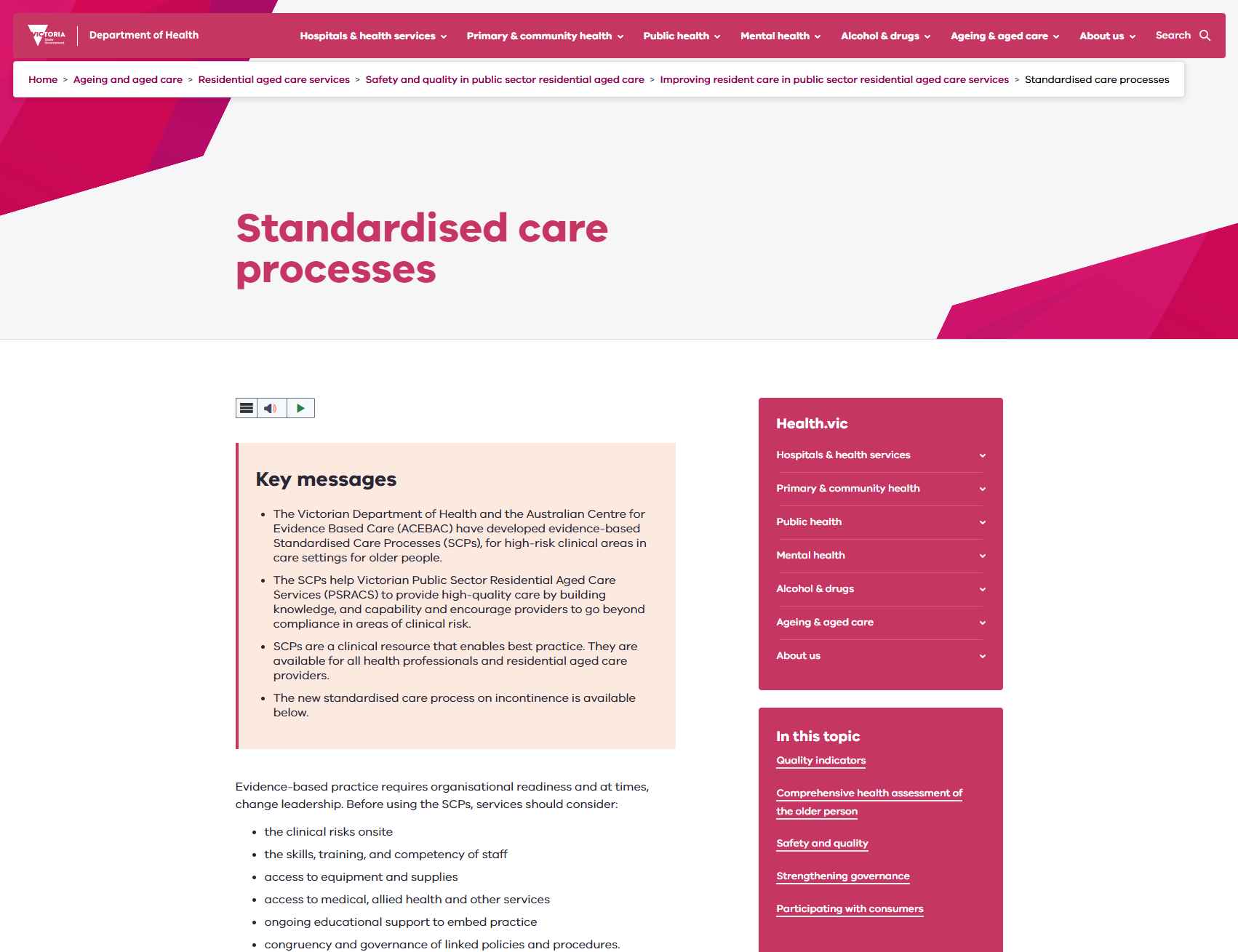
Standardised care processes
This resource offers evidence-based standardised care processes for aged care providers, covering high-risk clinical areas such as falls, pain, incontinence, and dehydration. It provides structured guidelines to support best practices, ensuring consistent and safe care for older people in residential settings.
This resource was developed by a state/territory government or organisation and therefore its applicability and usefulness may be limited.
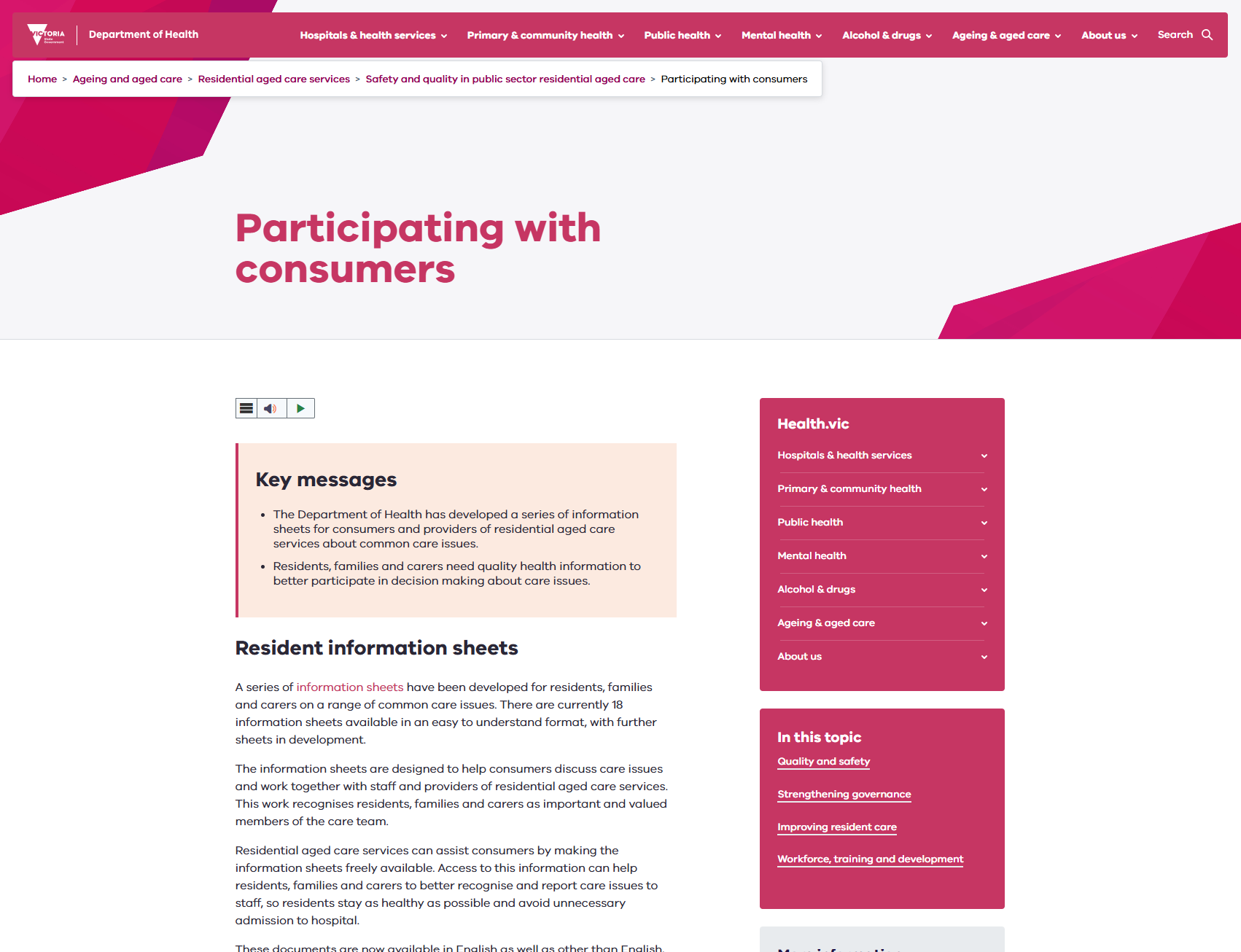
Participating with consumers
This resource provides information sheets for residents, families, and carers to support decision-making in residential aged care. Covering topics such as pain management, falls, and medicines, it promotes health literacy, enabling consumers to engage in discussions and report care issues effectively.
This resource was developed by a state/territory government or organisation and therefore its applicability and usefulness may be limited.
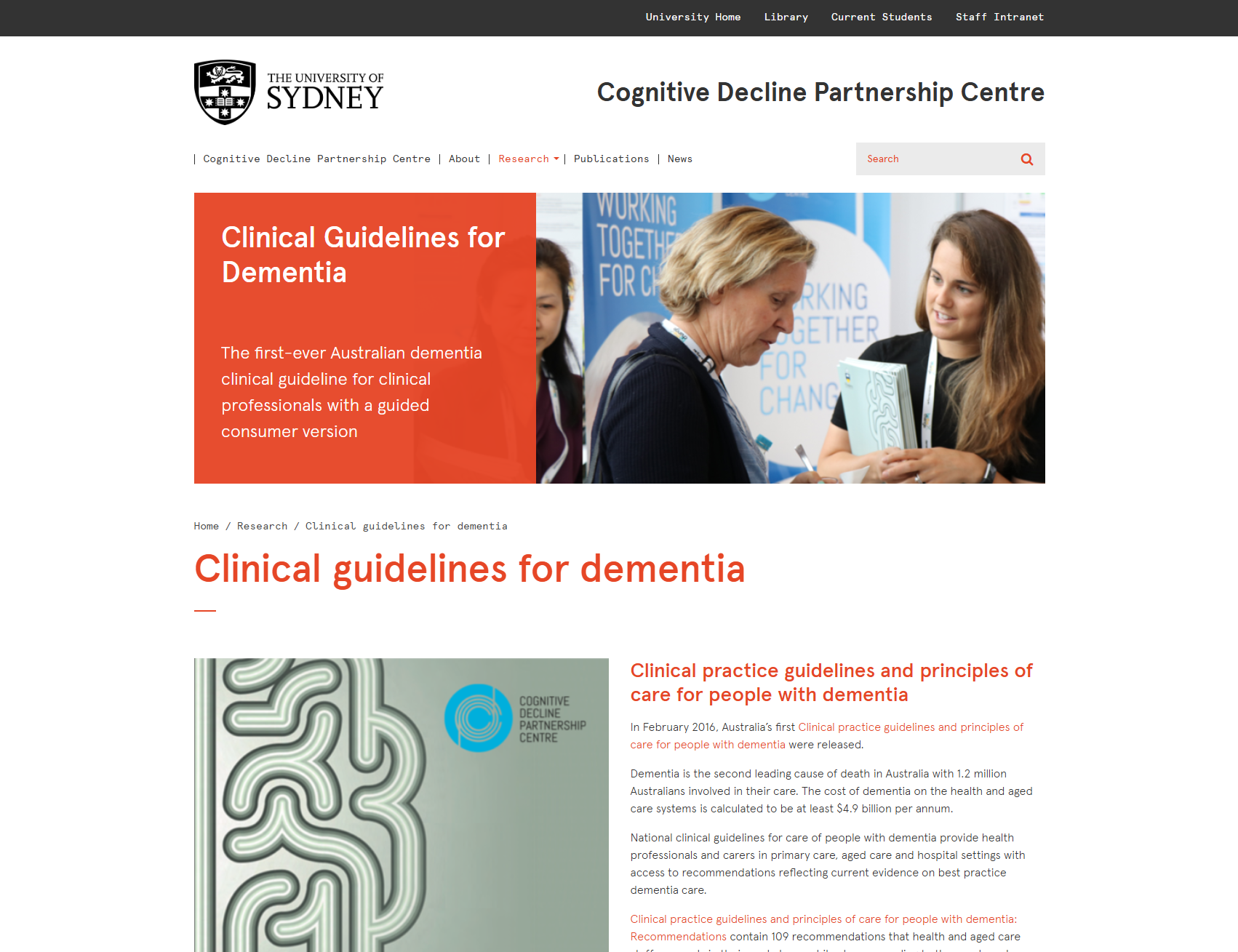
Clinical guidelines for dementia
This resource provides clinical practice guidelines and care principles for dementia, offering evidence-based recommendations for healthcare and aged care professionals. It includes a consumer companion guide and resources for training and implementation to improve dementia care across settings.
This resource was developed by a state/territory government or organisation and therefore its applicability and usefulness may be limited.
My healthy home: home health factsheet series
This resource offers accessible health information for Aboriginal and Torres Strait Islander people on preventing illness in the home. It includes room-based fact sheets with actions to improve environmental health, available as individual sheets or a workbook. This resource includes state-specific information and therefore its applicability and usefulness may be limited.
Bedrooms and privacy
This resource offers guidance on maintaining personal identity for people with dementia by fostering respect, independence, and communication. It suggests environmental and social modifications to enhance dignity, such as personalising spaces, supporting mobility, and addressing unmet needs.
This resource was developed by a state/territory government or organisation, and therefore its applicability and usefulness may be limited.
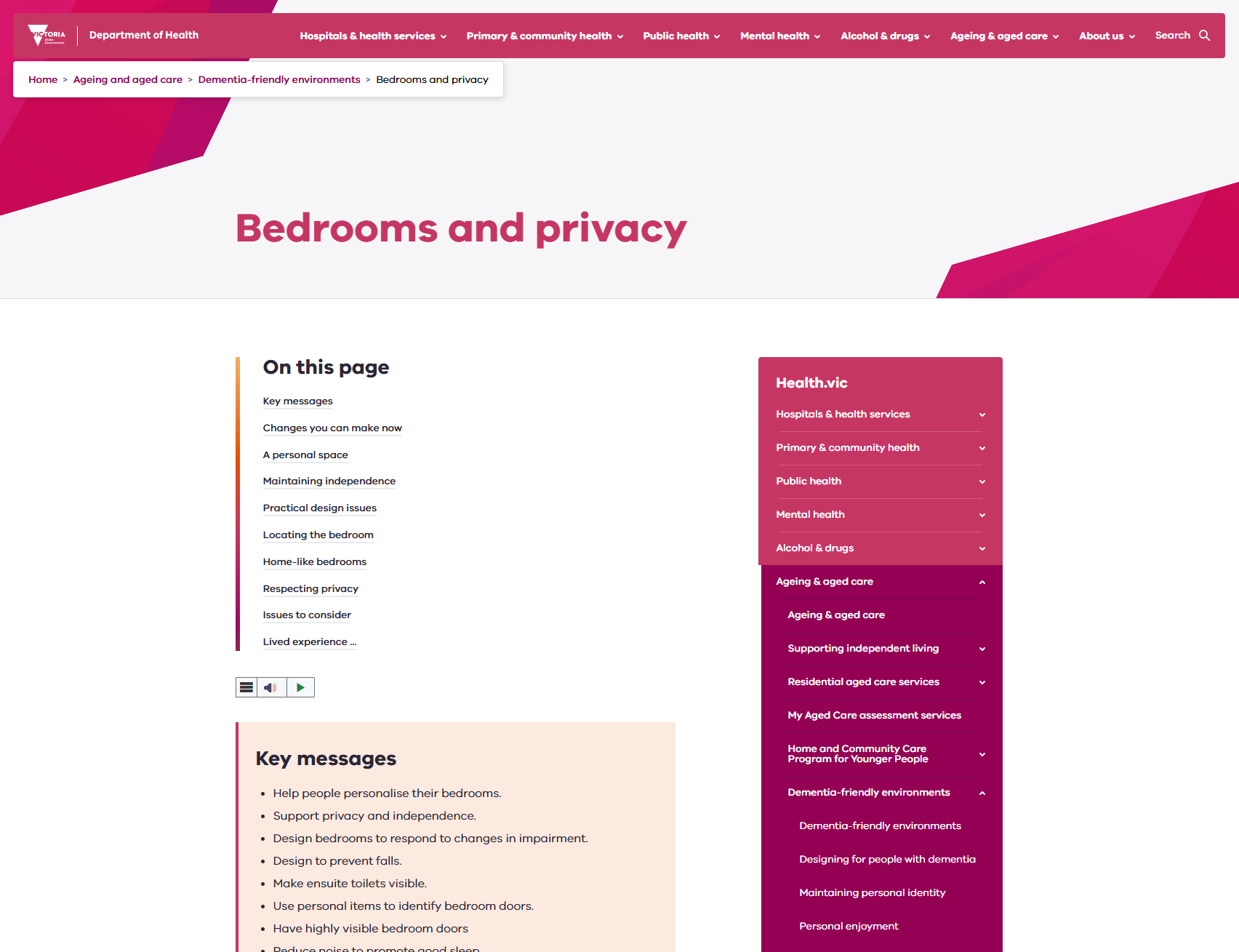
Program of Experience in the Palliative Approach (PEPA)
This page provides resources about palliative care for health professionals. The education resources support placement and workshop learning, but can be used for self-directed learning.
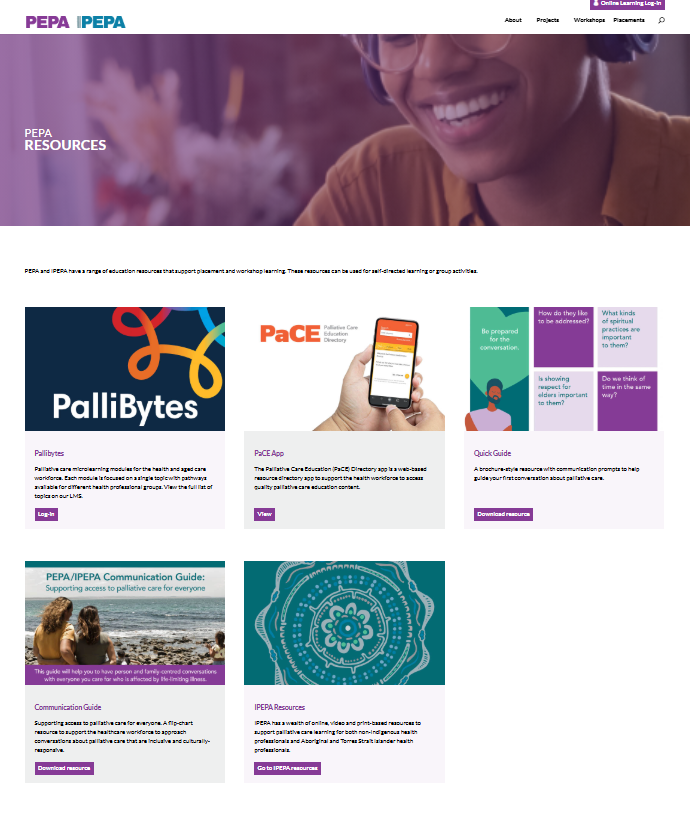
ELDAC Dementia Toolkit
This resource provides a toolkit for palliative care and end-of-life planning for people with dementia. It includes practical advice, resources, and evidence-based guidance to support health and aged care workers in delivering quality care. The toolkit covers assessment, care planning, symptom management, and communication with patients and families.
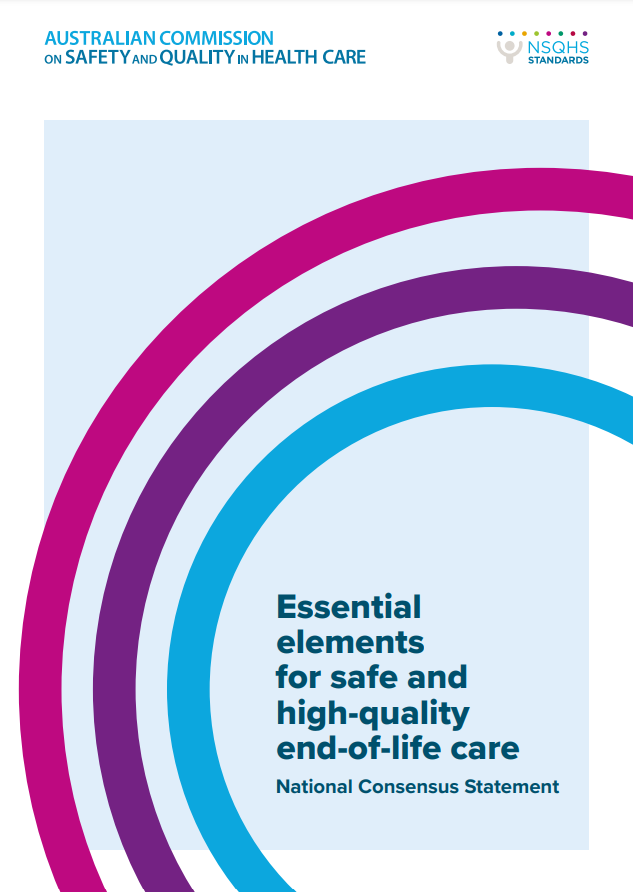
National Consensus Statement: Essential elements for safe and high-quality end-of-life care
This resource outlines the National Consensus Statement on essential elements for safe and high-quality end-of-life care in Australia. It provides guiding principles, care processes, and organisational processes, focusing on person-centred communication, multidisciplinary collaboration, and culturally appropriate care. The statement is designed for healthcare workers, service executives, and policy makers to enhance end-of-life care delivery.
RACGP aged care clinical guide (Silver Book) - Part B - Collaboration and multidisciplinary team-based care
This guide focuses on collaboration and multidisciplinary care for older adults, particularly in residential aged care. It outlines the benefits of team-based care, effective team structures, shared goals, defined roles, building trust, communication, and measurable processes to improve health outcomes. It provides practical tips for effective teamwork and highlights the importance of coordinating care among various healthcare professionals.
Dementia and oral health
This resource provides information on the impact of dementia on oral health, outlining key issues such as increased risk of poor oral health, the effects of medications, and the importance of maintaining dental care routines. It offers practical tips for toothbrushing, denture care, and dental visits to support those living with dementia.
Physical activity guidelines for older people
This resource provides physical activity guidelines for older people, highlighting the benefits of staying active. It recommends 30 minutes of moderate-intensity activity daily, including strength, flexibility, balance, and cardiovascular exercises. The document also provides tips for safely starting and maintaining an exercise routine to support healthy ageing.
Translating and Interpreting Service (TIS National)
The Translating and Interpreting Service (TIS National) provides interpreting support for people with limited English proficiency and agencies requiring assistance to communicate with non-English-speaking clients. Services include telephone, on-site, and video interpreting, with options for both government and fee-paying clients across Australia.