The Quality Standards Resource Centre helps extend understanding of the strengthened Aged Care Quality Standards, which take effect from 1 November 2025. The Resource Centre will be updated to reflect key changes made to the draft strengthened Standards. You can search for resources by using keywords, or filtering by standard, outcome, audience and theme. Before using the Resource Centre, please read the terms of use.
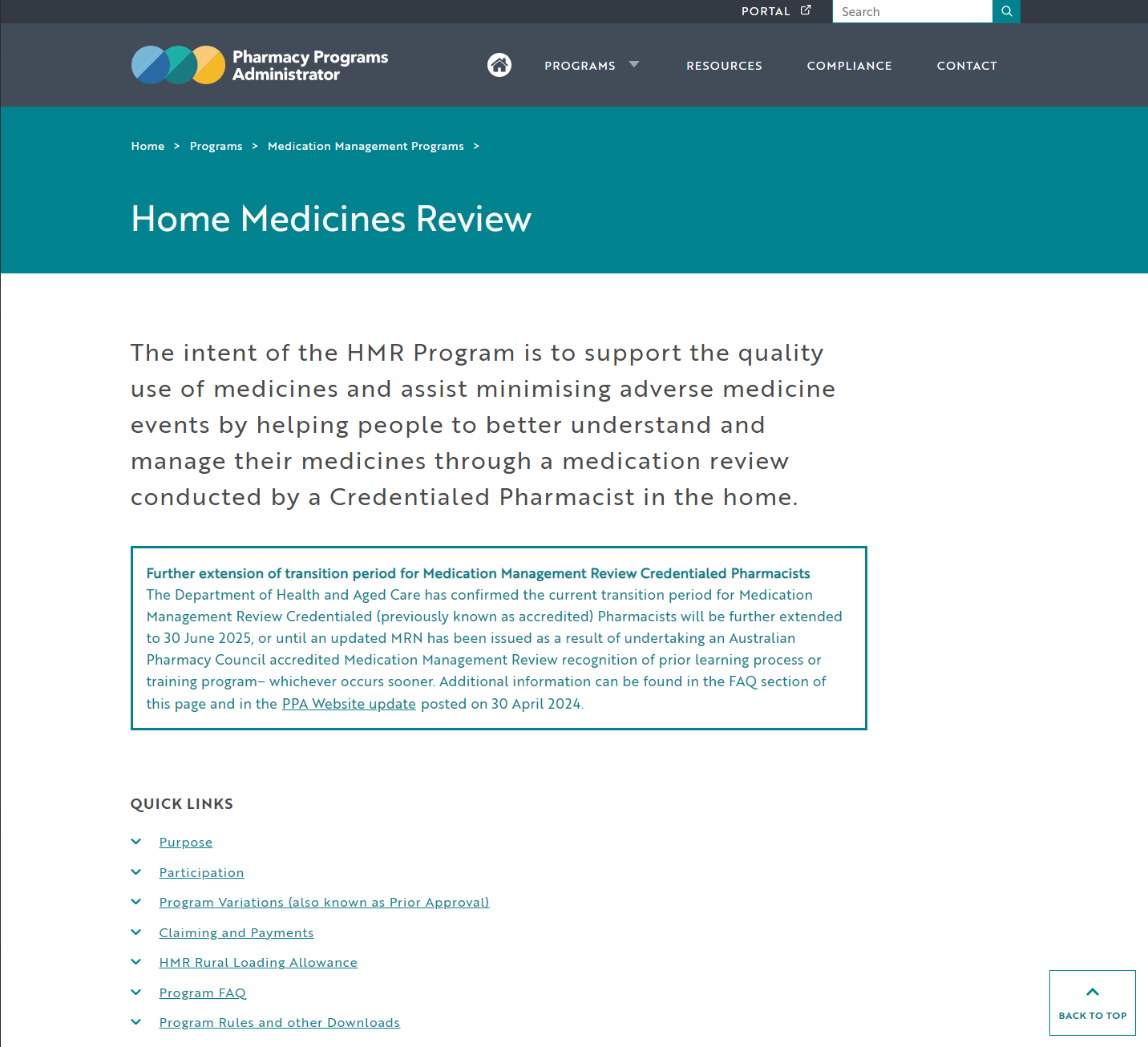
Home Medicines Review
This resource provides information on the Home Medicines Review (HMR) program, designed to support the safe and effective use of medicines for patients at home. It outlines the process, eligibility criteria, program variations, claiming and payments, rural loading allowance, and guidance for pharmacists and healthcare providers involved in medication reviews
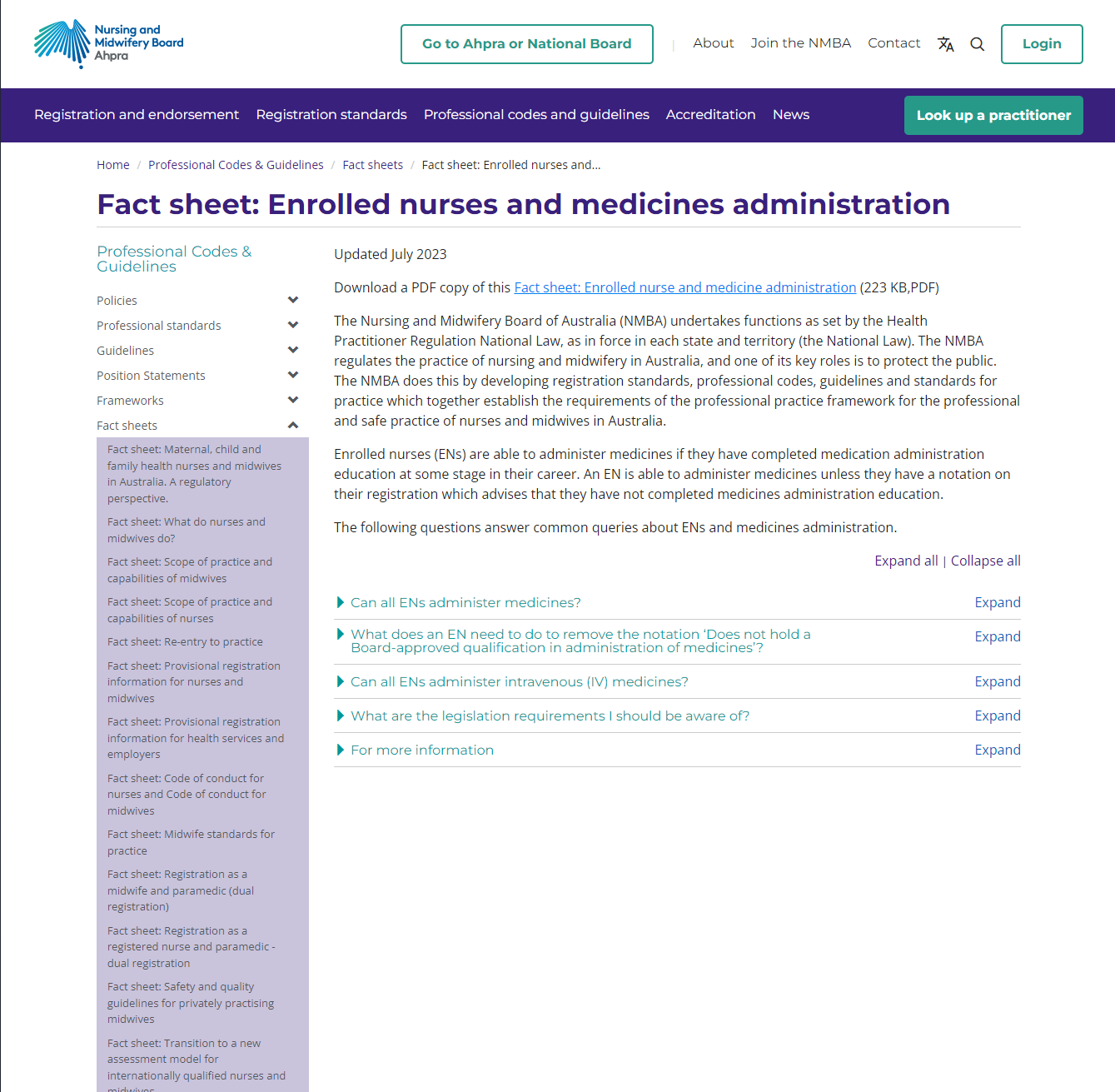
Fact sheet - Enrolled nurses and medicines administration
This fact sheet outlines the requirements for enrolled nurses (ENs) in Australia regarding the administration of medicines. It details the education and qualifications needed to administer medications, the specific conditions under which ENs may administer intravenous medicines, and guidance on removing any limitations from their registration. The document also emphasises adherence to legislation, policies, and safe practices.
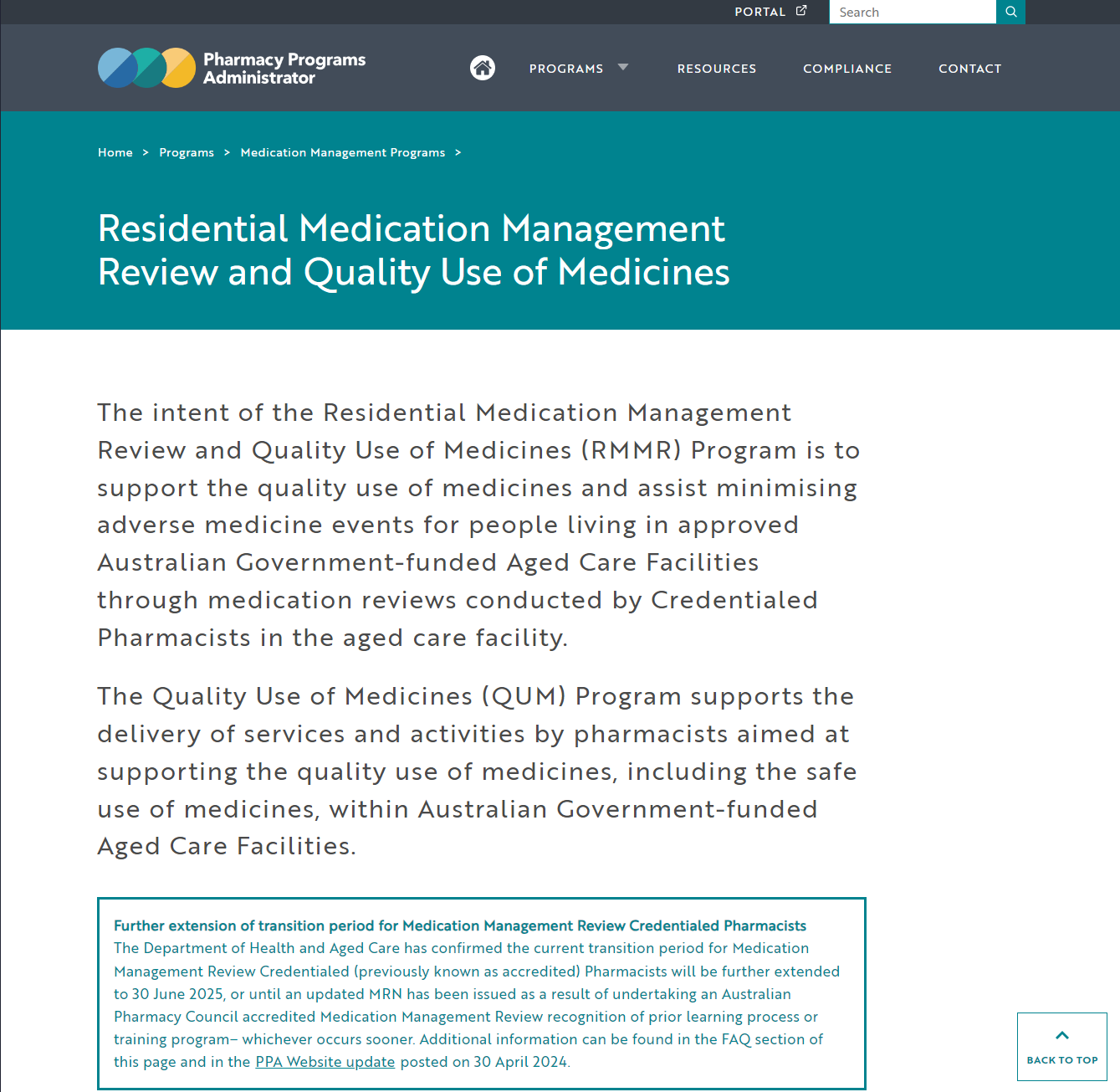
Residential Medication Management Review and Quality Use of Medicines
This page provides information on the intent of the Residential Medication Management Review and Quality Use of Medicines (RMMR) Program. It outlines its purpose, participation requirements, claiming and payment processes, frequently asked questions, program rules, and extra available downloads.
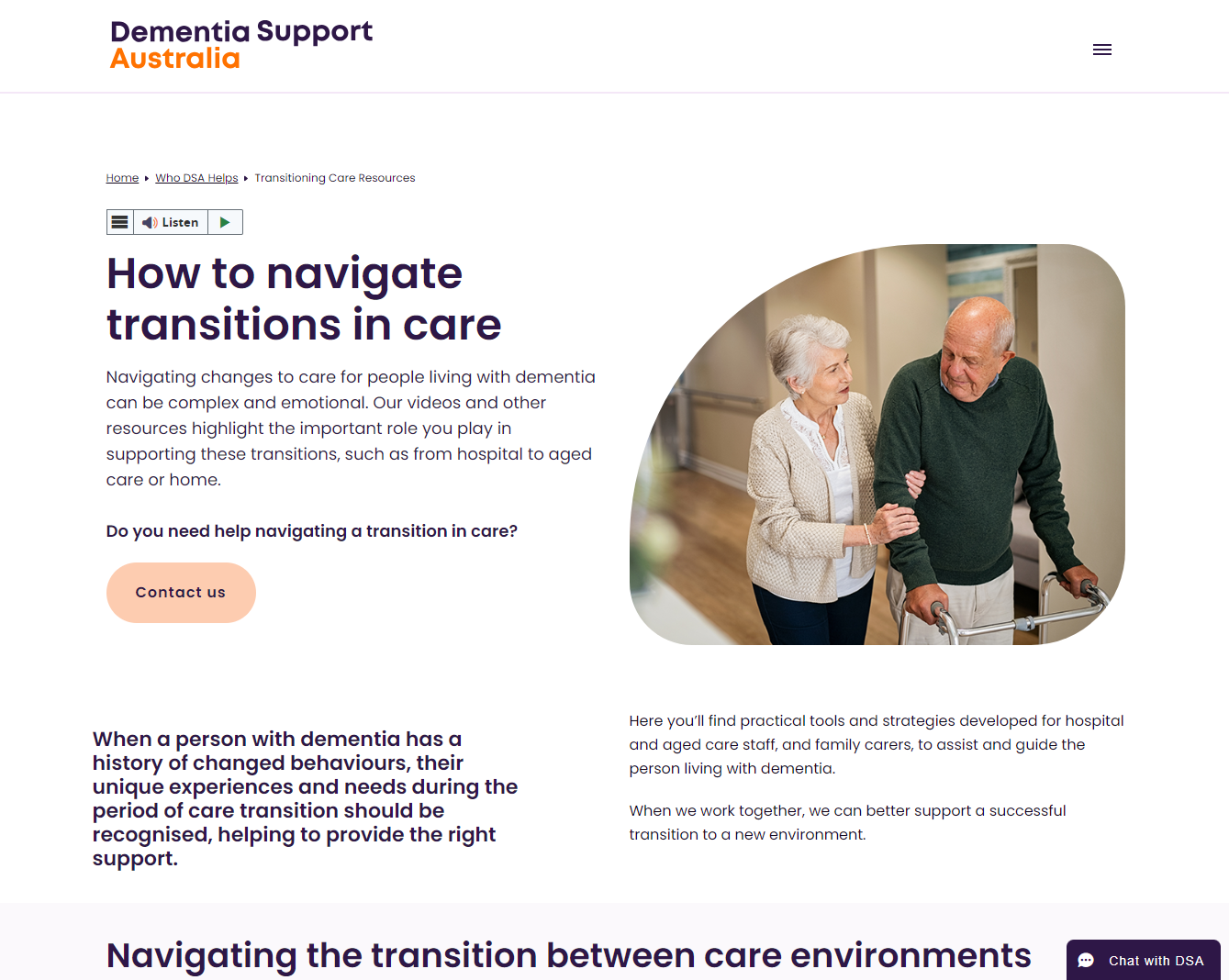
How to navigate transitions in care
This resource offers tools and strategies for navigating care transitions for people living with dementia. It provides support to hospital, aged care staff, and family carers, ensuring that the unique needs of those with dementia are met during transitions, such as moving from hospital to aged care or home.
Better use of medications in aged care
This discussion paper explores strategies to improve medication management in aged care, including reducing inappropriate prescriptions and promoting non-pharmacological interventions. It reviews current interventions' effectiveness, highlights the use of psychotropic medications, and identifies areas for improving practices through multifaceted and multidisciplinary approaches for better resident outcomes and healthcare quality.
This resource may refer to information that will be updated from 1 November 2025 to align with the new Aged Care Act and Quality Standards.
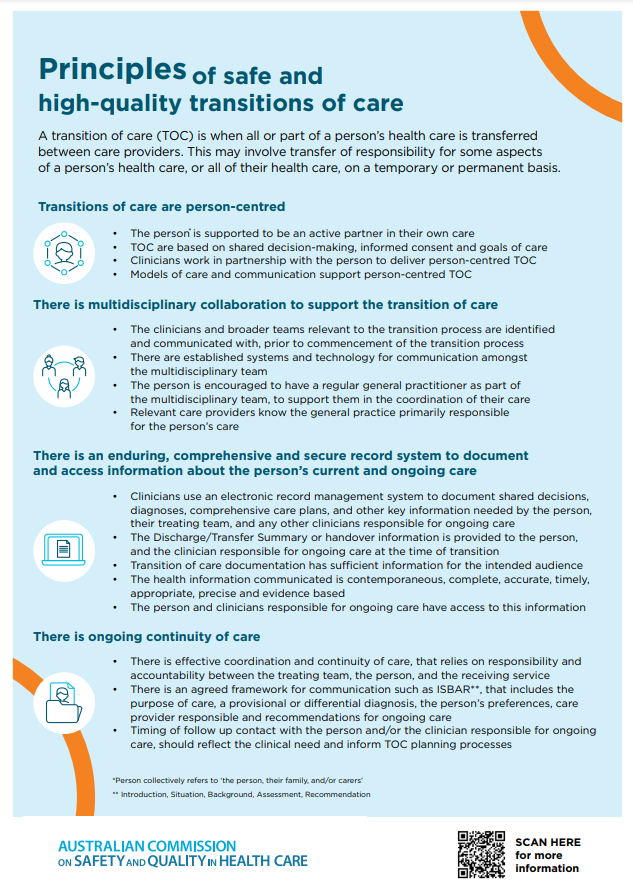
Fact sheet - Principles of safe and high-quality transitions of care
This resource outlines the principles for safe and high-quality transitions of care, emphasising person-centred care, multidisciplinary collaboration, and effective communication. It highlights the need for secure documentation, continuity of care, and coordination among healthcare teams to make sure smooth transitions and minimise risks during transfers between care providers.
This resource may refer to information that will be updated from 1 November 2025 to align with the new Aged Care Act and Quality Standards.
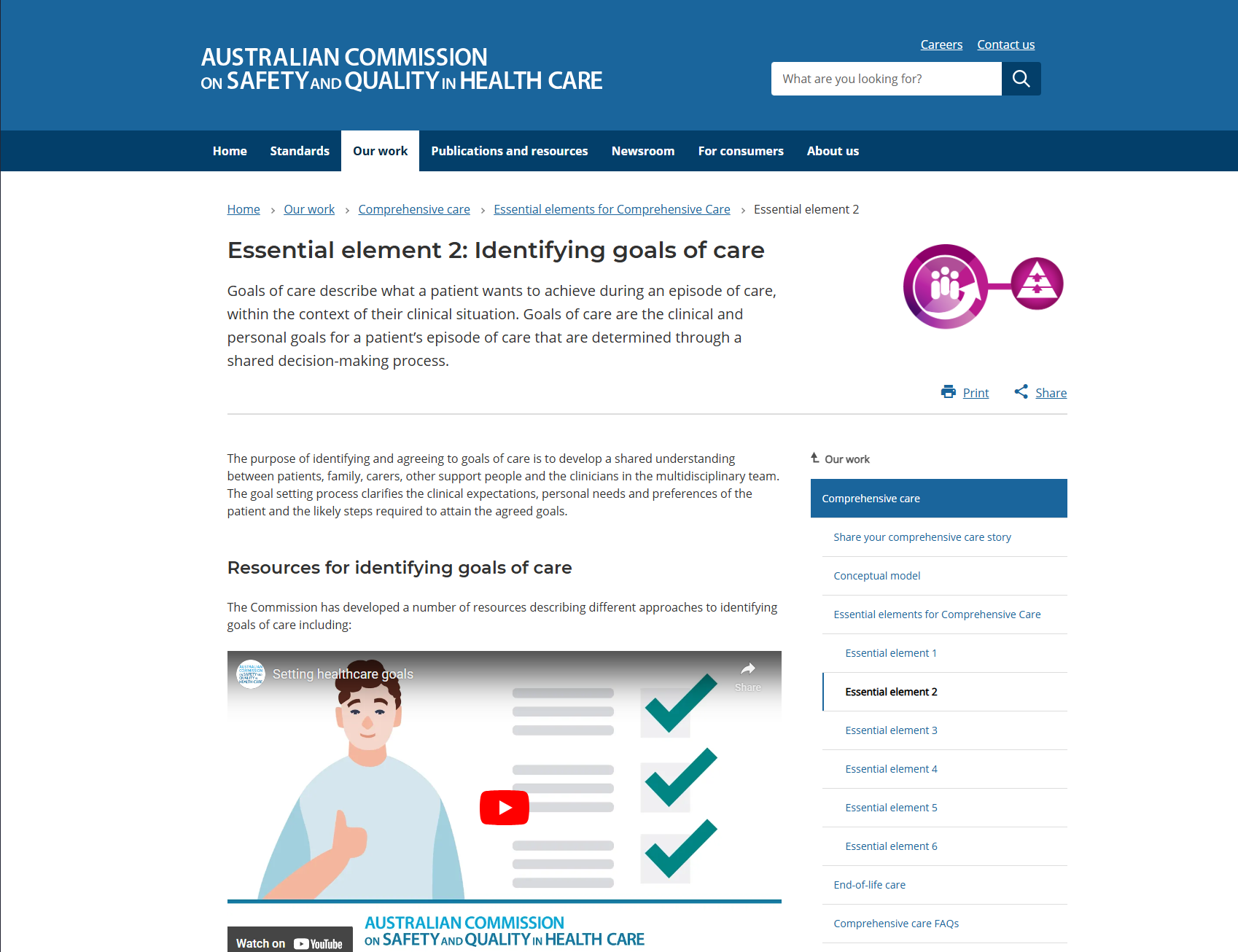
Essential element 2: Identifying goals of care
This resource guides providers in identifying and setting goals of care with patients through shared decision-making. It fosters collaboration between patients, family, and healthcare teams to clarify expectations and establish personalised clinical and personal care objectives.
This resource may apply to healthcare contexts outside of aged care. Please consider the applicability of this resource to your care setting. This resource may refer to information that will be updated from 1 November 2025 to align with the new Aged Care Act and Quality Standards.
Frequently asked questions about consent
This fact sheet covers the frequently asked questions about consent in aged care.
 Frequently asked questions about consent (PDF 433.26 KB)
Communication at clinical handover
This resource focuses on structured clinical handover processes to improve communication during patient care transitions. It highlights the importance of standardising handover procedures to make sure relevant information is effectively communicated, reducing errors and enhancing patient safety, especially during care transfers in healthcare settings, including aged care.
This resource may refer to information that will be updated from 1 November 2025 to align with the new Aged Care Act and Quality Standards.
Communicating for Safety
This resource provides tools and guidance on improving clinical communication to enhance patient safety. It focuses on key communication touchpoints, such as handovers, decision-making, and care transitions. Designed to support healthcare providers, it offers practical strategies to reduce errors and improve outcomes in aged care and other healthcare settings.
This resource may refer to information that will be updated from 1 November 2025 to align with the new Aged Care Act and Quality Standards.
Guide for consumers - Psychotropic Medicines in Cognitive Disability or Impairment Clinical Care Standard
This resource is a guide for consumers about the Australian Commission on Safety and Quality in Health Care's Psychotropic Medicines in Cognitive Disability or Impairment Clinical Care Standard. The resource includes 8 quality statements about the health care consumers should receive to support the correct use of psychotropic medicines.
This resource may refer to information that will be updated from 1 November 2025 to align with the new Aged Care Act and Quality Standards.
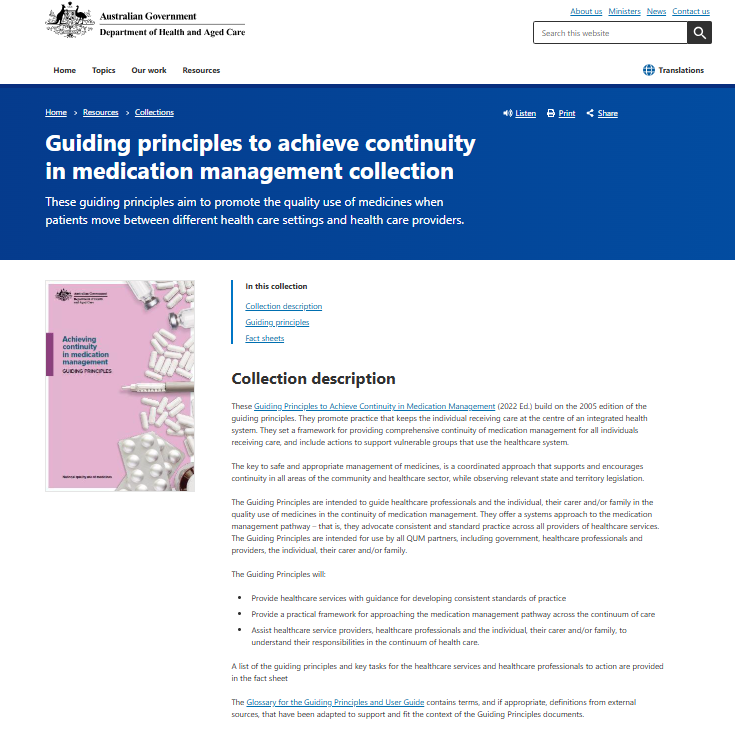
Guiding principles to achieve continuity in medication management collection
This collection of resources is related to the guiding principles for medication management.The guiding principles aim to promote the quality use of medicines when moving between different health care settings and health care providers. The collection includes the guiding principles and the corresponding glossary, user guide and fact sheet. This resource may apply to healthcare contexts outside of aged care.
This resource may refer to information that will be updated from 1 November 2025 to align with the new Aged Care Act and Quality Standards.
Handbook of tools to support medicine management in multimorbidity and polypharmacy
This handbook provides tools to support medicine management in multimorbidity and polypharmacy. The Department of Health and Aged Care commissioned the University of South Australia to develop the handbook.
This resource may refer to information that will be updated from 1 November 2025 to align with the new Aged Care Act and Quality Standards.

Transitioning to Residential Aged Care: Loss and Grief
This resource explores the emotional impact of transitioning into residential aged care, focusing on loss and grief experienced by older people and their families. It highlights the common emotional challenges, such as fear, loss of independence, and guilt, and provides strategies to support emotional well-being during this difficult transition.
This resource may refer to information that will be updated from 1 November 2025 to align with the new Aged Care Act and Quality Standards.
Healthcare Identifiers and the Healthcare Identifier Service
This document explains the Healthcare Identifier Service, a national system for assigning unique healthcare identifiers to individuals, providers, and healthcare organisations. The service aims to improve patient safety, ensure accurate records, and facilitate secure data sharing across health, aged care, and allied health services. It includes privacy measures and public consultation outcomes for potential legislative improvements.
This resource may refer to information that will be updated from 1 November 2025 to align with the new Aged Care Act and Quality Standards.
Transitions of Care
This resource explains transitions of care, when responsibility for a person’s health care is transferred between providers. It covers the risks involved, such as medication errors and readmissions, and offers principles for safe and high-quality transitions across care settings, including aged care, to reduce harm and improve outcomes. This resource may refer to information that will be updated from 1 November 2025 to align with the new Aged Care Act and Quality Standards.
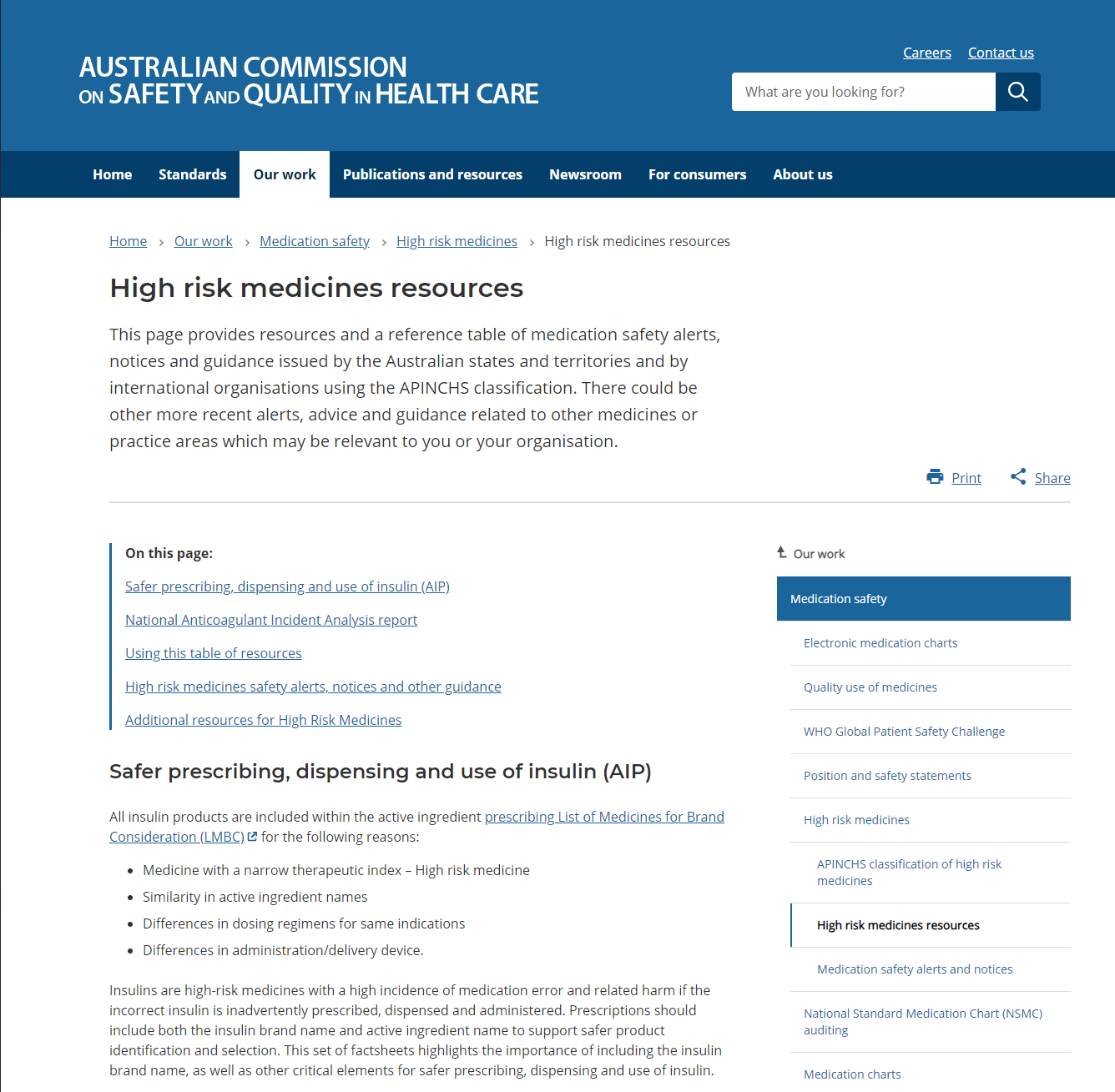
High risk medicines resources
This resource provides guidance on high-risk medicines, including safety alerts, notices, and best practices for safe prescribing, dispensing, and administration. It includes information on insulin and anticoagulant safety, monitoring tools, and best practice recommendations to improve medication safety and reduce harm from high-risk medications across healthcare settings.
This resource may refer to information that will be updated from 1 November 2025 to align with the new Aged Care Act and Quality Standards.
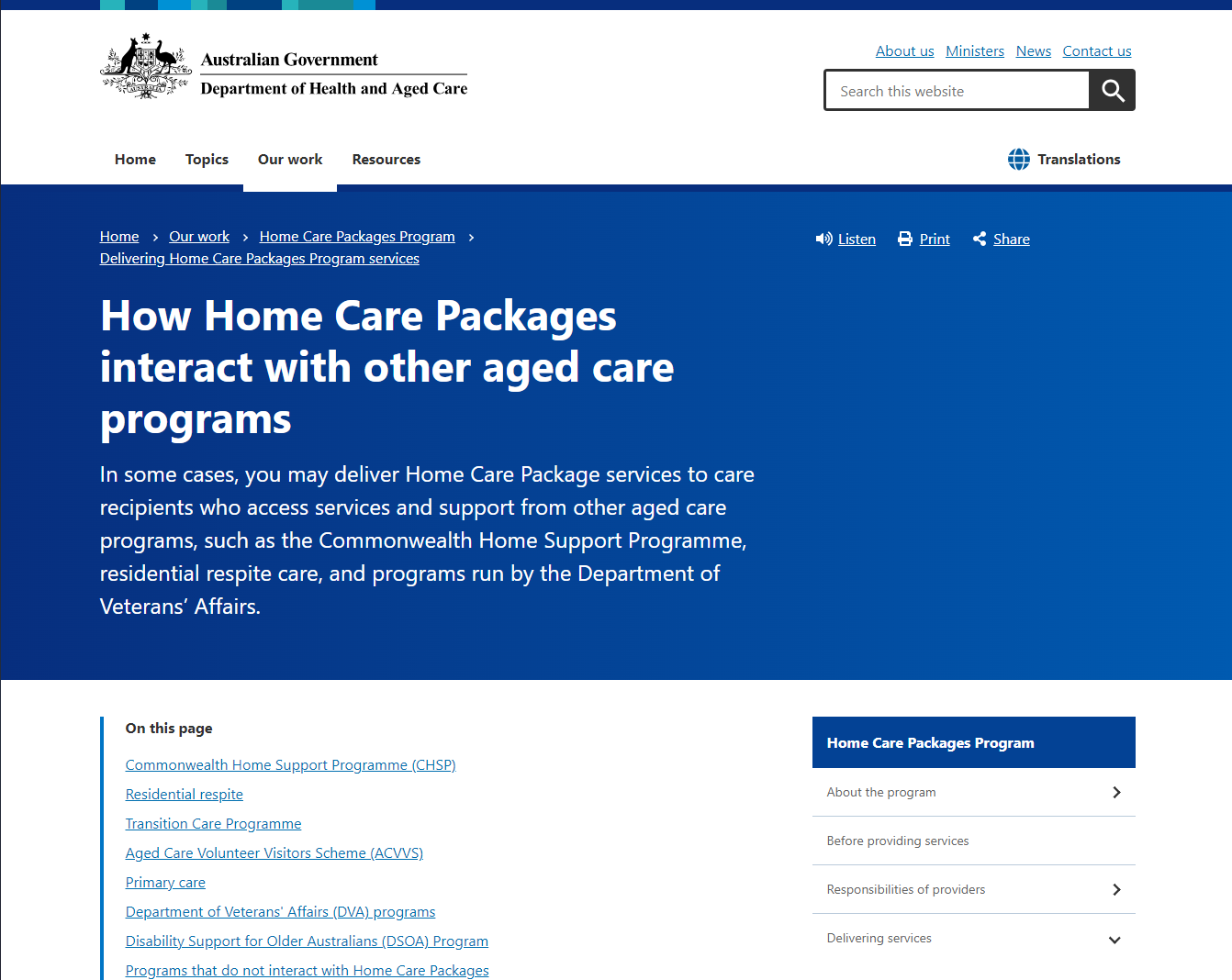
How Home Care Packages interact with other aged care programs
This resource explains how Home Care Packages interact with other aged care programs, such as the Commonwealth Home Support Programme, residential respite care, and the Transition Care Programme. It outlines how to coordinate services to avoid overlaps and provides guidance for accessing multiple programs without service duplication.
This resource may refer to information that will be updated from 1 November 2025 to align with the new Aged Care Act and Quality Standards.
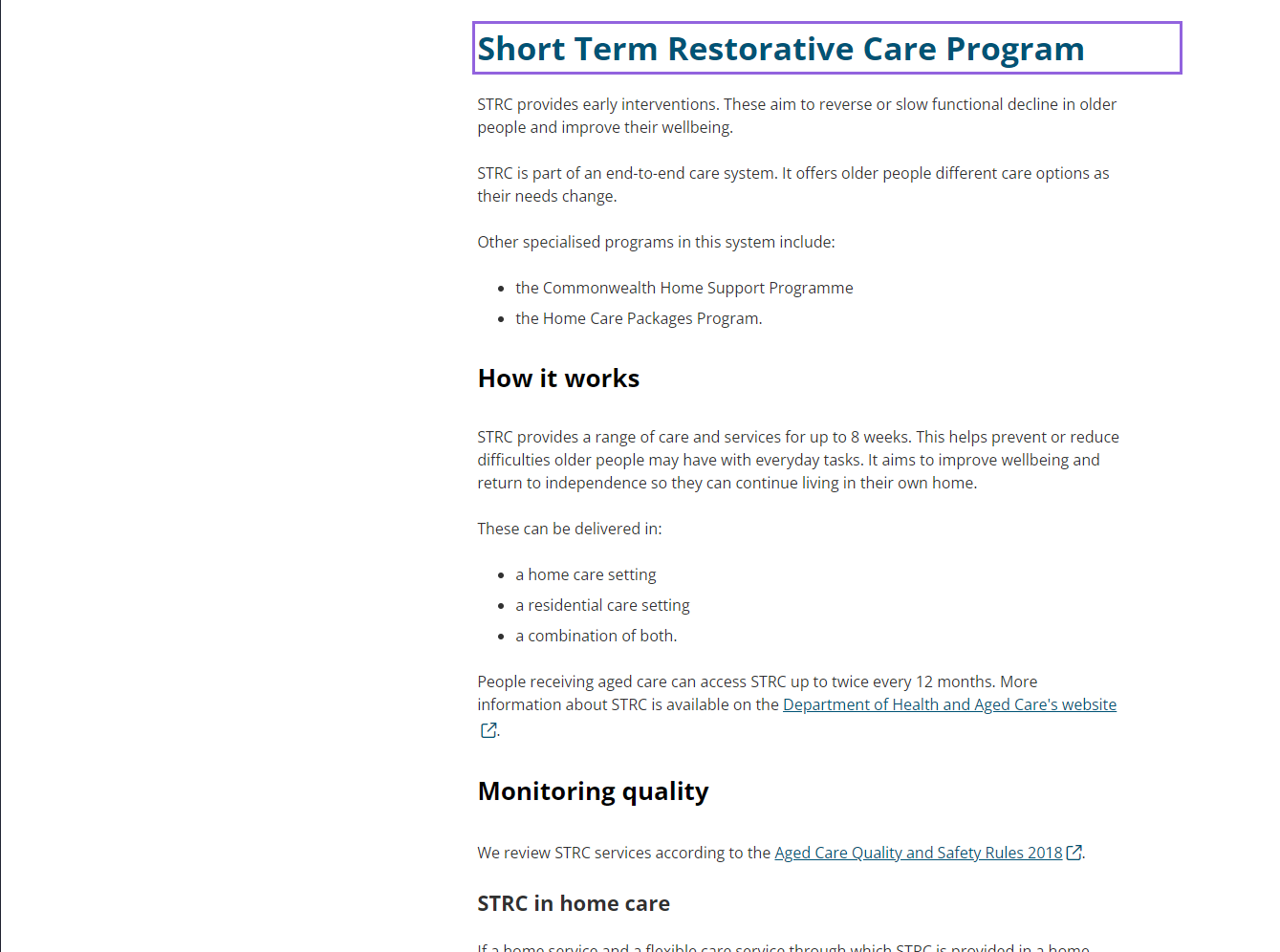
Short Term Restorative Care Program
This resource outlines the Short Term Restorative Care (STRC) Program which offers early interventions aimed at reversing or slowing functional decline in older people to enhance their wellbeing. It provides care for up to 8 weeks in home or residential settings, helping people regain independence. STRC is part of a broader care system, alongside other aged care services.
This resource may refer to information that will be updated from 1 November 2025 to align with the new Aged Care Act and Quality Standards.
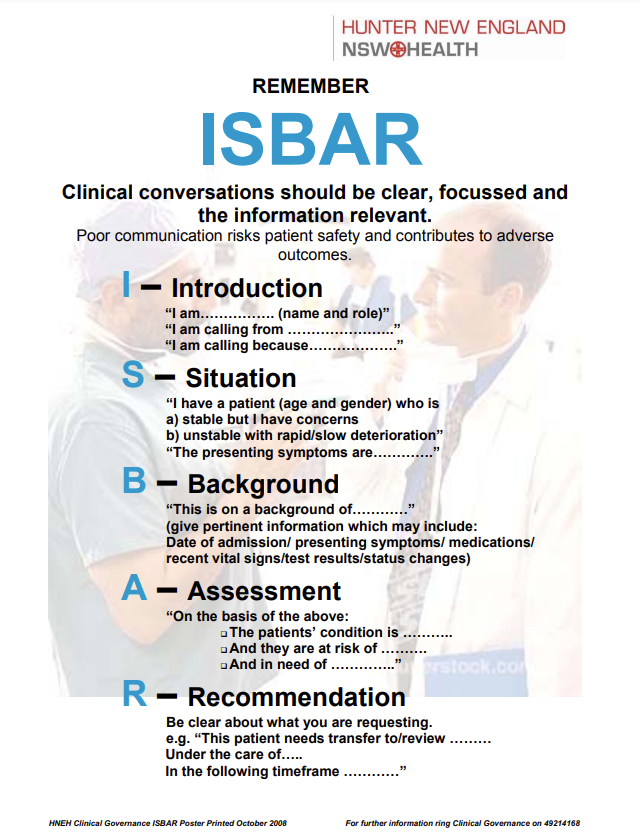
ISBAR Poster
This poster is a tool for improving clinical handover. It outlines the principles of ISBAR: Introduction, Situation, Background, Assessment, Recommendation. This supports clinical conversations to be clear, focused and relevant.
This resource may refer to information that will be updated from 1 November 2025 to align with the new Aged Care Act and Quality Standards.