The Quality Standards Resource Centre helps extend understanding of the strengthened Aged Care Quality Standards, which take effect from 1 November 2025. The Resource Centre will be updated to reflect key changes made to the draft strengthened Standards. You can search for resources by using keywords, or filtering by standard, outcome, audience and theme. Before using the Resource Centre, please read the terms of use.
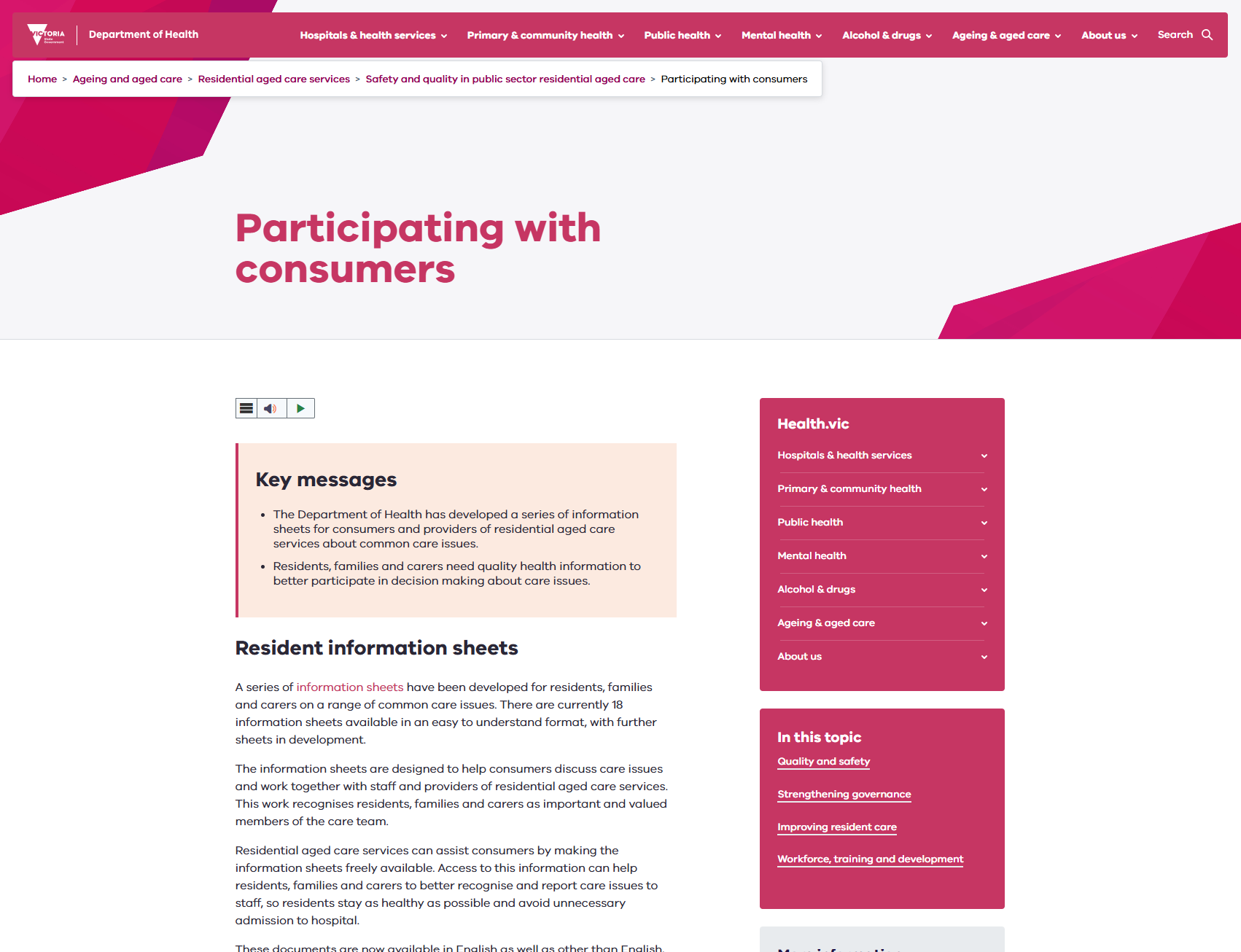
Participating with consumers
This resource provides information sheets for residents, families, and carers to support decision-making in residential aged care. Covering topics such as pain management, falls, and medicines, it promotes health literacy, enabling consumers to engage in discussions and report care issues effectively.
This resource was developed by a state/territory government or organisation and therefore its applicability and usefulness may be limited.
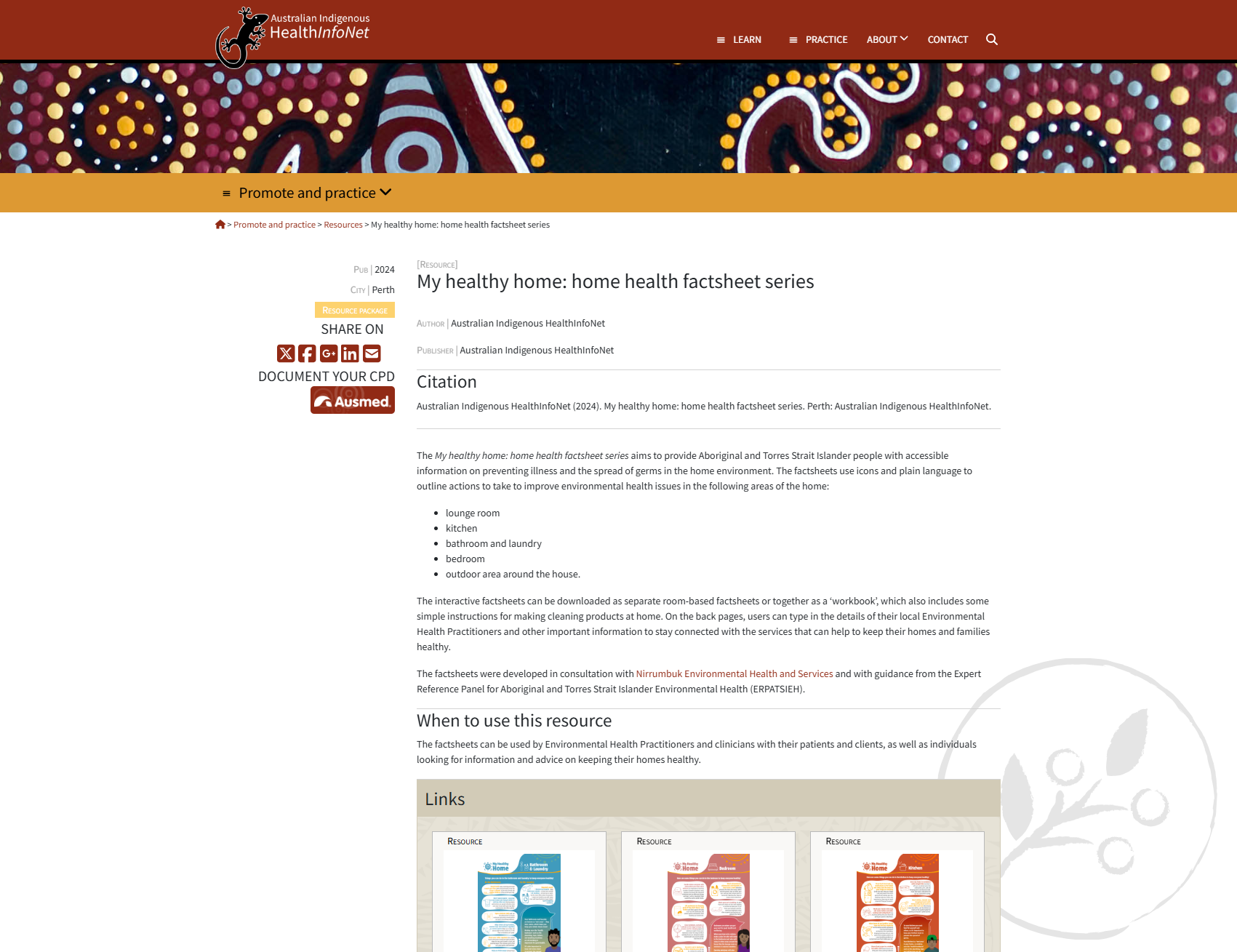
My healthy home: home health factsheet series
This resource offers accessible health information for Aboriginal and Torres Strait Islander people on preventing illness in the home. It includes room-based fact sheets with actions to improve environmental health, available as individual sheets or a workbook. This resource includes state-specific information and therefore its applicability and usefulness may be limited.
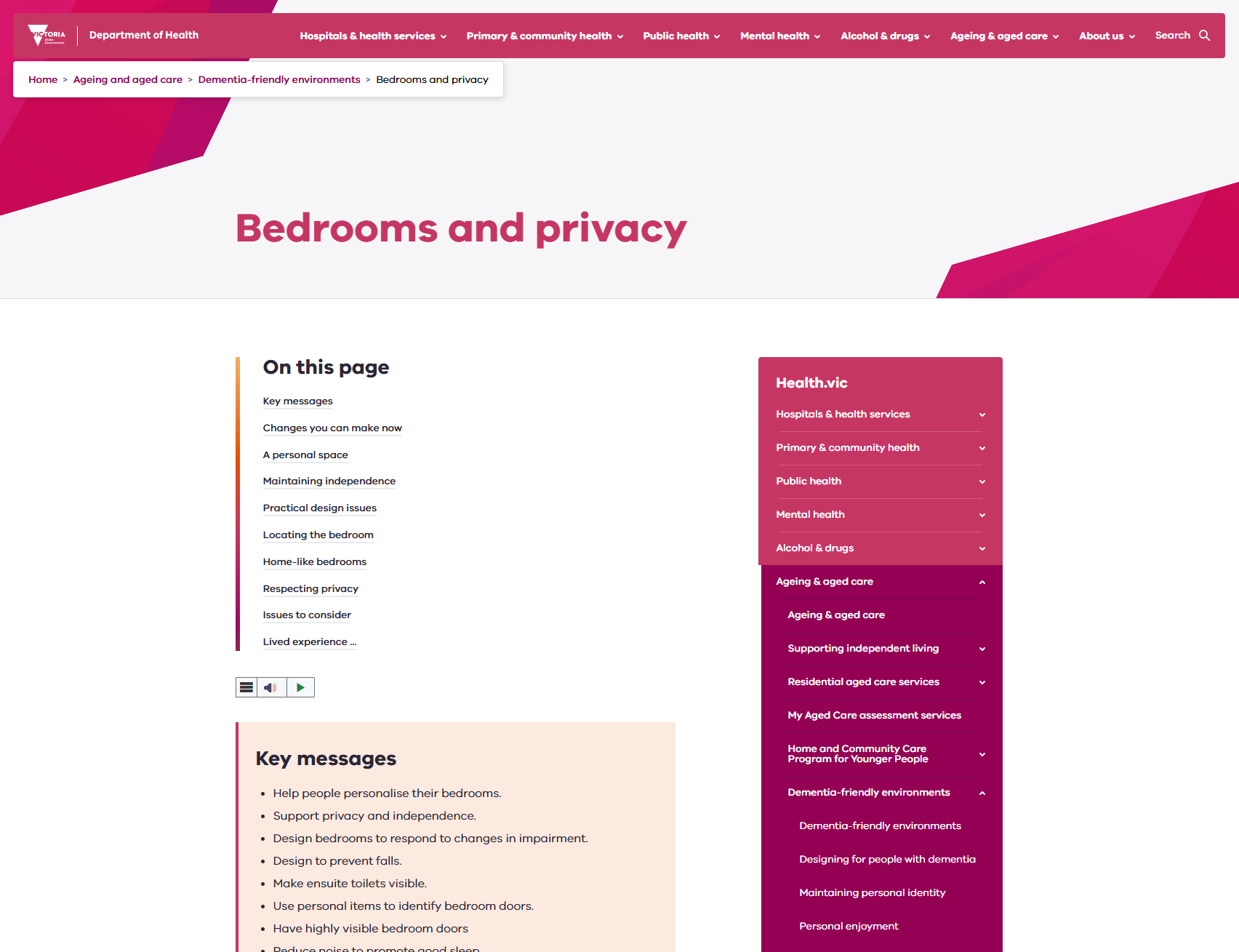
Bedrooms and privacy
This resource offers guidance on maintaining personal identity for people with dementia by fostering respect, independence, and communication. It suggests environmental and social modifications to enhance dignity, such as personalising spaces, supporting mobility, and addressing unmet needs.
This resource was developed by a state/territory government or organisation, and therefore its applicability and usefulness may be limited.
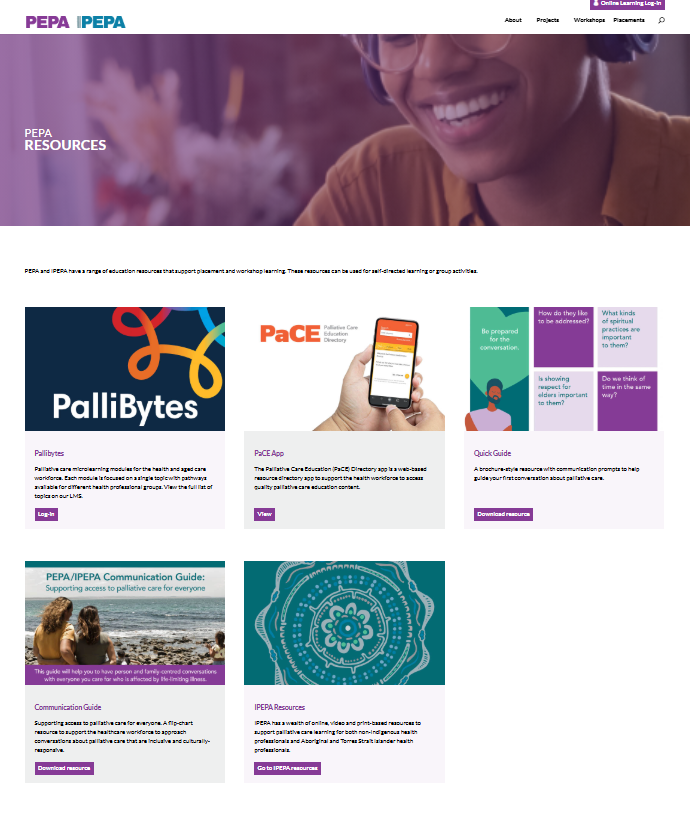
Program of Experience in the Palliative Approach (PEPA)
This page provides resources about palliative care for health professionals. The education resources support placement and workshop learning, but can be used for self-directed learning.
National Consensus Statement: Essential elements for safe and high-quality end-of-life care
This resource outlines the National Consensus Statement on essential elements for safe and high-quality end-of-life care in Australia. It provides guiding principles, care processes, and organisational processes, focusing on person-centred communication, multidisciplinary collaboration, and culturally appropriate care. The statement is designed for healthcare workers, service executives, and policy makers to enhance end-of-life care delivery.
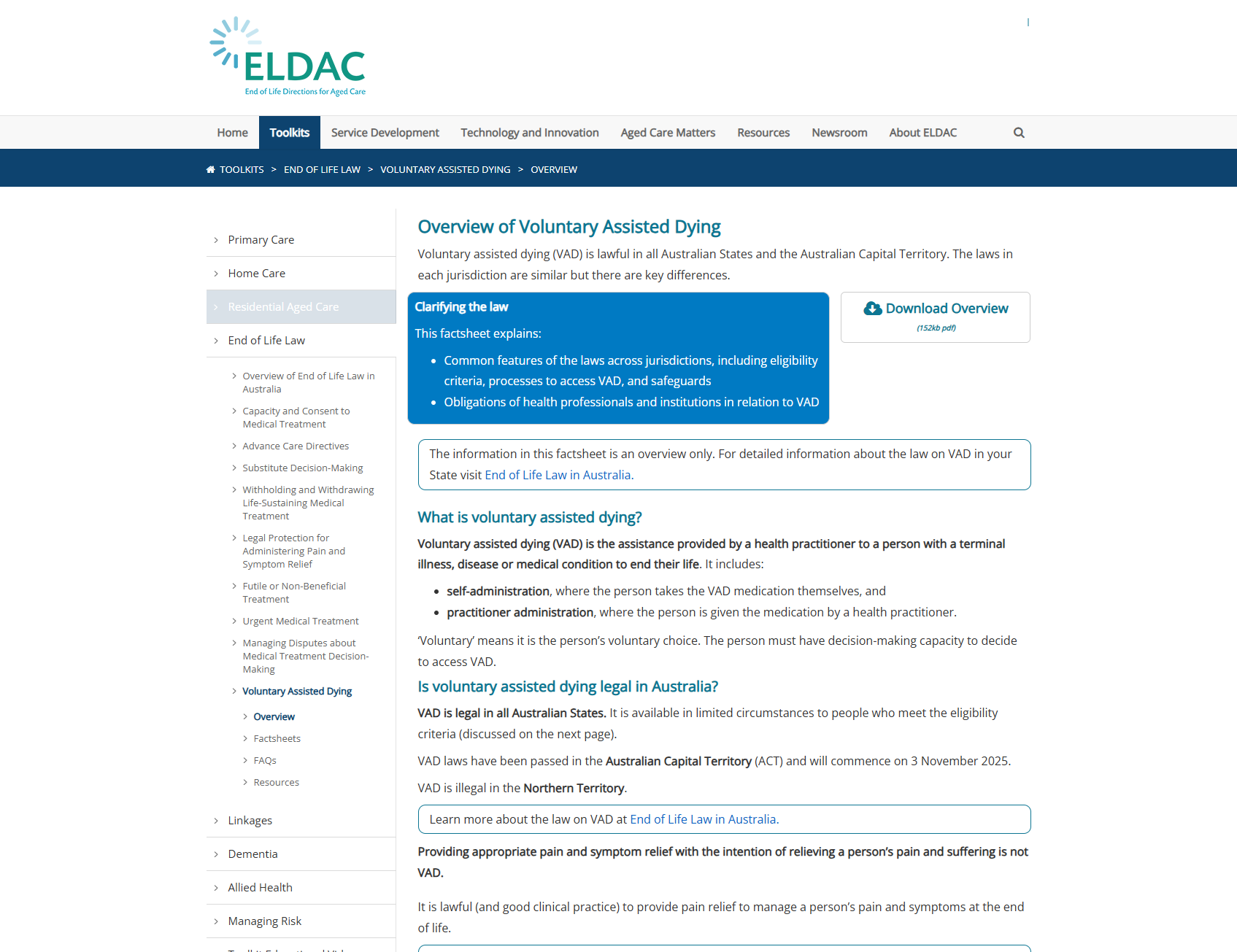
Overview of Voluntary Assisted Dying
This resource provides an overview of voluntary assisted dying (VAD) in Australia, detailing eligibility criteria, procedures, and legal requirements. It covers how VAD laws vary across jurisdictions, safeguards in place, and responsibilities for health professionals and institutions. Health professionals can conscientiously object but may still have legal responsibilities.
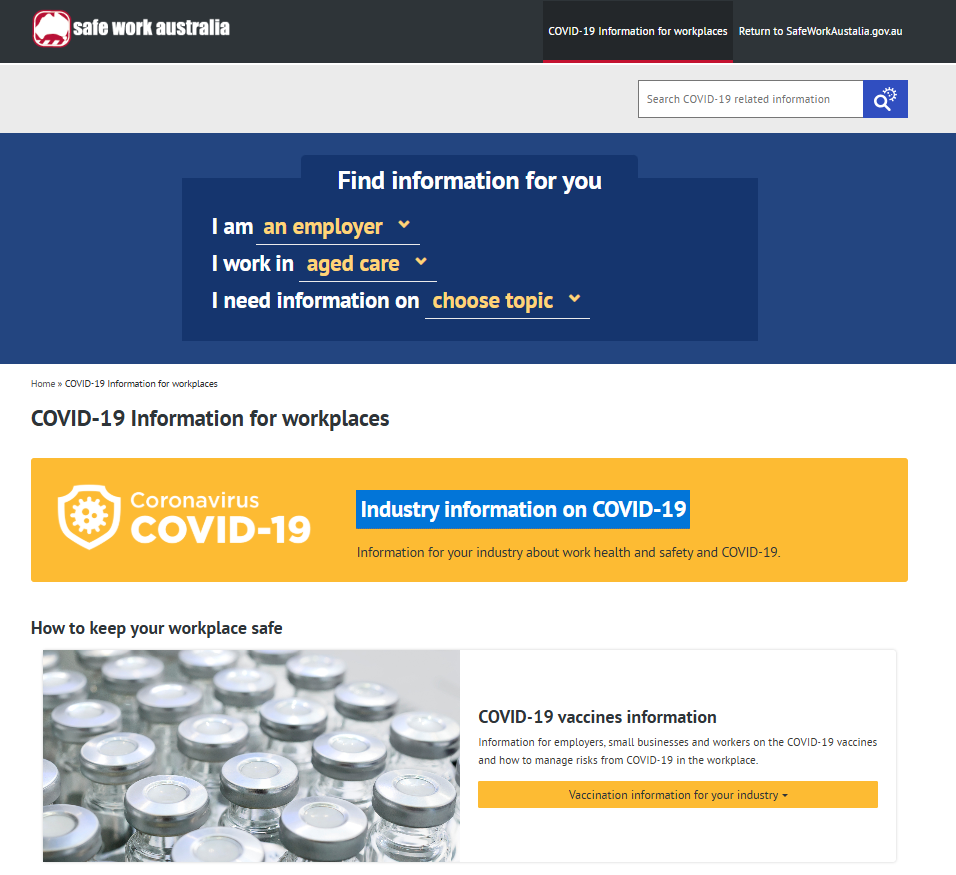
COVID-19 Information for workplaces - General
This resource provides guidance on minimising the spread of COVID-19, including aged care settings. It outlines vaccine information, risk assessments, physical distancing, hygiene and rapid antigen testing in the workplace. It also contains key resources such as signage, posters and translated information.
Clean and safe environment
This resource outlines processes to maintain a clean, safe, and hygienic environment in healthcare, including aged care. It provides guidance on infection control, environmental cleaning, and staff training to reduce risks and make sure high-quality care. The document also covers responding to environmental risks, maintaining equipment, and infection prevention practices.
Action 3.17 - Reprocessing of reusable equipment and devices
This resource outlines procedures for reprocessing reusable medical equipment and devices to minimise infection risks. It covers processes for ensuring compliance with national and international standards, maintaining traceability, and managing reprocessing for novel infections. It also highlights the importance of proper storage, transport, and workforce training to support safe reprocessing. This resource may apply to healthcare contexts outside of aged care.
Older people and falls
This resource provides information on the causes, treatments, and prevention of falls in older people. It outlines risk factors, such as home hazards and health conditions, and offers practical tips for reducing falls, including lifestyle changes, home modifications, and medical assessments. The document emphasises the importance of fall prevention in aged care settings.
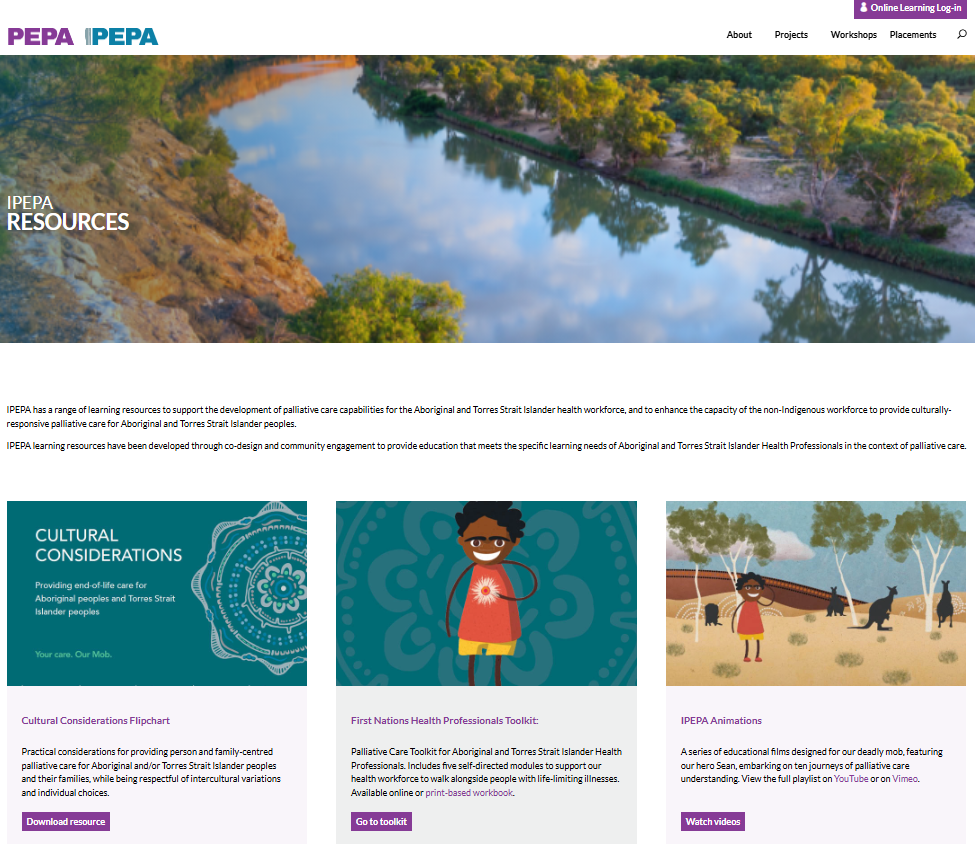
Indigenous Program of Experience in the Palliative Approach
This page provides resources about palliative care for Aboriginal and Torres Strait Islander health workers, and resources to support the non-Indigenous workforce provide culturally-responsive palliative care for Aboriginal and Torres Strait Islander peoples.
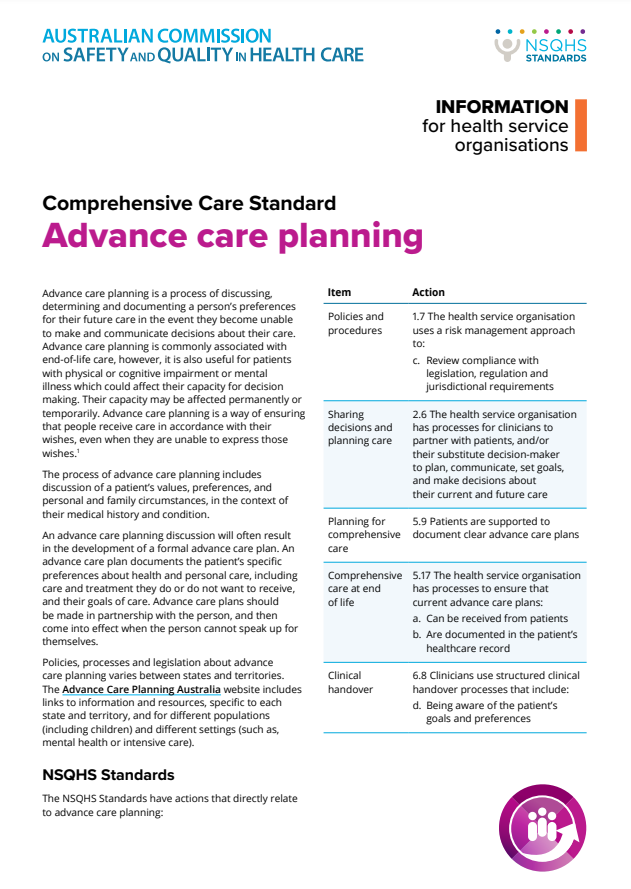
Advance care planning - Information for health service organisations
This resource outlines how health service organisations can support advance care planning within the Comprehensive Care Standard (National Safety and Quality Health Service Standards). It highlights the importance of documenting a patient’s preferences for future care and ensuring systems are in place to act on these plans. It also provides actions related to policies, sharing decisions, comprehensive care, and clinical handover.
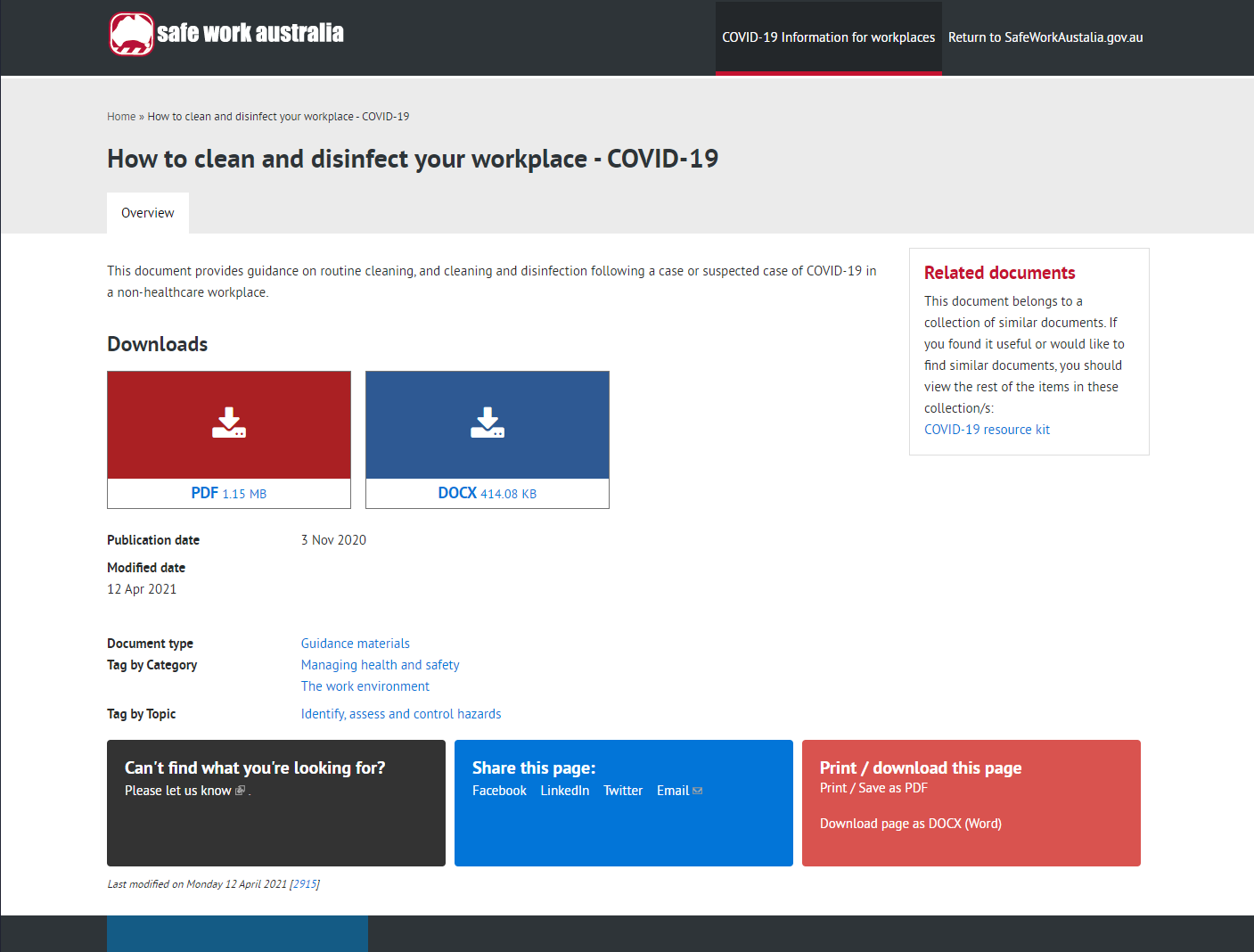
How to clean and disinfect your workplace - COVID-19
This resource provides detailed guidelines on cleaning and disinfecting workplaces, including aged care settings, to minimise the spread of COVID-19. It outlines cleaning procedures for different surfaces and items, the proper use of disinfectants, and disposal of materials. It supports workplace hygiene by ensuring routine and post-exposure cleaning protocols.
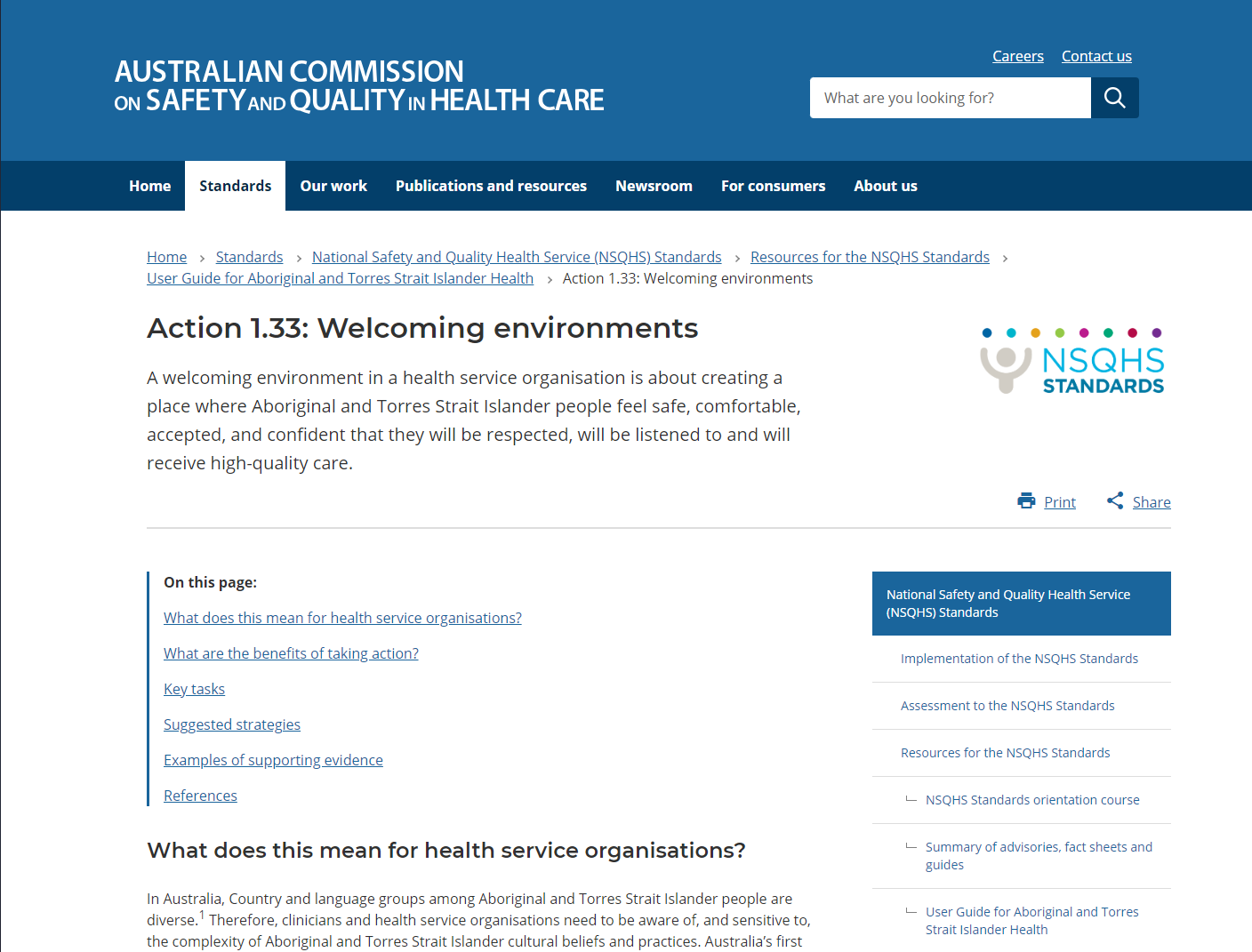
Action 1.33: Welcoming environments
This resource provides guidance on creating welcoming environments in healthcare services, including aged care, to make sure Aboriginal and Torres Strait Islander people feel safe, respected, and supported. It outlines strategies for cultural safety, collaboration with communities, and improving access to care through inclusive design, training, and environmental changes.
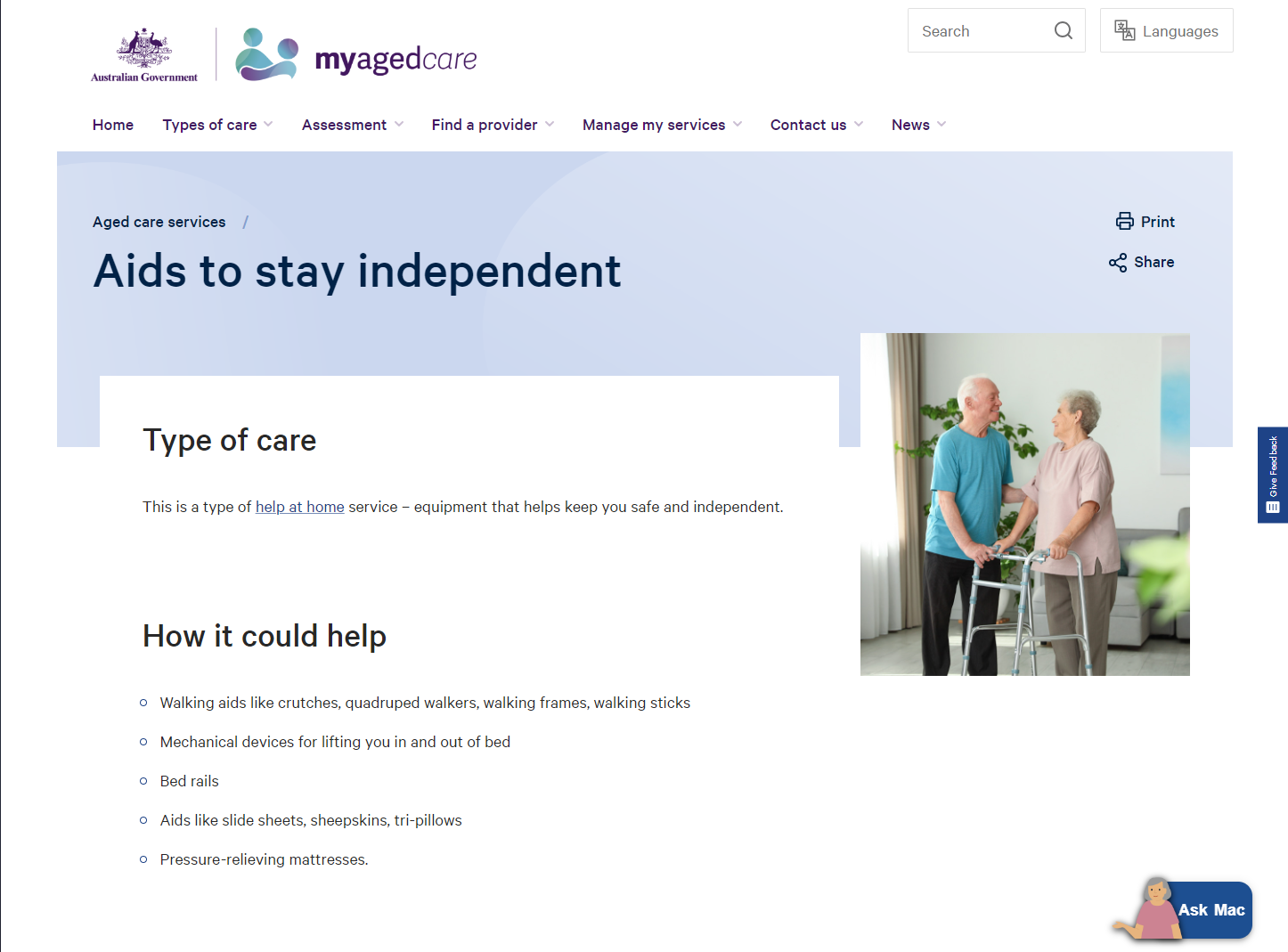
Aids to stay independent
This resource provides information on aids to help people stay safe and independent at home. It includes equipment such as walking aids, bed rails, and pressure-relieving mattresses. These services are available through the Commonwealth Home Support Programme or Home Care Packages, depending on eligibility, following an assessment.
Mobility aids
This resource provides an overview of mobility aids, including walkers, wheelchairs, lifting aids, and electric beds, to help people move safely and independently. It explains how these devices can help with daily tasks, manage pain, and reduce injury risks. The document also includes information on accessing aids through government programs or health professionals.
Aids, equipment and modifications through the Rehabilitation Appliances Program (RAP)
This resource provides information about the Rehabilitation Appliances Program (RAP), which offers aids, equipment, and home or vehicle modifications to help veterans stay independent. It explains the types of items available, such as mobility devices, personal care aids, and home accessibility modifications, and outlines the process for accessing these services through clinical assessments.
Tools and aids to help at home
This resource outlines tools, aids, and technology to help people with dementia live safely and independently at home. It includes medication reminders, safety devices, communication tools, and sensory aids. The document provides guidance on selecting appropriate tools to support daily tasks, reduce stress, and maintain quality of life at home.
National Palliative Care Standards for All Health Professionals and Aged Care Services
The National Palliative Care Standards provide guidance for all health professionals and aged care services to deliver high-quality generalist palliative care. They support improved experiences and outcomes for people receiving care, and are intended for use across diverse care settings. Resources like audit tools and fact sheets are available to aid self-assessment and adherence to these standards.
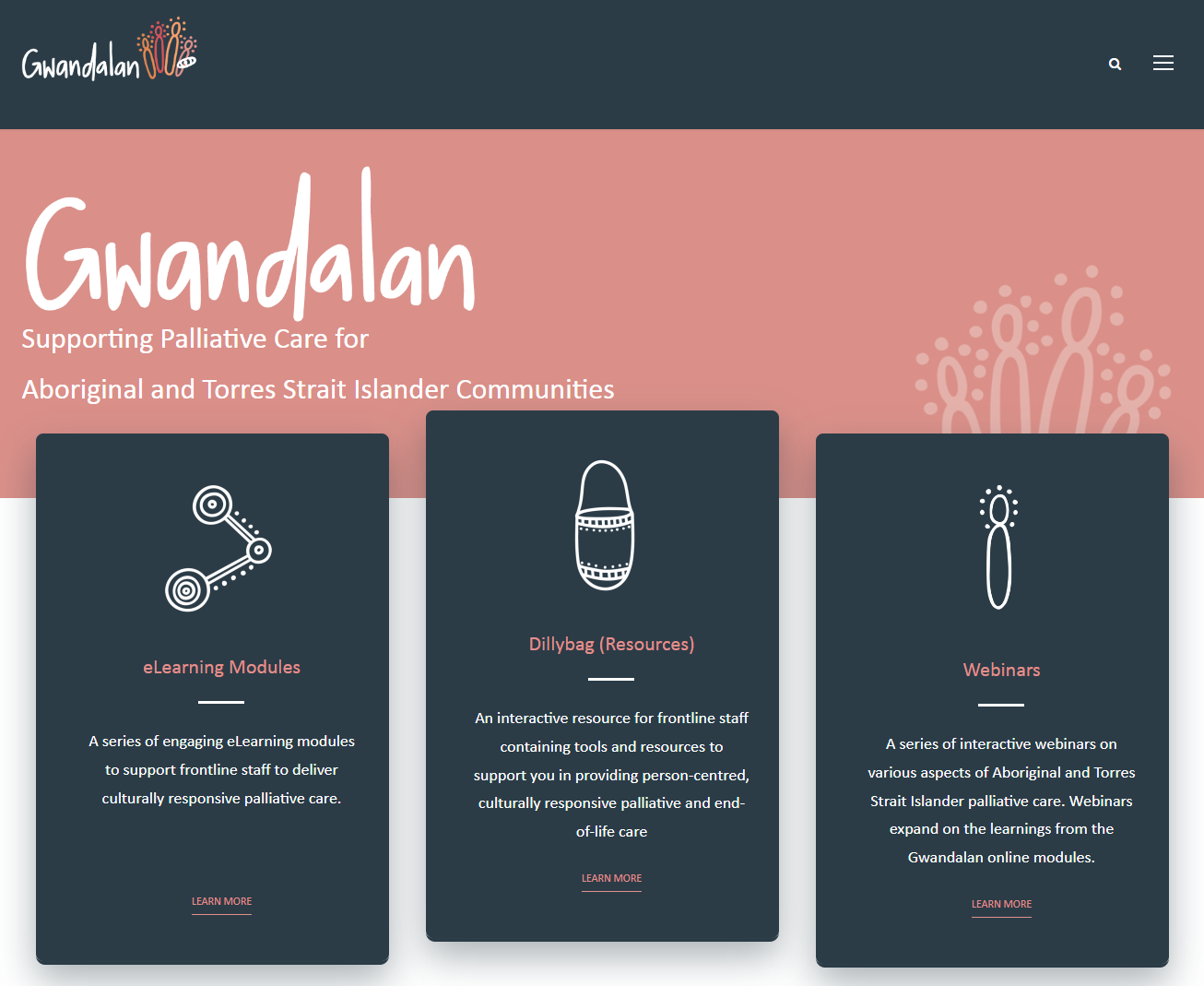
Gwandalan – Supporting Palliative Care for Aboriginal and Torres Strait Islander Communities
This resource provides culturally appropriate palliative care education and support for Aboriginal and Torres Strait Islander communities. It includes resources, videos, and training materials aimed at improving understanding, communication, and care practices in end-of-life care, integrating cultural beliefs and values to enhance quality care for Indigenous Australians.