The Quality Standards Resource Centre helps extend understanding of the strengthened Aged Care Quality Standards, which took effect from 1 November 2025. You can search for resources by using keywords, or filtering by standard, outcome and audience. Before using the Resource Centre, please read the terms of use.
Healing Foundation - Resources
This resource provides access to a range of materials aimed at promoting healing within Aboriginal and Torres Strait Islander communities. It includes documents on trauma, healing projects, and initiatives like the Stolen Generations redress schemes. Providers can use these resources to understand historical and ongoing trauma and support culturally sensitive care within aged care environments, fostering healing and resilience.
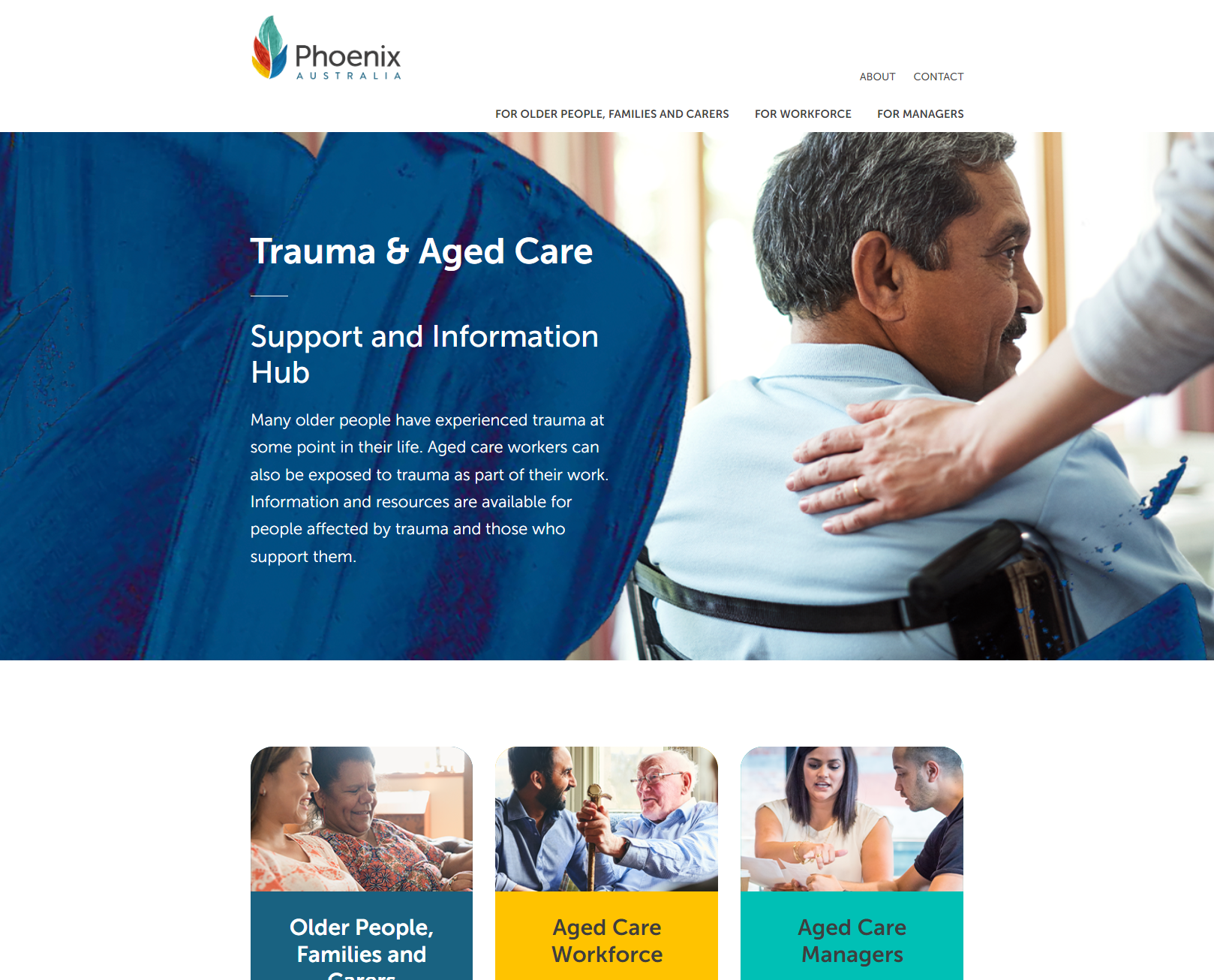
Trauma & Aged Care - Support and Information Hub
This resource provides information and support for aged care providers, workers, and people in aged care who may have experienced trauma. It offers resources to address trauma-related issues, both for those affected and for those providing care. It also provides guidance for aged care managers and the workforce to ensure trauma-informed care practices are integrated into aged care services.
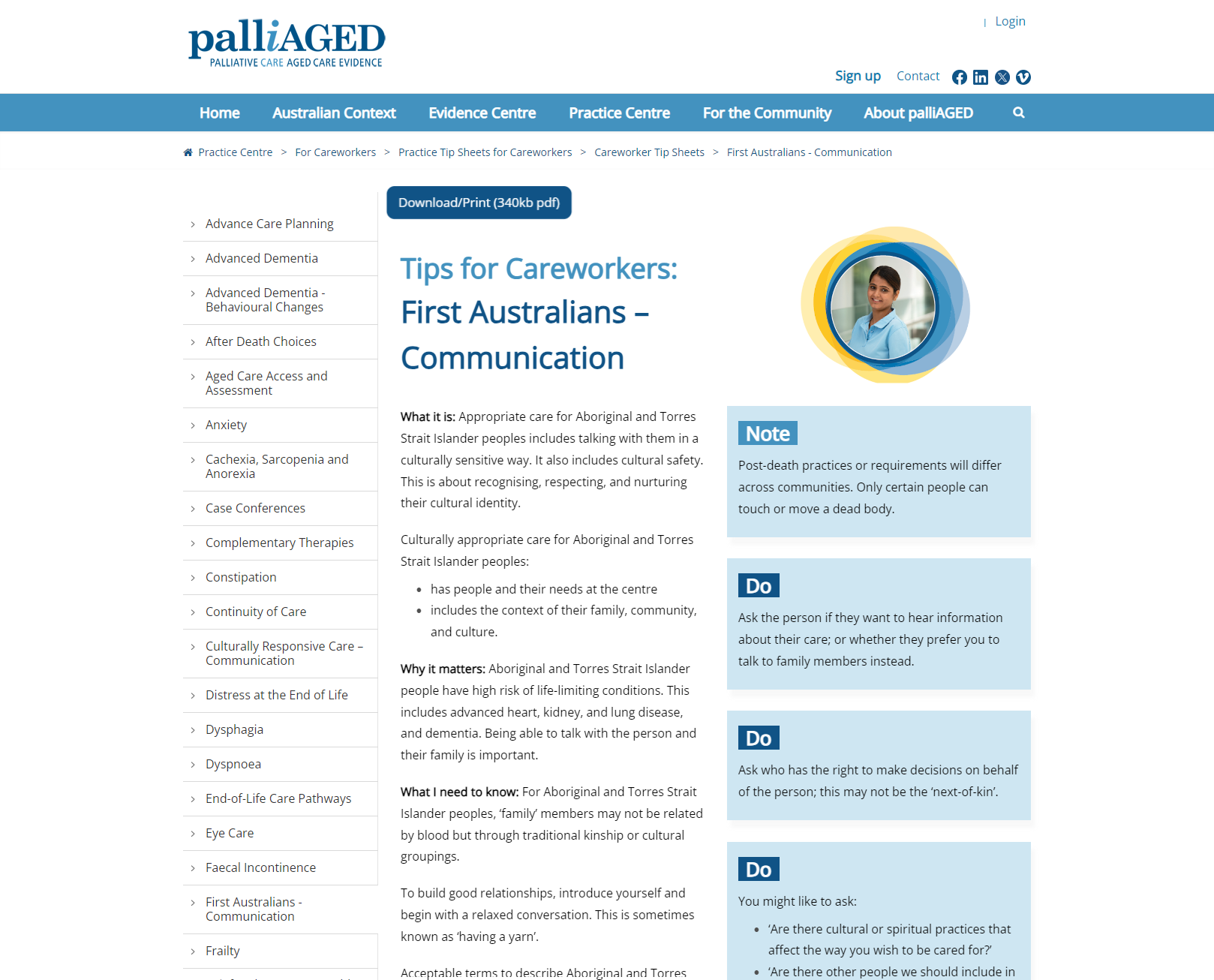
Tips for Careworkers: First Australians – Communication
This resource offers guidance on culturally appropriate communication with Aboriginal and Torres Strait Islander people in aged care. It highlights the importance of respecting cultural identity, involving family, and providing person-centred care. The resource provides practical tips for careworkers to ensure culturally sensitive and respectful communication.
Consumer and carer engagement: A practical guide
This resource provides a guide for engaging consumers and carers in mental health services. It outlines steps for involving people in decision-making, service design, and evaluation. The guide emphasises co-design, leadership, and dedicated resources to create a person-centred approach that improves care and service outcomes.
National Aboriginal and Torres Strait Islander Health Plan 2021–2031
This resource outlines the National Aboriginal and Torres Strait Islander Health Plan 2021–2031, which focuses on improving health outcomes through culturally safe, prevention-focused care. It emphasises addressing cultural and social determinants of health across the life course. The plan supports self-determination, eliminating racism, and fostering partnerships with community-controlled health services to make sure equitable access to health and wellbeing services.
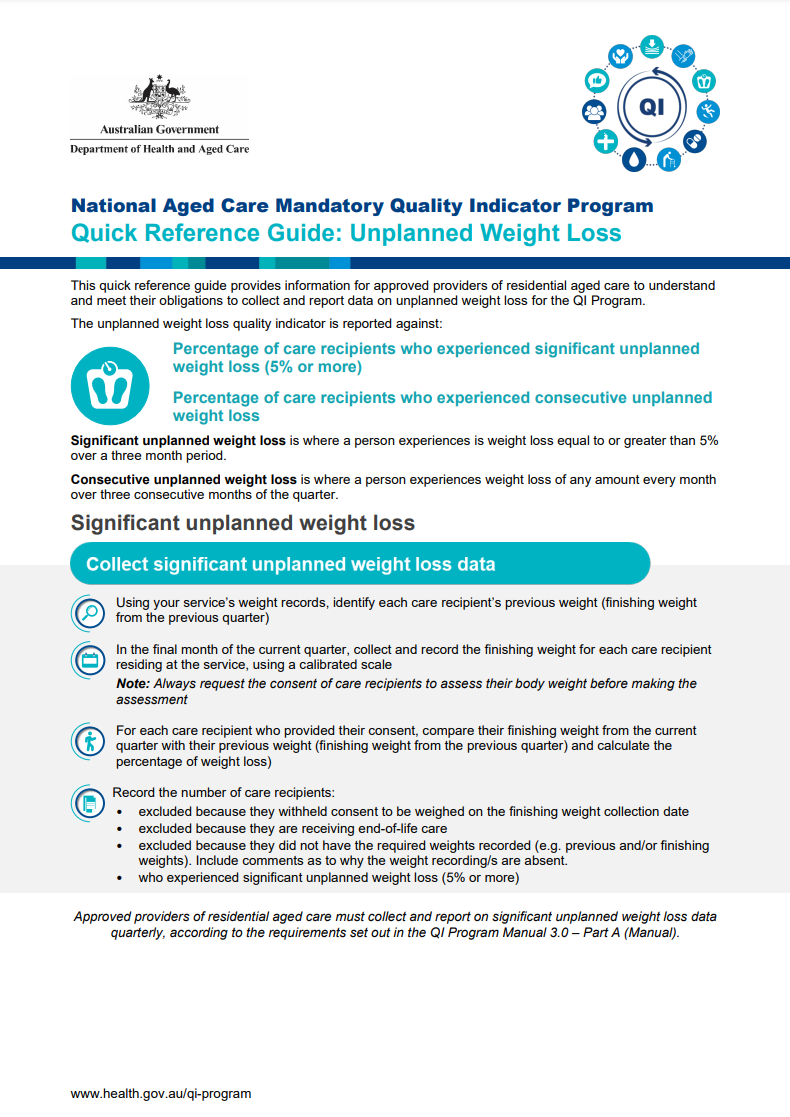
QI Program quick reference guide – Unplanned weight loss
This resource provides a quick reference guide for approved aged care providers on collecting and reporting data related to unplanned weight loss as part of the National Aged Care Mandatory Quality Indicator Program. It outlines reporting requirements for significant and consecutive unplanned weight loss and offers guidance on how to track and submit data quarterly. This resource may refer to information that will be updated from 1 November 2025 to align with the new Aged Care Act and Quality Standards.
Electronic prescribing
This resource outlines the framework for electronic prescribing, offering an alternative to paper prescriptions for healthcare providers and consumers. It explains the benefits of electronic prescriptions, such as reducing errors, improving efficiency, and supporting medication safety. The resource also covers technical and legislative requirements for implementing electronic prescriptions in various healthcare settings.
This resource may refer to information that will be updated from 1 November 2025 to align with the new Aged Care Act and Quality Standards.
Digital Health Developer Portal - Aged Care Clinical Information System Standards v1.0
This resource outlines the Aged Care Clinical Information System (ACCIS) Standards version 1.0, which sets minimum software requirements for clinical information and electronic medication management systems in aged care. The standards support interoperability, data sharing, and improved care quality by enabling safe and efficient clinical decision-making and information exchange between care providers.
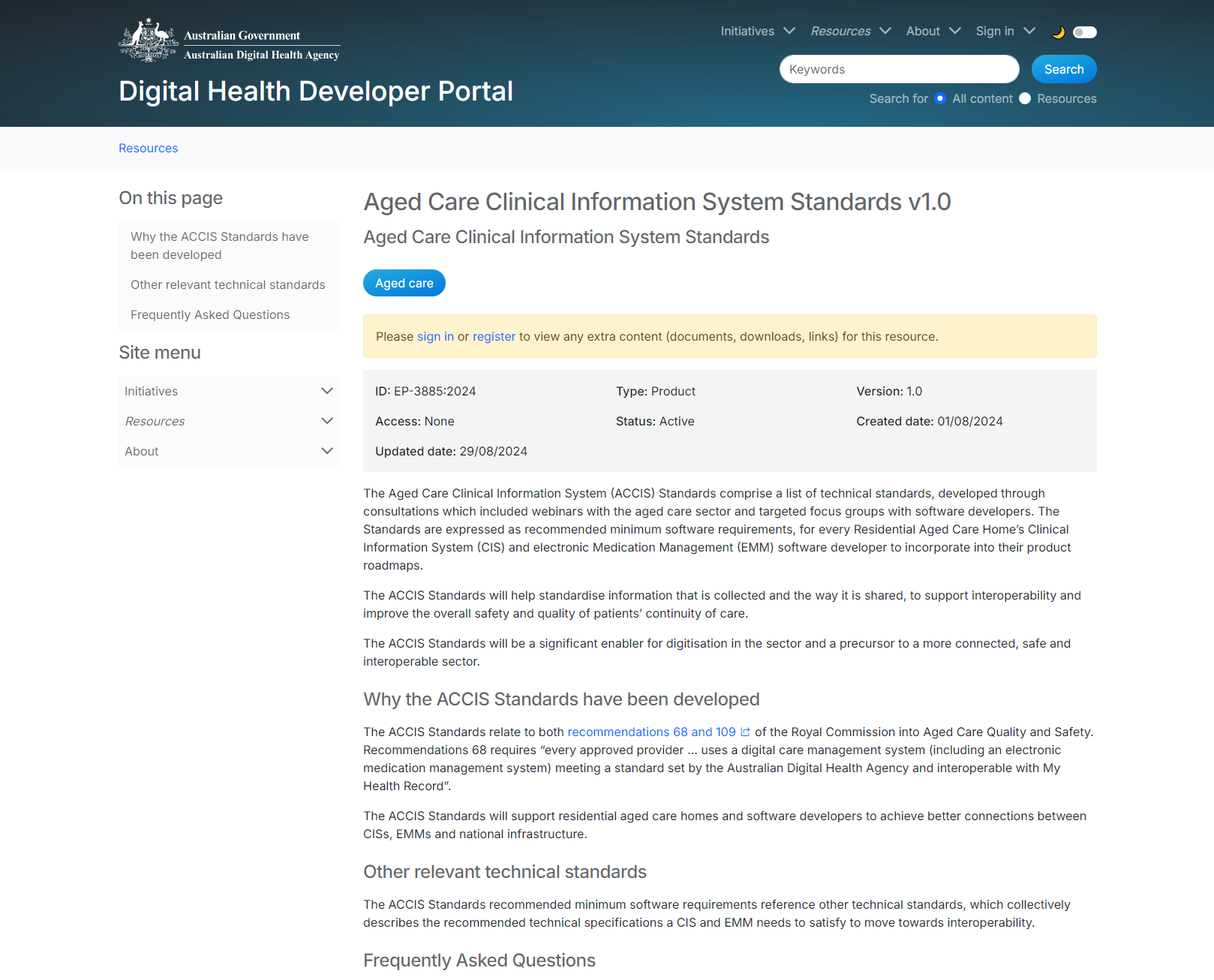
Aged Care Clinical Information System (ACCIS) Standards
This resource outlines the Aged Care Clinical Information System (ACCIS) Standards, providing minimum software requirements for clinical information systems used in aged care. It supports interoperability, data sharing, and safe clinical decision-making. The standards aim to enhance care coordination, improve data accuracy, and ensure compliance with privacy and security protocols within residential aged care settings.
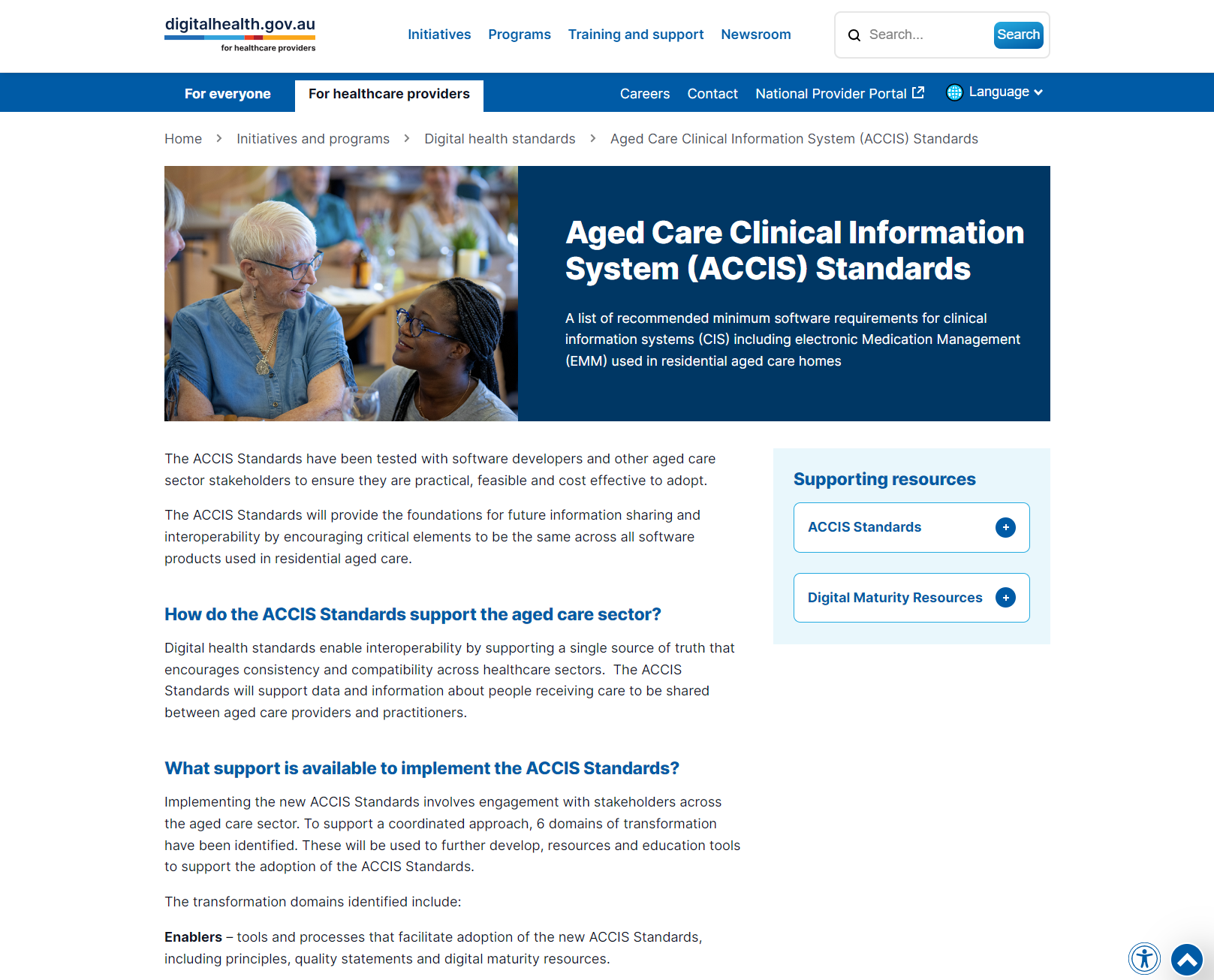
National Agreement on Closing the Gap
This resource outlines the National Agreement on Closing the Gap, focusing on improving life outcomes for Aboriginal and Torres Strait Islander peoples. It includes key areas for joint national action, prioritising cultural safety and addressing inequalities. The agreement encourages collaboration with communities to monitor progress and ensure accountability.
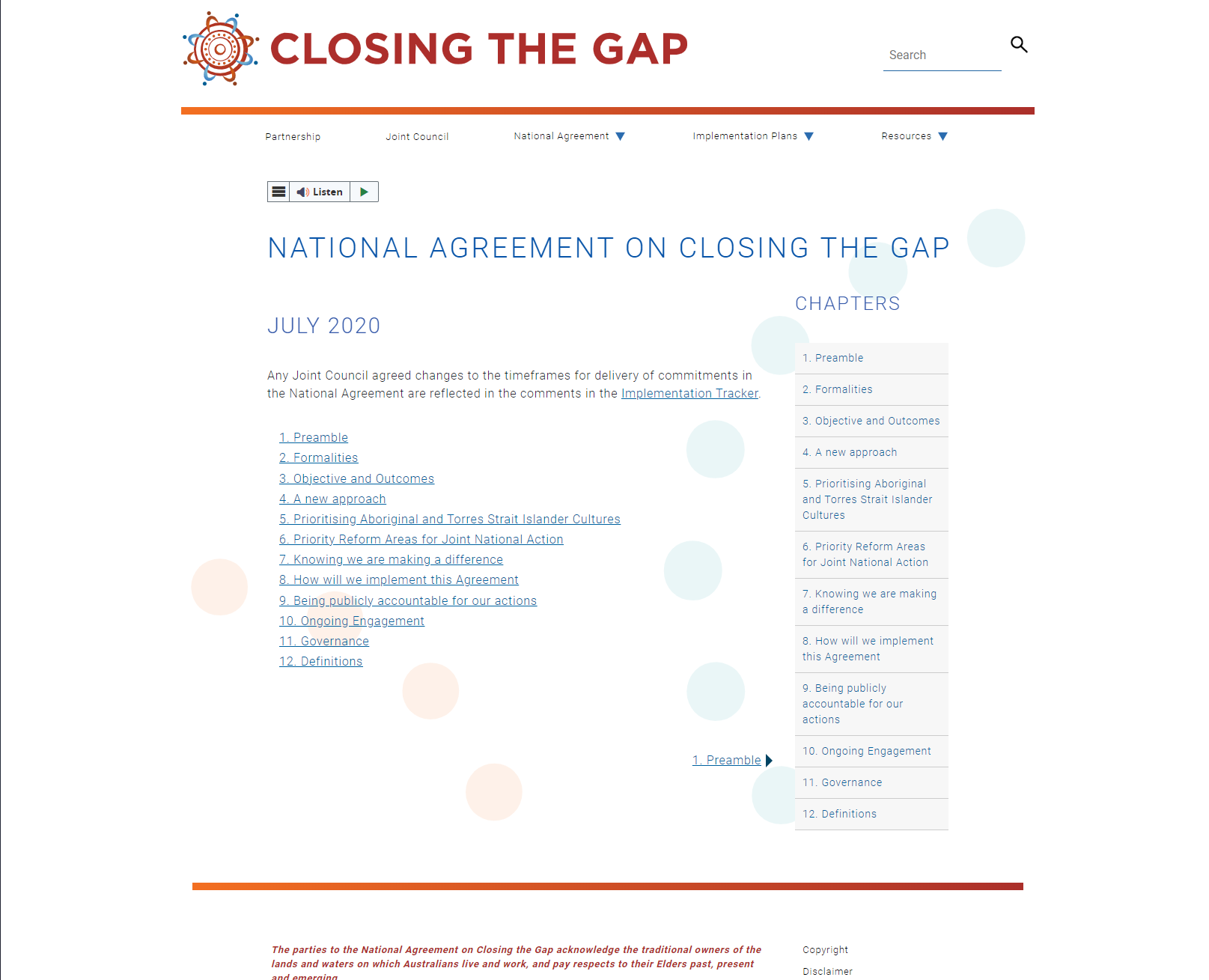
Electronic prescriptions
This resource provides an overview of electronic prescriptions, which offer a digital alternative to paper prescriptions. It explains how electronic prescriptions can be issued by healthcare providers and stored on digital devices for convenience. The resource also details the benefits of the Active Script List (ASL) for managing multiple prescriptions, enhancing efficiency and medicine safety.
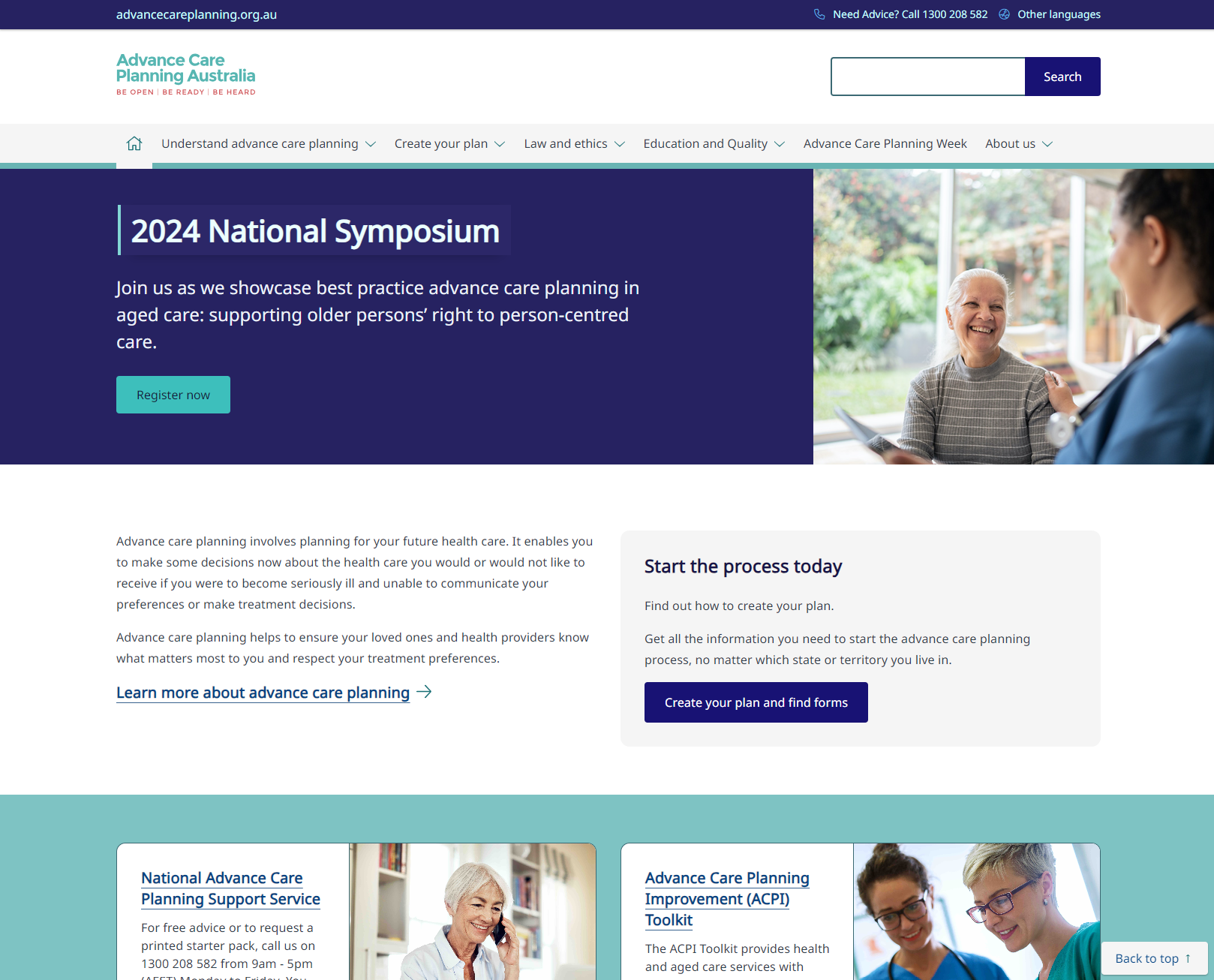
Advance Care Planning Australia
This resource provides information on advance care planning, which enables people to make decisions about their future health care in case they are unable to communicate their preferences. It helps ensure that healthcare providers and loved ones understand and respect their treatment choices. The resource includes tools, forms, and advice for creating an advance care plan.
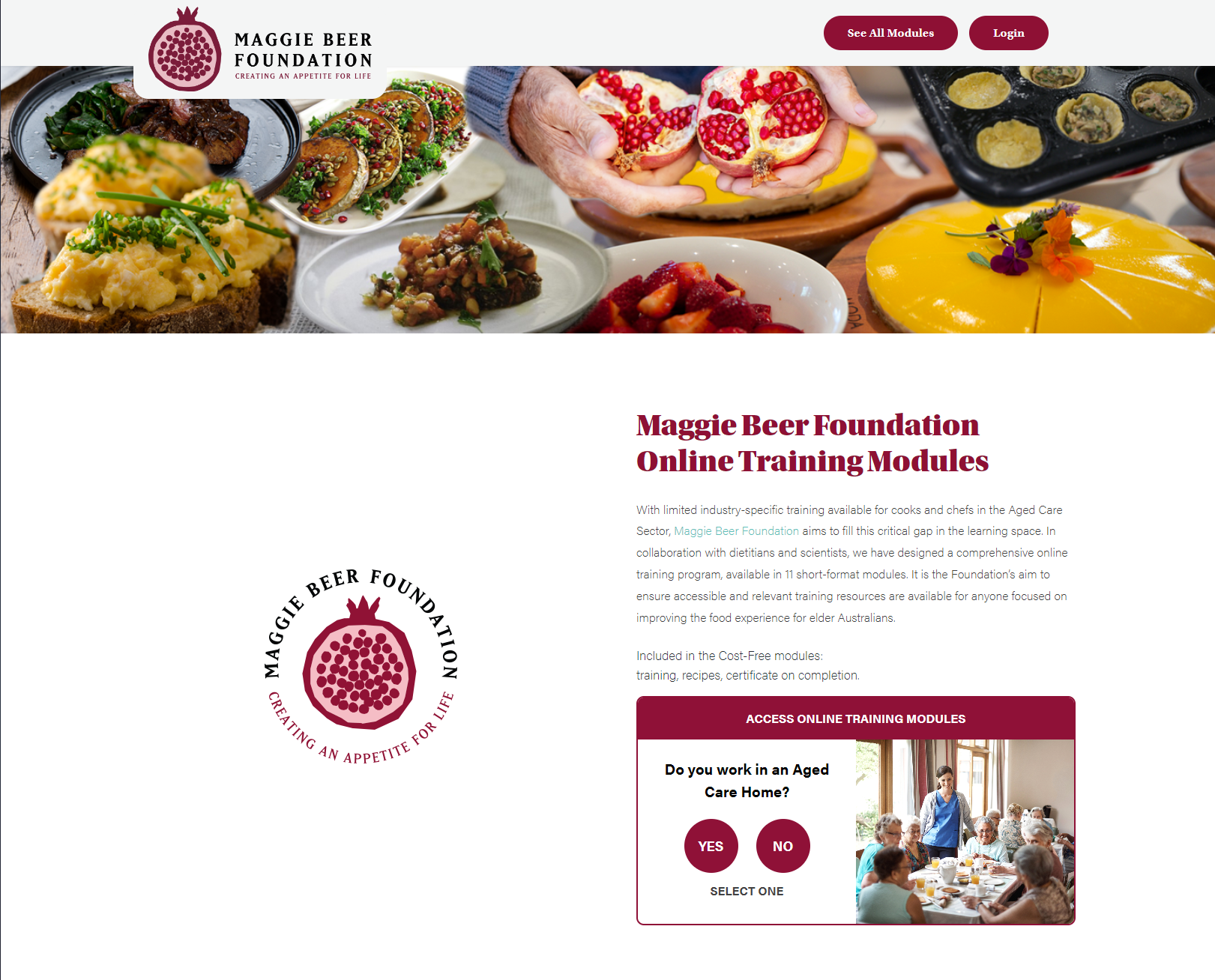
Maggie Beer Foundation - Online Training Modules
This resource offers free online training modules designed to improve food experiences for older people in aged care. The modules cover topics such as creating appetising meals, food presentation, and supporting nutrition and hydration. The program is intended for cooks, chefs, and aged care providers to enhance the quality of food service in care settings.
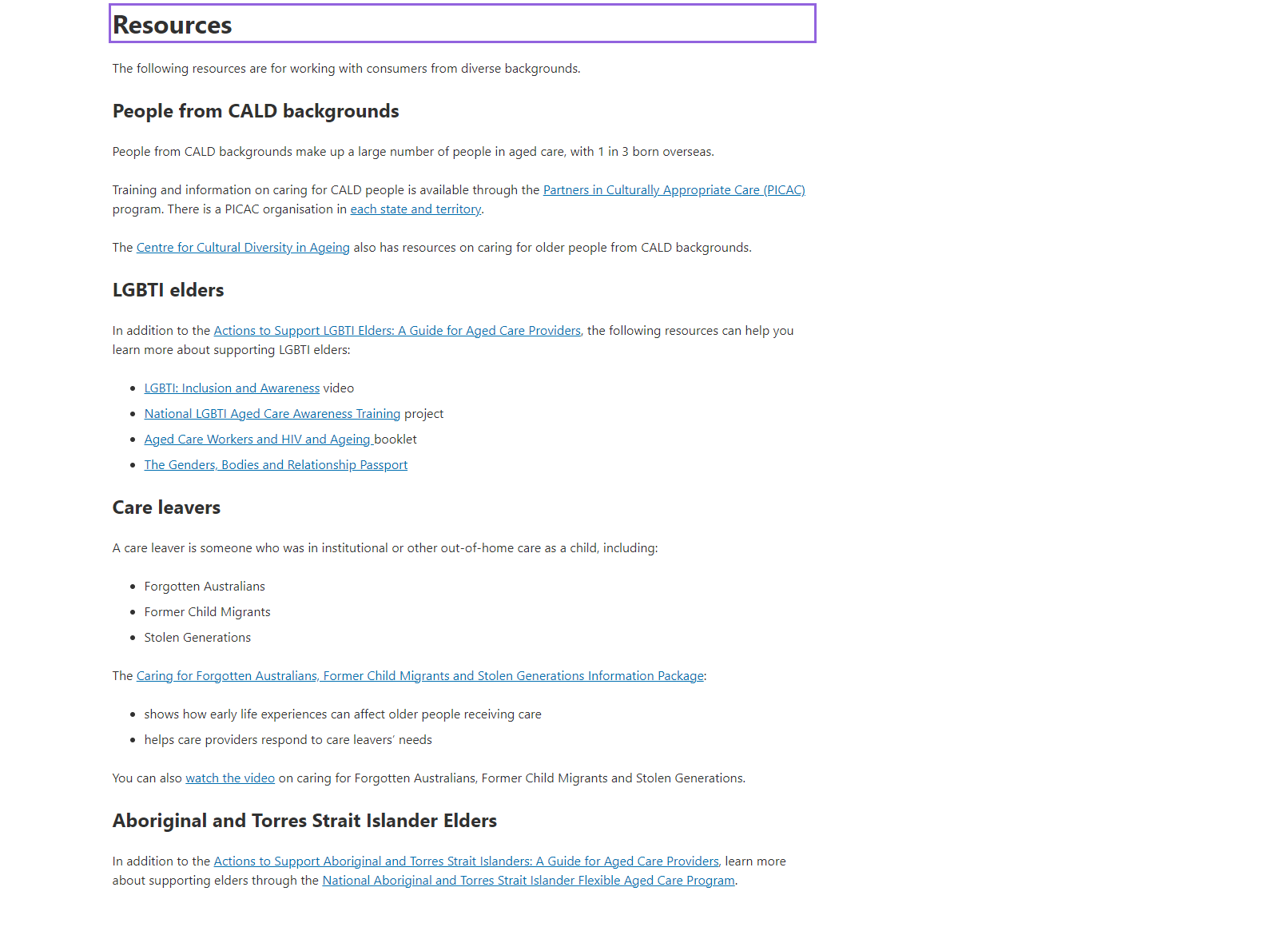
Working with diverse groups in aged care - Resources
This resource provides guidance for aged care providers on working with people from diverse backgrounds. It includes information on caring for people from culturally and linguistically diverse (CALD) backgrounds, LGBTI elders, care leavers, and Aboriginal and Torres Strait Islander Elders. Training programs and resources are available to support culturally appropriate care. This resource may refer to information that will be updated from 1 November 2025 to align with the new Aged Care Act and Quality Standards.
Quality improvement guidance for aged care providers
This resource offers guidance for aged care providers on implementing continuous quality improvement processes. It explains the ‘Plan, Do, Check, Act’ model to monitor and enhance care quality, using data and feedback to address issues. It also provides practical examples and tools to support providers in improving care and meeting regulatory requirements. This resource may refer to information that will be updated from 1 November 2025 to align with the new Aged Care Act and Quality Standards.

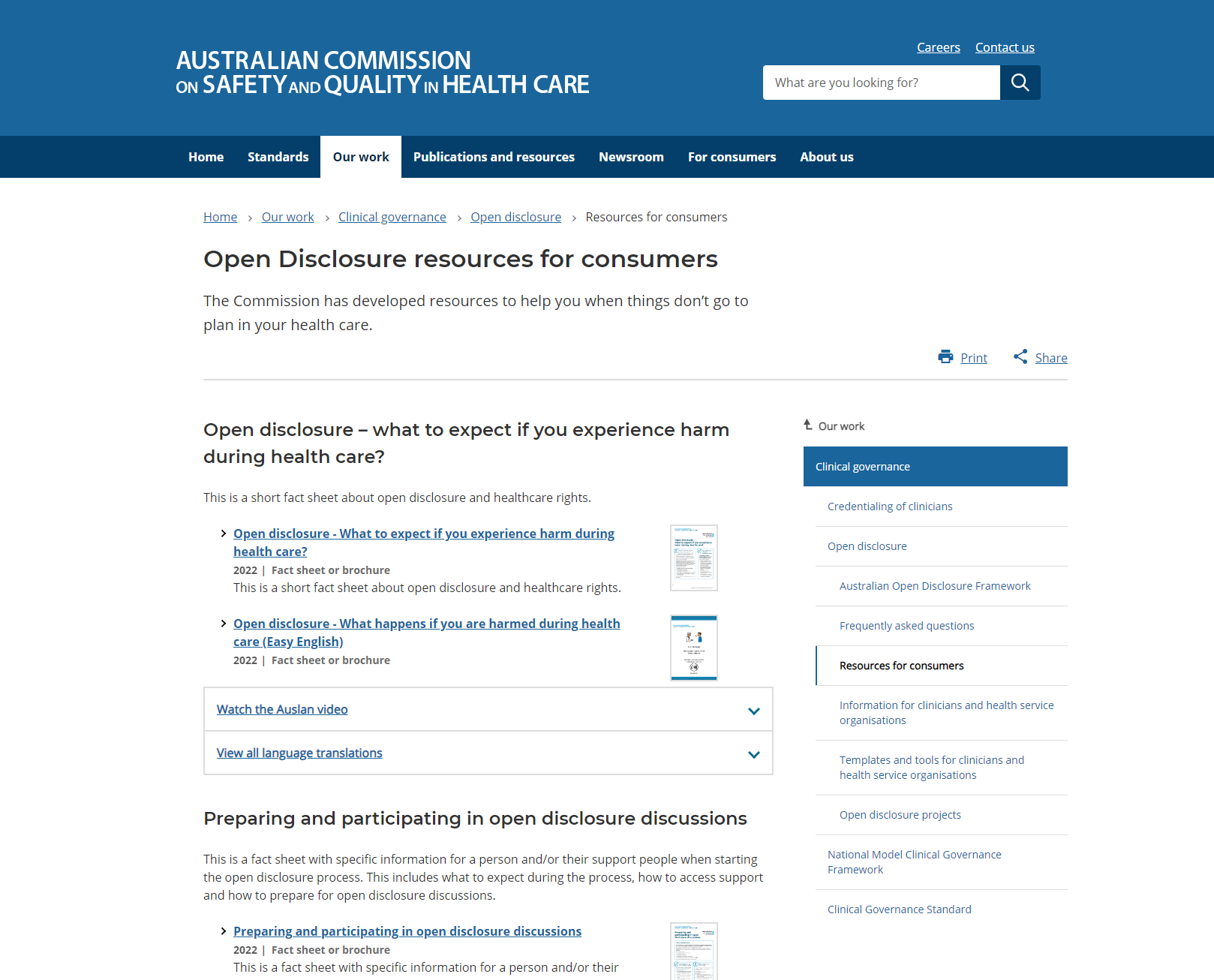
Open Disclosure resources for consumers
This resource provides information on open disclosure in healthcare, explaining what people should expect if harm occurs during care. It includes fact sheets in various languages and outlines how to prepare for open disclosure discussions. The resource aims to support transparent communication and improve care safety across healthcare settings, including aged care. This resource may refer to information that will be updated from 1 November 2025 to align with the new Aged Care Act and Quality Standards.
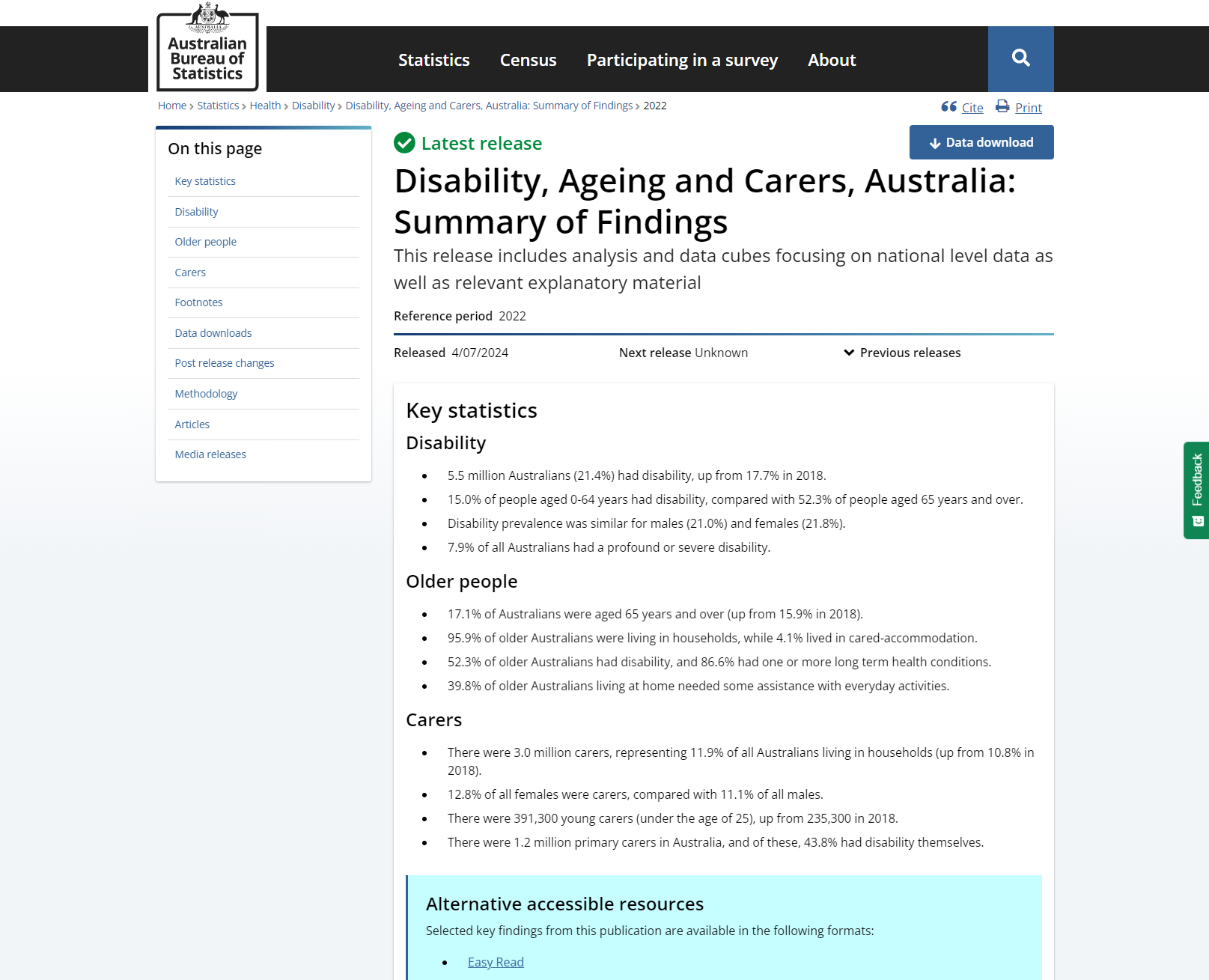
Disability, Ageing and Carers, Australia: Summary of Findings
This resource provides key statistics and findings on disability, ageing, and carers in Australia. It offers insights into the prevalence of disability, living arrangements, health conditions, and the needs for assistance among older adults. It also includes data on informal and formal care providers, highlighting the importance of support services for those aged 65 years and over in aged care settings.
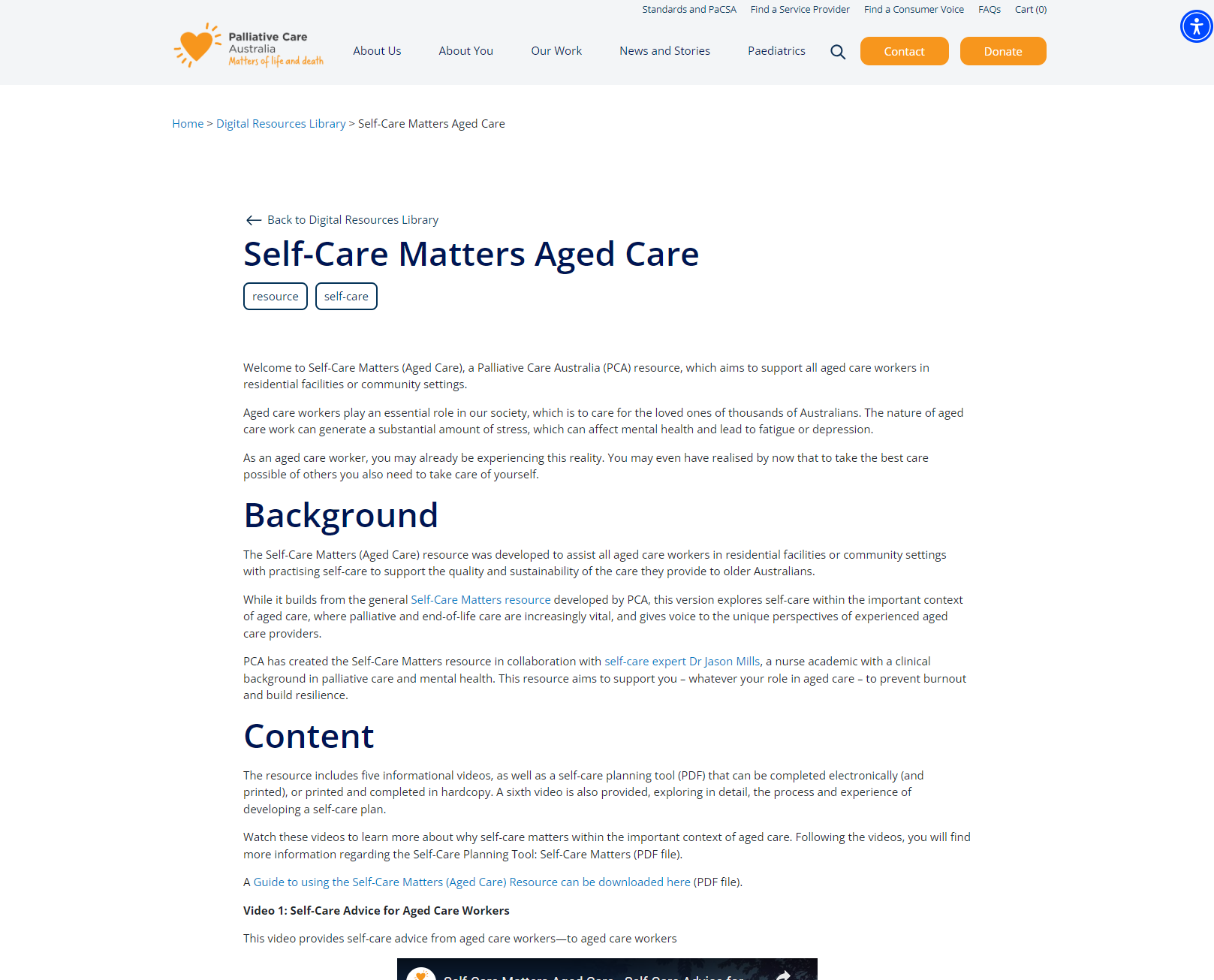
Self-Care Matters Aged Care
This resource supports aged care workers in managing stress and maintaining mental and physical wellbeing. It includes videos and tools focused on self-care strategies, such as mindfulness, relaxation, and personalised self-care planning. The resource is designed to help prevent burnout and promote resilience in delivering high-quality care in aged care settings.
Financial and Prudential Monitoring, Compliance and Intervention Framework
This resource outlines the Financial and Prudential Monitoring, Compliance and Intervention Framework for aged care providers. It aims to enhance financial transparency, requiring stricter reporting, oversight, and adherence to prudential standards. The framework helps ensure financial stability, protects refundable accommodation deposits, and supports the continuity of care in residential aged care. It includes phased implementation and future regulatory changes.

Government Provider Management System resources
This resource provides user guides, quick reference materials, and videos to support aged care providers in using the Government Provider Management System (GPMS). It covers essential tasks such as managing user details, financial reporting, and service information. The GPMS ensures accurate and efficient data management for regulatory compliance and operational oversight in aged care services.
This resource may refer to information that will be updated from 1 November 2025 to align with the new Aged Care Act and Quality Standards.