The Quality Standards Resource Centre helps extend understanding of the strengthened Aged Care Quality Standards, which took effect from 1 November 2025. You can search for resources by using keywords, or filtering by standard, outcome and audience. Before using the Resource Centre, please read the terms of use.
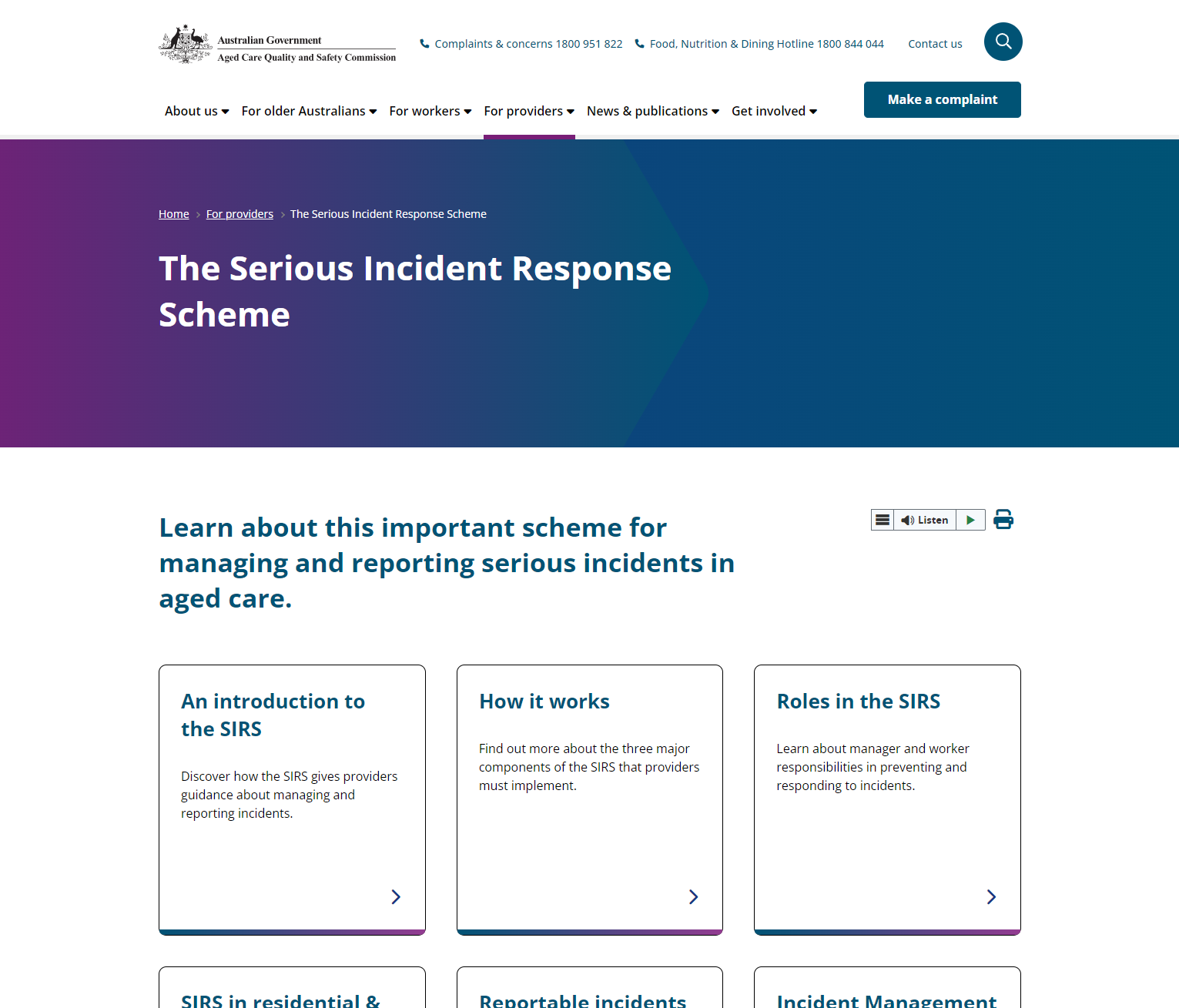
The Serious Incident Response Scheme
This resource provides an introduction to the Serious Incident Response Scheme (SIRS), outlining its role in managing and reporting serious incidents in aged care. It includes guidance on incident management systems, the responsibilities of managers and workers, and reporting requirements for residential and home services.
This resource may refer to information that will be updated from 1 November 2025 to align with the new Aged Care Act and Quality Standards.
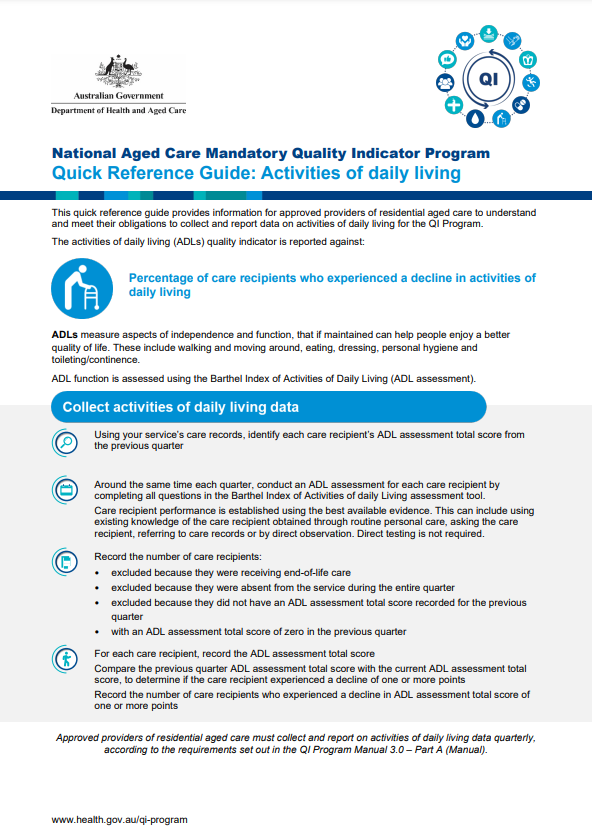
QI Program quick reference guide – Activities of daily living
This quick reference guide provides residential aged care providers with instructions on collecting and reporting data for the Quality Indicator Program. It focuses on measuring the decline in activities of daily living (ADLs) using the Barthel Index, helping providers monitor care recipients' functional independence and implement appropriate support strategies. This resource may refer to information that will be updated from 1 November 2025 to align with the new Aged Care Act and Quality Standards.
QI Program Module 7 – Activities of daily living
This resource explains the importance of measuring activities of daily living (ADLs) for older people in residential aged care. It guides providers on using the Barthel Index to assess ADLs quarterly, helping identify risks of functional decline and implement strategies to maintain independence and improve quality of life. This resource may refer to information that will be updated from 1 November 2025 to align with the new Aged Care Act and Quality Standards.
National Aboriginal and Torres Strait Islander Health Workforce Strategic Framework and Implementation Plan 2021–2031
This resource is separated into 2 parts: the vision, objectives and target; and the strategic framework and implementation plan. This plan has 6 overarching strategic directions. These directions support the ongoing development of the size, capability and capacity of the Aboriginal and Torres Strait Islander health workforce.
This resource may refer to information that will be updated from 1 November 2025 to align with the new Aged Care Act and Quality Standards.

National Allied Health Workforce Strategy
The National Allied Health Workforce Strategy outlines a plan to address workforce challenges, including the shortage of allied health professionals in Australia. It focuses on aligning the supply of professionals with current and future needs, ensuring workforce safety and quality, and enhancing sector-specific data collection. The strategy aims to support workforce planning and development.
This resource may refer to information that will be updated from 1 November 2025 to align with the new Aged Care Act and Quality Standards.
National Aged Care Mandatory Quality Indicator Program
The National Aged Care Mandatory Quality Indicator Program aids residential aged care providers in enhancing their services by allowing them to benchmark their performance against national outcomes. The program resource provides guidance on data submission frequency, explains the program's role, and provides more information on open hours and contact details.
This resource may refer to information that will be updated from 1 November 2025 to align with the new Aged Care Act and Quality Standards.
Our work related to the rural health workforce
This resource provides an overview of various initiatives and programs supporting the rural health workforce in Australia. It includes training programs, scholarships, and recruitment schemes aimed at addressing workforce shortages in rural and remote areas. The resource outlines efforts to improve healthcare access and quality through targeted support for medical and nursing professionals. This resource may refer to information that will be updated from 1 November 2025 to align with the new Aged Care Act and Quality Standards.
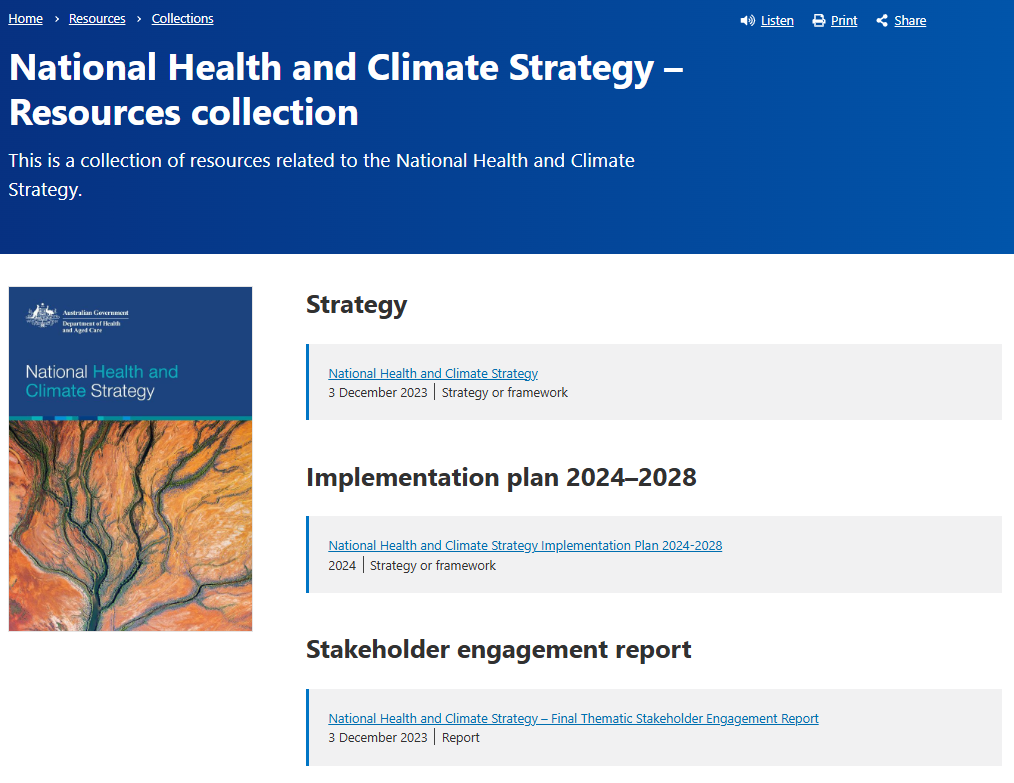
National Health and Climate Strategy – Resources collection
This is a collection of resources related to the National Health and Climate Strategy. The collection includes the strategy, implementation plan 2024-2028, stakeholder engagement report, governance information and publications.
This resource may refer to information that will be updated from 1 November 2025 to align with the new Aged Care Act and Quality Standards.
National Medical Workforce Strategy 2021–2031
This resource outlines the National Medical Workforce Strategy 2021–2031, developed to guide long-term medical planning across Australia. It provides a structured approach to creating a sustainable, well-trained medical workforce. The strategy includes 25 actions under 5 priority areas: collaboration, rebalancing supply, reforming training, building generalist capabilities, and ensuring workforce flexibility.
This resource may refer to information that will be updated from 1 November 2025 to align with the new Aged Care Act and Quality Standards.
National Notifiable Diseases Surveillance System (NNDSS)
This resource provides an overview of the National Notifiable Diseases Surveillance System (NNDSS), which tracks over 70 diseases that pose a risk to public health in Australia. It helps identify disease trends, supports outbreak responses, and informs public health policies. The system collects de-identified data from states and territories to ensure coordinated disease management.
This resource may refer to information that will be updated from 1 November 2025 to align with the new Aged Care Act and Quality Standards.
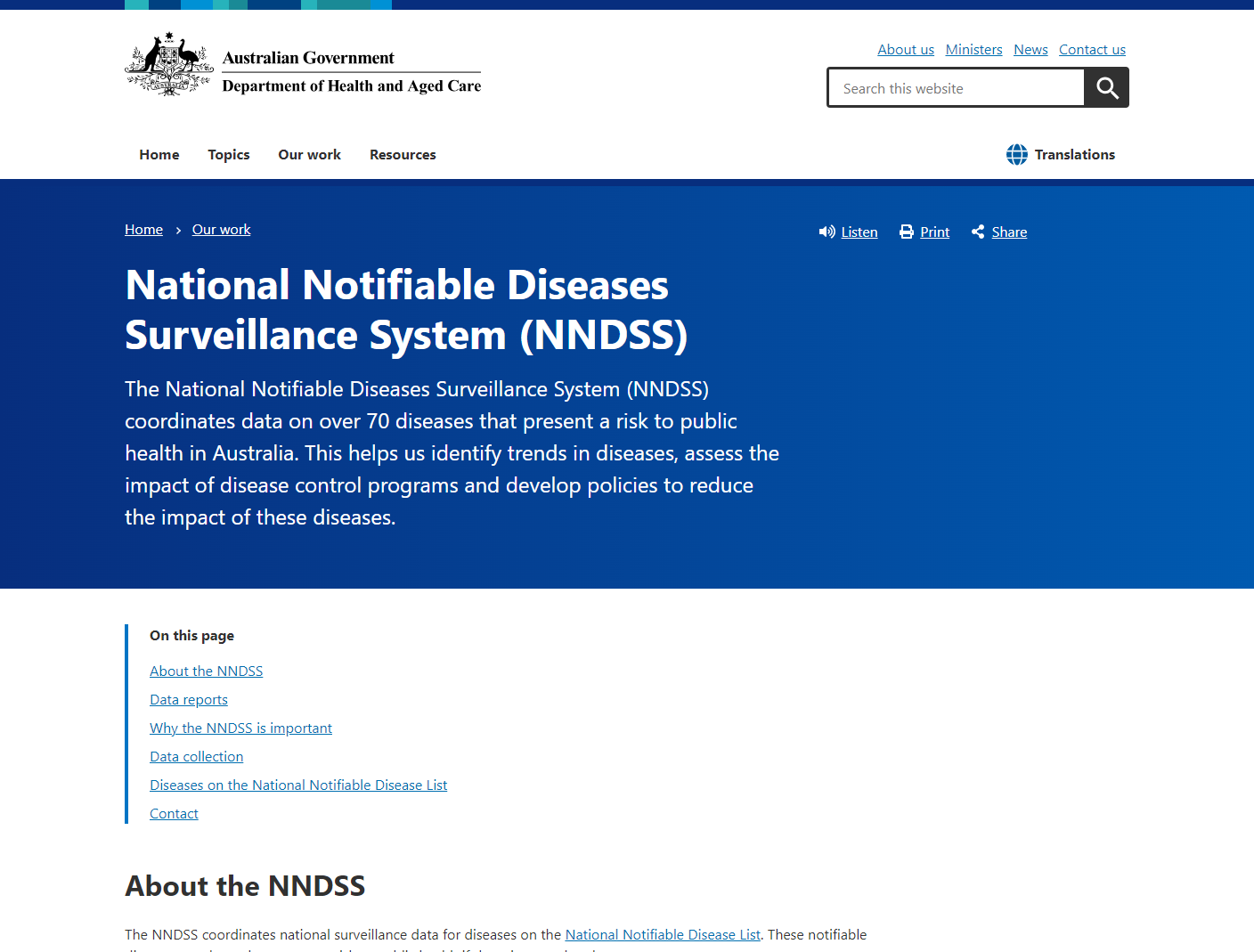
National Safety and Quality Health Service Standards (second edition)
This resource outlines the second edition of the National Safety and Quality Health Service (NSQHS) Standards. It aims to protect people from harm and improve healthcare quality. The 8 standards cover areas like clinical governance, infection control, and medication safety, supporting aged care providers in meeting safety and quality expectations.
This resource may refer to information that will be updated from 1 November 2025 to align with the new Aged Care Act and Quality Standards.
National Nursing Workforce Strategy
The resource provides information on the National Nursing Workforce Strategy, which outlines long-term plans for workforce sustainability, diversity, and development. It supports collaboration among stakeholders, promotes evidence-based care, and addresses challenges in regional and remote areas to ensure quality nursing care across the healthcare system.
This resource may refer to information that will be updated from 1 November 2025 to align with the new Aged Care Act and Quality Standards.
Non-compliance
This resource outlines the processes for managing non-compliance in aged care services. It includes information on banning orders, enforceable undertakings, and how the Commission addresses non-compliance through monitoring, complaints directions, and enforcement policies. Providers can also search for performance reports to track compliance.
This resource may refer to information that will be updated from 1 November 2025 to align with the new Aged Care Act and Quality Standards.
Governing for Reform in Aged Care Program
This resource outlines the Governing for Reform in Aged Care Program, designed to strengthen corporate and clinical governance capabilities for aged care leaders. It provides tools, online learning modules, webinars, and podcasts to support governance improvement and help leaders engage in reform efforts.
This resource may refer to information that will be updated from 1 November 2025 to align with the new Aged Care Act and Quality Standards.
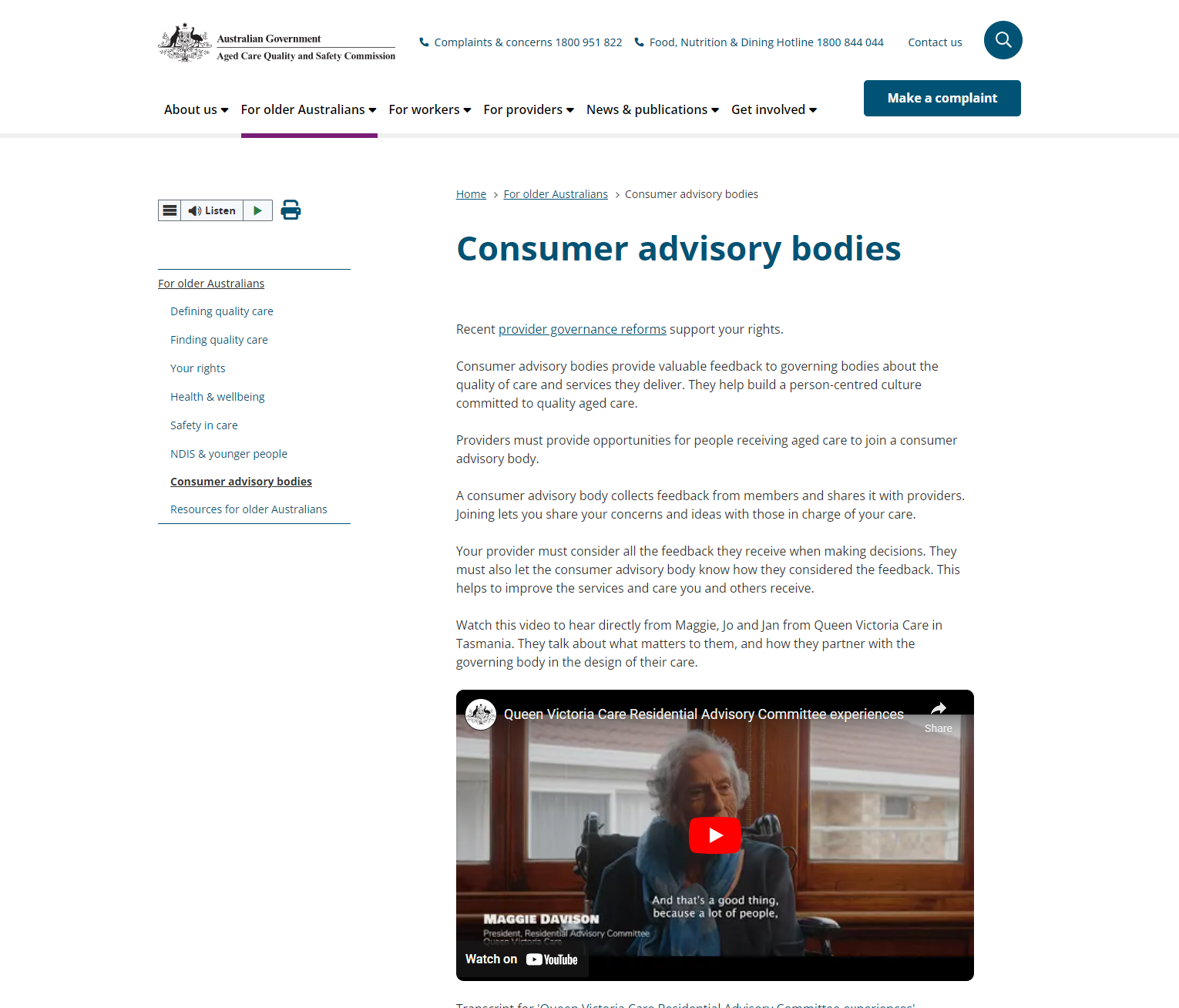
Consumer advisory bodies
This resource explains the role of consumer advisory bodies in aged care, which provide feedback to governing bodies on care and services. It outlines the process for joining, the importance of feedback in decision-making, and the responsibility of providers to offer participation opportunities annually.
This resource may refer to information that will be updated from 1 November 2025 to align with the new Aged Care Act and Quality Standards.
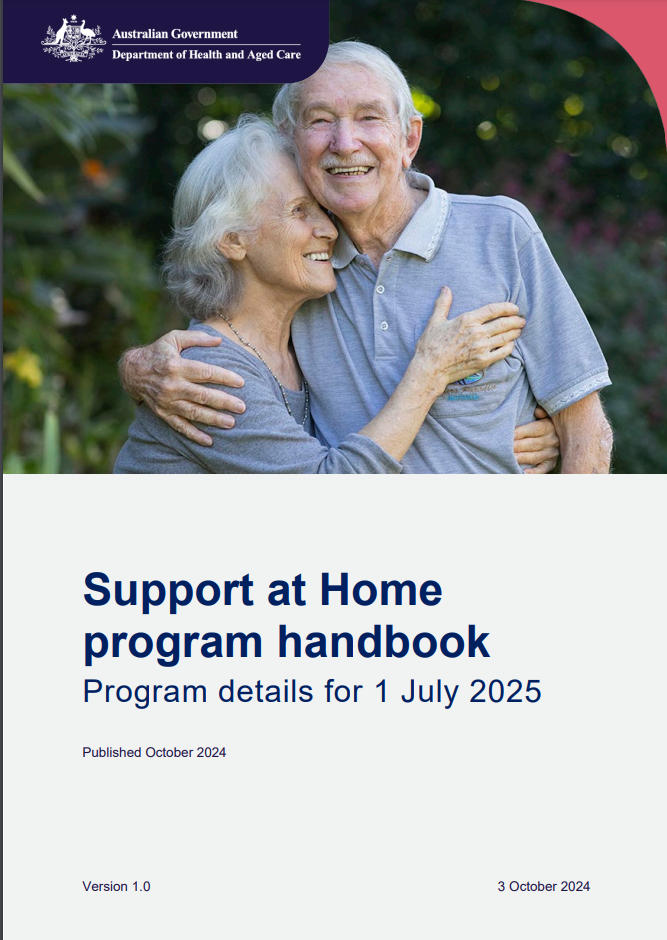
Support at Home program handbook
This resource outlines the design and key components of the Support at Home program, effective from 1 November 2025. It provides guidance for aged care providers on service delivery, budgeting, and assessment processes, helping older people remain independent at home. It also details regulatory requirements and transition from existing programs.
This resource may refer to information that will be updated from 1 November 2025 to align with the new Aged Care Act and Quality Standards.
Managing emergency situations
This resource outlines strategies for managing emergency situations, focusing on risk mitigation, preparedness, response, and recovery. It includes guidelines on emergency planning, crisis leadership, and community engagement, emphasising coordinated efforts across various sectors to handle natural or human-caused disasters.
Guidance and requirements may differ across states and territories. Users are responsible for considering their individual circumstances and specific state-based regulations and legislation.
Provider Governance Policy
Under the new Act, registered providers will need to meet certain governance obligations.
Our Provider Governance Policy outlines our expectations of providers and guiding principles of good governance. It includes:
- definitions and principles of good governance
- provider governance obligations
- how we collect provider governance information
- how we respond to provider governance risks.
 Provider Governance Policy (PDF 2.07 MB)
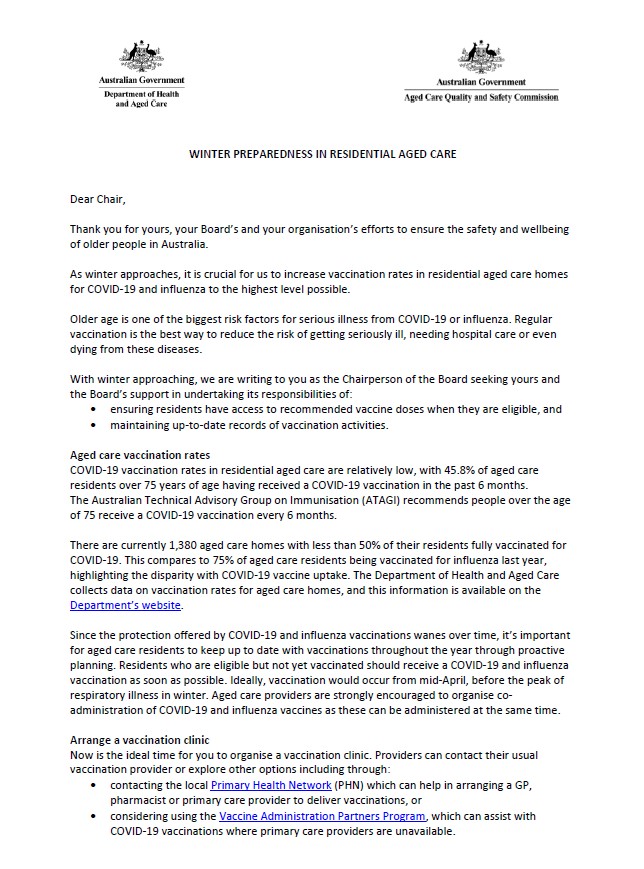
Joint letter from CMO and Commissioner to Board Chairs on winter preparedness 2025
Joint letter from the Chief Medical Officer Professor Anthony Lawler and Commissioner Liz Hefren-Webb to Board Chairs, Residential Aged Care Providers on winter preparedness in residential aged care.
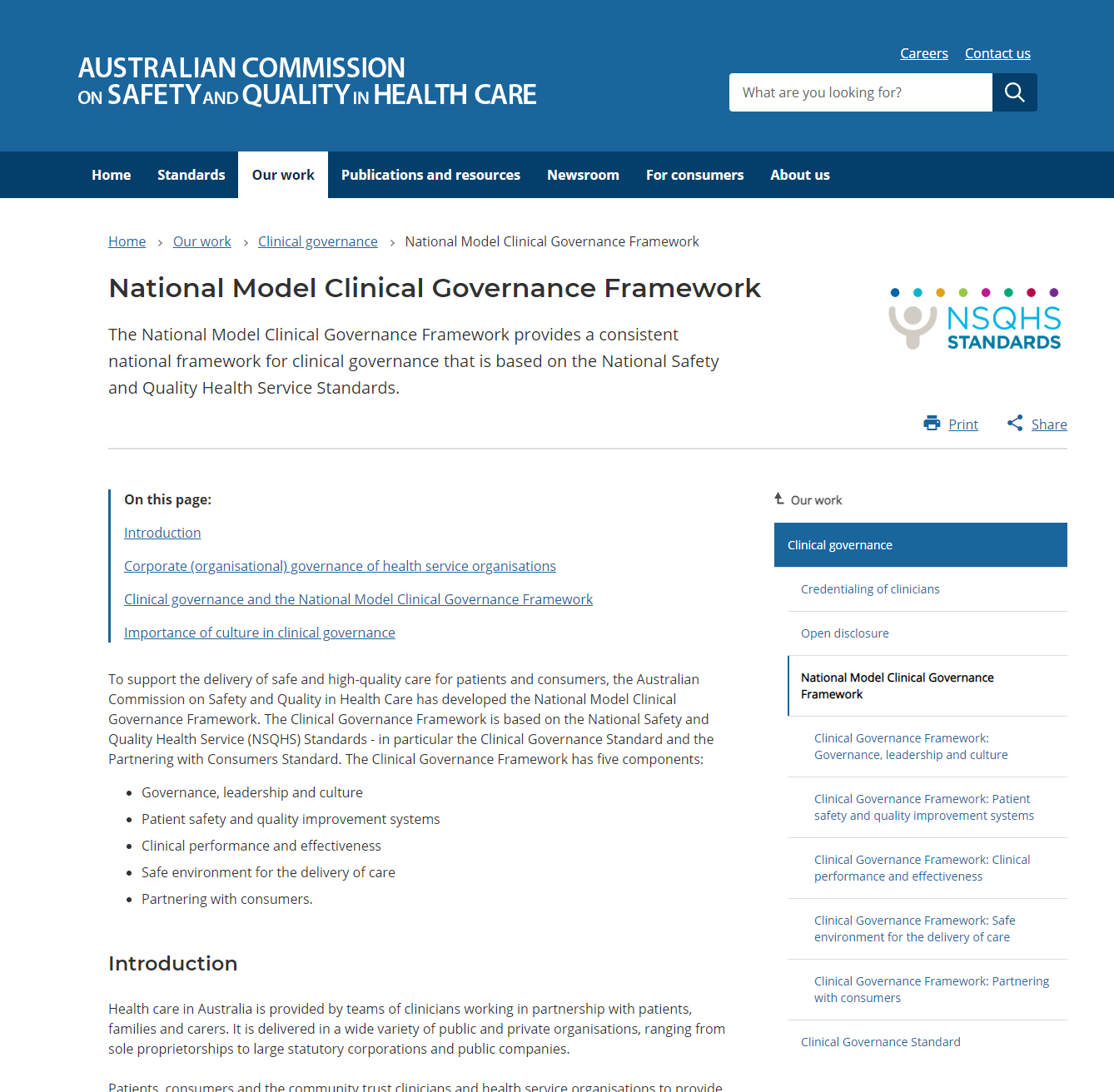
National Model Clinical Governance Framework
This framework provides a consistent national approach to clinical governance in healthcare, focusing on governance structures, leadership, culture, safety and quality improvement systems, clinical performance, care environment, and consumer partnerships. It supports healthcare organisations in developing systems to ensure accountability, safety, quality of care, and continuous improvement, following the NSQHS Standards.
This resource may refer to information that will be updated from 1 November 2025 to align with the new Aged Care Act and Quality Standards.