The Quality Standards Resource Centre helps extend understanding of the strengthened Aged Care Quality Standards, which take effect from 1 November 2025. The Resource Centre will be updated to reflect key changes made to the draft strengthened Standards. You can search for resources by using keywords, or filtering by standard, outcome, audience and theme. Before using the Resource Centre, please read the terms of use.
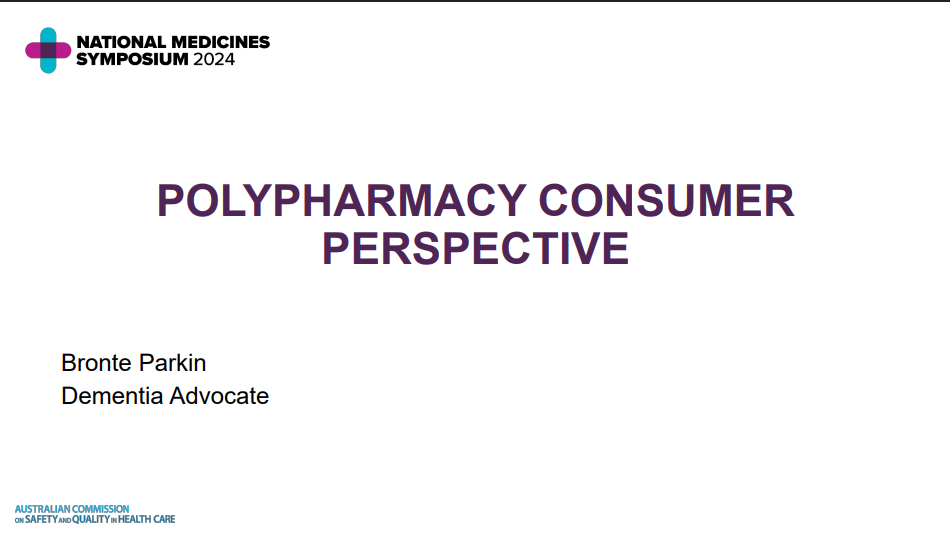
Polypharmacy Consumer Perspective - National Medicines Symposium 2024
This is a presentation on Polypharmacy Consumer Perspective. It includes details of a case example, resolution and care management, and key principles related to medicines and goal of care. This resource may refer to information that will be updated from 1 November 2025 to align with the new Aged Care Act and Quality Standards.
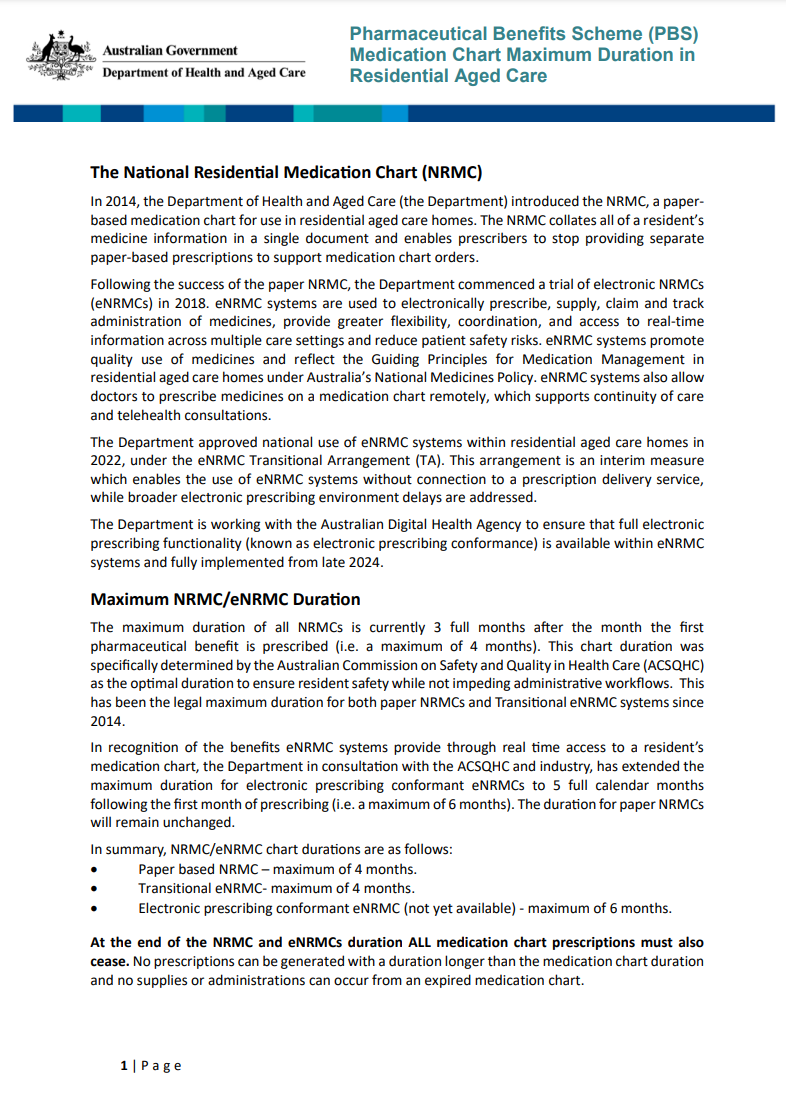
Pharmaceutical Benefits Scheme (PBS) medication chart maximum duration in residential aged care
This resource outlines the Pharmaceutical Benefits Scheme (PBS) medication chart's maximum duration in residential aged care. It explains the use of both paper-based and electronic National Residential Medication Charts (NRMC), highlighting their role in managing prescriptions, medication supply, and administration. The document provides guidance on compliance, chart expiry, and medication safety within aged care facilities. This resource may refer to information that will be updated from 1 November 2025 to align with the new Aged Care Act and Quality Standards.
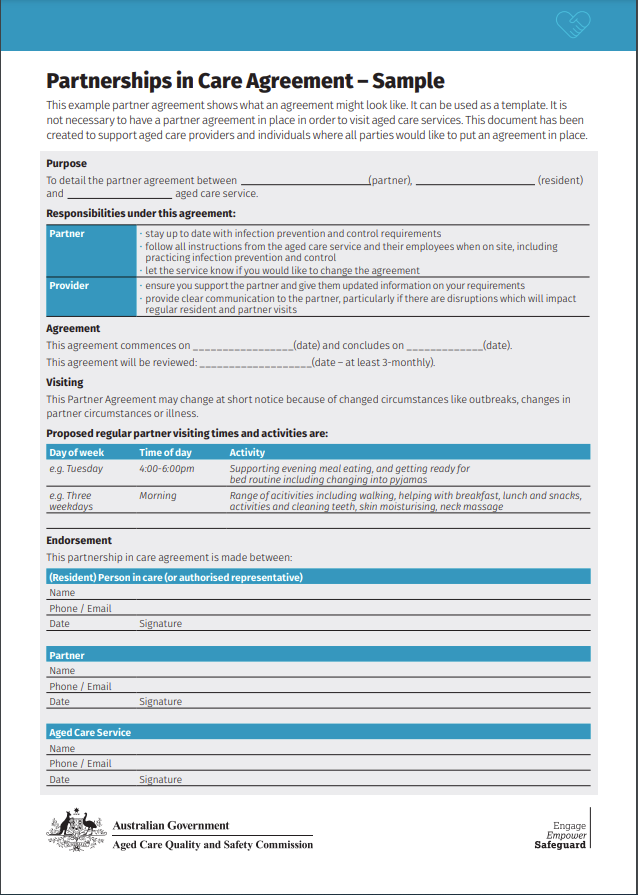
Partnerships in Care Agreement – Sample
This resource is a sample of what a partner agreement might look like. It can be used as a template. This document has been created to support aged care providers and individuals where all parties would like to put an agreement in place.
This resource may refer to information that will be updated from 1 November 2025 to align with the new Aged Care Act and Quality Standards.
 Partnerships in Care Agreement – Sample (PDF 108.45 KB)
Case study - Safe and Appropriate use of Psychotropic Medicines - Residential Aged Care
This resource is a fictional scenario that follows an older person’s care pathway with a residential aged care provider. The resource focuses on the systems and processes to support high-quality care of older people living with cognitive impairment. It includes 4 key priority areas: person-centred care, medication management, managing changed behaviours and transitions of care.
This resource may refer to information that will be updated from 1 November 2025 to align with the new Aged Care Act and Quality Standards.
Case study - Safe and Appropriate use of Psychotropic Medicines - In-home Aged Care
This resource is a fictional scenario that follows an older person’s care pathway with an in-home aged care provider. The resource focuses on the systems and processes to support high-quality care of older people living with dementia. It includes 4 key priority areas: person-centred care, medication management, managing changed behaviours and transitions of care.
This resource may refer to information that will be updated from 1 November 2025 to align with the new Aged Care Act and Quality Standards.

Safe and appropriate use of psychotropic medicines for aged care - Fact sheet
This fact sheet is informed by the Psychotropic Medicines in Cognitive Disability or Impairment Clinical Care Standard (CCS), developed by the Australian Commission on Safety and Quality in Health Care. The CCS describes the safe and appropriate use of psychotropic medicines for people with cognitive disability or impairment, in a way that upholds their rights, dignity, health and quality of life.
This resource may refer to information that will be updated from 1 November 2025 to align with the new Aged Care Act and Quality Standards.
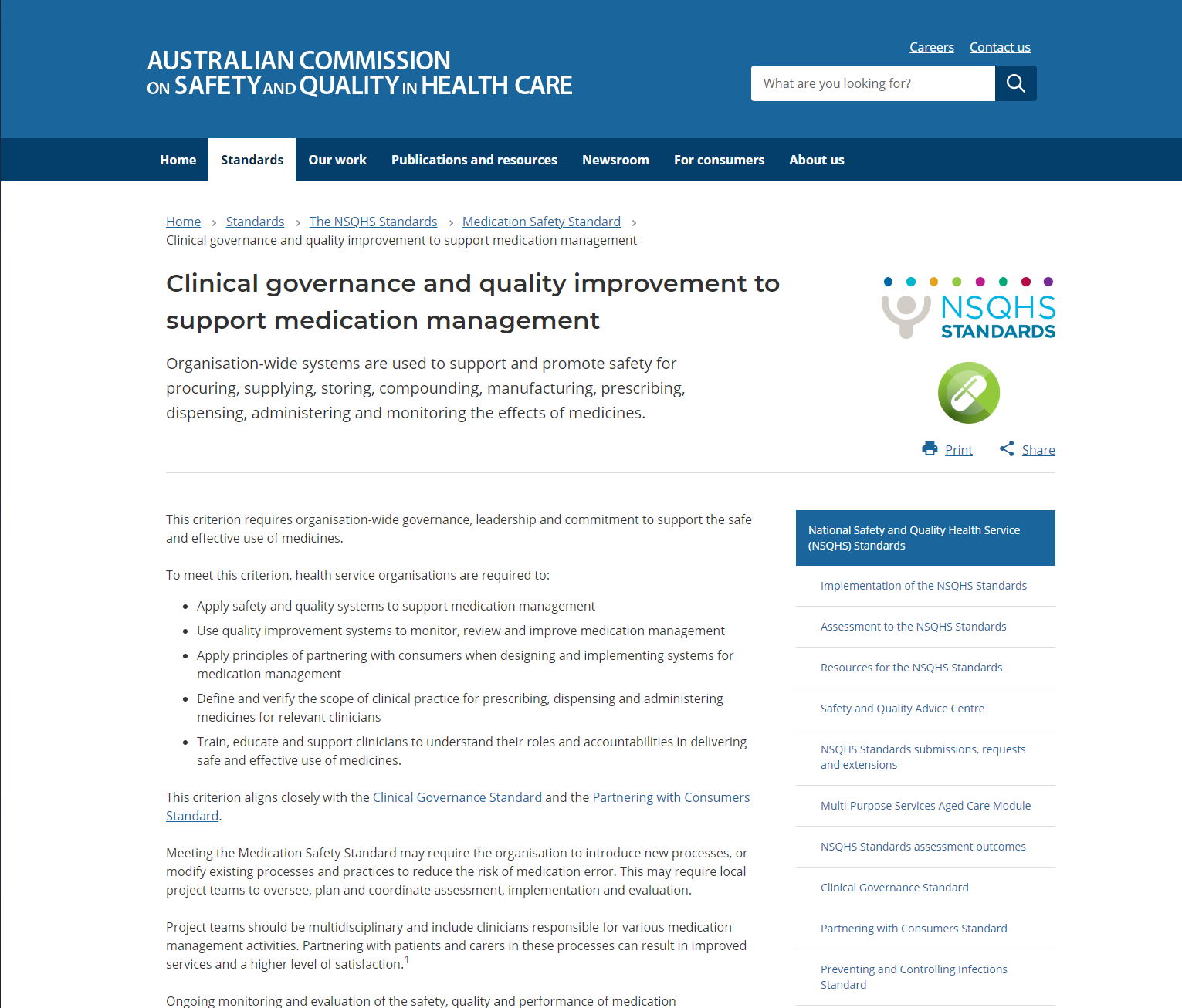
Clinical governance and quality improvement to support medication management
This resource outlines clinical governance and quality improvement systems to support safe medication management. It requires health service organisations to implement systems for procuring, prescribing, dispensing, and monitoring medicines.
This resource may refer to information that will be updated from 1 November 2025 to align with the new Aged Care Act and Quality Standards.
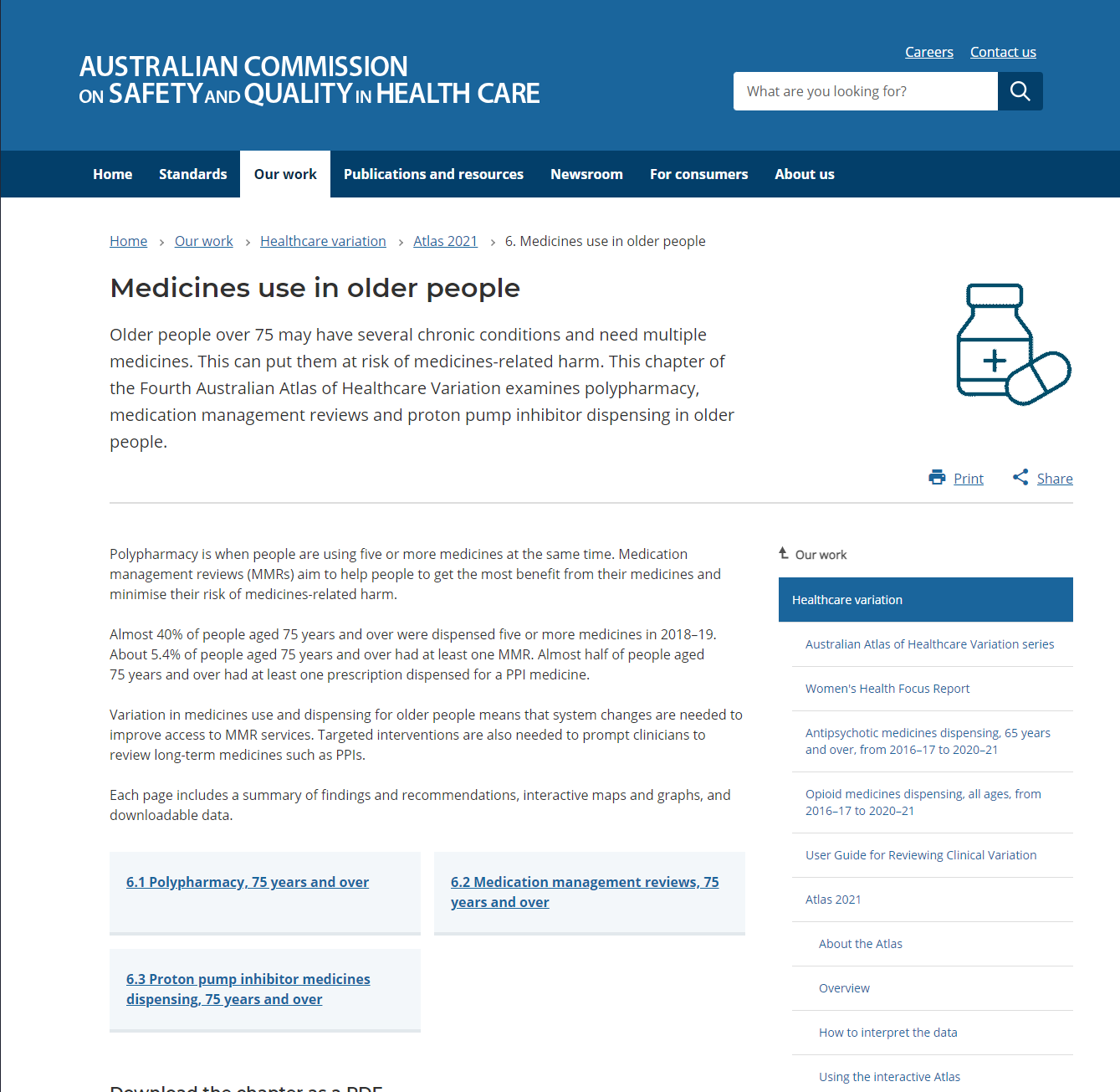
Medicines use in older people
This resource is chapter six of the Fourth Atlas 2021 of Healthcare Variations. The chapter examines medicines use in people aged 75 and over, focusing on polypharmacy, medication management reviews (MMRs), and proton pump inhibitor (PPI) dispensing. It highlights variations in medication use and recommends improving access to MMR services and interventions for safe, effective medication use in older populations.
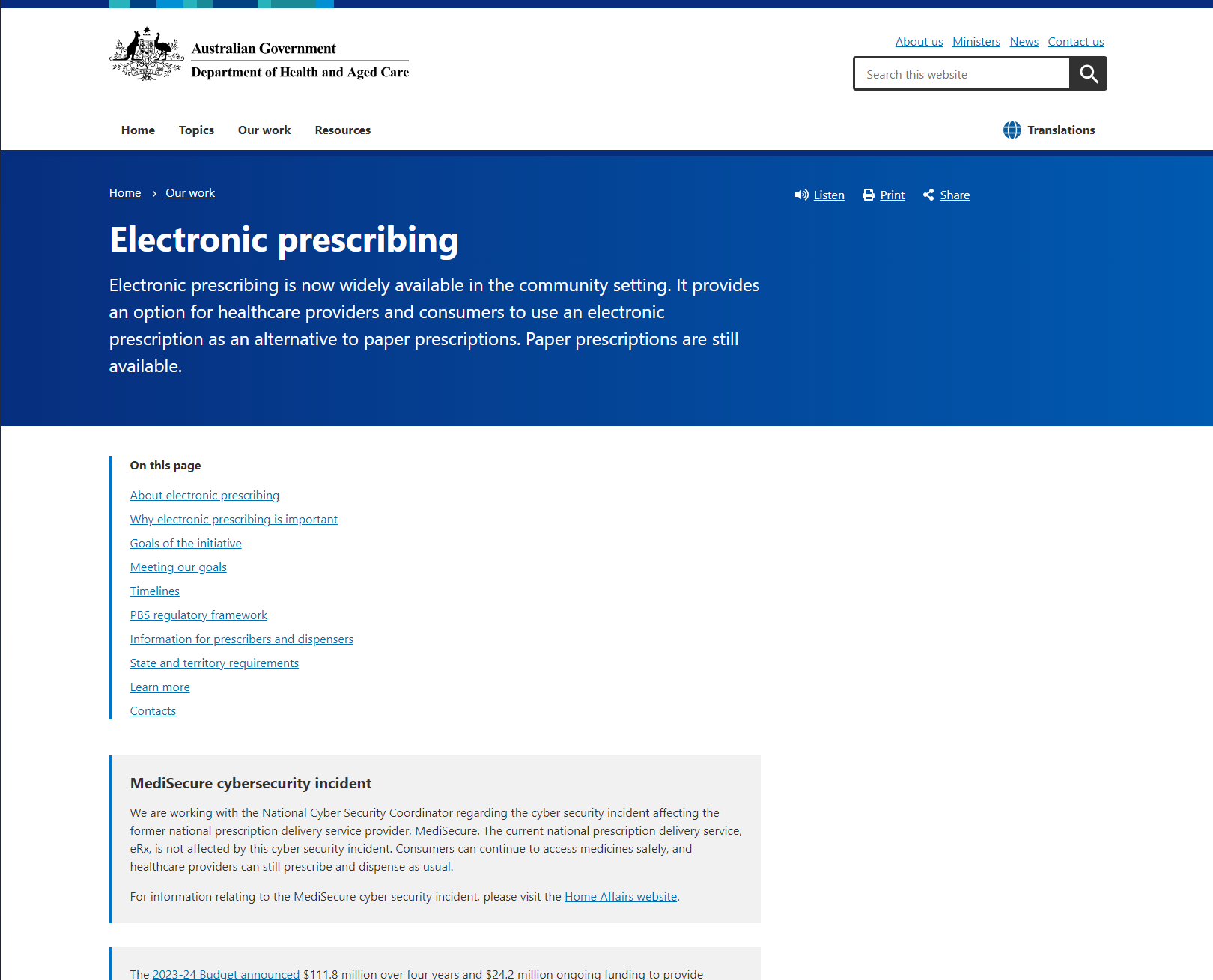
Electronic prescribing
This resource outlines the framework for electronic prescribing, offering an alternative to paper prescriptions for healthcare providers and consumers. It explains the benefits of electronic prescriptions, such as reducing errors, improving efficiency, and supporting medication safety. The resource also covers technical and legislative requirements for implementing electronic prescriptions in various healthcare settings.
This resource may refer to information that will be updated from 1 November 2025 to align with the new Aged Care Act and Quality Standards.
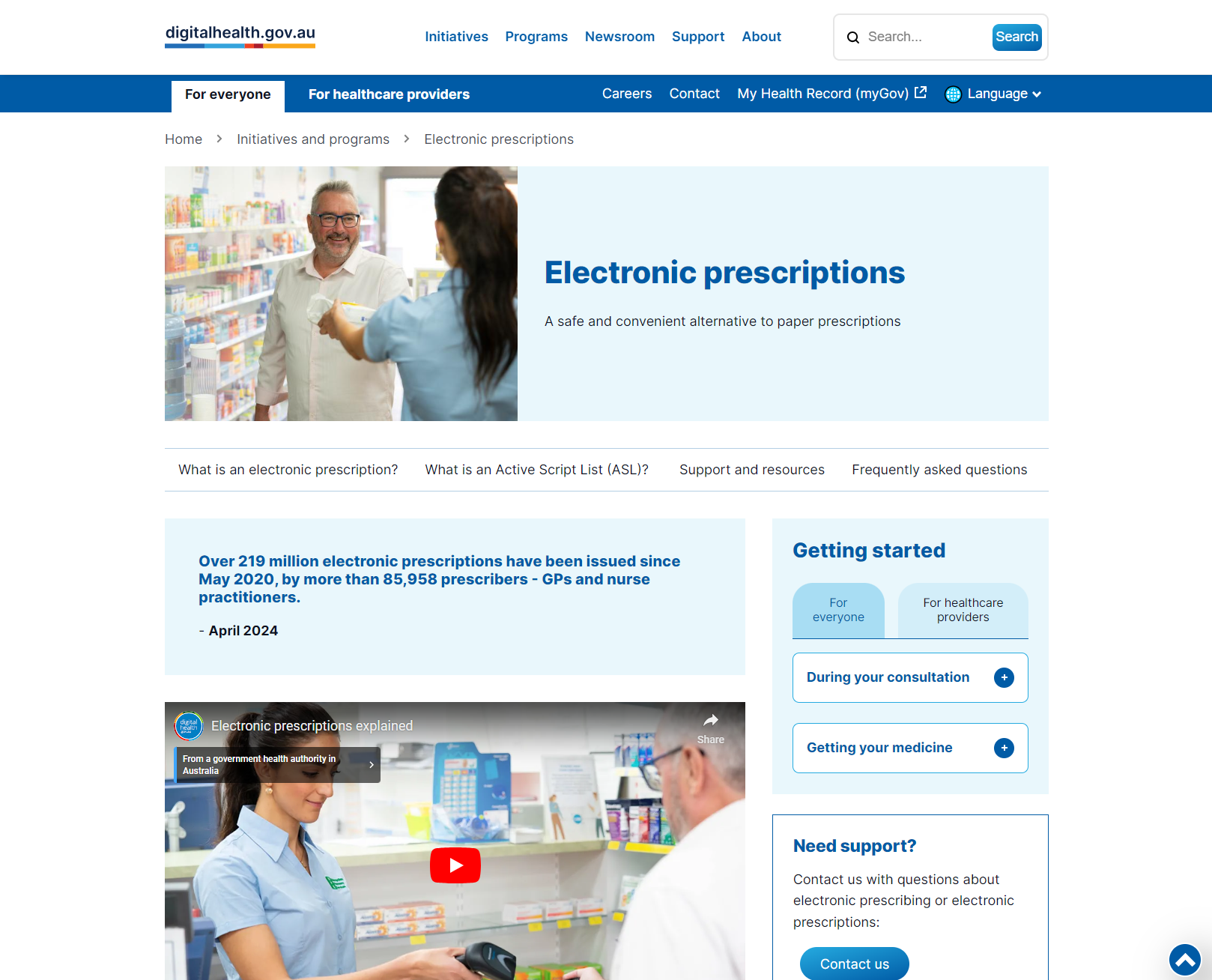
Electronic prescriptions
This resource provides an overview of electronic prescriptions, which offer a digital alternative to paper prescriptions. It explains how electronic prescriptions can be issued by healthcare providers and stored on digital devices for convenience. The resource also details the benefits of the Active Script List (ASL) for managing multiple prescriptions, enhancing efficiency and medicine safety.
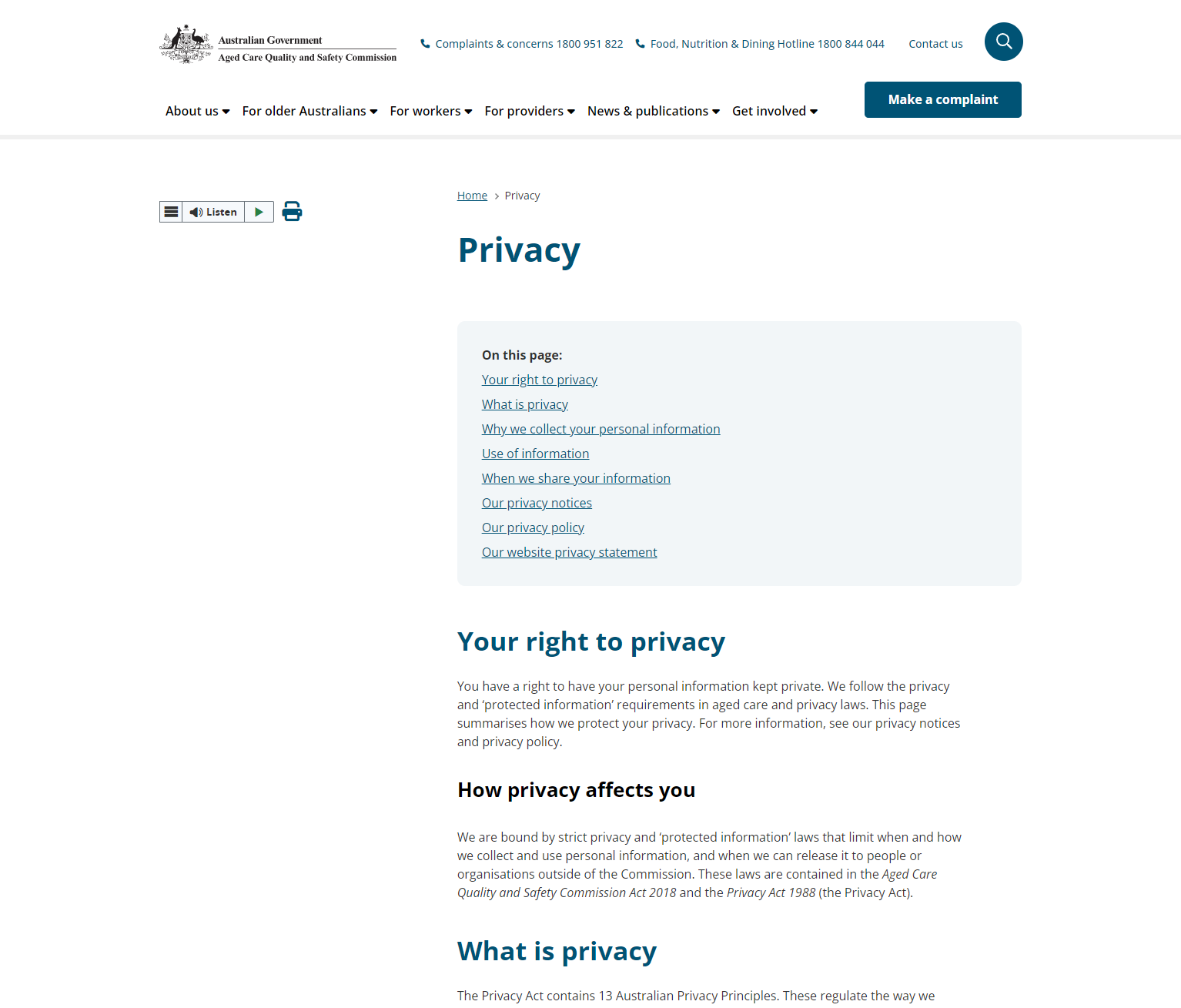
Privacy
This resource provides information about privacy rights in aged care, explaining how personal information is collected, used, and protected. It outlines privacy laws and principles governing the handling of personal data, including when information can be shared. The resource also links to privacy notices and policies for further details.
This resource may refer to information that will be updated from 1 November 2025 to align with the new Aged Care Act and Quality Standards.
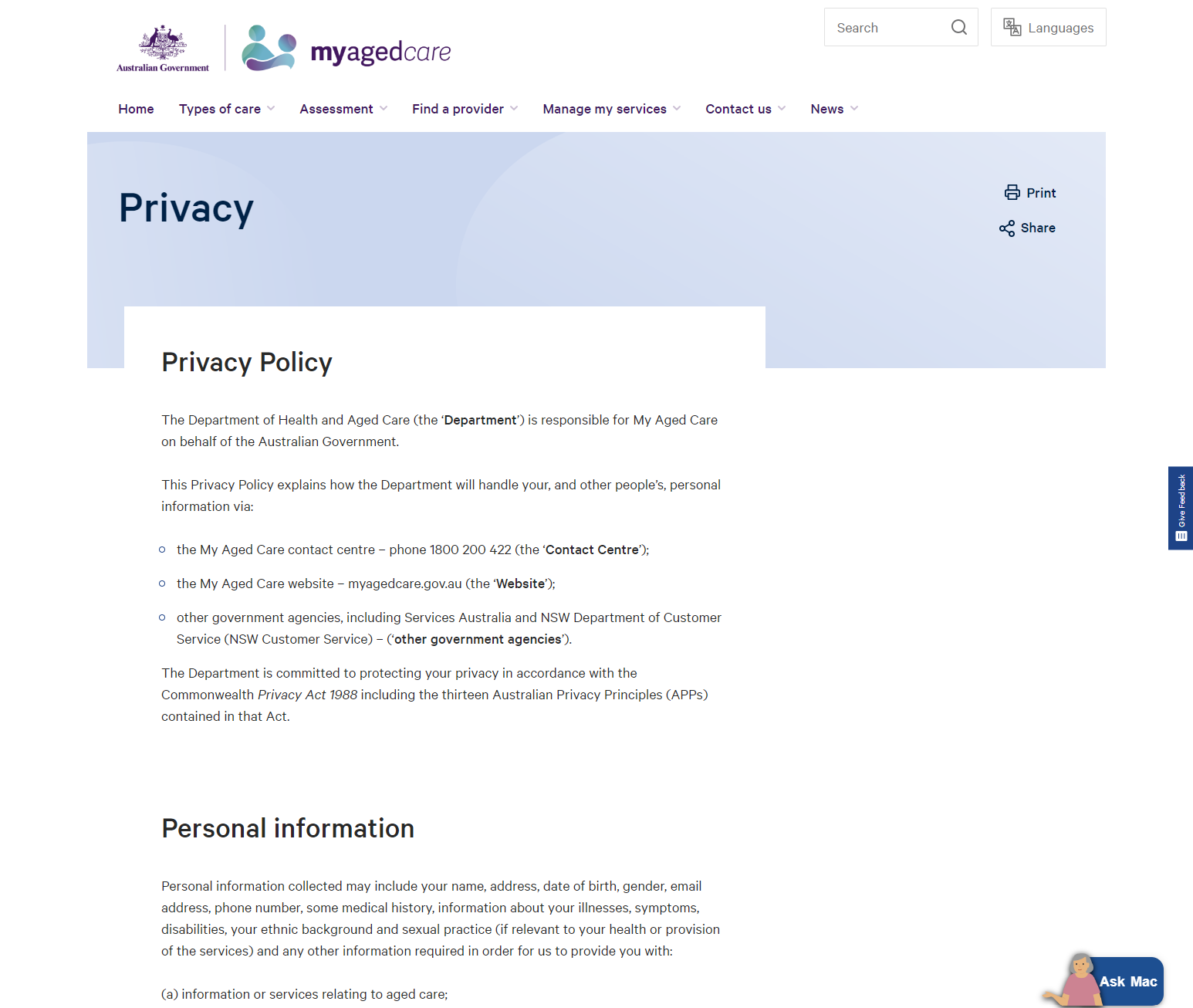
Privacy
This resource outlines the privacy policy for handling personal information through My Aged Care services. It explains how personal data is collected, used, and shared, ensuring compliance with the Privacy Act 1988. The document provides details on consent, data protection measures, and rights to access or correct personal information.
Your right to quality care
This resource outlines the rights of people receiving aged care, including the right to safe, high-quality care, dignity, independence, and privacy. It also covers steps for addressing concerns, accessing advocacy, and using the Charter of Aged Care Rights as a foundation for understanding and exercising these rights.
This resource may refer to information that will be updated from 1 November 2025 to align with the new Aged Care Act and Quality Standards.
First Nations - YouTube videos
This resource includes a series of YouTube videos developed by the Aged Care Quality and Safety Commission. Australian First Nations older people discuss good quality, culturally appropriate and safe aged care, including person-centred care, rights and how to speak up about care. This resource may refer to information that will be updated from 1 November 2025 to align with the new Aged Care Act and Quality Standards.

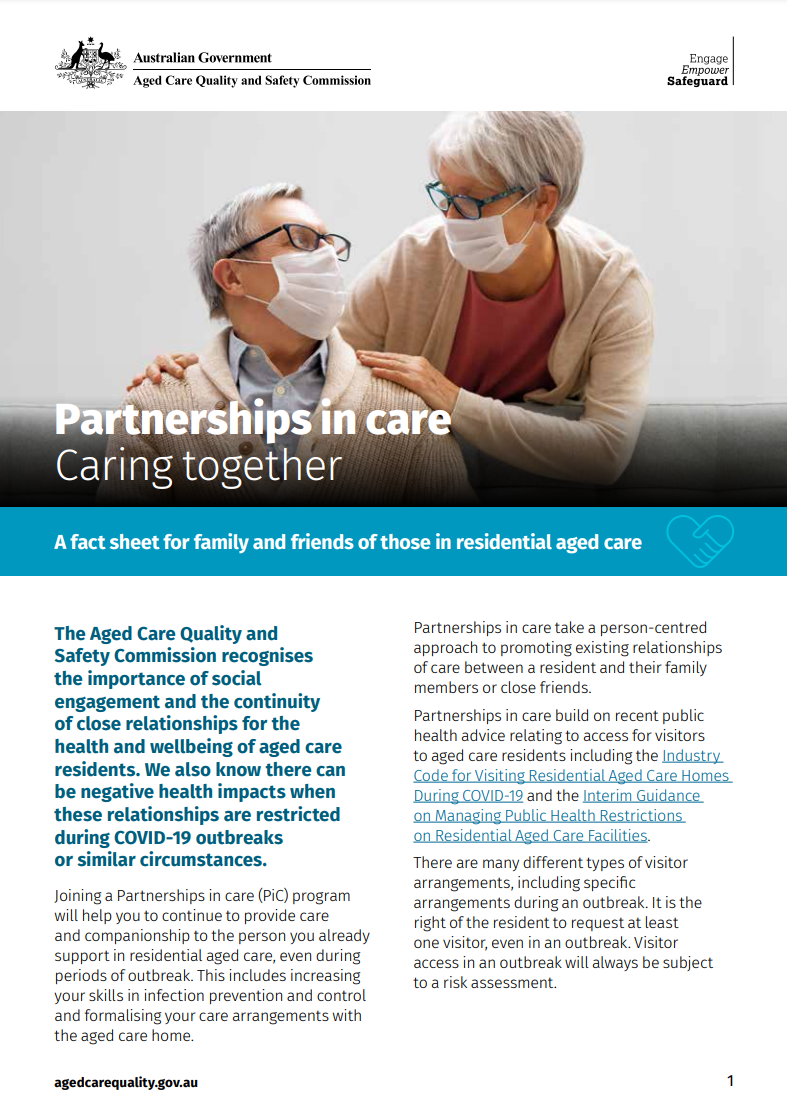
Partnering in care - Caring together
This resource outlines the Partnerships in Care (PiC) programme, which encourages family and friends to support companionship and care for people in aged care, even during outbreak situations. It provides guidance on infection control, visitation protocols, and formal engagement with care activities to enhance resident well-being in a safe, structured manner.
This resource may refer to information that will be updated from 1 November 2025 to align with the new Aged Care Act and Quality Standards.
The Poisons Standard (the SUSMP)
The Poisons Standard (SUSMP) is a resource that classifies medicines and chemicals into schedules for regulatory control in Australia. It outlines guidelines for labelling, packaging, and handling of substances. Key points include updates on scheduling decisions, which assist in public safety, healthcare, and chemical management.
This resource may refer to information that will be updated from 1 November 2025 to align with the new Aged Care Act and Quality Standards.