The Quality Standards Resource Centre helps extend understanding of the strengthened Aged Care Quality Standards, which take effect from 1 November 2025. The Resource Centre will be updated to reflect key changes made to the draft strengthened Standards. You can search for resources by using keywords, or filtering by standard, outcome, audience and theme. Before using the Resource Centre, please read the terms of use.
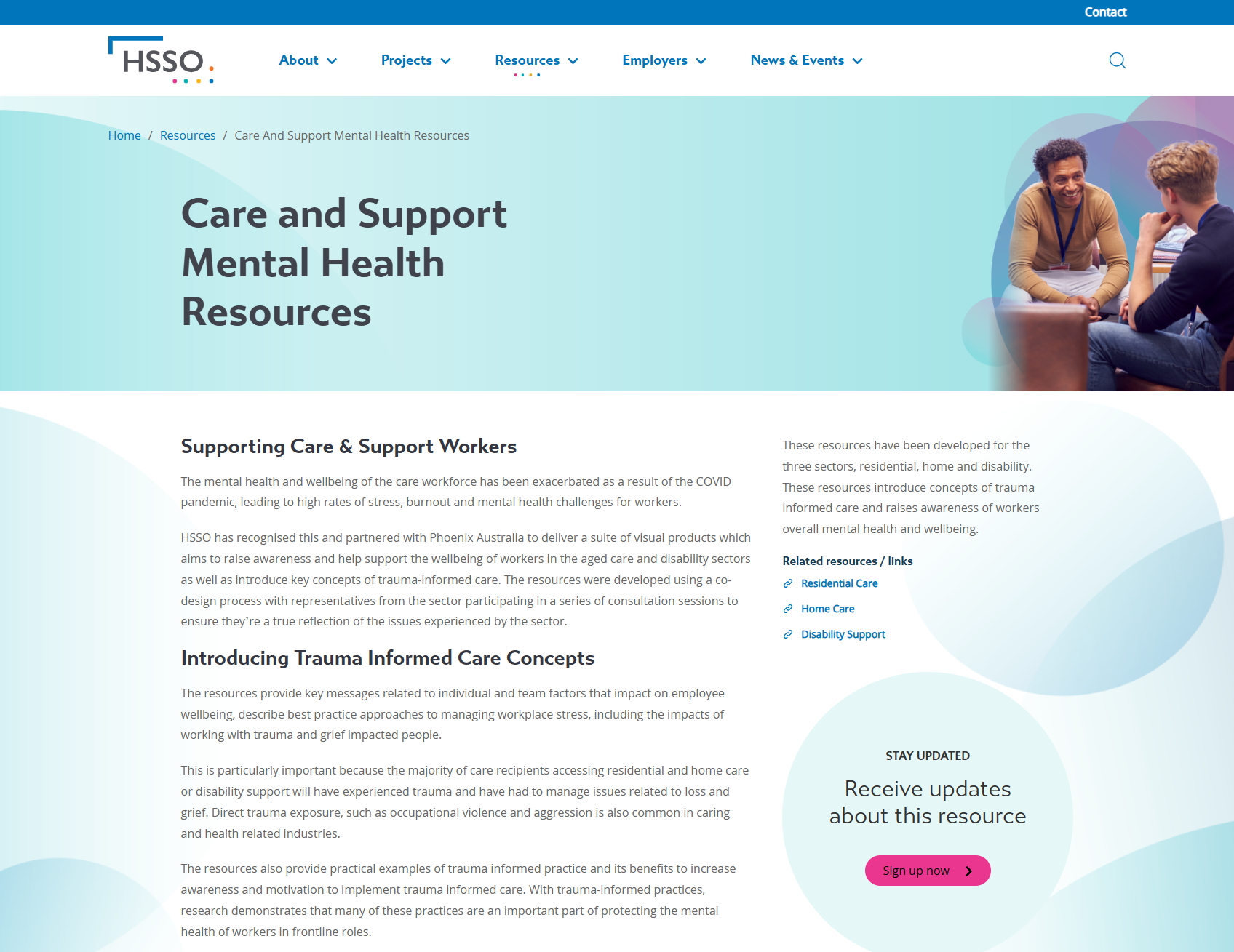
Care and Support Mental Health Resources
This resource offers mental health and trauma-informed care materials to support aged care, home care, and disability support workers. Developed with industry consultation, it provides strategies to improve worker wellbeing, manage workplace stress, and integrate trauma-informed practices, addressing common challenges like burnout and occupational stress.
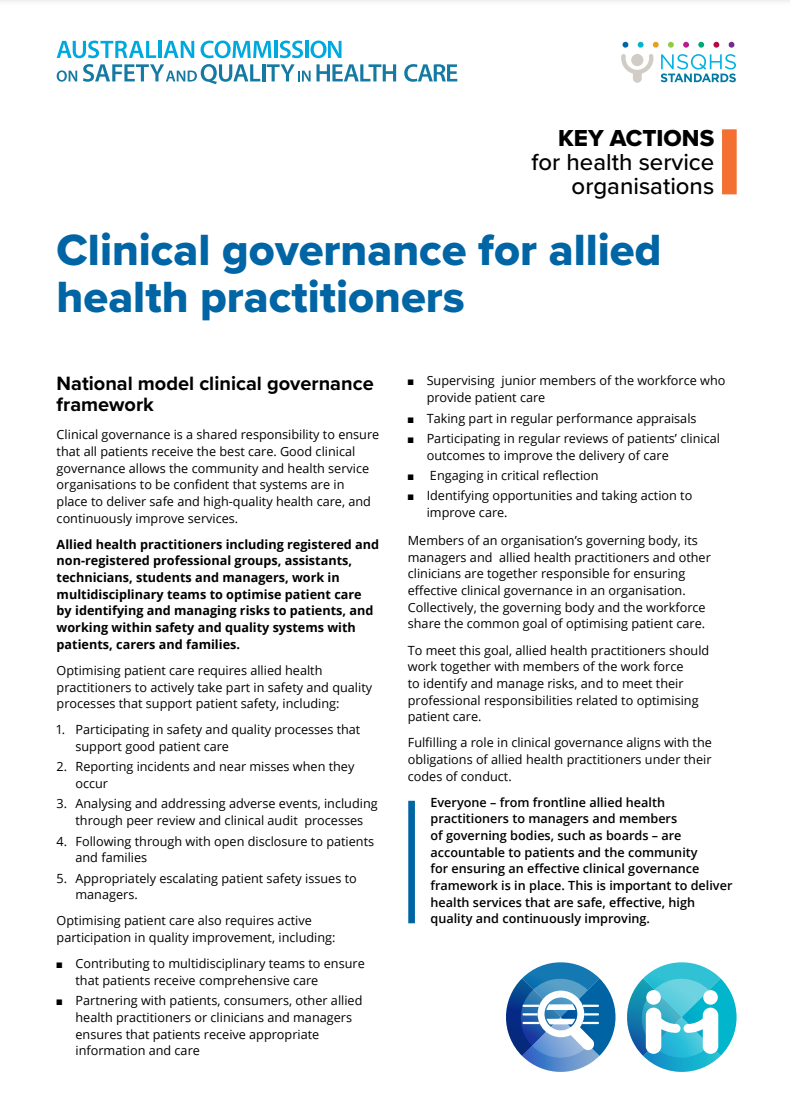
Clinical governance for allied health practitioners
This fact sheet identifies the clinical governance and roles and responsibilities of allied health practitioners. It provides information on the National Model Clinical Governance Framework and lists the roles and responsibilities across Governance, leadership and culture, patient safety and quality systems, clinical performance and effectiveness and safe environment for the delivery of care.
This resource may refer to information that will be updated from 1 November 2025 to align with the new Aged Care Act and Quality Standards.
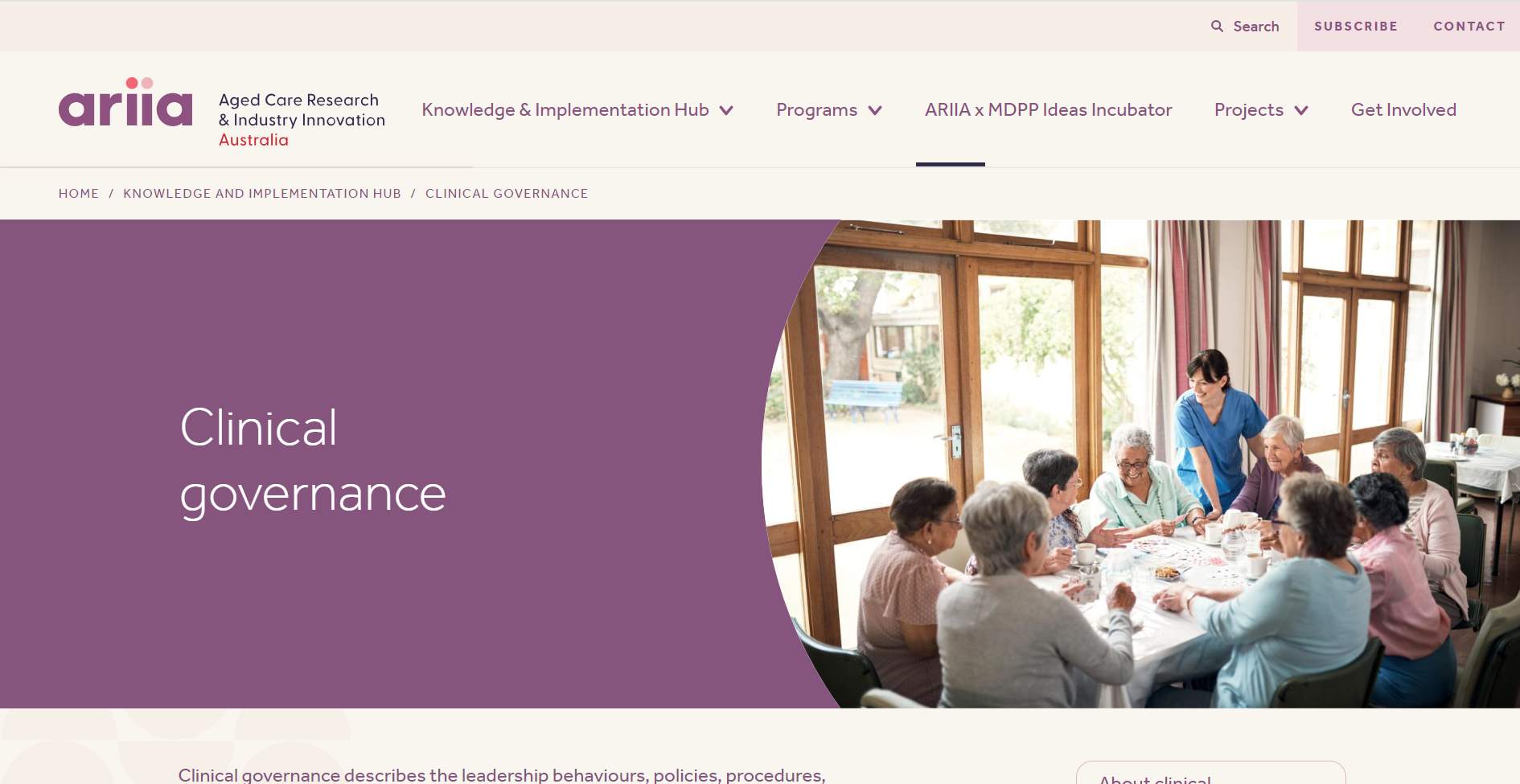
Knowledge and Implementation Hub - Clinical governance
This resource discusses clinical governance in aged care, highlighting its importance in delivering safe, high-quality care. It includes evidence-based resources, themes on governance like leadership, culture, consumer partnerships, and workforce strategies, and provides access to research projects, reviews, and practical guidance to support care quality improvements.
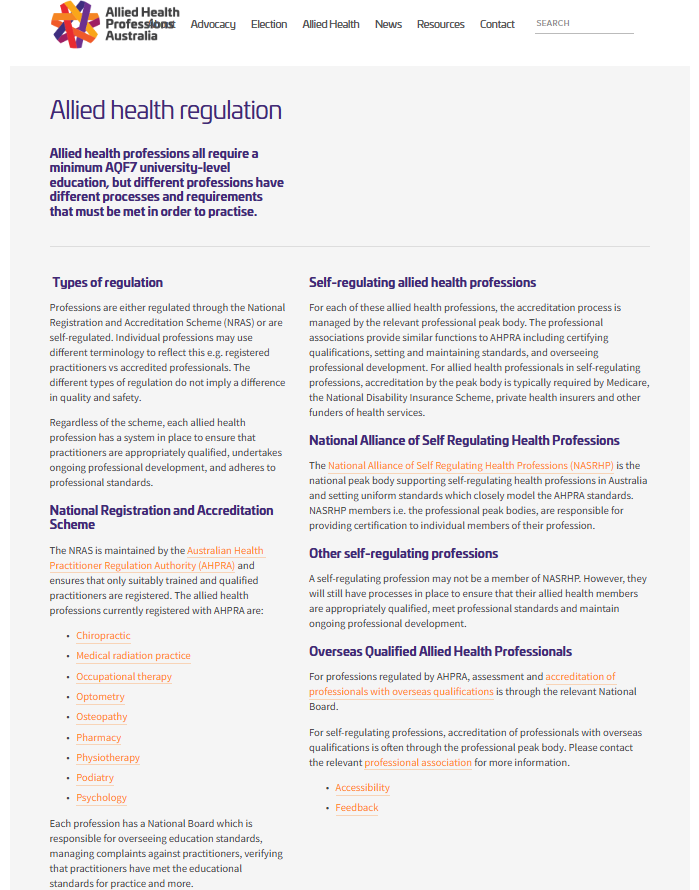
Allied health regulation
This resource provides information about the regulation of allied health professions in Australia. It includes those registered under the National Registration and Accreditation Scheme (NRAS) and self-regulating professions managed by professional peak bodies. It also provides links to further information about allied health professions currently registered with AHPRA and information for overseas-qualified practitioners.
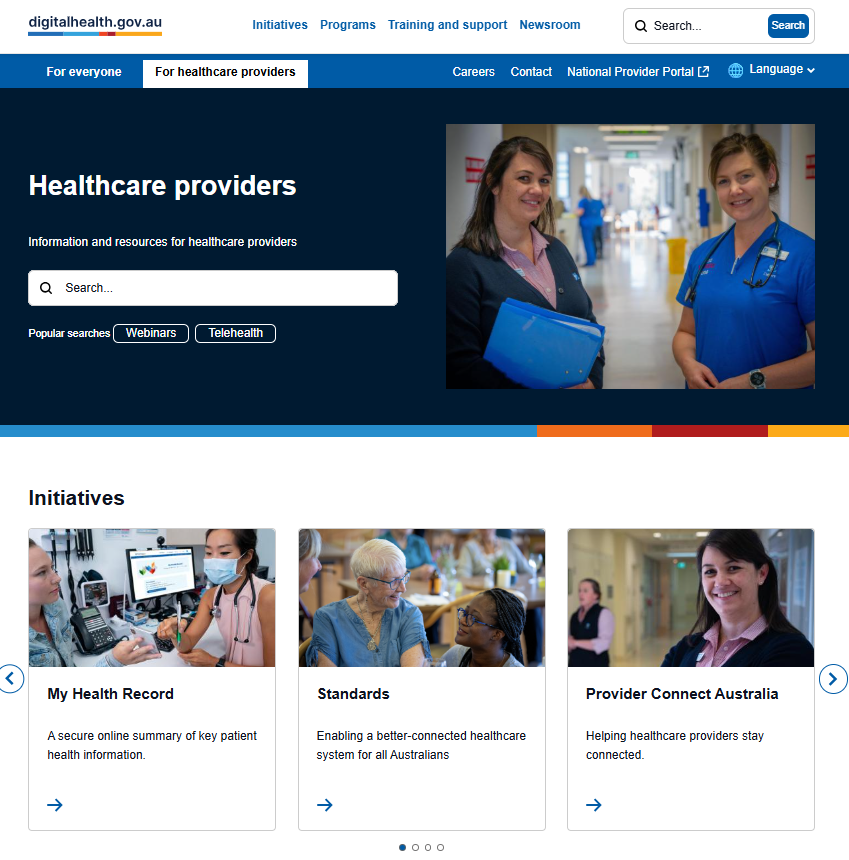
Digital health - For healthcare providers
This resource provides guidance for aged care assessors and service providers on accessing and using the My Aged Care portals. It outlines steps for setting up secure access through authentication methods, managing organisation information, and creating staff accounts, supporting efficient service delivery and assessment processes.
This resource may refer to information that will be updated from 1 July 2025 to align with the new Aged Care Act and Quality Standards.
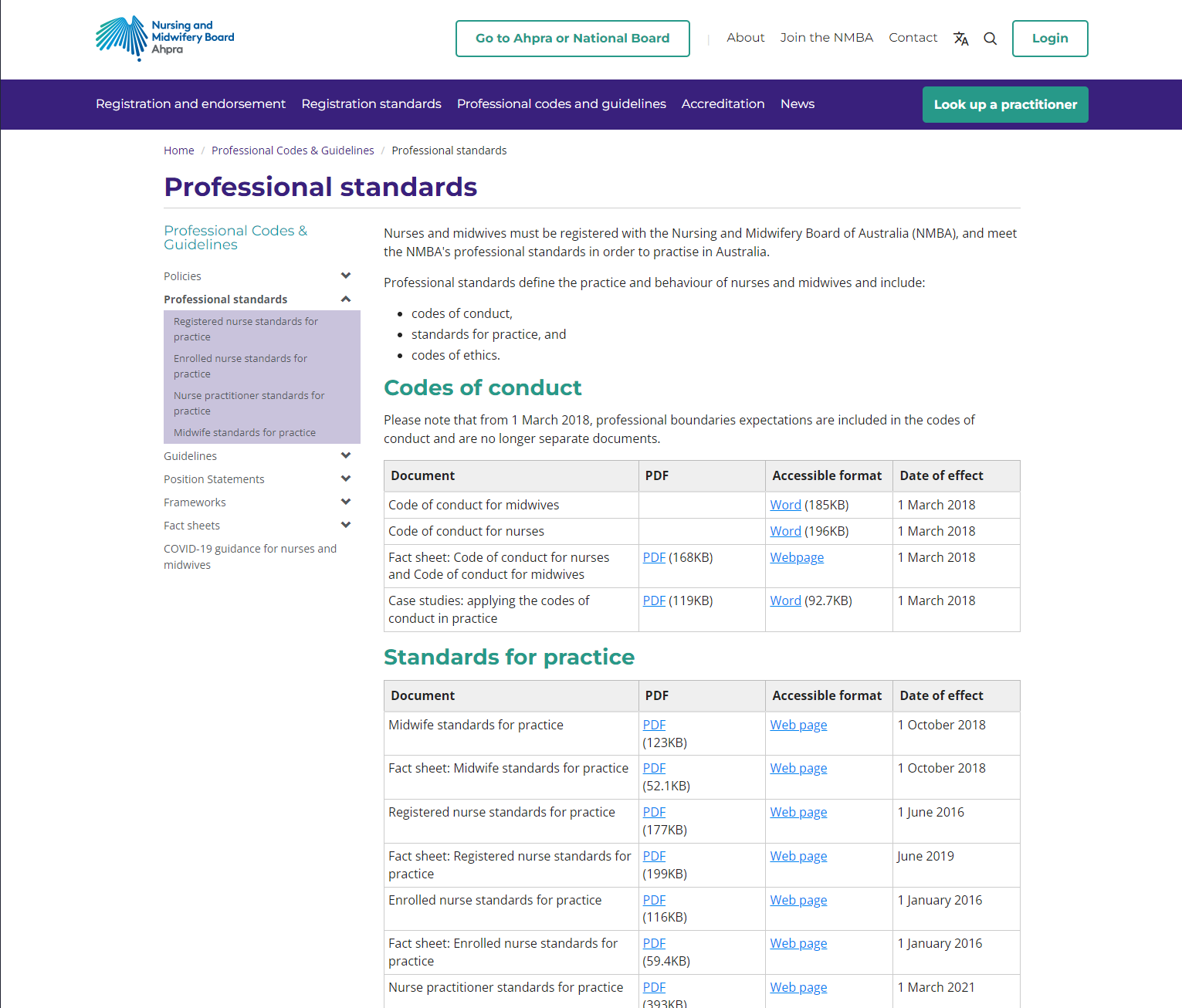
Nursing and Midwifery Board - Professional standards
This resource outlines the professional standards required for nurses and midwives to practise in Australia, including codes of conduct, standards for practice, and codes of ethics. It provides access to various documents, fact sheets, and guidelines that define the expected practice and behaviour for different nursing roles.
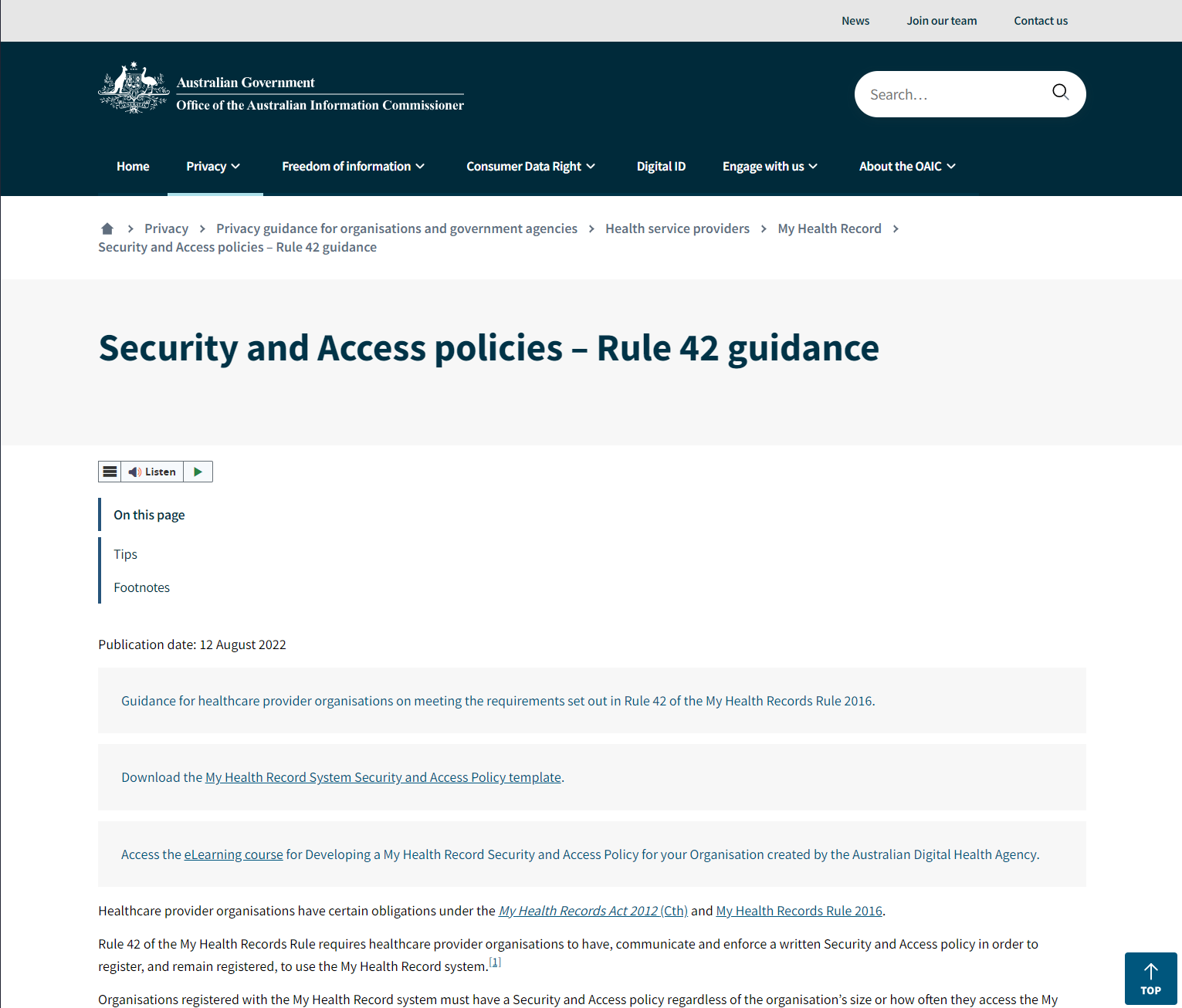
Security and access policies - Rule 42 guidance
This resource provides guidance for healthcare provider organisations to meet Rule 42 of the My Health Records Rule 2016. It covers creating, communicating, and enforcing a written Security and Access policy to access the My Health Record system, addressing authorisation, training, security measures, and risk mitigation.
National Clinical Terminology Service
This resource provides information for healthcare providers on digital health tools and initiatives. It covers services such as My Health Record, secure messaging, electronic prescriptions, and telehealth. It supports providers in using digital technologies to enhance healthcare delivery and improve patient outcomes.
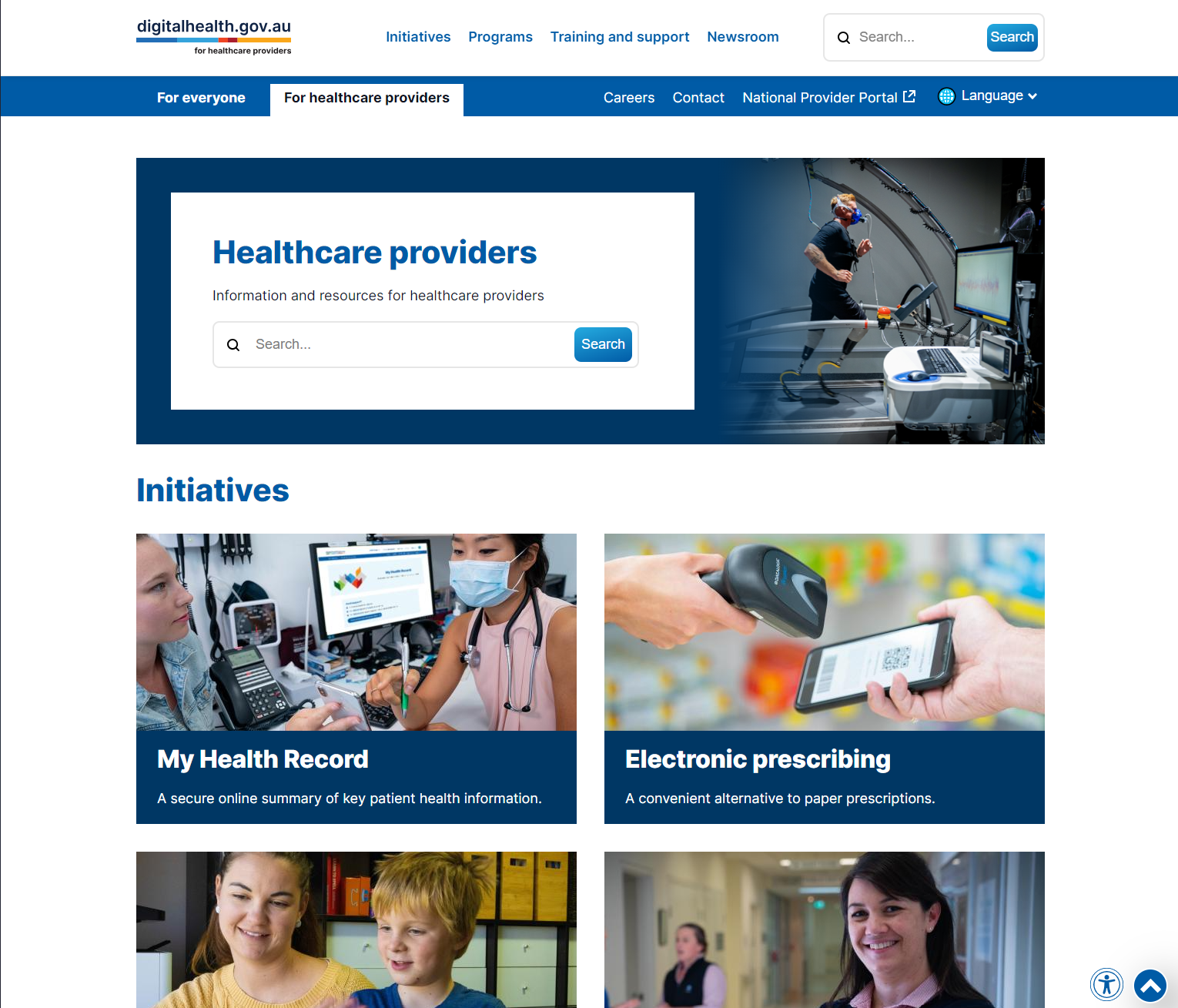
Electronic prescribing
This resource outlines the framework for electronic prescribing, offering an alternative to paper prescriptions for healthcare providers and consumers. It explains the benefits of electronic prescriptions, such as reducing errors, improving efficiency, and supporting medication safety. The resource also covers technical and legislative requirements for implementing electronic prescriptions in various healthcare settings.
This resource may refer to information that will be updated from 1 November 2025 to align with the new Aged Care Act and Quality Standards.
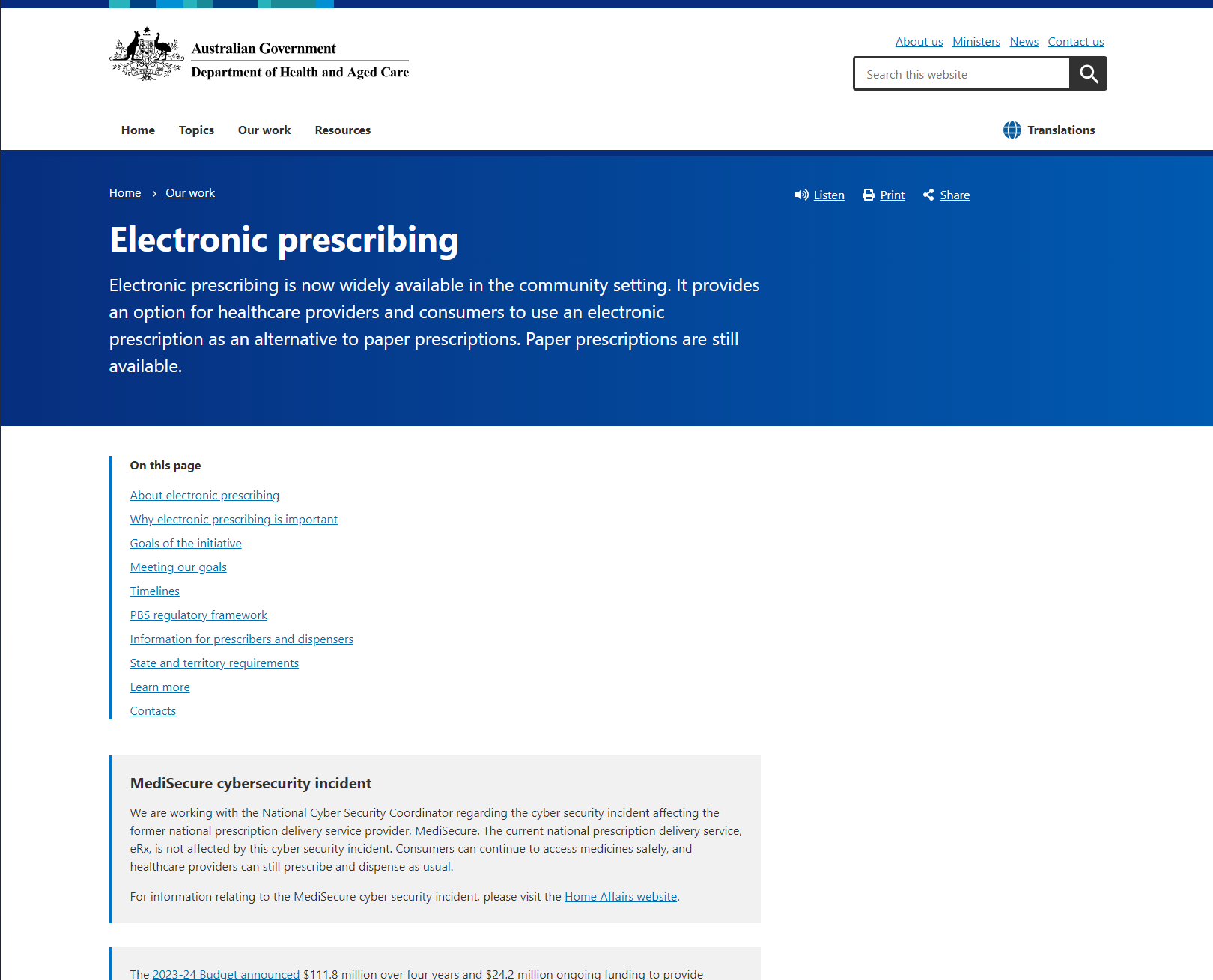
Digital Health Developer Portal - Aged Care Clinical Information System Standards v1.0
This resource outlines the Aged Care Clinical Information System (ACCIS) Standards version 1.0, which sets minimum software requirements for clinical information and electronic medication management systems in aged care. The standards support interoperability, data sharing, and improved care quality by enabling safe and efficient clinical decision-making and information exchange between care providers.
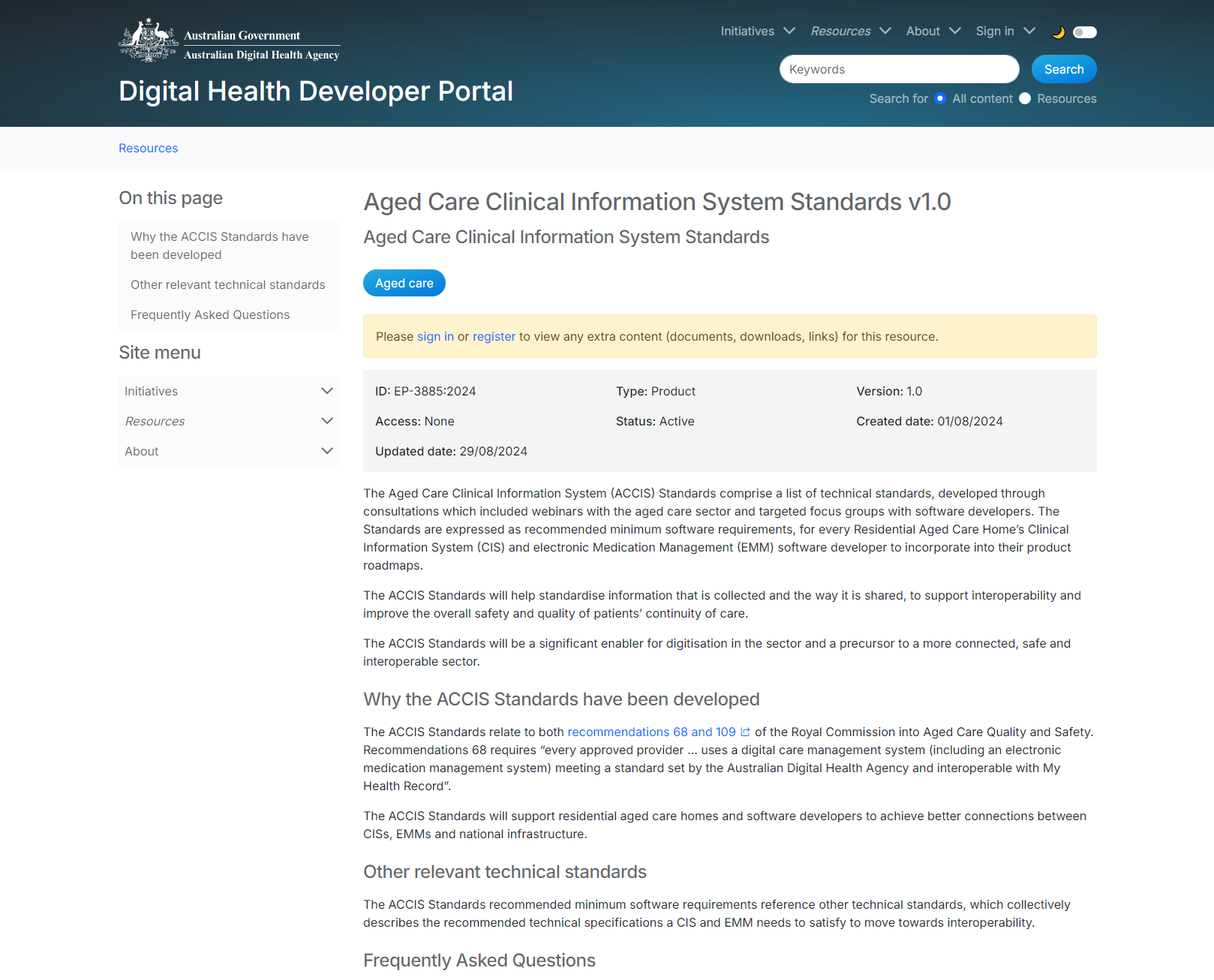
Aged Care Clinical Information System (ACCIS) Standards
This resource outlines the Aged Care Clinical Information System (ACCIS) Standards, providing minimum software requirements for clinical information systems used in aged care. It supports interoperability, data sharing, and safe clinical decision-making. The standards aim to enhance care coordination, improve data accuracy, and ensure compliance with privacy and security protocols within residential aged care settings.
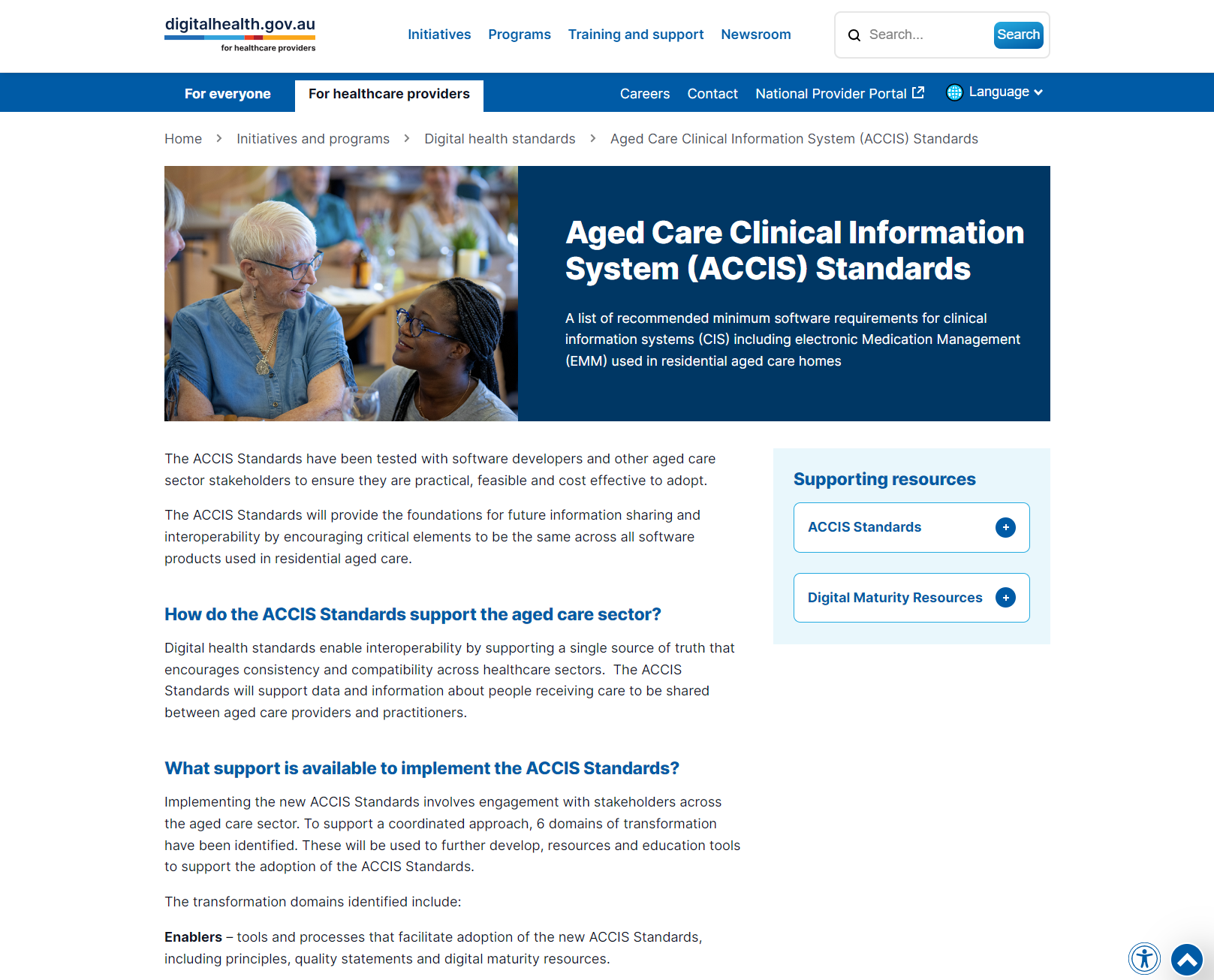
Electronic prescriptions
This resource provides an overview of electronic prescriptions, which offer a digital alternative to paper prescriptions. It explains how electronic prescriptions can be issued by healthcare providers and stored on digital devices for convenience. The resource also details the benefits of the Active Script List (ASL) for managing multiple prescriptions, enhancing efficiency and medicine safety.

Self-Care Matters Aged Care
This resource supports aged care workers in managing stress and maintaining mental and physical wellbeing. It includes videos and tools focused on self-care strategies, such as mindfulness, relaxation, and personalised self-care planning. The resource is designed to help prevent burnout and promote resilience in delivering high-quality care in aged care settings.
Government Provider Management System resources
This resource provides user guides, quick reference materials, and videos to support aged care providers in using the Government Provider Management System (GPMS). It covers essential tasks such as managing user details, financial reporting, and service information. The GPMS ensures accurate and efficient data management for regulatory compliance and operational oversight in aged care services.
This resource may refer to information that will be updated from 1 November 2025 to align with the new Aged Care Act and Quality Standards.
Government Provider Management System (GPMS)
This resource provides an overview of the Government Provider Management System (GPMS), designed to simplify access to and reporting of information by aged care providers to the government. It includes user guides, fact sheets, and troubleshooting support for managing organisational details, notifications, and financial reporting in compliance with aged care requirements.
This resource may refer to information that will be updated from 1 November 2025 to align with the new Aged Care Act and Quality Standards.
Aged care workforce
This resource provides information about the aged care workforce, highlighting opportunities for those interested in joining the sector. It details available programs such as scholarships, training, and clinical placements for nurses and aged care workers. It also includes initiatives to support the growth, training, and development of the aged care workforce to ensure quality care for older adults.
This resource may refer to information that will be updated from 1 July 2025 to align with the new Aged Care Act and Quality Standards.
Privacy
This resource provides information about privacy rights in aged care, explaining how personal information is collected, used, and protected. It outlines privacy laws and principles governing the handling of personal data, including when information can be shared. The resource also links to privacy notices and policies for further details.
This resource may refer to information that will be updated from 1 November 2025 to align with the new Aged Care Act and Quality Standards.
Privacy
This resource outlines the privacy policy for handling personal information through My Aged Care services. It explains how personal data is collected, used, and shared, ensuring compliance with the Privacy Act 1988. The document provides details on consent, data protection measures, and rights to access or correct personal information.
Code of conduct
This resource provides the National Boards' Code of Conduct, outlining the expected professional behaviour and ethical standards for registered health practitioners. It serves as a regulatory framework to ensure safe, ethical care, helping practitioners understand their responsibilities. The document is important for all registered practitioners to ensure they comply with these standards across healthcare settings.
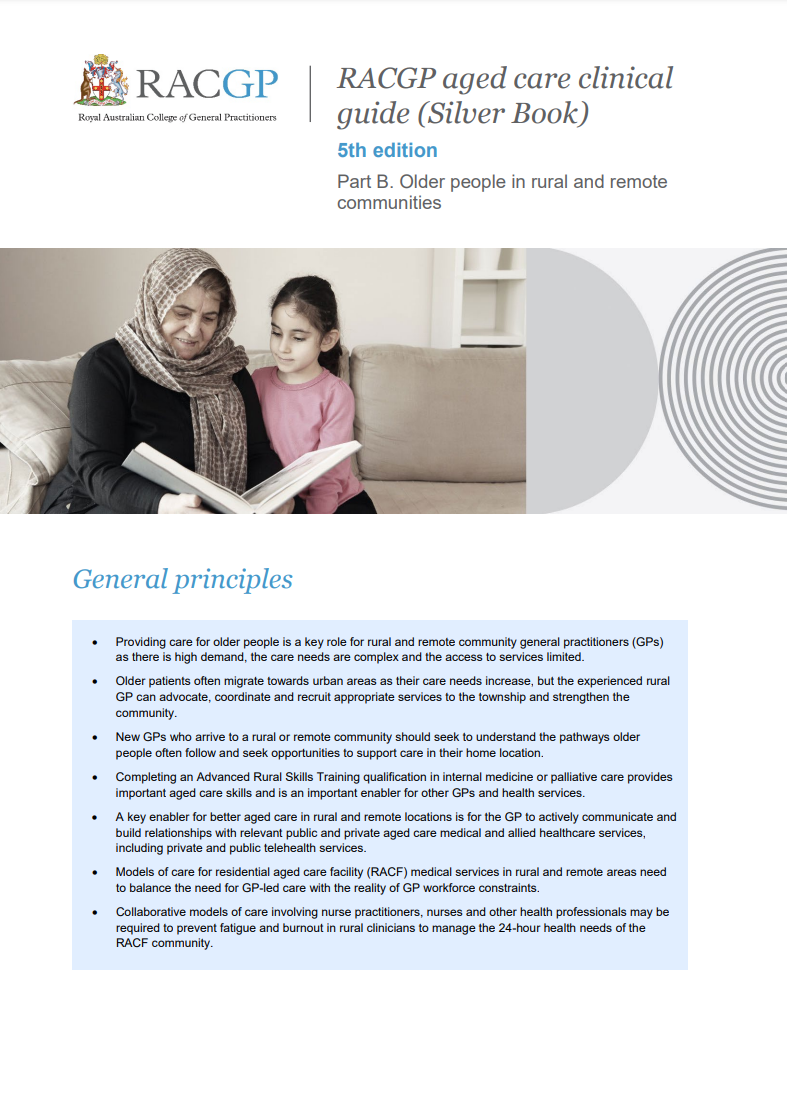
RACGP aged care clinical guide (Silver Book) - Part B - Older people in rural and remote communities
This guide discusses providing aged care in rural and remote communities, focusing on the unique needs of older residents, the role of GPs in care coordination, and overcoming challenges like limited services and workforce shortages. It covers building telehealth connections, establishing collaborative care models, and offers a checklist for newly arrived GPs to support quality care for older adults.