The Quality Standards Resource Centre helps extend understanding of the strengthened Aged Care Quality Standards, which take effect from 1 November 2025. The Resource Centre will be updated to reflect key changes made to the draft strengthened Standards. You can search for resources by using keywords, or filtering by standard, outcome, audience and theme. Before using the Resource Centre, please read the terms of use.
ELDAC Dementia Toolkit
This resource provides a toolkit for palliative care and end-of-life planning for people with dementia. It includes practical advice, resources, and evidence-based guidance to support health and aged care workers in delivering quality care. The toolkit covers assessment, care planning, symptom management, and communication with patients and families.
RACGP aged care clinical guide (Silver Book) - Part B - Collaboration and multidisciplinary team-based care
This guide focuses on collaboration and multidisciplinary care for older adults, particularly in residential aged care. It outlines the benefits of team-based care, effective team structures, shared goals, defined roles, building trust, communication, and measurable processes to improve health outcomes. It provides practical tips for effective teamwork and highlights the importance of coordinating care among various healthcare professionals.
Dementia and oral health
This resource provides information on the impact of dementia on oral health, outlining key issues such as increased risk of poor oral health, the effects of medications, and the importance of maintaining dental care routines. It offers practical tips for toothbrushing, denture care, and dental visits to support those living with dementia.
Physical activity guidelines for older people
This resource provides physical activity guidelines for older people, highlighting the benefits of staying active. It recommends 30 minutes of moderate-intensity activity daily, including strength, flexibility, balance, and cardiovascular exercises. The document also provides tips for safely starting and maintaining an exercise routine to support healthy ageing.
Translating and Interpreting Service (TIS National)
The Translating and Interpreting Service (TIS National) provides interpreting support for people with limited English proficiency and agencies requiring assistance to communicate with non-English-speaking clients. Services include telephone, on-site, and video interpreting, with options for both government and fee-paying clients across Australia.
COVID-19 Information for workplaces - General
This resource provides guidance on minimising the spread of COVID-19, including aged care settings. It outlines vaccine information, risk assessments, physical distancing, hygiene and rapid antigen testing in the workplace. It also contains key resources such as signage, posters and translated information.
Clean and safe environment
This resource outlines processes to maintain a clean, safe, and hygienic environment in healthcare, including aged care. It provides guidance on infection control, environmental cleaning, and staff training to reduce risks and make sure high-quality care. The document also covers responding to environmental risks, maintaining equipment, and infection prevention practices.
Action 3.17 - Reprocessing of reusable equipment and devices
This resource outlines procedures for reprocessing reusable medical equipment and devices to minimise infection risks. It covers processes for ensuring compliance with national and international standards, maintaining traceability, and managing reprocessing for novel infections. It also highlights the importance of proper storage, transport, and workforce training to support safe reprocessing. This resource may apply to healthcare contexts outside of aged care.
Older people and falls
This resource provides information on the causes, treatments, and prevention of falls in older people. It outlines risk factors, such as home hazards and health conditions, and offers practical tips for reducing falls, including lifestyle changes, home modifications, and medical assessments. The document emphasises the importance of fall prevention in aged care settings.
Goals of care document
This resource explains the purpose of a goals of care document, which outlines a person’s medical treatment goals and end of life care preferences. It describes how healthcare providers create and upload these documents to health records, supporting informed decision-making and access to care preferences.
How to clean and disinfect your workplace - COVID-19
This resource provides detailed guidelines on cleaning and disinfecting workplaces, including aged care settings, to minimise the spread of COVID-19. It outlines cleaning procedures for different surfaces and items, the proper use of disinfectants, and disposal of materials. It supports workplace hygiene by ensuring routine and post-exposure cleaning protocols.
Action 1.33: Welcoming environments
This resource provides guidance on creating welcoming environments in healthcare services, including aged care, to make sure Aboriginal and Torres Strait Islander people feel safe, respected, and supported. It outlines strategies for cultural safety, collaboration with communities, and improving access to care through inclusive design, training, and environmental changes.
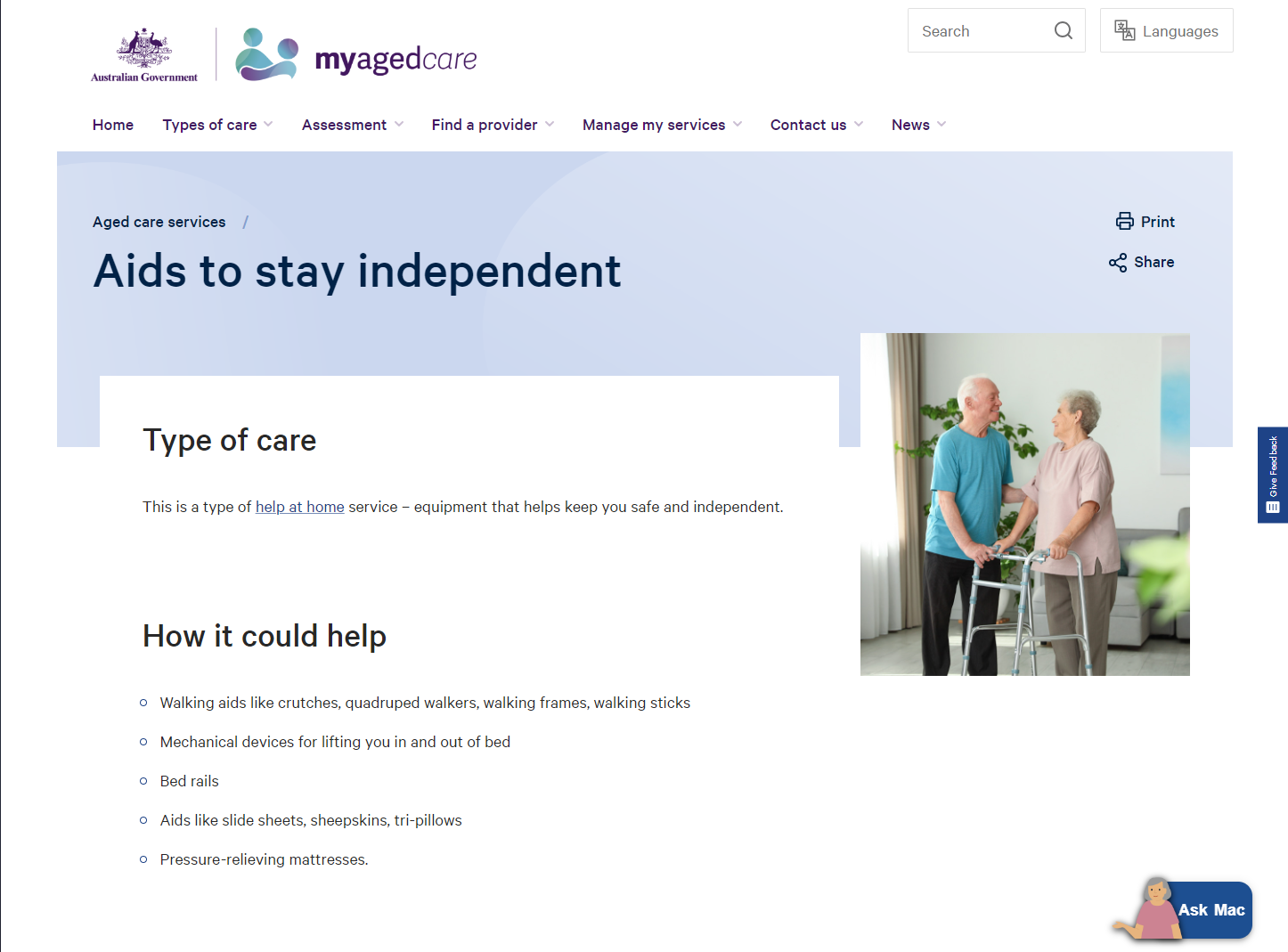
Aids to stay independent
This resource provides information on aids to help people stay safe and independent at home. It includes equipment such as walking aids, bed rails, and pressure-relieving mattresses. These services are available through the Commonwealth Home Support Programme or Home Care Packages, depending on eligibility, following an assessment.
Mobility aids
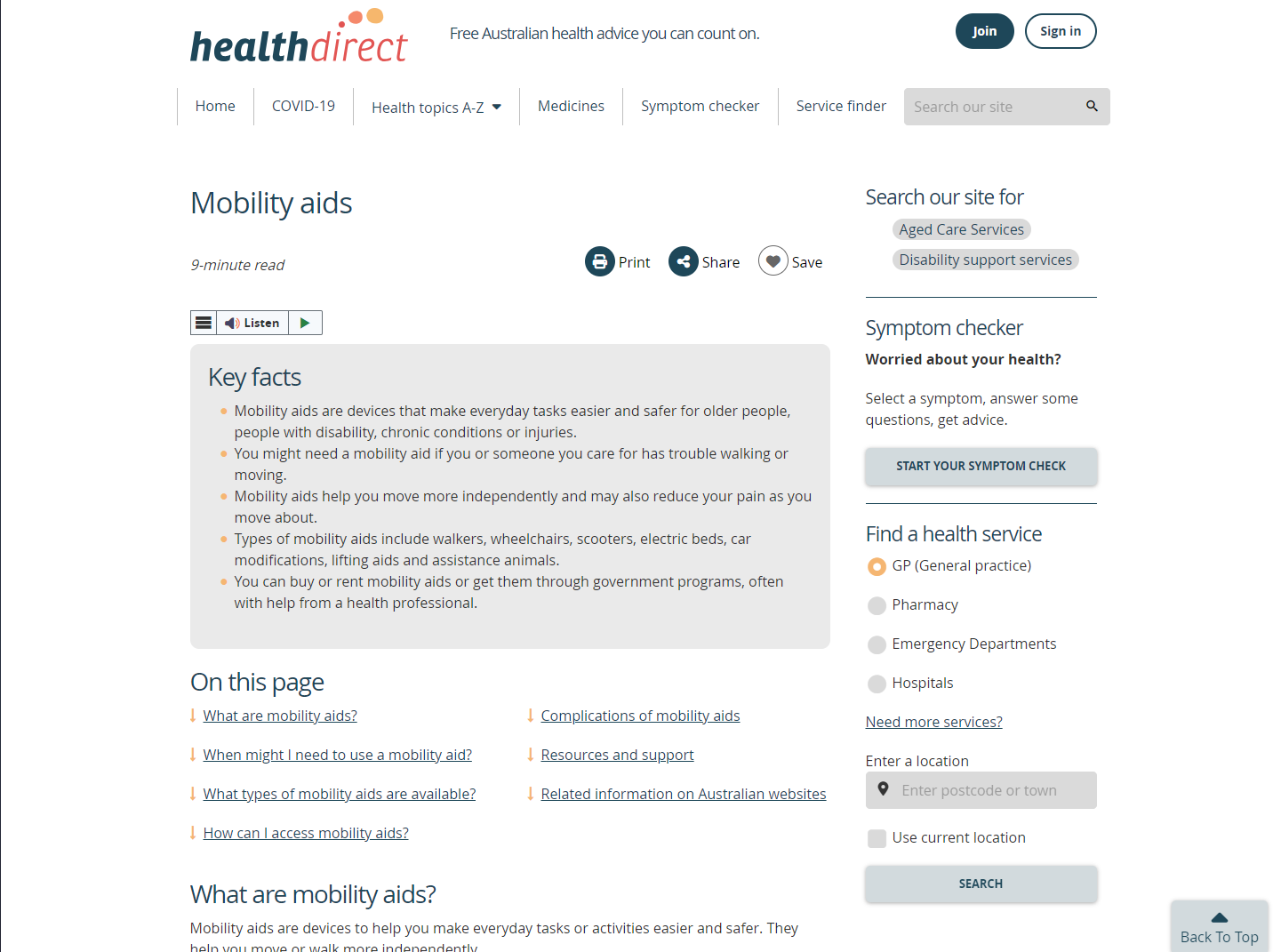
This resource provides an overview of mobility aids, including walkers, wheelchairs, lifting aids, and electric beds, to help people move safely and independently. It explains how these devices can help with daily tasks, manage pain, and reduce injury risks. The document also includes information on accessing aids through government programs or health professionals.
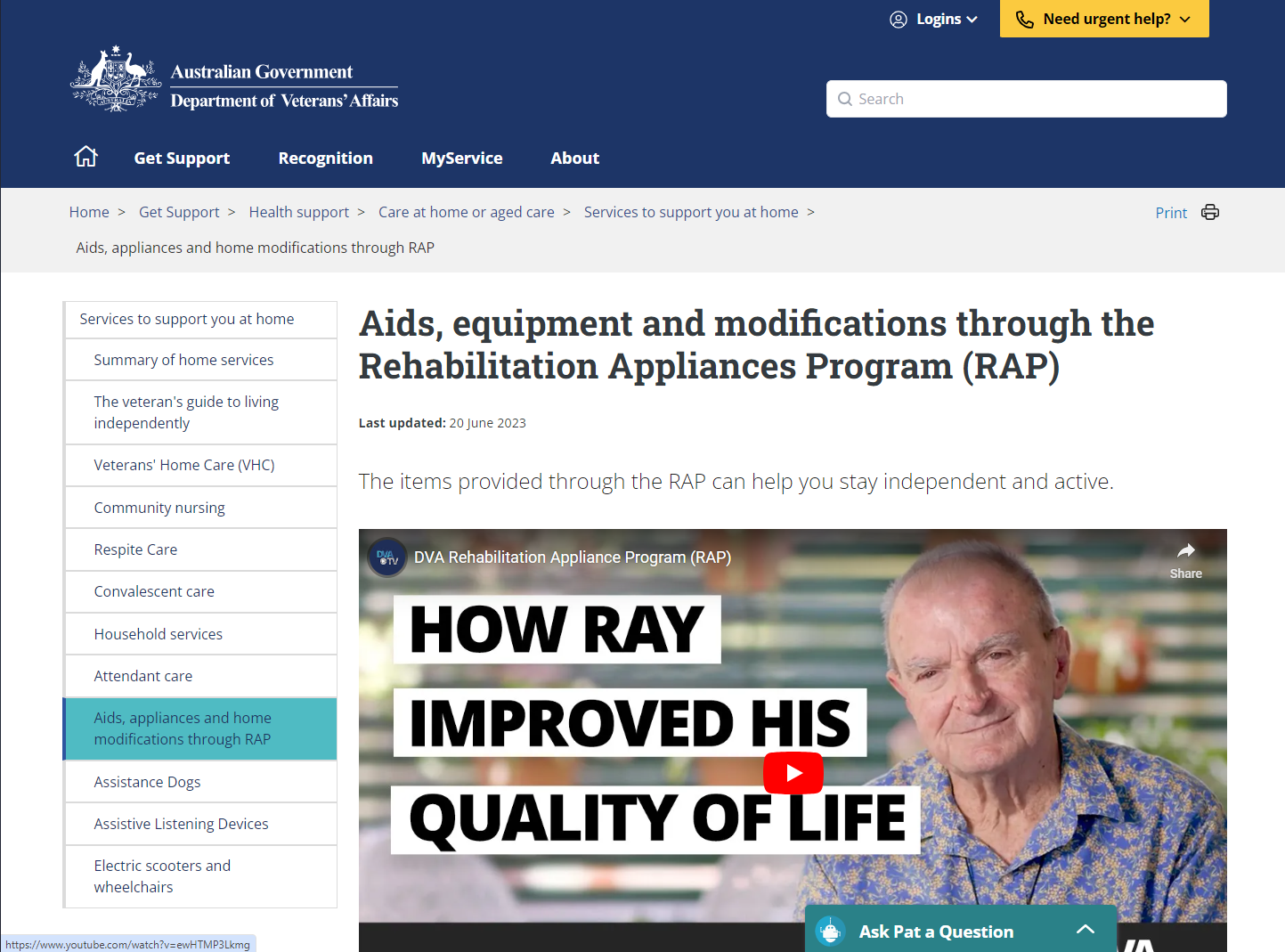
Aids, equipment and modifications through the Rehabilitation Appliances Program (RAP)
This resource provides information about the Rehabilitation Appliances Program (RAP), which offers aids, equipment, and home or vehicle modifications to help veterans stay independent. It explains the types of items available, such as mobility devices, personal care aids, and home accessibility modifications, and outlines the process for accessing these services through clinical assessments.
Tools and aids to help at home
This resource outlines tools, aids, and technology to help people with dementia live safely and independently at home. It includes medication reminders, safety devices, communication tools, and sensory aids. The document provides guidance on selecting appropriate tools to support daily tasks, reduce stress, and maintain quality of life at home.
Trauma-informed Care and Practice Organisational Toolkit
This toolkit provides guidance for organisations on implementing trauma-informed care practices, aiming to improve safety, trust, and empowerment in care settings. It outlines strategies to adapt policies, environments, and staff approaches to better support people with trauma histories in various care environments.
Why meals matter
This resource highlights the importance of meals in aged care settings, focusing on nutritional needs, dining experience, and personal preferences. It addresses issues like malnutrition, dehydration, and food choice, linking them to resident wellbeing, autonomy, and satisfaction. It also suggests strategies such as person-centred dining, meal service innovations, and improved environmental factors to enhance mealtime experiences in residential aged care.
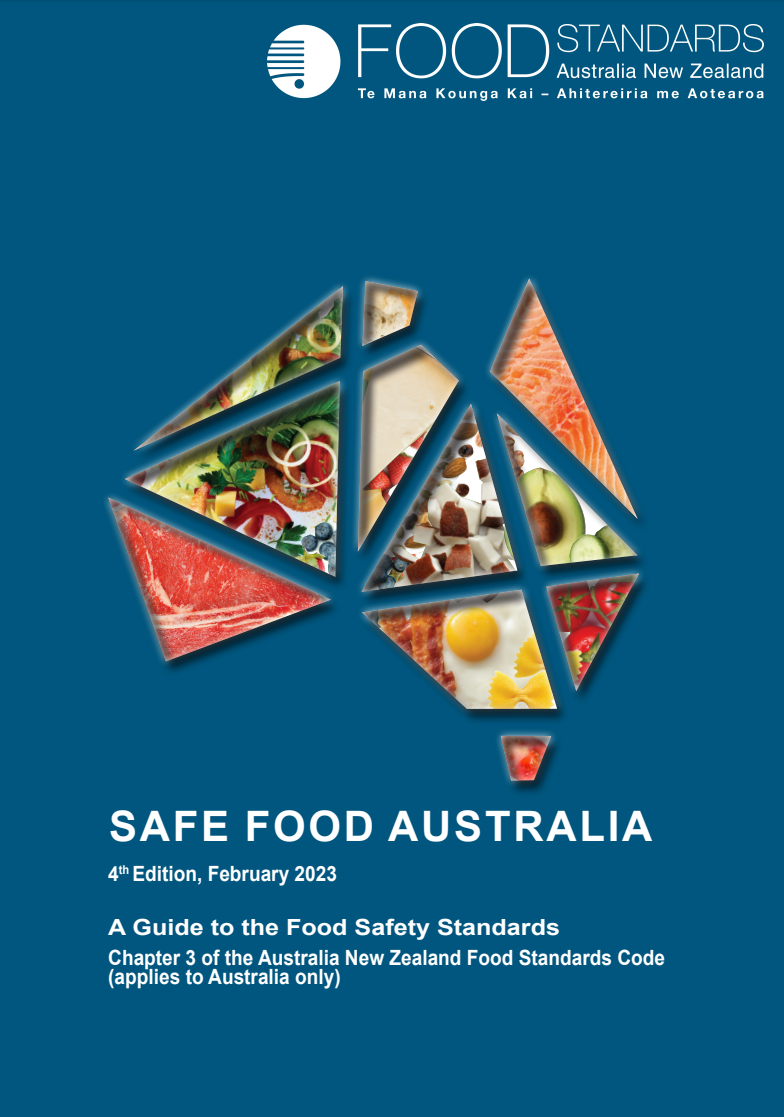
Safe Food Australia - A guide to the Food Safety Standards
This resource provides guidance on the food safety standards in Australia, specifically Chapter 3 of the Australia New Zealand Food Standards Code. It outlines requirements for food businesses, focusing on safe food handling practices, hygiene, and equipment standards. The resource helps aged care providers comply with regulatory standards to ensure safe and suitable food for vulnerable populations.
Mealtime Safety
This resource provides guidance on mealtime safety, particularly for people with swallowing difficulties who are at risk of choking. It includes steps to respond to choking incidents, tips for recognising signs of swallowing difficulties, and resources for making referrals. It also covers documenting incidents and maintaining proper oral hygiene, promoting safe and enjoyable mealtimes in care environments