The Quality Standards Resource Centre helps extend understanding of the strengthened Aged Care Quality Standards, which take effect from 1 November 2025. The Resource Centre will be updated to reflect key changes made to the draft strengthened Standards. You can search for resources by using keywords, or filtering by standard, outcome, audience and theme. Before using the Resource Centre, please read the terms of use.
Wounds Australia
This resource provides information and resources on wound prevention and management. It offers clinical guidelines, educational materials, and support for health professionals, caregivers, and people affected by wounds. The focus is on best practices, evidence-based care, and promoting awareness to improve wound healing outcomes across various settings.
Vision Australia - Clinical tools and resources
This resource offers tools and information for clinicians supporting people with blindness or low vision across a range of settings including aged care. It includes free patient materials, brochures in multiple languages, fact sheets on eye conditions, case studies, tips on communication, assistive technology recommendations, and professional development webinars to enhance patient care and referral processes. This resource may apply to healthcare contexts outside of aged care. Please consider the applicability of this resource to your care setting.”
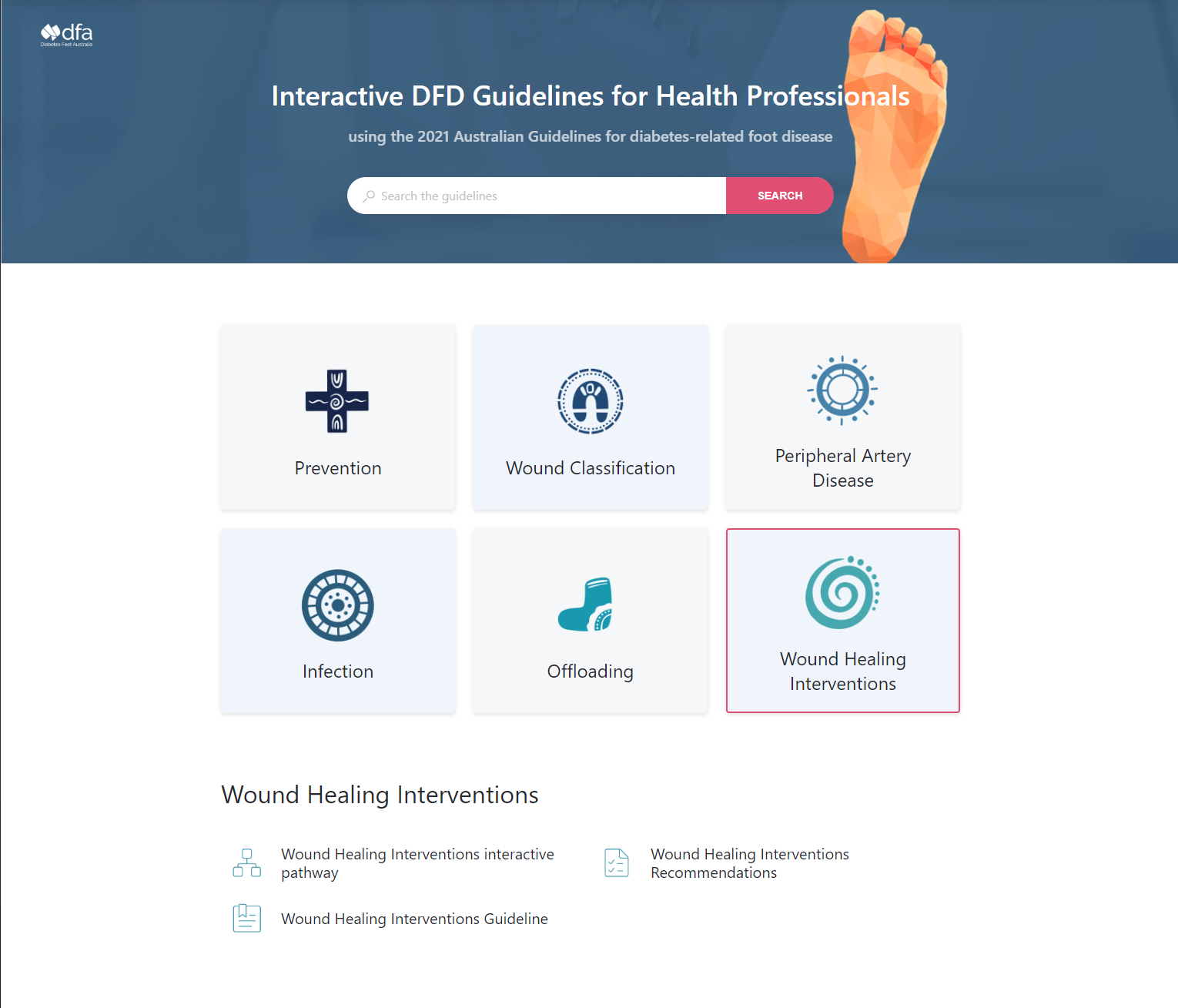
Wound Healing Interventions
This resource provides the 2021 Australian guidelines on wound healing interventions for diabetic foot disease (DFD) and foot ulcers (DFU). It includes evidence-based recommendations for healthcare professionals on appropriate practices, such as sharp debridement, exudate control, adjunctive treatments, and decision-making pathways to enhance wound healing and improve patient outcomes.
Training resources for hearing assistance in aged care & hospitals
This resource provides free training materials for hearing assistance in aged care and hospital settings. It includes a Good Practice Guide, instructional video, poster series, and training modules. The resources aim to equip staff, volunteers, and family carers with knowledge to support people with hearing loss effectively.
Ageing and dual sensory loss
This resource provides information and strategies for supporting older adults with age-related dual sensory loss or deafblindness. It includes a resource booklet and video developed to help aged care workers understand and address the needs of people with combined vision and hearing impairments to reduce isolation and enhance care.
Pain in Residential Aged Care Facilities: Management Strategies - Resources
This resource provides downloadable tools to support the management of pain in residential aged care facilities. It covers comprehensive pain assessment, pain management strategies for communicative and non-communicative residents, complementary therapies, opioid considerations, and quality indicators, aiming to enhance care practices and improve residents' quality of life.
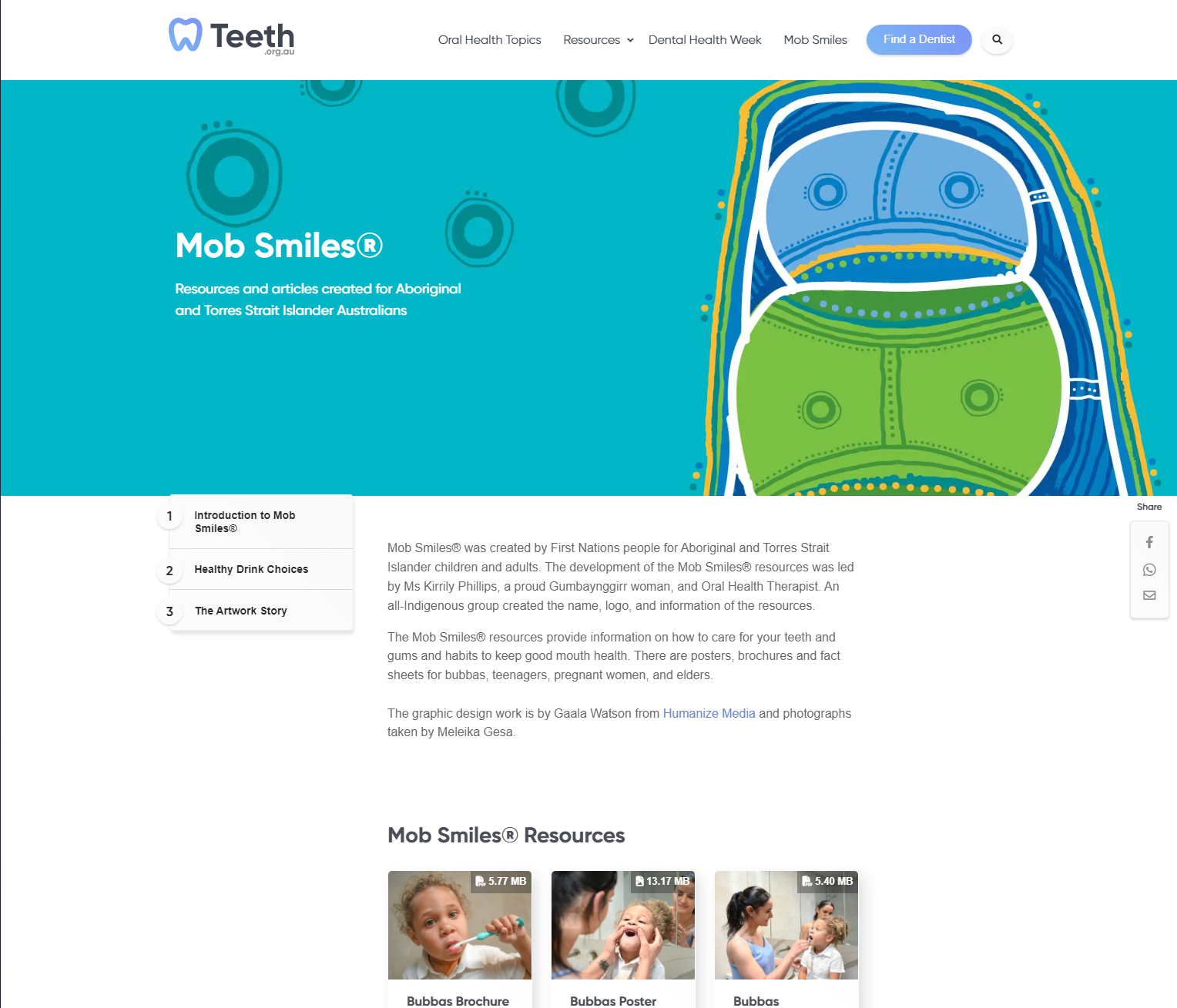
Mob Smiles - Resources and articles created for Aboriginal and Torres Strait Islander Australians
This resource, Mob Smiles, provides culturally appropriate oral health information for Aboriginal and Torres Strait Islander people. It includes brochures, posters, and fact sheets tailored for different life stages such as children, teenagers, elders, and pregnant women. The content focuses on dental care, healthy habits, and oral health education.
RACGP aged care clinical guide (Silver Book) - Part A - Palliative and end-of-life care
This guide focuses on palliative and end-of-life care, detailing general principles, illness trajectories, the role of general practitioners, and practical recommendations for patient-cantered care. It provides consensus-based guidelines for initiating advance care planning, symptom management, team-based end-of-life care, medication use, and supporting both patients and their families. It includes information on the transition from chronic disease treatment to a palliative approach and includes tools for clinical decision-making.
RACGP aged care clinical guide (Silver Book) - Part B - Palliative care approach
This guide outlines a palliative care approach for patients with life-limiting conditions, focusing on improving quality of life through early assessment, pain relief, and addressing psychosocial and spiritual needs. It describes the role of general practitioners in delivering person-centred care, engaging families, and ensuring collaborative, holistic support in both residential aged care and community settings.
RACGP aged care clinical guide (Silver Book) - Part A - Faecal incontinence
This guide addresses the assessment and management of urinary incontinence in older adults. It outlines a stepwise approach to evaluation, including identifying transient causes, detailed history-taking, medication review, and focused examination. It provides information on management including lifestyle measures, medications, bladder drainage options, and potential referral to specialists based on individual needs and the type of incontinence.
RACGP aged care clinical guide (Silver Book) - Part A - Urinary incontinence
This guide addresses the assessment and management of urinary incontinence in older adults. It outlines a stepwise approach to evaluation, including identifying transient causes, detailed history-taking, medication review, and focused examination. It provides information on management including lifestyle measures, medications, bladder drainage options, and potential referral to specialists based on individual needs and the type of incontinence.
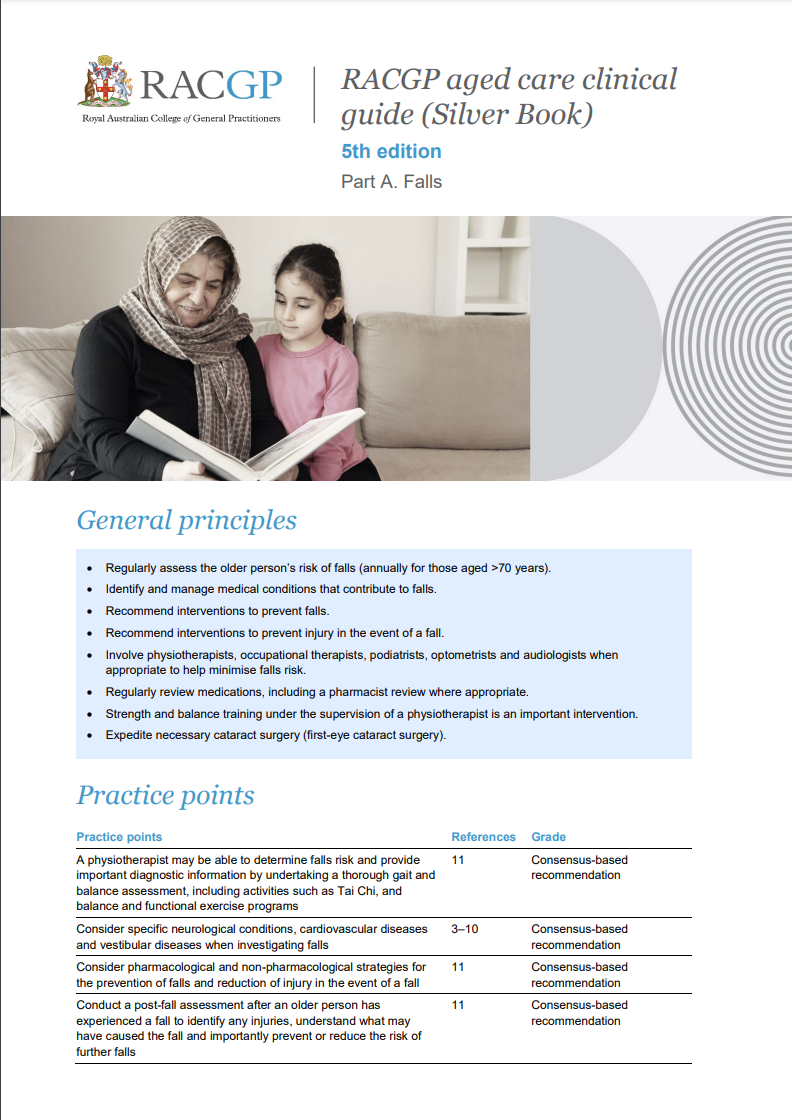
RACGP aged care clinical guide (Silver Book) - Part A - Falls
This guide covers fall prevention and management in older adults, focusing on assessing fall risks, involving multidisciplinary teams (e.g. physiotherapists, occupational therapists), and recommending both non-pharmacological and pharmacological interventions. It includes steps for post-fall assessments, medication review, and strategies for preventing injuries, with a comprehensive approach to improving outcomes in aged care.
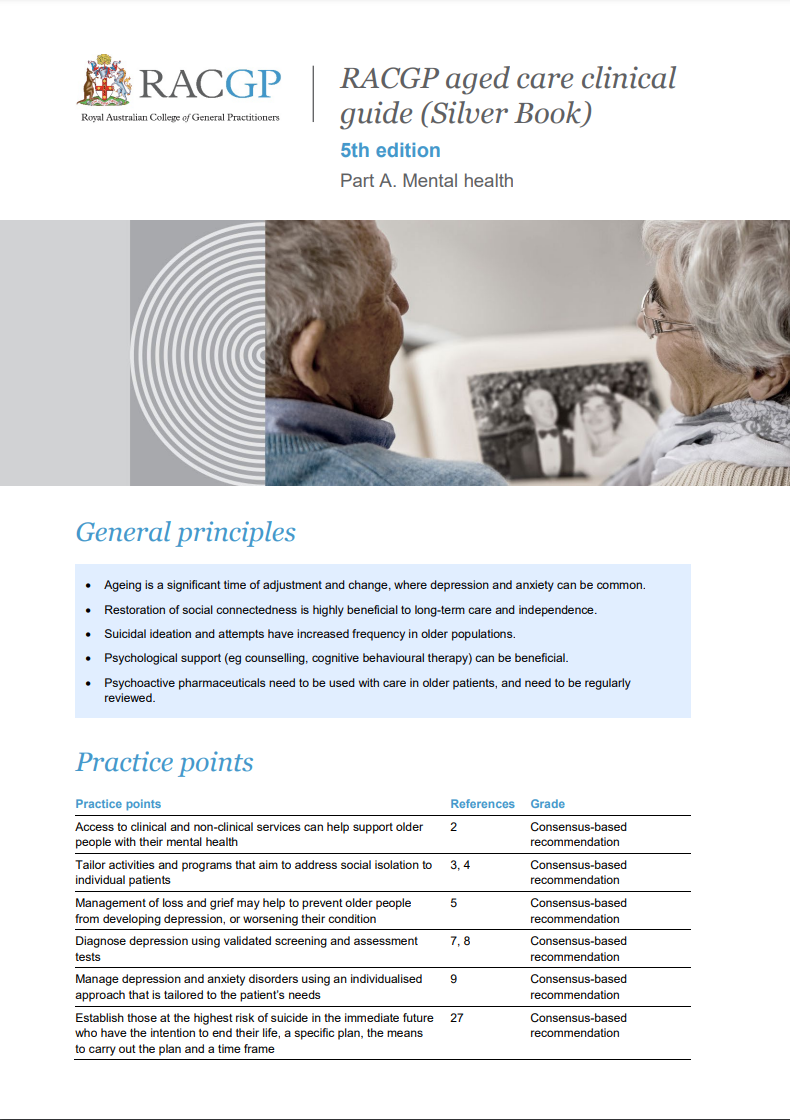
RACGP aged care clinical guide (Silver Book) - Part A - Mental health
This guide addresses mental health in older adults, including social isolation, depression, anxiety, suicide risk, bipolar disorder, and schizophrenia. It provides consensus-based recommendations for tailored interventions, diagnosis through validated assessments, and management strategies that combine clinical and non-clinical approaches.
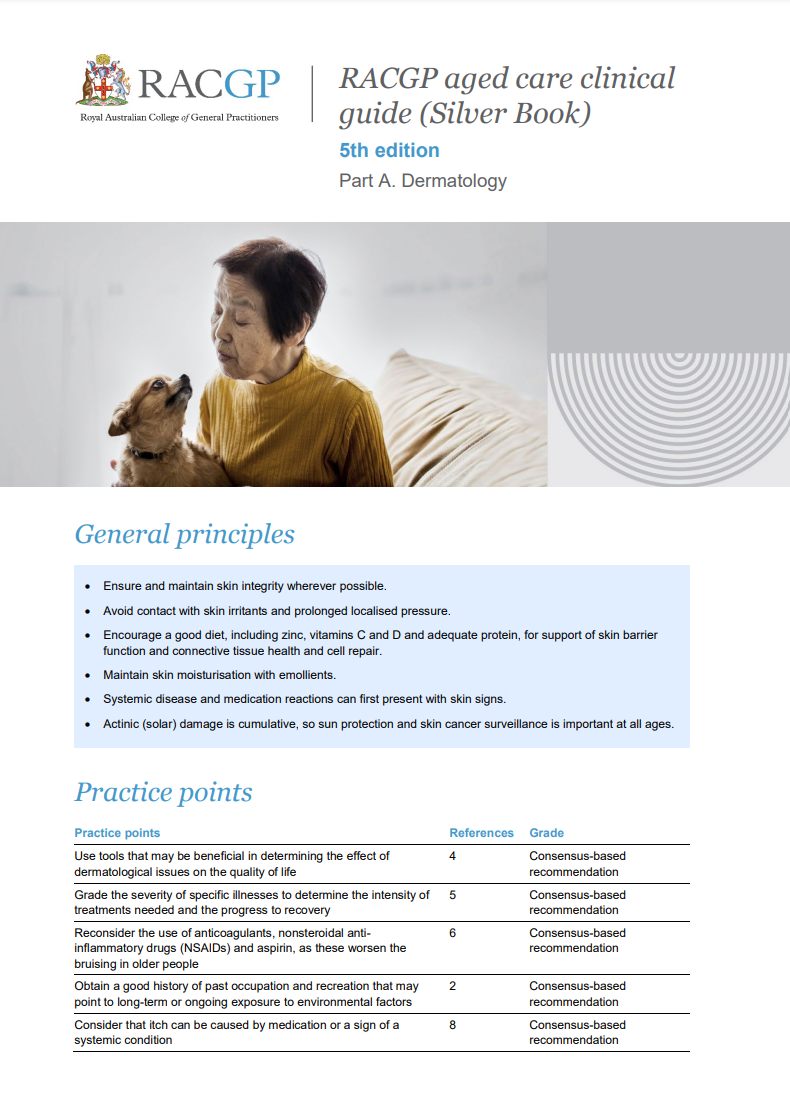
RACGP aged care clinical guide (Silver Book) - Part A - Dermatology
This guide provides recommendations for dermatological care in older adults, addressing skin integrity, sun damage, bruising, and wound management. It highlights factors affecting skin health, like systemic disease, medication, and environmental exposure. It recommends regular skin assessments, non-pharmacological interventions, moisturisation, and tailored approaches for managing conditions like ulcers, pruritus, and skin cancer in aged care settings.
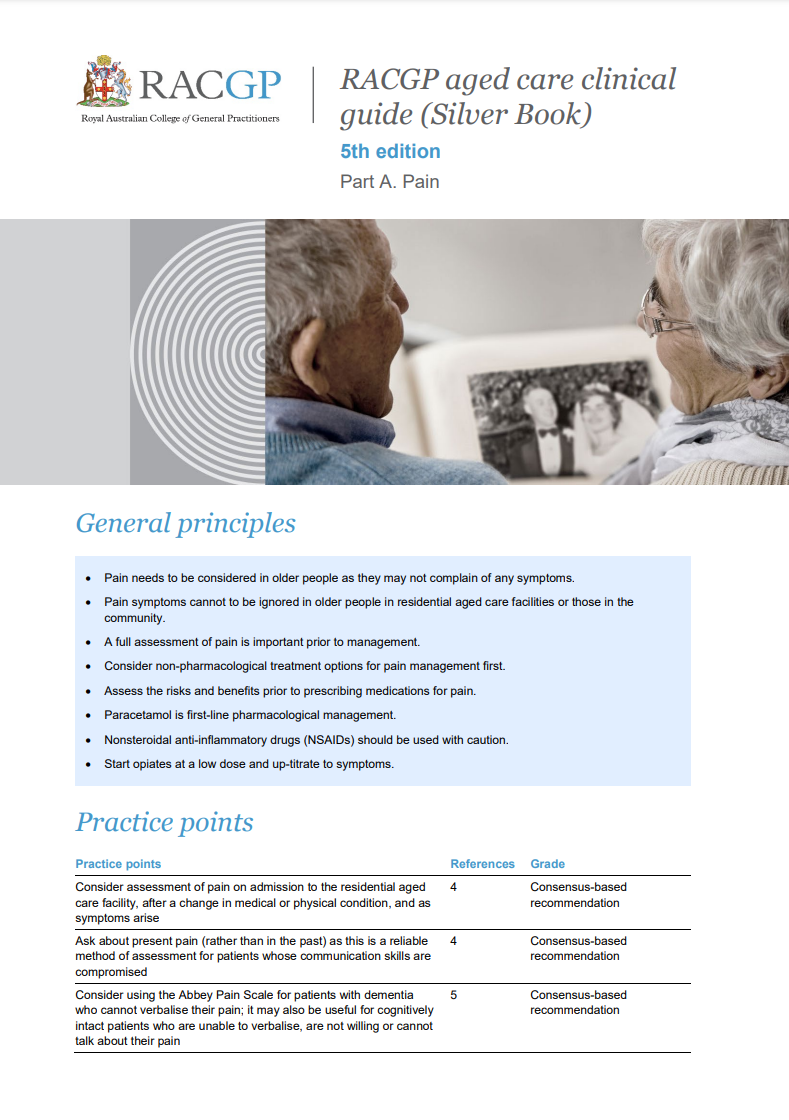
RACGP aged care clinical guide (Silver Book) - Part A - Pain
This guide provides strategies for managing pain in older adults in aged care, focusing on assessment, non-pharmacological treatments, and pharmacological interventions. It includes practice points on appropriate medication use, considerations for pain assessment tools, and recommendations for safe management, including tailored care and treatment monitoring to improve quality of life.
Advance care planning - Information for clinicians
This resource guides clinicians on the importance of advance care planning, particularly for those with life-limiting illnesses, chronic conditions, or cognitive impairment. It outlines the need for early conversations about patient preferences and comprehensive care, ensuring decisions are documented, shared, and align with clinical handover processes to respect patient autonomy and improve care outcomes.
This resource may refer to information that will be updated from 1 November 2025 to align with the new Aged Care Act and Quality Standards.
End-of-life care - Last days of life
This resource provides guidance on end-of-life care during the last days of life, relevant for aged care settings. It focuses on maintaining comfort, managing symptoms, and reducing unnecessary interventions. Clinicians are supported in offering compassionate care, addressing potential emergencies, and involving family members while ensuring that older people are treated with dignity during their final days.
This resource may refer to information that will be updated from 1 November 2025 to align with the new Aged Care Act and Quality Standards.
End-of-life care - clinical basics
This resource provides key actions for clinicians delivering end-of-life care. It highlights the shift from curative to palliative approaches, emphasising communication, patient dignity, symptom management, medication review, and decision-making. It includes strategies for managing common symptoms and minimising risks to ensure safe, high-quality care in the last days of life.
This resource may refer to information that will be updated from 1 November 2025 to align with the new Aged Care Act and Quality Standards.
Falls prevention
This resource provides guidance for preventing falls and harm from falls in older people in healthcare settings. This resource may refer to information that will be updated from 1 November 2025 to align with the new Aged Care Act and Quality Standards.
What we’re doing about palliative care
This resource outlines the Australian Government’s strategies, initiatives, and research for improving palliative care. It details the National Palliative Care Strategy, workforce training, and key programs such as at-home and aged care measures. It also highlights the National Framework for Advance Care Planning, ensuring access to quality palliative care across Australia.
This resource may refer to information that will be updated from 1 November 2025 to align with the new Aged Care Act and Quality Standards.