The Quality Standards Resource Centre helps extend understanding of the strengthened Aged Care Quality Standards, which take effect from 1 November 2025. The Resource Centre will be updated to reflect key changes made to the draft strengthened Standards. You can search for resources by using keywords, or filtering by standard, outcome, audience and theme. Before using the Resource Centre, please read the terms of use.
Analysis of a survey of food and dining experiences in residential aged care services - Final report
This resource provides insights into food, dining, and nutrition in residential aged care services. It is based on a survey conducted to understand residents’ dining experiences, preferences, and the quality of food and service provided. The findings highlight the importance of fresh, familiar meals, flexible mealtimes, and a homelike dining environment to enhance the quality of life for older people. This resource may refer to information that will be updated from 1 November 2025 to align with the new Aged Care Act and Quality Standards.
Residential aged care food services discussion paper
This paper presents a high-level overview of contemporary evidence regarding food services in residential aged care settings.
 Residential aged care food services discussion paper (PDF 536.47 KB)
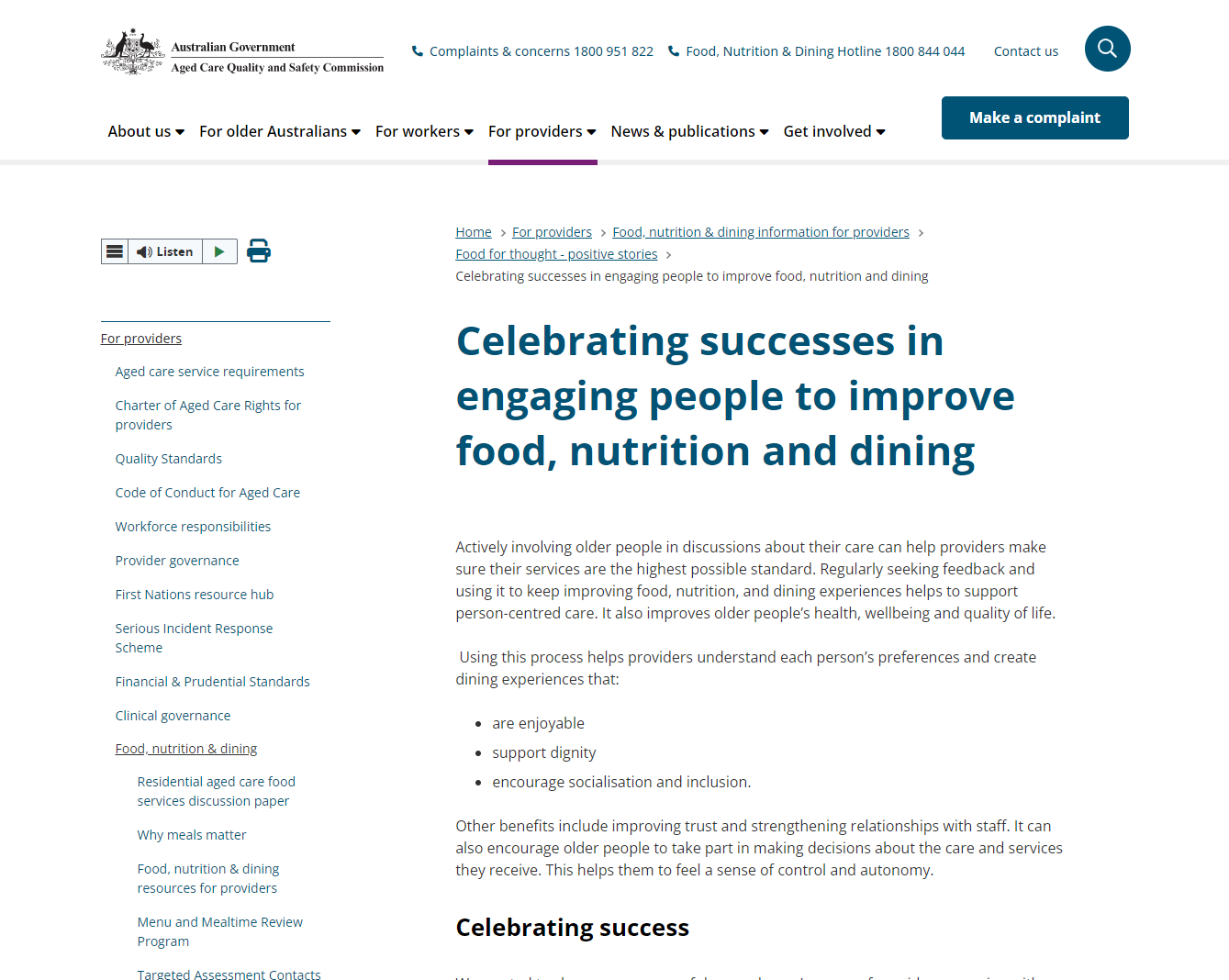
Celebrating successes in engaging people to improve food, nutrition and dining
This resource highlights successful practices in engaging older people to improve food, nutrition, and dining experiences. Providers can use examples like food focus groups, family involvement in recipe changes, and resident-led dining committees to promote enjoyable, dignified, and inclusive dining. It fosters better health, wellbeing, and relationships with staff.
This resource may refer to information that will be updated from 1 November 2025 to align with the new Aged Care Act and Quality Standards.
Cultural considerations in Food, Nutrition and Dining
This resource provides guidance on incorporating cultural considerations into food, nutrition, and dining in aged care settings. It highlights the importance of understanding diverse dietary preferences, religious practices, and family dynamics to support person-centred care, improve wellbeing, and promote inclusivity within the aged care environment.
This resource may refer to information that will be updated from 1 November 2025 to align with the new Aged Care Act and Quality Standards.
Food for thought - positive stories
This resource shares positive stories about food, nutrition, and dining improvements in aged care facilities. It highlights initiatives that enhance the dining experience, including resident involvement in meal planning, use of fresh and seasonal ingredients, and creating more social and enjoyable mealtime environments. These stories demonstrate best practices and innovative approaches to improve resident satisfaction and wellbeing.
Food, nutrition & dining: resources for workers
This resource provides aged care workers with tools to enhance food, nutrition, and dining experiences for people in their care. It includes practical guides on offering choice, managing swallowing difficulties, promoting oral health, and creating an enjoyable dining environment, all while ensuring adherence to aged care standards.
This resource may refer to information that will be updated from 1 November 2025 to align with the new Aged Care Act and Quality Standards.
Food, nutrition & dining: resources for providers
This resource provides tools and guidance for aged care providers to ensure quality food, nutrition, and dining experiences. It includes hotlines, resources for dining, choice, swallowing, and oral health, as well as webinars, research findings, and practical tips to support older adults' wellbeing and meet care standards.
This resource may refer to information that will be updated from 1 November 2025 to align with the new Aged Care Act and Quality Standards.
Guide for consumers - Psychotropic Medicines in Cognitive Disability or Impairment Clinical Care Standard
This resource is a guide for consumers about the Australian Commission on Safety and Quality in Health Care's Psychotropic Medicines in Cognitive Disability or Impairment Clinical Care Standard. The resource includes 8 quality statements about the health care consumers should receive to support the correct use of psychotropic medicines.
This resource may refer to information that will be updated from 1 November 2025 to align with the new Aged Care Act and Quality Standards.
Guiding principles to achieve continuity in medication management collection
This collection of resources is related to the guiding principles for medication management.The guiding principles aim to promote the quality use of medicines when moving between different health care settings and health care providers. The collection includes the guiding principles and the corresponding glossary, user guide and fact sheet. This resource may apply to healthcare contexts outside of aged care.
This resource may refer to information that will be updated from 1 November 2025 to align with the new Aged Care Act and Quality Standards.
Handbook of tools to support medicine management in multimorbidity and polypharmacy
This handbook provides tools to support medicine management in multimorbidity and polypharmacy. The Department of Health and Aged Care commissioned the University of South Australia to develop the handbook.
This resource may refer to information that will be updated from 1 November 2025 to align with the new Aged Care Act and Quality Standards.

Using technology to improve the dining experience
This resource provides guidance on how technology, such as virtual reality (VR) and mobile applications, can enhance the dining experience in aged care settings. These tools are designed to increase engagement, support meal choices, improve communication with families, and contribute to overall wellbeing by making mealtimes more enjoyable.
This resource may refer to information that will be updated from 1 November 2025 to align with the new Aged Care Act and Quality Standards.
High risk medicines resources
This resource provides guidance on high-risk medicines, including safety alerts, notices, and best practices for safe prescribing, dispensing, and administration. It includes information on insulin and anticoagulant safety, monitoring tools, and best practice recommendations to improve medication safety and reduce harm from high-risk medications across healthcare settings.
This resource may refer to information that will be updated from 1 November 2025 to align with the new Aged Care Act and Quality Standards.
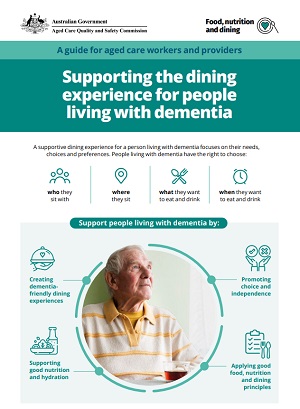
Supporting the dining experience for people living with dementia – Providers and workers guide
This guide is about how to support people living with dementia to maintain good nutrition and enjoy positive dining experiences.
This resource may refer to information that will be updated from 1 November 2025 to align with the new Aged Care Act and Quality Standards.
Supporting people living with dementia to eat and drink well
This resource provides guidance for aged care services on how to support people living with dementia to eat and drink well. It highlights innovative approaches such as creating familiar, enjoyable meals, reducing mealtime interruptions, and offering 24-hour access to nutritious foods. These strategies help address challenges like malnutrition and dehydration.
This resource may refer to information that will be updated from 1 November 2025 to align with the new Aged Care Act and Quality Standards.
Improving aged care with speech pathology: Why it matters and how it helps
This page highlights the role of speech pathologists in supporting older people with communication, eating, drinking, and swallowing difficulties. It provides resources for aged care providers on how to improve care quality through effective communication tools and tailored strategies. This resource includes practical examples, like sample plates and picture boards, for enhancing dining experiences and supporting individual choice.
This resource may refer to information that will be updated from 1 November 2025 to align with the new Aged Care Act and Quality Standards.
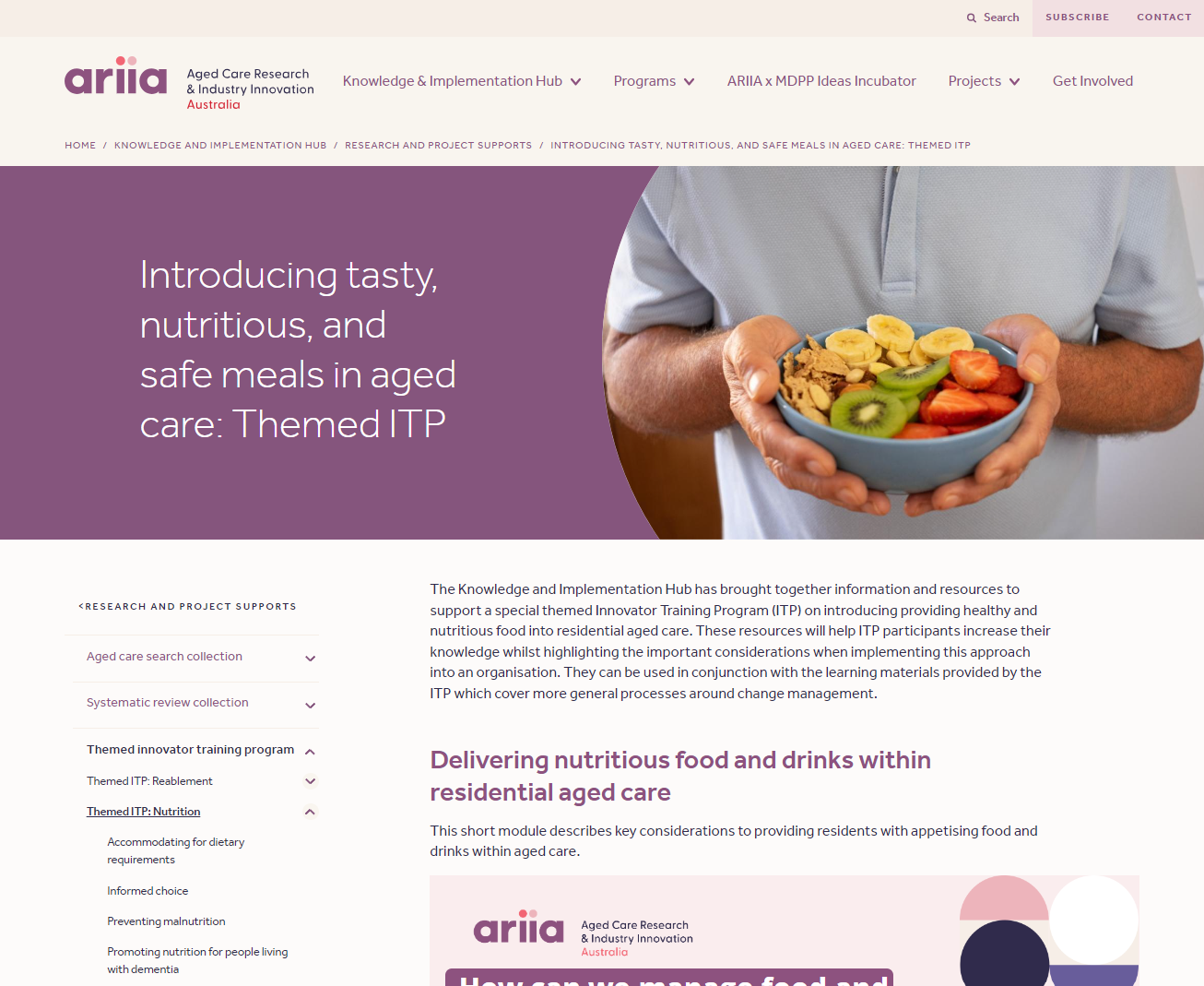
Introducing tasty, nutritious, and safe meals in aged care - Themed Innovator Training Program
This resource provides guidance on implementing safe, nutritious, and appealing meals in aged care. It emphasises informed choice, accommodating dietary needs, and preventing malnutrition. It highlights the importance of culturally appropriate meal planning, supporting residents' autonomy, and ensuring that nutritious food enhances social interaction, mental health, and overall quality of life.
This resource may refer to information that will be updated from 1 November 2025 to align with the new Aged Care Act and Quality Standards.
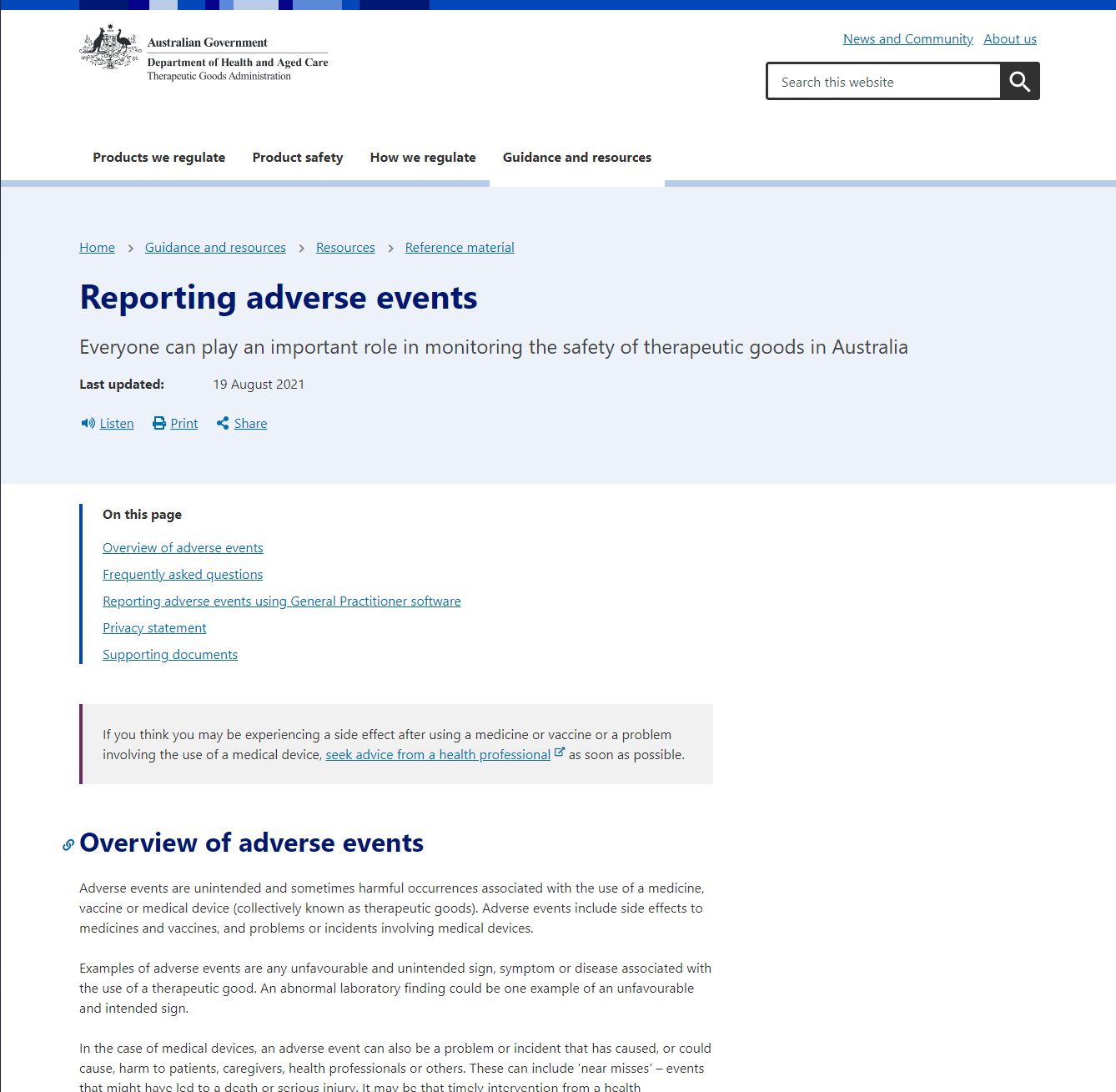
Reporting adverse events
This resource provides information on identifying and reporting adverse events related to medicines, vaccines, and medical devices. It outlines who can report, how to submit a report, the importance of these reports for safety monitoring, and the steps taken by the TGA in response to reported safety concerns.
This resource may refer to information that will be updated from 1 November 2025 to align with the new Aged Care Act and Quality Standards.
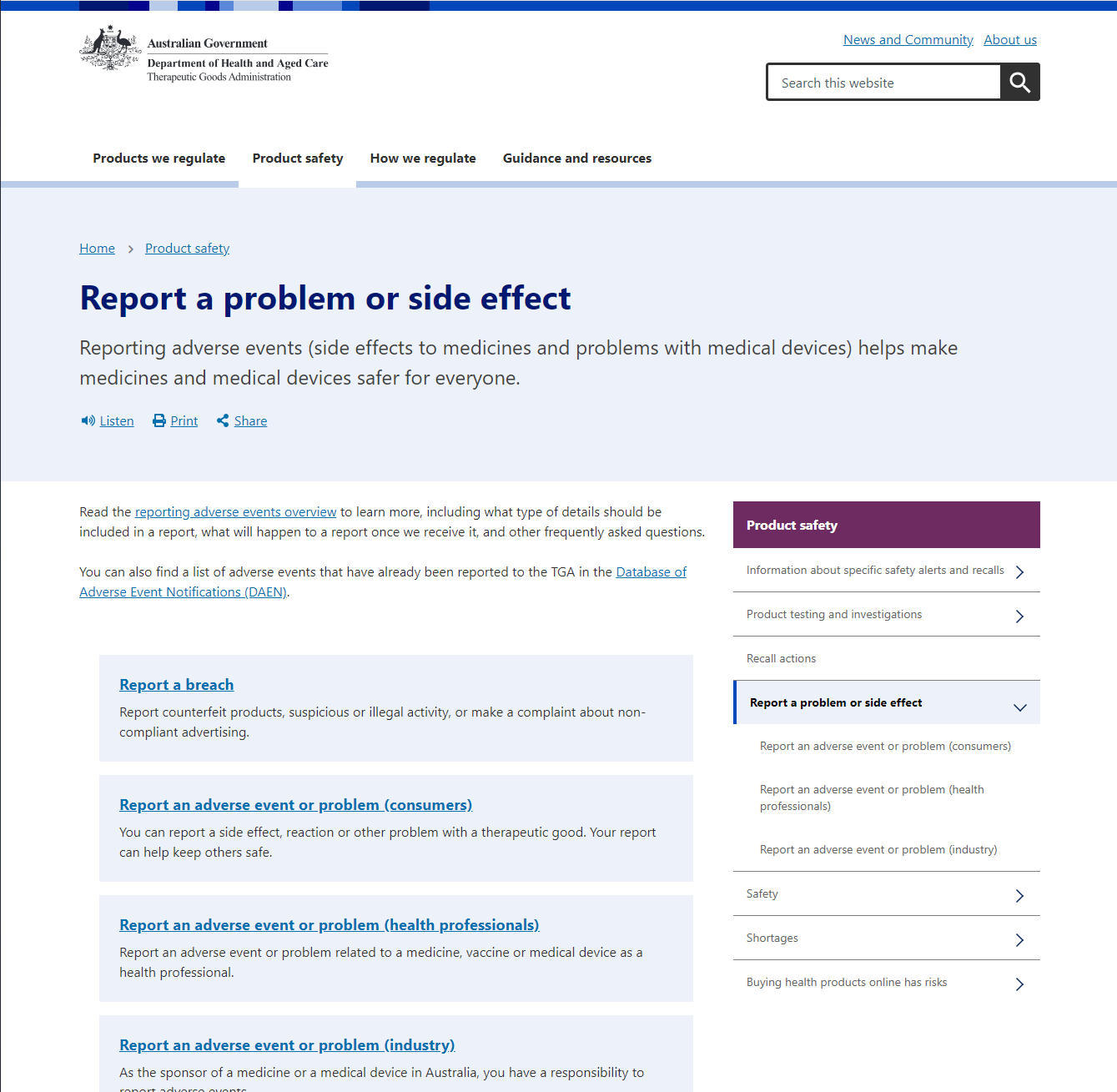
Report a problem or side effect
This resource provides information on how to report adverse events, side effects, or problems related to medicines, vaccines, and medical devices. It includes reporting procedures and information for consumers, health professionals, and industry, aiming to enhance safety and address breaches or non-compliant advertising.
This resource may refer to information that will be updated from 1 November 2025 to align with the new Aged Care Act and Quality Standards.
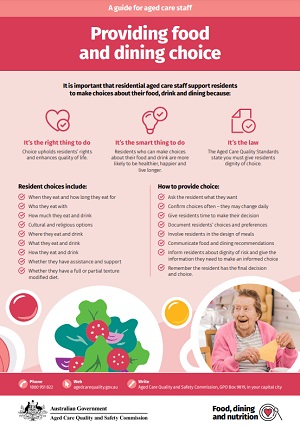
Providing food and dining choice - aged care staff poster
This guide supports aged care staff in providing food and dining choices for residents. It outlines the importance of upholding residents' rights to choose, enhancing their health and quality of life. The guide recommends confirming preferences regularly, involving residents in meal planning, and respecting individual choices regarding when, where, and what they eat or drink. This resource may refer to information that will be updated from 1 November 2025 to align with the new Aged Care Act and Quality Standards.
Providing food and dining choice - aged care staff poster (PDF 445.57 KB)
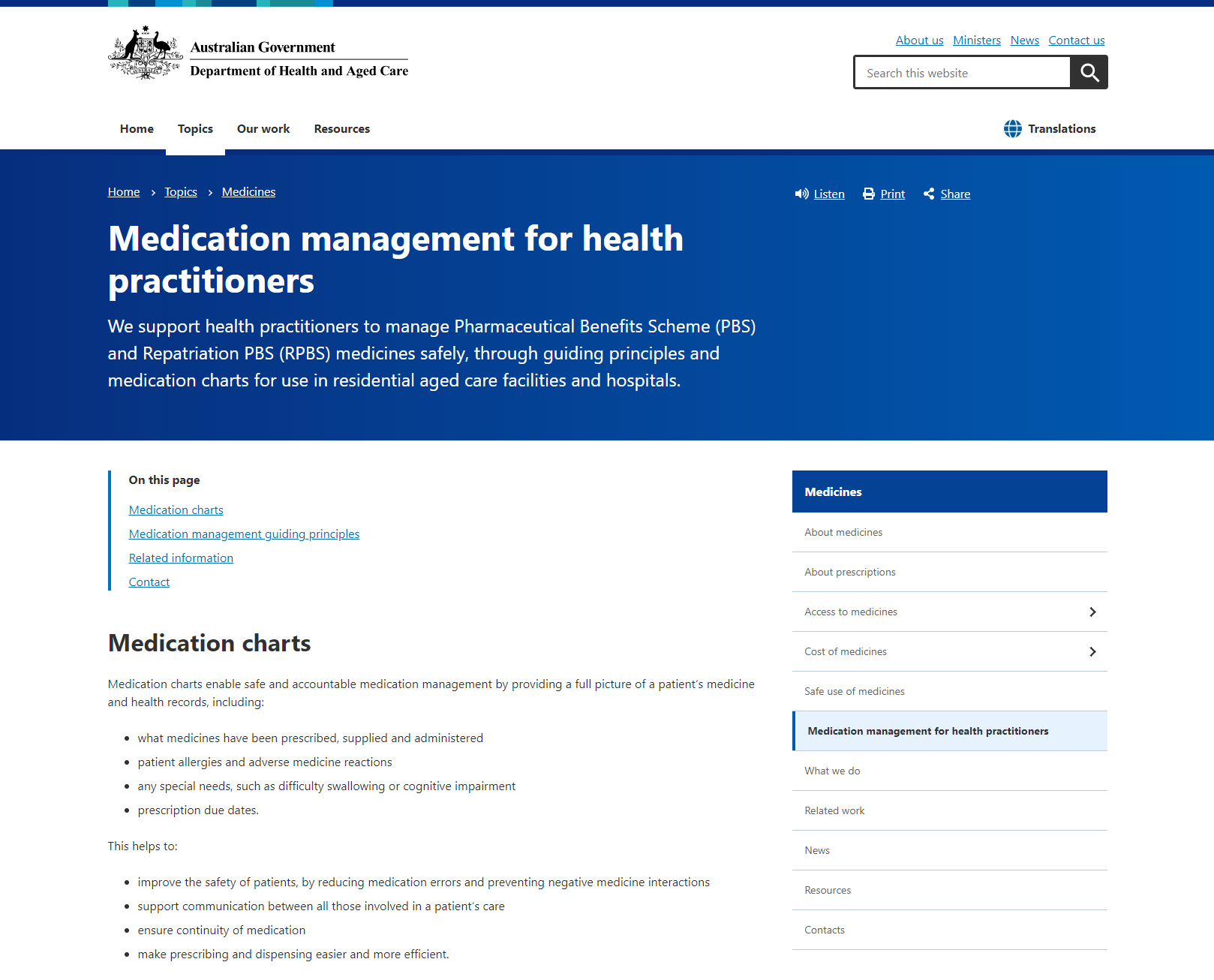
Medication management for health practitioners
This resource supports health practitioners in managing medicines through the use of medication charts in aged care facilities and hospitals. It provides guidelines for safe prescribing, administration, and communication. The resource includes both paper-based and electronic medication chart systems to reduce errors, improve patient safety, and streamline medication management processes in aged care settings.
This resource may refer to information that will be updated from 1 November 2025 to align with the new Aged Care Act and Quality Standards.