The Quality Standards Resource Centre helps extend understanding of the strengthened Aged Care Quality Standards, which took effect from 1 November 2025. You can search for resources by using keywords, or filtering by standard, outcome and audience. Before using the Resource Centre, please read the terms of use.
Governing for Reform in Aged Care Program
This resource outlines the Governing for Reform in Aged Care Program, designed to strengthen corporate and clinical governance capabilities for aged care leaders. It provides tools, online learning modules, webinars, and podcasts to support governance improvement and help leaders engage in reform efforts.
This resource may refer to information that will be updated from 1 November 2025 to align with the new Aged Care Act and Quality Standards.
Training and guidance for aged care providers
This resource provides training and guidance for aged care providers on essential topics such as dementia care, managing infectious diseases, emergency planning, and restrictive practices. It also includes information on upskilling the workforce and using electronic medication charts. The resource is designed to help providers maintain high-quality care and meet regulatory requirements in aged care settings. This resource may refer to information that will be updated from 1 November 2025 to align with the new Aged Care Act and Quality Standards.
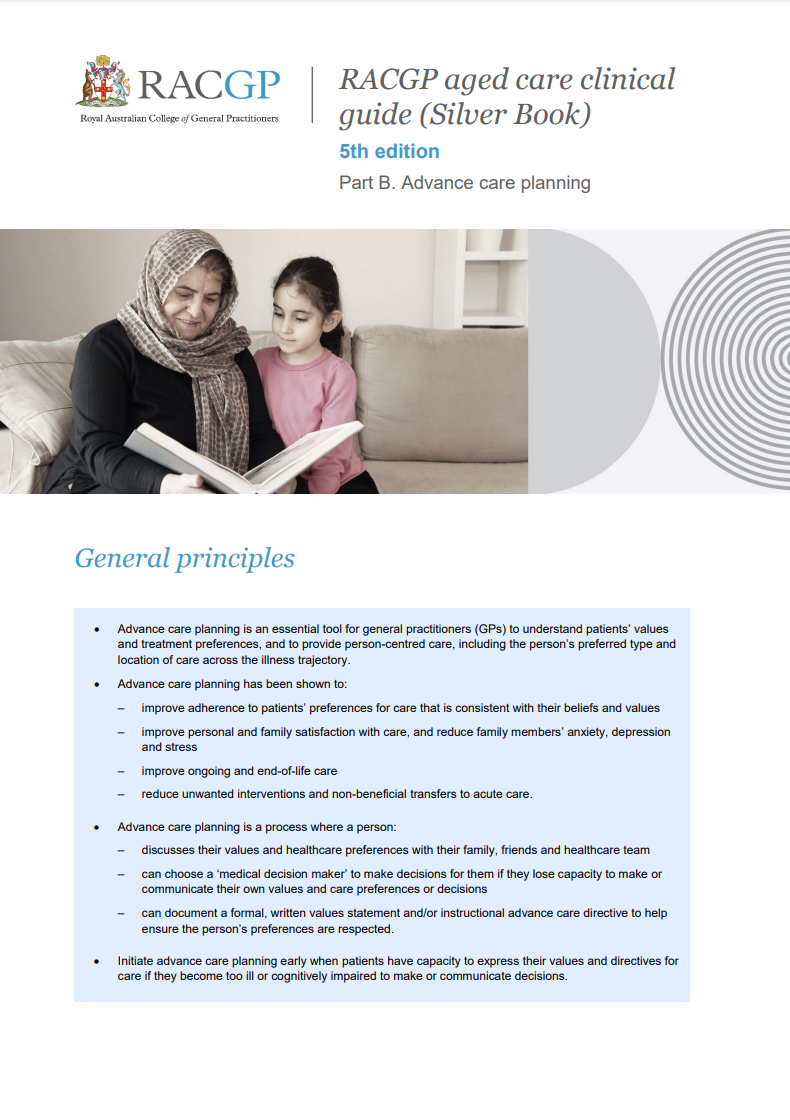
RACGP aged care clinical guide (Silver Book) - Part B - Advance care planning
This guide covers advance care planning for older adults, detailing the process of discussing patients' values, appointing a decision-maker, and documenting preferences for future care. It outlines the general practitioner’s role, steps for initiating discussions, assessing decision-making capacity, storing care plans, and ensuring patients' wishes are respected during their illness trajectory.
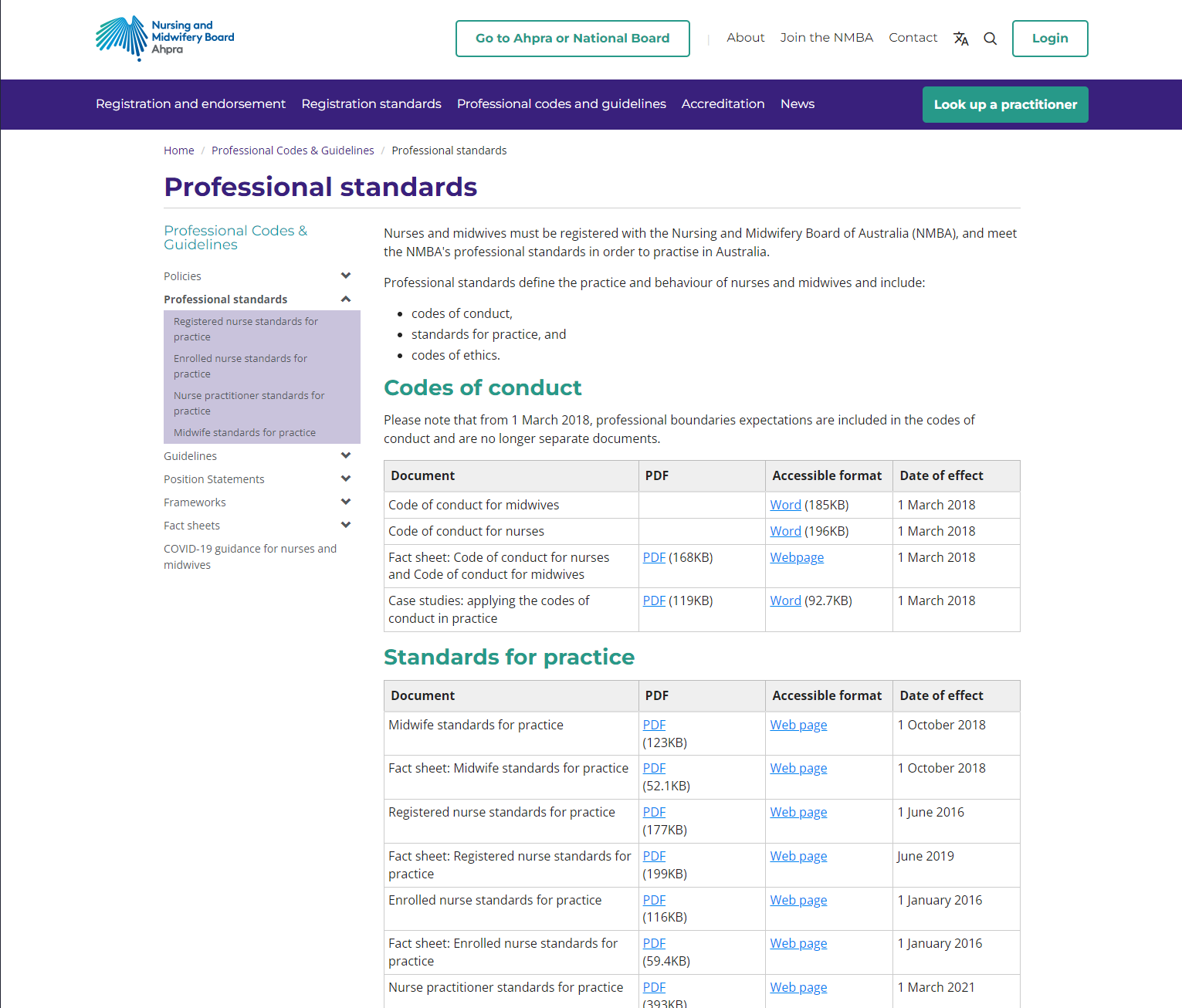
Nursing and Midwifery Board - Professional standards
This resource outlines the professional standards required for nurses and midwives to practise in Australia, including codes of conduct, standards for practice, and codes of ethics. It provides access to various documents, fact sheets, and guidelines that define the expected practice and behaviour for different nursing roles.
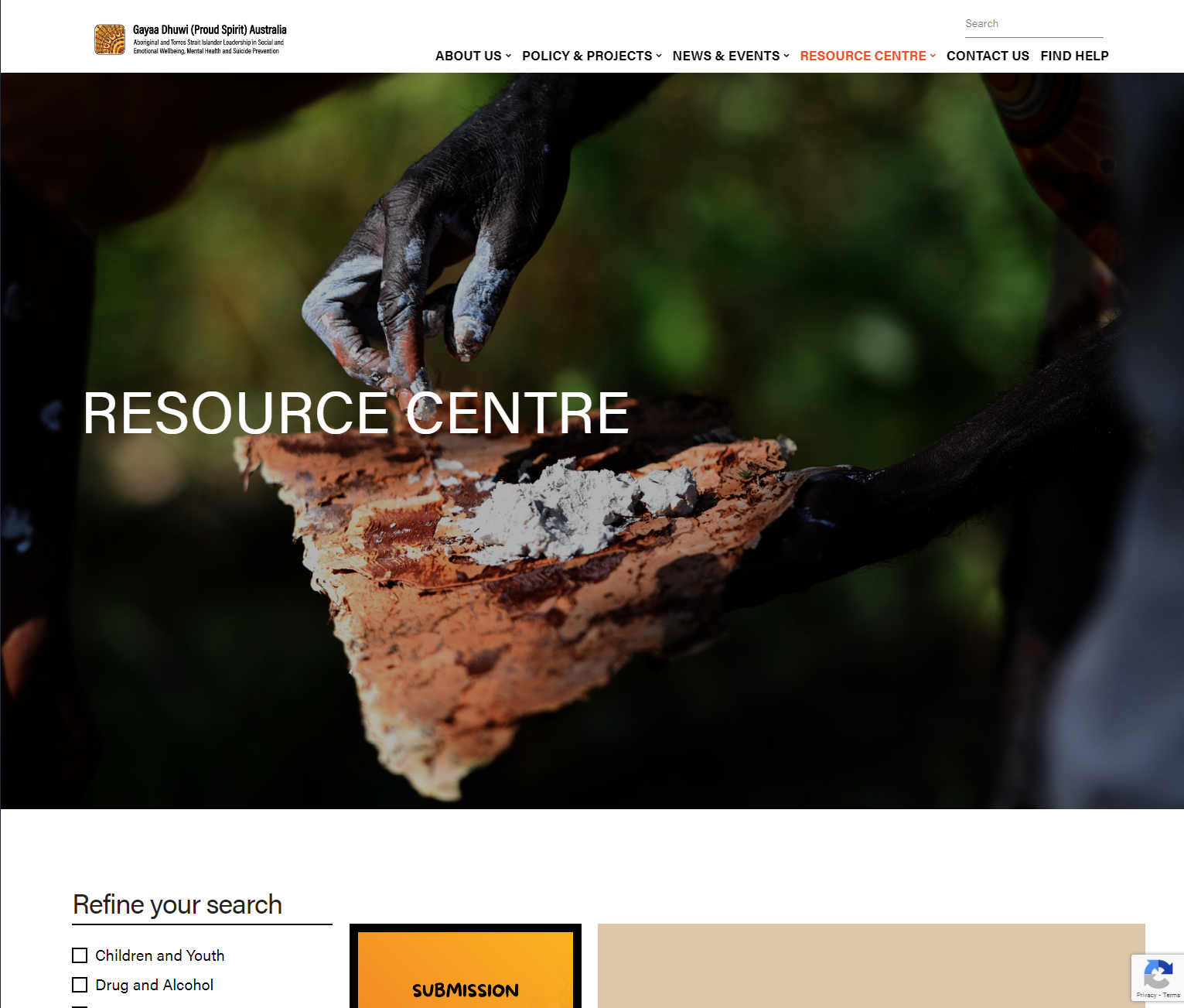
Resources for Aboriginal and Torres Strait Islander Mental Health and Wellbeing
This resource provides a variety of documents and resources to support the mental health and wellbeing of Aboriginal and Torres Strait Islander peoples. It covers topics including leadership in mental health, culturally safe practices, social and emotional wellbeing, suicide prevention, and strategic policy frameworks, offering tools for health professionals and communities.
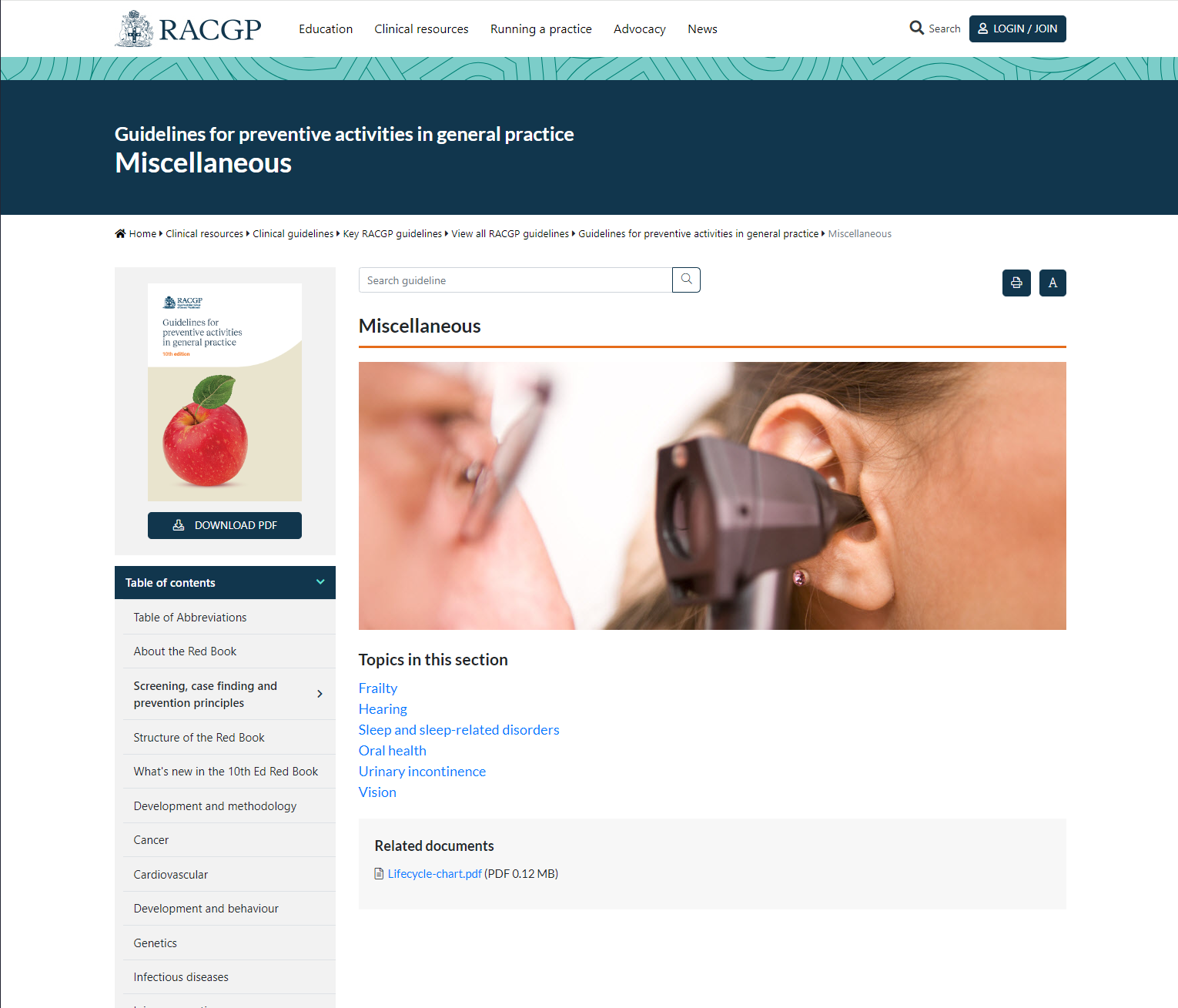
RACGP Guidelines for preventive activities in general practice - Miscellaneous
This resource provides guidelines for preventive activities in general practice, covering frailty, hearing, sleep disorders, oral health, urinary incontinence, and vision.
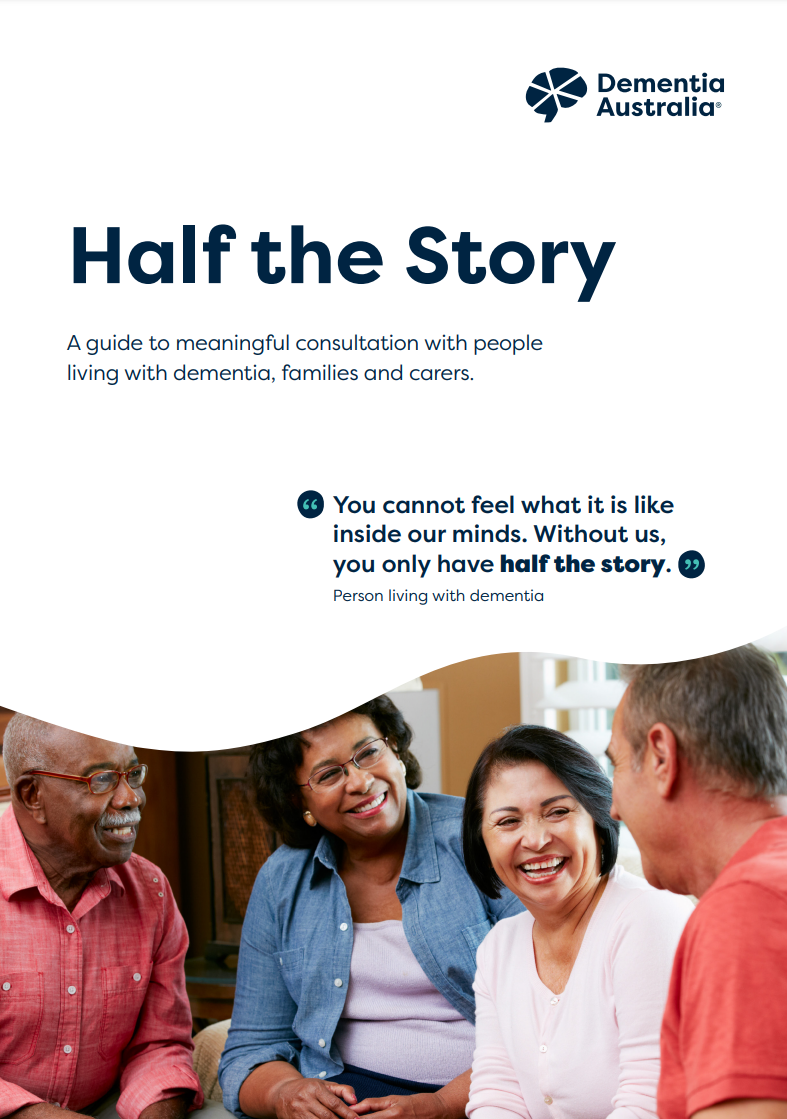
Half the story: A guide to meaningful consultation with people living with dementia, families and carers
This resource is a guide for meaningful consultation with people living with dementia, their families, and carers. It covers planning, ethical considerations, communication methods, and ways to improve accessibility. The guide offers strategies to ensure the voices of those living with dementia are respected, valued, and effectively integrated into decision-making processes.
Draft National Consumer Engagement Strategy for Health and Wellbeing
This resource presents the Draft National Consumer Engagement Strategy for Health and Wellbeing, which aims to foster partnerships between health policymakers and communities. It is designed to involve people and communities in the development and implementation of preventive health policies. The strategy supports policymakers and program developers in engaging effectively with consumers to achieve improved health outcomes across Australia.
Consumer and carer engagement: A practical guide
This resource provides a guide for engaging consumers and carers in mental health services. It outlines steps for involving people in decision-making, service design, and evaluation. The guide emphasises co-design, leadership, and dedicated resources to create a person-centred approach that improves care and service outcomes.
Advance Care Planning Australia
This resource provides information on advance care planning, which enables people to make decisions about their future health care in case they are unable to communicate their preferences. It helps ensure that healthcare providers and loved ones understand and respect their treatment choices. The resource includes tools, forms, and advice for creating an advance care plan.
Implementing the Comprehensive Care Standard - Clinical assessment and diagnosis
This document provides guidance on implementing the clinical assessment and diagnosis element of the Comprehensive Care Standard (National Safety and Quality Health Service Standards). It helps clinicians identify a person’s conditions or needs through examination and investigation. The resource supports safe, patient-centred care, improving diagnostic accuracy and promoting teamwork in healthcare settings, including aged care.
This resource may refer to information that will be updated from 1 November 2025 to align with the new Aged Care Act and Quality Standards.
NSQMHCMO Standards Guide for Service Providers
This guide helps service providers implement the National Safety and Quality Mental Health Standards for Community Managed Organisations. It covers governance, care models, and quality systems. While focused on mental health services, elements like governance and quality may be relevant to aged care. This resource may refer to information that will be updated from 1 November 2025 to align with the new Aged Care Act and Quality Standards.
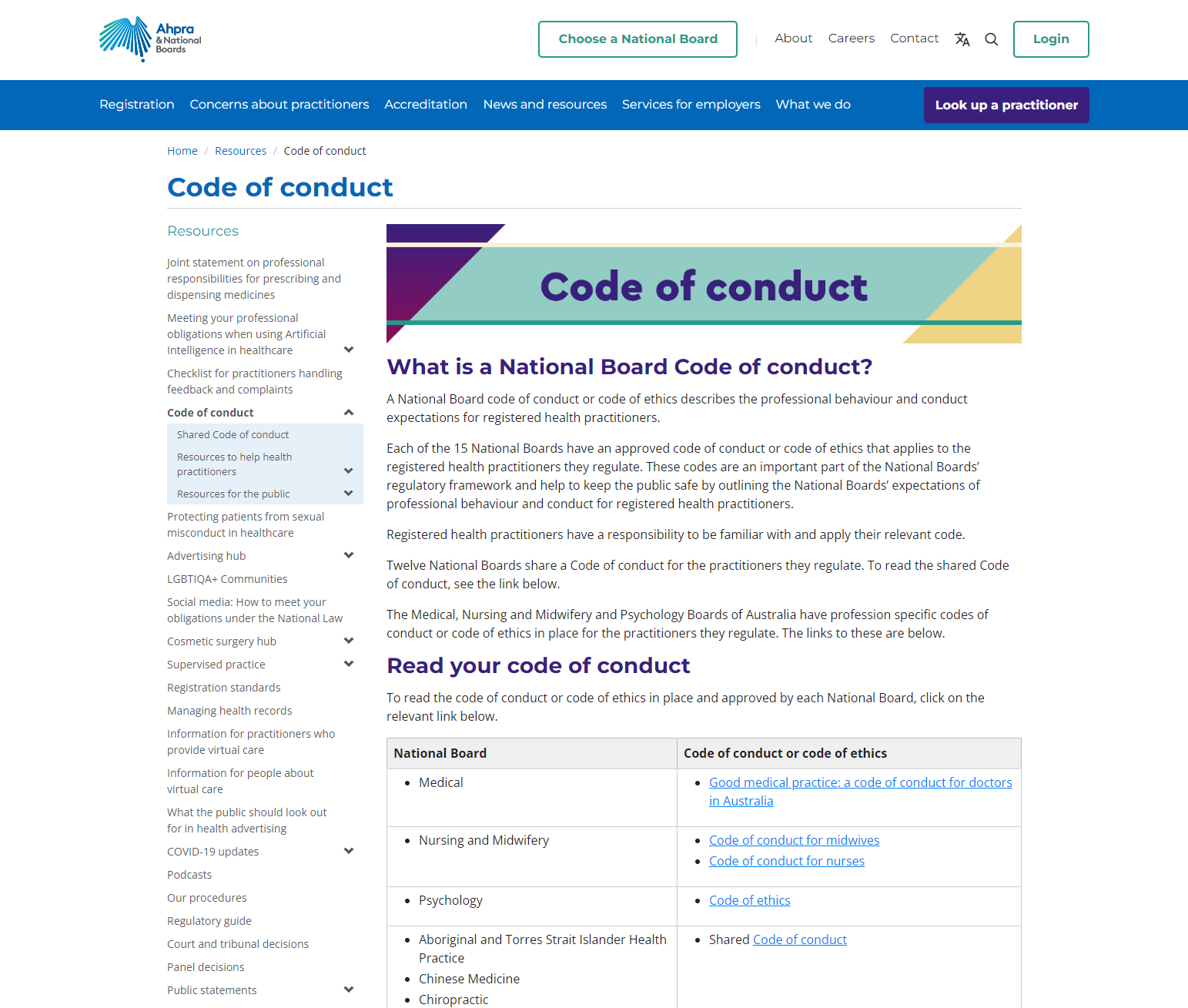
Code of conduct
This resource provides the National Boards' Code of Conduct, outlining the expected professional behaviour and ethical standards for registered health practitioners. It serves as a regulatory framework to ensure safe, ethical care, helping practitioners understand their responsibilities. The document is important for all registered practitioners to ensure they comply with these standards across healthcare settings.
Aboriginal and Torres Strait Islander mental health program
This resource provides information on a mental health program for Aboriginal and Torres Strait Islander people. It includes funding for culturally appropriate mental health services, offering psychological therapies, complex care, and clinical coordination. The program integrates with other services such as drug and alcohol support and suicide prevention initiatives.
This resource may refer to information that will be updated from 1 July 2025 to align with the new Aged Care Act and Quality Standards.
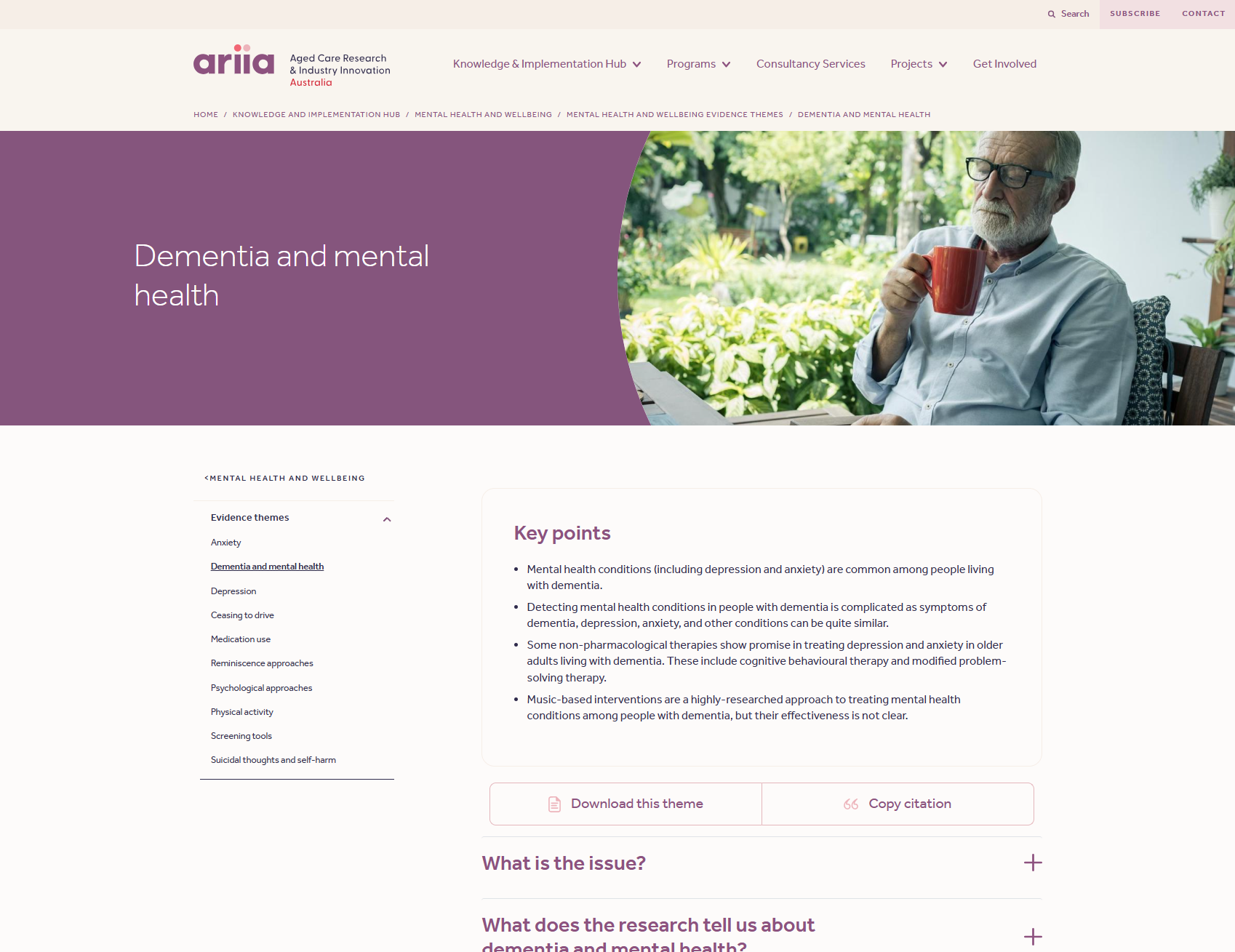
Mental health and wellbeing - Dementia and mental health
This resource examines mental health challenges in people living with dementia, covering complexities in diagnosing conditions like depression and anxiety. It provides evidence-based insights on therapeutic approaches, including music and cognitive therapies, and offers tools to aid aged care providers in supporting mental health in dementia care.
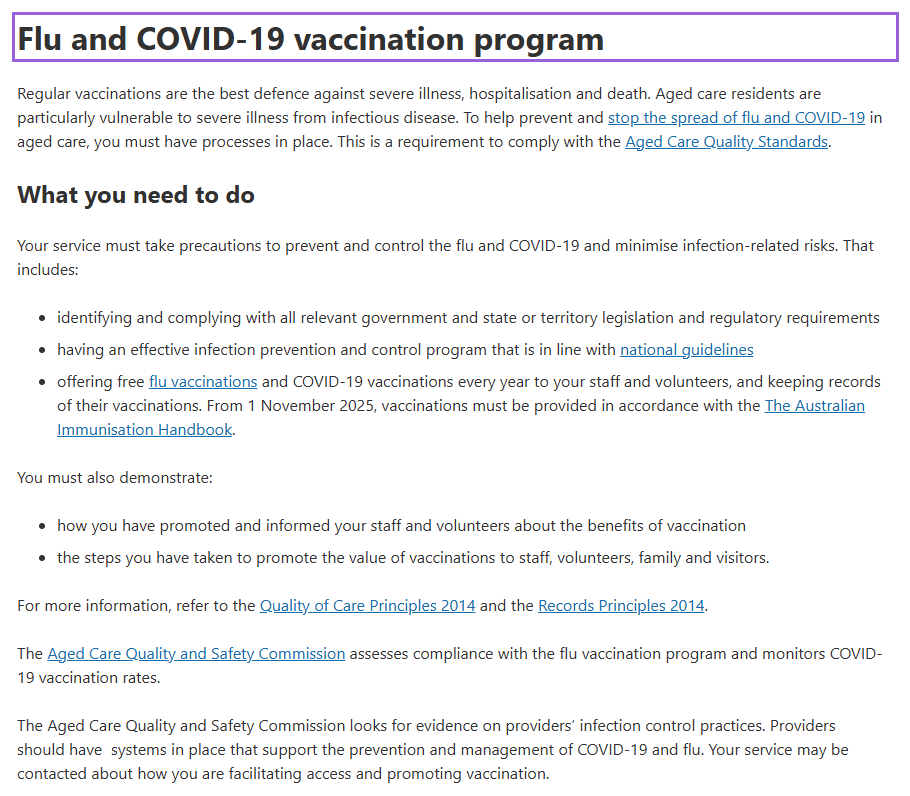
Flu and COVID-19 vaccination program
This resource outlines the flu and COVID-19 vaccination program for residential aged care providers. It includes information about what services must do to take precautions to prevent and control the flu and COVID-19 and minimise infection-related risks. This resource may refer to information that will be updated from 1 November 2025 to align with the new Aged Care Act and Quality Standards.
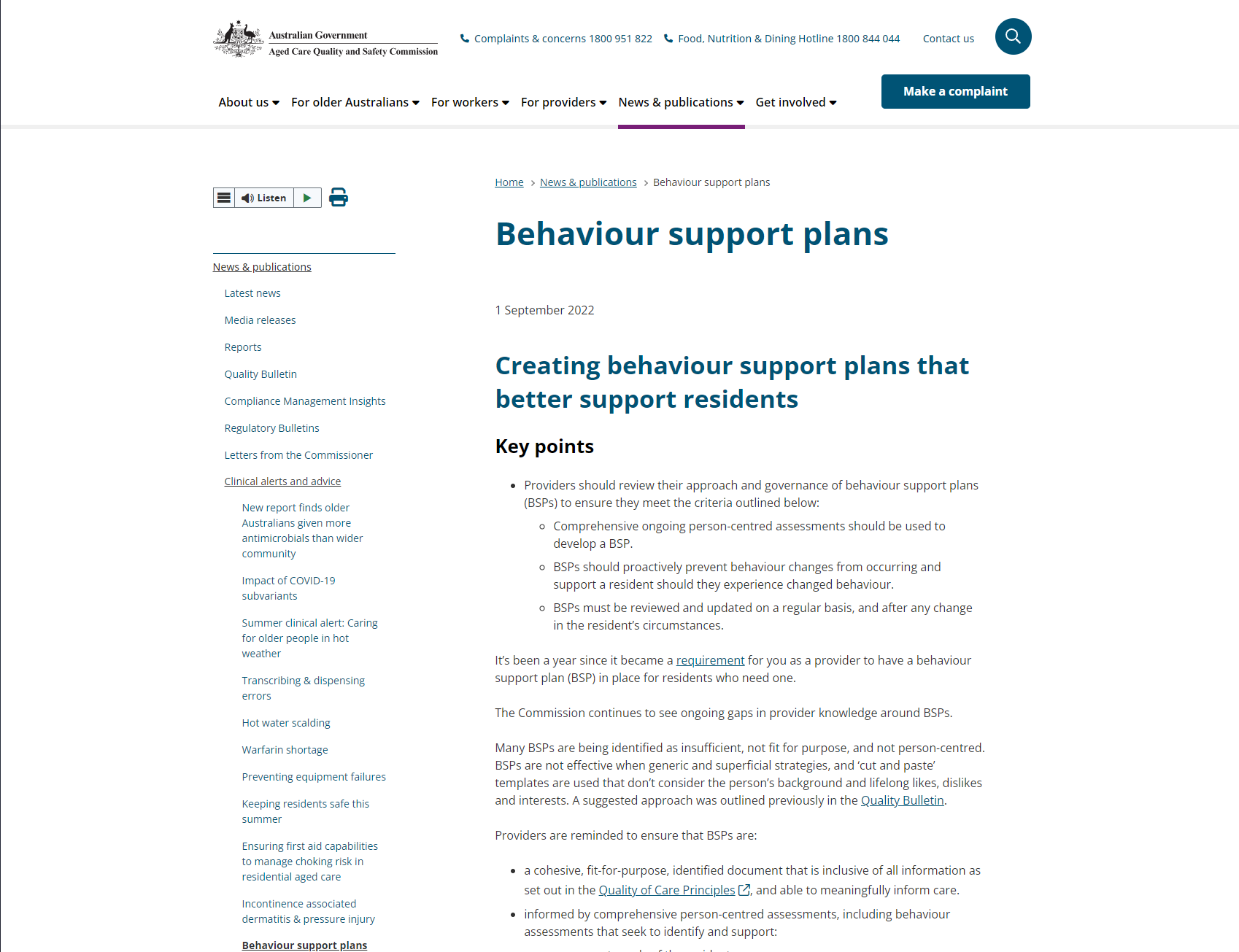
Creating behaviour support plans that better support residents
This document outlines the development of behaviour support plans (BSPs) in aged care, focusing on person-centred assessments, identification of triggers, tailored strategies, and regular reviews. It highlights the involvement of healthcare professionals and adherence to care principles to effectively manage residents’ behavioural changes and improve their quality of life.
This resource may refer to information that will be updated from 1 November 2025 to align with the new Aged Care Act and Quality Standards.
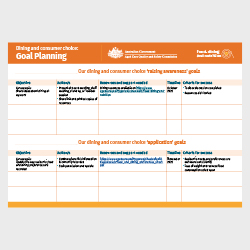
Goal planning tool
This resource is a goal planning tool designed to support aged care providers in improving food, dining, nutrition, and consumer choice. It helps providers set objectives, track progress, and implement actions to enhance service quality, ensuring that people’s preferences and dietary needs are consistently met.
This resource may refer to information that will be updated from 1 November 2025 to align with the new Aged Care Act and Quality Standards.
 Goal planning tool (PDF 899.52 KB)
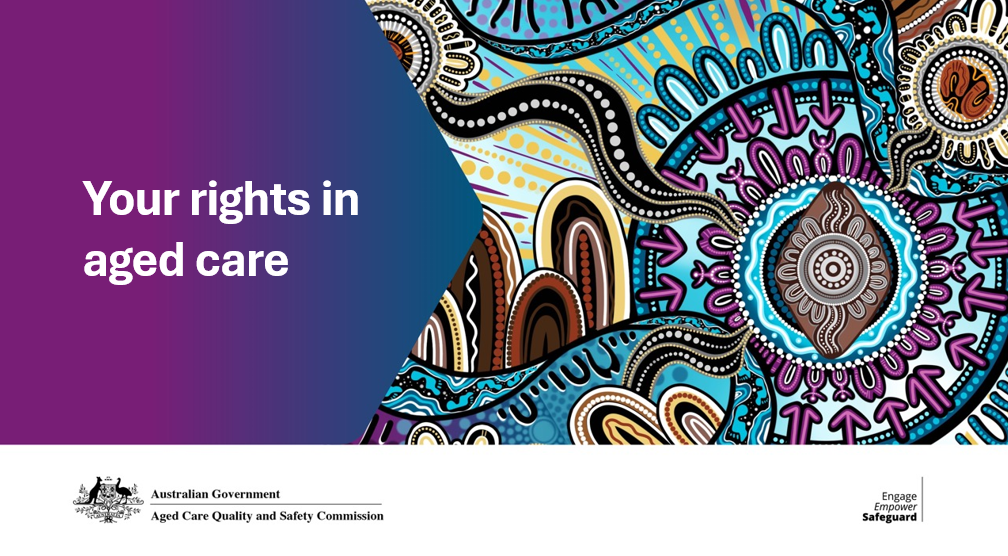
First Nations - Digital Flipchart - Your rights in aged care
A visual guide for conversations between providers/workers and older people about aged care. It includes notes for providers/workers to help guide the conversation.
Australian Centre for Evidence Based Aged Care - Resources
This resource provides a collection of tools and guidelines for improving person-centred care in aged care settings. It includes assessments on care personalisation, pain management, staff-family relationships, and support for sexuality and decision-making for people with dementia.
This resource was developed by a state/territory government or organisation and therefore its applicability and usefulness may be limited.