The Quality Standards Resource Centre helps extend understanding of the strengthened Aged Care Quality Standards, which take effect from 1 November 2025. The Resource Centre will be updated to reflect key changes made to the draft strengthened Standards. You can search for resources by using keywords, or filtering by standard, outcome, audience and theme. Before using the Resource Centre, please read the terms of use.
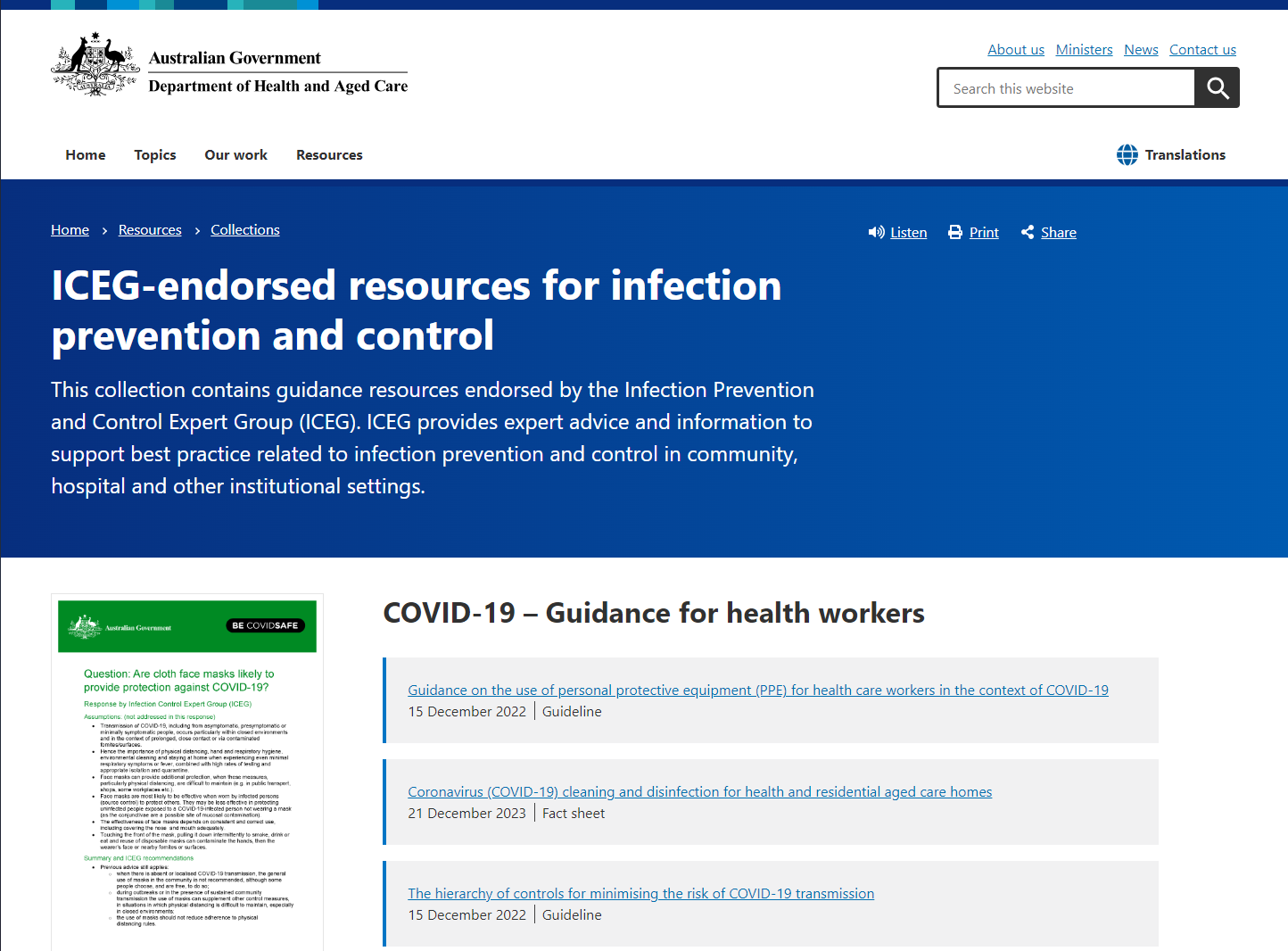
ICEG-endorsed resources for infection prevention and control
This resource collection includes guidance on infection prevention and control practices endorsed by the Infection Prevention and Control Expert Group (ICEG). It supports health and aged care providers with best practices related to COVID-19, personal protective equipment (PPE), cleaning, disinfection, and minimising transmission risks in institutional and community settings.
This resource may refer to information that will be updated from 1 November 2025 to align with the new Aged Care Act and Quality Standards.
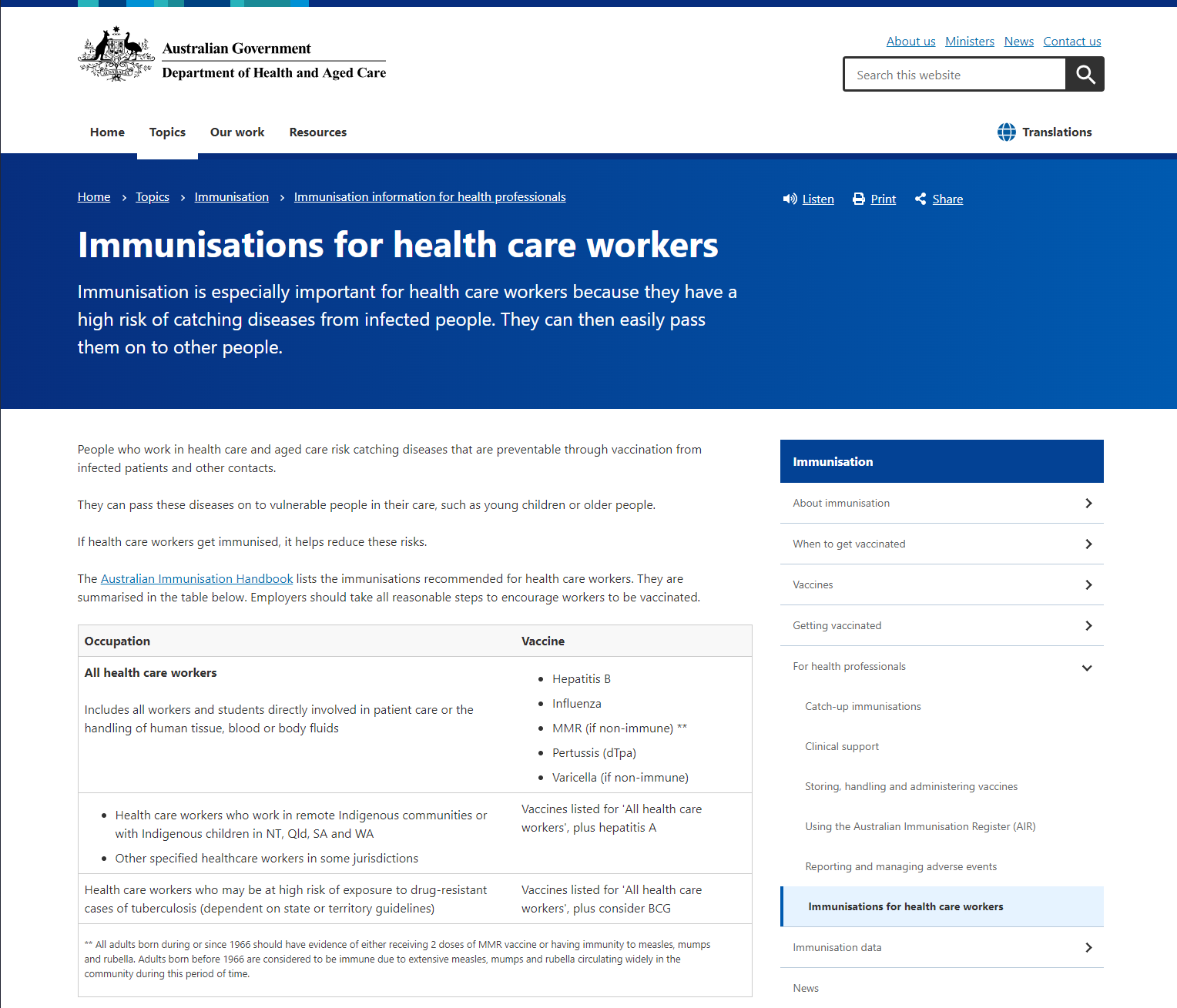
Immunisations for health care workers
This resource outlines recommended immunisations for healthcare workers, emphasising the importance of vaccination to prevent disease transmission to vulnerable populations. It lists vaccines such as Hepatitis B, Influenza, MMR, Pertussis, and Varicella, and highlights more requirements for workers in specific settings or with higher risks of exposure.
This resource may refer to information that will be updated from 1 November 2025 to align with the new Aged Care Act and Quality Standards.
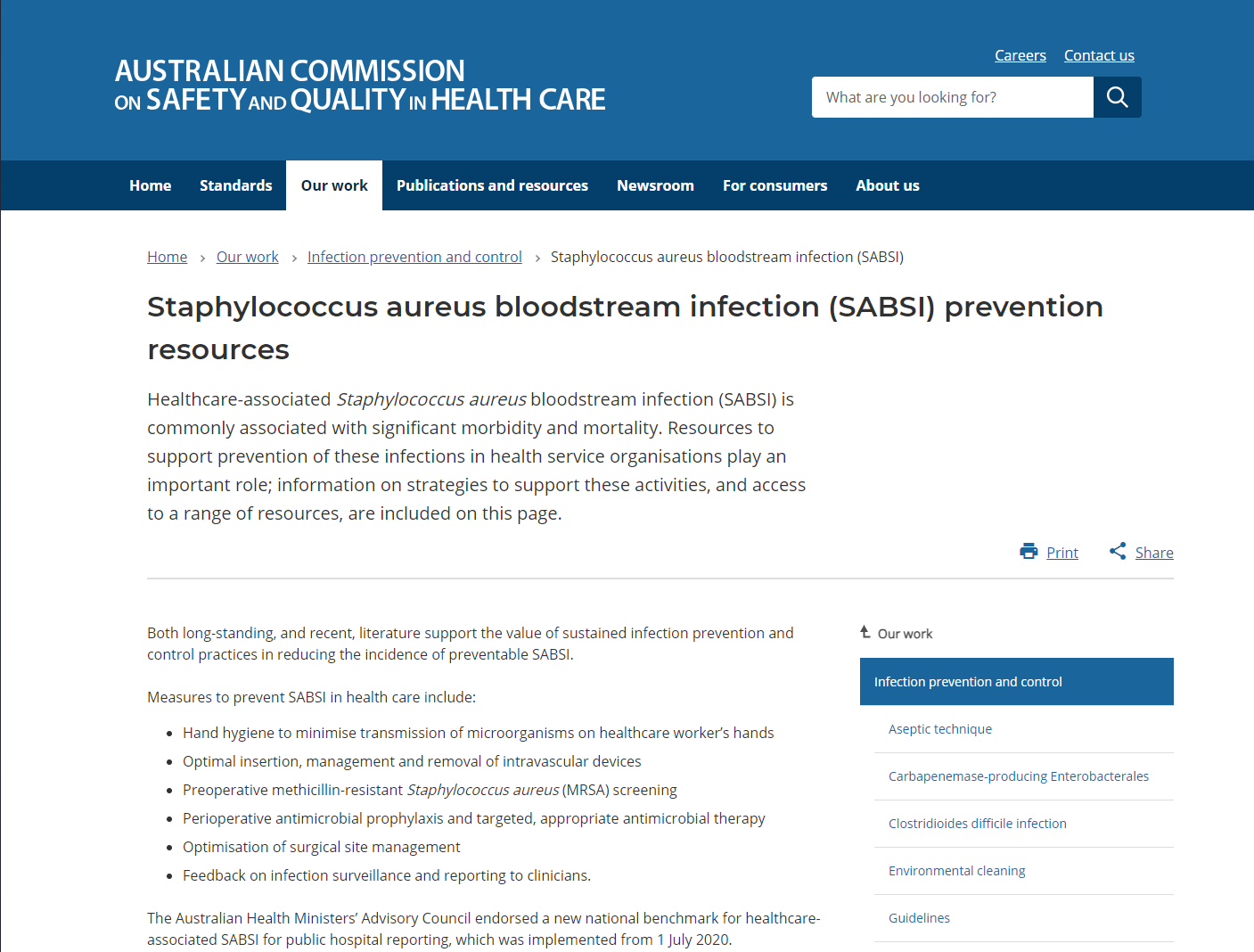
Staphylococcus aureus bloodstream infection (SABSI) prevention resources
This resource offers guidelines for preventing Staphylococcus aureus bloodstream infections (SABSI) in healthcare settings. It covers infection control strategies, including hand hygiene, device management, and surgical site care, helping organisations reduce infection risks and comply with national SABSI prevention standards.
This resource may refer to information that will be updated from 1 November 2025 to align with the new Aged Care Act and Quality Standards.
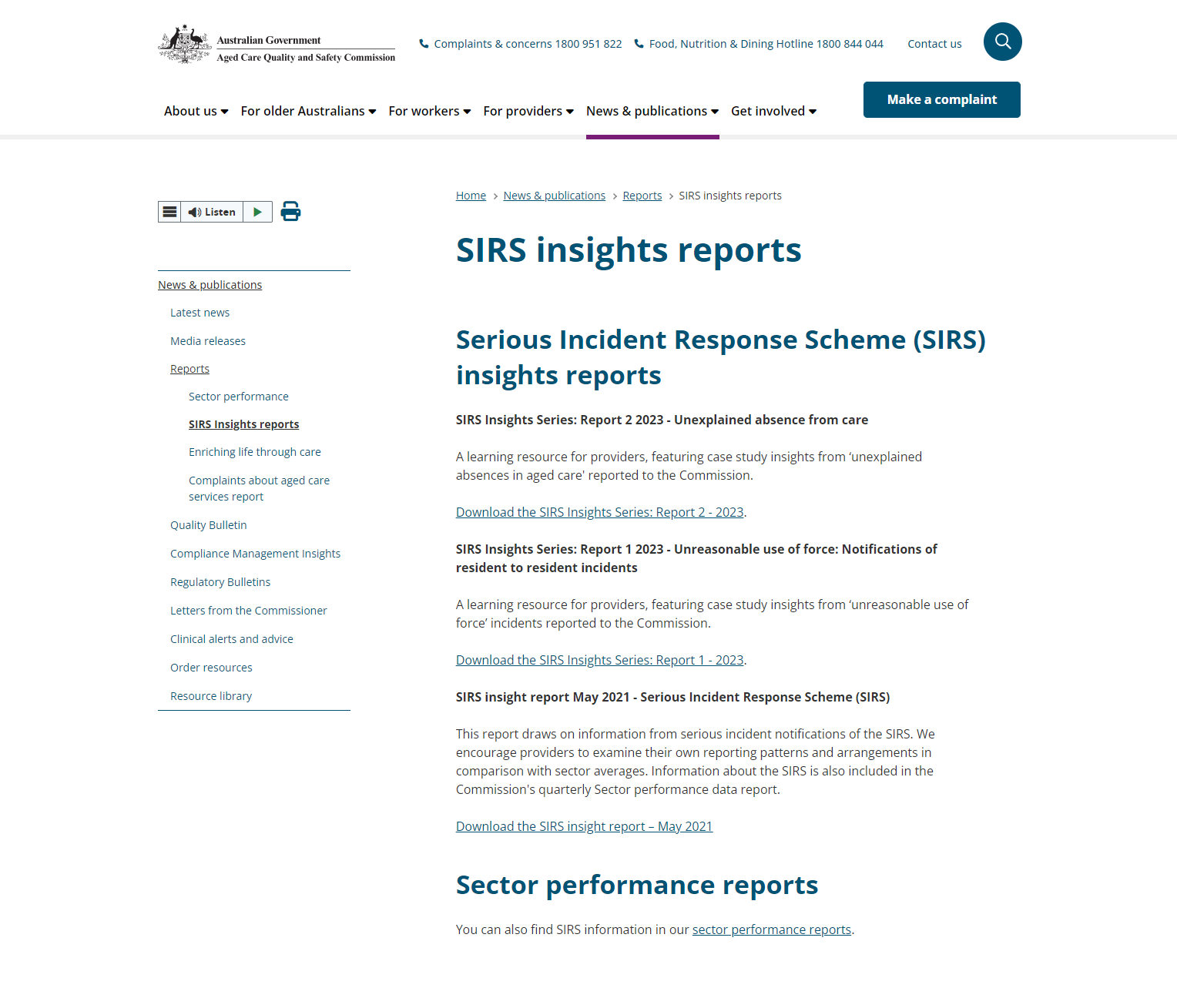
SIRS insights reports
This resource provides Serious Incident Response Scheme (SIRS) insights reports, offering case study examples and data to help aged care providers improve incident management practices. The reports feature learnings from incidents such as unexplained absences and unreasonable use of force, helping providers assess their own practices and enhance care quality.
This resource may refer to information that will be updated from 1 November 2025 to align with the new Aged Care Act and Quality Standards.
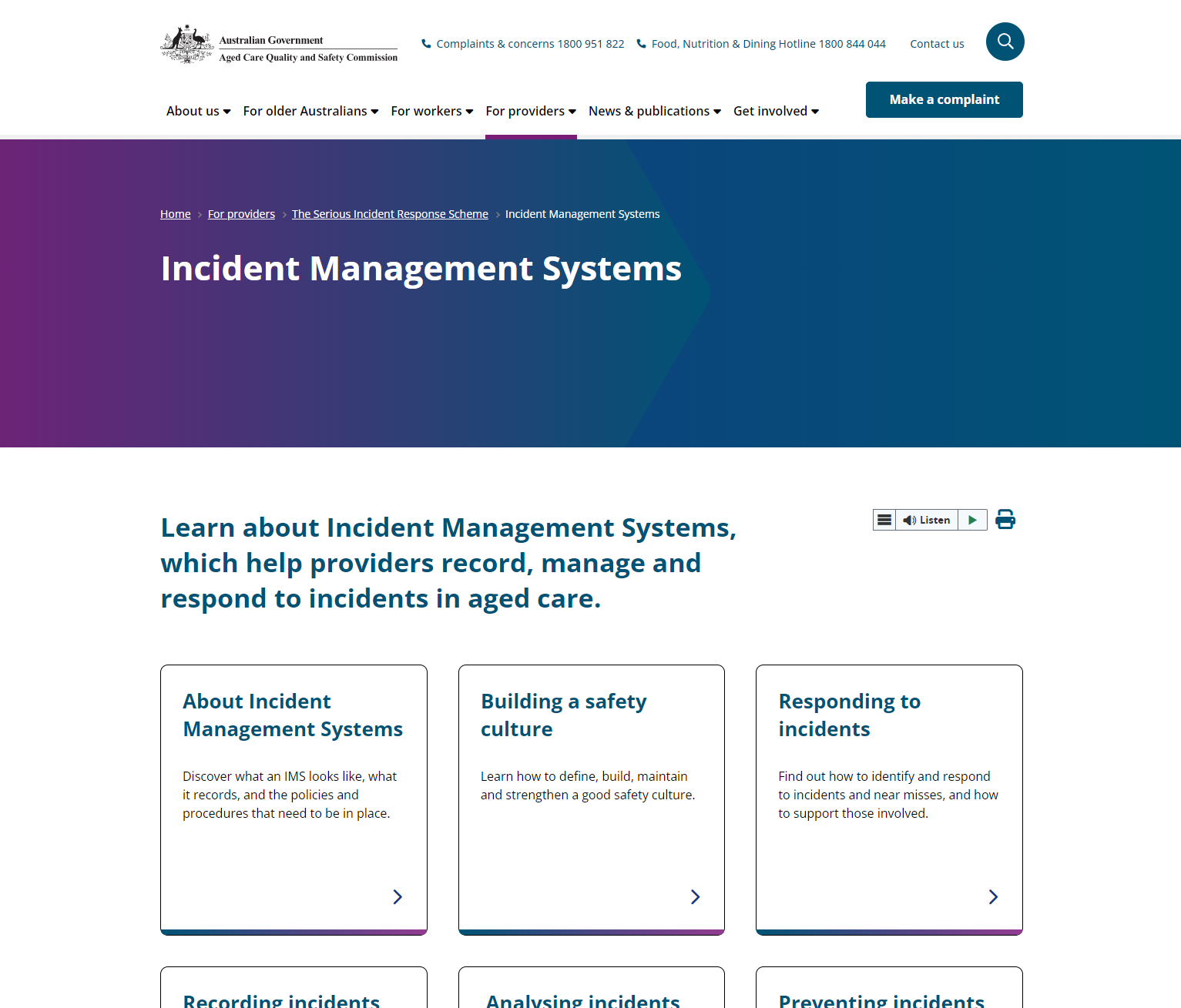
Incident Management Systems
This resource explains Incident Management Systems (IMS) used in aged care to record, manage, and respond to incidents. It provides guidance on building a safety culture, recording and analysing incidents, and implementing steps to prevent reoccurrences, supporting continuous improvement in care delivery.
This resource may refer to information that will be updated from 1 November 2025 to align with the new Aged Care Act and Quality Standards.
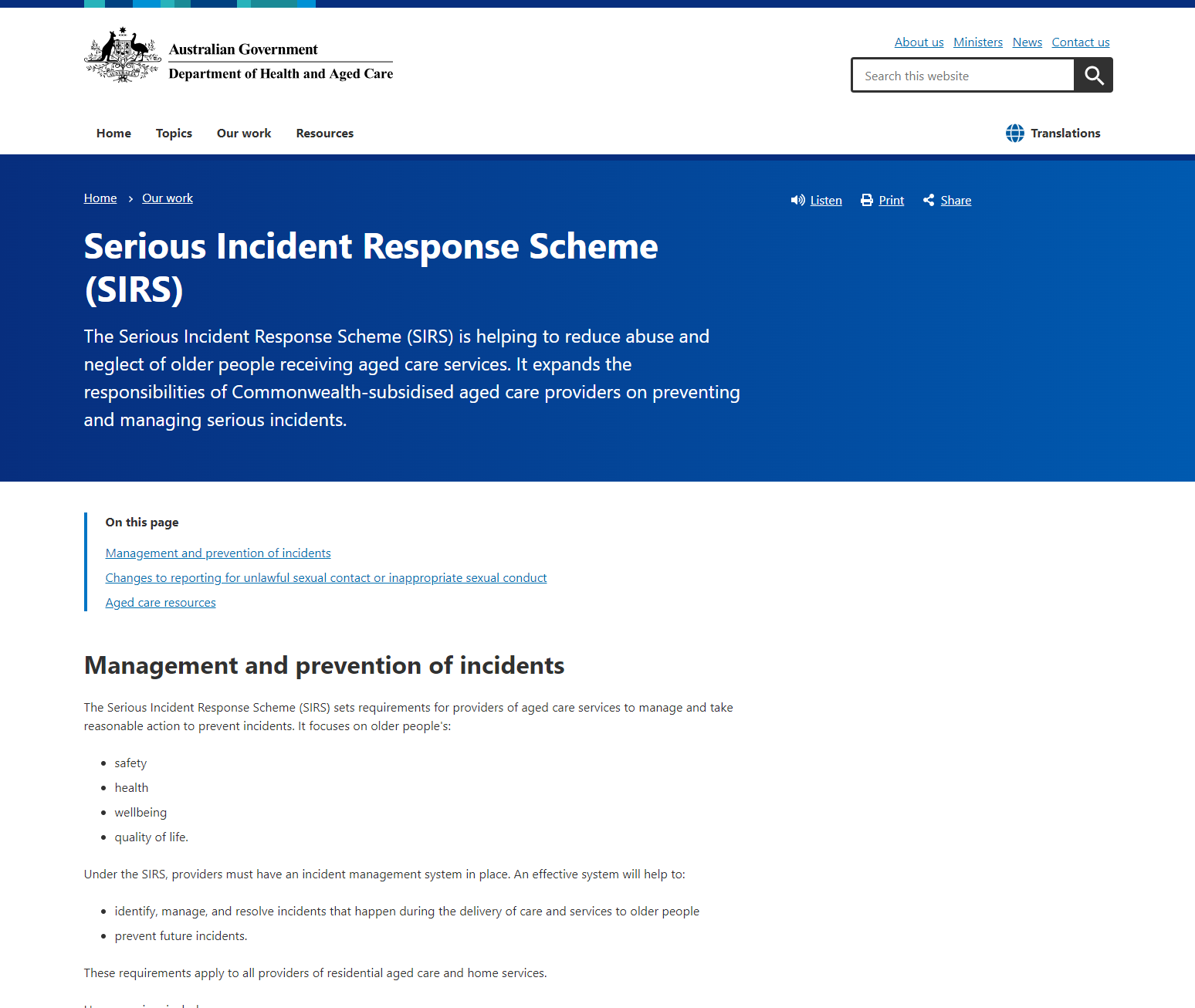
Serious Incident Response Scheme (SIRS)
This resource outlines the Serious Incident Response Scheme (SIRS), which helps reduce abuse and neglect of older people in aged care services. It mandates that Commonwealth-subsidised aged care providers implement systems to manage and prevent serious incidents. Providers must report incidents such as abuse, neglect, and unlawful contact, ensuring older people’s safety and wellbeing. This resource may refer to information that will be updated from 1 November 2025 to align with the new Aged Care Act and Quality Standards.
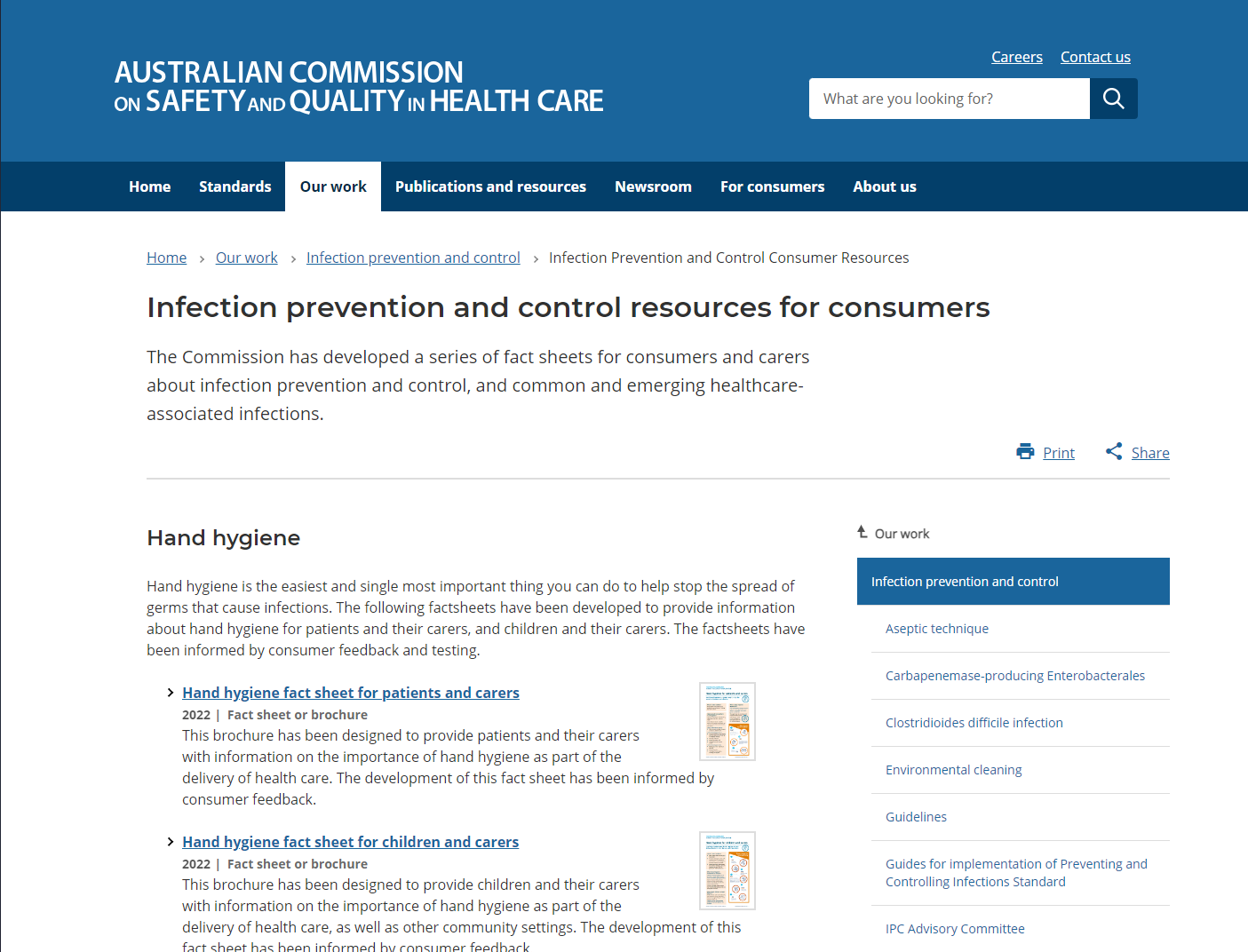
Infection prevention and control resources for consumers
This resource provides fact sheets for consumers and carers on infection prevention and control, including hand hygiene and healthcare-associated infections. It covers common infections such as MRSA, CPE, and CDI, offering guidance on prevention, treatment, and risk factors to help reduce the spread of infections in aged care settings.
This resource may refer to information that will be updated from 1 November 2025 to align with the new Aged Care Act and Quality Standards.
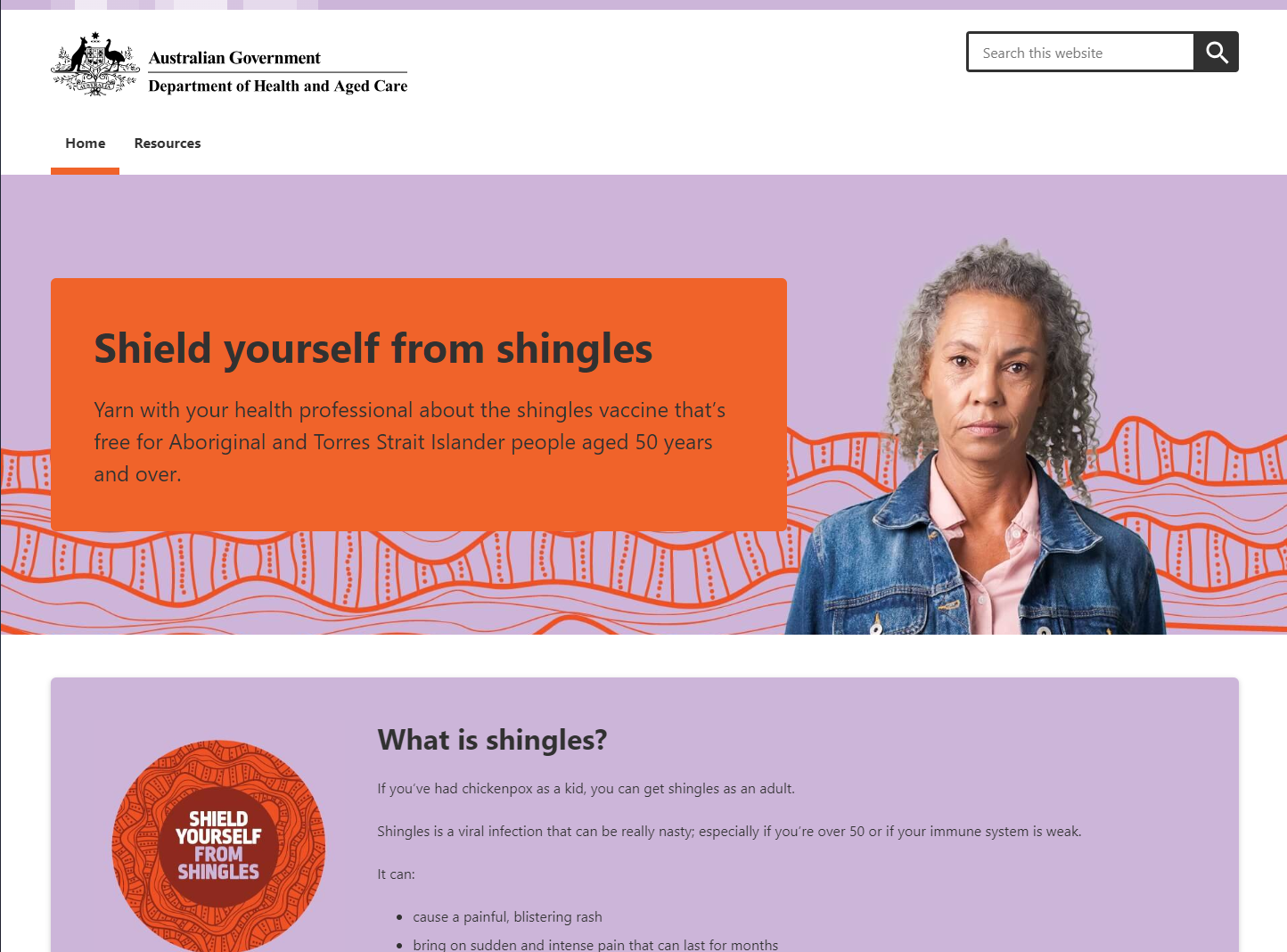
Shield yourself from shingles
This resource provides information on the shingles vaccine, which is free for Aboriginal and Torres Strait Islander people aged 50 and over. It explains the risks of shingles, vaccination locations, and potential side effects. The document encourages older adults to discuss vaccination with their healthcare professional to protect against shingles.
This resource may refer to information that will be updated from 1 November 2025 to align with the new Aged Care Act and Quality Standards.
Serious incidents
This resource provides information on how aged care providers should respond to serious incidents, ensuring the safety, health, and wellbeing of people in care. It outlines mandatory reporting requirements for incidents such as abuse, neglect, or financial coercion under the Serious Incident Response Scheme (SIRS), aiming to promote transparency and accountability in aged care settings. This resource may refer to information that will be updated from 1 November 2025 to align with the new Aged Care Act and Quality Standards.
The Serious Incident Response Scheme
This resource provides an introduction to the Serious Incident Response Scheme (SIRS), outlining its role in managing and reporting serious incidents in aged care. It includes guidance on incident management systems, the responsibilities of managers and workers, and reporting requirements for residential and home services.
This resource may refer to information that will be updated from 1 November 2025 to align with the new Aged Care Act and Quality Standards.
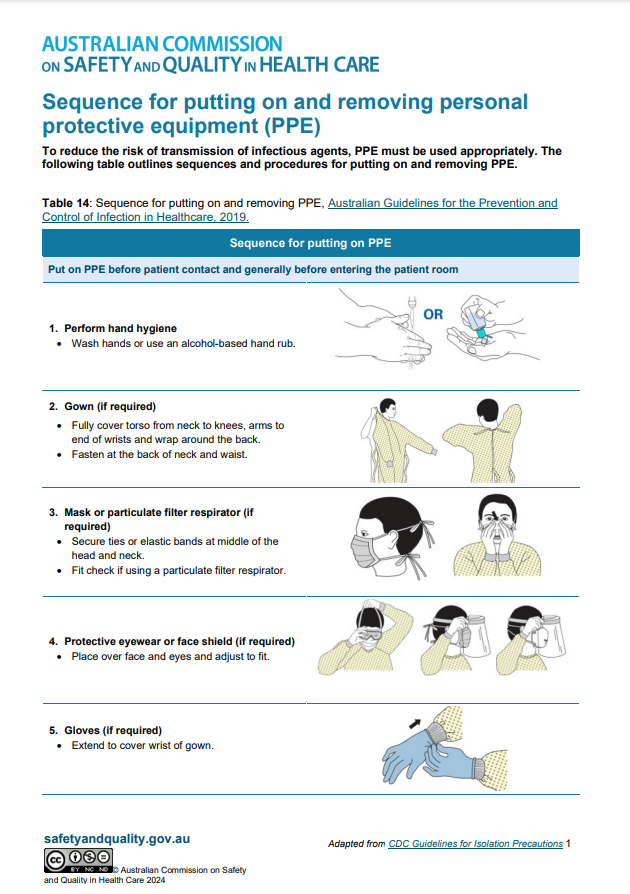
Sequence for putting on and removing personal protective equipment (PPE)
This poster outlines the correct sequence for putting on and removing personal protective equipment (PPE) to reduce the transmission of infectious agents. It provides step-by-step instructions for healthcare workers to ensure safe use of gowns, masks, gloves, and protective eyewear.
This resource may apply to healthcare contexts outside of aged care. Please consider the applicability of this resource to your care setting. This resource may refer to information that will be updated from 1 November 2025 to align with the new Aged Care Act and Quality Standards.
Infection Prevention and Control Week 2023 - Presentation - Basics of Infection prevention and control
This resource provides a presentation for Infection Prevention and Control Week 2023 covers hand hygiene, standard and transmission-based precautions, managing invasive devices, and antimicrobial stewardship. It provides foundational knowledge for healthcare workers to prevent and control infections in care settings.
This resource may refer to information that will be updated from 1 November 2025 to align with the new Aged Care Act and Quality Standards.
Sepsis Clinical Care Standard
The Australian Commission on Safety and Quality in Health Care's Sepsis Clinical Care Standard 2022 outlines 7 quality statements to ensure early recognition and best-practice care for sepsis, reducing risks of death and complications. It includes indicators for monitoring care and ensuring timely treatment. Applicable to multiple settings, including aged care, it supports high-quality sepsis management and improved outcomes.
This resource may refer to information that will be updated from 1 November 2025 to align with the new Aged Care Act and Quality Standards.
Infection Prevention in the Home
This resource provides guidance on infection prevention in home care settings, highlighting challenges such as the unpredictability of home environments and lack of basic hygiene resources. It explains how to apply standard and transmission-based precautions, manage infection hazards, and involve clients in maintaining infection control practices to ensure safety.
This resource may refer to information that will be updated from 1 November 2025 to align with the new Aged Care Act and Quality Standards.
Respiratory syncytial virus (RSV) infection
This resource provides information about respiratory syncytial virus (RSV), a common and highly contagious respiratory virus. It explains symptoms, diagnosis, and prevention, highlighting that RSV can be serious for infants and older adults with chronic conditions. It also details how RSV cases are monitored through national surveillance systems.
This resource may refer to information that will be updated from 1 November 2025 to align with the new Aged Care Act and Quality Standards.
IPC location-based guidance
This resource provides infection prevention and control (IPC) location-based guidance tailored for aged care providers. It includes state and territory-specific IPC requirements and offers links to relevant Commonwealth and local guidance. The document helps providers access and prioritise the appropriate IPC information to maintain compliance with regulations.
This resource may refer to information that will be updated from 1 November 2025 to align with the new Aged Care Act and Quality Standards.
IPC resource collection
This is an Infection and Prevention Control (IPC) resource tool. This tool can be used by both residential and home care providers to access key pieces of information and reference materials on infection prevention and control. The tool provides access to specific information by selecting a relevant topic and sub-topic.
This resource may refer to information that will be updated from 1 November 2025 to align with the new Aged Care Act and Quality Standards.
Reportable incidents
This resource outlines reportable incidents within aged care, including Priority 1 and Priority 2 incidents. It provides information on the 8 types of incidents that must be reported, such as psychological abuse, neglect, and the inappropriate use of restrictive practices, helping providers meet their obligations.
This resource may refer to information that will be updated from 1 November 2025 to align with the new Aged Care Act and Quality Standards.
Laundry and Infection Control in Residential Aged Care
This resource provides guidance on proper laundry procedures in residential aged care to support infection control. It explains how to handle soiled linen, manage laundry services, and prevent contamination. The resource aligns with infection control standards, helping aged care providers meet hygiene requirements and reduce the risk of pathogen transmission.
This resource may refer to information that will be updated from 1 November 2025 to align with the new Aged Care Act and Quality Standards.
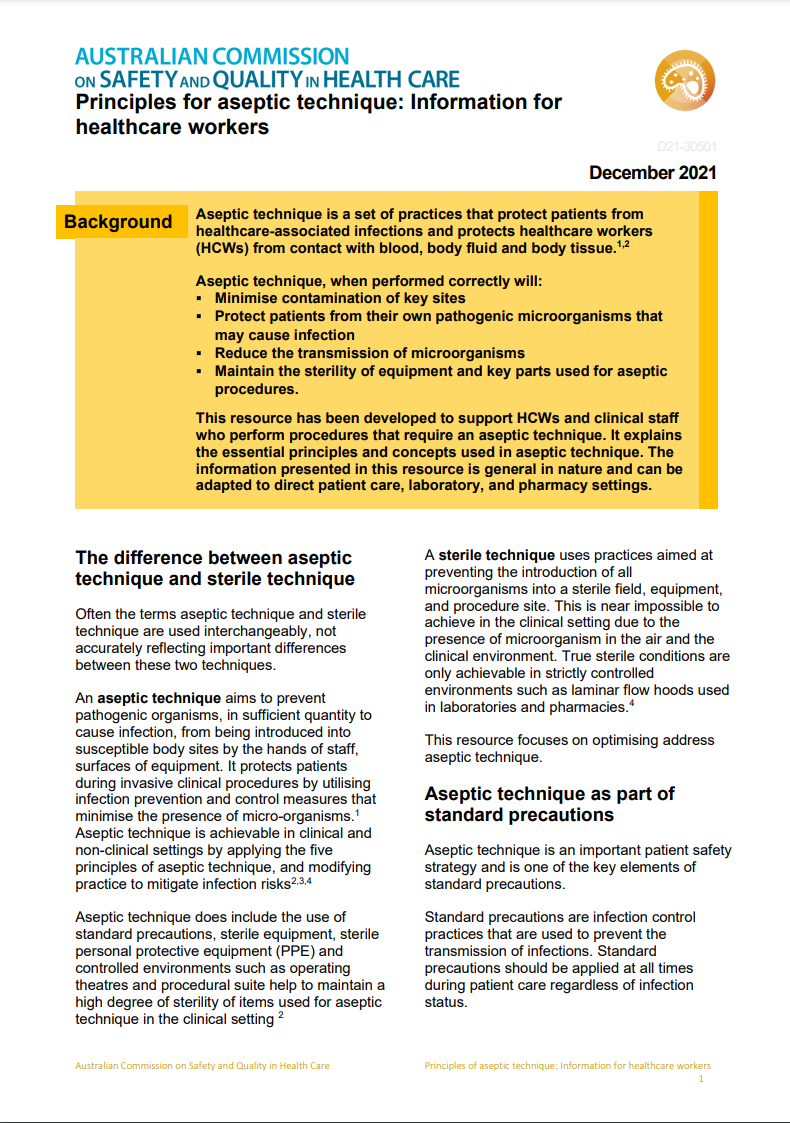
Principles of aseptic technique: Information for healthcare workers
This fact sheet provides principles of aseptic technique to support healthcare workers performing procedures requiring aseptic practices. It covers key concepts, differences between aseptic and sterile techniques, and application in clinical, pharmacy, and laboratory settings, emphasising infection prevention, standard precautions, and proper handling of equipment.
This resource may refer to information that will be updated from 1 November 2025 to align with the new Aged Care Act and Quality Standards.