The Quality Standards Resource Centre helps extend understanding of the strengthened Aged Care Quality Standards, which take effect from 1 November 2025. The Resource Centre will be updated to reflect key changes made to the draft strengthened Standards. You can search for resources by using keywords, or filtering by standard, outcome, audience and theme. Before using the Resource Centre, please read the terms of use.
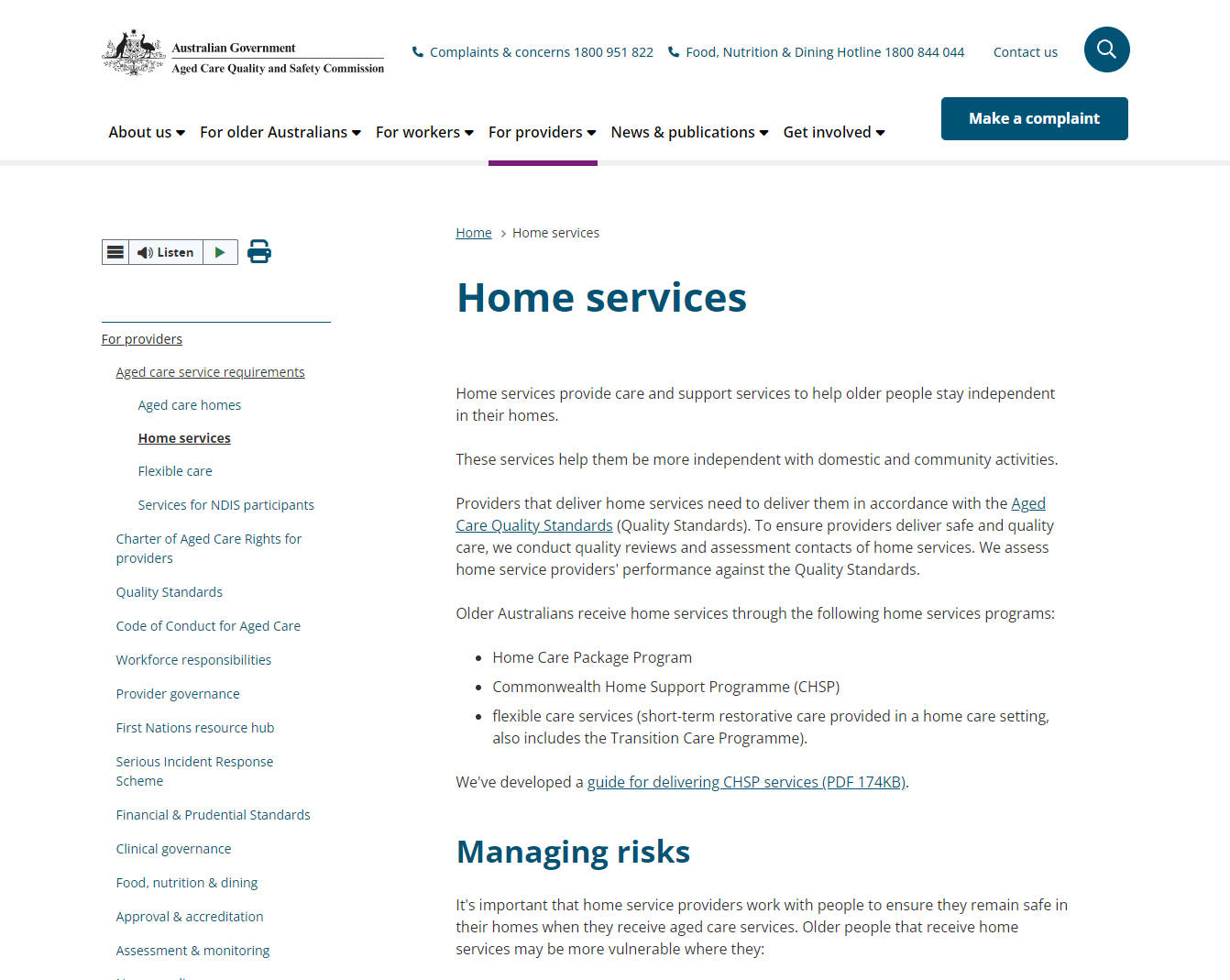
Home services
This page provides guidance for home service providers delivering care to older people in their homes. It outlines how providers must follow the Aged Care Quality Standards, conduct regular assessments, manage risks, and ensure the safety of vulnerable people. It includes resources to help providers identify and manage risks.
This resource may refer to information that will be updated from 1 November 2025 to align with the new Aged Care Act and Quality Standards.
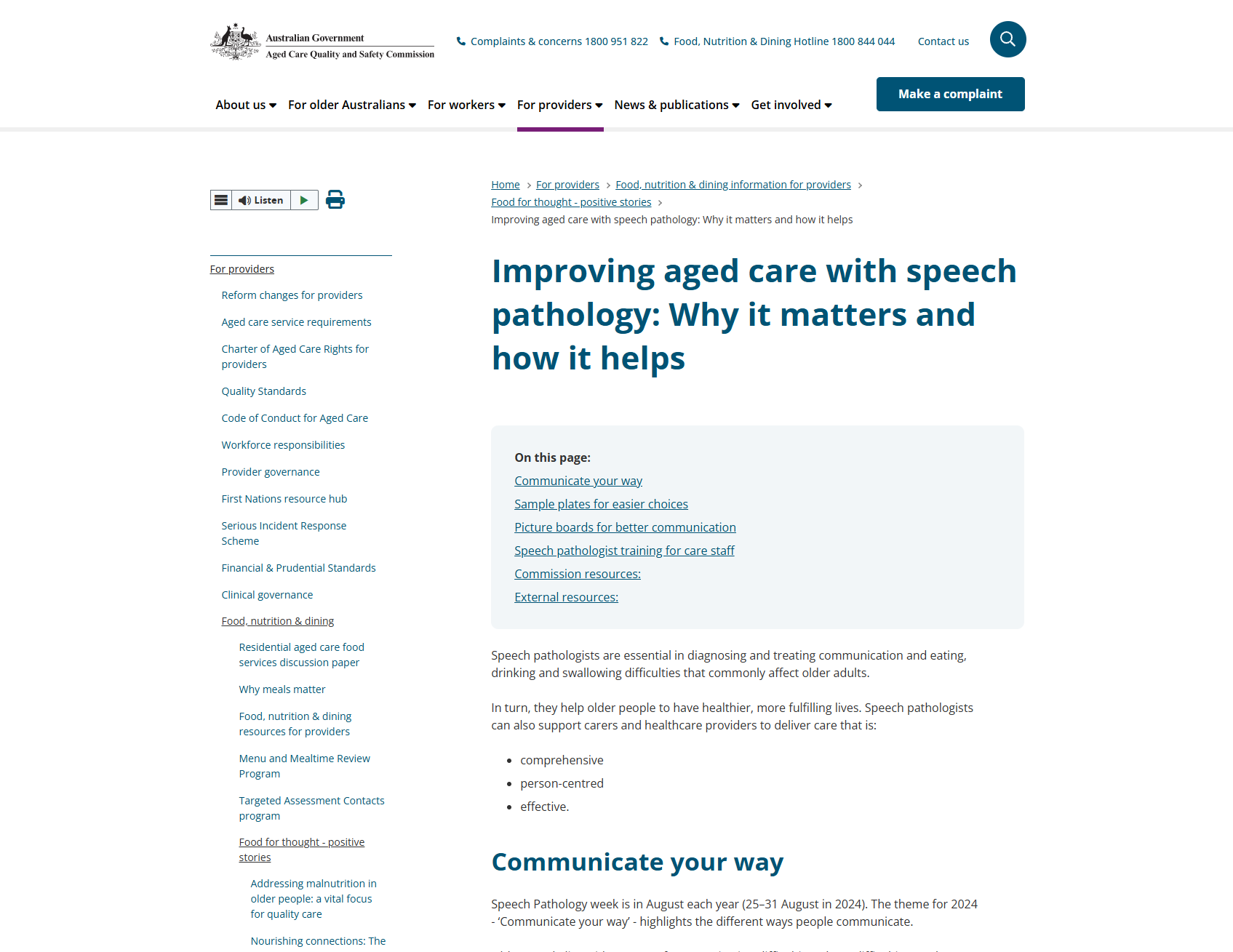
Improving aged care with speech pathology: Why it matters and how it helps
This page highlights the role of speech pathologists in supporting older people with communication, eating, drinking, and swallowing difficulties. It provides resources for aged care providers on how to improve care quality through effective communication tools and tailored strategies. This resource includes practical examples, like sample plates and picture boards, for enhancing dining experiences and supporting individual choice.
This resource may refer to information that will be updated from 1 November 2025 to align with the new Aged Care Act and Quality Standards.
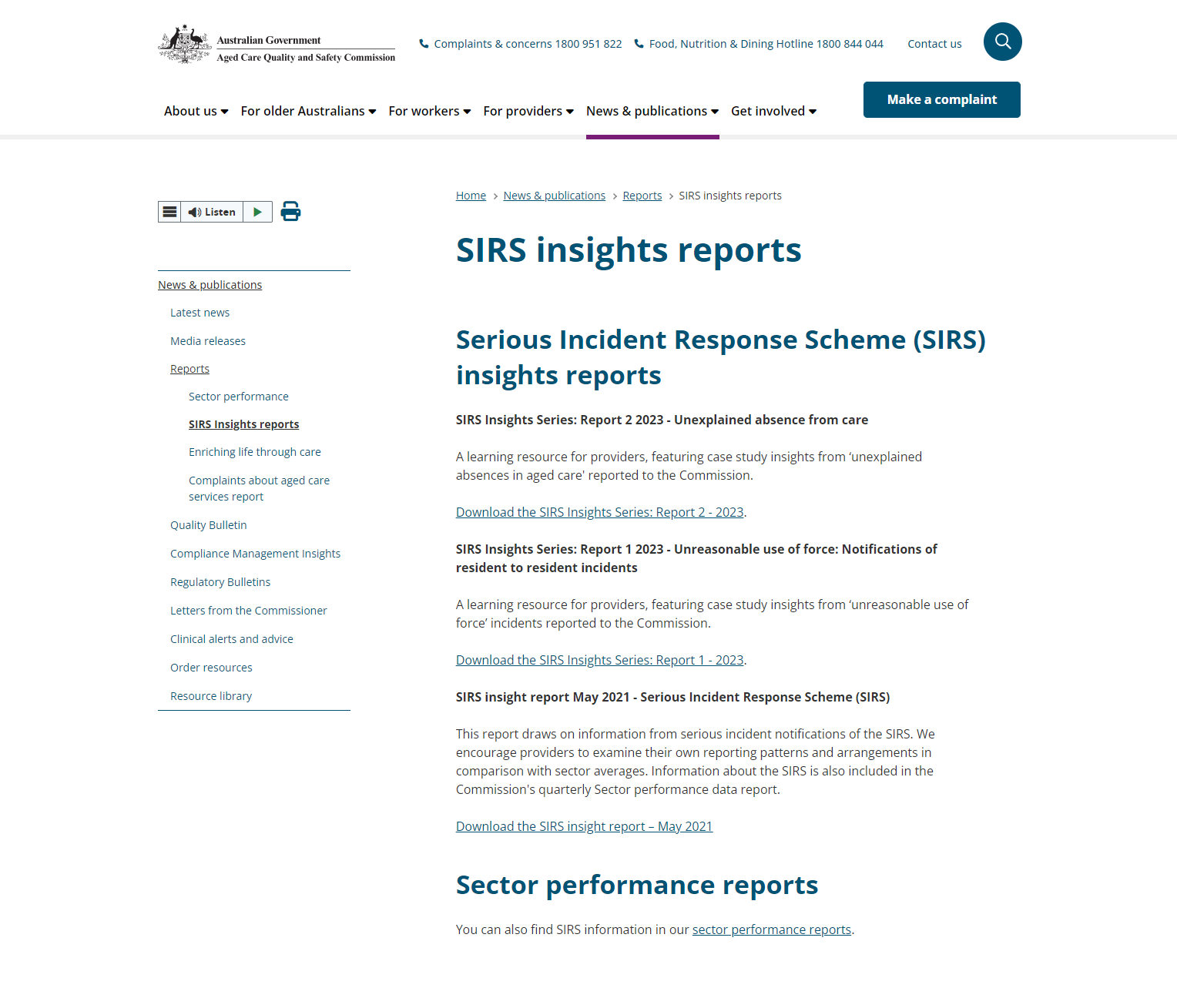
SIRS insights reports
This resource provides Serious Incident Response Scheme (SIRS) insights reports, offering case study examples and data to help aged care providers improve incident management practices. The reports feature learnings from incidents such as unexplained absences and unreasonable use of force, helping providers assess their own practices and enhance care quality.
This resource may refer to information that will be updated from 1 November 2025 to align with the new Aged Care Act and Quality Standards.
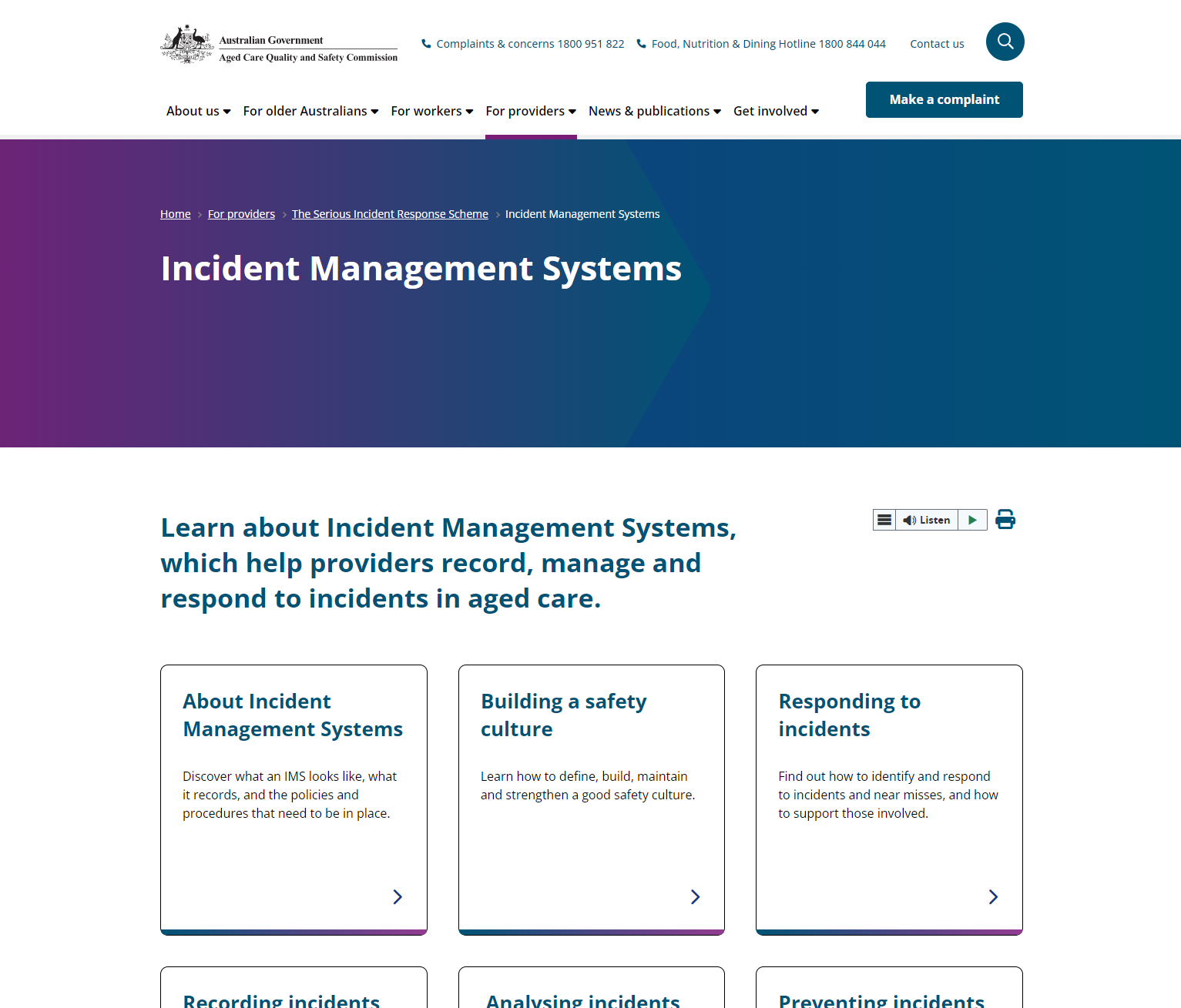
Incident Management Systems
This resource explains Incident Management Systems (IMS) used in aged care to record, manage, and respond to incidents. It provides guidance on building a safety culture, recording and analysing incidents, and implementing steps to prevent reoccurrences, supporting continuous improvement in care delivery.
This resource may refer to information that will be updated from 1 November 2025 to align with the new Aged Care Act and Quality Standards.
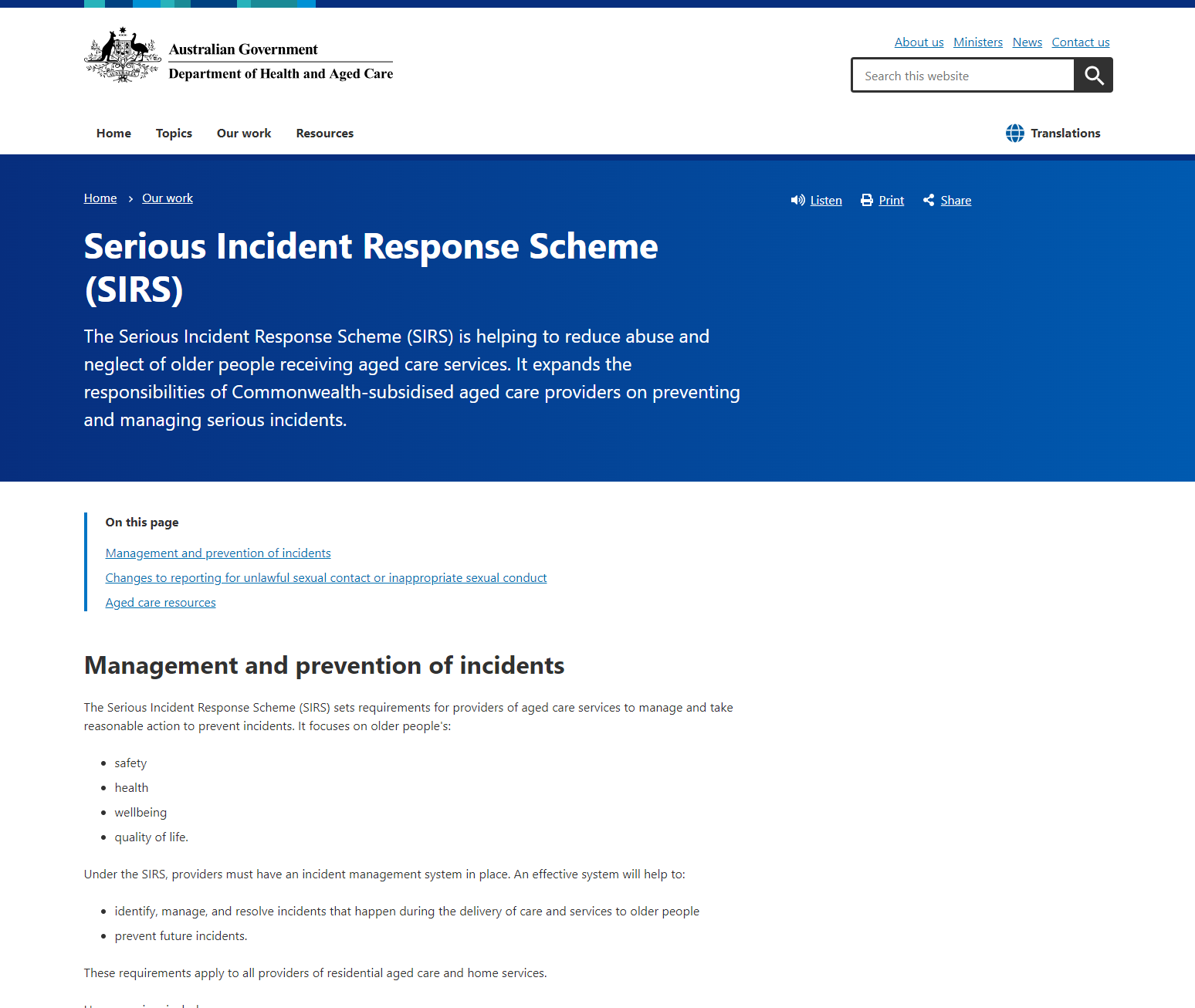
Serious Incident Response Scheme (SIRS)
This resource outlines the Serious Incident Response Scheme (SIRS), which helps reduce abuse and neglect of older people in aged care services. It mandates that Commonwealth-subsidised aged care providers implement systems to manage and prevent serious incidents. Providers must report incidents such as abuse, neglect, and unlawful contact, ensuring older people’s safety and wellbeing. This resource may refer to information that will be updated from 1 November 2025 to align with the new Aged Care Act and Quality Standards.
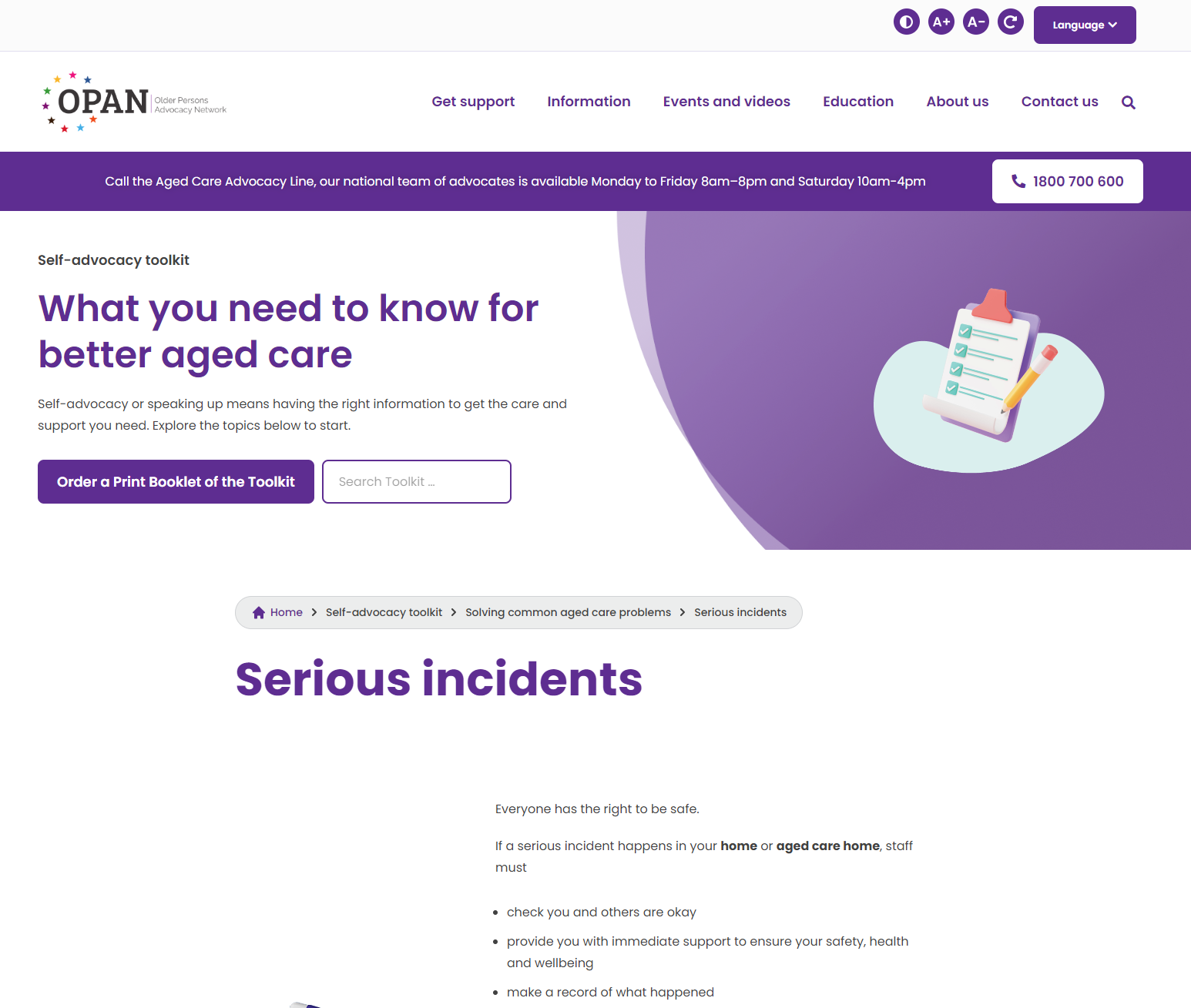
Serious incidents
This resource provides information on how aged care providers should respond to serious incidents, ensuring the safety, health, and wellbeing of people in care. It outlines mandatory reporting requirements for incidents such as abuse, neglect, or financial coercion under the Serious Incident Response Scheme (SIRS), aiming to promote transparency and accountability in aged care settings. This resource may refer to information that will be updated from 1 November 2025 to align with the new Aged Care Act and Quality Standards.
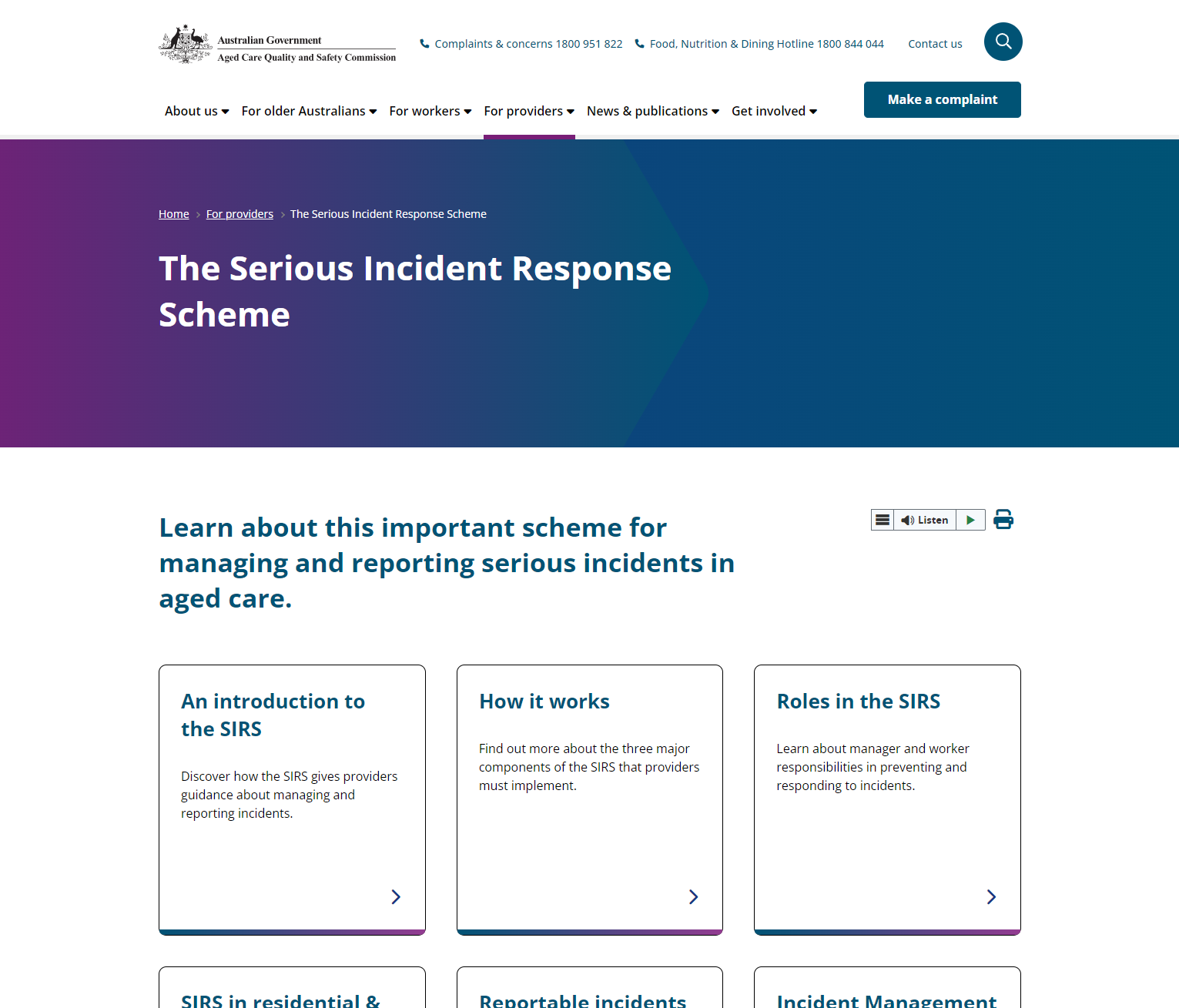
The Serious Incident Response Scheme
This resource provides an introduction to the Serious Incident Response Scheme (SIRS), outlining its role in managing and reporting serious incidents in aged care. It includes guidance on incident management systems, the responsibilities of managers and workers, and reporting requirements for residential and home services.
This resource may refer to information that will be updated from 1 November 2025 to align with the new Aged Care Act and Quality Standards.
Reprocessing of reusable medical devices
This resource provides guidance on implementing updated standards for reprocessing reusable medical devices in health and non-health facilities. It supports compliance with AS 5369:2023, ensuring healthcare organisations follow national and international standards for safe equipment reprocessing to minimise infection risks and promote patient safety.
This resource may refer to information that will be updated from 1 November 2025 to align with the new Aged Care Act and Quality Standards.
An Introduction to Activities of Daily Living (ADLs)
This resource explains Activities of Daily Living (ADLs), which are essential tasks that people must perform to care for themselves. It covers basic ADLs like mobility, dressing, and feeding, as well as instrumental ADLs such as managing finances and medication. The document highlights the clinical importance of assessing and supporting ADLs in aged care.
This resource may refer to information that will be updated from 1 November 2025 to align with the new Aged Care Act and Quality Standards.
Respecting the privacy and dignity of clients
This resource provides guidance about respecting the privacy and dignity of clients. It includes information about personal privacy, the Privacy Act, what classifies as health information, consent and privacy of information. It also includes information about person-centred care and client dignity.
This resource may refer to information that will be updated from 1 November 2025 to align with the new Aged Care Act and Quality Standards.
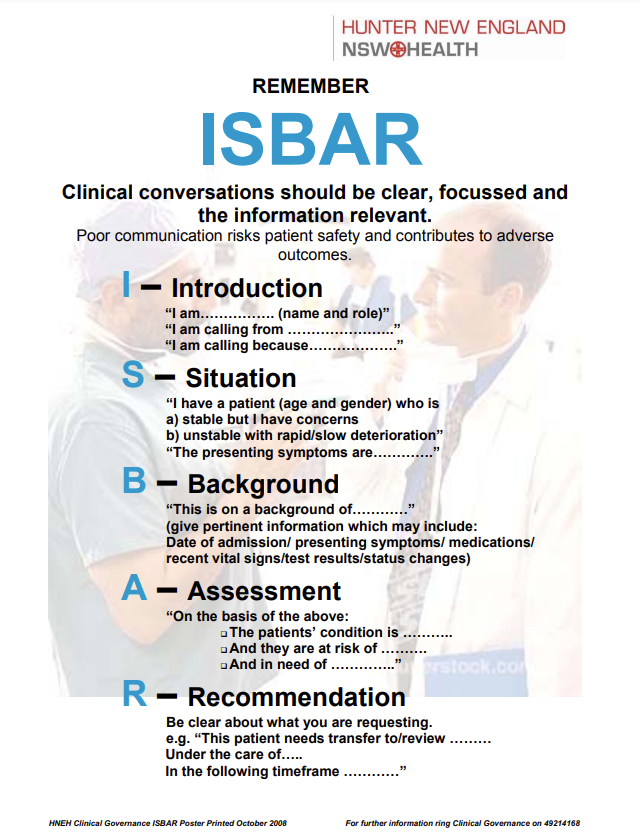
ISBAR Poster
This poster is a tool for improving clinical handover. It outlines the principles of ISBAR: Introduction, Situation, Background, Assessment, Recommendation. This supports clinical conversations to be clear, focused and relevant.
This resource may refer to information that will be updated from 1 November 2025 to align with the new Aged Care Act and Quality Standards.
Keeping residents safe this summer
This resource offers guidance to aged care providers on keeping older people safe during summer. It includes strategies for managing heat exposure, hydration, and sun protection. It helps providers monitor vulnerable people, recognise signs of overheating, and implement preventative measures to ensure safety during hot weather.
This resource may refer to information that will be updated from 1 November 2025 to align with the new Aged Care Act and Quality Standards.
Reportable incidents
This resource outlines reportable incidents within aged care, including Priority 1 and Priority 2 incidents. It provides information on the 8 types of incidents that must be reported, such as psychological abuse, neglect, and the inappropriate use of restrictive practices, helping providers meet their obligations.
This resource may refer to information that will be updated from 1 November 2025 to align with the new Aged Care Act and Quality Standards.
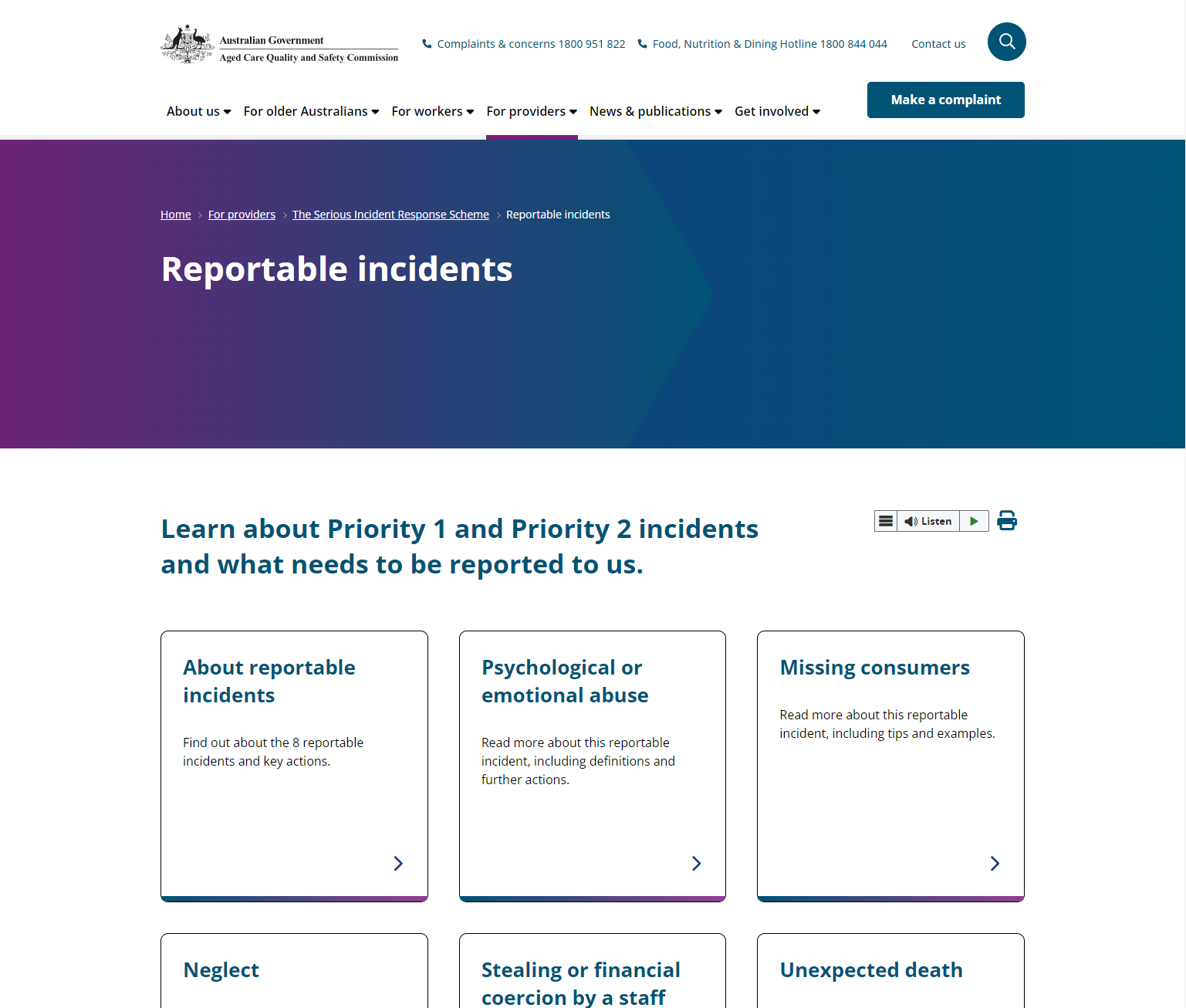
QI Program quick reference guide – Activities of daily living
This quick reference guide provides residential aged care providers with instructions on collecting and reporting data for the Quality Indicator Program. It focuses on measuring the decline in activities of daily living (ADLs) using the Barthel Index, helping providers monitor care recipients' functional independence and implement appropriate support strategies. This resource may refer to information that will be updated from 1 November 2025 to align with the new Aged Care Act and Quality Standards.
QI Program Module 7 – Activities of daily living
This resource explains the importance of measuring activities of daily living (ADLs) for older people in residential aged care. It guides providers on using the Barthel Index to assess ADLs quarterly, helping identify risks of functional decline and implement strategies to maintain independence and improve quality of life. This resource may refer to information that will be updated from 1 November 2025 to align with the new Aged Care Act and Quality Standards.
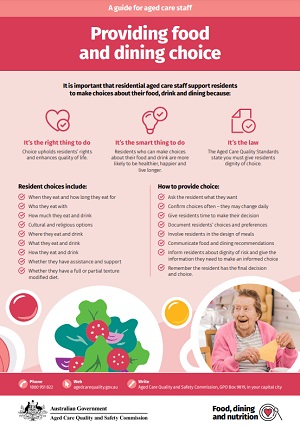
Providing food and dining choice - aged care staff poster
This guide supports aged care staff in providing food and dining choices for residents. It outlines the importance of upholding residents' rights to choose, enhancing their health and quality of life. The guide recommends confirming preferences regularly, involving residents in meal planning, and respecting individual choices regarding when, where, and what they eat or drink. This resource may refer to information that will be updated from 1 November 2025 to align with the new Aged Care Act and Quality Standards.
 Providing food and dining choice - aged care staff poster (PDF 445.57 KB)
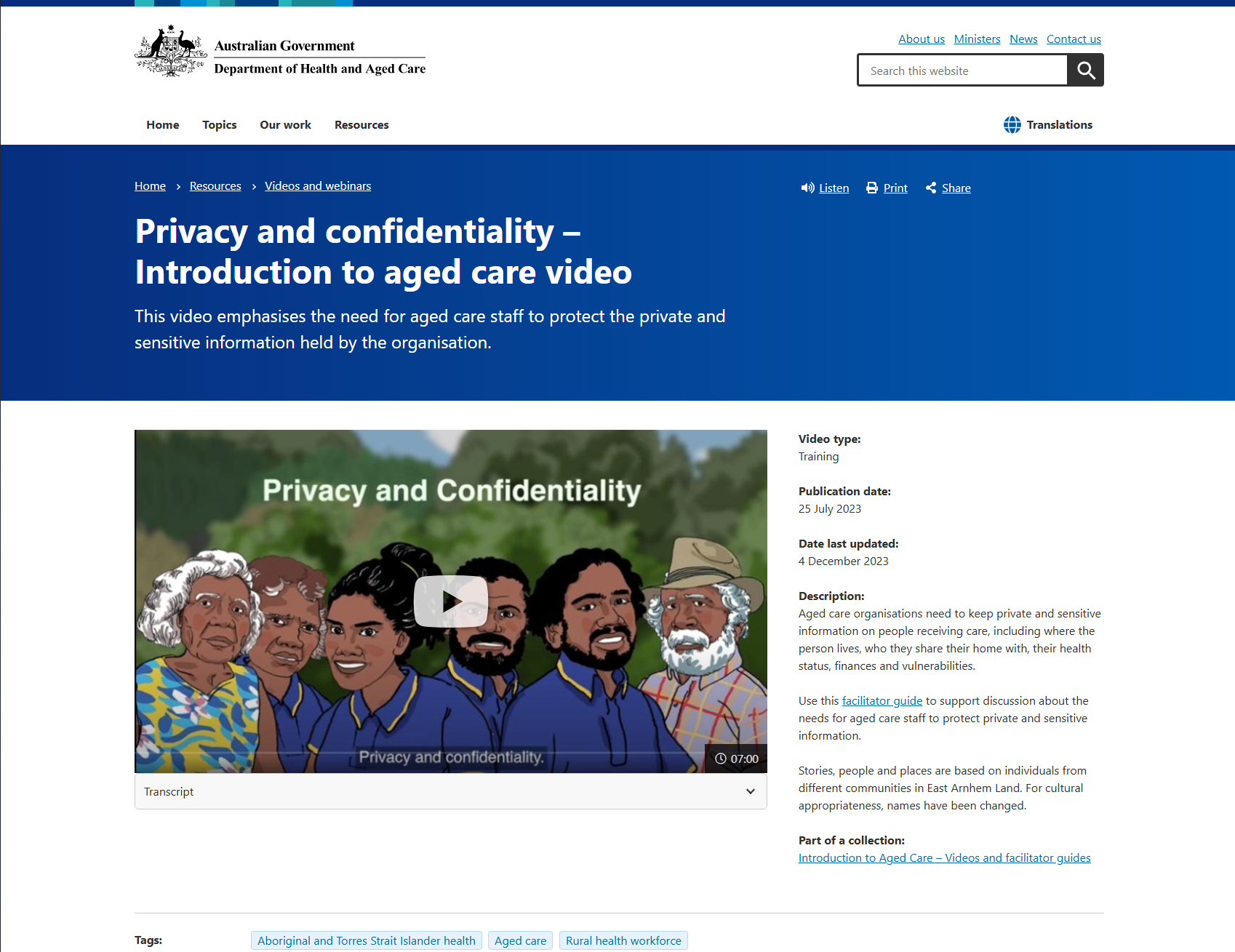
Privacy and confidentiality – Introduction to aged care video
This resource is a training video guiding aged care staff on the importance of maintaining privacy and confidentiality for people receiving care. It covers protecting personal information, proper handling of sensitive data, and safe sharing practices, aiming to make sure clients feel secure in sharing information.
This resource may refer to information that will be updated from 1 November 2025 to align with the new Aged Care Act and Quality Standards.
National Aboriginal and Torres Strait Islander Flexible Aged Care Program
This resource provides information on the National Aboriginal and Torres Strait Islander Flexible Aged Care Program. The program funds flexible and culturally appropriate aged care services for Aboriginal and Torres Strait Islander communities, mainly in rural and remote areas. It covers service provider requirements, funding processes, and adaptations to ongoing aged care reforms.
This resource may refer to information that will be updated from 1 November 2025 to align with the new Aged Care Act and Quality Standards.
Preventing equipment failures
This resource highlights the importance of preventing equipment failures in aged care settings. It outlines the need for regular maintenance checks, adherence to manufacturer guidelines, and proper record-keeping to ensure safety. The document also provides recommendations for improving the safety and reliability of critical devices, such as mobility hoists and medical equipment.
This resource may refer to information that will be updated from 1 November 2025 to align with the new Aged Care Act and Quality Standards.
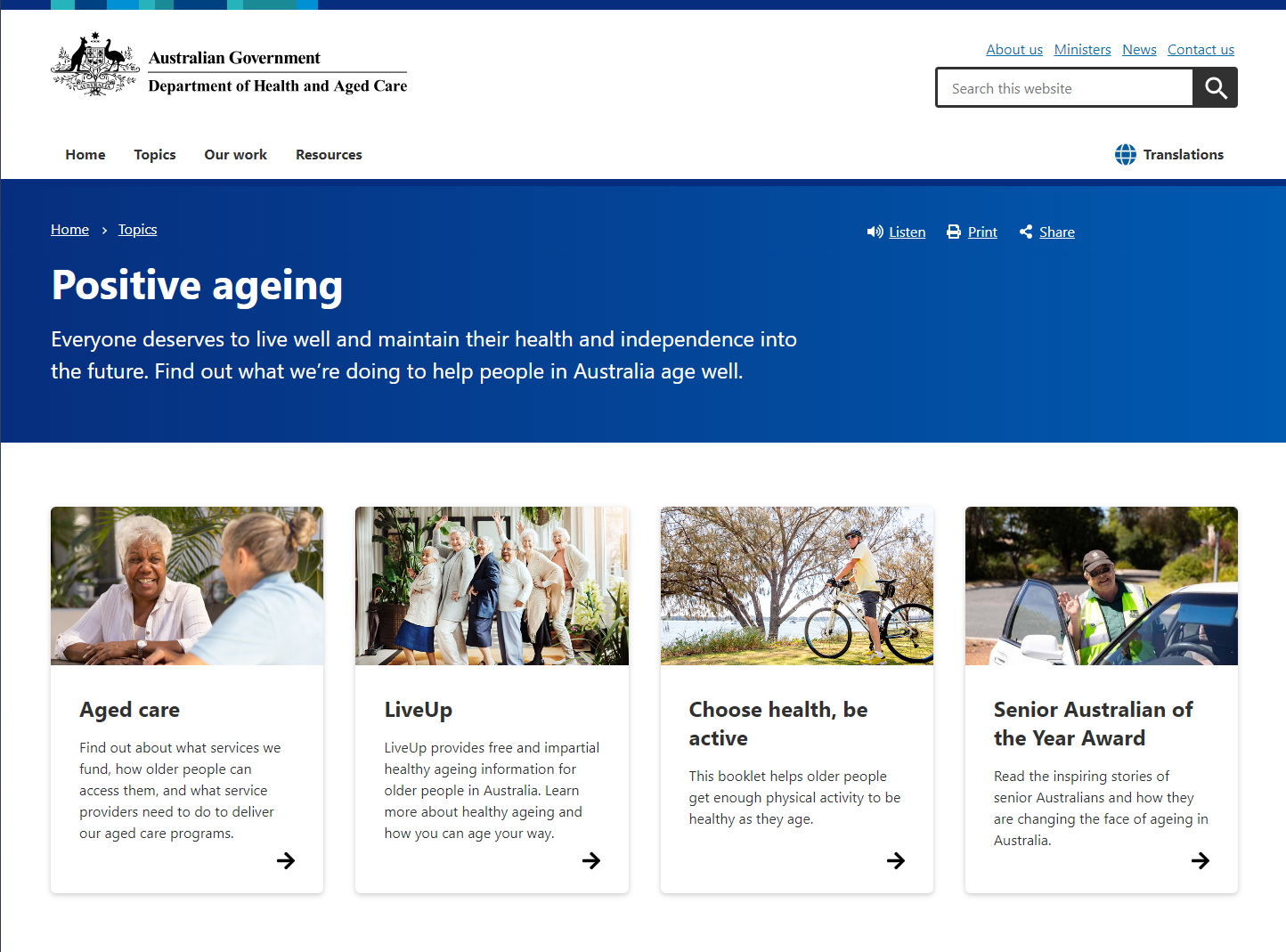
Positive ageing
This resource focuses on positive ageing, encouraging older people to maintain their health, independence, and connection to community. It covers planning for healthy ageing, staying physically active, and accessing aged care services when needed. The resource promotes ageing as a positive experience, offering practical guidance to support older people in living well. This resource may refer to information that will be updated from 1 November 2025 to align with the new Aged Care Act and Quality Standards.