The Quality Standards Resource Centre helps extend understanding of the strengthened Aged Care Quality Standards, which take effect from 1 November 2025. The Resource Centre will be updated to reflect key changes made to the draft strengthened Standards. You can search for resources by using keywords, or filtering by standard, outcome, audience and theme. Before using the Resource Centre, please read the terms of use.
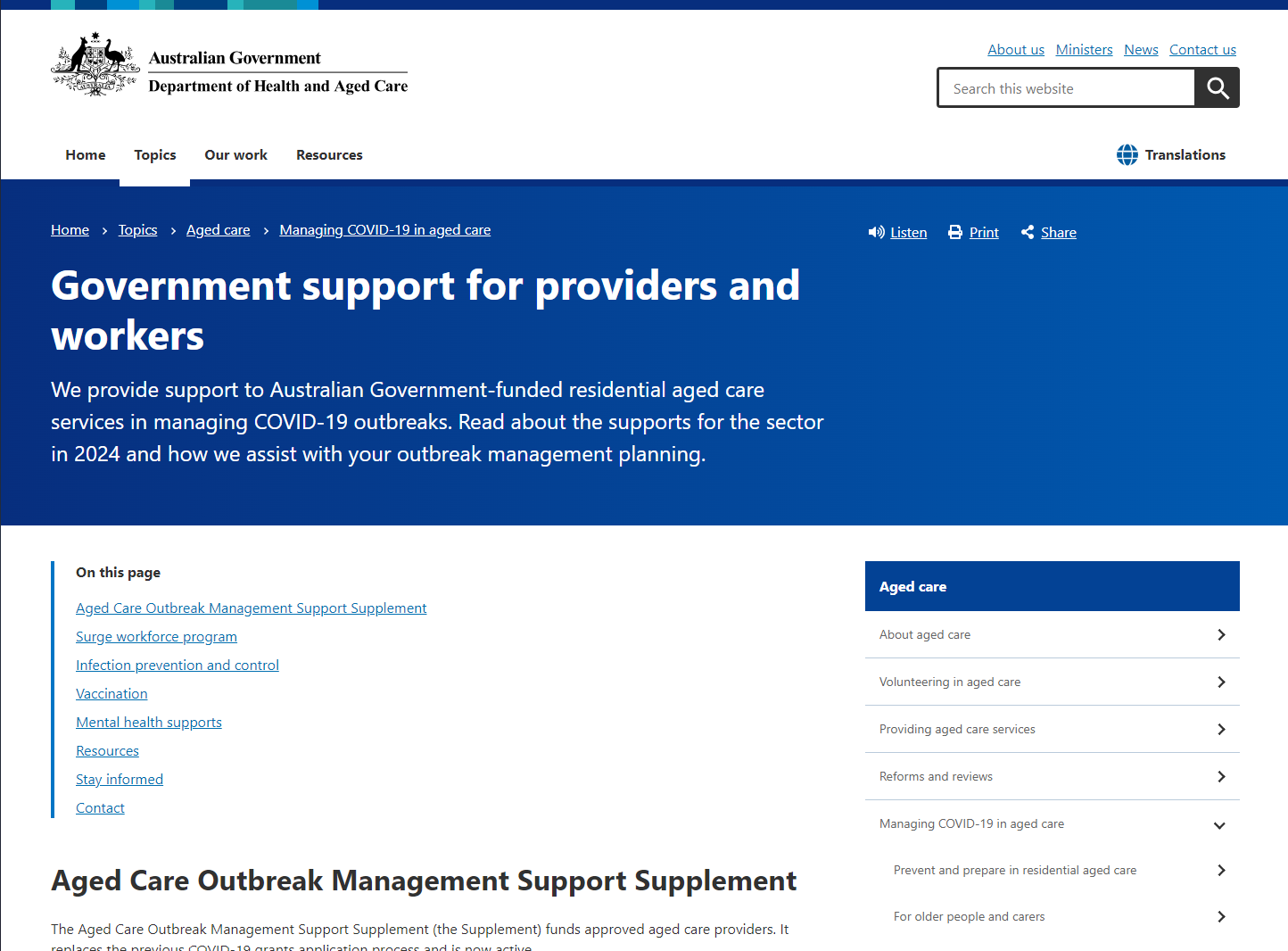
Government support for providers and workers
This resource outlines government support for aged care providers managing COVID-19 outbreaks. It covers funding through the Outbreak Management Support Supplement, surge workforce programs, infection prevention measures, vaccination assistance, and mental health resources to help providers maintain care quality and safety during outbreaks.
This resource may refer to information that will be updated from 1 November 2025 to align with the new Aged Care Act and Quality Standards.
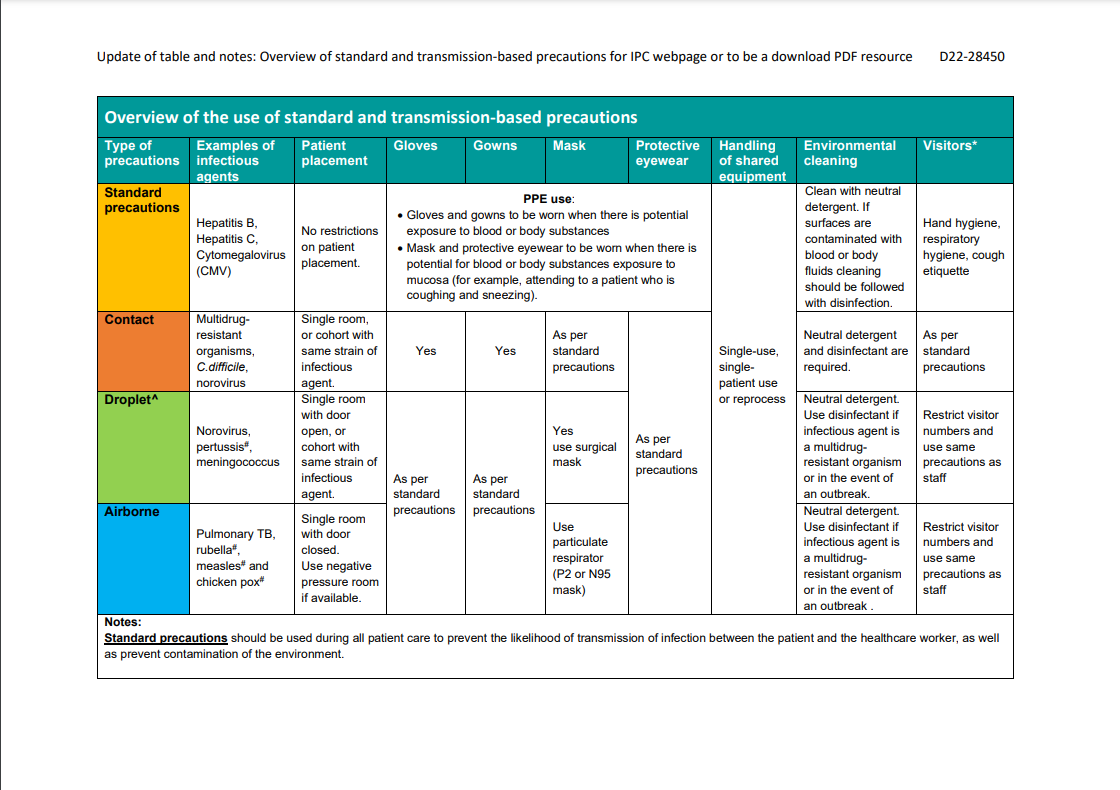
Use of standard and transmission-based precautions
This resource provides an overview of standard and transmission-based precautions, including personal protective equipment (PPE) use and patient placement requirements. It helps healthcare providers minimise infection risks by guiding appropriate PPE selection and patient placement based on local risk assessments, ensuring safe and effective infection prevention practices in aged care settings.
This resource may refer to information that will be updated from 1 November 2025 to align with the new Aged Care Act and Quality Standards.
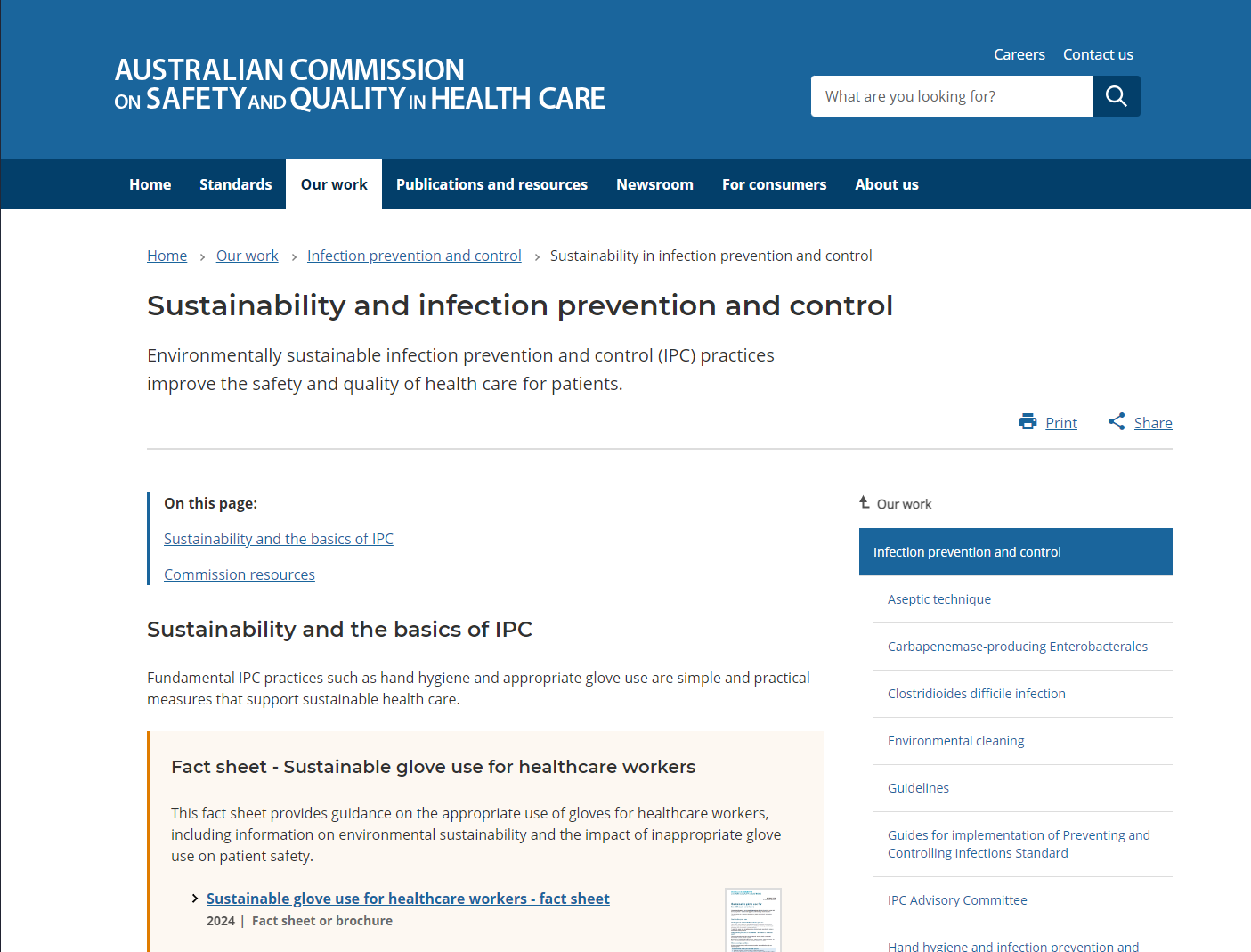
Sustainability and infection prevention and control
This resource highlights the importance of environmentally sustainable infection prevention and control (IPC) practices in healthcare. It covers fundamental practices such as hand hygiene and sustainable glove use, providing guidance on reducing environmental impact while maintaining safety and quality. It also links to relevant IPC guidelines for aged care settings.
This resource may refer to information that will be updated from 1 November 2025 to align with the new Aged Care Act and Quality Standards.
Vaccination for people at occupational risk
This resource provides vaccination guidelines for people in occupations with increased risk of exposure to vaccine-preventable diseases. It outlines recommended vaccinations for healthcare workers, carers, emergency services, and others in high-risk environments. The document supports the development of vaccination policies and programs to protect workers and the people they serve.
This resource may refer to information that will be updated from 1 November 2025 to align with the new Aged Care Act and Quality Standards.
Use of the hierarchy of controls in infection prevention and control
This fact sheet provides guidance on using the hierarchy of controls with infection prevention systems to manage infection risks. It outlines strategies such as elimination, isolation, engineering controls, and personal protective equipment (PPE) to help aged care providers maintain infection control and ensure safe care environments.
This resource may refer to information that will be updated from 1 November 2025 to align with the new Aged Care Act and Quality Standards.
Using technology to improve the dining experience
This resource provides guidance on how technology, such as virtual reality (VR) and mobile applications, can enhance the dining experience in aged care settings. These tools are designed to increase engagement, support meal choices, improve communication with families, and contribute to overall wellbeing by making mealtimes more enjoyable.
This resource may refer to information that will be updated from 1 November 2025 to align with the new Aged Care Act and Quality Standards.
Validating infection surveillance data
This fact sheet provides guidance on validating infection surveillance data. It supports infection control teams in ensuring data accuracy and completeness, essential for effective infection control strategies. The resource outlines steps for both manual and automated validation methods and includes a checklist for common practices.
This resource may refer to information that will be updated from 1 November 2025 to align with the new Aged Care Act and Quality Standards.
Heaters and burns - Reducing heater burn risks in residential aged care services
This resource provides guidance for aged care providers on managing risks related to hydronic heaters. It advises regular maintenance, accurate temperature checks, and positioning of beds away from heaters. Installing guards and monitoring heat settings are also recommended to prevent burns and ensure the safety of older people in cooler months.
This resource may refer to information that will be updated from 1 November 2025 to align with the new Aged Care Act and Quality Standards.
Supporting visitors and partners in care with IPC
This resource offers guidance for aged care providers on supporting visitors and partners in care through infection prevention and control (IPC) measures. It includes training resources to help visitors follow IPC protocols and maintain safe care, especially during infectious outbreaks, through the 'Partnerships in Care' program.
This resource may refer to information that will be updated from 1 November 2025 to align with the new Aged Care Act and Quality Standards.
ICEG-endorsed resources for infection prevention and control
This resource collection includes guidance on infection prevention and control practices endorsed by the Infection Prevention and Control Expert Group (ICEG). It supports health and aged care providers with best practices related to COVID-19, personal protective equipment (PPE), cleaning, disinfection, and minimising transmission risks in institutional and community settings.
This resource may refer to information that will be updated from 1 November 2025 to align with the new Aged Care Act and Quality Standards.
Supporting people living with dementia to eat and drink well
This resource provides guidance for aged care services on how to support people living with dementia to eat and drink well. It highlights innovative approaches such as creating familiar, enjoyable meals, reducing mealtime interruptions, and offering 24-hour access to nutritious foods. These strategies help address challenges like malnutrition and dehydration.
This resource may refer to information that will be updated from 1 November 2025 to align with the new Aged Care Act and Quality Standards.
Immunisations for health care workers
This resource outlines recommended immunisations for healthcare workers, emphasising the importance of vaccination to prevent disease transmission to vulnerable populations. It lists vaccines such as Hepatitis B, Influenza, MMR, Pertussis, and Varicella, and highlights more requirements for workers in specific settings or with higher risks of exposure.
This resource may refer to information that will be updated from 1 November 2025 to align with the new Aged Care Act and Quality Standards.
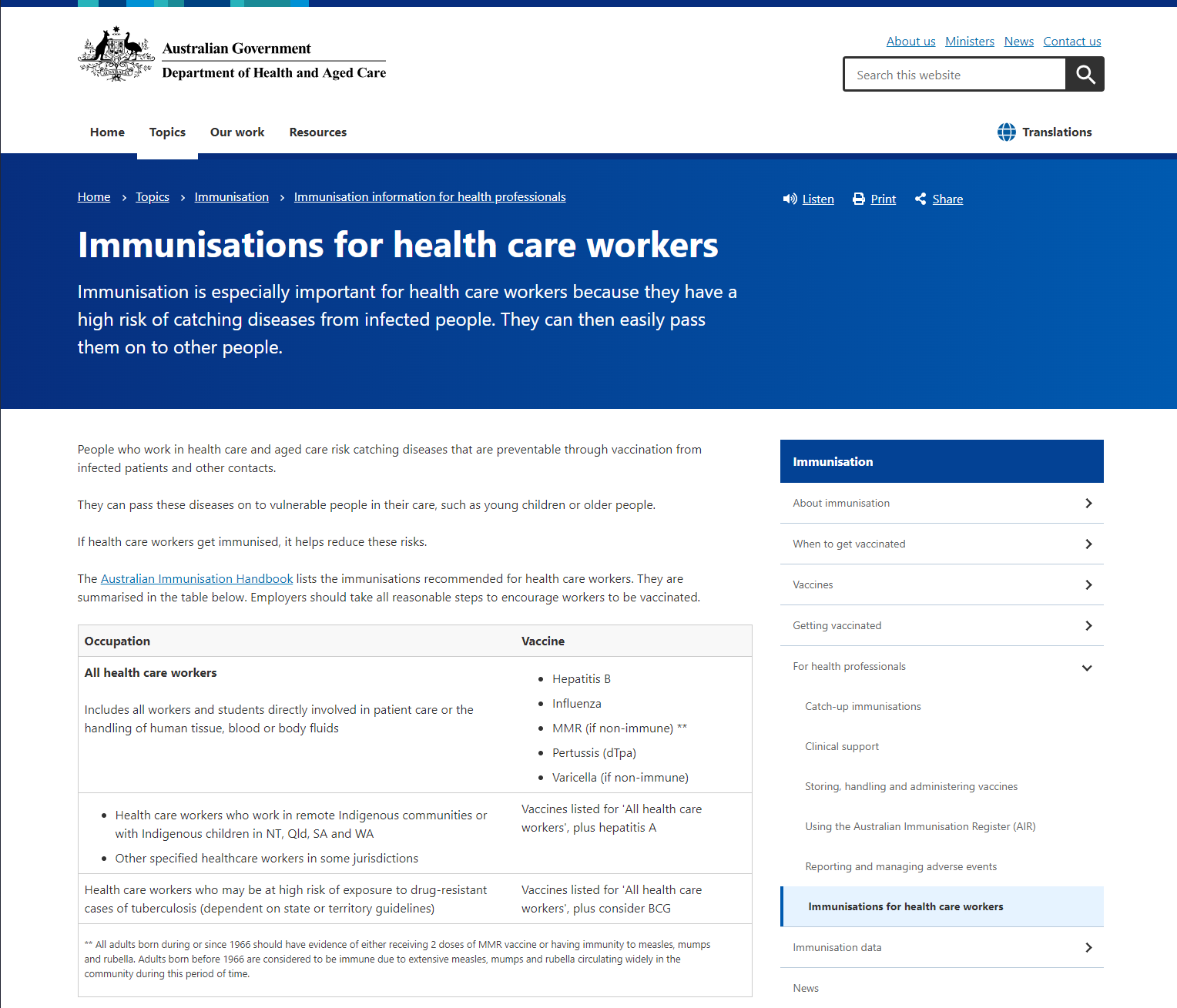
Hot water scalding
This page provides guidance for aged care providers on preventing and responding to hot water scalding incidents. It highlights the importance of staff oversight, proper training, and temperature checks when providing care. It also includes immediate first aid steps for burns, helping to reduce risks for vulnerable people, especially older people.
This resource may refer to information that will be updated from 1 November 2025 to align with the new Aged Care Act and Quality Standards.
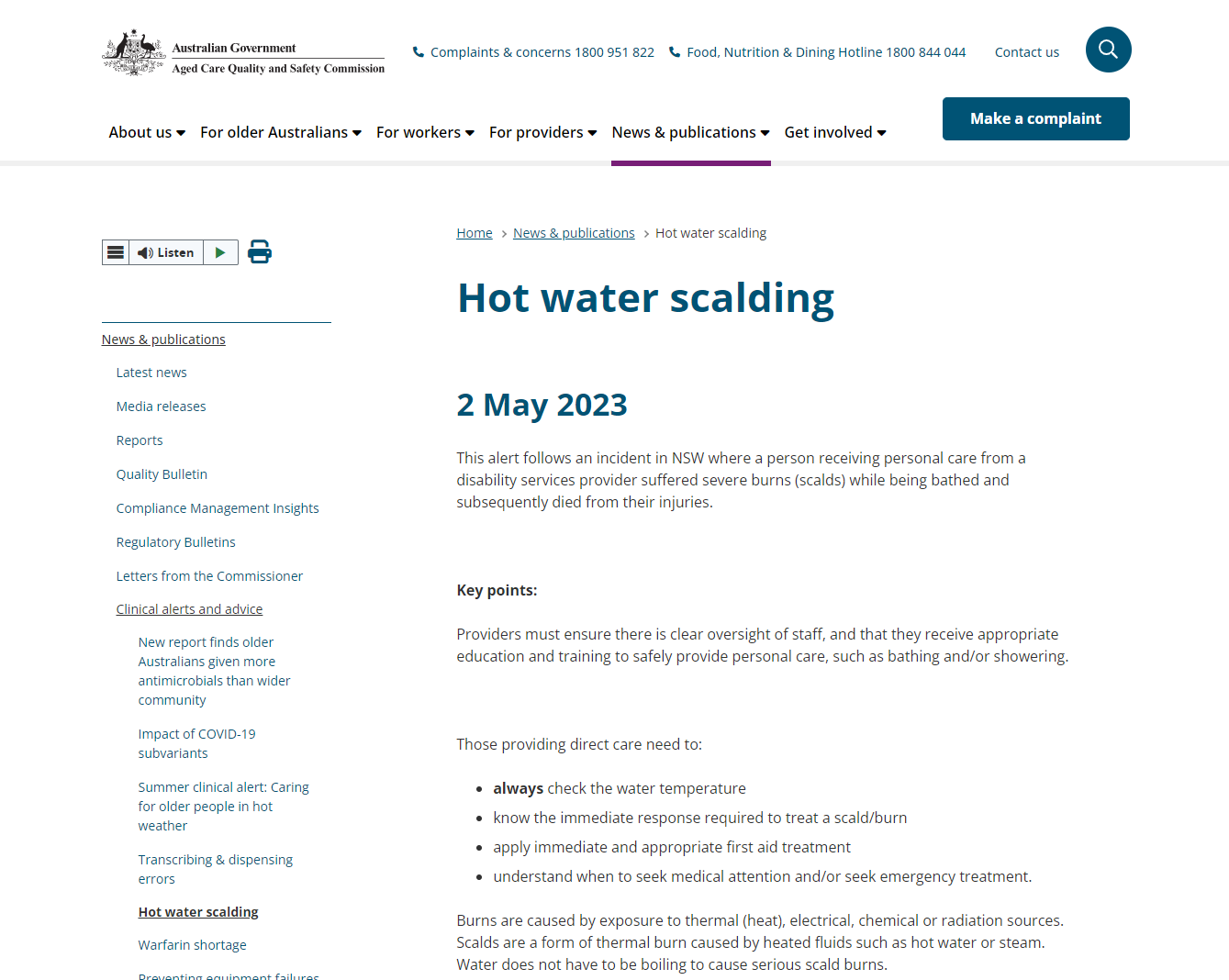
Home services
This page provides guidance for home service providers delivering care to older people in their homes. It outlines how providers must follow the Aged Care Quality Standards, conduct regular assessments, manage risks, and ensure the safety of vulnerable people. It includes resources to help providers identify and manage risks.
This resource may refer to information that will be updated from 1 November 2025 to align with the new Aged Care Act and Quality Standards.
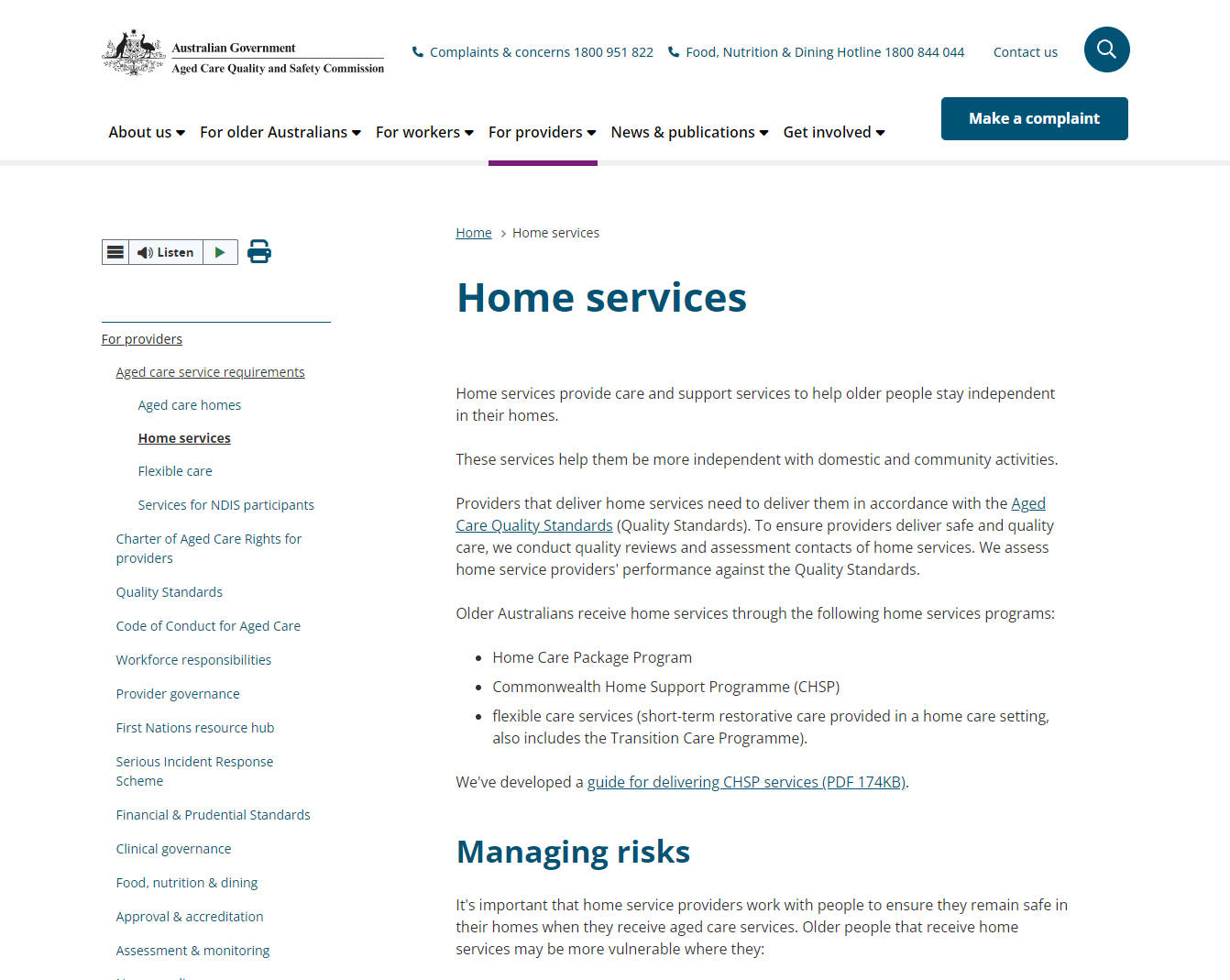
Improving aged care with speech pathology: Why it matters and how it helps
This page highlights the role of speech pathologists in supporting older people with communication, eating, drinking, and swallowing difficulties. It provides resources for aged care providers on how to improve care quality through effective communication tools and tailored strategies. This resource includes practical examples, like sample plates and picture boards, for enhancing dining experiences and supporting individual choice.
This resource may refer to information that will be updated from 1 November 2025 to align with the new Aged Care Act and Quality Standards.
Staphylococcus aureus bloodstream infection (SABSI) prevention resources
This resource offers guidelines for preventing Staphylococcus aureus bloodstream infections (SABSI) in healthcare settings. It covers infection control strategies, including hand hygiene, device management, and surgical site care, helping organisations reduce infection risks and comply with national SABSI prevention standards.
This resource may refer to information that will be updated from 1 November 2025 to align with the new Aged Care Act and Quality Standards.
Incident Management Systems
This resource explains Incident Management Systems (IMS) used in aged care to record, manage, and respond to incidents. It provides guidance on building a safety culture, recording and analysing incidents, and implementing steps to prevent reoccurrences, supporting continuous improvement in care delivery.
This resource may refer to information that will be updated from 1 November 2025 to align with the new Aged Care Act and Quality Standards.
Infection prevention and control resources for consumers
This resource provides fact sheets for consumers and carers on infection prevention and control, including hand hygiene and healthcare-associated infections. It covers common infections such as MRSA, CPE, and CDI, offering guidance on prevention, treatment, and risk factors to help reduce the spread of infections in aged care settings.
This resource may refer to information that will be updated from 1 November 2025 to align with the new Aged Care Act and Quality Standards.
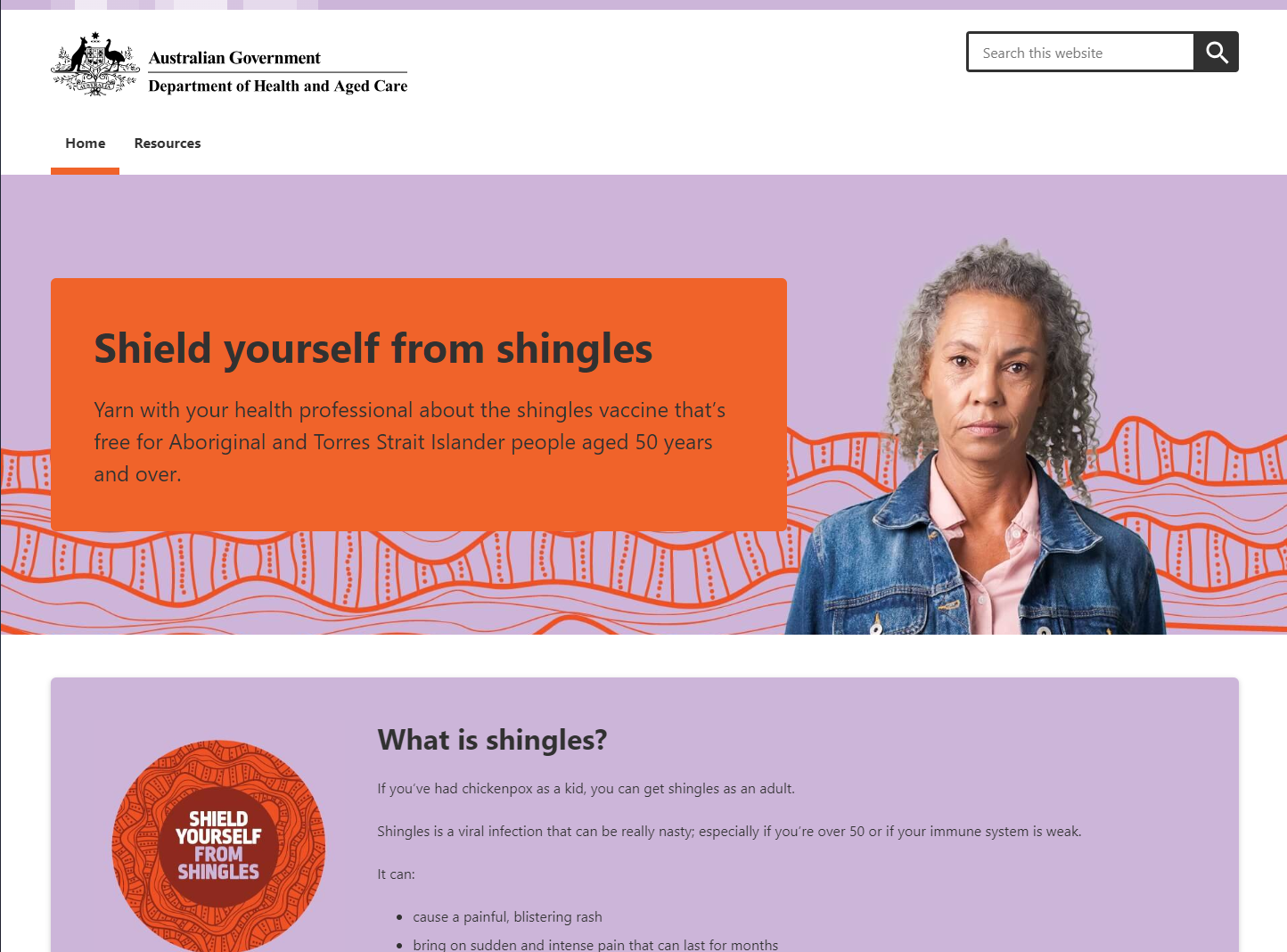
Shield yourself from shingles
This resource provides information on the shingles vaccine, which is free for Aboriginal and Torres Strait Islander people aged 50 and over. It explains the risks of shingles, vaccination locations, and potential side effects. The document encourages older adults to discuss vaccination with their healthcare professional to protect against shingles.
This resource may refer to information that will be updated from 1 November 2025 to align with the new Aged Care Act and Quality Standards.
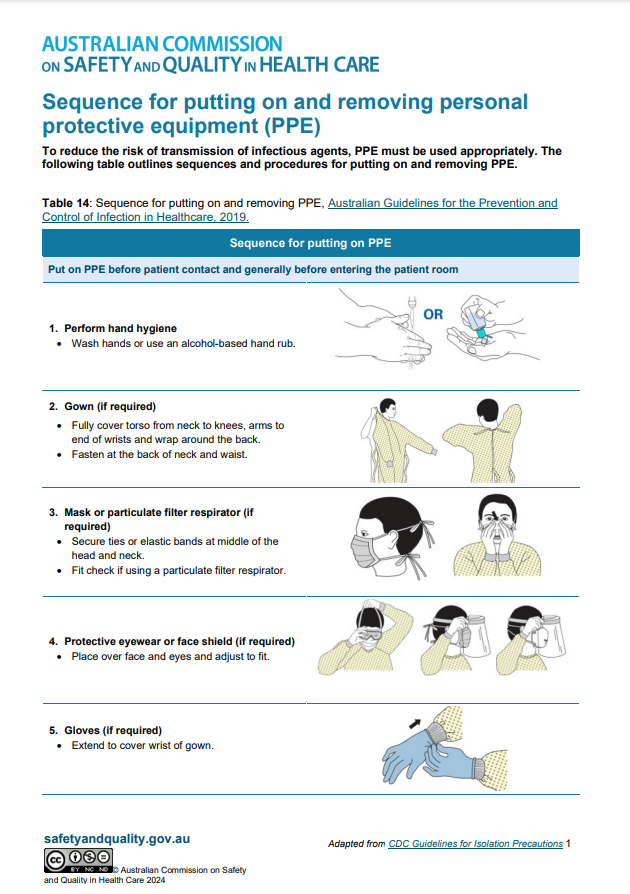
Sequence for putting on and removing personal protective equipment (PPE)
This poster outlines the correct sequence for putting on and removing personal protective equipment (PPE) to reduce the transmission of infectious agents. It provides step-by-step instructions for healthcare workers to ensure safe use of gowns, masks, gloves, and protective eyewear.
This resource may apply to healthcare contexts outside of aged care. Please consider the applicability of this resource to your care setting. This resource may refer to information that will be updated from 1 November 2025 to align with the new Aged Care Act and Quality Standards.