The Quality Standards Resource Centre helps extend understanding of the strengthened Aged Care Quality Standards, which took effect from 1 November 2025. You can search for resources by using keywords, or filtering by standard, outcome and audience. Before using the Resource Centre, please read the terms of use.
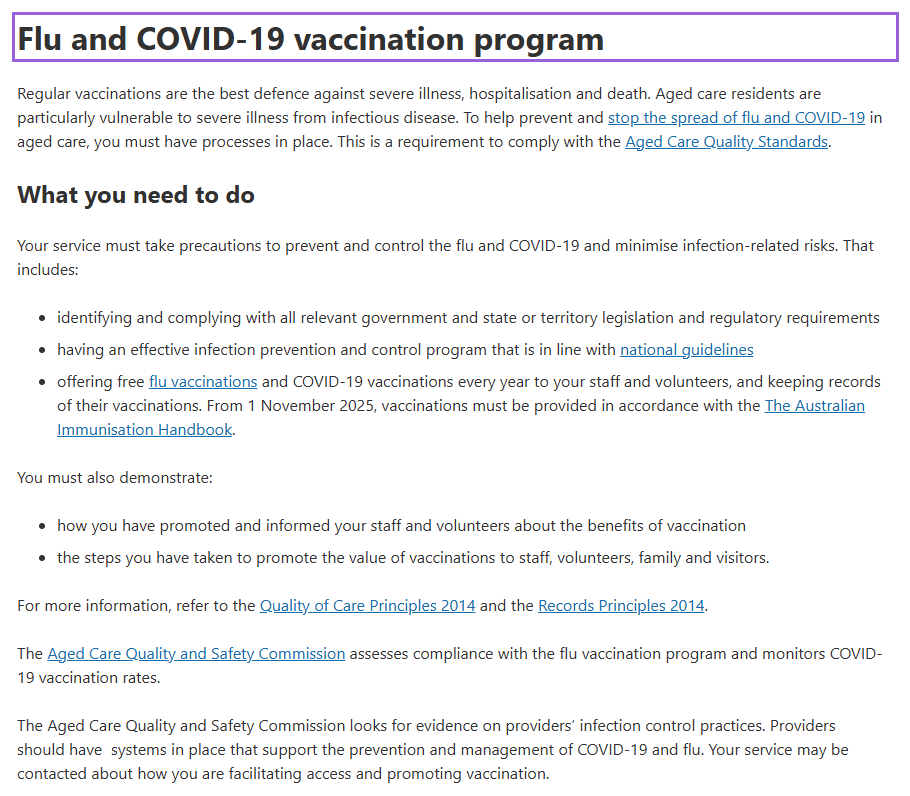
Flu and COVID-19 vaccination program
This resource outlines the flu and COVID-19 vaccination program for residential aged care providers. It includes information about what services must do to take precautions to prevent and control the flu and COVID-19 and minimise infection-related risks. This resource may refer to information that will be updated from 1 November 2025 to align with the new Aged Care Act and Quality Standards.
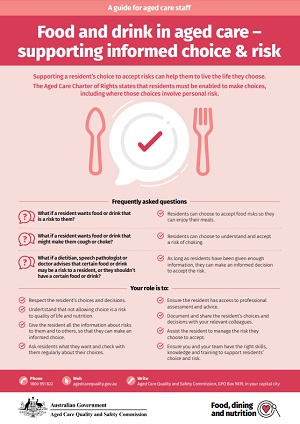
Food and drink in your aged care - supporting informed choice and risk - staff poster
This resource provides guidance for aged care staff on supporting older people's informed choices regarding food and drink, even when those choices involve personal risks. It encourages staff to respect resident autonomy, provide information on risks, document decisions, and ensure access to professional advice, promoting dignity and quality of life in care settings. This resource may refer to information that will be updated from 1 November 2025 to align with the new Aged Care Act and Quality Standards.

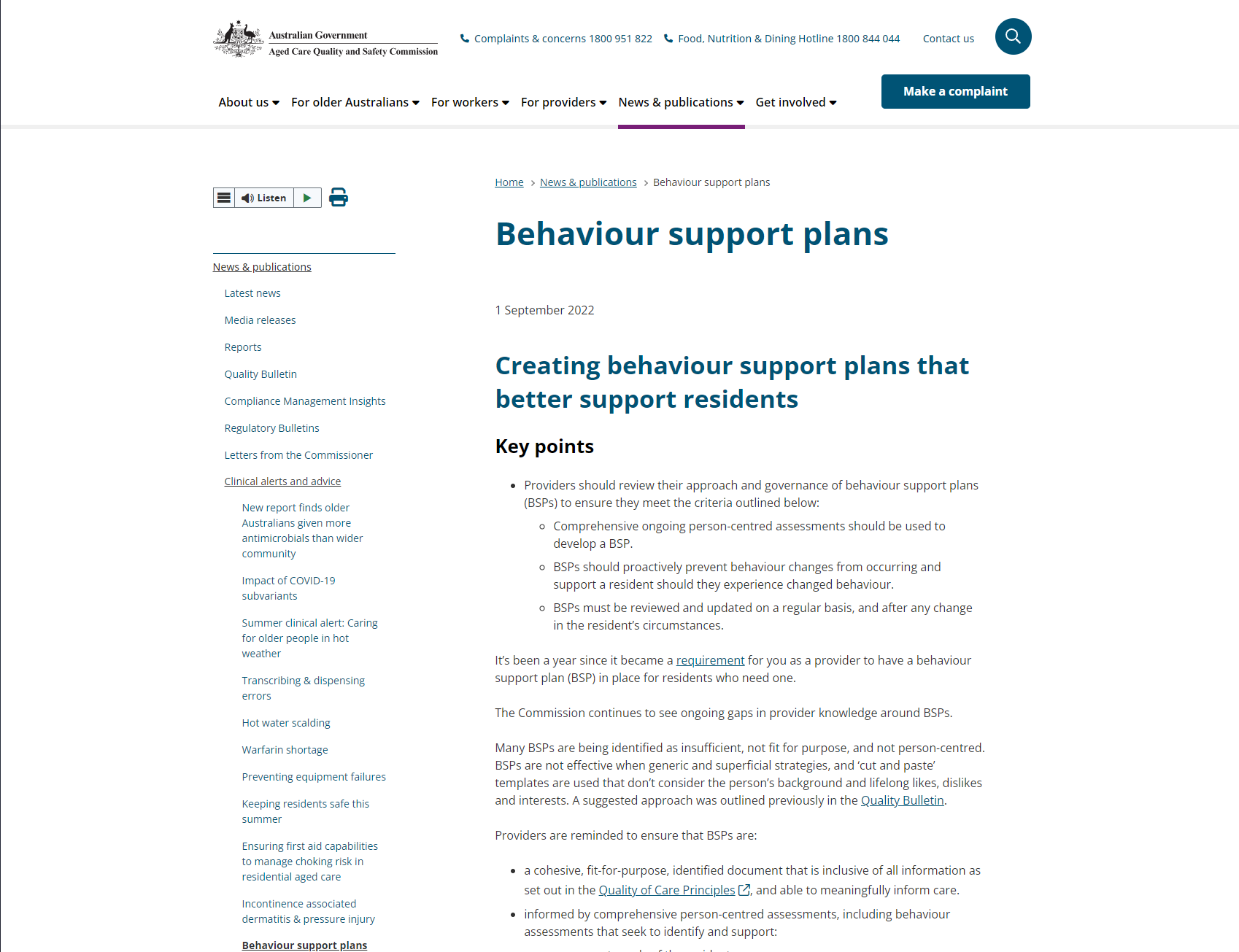
Creating behaviour support plans that better support residents
This document outlines the development of behaviour support plans (BSPs) in aged care, focusing on person-centred assessments, identification of triggers, tailored strategies, and regular reviews. It highlights the involvement of healthcare professionals and adherence to care principles to effectively manage residents’ behavioural changes and improve their quality of life.
This resource may refer to information that will be updated from 1 November 2025 to align with the new Aged Care Act and Quality Standards.
Restrictive practices provider resources
This resource offers guidance and tools for aged care providers on managing restrictive practices. It emphasises using restrictive practices as a last resort, obtaining informed consent, and developing behaviour support plans. The materials include fact sheets, regulatory updates, webinars, and decision-making tools to ensure compliance with legislation and promote person-centred care.
This resource may refer to information that will be updated from 1 November 2025 to align with the new Aged Care Act and Quality Standards.
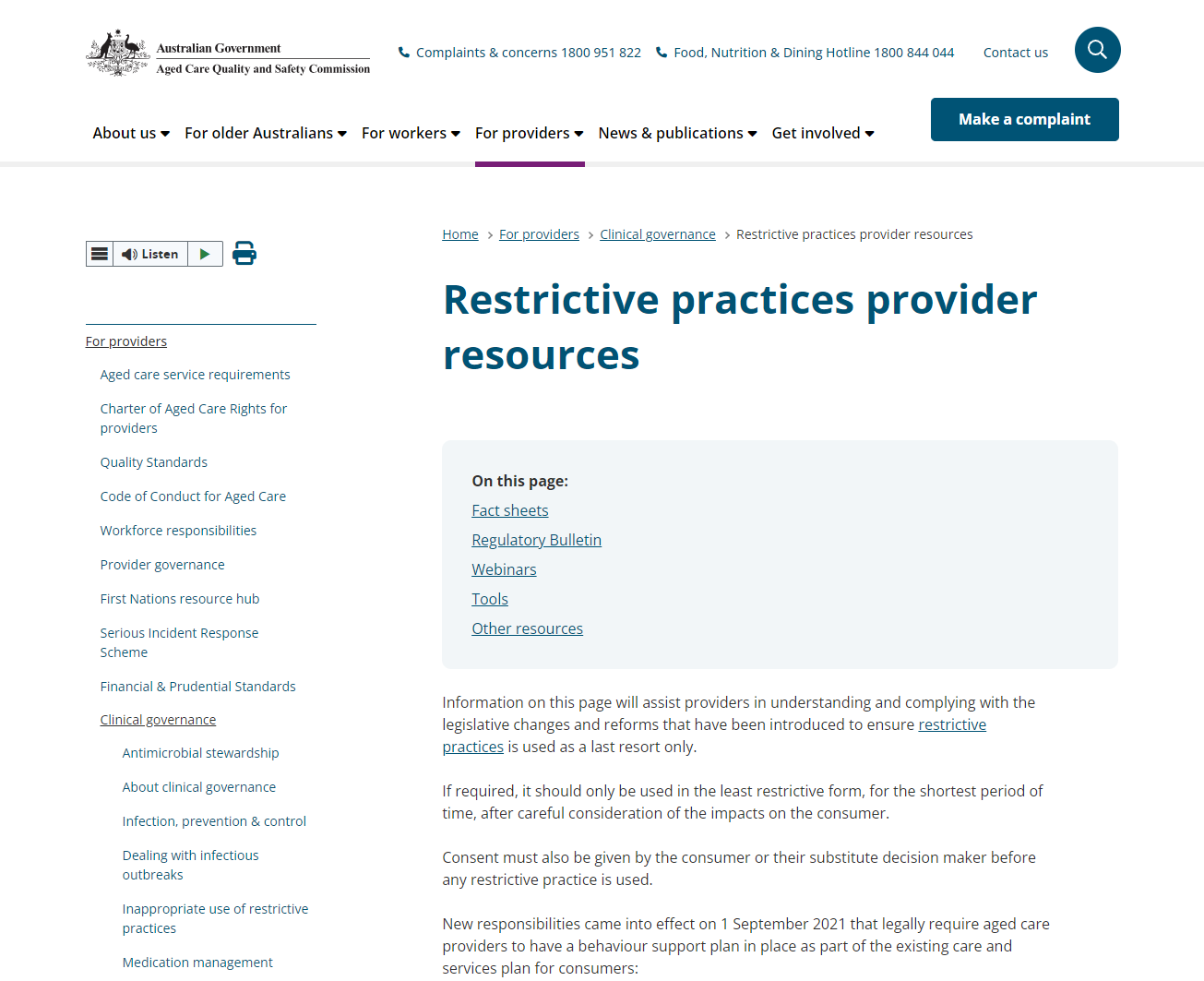
Antimicrobial Stewardship Self-Assessment Tool and User Guide
This tool and user guide supports residential aged care services in self-assessing their antimicrobial stewardship (AMS) practices. It covers AMS governance, policies, education, monitoring, and feedback, aiming to improve antibiotic use and reduce risks associated with antimicrobial resistance. The resources helps identify gaps and develop action plans to enhance AMS activities and patient care. This resource may refer to information that will be updated from 1 July 2025 to align with the new Aged Care Act and Quality Standards.
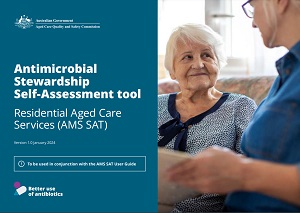
Infection prevention and control - ACSQH
This resource provides guidelines to reduce infection transmission risks in healthcare settings. It provides information on standard and transmission-based precautions, specific diseases or conditions, other infection prevention and control strategies and promotional resources practices such as hand hygiene, use of personal protective equipment, and environmental cleaning.
This resource may refer to information that will be updated from 1 November 2025 to align with the new Aged Care Act and Quality Standards.
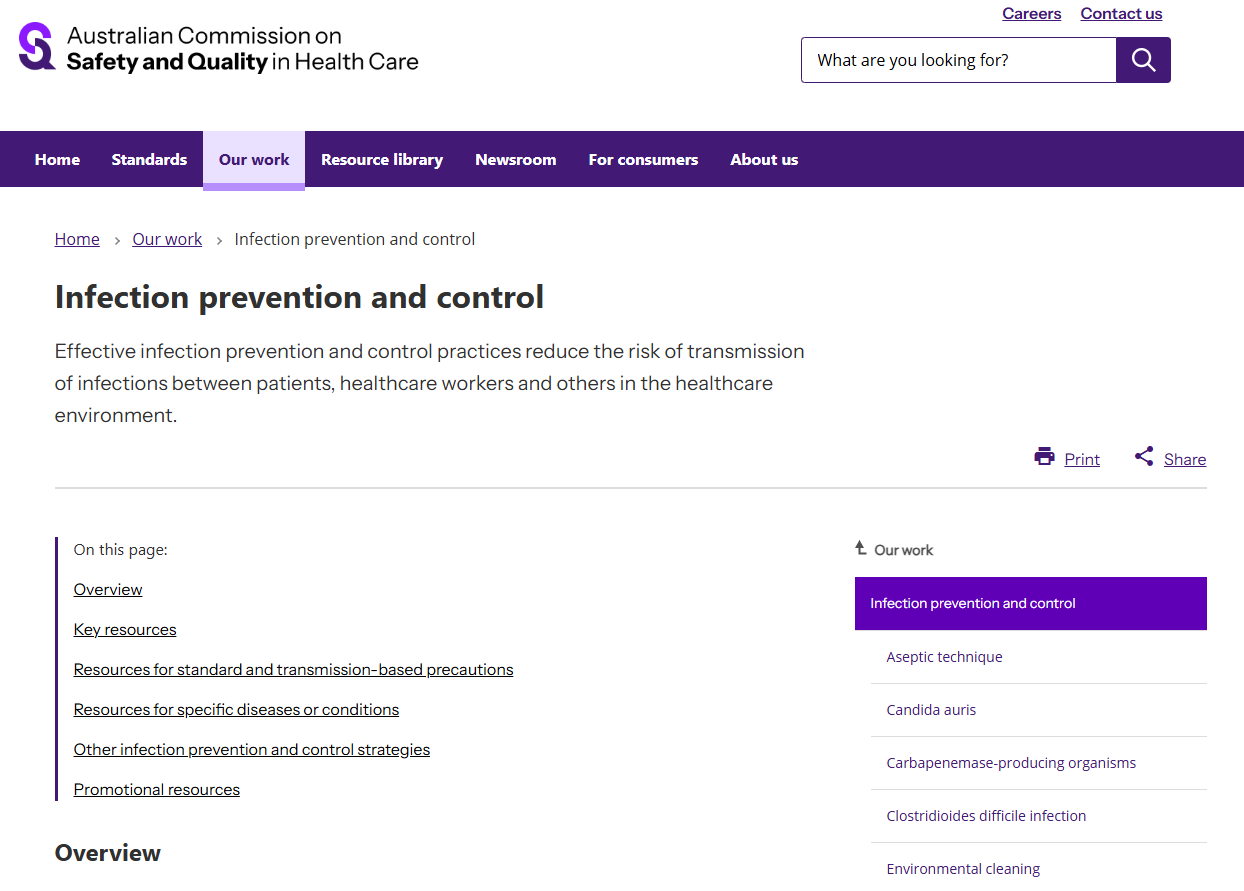
First Nations - Stakeholder Communications Toolkit
This Toolkit is designed for First Nations stakeholders including providers, workers and others involved in providing aged care services for First Nations people. We’ve developed it to make it easy for you to share relevant resources with your networks and members
Government support for providers and workers
This resource outlines government support for aged care providers managing COVID-19 outbreaks. It covers information on infection prevention measures, vaccination assistance, and mental health resources to help providers maintain care quality and safety during outbreaks.
This resource may refer to information that will be updated from 1 November 2025 to align with the new Aged Care Act and Quality Standards.
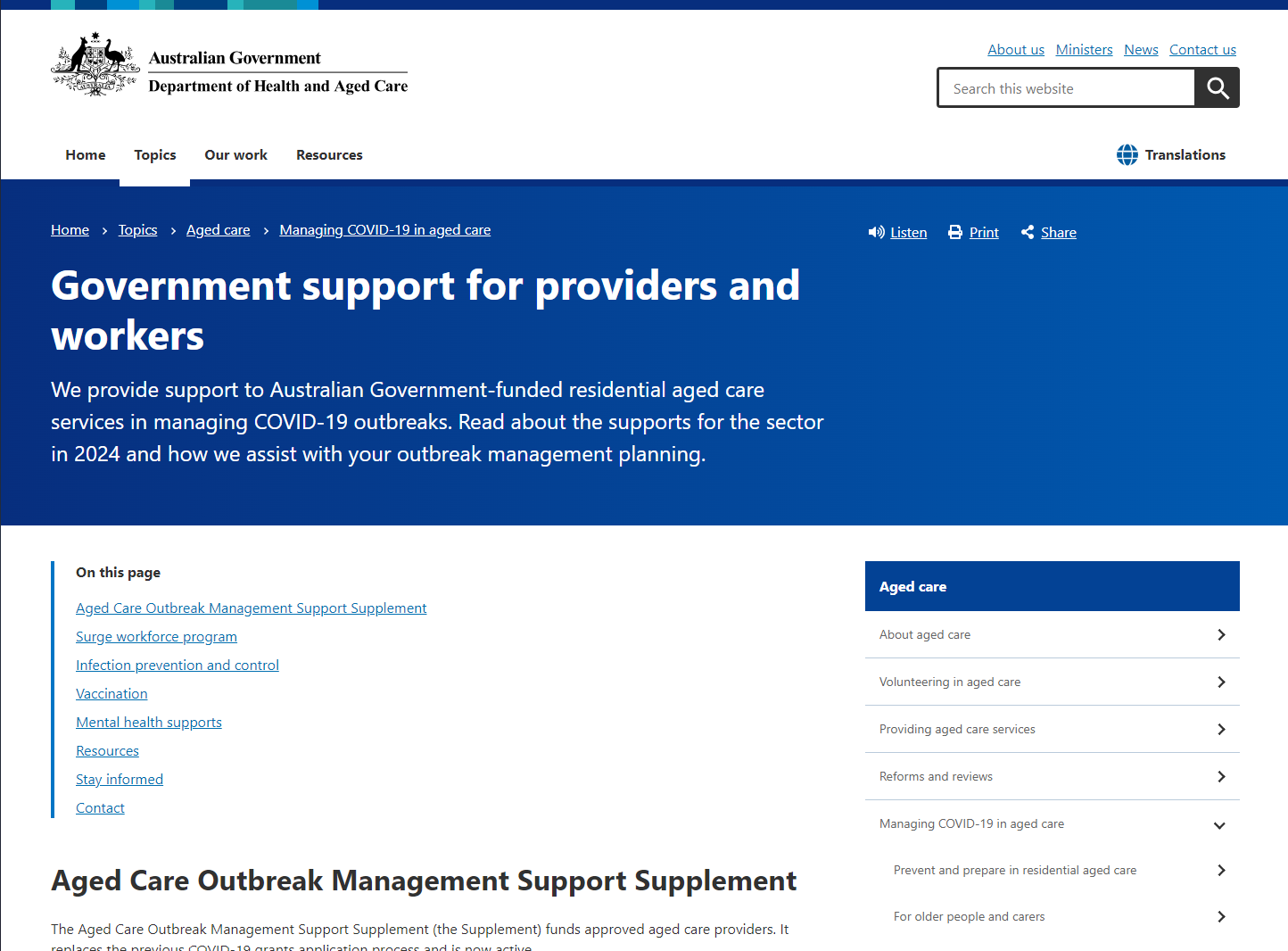
Infection prevention and control in aged care - Cognitive decline and dementia
How to create an environment with strong infection prevention and control practices while continuing to provide a positive experience for people with cognitive decline and dementia.
This resource may refer to information that will be updated from 1 November 2025 to align with the new Aged Care Act and Quality Standards
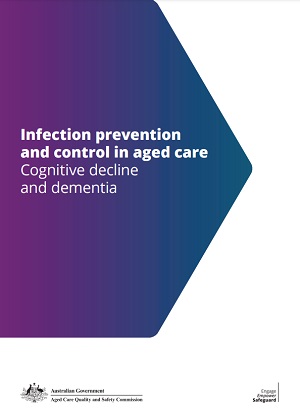
Antimicrobial stewardship
This resource addresses antimicrobial stewardship (AMS) in aged care, focusing on optimising antimicrobial use to combat antimicrobial resistance. It includes tools, self-assessment guides, and quality improvement strategies to reduce inappropriate antibiotic use, particularly for urinary tract infections. It supports providers in improving infection prevention and control within their services.
This resource may refer to information that will be updated from 1 November 2025 to align with the new Aged Care Act and Quality Standards.
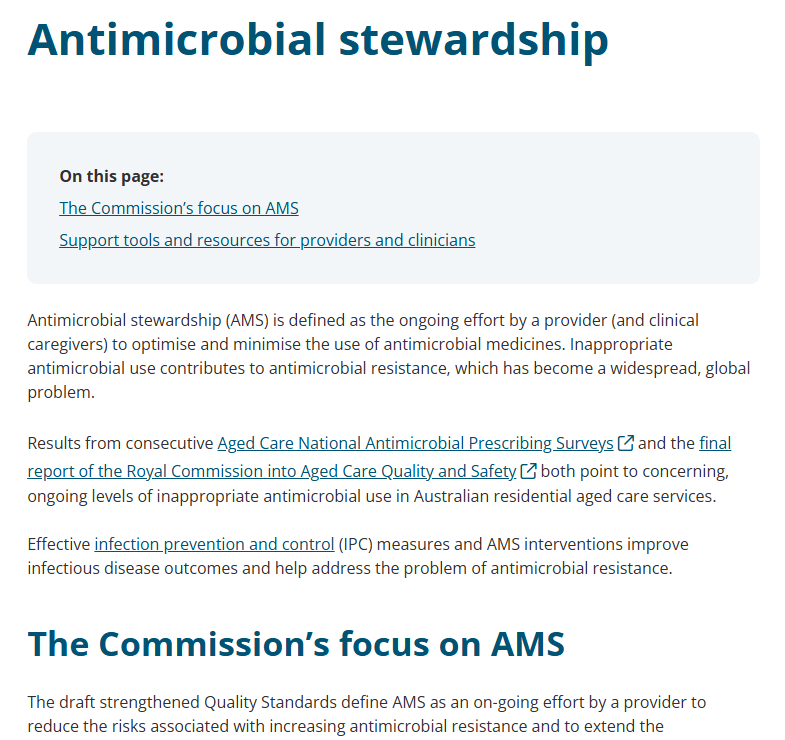
Guidelines for pharmacists supporting Aboriginal and Torres Strait Islander peoples with medicines management
This resource describes the professional obligations of pharmacists when supporting Aboriginal and Torres Strait Islander peoples with culturally safe and responsive care and medicines management. It includes information about appropriate and effective processes, desired behaviour or minimum standards of good practice and information about duties and responsibilities.
This resource may refer to information that will be updated from 1 November 2025 to align with the new Aged Care Act and Quality Standards.
National Aged Care Design Principles and Guidelines
This guide provides guidance on different systems and tools that can be used in residential aged care and community settings. It includes topics such as clinical handover and continuity of care (medication management), information technology systems, My Aged Care, quality improvement, and more. This resource complements Part A: Common clinical conditions in aged care and Part B: General approaches to aged care of the RACGP aged care clinical guide (Silver Book).
New Aged Care Infection Prevention and Control Guide – Webinar
This resource provides an overview of a webinar discussing the new Aged Care Infection Prevention and Control (IPC) Guide. It explains how aged care providers can apply infection prevention principles to minimise risks, meet the Aged Care Quality Standards, and develop local IPC policies and procedures tailored to their services.
This resource may refer to information that will be updated from 1 November 2025 to align with the new Aged Care Act and Quality Standards.
National Dementia Action Plan
This action plan outlines practical steps to improve the experiences of people living with dementia, their carers, and families in Australia. It aims to guide government policies, improve care services, raise awareness, and integrate support systems over the next 10 years, incorporating feedback from public consultations and stakeholders.
This resource may refer to information that will be updated from 1 November 2025 to align with the new Aged Care Act and Quality Standards.
Creating safe and inclusive care for Forgotten Australians and Care Leavers
This resource provides guidance for creating safe, inclusive aged care for Forgotten Australians and Care Leavers, focusing on trauma-informed practices. It supports providers in recognising unique needs, avoiding re-traumatisation, and promoting respect and sensitivity in care environments.
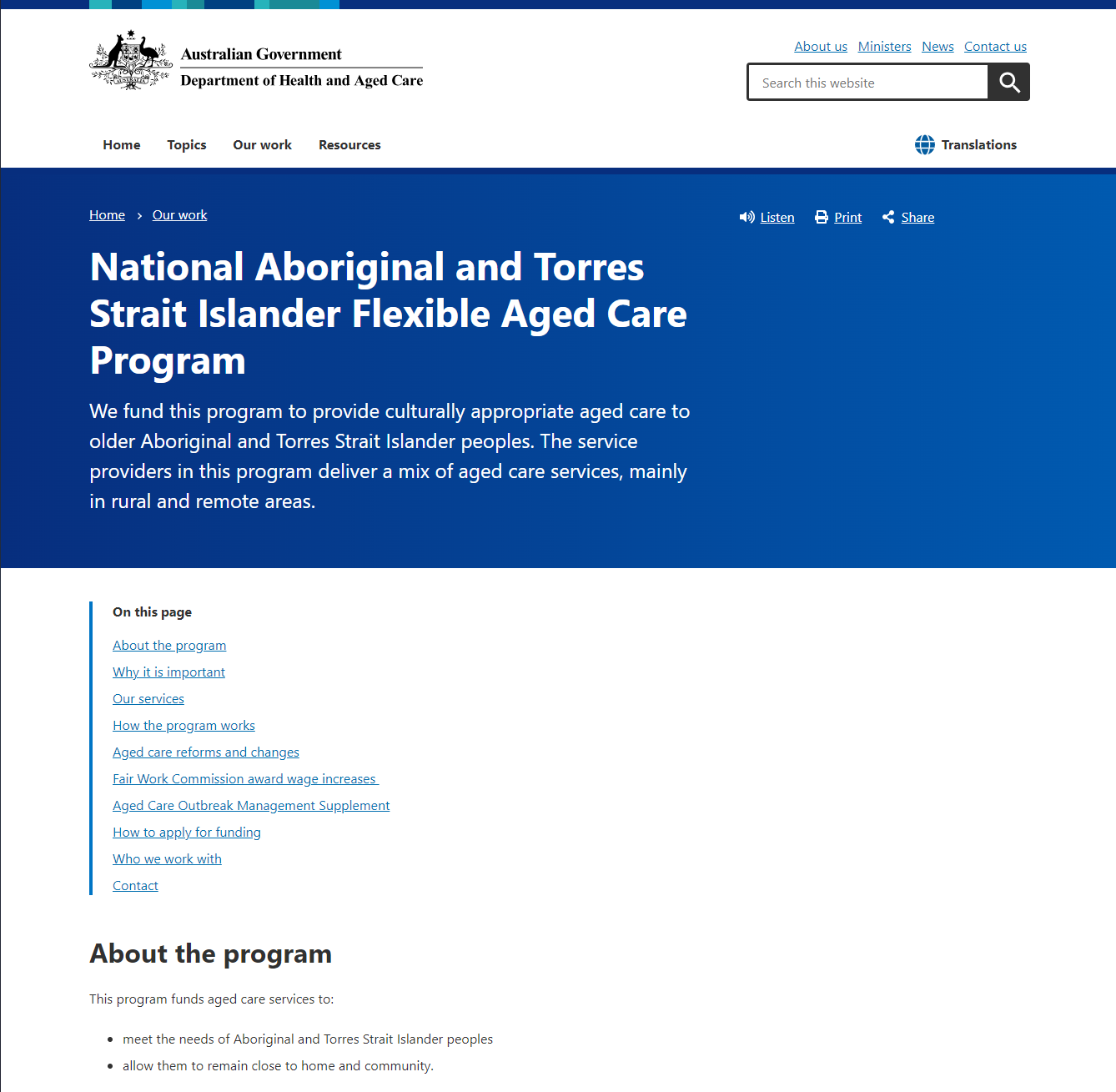
National Aboriginal and Torres Strait Islander Flexible Aged Care Program
This resource provides information on the National Aboriginal and Torres Strait Islander Flexible Aged Care Program. The program funds flexible and culturally appropriate aged care services for Aboriginal and Torres Strait Islander communities, mainly in rural and remote areas. It covers service provider requirements, funding processes, and adaptations to ongoing aged care reforms.
This resource may refer to information that will be updated from 1 November 2025 to align with the new Aged Care Act and Quality Standards.