The Quality Standards Resource Centre helps extend understanding of the strengthened Aged Care Quality Standards, which took effect from 1 November 2025. You can search for resources by using keywords, or filtering by standard, outcome and audience. Before using the Resource Centre, please read the terms of use.
Infection prevention and control in aged care
This resource is a collection of resources on infection prevention and control (IPC) for aged care service providers and staff. It includes guidelines, IPC posters and antimicrobial stewardship (AMS) fact sheets.
This resource may refer to information that will be updated from 1 November 2025 to align with the new Aged Care Act and Quality Standards.
Healthy Ageing
This resource is a collection of resources on the Tasmanian Government Department of Health webpage about healthy ageing. It includes resources about malnutrition screening, being physically active, and eating well.
This resource was developed by a state/territory government or organisation and therefore its applicability and usefulness may be limited.
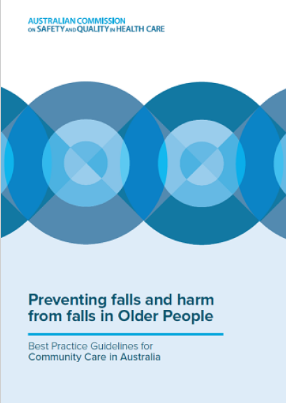
Falls Guidelines for Community Care
The Preventing Falls and Harm from Falls in Older People: Best Practice Guidelines for Community Care in Australia (Falls Guidelines for Community Care) has been developed for use by health professionals, primary care providers, the aged care workforce and other community care staff.
This resource may refer to information that will be updated from 1 November 2025 to align with the new Aged Care Act and Quality Standards.
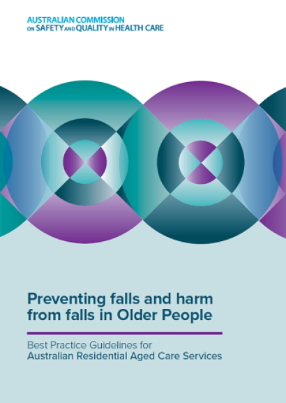
Falls Guidelines for Australian Residential Aged Care Services
The Preventing Falls and Harm from Falls in Older People: Best Practice Guidelines for Australian Residential Aged Care Services has been developed for use by health professionals and the aged care workforce.
This resource may refer to information that will be updated from 1 November 2025 to align with the new Aged Care Act and Quality Standards.
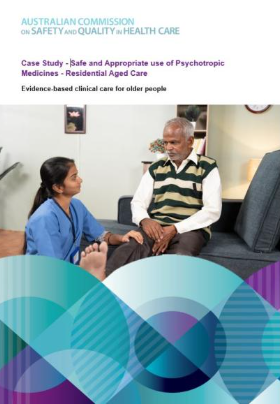
Case study - Safe and Appropriate use of Psychotropic Medicines - Residential Aged Care
This resource is a fictional scenario that follows an older person’s care pathway with a residential aged care provider. The resource focuses on the systems and processes to support high-quality care of older people living with cognitive impairment. It includes 4 key priority areas: person-centred care, medication management, managing changed behaviours and transitions of care.
This resource may refer to information that will be updated from 1 November 2025 to align with the new Aged Care Act and Quality Standards.
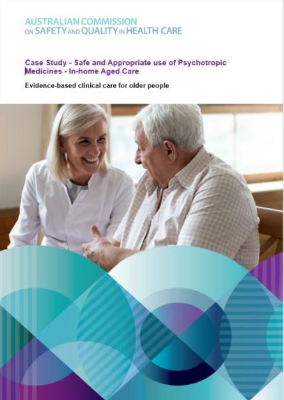
Case study - Safe and Appropriate use of Psychotropic Medicines - In-home Aged Care
This resource is a fictional scenario that follows an older person’s care pathway with an in-home aged care provider. The resource focuses on the systems and processes to support high-quality care of older people living with dementia. It includes 4 key priority areas: person-centred care, medication management, managing changed behaviours and transitions of care.
This resource may refer to information that will be updated from 1 November 2025 to align with the new Aged Care Act and Quality Standards.
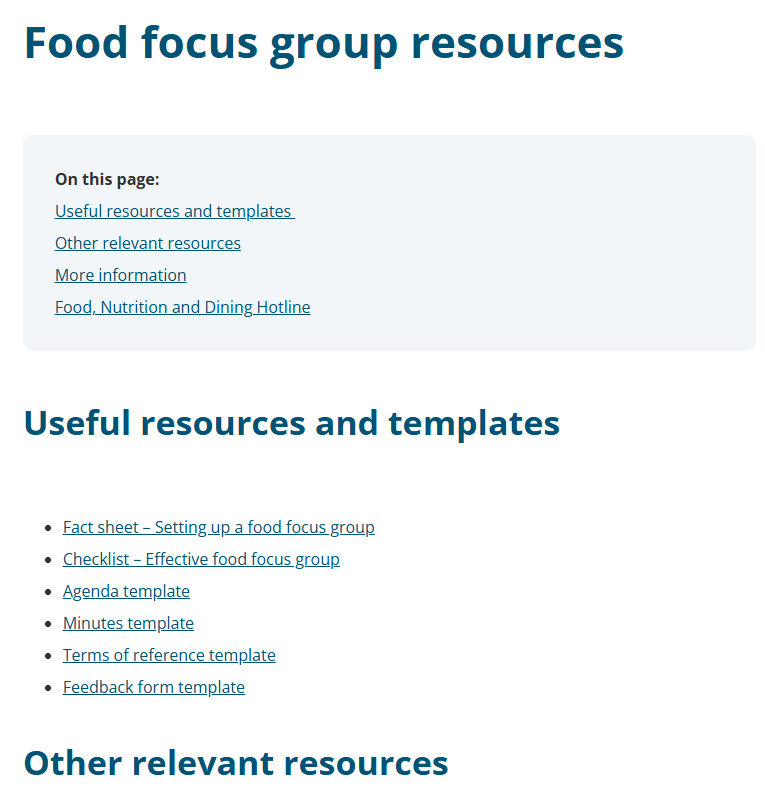
Food focus group resources
This resource is a collection of resources about food focus groups. It includes a fact sheet about setting up a food focus group and a checklist for an effective food focus group. It also contains associated templates, including agenda, minutes, terms of reference and feedback form.
This resource may refer to information that will be updated from 1 November 2025 to align with the new Aged Care Act and Quality Standards.
Renewal of registration audit guide
This guide helps you prepare for and take part in a renewal of registration audit.
It describes:
- the purpose of audits and how they inform (help us make) registration decisions
- the 3 stages of the audit process (initiation, delivery, reporting)
- what to expect and what to do at each stage
- the types of evidence we consider during audits
- how we define our audit ratings
- the audit tools we use
- other relevant resources.
 Renewal of registration audit guide (PDF 471.26 KB)
Variation of registration audit
This guide helps you prepare for and take part in a variation of registration audit.
It describes:
- the purpose of audits and how they inform (help us make) registration decisions
- the 3 stages of the audit process (initiation, delivery, reporting)
- what to expect and what to do at each stage
- the types of evidence we consider during audits
- how we define our audit ratings
- the audit tools we use
- other relevant resources.
Variation of registration audit (PDF 434.06 KB)
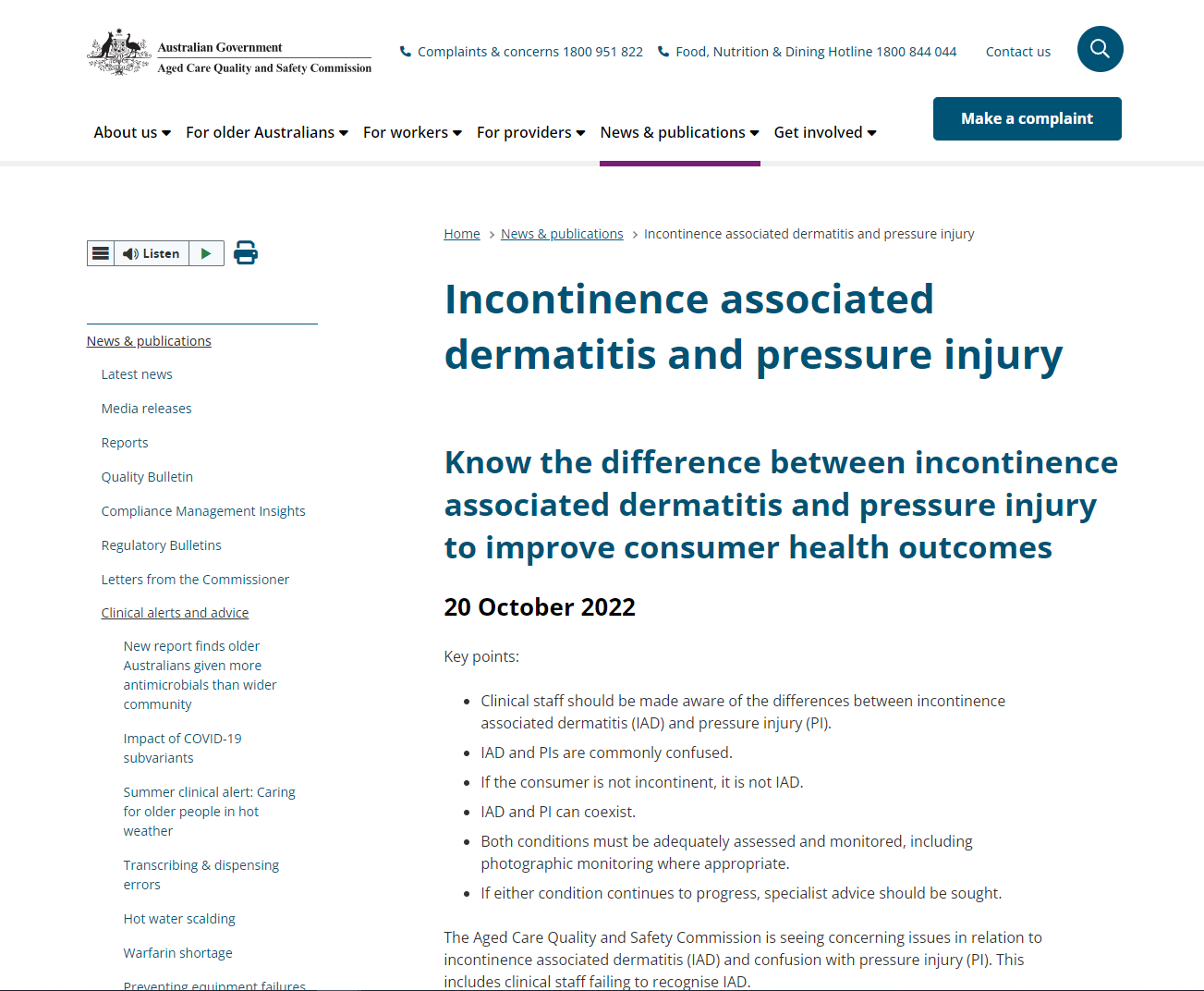
Incontinence associated dermatitis and pressure injury
This resource provides guidance on managing incontinence-associated dermatitis (IAD) and pressure injuries (PI) in aged care. It highlights the differences between IAD and PI, emphasises the need for timely assessment and monitoring, and outlines strategies for prevention, including proper skin care, repositioning, and using appropriate continence products to prevent skin damage.
This resource may refer to information that will be updated from 1 November 2025 to align with the new Aged Care Act and Quality Standards.
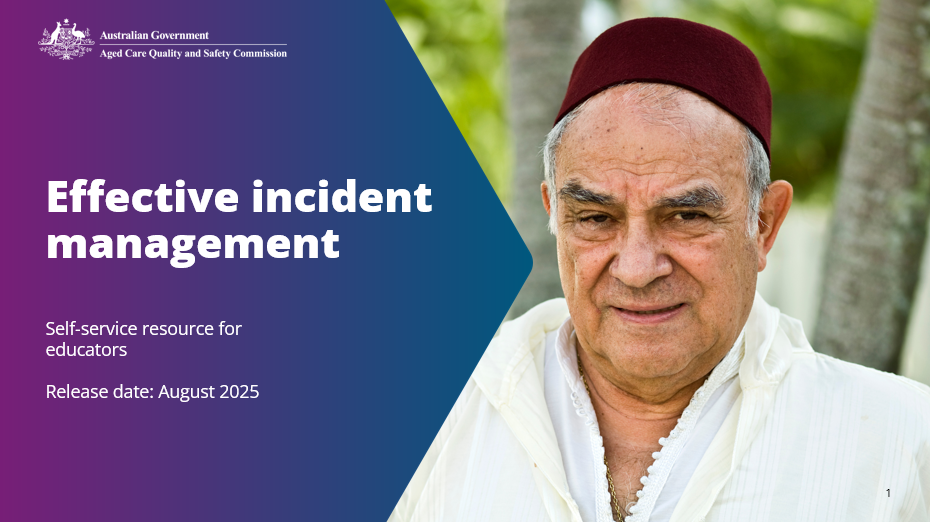
Effective incident management education pack
The Effective incident management education pack is designed for providers to deliver to their own staff. It can be delivered in full or delivered as a series of shorter sessions where you can focus on the sections that are most relevant to your setting or the time you have available.
This pack will support your staff to understand the role they play in effectively managing incidents at your aged care service and help them understand what an incident management system is and its key elements.
Infection prevention & control resources
This resource provides guidance on infection prevention and control for aged care providers, outlining responsibilities to make sure safety and minimise infection risks. It covers the development of infection control programs, training requirements, governance, and compliance with national standards, supporting the delivery of safe, high-quality care in residential aged care settings.
This resource may refer to information that will be updated from 1 July 2025 to align with the new Aged Care Act and Quality Standards.
Digital health - For healthcare providers
This resource provides guidance for aged care assessors and service providers on accessing and using the My Aged Care portals. It outlines steps for setting up secure access through authentication methods, managing organisation information, and creating staff accounts, supporting efficient service delivery and assessment processes.
This resource may refer to information that will be updated from 1 July 2025 to align with the new Aged Care Act and Quality Standards.
Dementia and Aboriginal and Torres Strait Islander people
This resource provides information on dementia tailored specifically for Aboriginal and Torres Strait Islander people. It offers culturally appropriate materials, guidance for health professionals, and support services tailored to the needs of Indigenous communities, promoting awareness, diagnosis, and management of dementia in these populations.
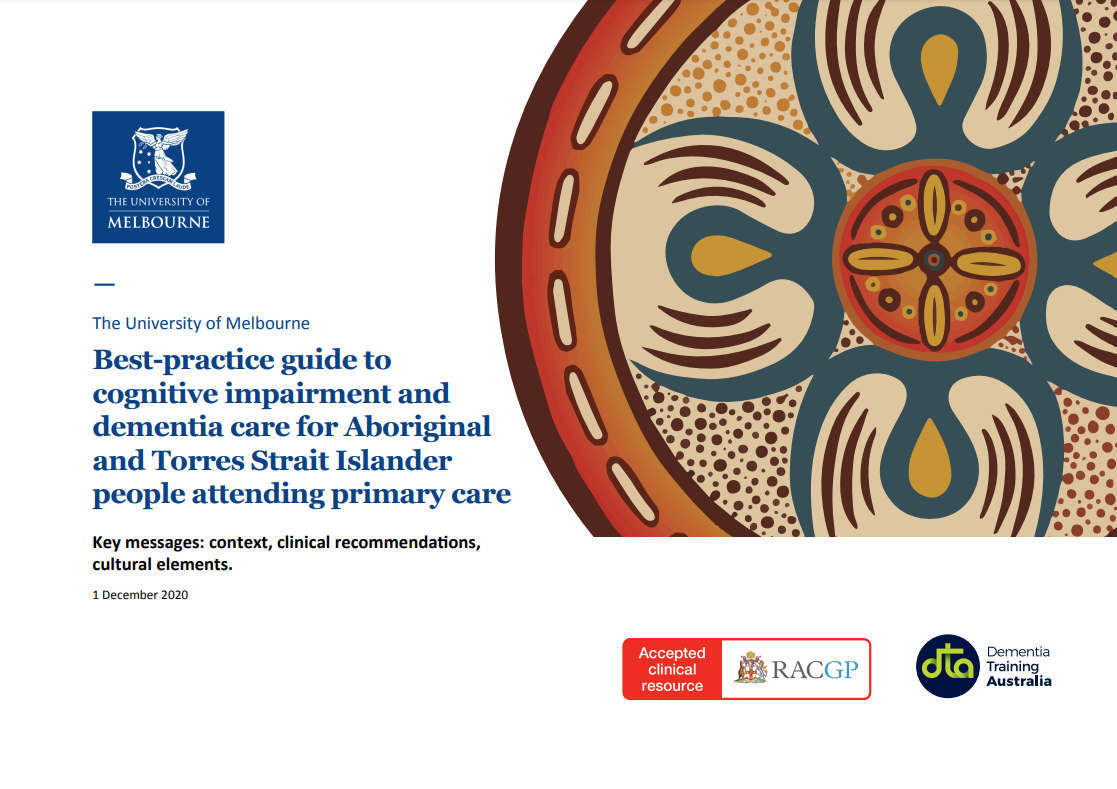
Cognitive impairment and dementia care for Aboriginal and Torres Strait Islander people
This resource is a best-practice guide to cognitive impairment and dementia care for Aboriginal and Torres Strait Islander people attending primary health care. It combines clinical evidence with cultural principles, addressing health promotion, prevention, detection, and management of dementia, while also providing culturally informed recommendations on end-of-life care and support for carers within the context of primary care services.
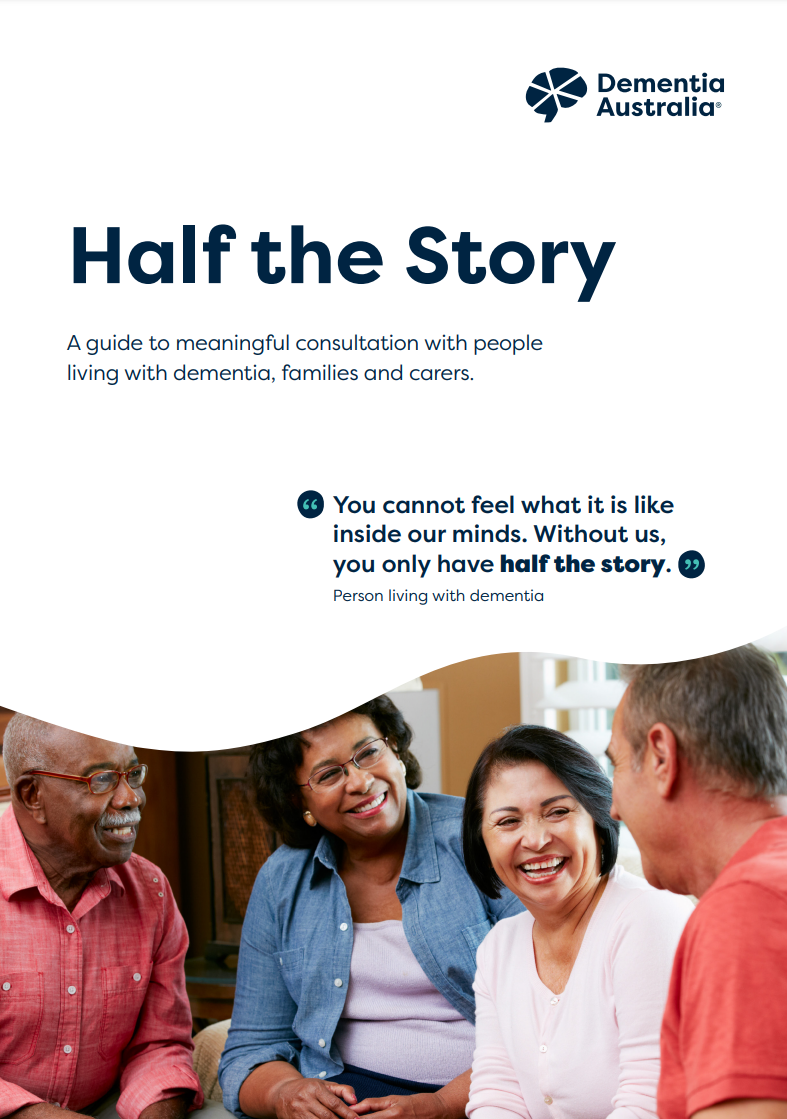
Half the story: A guide to meaningful consultation with people living with dementia, families and carers
This resource is a guide for meaningful consultation with people living with dementia, their families, and carers. It covers planning, ethical considerations, communication methods, and ways to improve accessibility. The guide offers strategies to ensure the voices of those living with dementia are respected, valued, and effectively integrated into decision-making processes.
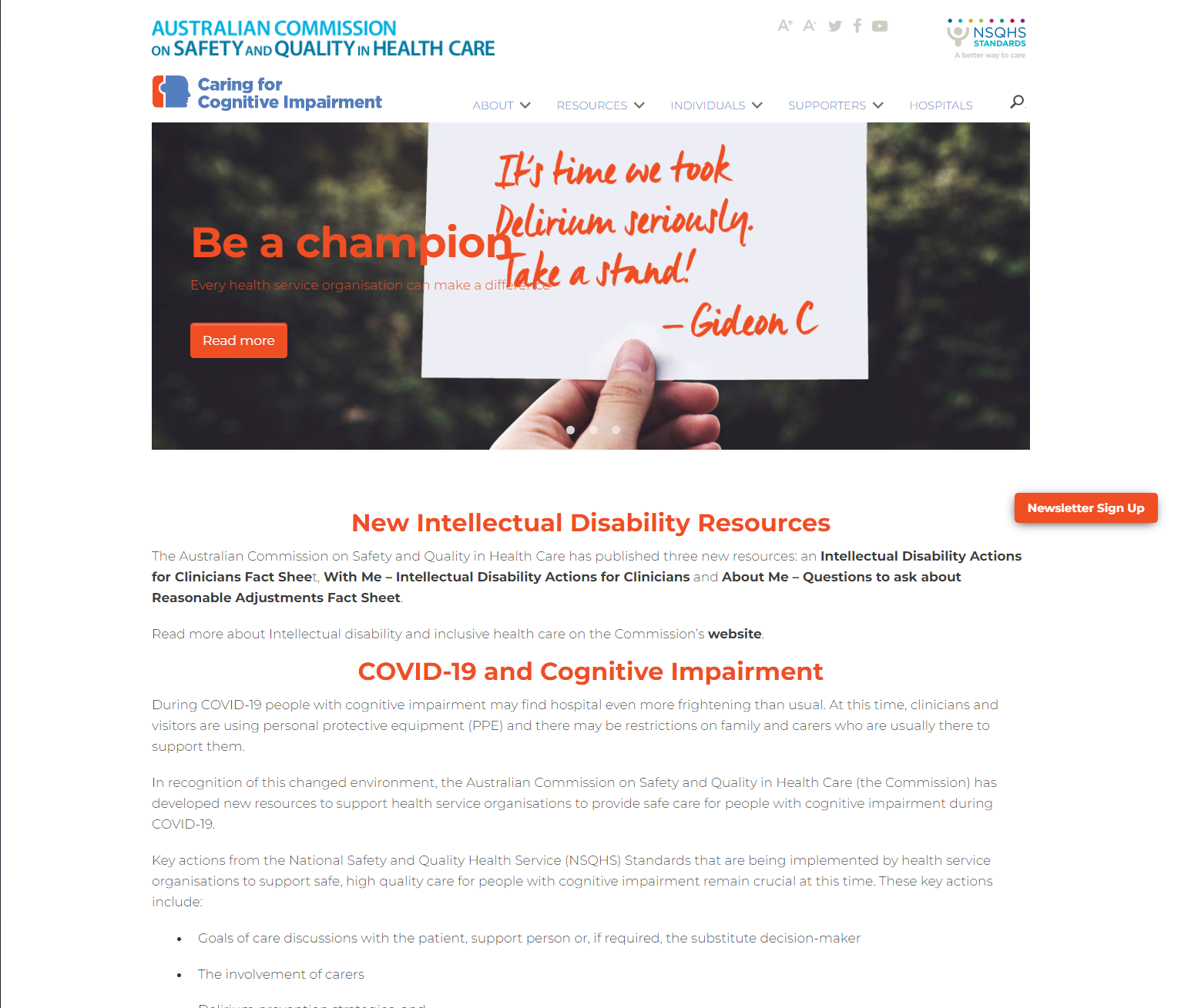
Caring for Cognitive Impairment
This resource outlines support for health service organisations to provide safe, high-quality care for people with cognitive impairment, especially during COVID-19. It includes new intellectual disability resources, fact sheets, posters, and guidance aligned with the National Safety and Quality Health Service (NSQHS) Standards to improve patient outcomes and care experiences.
This resource may refer to information that will be updated from 1 November 2025 to align with the new Aged Care Act and Quality Standards.
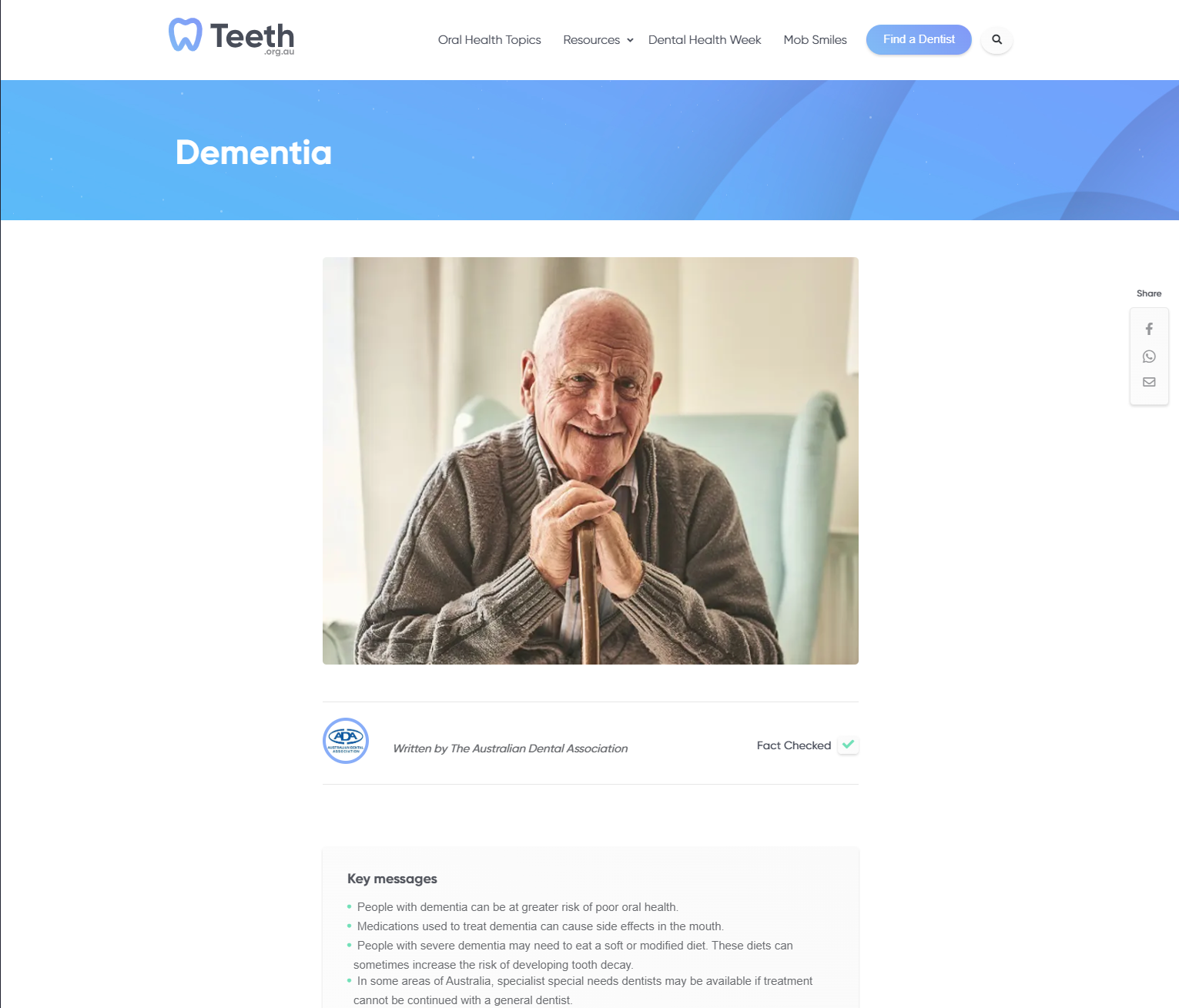
Dementia and oral health
This resource provides information on the impact of dementia on oral health, outlining key issues such as increased risk of poor oral health, the effects of medications, and the importance of maintaining dental care routines. It offers practical tips for toothbrushing, denture care, and dental visits to support those living with dementia.
National Roadmap for Improving the Health of People with Intellectual Disability
This resource outlines the National Roadmap for Improving the Health of People with Intellectual Disability, aiming to address health inequities. It focuses on enhancing care support, developing better models of care, improving oral health, and supporting health professionals. The roadmap includes projects on primary care, health assessments, curriculum development, and more.
ELDAC Dementia Toolkit
This resource provides a toolkit for palliative care and end-of-life planning for people with dementia. It includes practical advice, resources, and evidence-based guidance to support health and aged care workers in delivering quality care. The toolkit covers assessment, care planning, symptom management, and communication with patients and families.