The Quality Standards Resource Centre helps extend understanding of the strengthened Aged Care Quality Standards, which take effect from 1 November 2025. The Resource Centre will be updated to reflect key changes made to the draft strengthened Standards. You can search for resources by using keywords, or filtering by standard, outcome, audience and theme. Before using the Resource Centre, please read the terms of use.
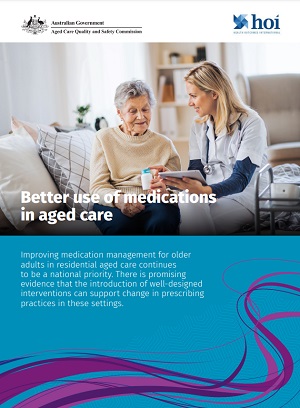
Better use of medications in aged care
This discussion paper explores strategies to improve medication management in aged care, including reducing inappropriate prescriptions and promoting non-pharmacological interventions. It reviews current interventions' effectiveness, highlights the use of psychotropic medications, and identifies areas for improving practices through multifaceted and multidisciplinary approaches for better resident outcomes and healthcare quality.
This resource may refer to information that will be updated from 1 November 2025 to align with the new Aged Care Act and Quality Standards.

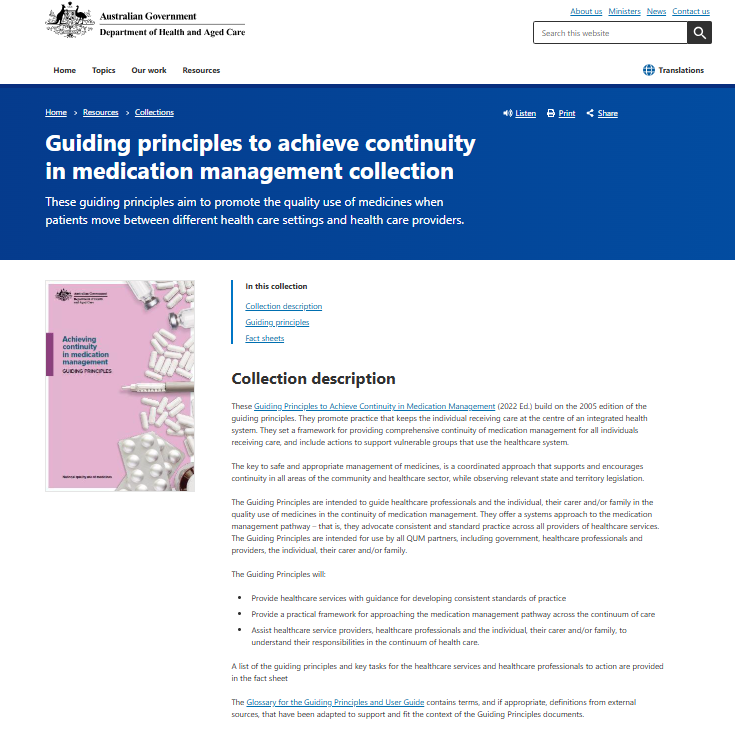
Guiding principles to achieve continuity in medication management collection
This collection of resources is related to the guiding principles for medication management.The guiding principles aim to promote the quality use of medicines when moving between different health care settings and health care providers. The collection includes the guiding principles and the corresponding glossary, user guide and fact sheet. This resource may apply to healthcare contexts outside of aged care.
This resource may refer to information that will be updated from 1 November 2025 to align with the new Aged Care Act and Quality Standards.
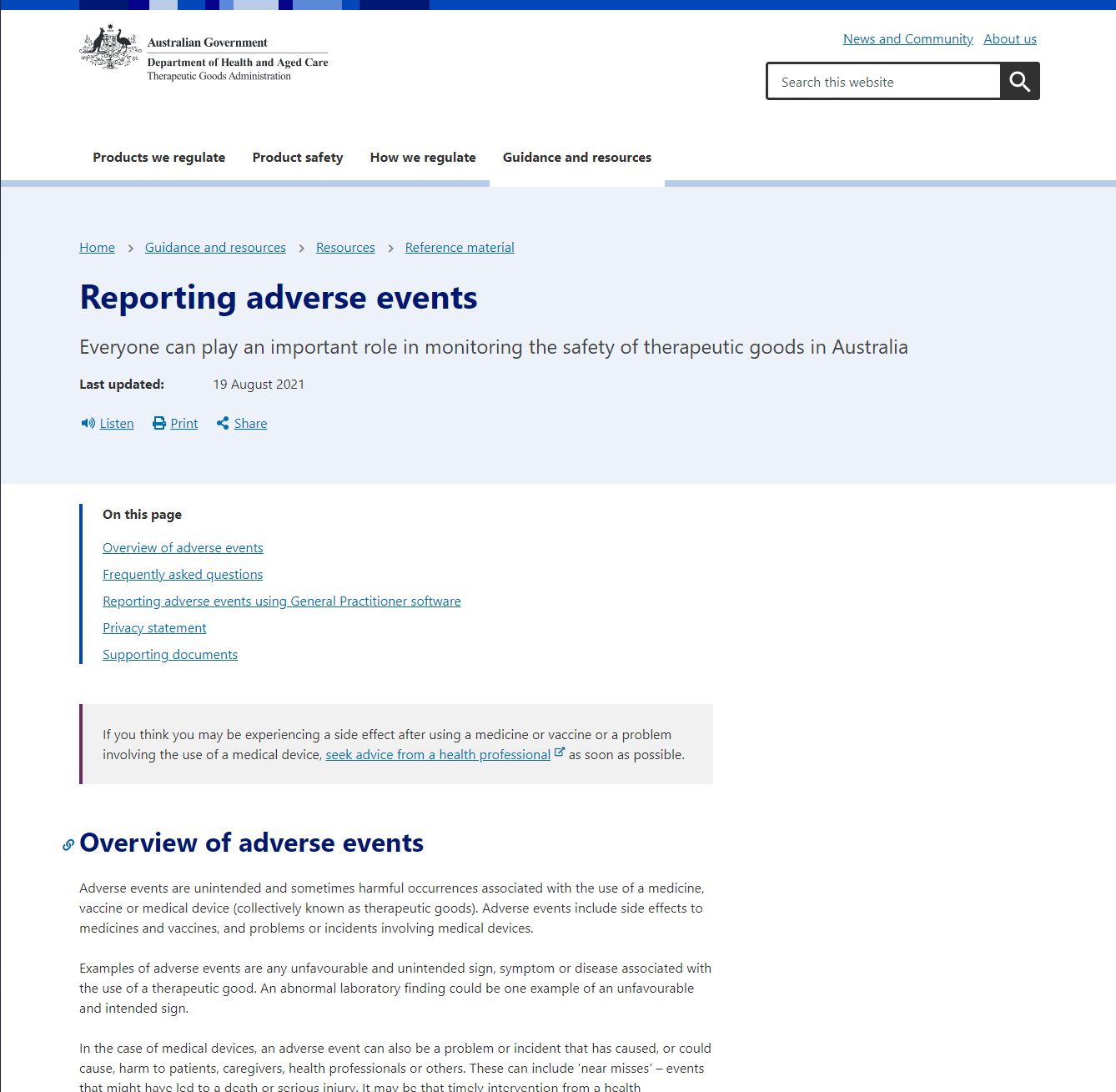
Reporting adverse events
This resource provides information on identifying and reporting adverse events related to medicines, vaccines, and medical devices. It outlines who can report, how to submit a report, the importance of these reports for safety monitoring, and the steps taken by the TGA in response to reported safety concerns.
This resource may refer to information that will be updated from 1 November 2025 to align with the new Aged Care Act and Quality Standards.
Report a problem or side effect
This resource provides information on how to report adverse events, side effects, or problems related to medicines, vaccines, and medical devices. It includes reporting procedures and information for consumers, health professionals, and industry, aiming to enhance safety and address breaches or non-compliant advertising.
This resource may refer to information that will be updated from 1 November 2025 to align with the new Aged Care Act and Quality Standards.
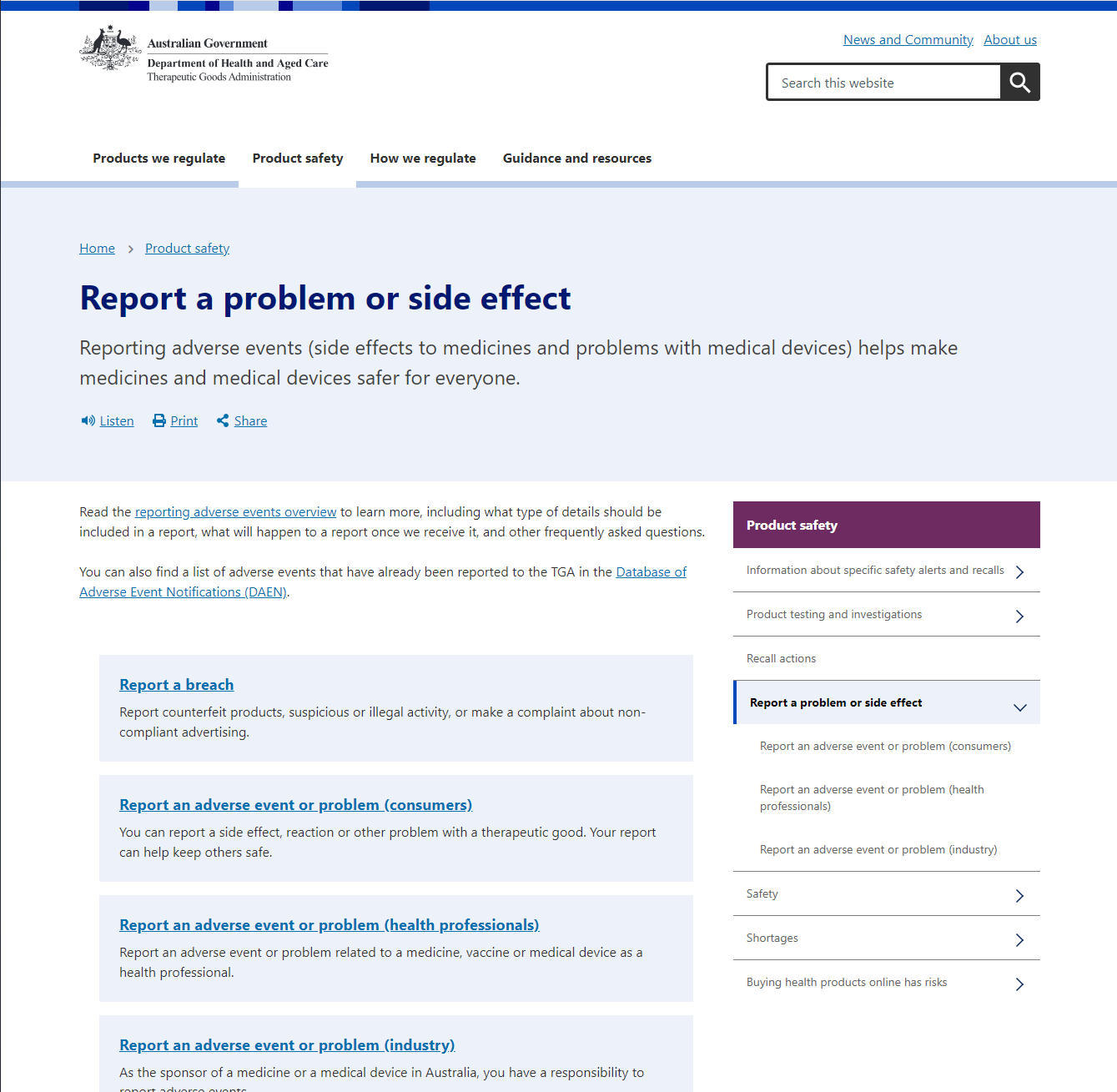
Medication management for health practitioners
This resource supports health practitioners in managing medicines through the use of medication charts in aged care facilities and hospitals. It provides guidelines for safe prescribing, administration, and communication. The resource includes both paper-based and electronic medication chart systems to reduce errors, improve patient safety, and streamline medication management processes in aged care settings.
This resource may refer to information that will be updated from 1 November 2025 to align with the new Aged Care Act and Quality Standards.
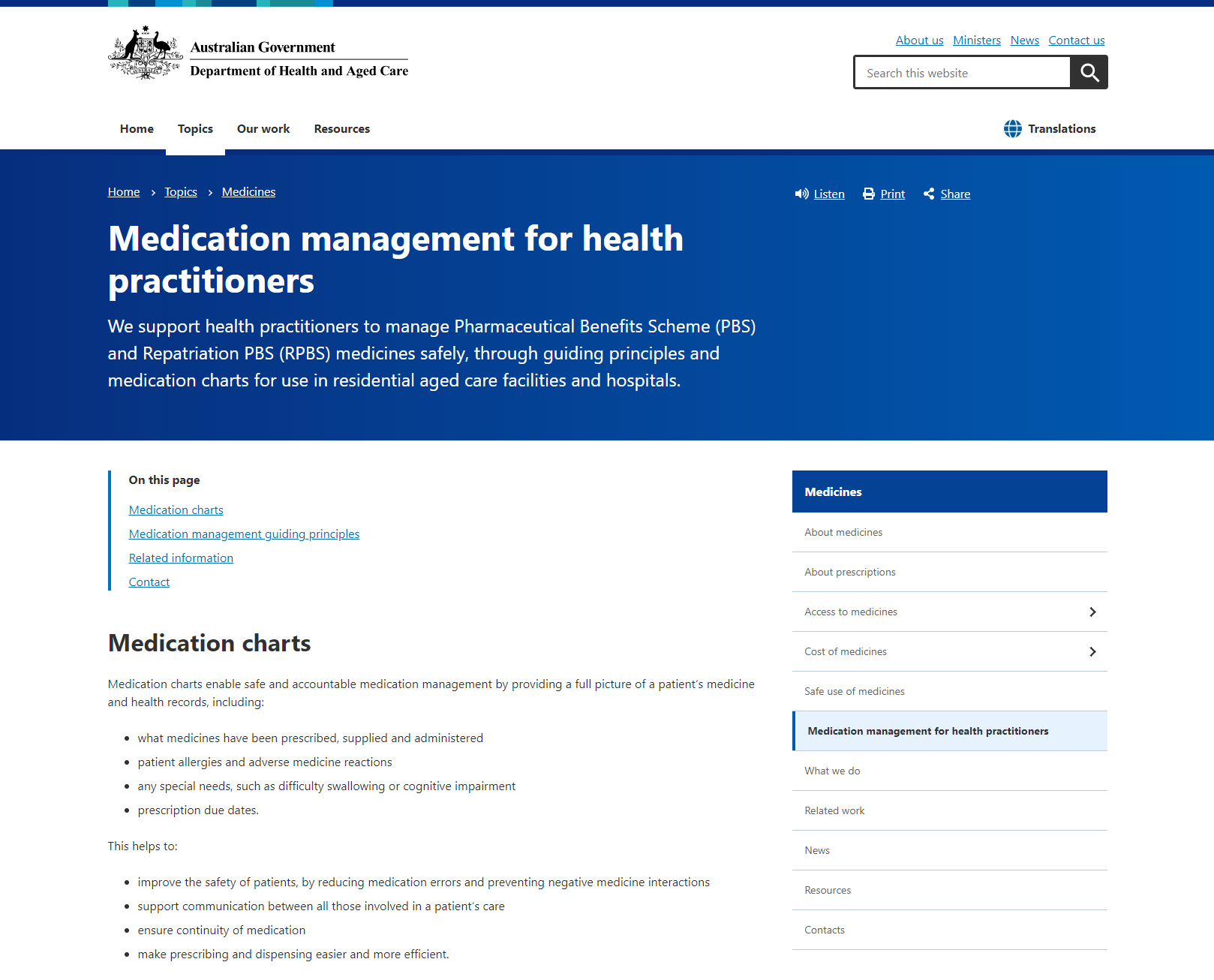
Medication: it's your choice
This resource informs older Australians about their rights and choices regarding medication, including potential side effects, the importance of informed decision-making, and reducing unnecessary antibiotic and psychotropic use. It offers brochures, videos, and fact sheets to support understanding and provide guidance on alternative treatments and safe medication practices.
This resource may refer to information that will be updated from 1 November 2025 to align with the new Aged Care Act and Quality Standards.
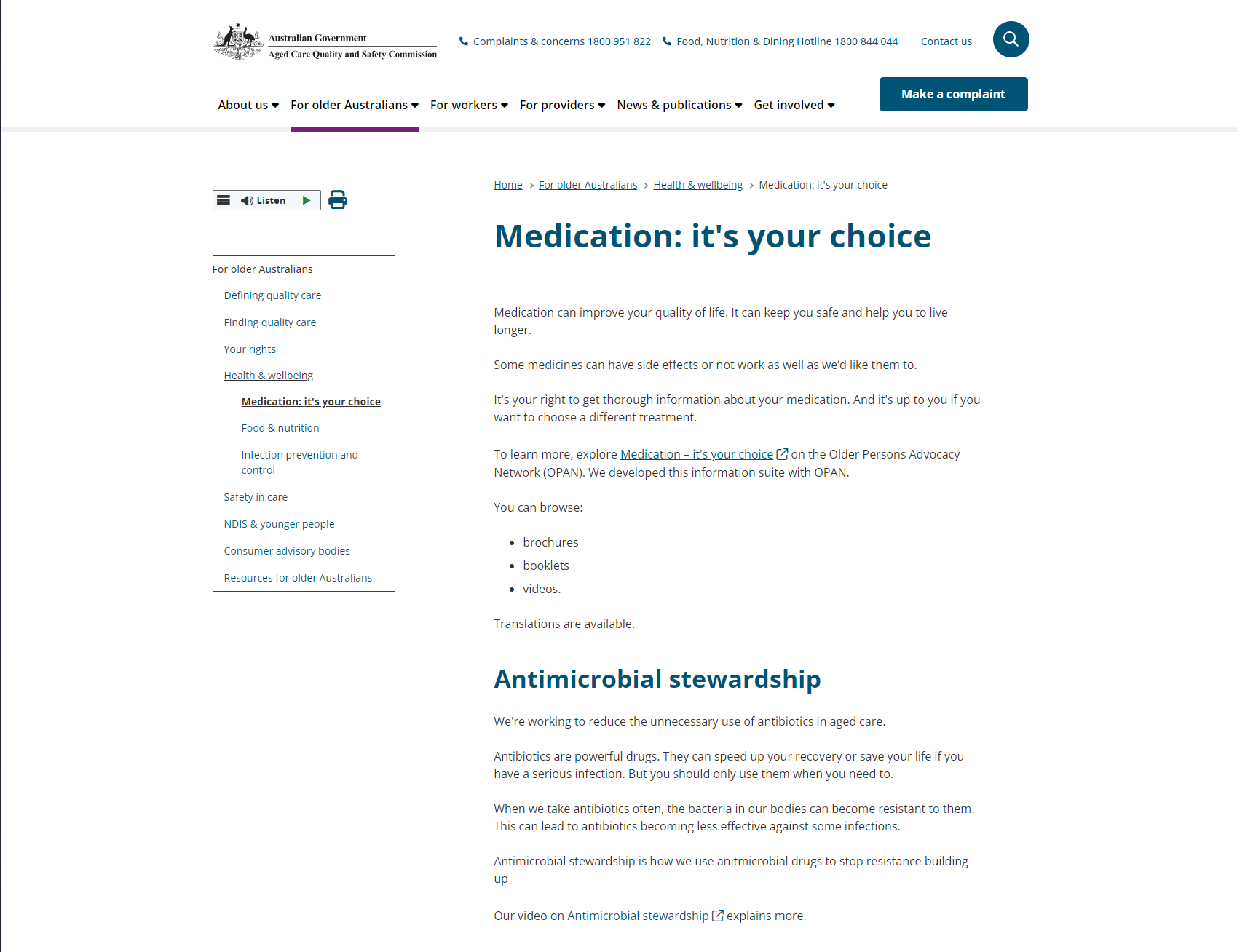
Medication management
This resource provides information on medication management in aged care, focusing on psychotropics and antimicrobials. It includes tools for reducing inappropriate use, antimicrobial stewardship guidance, self-assessment resources, and quality bulletins. It aims to improve medication safety, prevent inappropriate prescribing, and support care providers in ensuring safe clinical practices.
This resource may refer to information that will be updated from 1 November 2025 to align with the new Aged Care Act and Quality Standards.
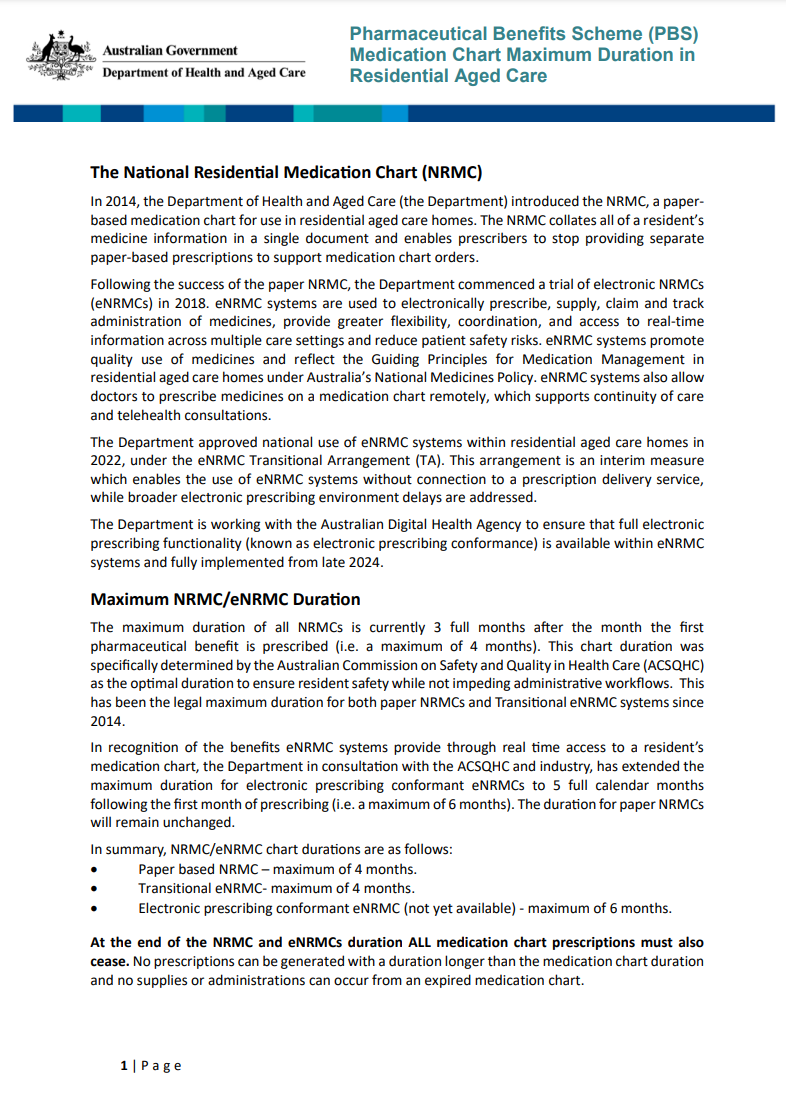
Pharmaceutical Benefits Scheme (PBS) medication chart maximum duration in residential aged care
This resource outlines the Pharmaceutical Benefits Scheme (PBS) medication chart's maximum duration in residential aged care. It explains the use of both paper-based and electronic National Residential Medication Charts (NRMC), highlighting their role in managing prescriptions, medication supply, and administration. The document provides guidance on compliance, chart expiry, and medication safety within aged care facilities. This resource may refer to information that will be updated from 1 November 2025 to align with the new Aged Care Act and Quality Standards.
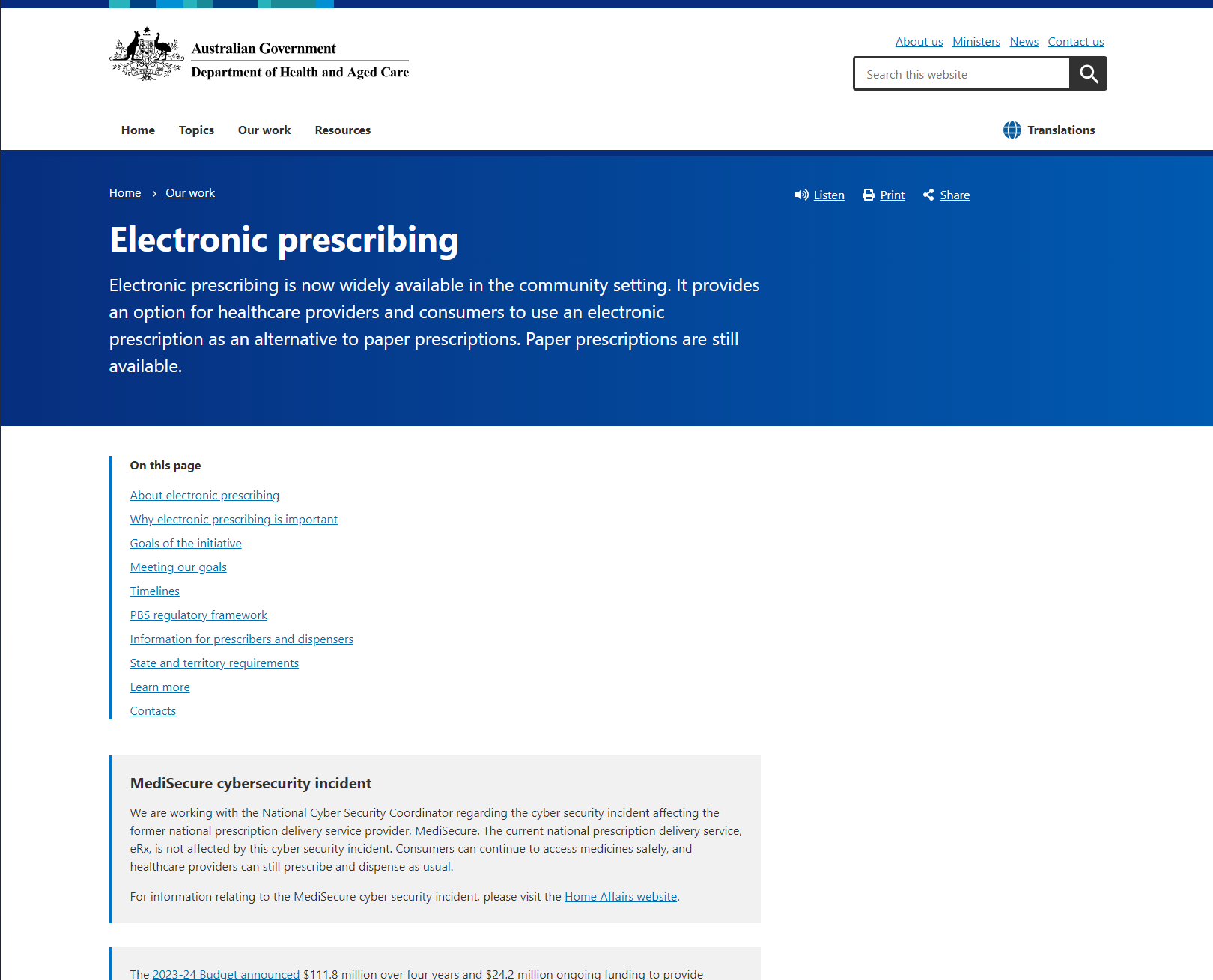
Electronic prescribing
This resource outlines the framework for electronic prescribing, offering an alternative to paper prescriptions for healthcare providers and consumers. It explains the benefits of electronic prescriptions, such as reducing errors, improving efficiency, and supporting medication safety. The resource also covers technical and legislative requirements for implementing electronic prescriptions in various healthcare settings.
This resource may refer to information that will be updated from 1 November 2025 to align with the new Aged Care Act and Quality Standards.
The Poisons Standard (the SUSMP)
The Poisons Standard (SUSMP) is a resource that classifies medicines and chemicals into schedules for regulatory control in Australia. It outlines guidelines for labelling, packaging, and handling of substances. Key points include updates on scheduling decisions, which assist in public safety, healthcare, and chemical management.
This resource may refer to information that will be updated from 1 November 2025 to align with the new Aged Care Act and Quality Standards.