Aged care laws in Australia have now changed. The new Aged Care Act 2024 and Aged Care Rules 2025 now apply. While we complete updating of our website, including draft guidance and other materials, to align with the new laws, providers are advised to refer to the new Act and Rules for any required clarification of their obligations and legal responsibilities. Thank you for your patience.

Quality Standards Resource Centre

The Quality Standards Resource Centre helps extend understanding of the strengthened Aged Care Quality Standards, which take effect from 1 November 2025. The Resource Centre will be updated to reflect key changes made to the draft strengthened Standards. You can search for resources by using keywords, or filtering by standard, outcome, audience and theme. Before using the Resource Centre, please read the terms of use.

Displaying 1 to 14 of 14 result(s)
/quality-standards/code-conduct-aged-care

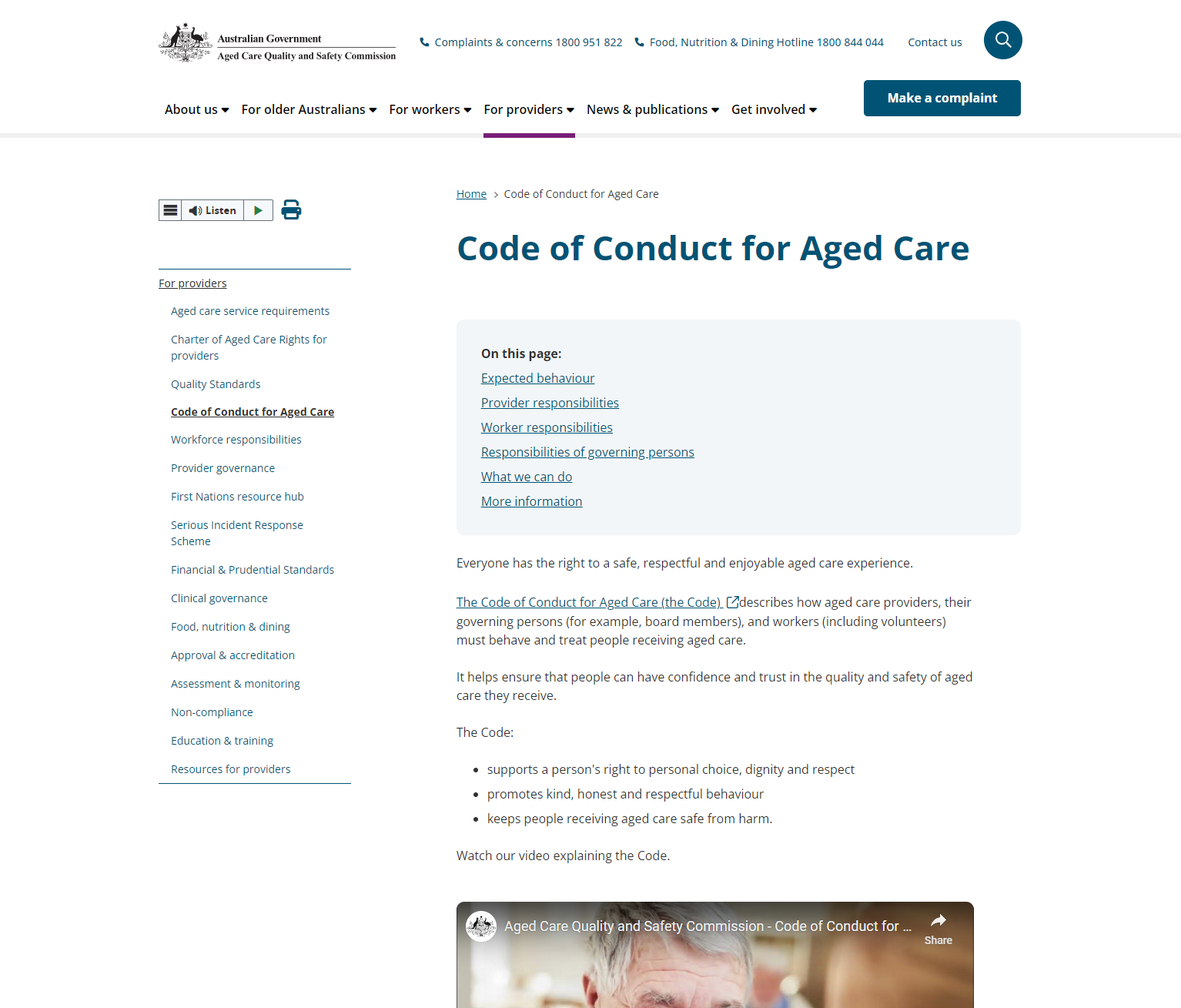
Code of Conduct for Aged Care

Guidance

This resource outlines the Code of Conduct for Aged Care, which sets expectations for the behaviour of providers, governing persons, and workers. It promotes respect, safety, and quality in aged care services, ensuring people’s rights are protected. The Code includes guidance on handling concerns and preventing abuse or neglect​. 

This resource may refer to information that will be updated from 1 November 2025 to align with the new Aged Care Act and Quality Standards.
Author
Aged Care Quality & Safety Commission
Key Theme
Workforce and human resources management, Dignity, respect and privacy
Standard
2: The Organisation, 1: The Individual
Outcomes
2.9: Human resource management, 1.2: Dignity, respect and privacy
Code of Conduct for Aged Care
/quality-standards/code-conduct-workers

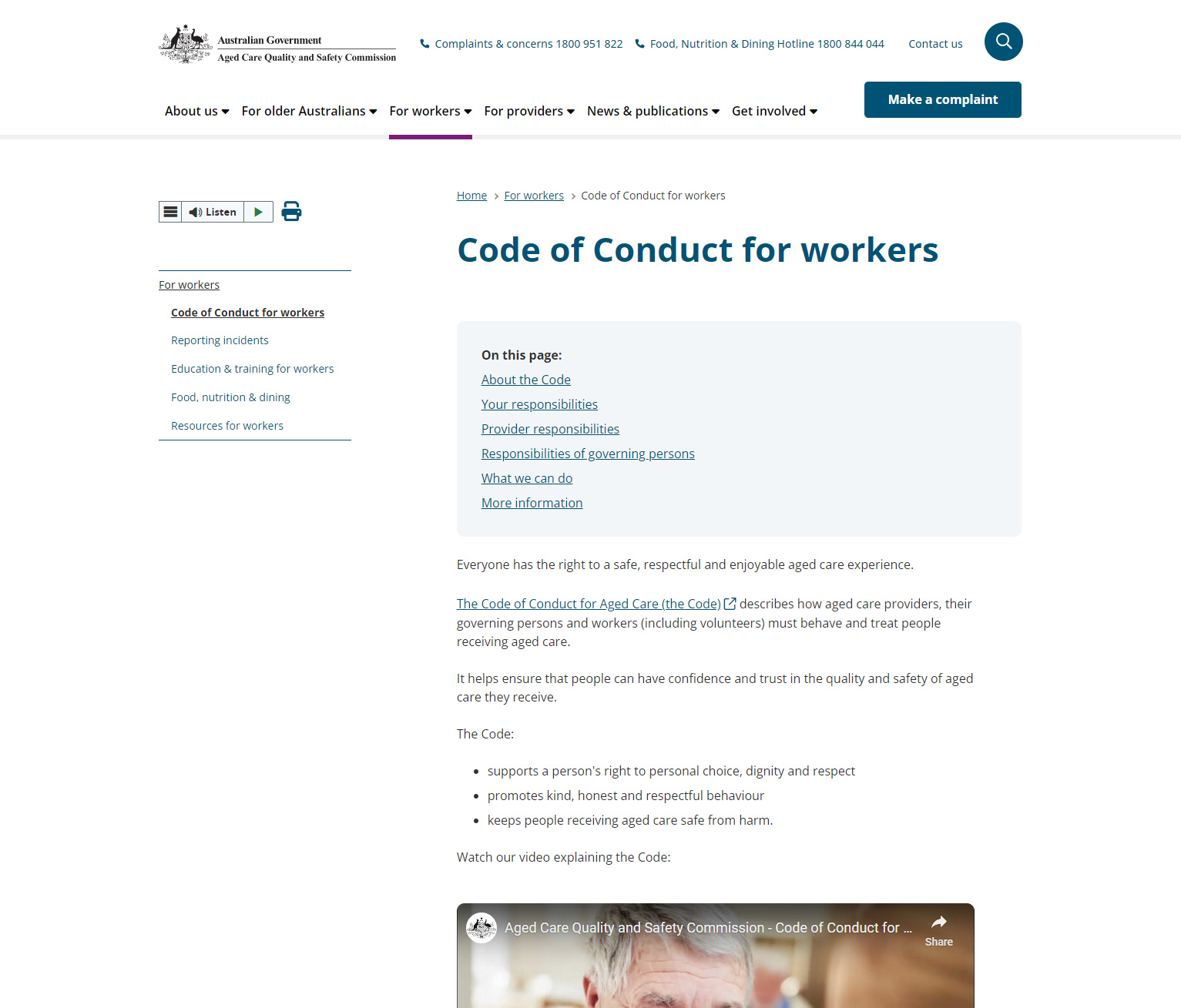
Code of Conduct for workers

Guidance

This resource outlines the Code of Conduct for Aged Care workers, detailing expected behaviours such as respect, honesty, and integrity. It ensures people receiving care are treated with dignity, kept safe from harm, and supported. The Code applies to all aged care workers, including volunteers​. 

This resource may refer to information that will be updated from 1 November 2025 to align with the new Aged Care Act and Quality Standards.
Author
Aged Care Quality & Safety Commission
Key Theme
Workforce and human resources management, Dignity, respect and privacy
Standard
2: The Organisation, 1: The Individual
Outcomes
2.9: Human resource management, 1.2: Dignity, respect and privacy
Code of Conduct for workers
/quality-standards/respecting-privacy-and-dignity-clients

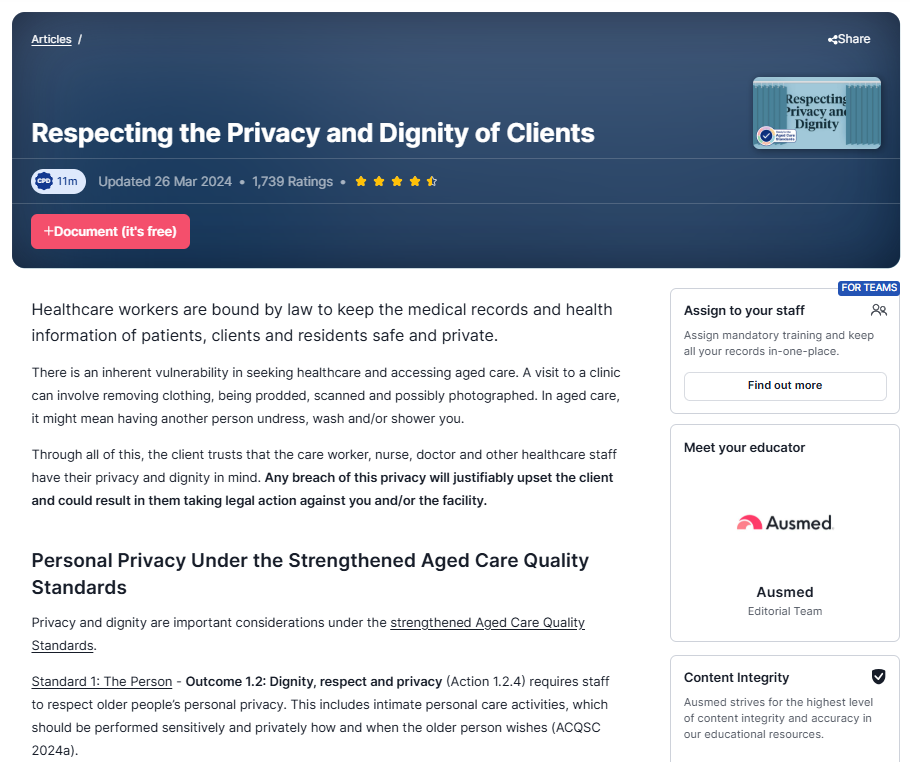
Respecting the privacy and dignity of clients

Guidance
Last Updated

This resource provides guidance about respecting the privacy and dignity of clients. It includes information about personal privacy, the Privacy Act, what classifies as health information, consent and privacy of information. It also includes information about person-centred care and client dignity. 

This resource may refer to information that will be updated from 1 November 2025 to align with the new Aged Care Act and Quality Standards.
Author
External resource
Key Theme
Dignity, respect and privacy, Information management system, Delivering comprehensive care and services
Standard
1: The Individual, 2: The Organisation, 7: The Residential Community
Outcomes
1.2: Dignity, respect and privacy, 2.7: Information management, 7.1: Daily living
Respecting the privacy and dignity of clients
/quality-standards/national-aboriginal-and-torres-strait-islander-flexible-aged-care-program

National Aboriginal and Torres Strait Islander Flexible Aged Care Program

Guidance
Published date
Last Updated

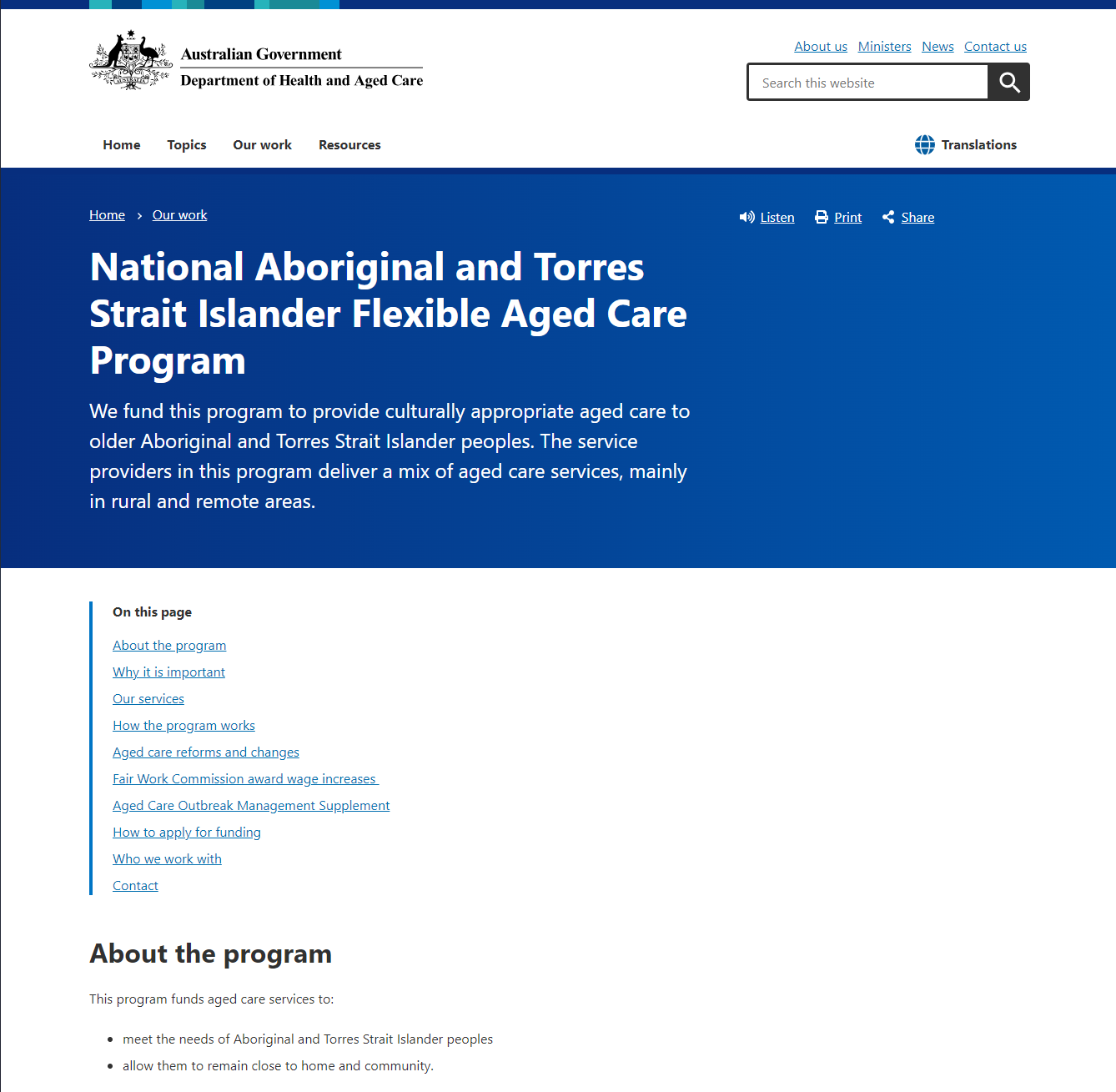
This resource provides information on the National Aboriginal and Torres Strait Islander Flexible Aged Care Program. The program funds flexible and culturally appropriate aged care services for Aboriginal and Torres Strait Islander communities, mainly in rural and remote areas. It covers service provider requirements, funding processes, and adaptations to ongoing aged care reforms. 

This resource may refer to information that will be updated from 1 November 2025 to align with the new Aged Care Act and Quality Standards.
Author
Department of Health, Disability and Ageing
Key Theme
Person-centred care, Delivering comprehensive care and services, Corporate and clinical governance, Care coordination and transitions
Standard
3: The Care and Services, 2: The Organisation, 1: The Individual, 7: The Residential Community
Outcomes
3.2: Delivery of funded aged care services, 2.1: Partnering with individuals, 1.1: Person-centred care, 7.2: Transitions
National Aboriginal and Torres Strait Islander Flexible Aged Care Program
/quality-standards/allied-health-regulation

Allied health regulation

Guidance

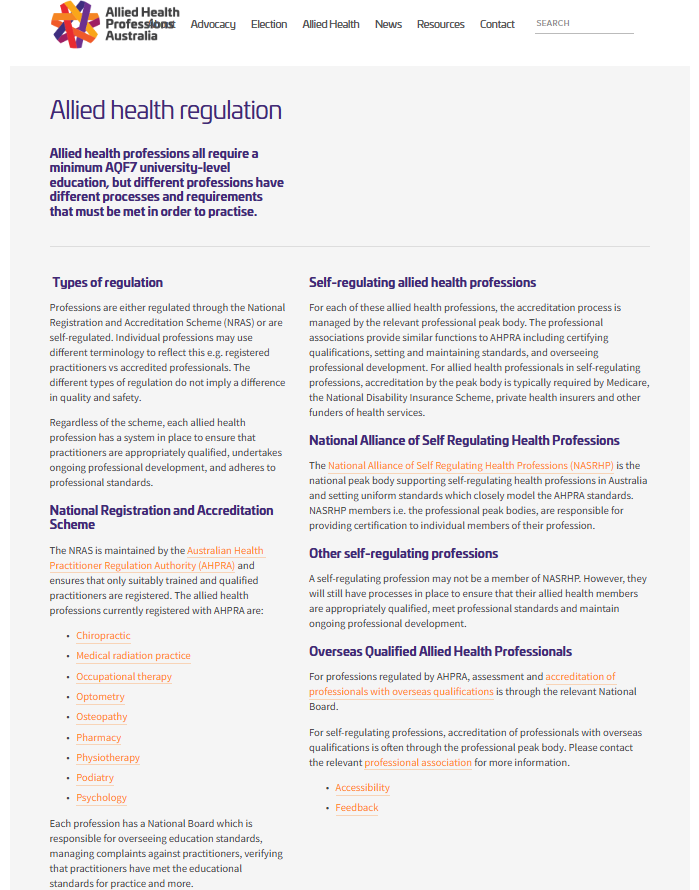
This resource provides information about the regulation of allied health professions in Australia. It includes those registered under the National Registration and Accreditation Scheme (NRAS) and self-regulating professions managed by professional peak bodies. It also provides links to further information about allied health professions currently registered with AHPRA and information for overseas-qualified practitioners.
Author
External resource
Key Theme
Workforce and human resources management, Delivering comprehensive care and services, Assessment and planning, Care coordination and transitions
Standard
5: Clinical Care, 2: The Organisation
Outcomes
5.4: Comprehensive care, 2.8: Workforce planning, 2.9: Human resource management
Allied health regulation
/quality-standards/digital-health-healthcare-providers

Digital health - For healthcare providers

Guidance
Last Updated

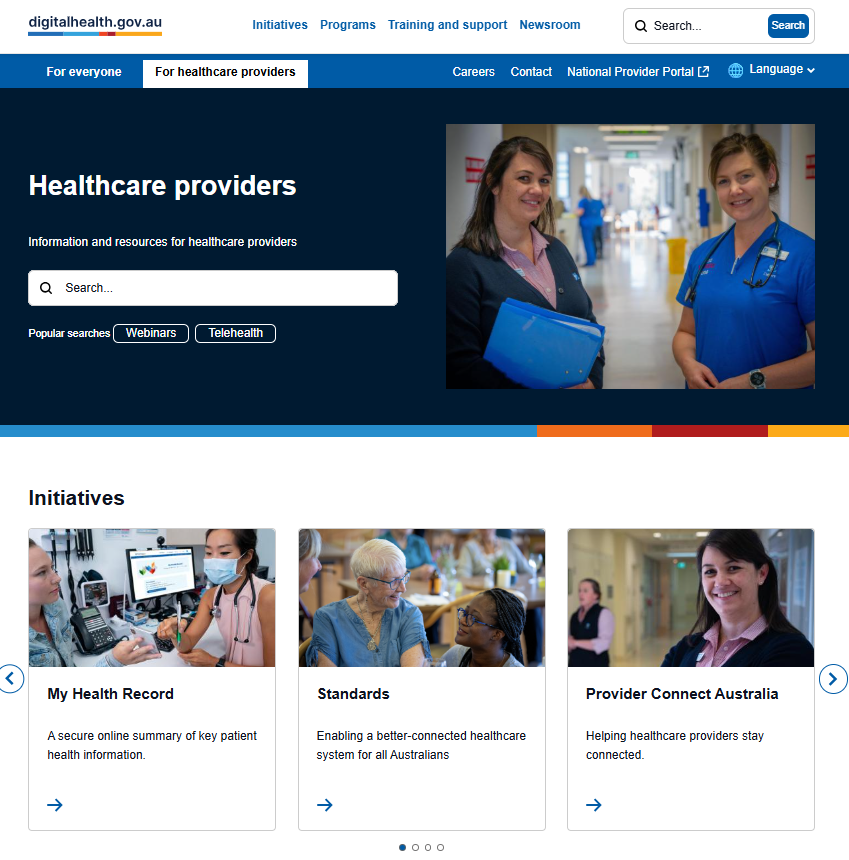
This resource provides guidance for aged care assessors and service providers on accessing and using the My Aged Care portals. It outlines steps for setting up secure access through authentication methods, managing organisation information, and creating staff accounts, supporting efficient service delivery and assessment processes. 

This resource may refer to information that will be updated from 1 July 2025 to align with the new Aged Care Act and Quality Standards.
Author
External resource
Key Theme
Information management system, Care coordination and transitions, Workforce and human resources management, Corporate and clinical governance
Standard
2: The Organisation, 5: Clinical Care
Outcomes
2.7: Information management, 5.1: Clinical governance
Digital health - For healthcare providers
/quality-standards/national-clinical-terminology-service

National Clinical Terminology Service

Guidance

This resource provides information for healthcare providers on digital health tools and initiatives. It covers services such as My Health Record, secure messaging, electronic prescriptions, and telehealth. It supports providers in using digital technologies to enhance healthcare delivery and improve patient outcomes.

Author
External resource
Key Theme
Care coordination and transitions, Information management system, Corporate and clinical governance
Standard
2: The Organisation, 5: Clinical Care
Outcomes
2.7: Information management, 5.1: Clinical governance
This resource provides information for healthcare providers on digital health tools and initiatives. It covers services such as My Health Record, secure messaging, electronic prescriptions, and telehealth. It supports providers in using digital technologies to enhance healthcare delivery and improve patient outcomes.
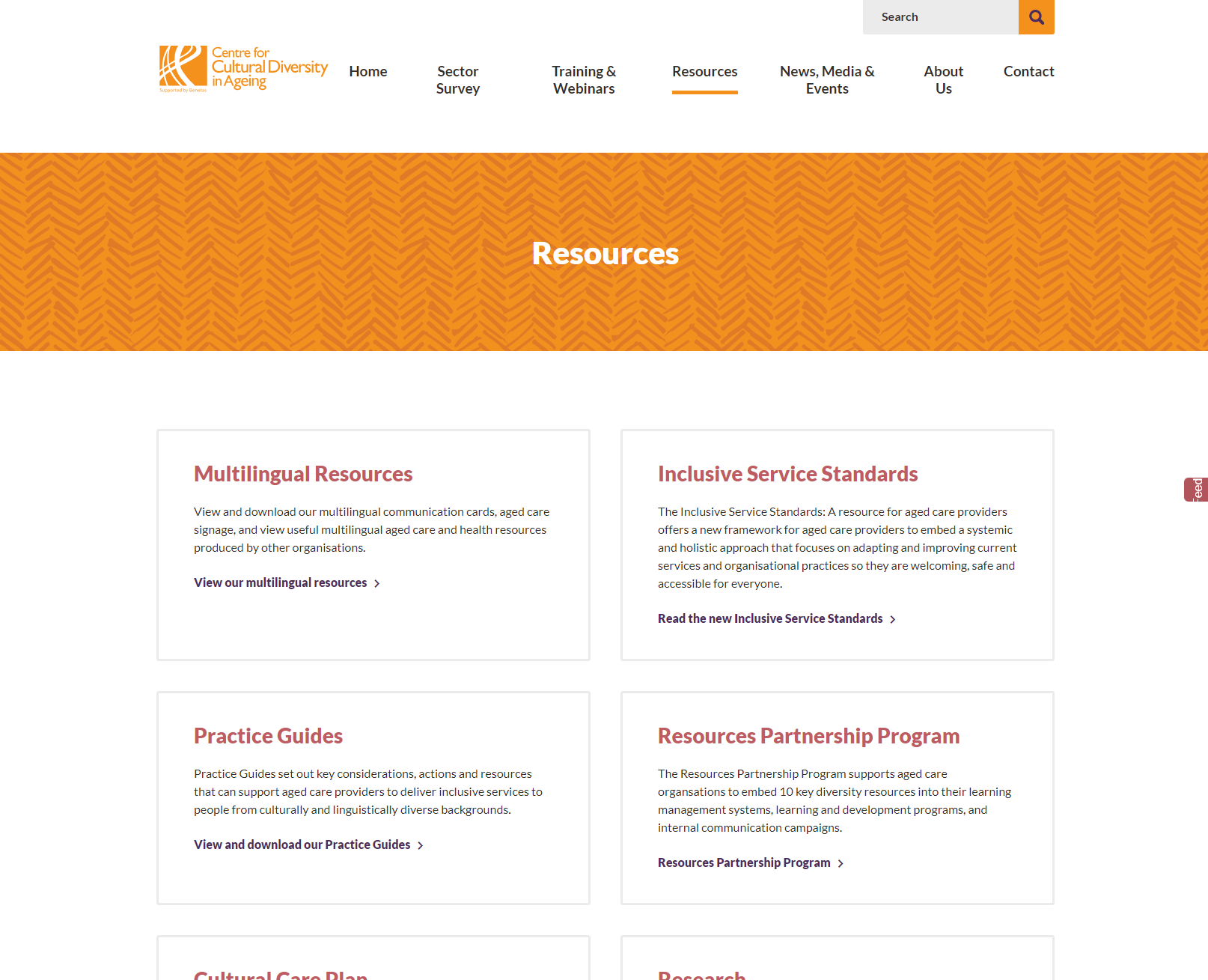
/quality-standards/centre-cultural-diversity-ageing-resources

Centre for Cultural Diversity in Ageing - Resources

Guidance

This page offers a wide range of resources aimed at helping aged care providers deliver culturally inclusive services. It includes multilingual communication cards, cultural care plans, and practice guides that help address the cultural, linguistic, and spiritual needs of people in care. The resources make sure aged care services are accessible, safe, and appropriate for culturally and linguistically diverse populations​.

Author
External resource
Key Theme
Person-centred care, Corporate and clinical governance, Care coordination and transitions, Food and nutrition
Standard
1: The Individual, 2: The Organisation, 3: The Care and Services, 6: Food and Nutrition
Outcomes
1.1: Person-centred care, 2.1: Partnering with individuals, 3.2: Delivery of funded aged care services, 3.4: Planning and coordination of funded aged care services, 6.1: Partnering with individuals on food and drinks, 6.2: Assessment of nutritional needs and preferences
Centre for Cultural Diversity in Ageing - Resources
/quality-standards/draft-national-consumer-engagement-strategy-health-and-wellbeing

Draft National Consumer Engagement Strategy for Health and Wellbeing

Guidance
Published date

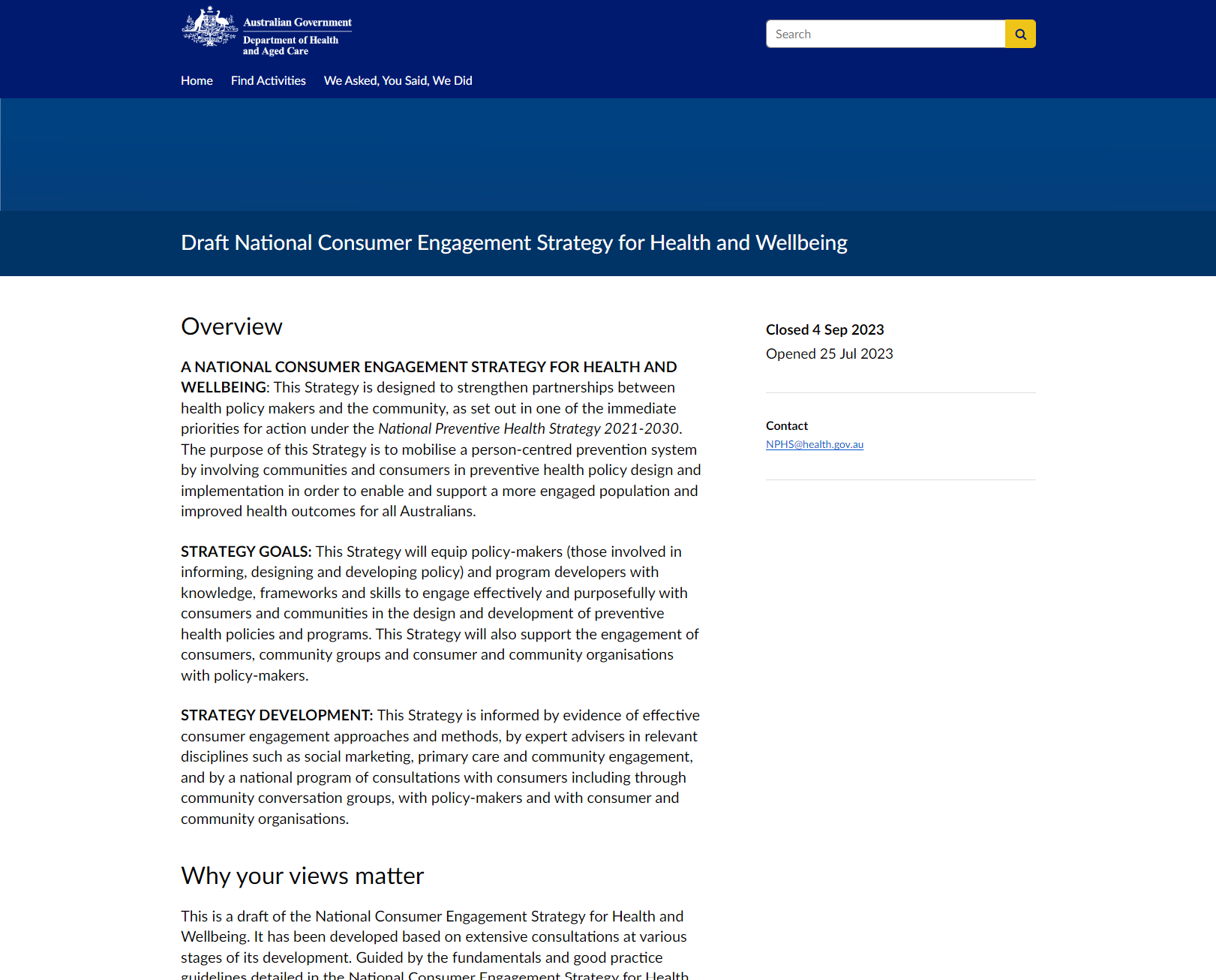
This resource presents the Draft National Consumer Engagement Strategy for Health and Wellbeing, which aims to foster partnerships between health policymakers and communities. It is designed to involve people and communities in the development and implementation of preventive health policies. The strategy supports policymakers and program developers in engaging effectively with consumers to achieve improved health outcomes across Australia. 
Author
Department of Health, Disability and Ageing
Key Theme
Person-centred care, Corporate and clinical governance, Assessment and planning, Care coordination and transitions
Standard
1: The Individual, 2: The Organisation, 3: The Care and Services
Outcomes
1.1: Person-centred care, 2.1: Partnering with individuals, 3.1 Assessment and planning, 3.4: Planning and coordination of funded aged care services
Draft National Consumer Engagement Strategy for Health and Wellbeing
/quality-standards/consumer-and-carer-engagement-practical-guide

Consumer and carer engagement: A practical guide

Guidance
Last Updated

This resource provides a guide for engaging consumers and carers in mental health services. It outlines steps for involving people in decision-making, service design, and evaluation. The guide emphasises co-design, leadership, and dedicated resources to create a person-centred approach that improves care and service outcomes.
Author
External resource
Key Theme
Person-centred care, Care coordination and transitions, Assessment and planning, Corporate and clinical governance
Standard
1: The Individual, 2: The Organisation, 3: The Care and Services
Outcomes
1.1: Person-centred care, 2.1: Partnering with individuals, 3.1 Assessment and planning, 3.4: Planning and coordination of funded aged care services
Consumer and carer engagement: A practical guide
/quality-standards/privacy-0

Privacy

Guidance

This resource provides information about privacy rights in aged care, explaining how personal information is collected, used, and protected. It outlines privacy laws and principles governing the handling of personal data, including when information can be shared. The resource also links to privacy notices and policies for further details. 

This resource may refer to information that will be updated from 1 November 2025 to align with the new Aged Care Act and Quality Standards.
Author
Aged Care Quality & Safety Commission
Key Theme
Information management system, Dignity, respect and privacy
Standard
2: The Organisation, 1: The Individual
Outcomes
2.7: Information management, 1.2: Dignity, respect and privacy
Privacy
/quality-standards/privacy

Privacy

Guidance
Last Updated

This resource outlines the privacy policy for handling personal information through My Aged Care services. It explains how personal data is collected, used, and shared, ensuring compliance with the Privacy Act 1988. The document provides details on consent, data protection measures, and rights to access or correct personal information.
Author
External resource
Key Theme
Dignity, respect and privacy, Information management system
Standard
1: The Individual, 2: The Organisation
Outcomes
1.2: Dignity, respect and privacy, 2.7: Information management
Privacy
/quality-standards/racgp-aged-care-clinical-guide-silver-book-part-b-older-people-rural-and-remote-communities

RACGP aged care clinical guide (Silver Book) - Part B - Older people in rural and remote communities

Guidance
Last Updated

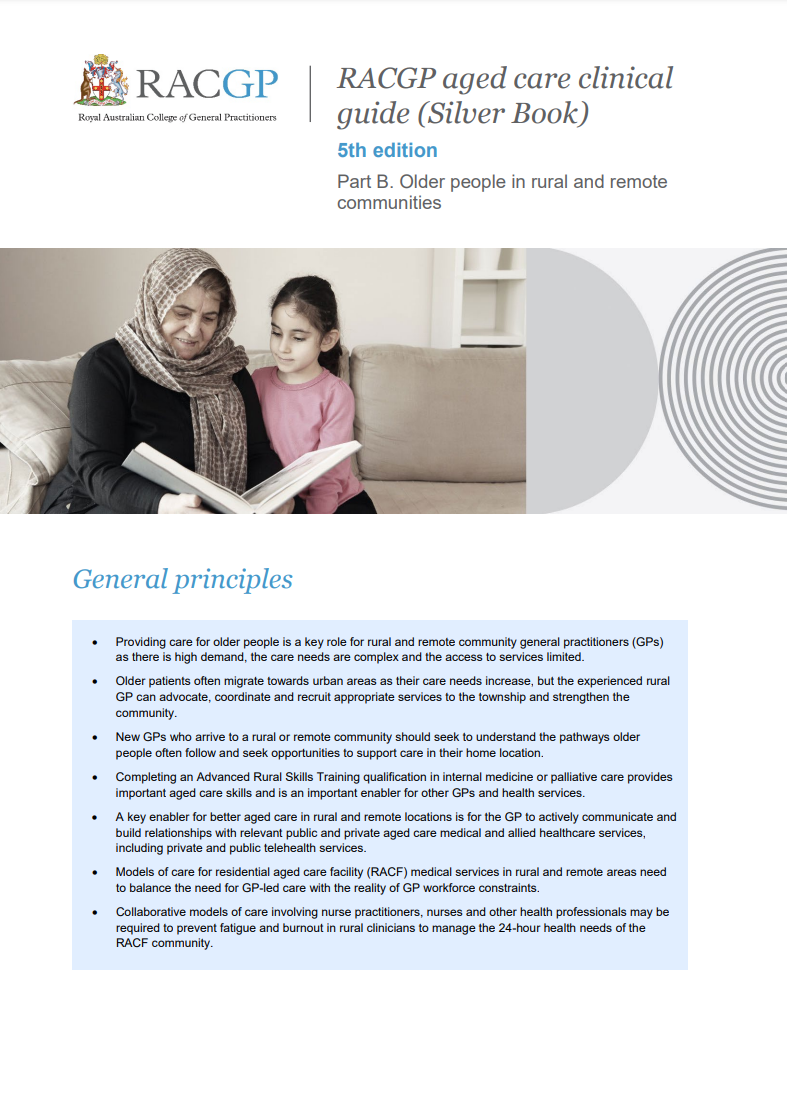
This guide discusses providing aged care in rural and remote communities, focusing on the unique needs of older residents, the role of GPs in care coordination, and overcoming challenges like limited services and workforce shortages. It covers building telehealth connections, establishing collaborative care models, and offers a checklist for newly arrived GPs to support quality care for older adults.
Author
External resource
Key Theme
Care coordination and transitions, Delivering comprehensive care and services, Workforce and human resources management
Standard
4: The Environment, 2: The Organisation, 3: The Care and Services, 5: Clinical Care
Outcomes
5.4: Comprehensive care, 2.8: Workforce planning, 3.2: Delivery of funded aged care services
RACGP aged care clinical guide (Silver Book) - Part B - Older people in rural and remote communities
/quality-standards/first-nations-youtube-videos

First Nations - YouTube videos

Video
Published date

This resource includes a series of YouTube videos developed by the Aged Care Quality and Safety Commission. Australian First Nations older people discuss good quality, culturally appropriate and safe aged care, including person-centred care, rights and how to speak up about care. This resource may refer to information that will be updated from 1 November 2025 to align with the new Aged Care Act and Quality Standards.


Author
Aged Care Quality & Safety Commission
Key Theme
Person-centred care, Dignity, respect and privacy, Feedback and complaints management system, Delivering comprehensive care and services
Standard
1: The Individual, 2: The Organisation, 3: The Care and Services
Outcomes
1.1: Person-centred care, 1.2: Dignity, respect and privacy, 2.6b: Complaints and feedback management for individuals, 3.2: Delivery of funded aged care services
First Nations - YouTube videos