The Quality Standards Resource Centre helps extend understanding of the strengthened Aged Care Quality Standards, which take effect from 1 November 2025. The Resource Centre will be updated to reflect key changes made to the draft strengthened Standards. You can search for resources by using keywords, or filtering by standard, outcome, audience and theme. Before using the Resource Centre, please read the terms of use.
Participating with consumers
This resource provides information sheets for residents, families, and carers to support decision-making in residential aged care. Covering topics such as pain management, falls, and medicines, it promotes health literacy, enabling consumers to engage in discussions and report care issues effectively.
This resource was developed by a state/territory government or organisation and therefore its applicability and usefulness may be limited.
Advance care planning - Information for clinicians
This resource guides clinicians on the importance of advance care planning, particularly for those with life-limiting illnesses, chronic conditions, or cognitive impairment. It outlines the need for early conversations about patient preferences and comprehensive care, ensuring decisions are documented, shared, and align with clinical handover processes to respect patient autonomy and improve care outcomes.
This resource may refer to information that will be updated from 1 November 2025 to align with the new Aged Care Act and Quality Standards.
End-of-life care - Last days of life
This resource provides guidance on end-of-life care during the last days of life, relevant for aged care settings. It focuses on maintaining comfort, managing symptoms, and reducing unnecessary interventions. Clinicians are supported in offering compassionate care, addressing potential emergencies, and involving family members while ensuring that older people are treated with dignity during their final days.
This resource may refer to information that will be updated from 1 November 2025 to align with the new Aged Care Act and Quality Standards.
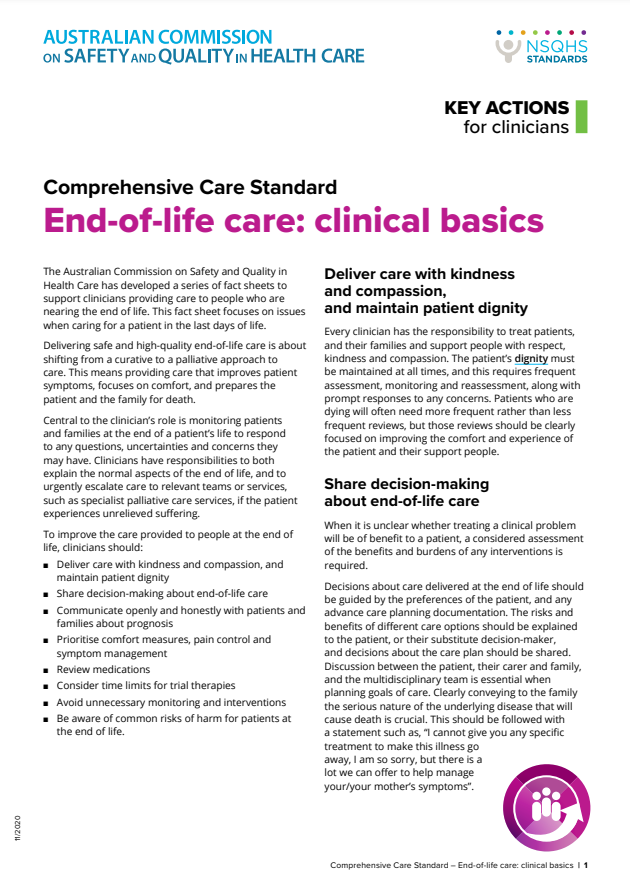
End-of-life care - clinical basics
This resource provides key actions for clinicians delivering end-of-life care. It highlights the shift from curative to palliative approaches, emphasising communication, patient dignity, symptom management, medication review, and decision-making. It includes strategies for managing common symptoms and minimising risks to ensure safe, high-quality care in the last days of life.
This resource may refer to information that will be updated from 1 November 2025 to align with the new Aged Care Act and Quality Standards.
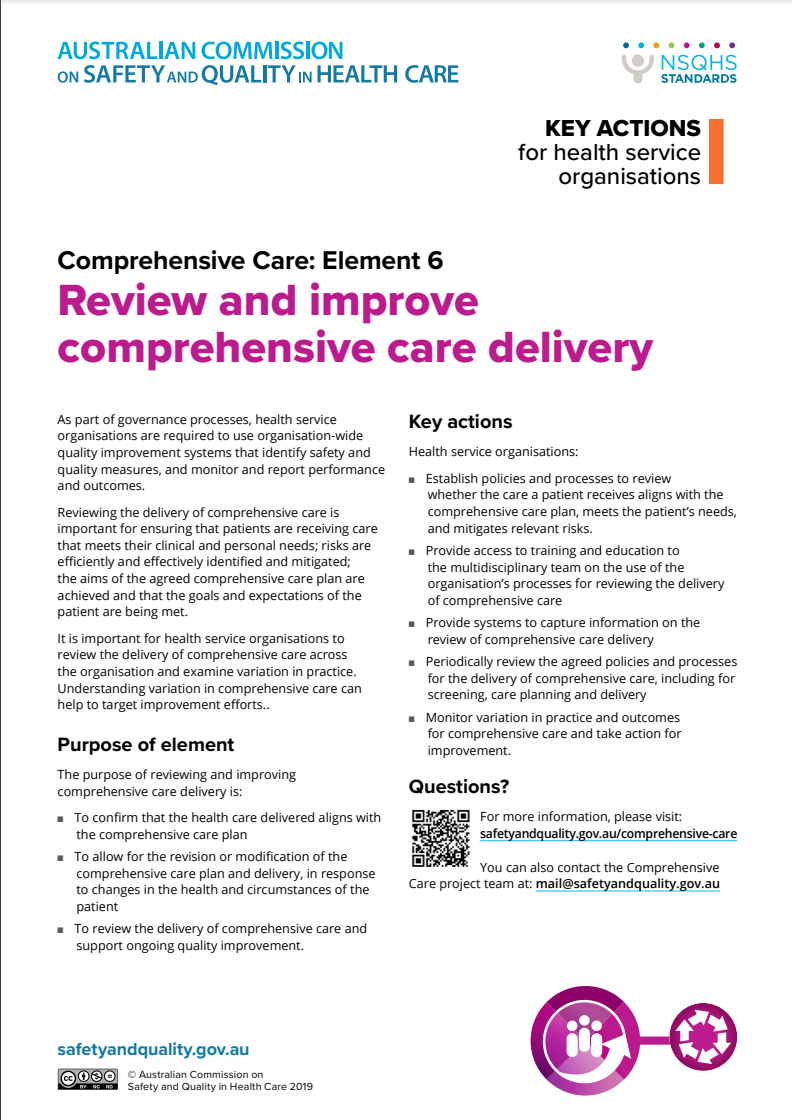
Comprehensive Care - Review and improve comprehensive care delivery - Key actions for health service organisations
This resource outlines actions for health service organisations to review and improve comprehensive care delivery, focusing on aligning care with patients' needs and care plans. It emphasises regular assessment, multidisciplinary collaboration, and quality improvement to maintain responsive, person-centred care across services.
Clinical governance for allied health practitioners
This fact sheet identifies the clinical governance and roles and responsibilities of allied health practitioners. It provides information on the National Model Clinical Governance Framework and lists the roles and responsibilities across Governance, leadership and culture, patient safety and quality systems, clinical performance and effectiveness and safe environment for the delivery of care.
This resource may refer to information that will be updated from 1 November 2025 to align with the new Aged Care Act and Quality Standards.