The Quality Standards Resource Centre helps extend understanding of the strengthened Aged Care Quality Standards, which take effect from 1 November 2025. The Resource Centre will be updated to reflect key changes made to the draft strengthened Standards. You can search for resources by using keywords, or filtering by standard, outcome, audience and theme. Before using the Resource Centre, please read the terms of use.
Standardised care processes
This resource offers evidence-based standardised care processes for aged care providers, covering high-risk clinical areas such as falls, pain, incontinence, and dehydration. It provides structured guidelines to support best practices, ensuring consistent and safe care for older people in residential settings.
This resource was developed by a state/territory government or organisation and therefore its applicability and usefulness may be limited.
Working with older people with diabetes
This resource provides materials for health professionals supporting older people with diabetes. Resources cover diabetes symptoms and management, blood glucose monitoring, diabetes medication, healthy eating, and more, aiming to improve quality care.
National Aboriginal Community Controlled Health Organisation - Medicines & Pharmacy
This resources provides information for Aboriginal Community Controlled Health Organisations (ACCHOs) and other communities related to medicine use and management. It includes a collection of resources for health workers involved in prescribing and supplying medicines in these settings.

Documentation of patient information
This resource outlines best practices for documenting patient information related to medication history and adverse drug reactions. It provides guidance on obtaining the best possible medication history (BPMH), reconciling medications at care transitions, and recording known allergies. The resource helps aged care providers ensure accurate medication management, reduce errors, and prevent harm from adverse drug events.
This resource may apply to healthcare contexts outside of aged care. Please consider the applicability of this resource to your care setting.
Australian College of Care Workers - Code of Conduct for Care Workers
This resource outlines the Code of Conduct for members of the Australian College of Care Workers. It includes 7 key principles that ensure care workers provide safe, ethical, and respectful care. The Code sets minimum standards for professionalism, accountability, and respect for people receiving care, promoting integrity and competency within the profession.
Work-related psychological health and safety: A systematic approach to meeting your duties
This guide offers a systematic approach to managing work-related psychological health and safety, particularly under work health and safety (WHS) and workers’ compensation laws. It provides businesses with a structured methodology for preventing psychological harm, intervening early when signs of stress appear, and supporting workers' recovery and return to work. Though the guide is an archived document, it can still offer useful background on managing psychosocial hazards but does not reflect recent changes in regulations.
Mental health tips for aged care workers and managers
This resource provides mental health tips for aged care workers and managers during the COVID-19 pandemic. It includes strategies to manage stress, anxiety, and overall mental wellbeing. The resource offers evidence-based advice on recognising when extra support is needed and how to maintain mental health, helping aged care staff navigate challenging times effectively.
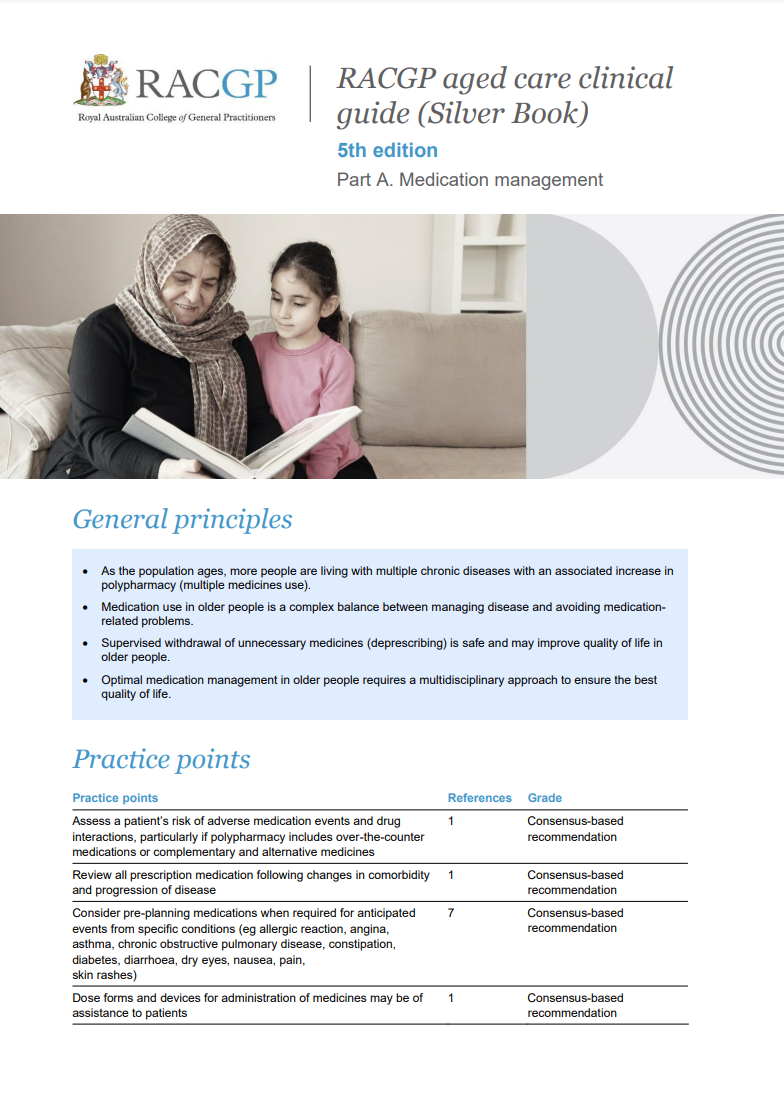
RACGP aged care clinical guide (Silver Book) - Part A - Medication management
This guide covers medication management in aged care, addressing the use of multiple medications, reviewing prescriptions, and the role of multidisciplinary teams. It outlines principles for safe medication practices, deprescribing, administering medication, managing adverse events, and conducting medication reviews. It also provides guidelines for storage, disposal, and modification of medications.
RACGP aged care clinical guide (Silver Book) - Part A - Polypharmacy
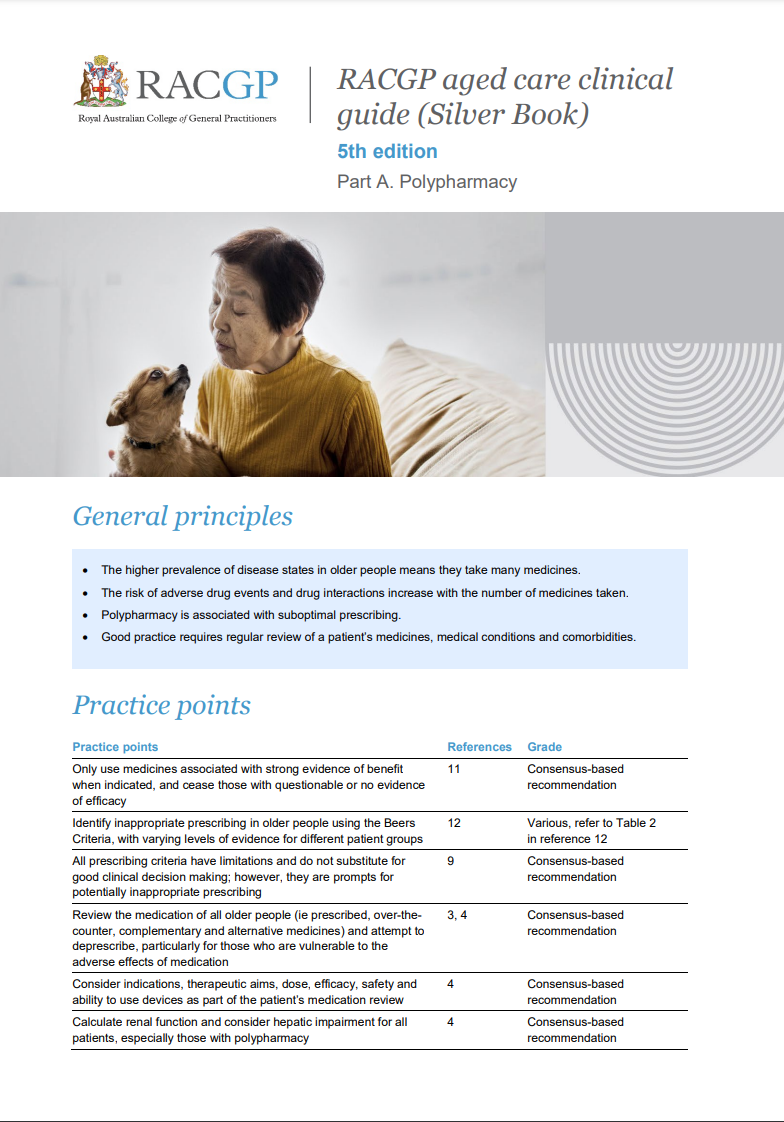
This guide addresses polypharmacy in aged care, focusing on identifying inappropriate prescribing and reviewing all medications, including prescription, over-the-counter and complementary and alternative medicines. It includes recommendations for reducing medication use through deprescribing, ensuring medication safety, and regular review of renal and hepatic functions. Tools such as Beers Criteria and other screening frameworks are provided to support optimal medication management in older adults.
RACGP aged care clinical guide (Silver Book) - Part A - Deprescribing
This guide focuses on deprescribing in aged care, aiming to reduce unnecessary or potentially harmful medications. It provides a framework for reviewing medication, assessing risks and benefits, developing tapering plans, and involving multidisciplinary teams. It provides recommendations including; patient-cantered communication, establishing written plans for medication withdrawal, and monitoring outcomes to improve quality of life.
Home Medicines Review
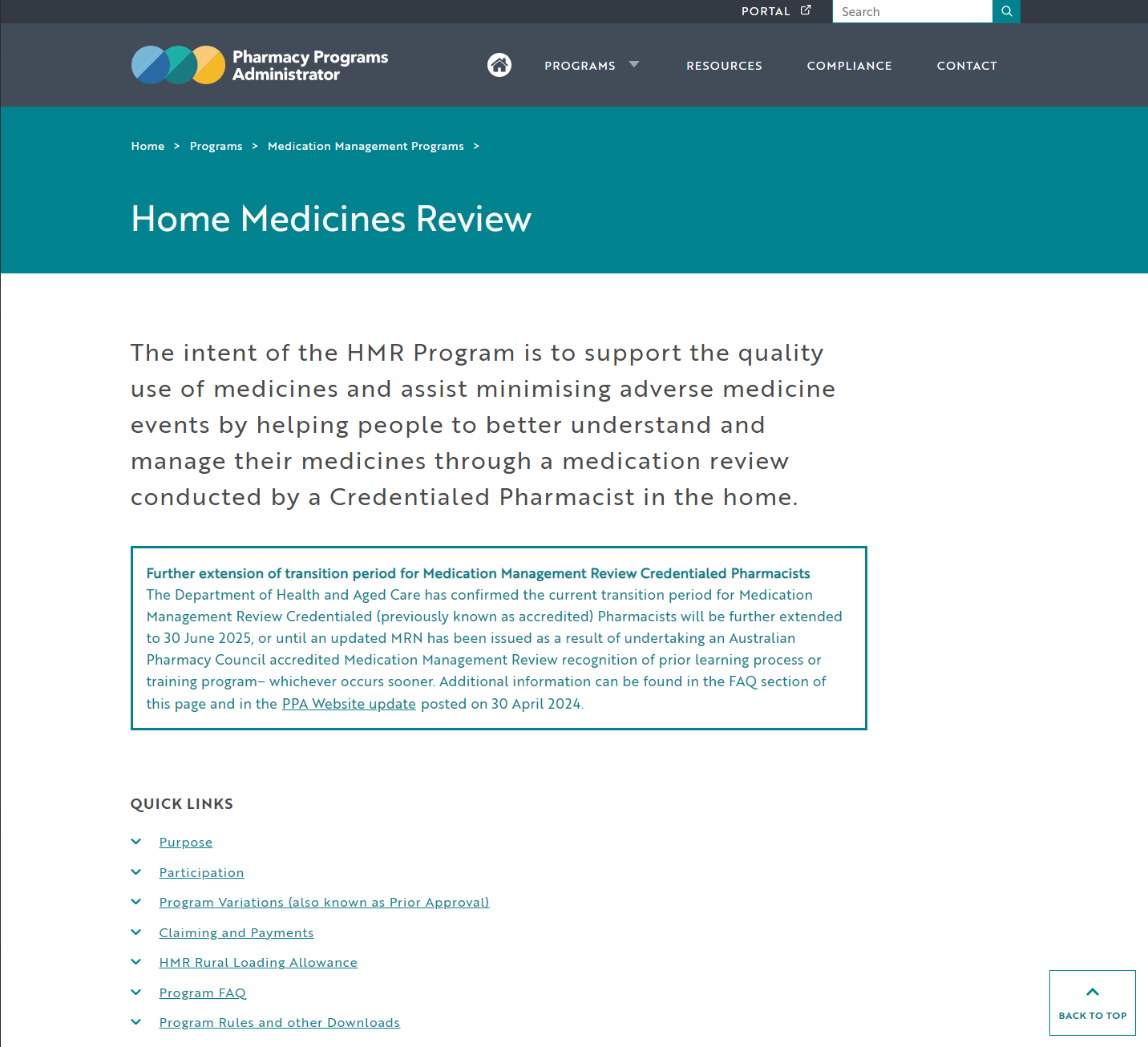
This resource provides information on the Home Medicines Review (HMR) program, designed to support the safe and effective use of medicines for patients at home. It outlines the process, eligibility criteria, program variations, claiming and payments, rural loading allowance, and guidance for pharmacists and healthcare providers involved in medication reviews
Education & training
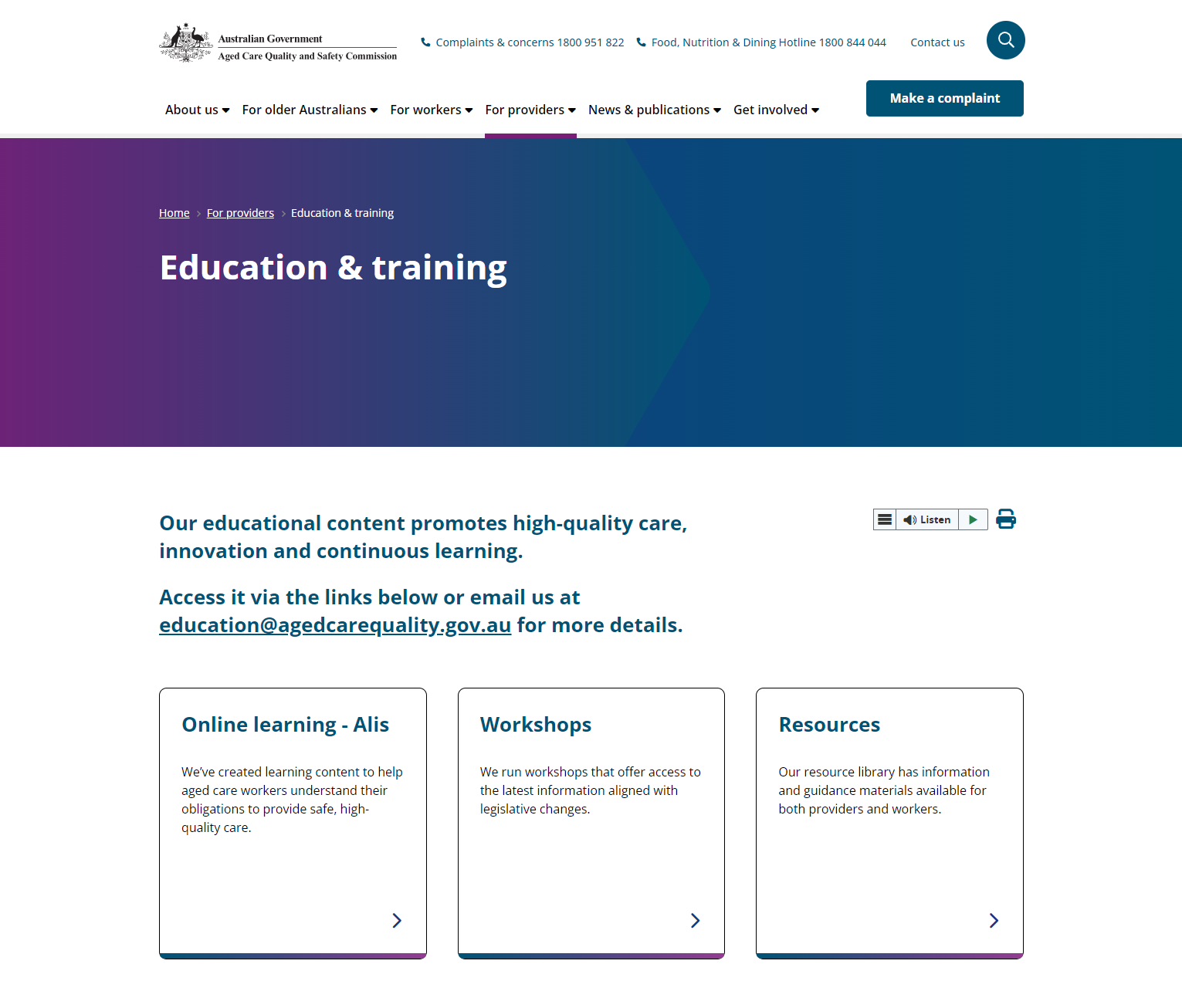
This resource provides information on the educational content offered to aged care providers and workers. It includes online learning modules, workshops, and access to a resource library, aimed at promoting high-quality care and compliance with legislative changes. The content supports continuous learning and professional development.
This resource may refer to information that will be updated from 1 November 2025 to align with the new Aged Care Act and Quality Standards.
Workforce responsibilities
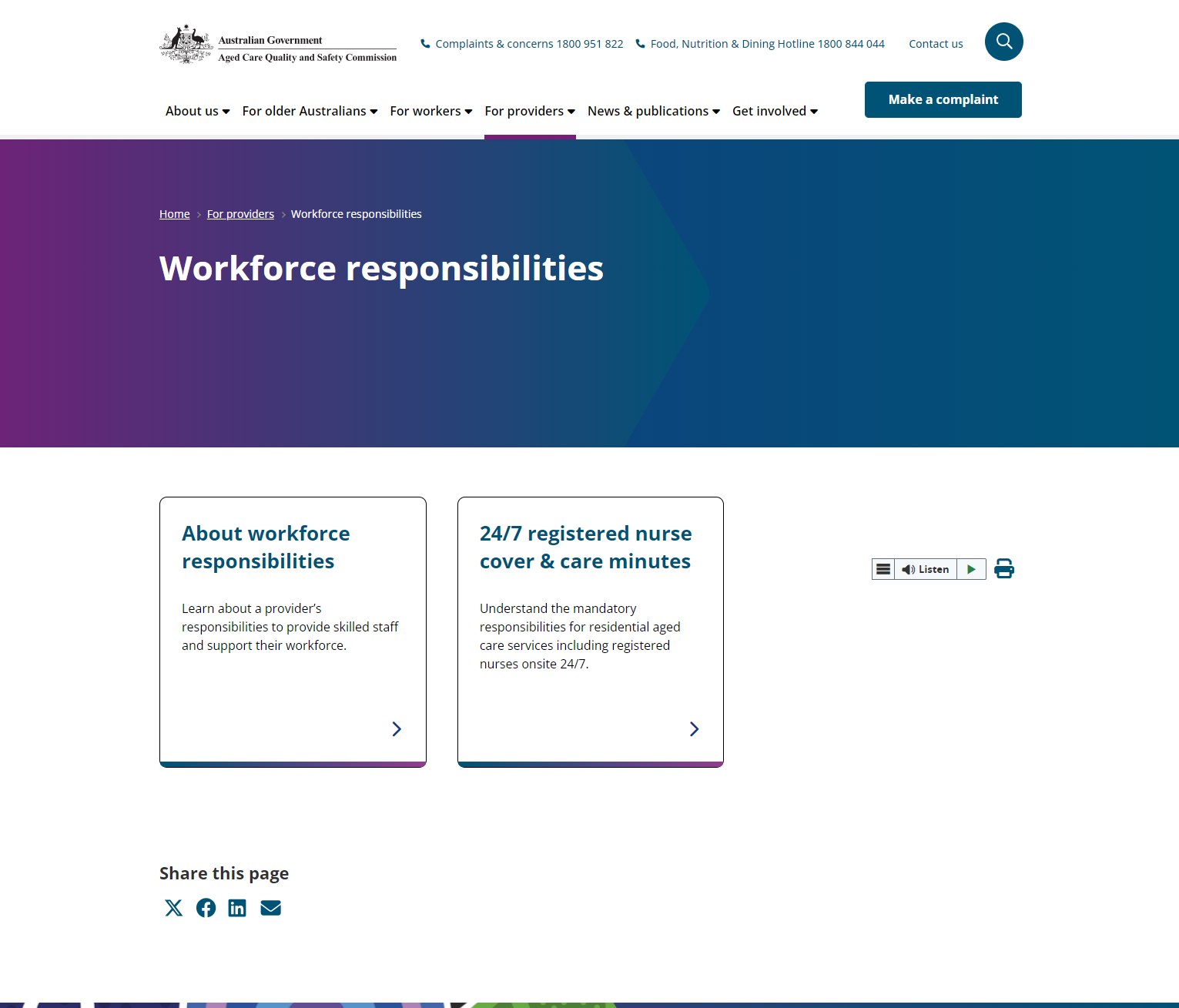
This resource outlines the workforce responsibilities of aged care providers, including the legal obligation to provide skilled staff and support their workforce. It details mandatory requirements such as 24/7 registered nurse coverage and care minutes for residential aged care services.
This resource may refer to information that will be updated from 1 November 2025 to align with the new Aged Care Act and Quality Standards.
Workforce planning in aged care
This resource provides guidance about workforce planning in aged care. It includes information about workforce composition, current requirements and why it's important. It highlights the importance of the care experience, including continuity of care. This resource may refer to information that will be updated from 1 November 2025 to align with the new Aged Care Act and Quality Standards.

Code of Conduct for Aged Care
This resource outlines the Code of Conduct for Aged Care, which sets expectations for the behaviour of providers, governing persons, and workers. It promotes respect, safety, and quality in aged care services, ensuring people’s rights are protected. The Code includes guidance on handling concerns and preventing abuse or neglect.
This resource may refer to information that will be updated from 1 November 2025 to align with the new Aged Care Act and Quality Standards.
Code of Conduct for workers
This resource outlines the Code of Conduct for Aged Care workers, detailing expected behaviours such as respect, honesty, and integrity. It ensures people receiving care are treated with dignity, kept safe from harm, and supported. The Code applies to all aged care workers, including volunteers.
This resource may refer to information that will be updated from 1 November 2025 to align with the new Aged Care Act and Quality Standards.
Guide for consumers - Psychotropic Medicines in Cognitive Disability or Impairment Clinical Care Standard
This resource is a guide for consumers about the Australian Commission on Safety and Quality in Health Care's Psychotropic Medicines in Cognitive Disability or Impairment Clinical Care Standard. The resource includes 8 quality statements about the health care consumers should receive to support the correct use of psychotropic medicines.
This resource may refer to information that will be updated from 1 November 2025 to align with the new Aged Care Act and Quality Standards.
Vaccination for people at occupational risk
This resource provides vaccination guidelines for people in occupations with increased risk of exposure to vaccine-preventable diseases. It outlines recommended vaccinations for healthcare workers, carers, emergency services, and others in high-risk environments. The document supports the development of vaccination policies and programs to protect workers and the people they serve.
This resource may refer to information that will be updated from 1 November 2025 to align with the new Aged Care Act and Quality Standards.
Healthcare Identifiers and the Healthcare Identifier Service
This document explains the Healthcare Identifier Service, a national system for assigning unique healthcare identifiers to individuals, providers, and healthcare organisations. The service aims to improve patient safety, ensure accurate records, and facilitate secure data sharing across health, aged care, and allied health services. It includes privacy measures and public consultation outcomes for potential legislative improvements.
This resource may refer to information that will be updated from 1 November 2025 to align with the new Aged Care Act and Quality Standards.
Health workforce
This resource provides an overview of the support and programs available for Australia's health workforce, including doctors, nurses, allied health professionals, and mental health workers. It highlights incentives, training, and initiatives to address workforce shortages, particularly in rural and remote areas, ensuring Australians receive the care they need across the country.
This resource may refer to information that will be updated from 1 November 2025 to align with the new Aged Care Act and Quality Standards.