The Quality Standards Resource Centre helps extend understanding of the strengthened Aged Care Quality Standards, which take effect from 1 November 2025. The Resource Centre will be updated to reflect key changes made to the draft strengthened Standards. You can search for resources by using keywords, or filtering by standard, outcome, audience and theme. Before using the Resource Centre, please read the terms of use.
Dementia enabling environments
The Dementia Enabling Environments website, developed by Alzheimer's WA, provides guidance and resources to help create enabling environments for a person living with dementia. It includes design principles for different environment types, include home and residential aged care facilities.
This resource was developed by a state/territory government or organisation and therefore its applicability and usefulness may be limited.
Dementia-friendly environments - Designing for people with dementia
This resource provides design principles for creating dementia-friendly environments that support comfort, independence, and a sense of home. It includes guidance on optimising lighting, safety, social connection, and personalised spaces to enhance quality of life.
This resource was developed by a state/territory government or organisation and therefore its applicability and usefulness may be limited.
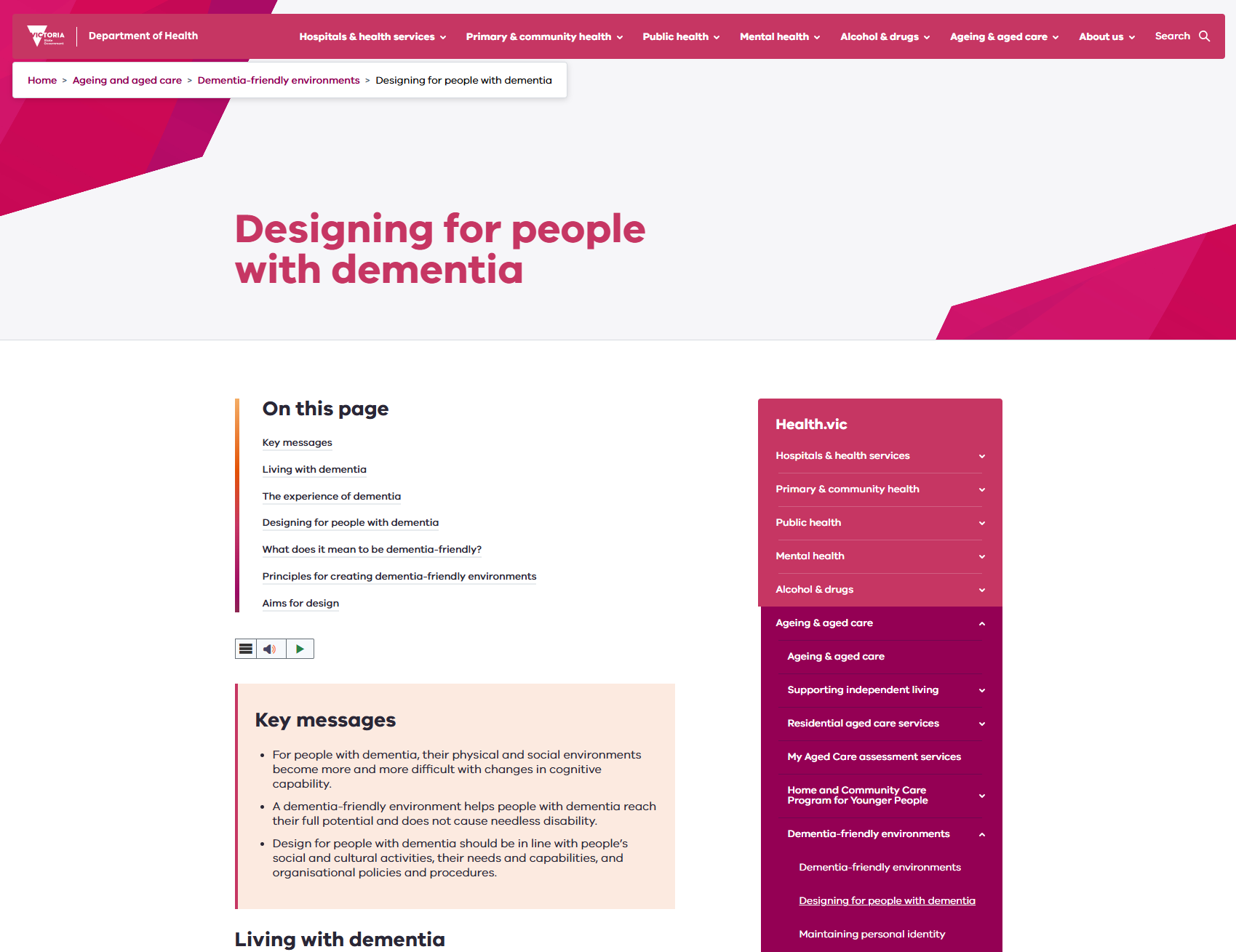
Dementia enabling environments - Care environments: Kitchen
This resource, developed by Alzheimer's WA, is a Dementia Enabling Environments illustration information sheet about kitchens in care environments. It includes principles to create enabling spaces and information about how to design the physical environment to maximise enablement and wellbeing for people living with dementia.
This resource was developed by a state/territory government or organisation and therefore its applicability and usefulness may be limited.
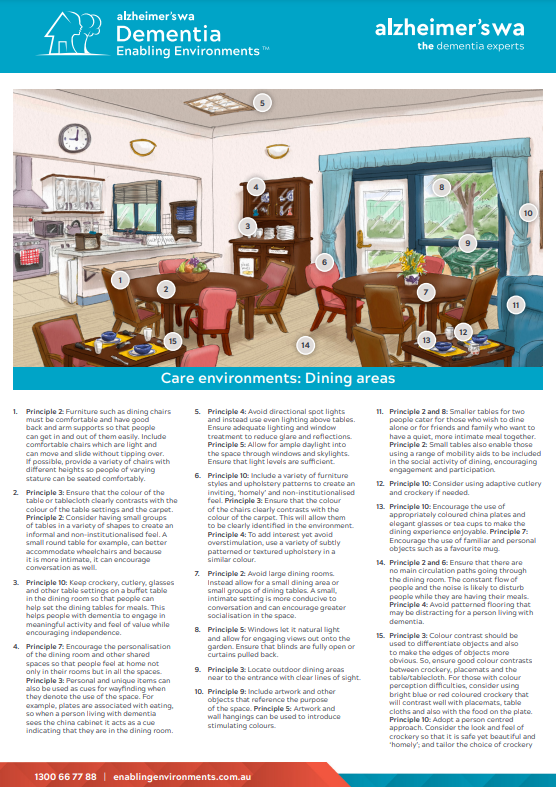
Dementia enabling environments - Care environments: Dining areas
This resource, developed by Alzheimer's WA, is a Dementia Enabling Environments illustration information sheet about dining areas in care environments. It includes principles to create enabling spaces and information about how to design the physical environment to maximise enablement and wellbeing for people living with dementia.
This resource was developed by a state/territory government or organisation and therefore its applicability and usefulness may be limited.
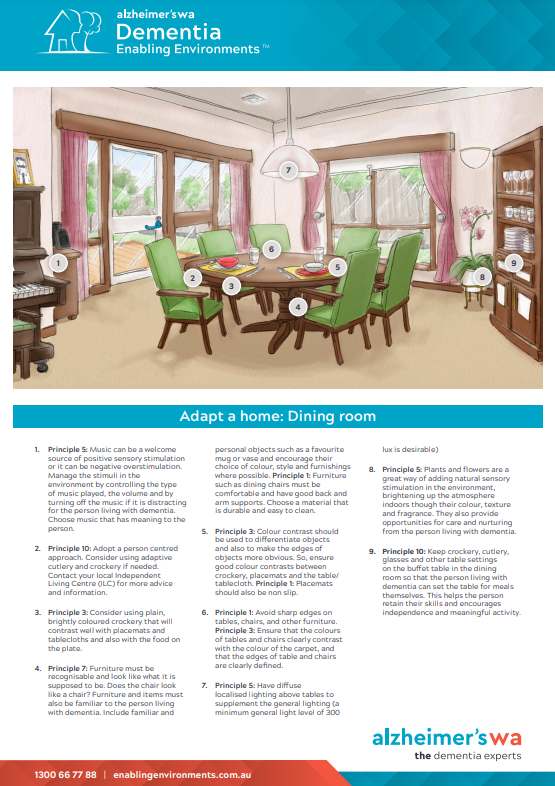
Dementia enabling environments - Adapt a home: Dining room
This resource, developed by Alzheimer's WA, is a Dementia Enabling Environments illustration information sheet about adapting a home, focusing on the dining room. It includes principles to integrate enabling design and make changes within the physical environment to maximise enablement and wellbeing for people living with dementia.
This resource was developed by a state/territory government or organisation and therefore its applicability and usefulness may be limited.
Designing dementia-friendly care environments
This resource provides guidance for professionals on designing dementia-friendly care environments to help people living with dementia to make the best of everyday life. It includes dementia enabling environment principles and an example of how to design a space using the principles. The resource also includes links to other Dementia Australia resources about developing a dementia-friendly environment.
Familiar Places Webinar 2 – Bedrooms and Dining Areas
This webpage provides a video webinar focused on familiar places, such as bedrooms and dining areas, for dementia care environments. It offers insights into how these spaces can be designed to support the wellbeing of people living with dementia, with a particular emphasis on creating comfortable and familiar settings.
How to navigate transitions in care
This resource offers tools and strategies for navigating care transitions for people living with dementia. It provides support to hospital, aged care staff, and family carers, ensuring that the unique needs of those with dementia are met during transitions, such as moving from hospital to aged care or home.
Bedrooms and privacy
This resource offers guidance on maintaining personal identity for people with dementia by fostering respect, independence, and communication. It suggests environmental and social modifications to enhance dignity, such as personalising spaces, supporting mobility, and addressing unmet needs.
This resource was developed by a state/territory government or organisation, and therefore its applicability and usefulness may be limited.
Dementia-friendly environments - Personal enjoyment
This resource provides guidance on fostering personal enjoyment for people with dementia, encouraging meaningful activities based on life history and familiar roles. It includes ideas for sensory engagement, physical activity, and social connection in home-like settings.
This resource was developed by a state/territory government or organisation and therefore its applicability and usefulness may be limited.
Tools and aids to help at home
This resource outlines tools, aids, and technology to help people with dementia live safely and independently at home. It includes medication reminders, safety devices, communication tools, and sensory aids. The document provides guidance on selecting appropriate tools to support daily tasks, reduce stress, and maintain quality of life at home.
Dementia-friendly environments - Staff education and support
This resource offers guidance for staff support in dementia care, covering person-centred approaches, workplace culture change, training, and physical environment improvements. It includes strategies to enhance job satisfaction, staff wellbeing, and dementia-friendly care practices.
This resource was developed by a state/territory government or organisation and therefore its applicability and usefulness may be limited.
Environmental design resources handbook
This resource supports improvements to environments for people living with dementia. The resource includes information and background on the key design principles and environmental assessment tools. It also includes the Indigenous Aged Care Design Guide. The handbook can be accessed in full, or individually as 7 separate resources.
This resource may refer to information that will be updated from 1 November 2025 to align with the new Aged Care Act and Quality Standards.