The Quality Standards Resource Centre helps extend understanding of the strengthened Aged Care Quality Standards, which took effect from 1 November 2025. You can search for resources by using keywords, or filtering by standard, outcome and audience. Before using the Resource Centre, please read the terms of use.
Seeking support from an advocate
This resource describes the advocacy support available for people receiving government-funded aged care, provided through the National Aged Care Advocacy Program. It outlines the role of advocates in assisting with understanding services, managing rights, addressing concerns, and learning self-advocacy skills, supporting respectful and fair treatment in aged care.
Common barriers
This resource outlines common barriers faced by diverse groups in accessing aged care services, including communication challenges, social isolation, experiences of trauma, grief and loss, and social exclusion. It provides guidance on addressing these issues to make sure equitable access to services for all older people.
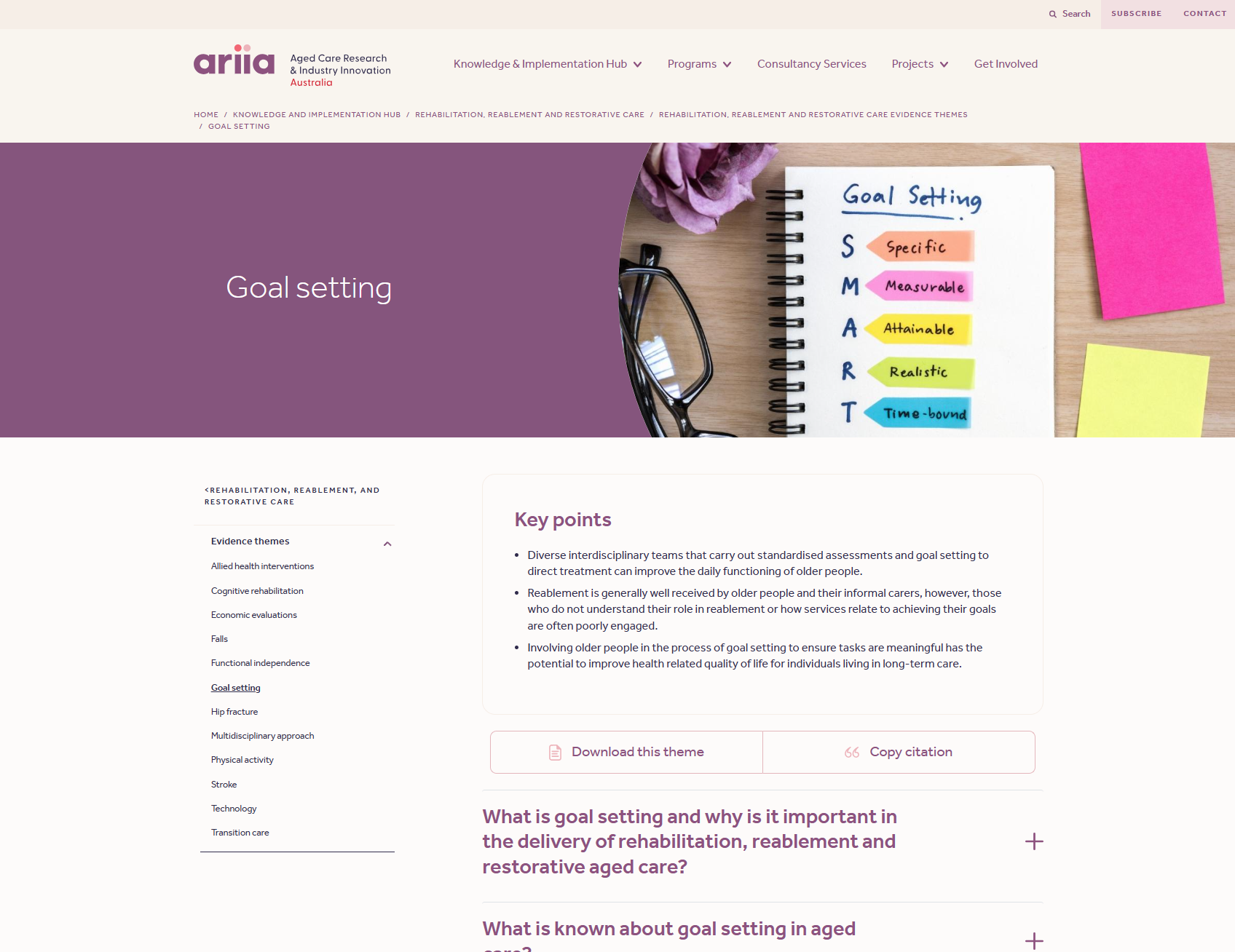
Goal setting
This resource discusses the role of goal setting in enhancing rehabilitation, reablement, and restorative care for older people. It highlights the value of involving older people in defining goals and the positive impact of goal setting on engagement, daily function, and quality of life.
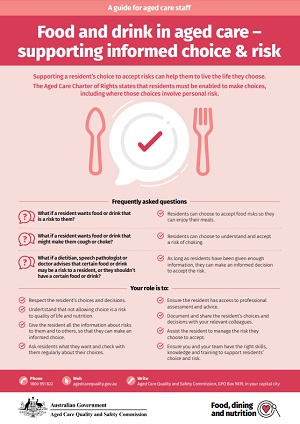
Food and drink in your aged care - supporting informed choice and risk - staff poster
This resource provides guidance for aged care staff on supporting older people's informed choices regarding food and drink, even when those choices involve personal risks. It encourages staff to respect resident autonomy, provide information on risks, document decisions, and ensure access to professional advice, promoting dignity and quality of life in care settings. This resource may refer to information that will be updated from 1 November 2025 to align with the new Aged Care Act and Quality Standards.
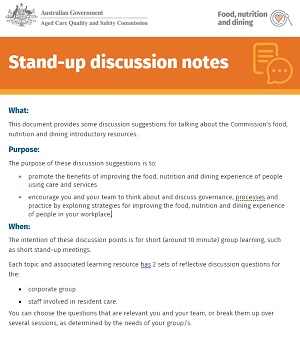
Food, nutrition and dining stand-up discussion notes
This resource provides discussion notes to improve the food, nutrition, and dining experience in aged care settings. It includes reflective questions for corporate teams and care staff, focusing on governance, resident choice, oral health, and support for those with swallowing difficulties. The resource promotes continuous improvement and quality care through group discussions. This resource may refer to information that will be updated from 1 November 2025 to align with the new Aged Care Act and Quality Standards.
 Stand-up discussion notes (DOCX 6.68 MB)
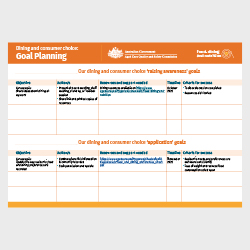
Goal planning tool
This resource is a goal planning tool designed to support aged care providers in improving food, dining, nutrition, and consumer choice. It helps providers set objectives, track progress, and implement actions to enhance service quality, ensuring that people’s preferences and dietary needs are consistently met.
This resource may refer to information that will be updated from 1 November 2025 to align with the new Aged Care Act and Quality Standards.
 Goal planning tool (PDF 899.52 KB)
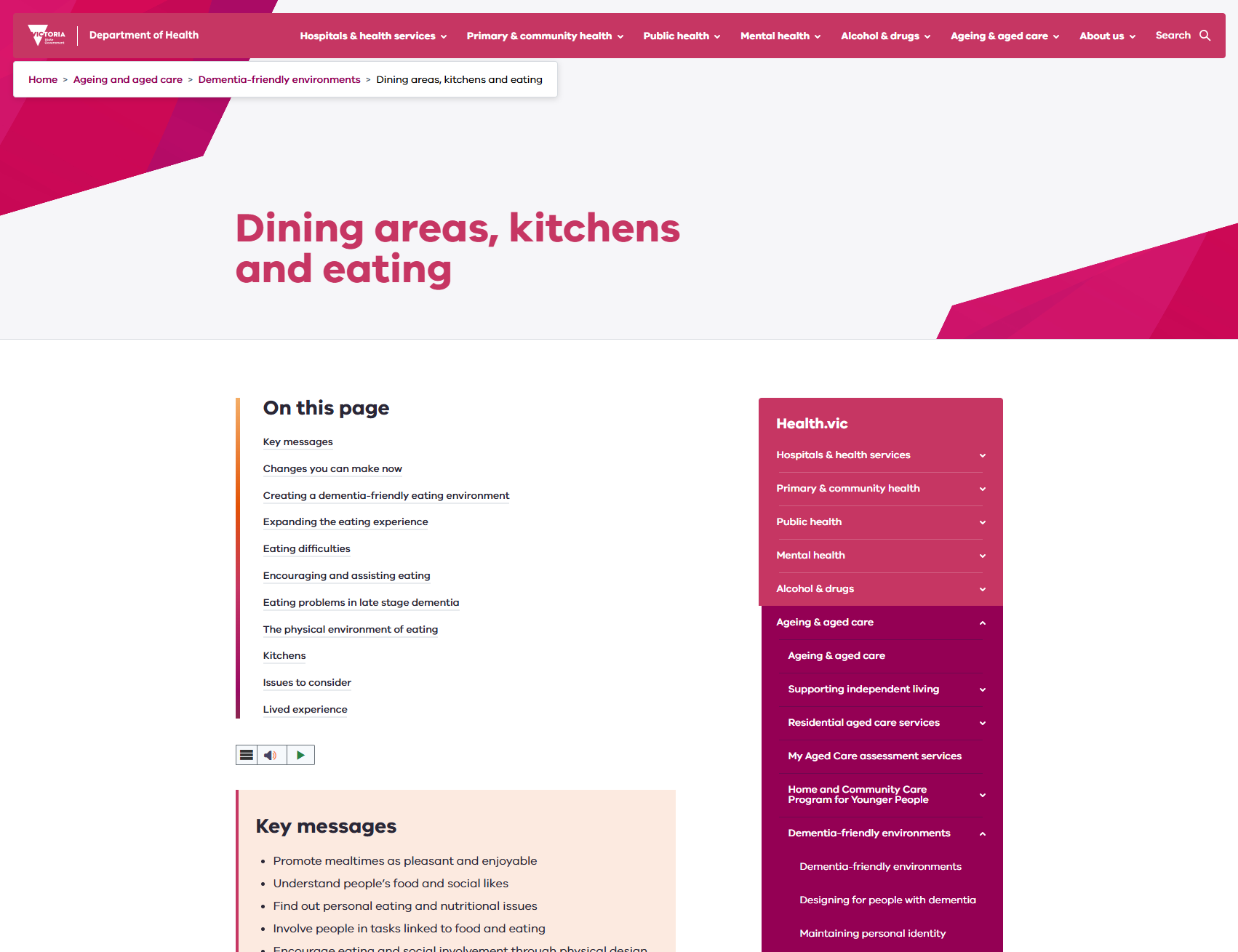
Dementia-friendly environments - Dining areas, kitchens and eating
This resource provides guidelines for creating dementia-friendly dining and kitchen spaces, emphasising sensory engagement, personalised meal experiences, and a home-like environment. It includes practical adjustments for lighting, noise, seating, and social interaction to enhance dining enjoyment.
This resource was developed by a state/territory government or organisation and therefore its applicability and usefulness may be limited.
Food, nutrition & dining - information for providers
This resource provides information and support for aged care providers to improve food, nutrition, and dining services. It includes guidance on meeting nutritional standards, promoting resident choice, and ensuring a positive dining experience. The resource also offers tools for monitoring food quality, addressing dietary needs, and enhancing overall meal service delivery. This resource may refer to information that will be updated from 1 July 2025 to align with the new Aged Care Act and Quality Standards.
Food, nutrition & dining - information for workers
This resource provides guidance for aged care workers on improving food, nutrition, and dining experiences for residents. It covers meal preparation, resident engagement in food choices, safe food handling, and the importance of nutrition in promoting wellbeing. The resource offers practical tips for ensuring meals meet individual dietary needs and preferences. This resource may refer to information that will be updated from 1 November 2025 to align with the new Aged Care Act and Quality Standards.
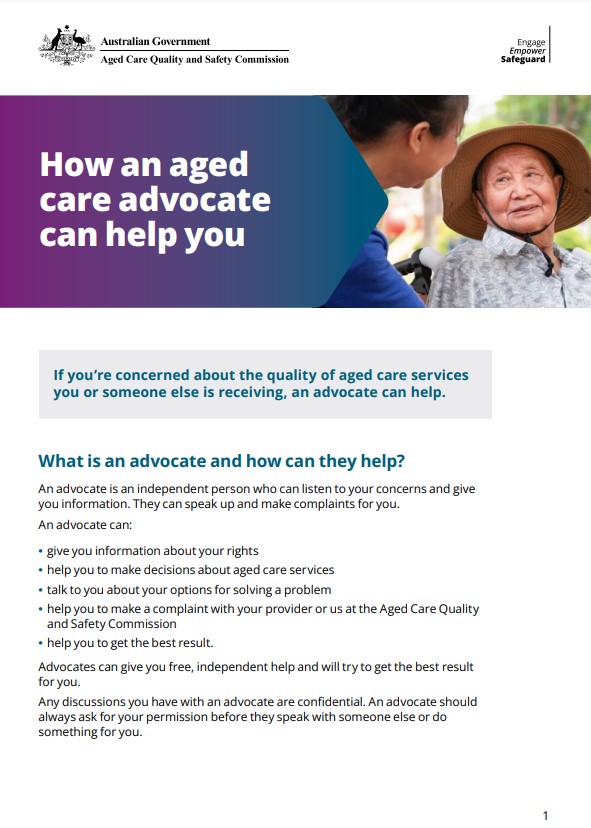
How an aged care advocate can help you
If you are concerned about the quality of the aged care service you or the person you represent is receiving, an advocacy service may be able to help.
How an aged care advocate can help you – fact sheet (PDF 267.87 KB)
Food, nutrition and dining: a reflection on practice
This training PowerPoint is a presentation that trainers/managers can download, customise and use to promote discussion and educate their staff to support and improve the food, nutrition and dining experience of consumers in their care.
The resource is designed to support reflective discussions about what ‘best practice’ looks like and a reflection on how it applies in practice. This resource may refer to information that will be updated from 1 November 2025 to align with the new Aged Care Act and Quality Standards.
Statement of Rights - Workers
This resource provides information for providers about the Statement of Rights. The Statement of Rights promote quality and safe care for older persons accessing, or seeking to access, funded aged care services. The rights help to ensure that older people and their needs are at the centre of the new aged care system.
This page includes information about what the Statement of Rights means for providers, and has links to additional resources about the rights, including videos and fact sheets.
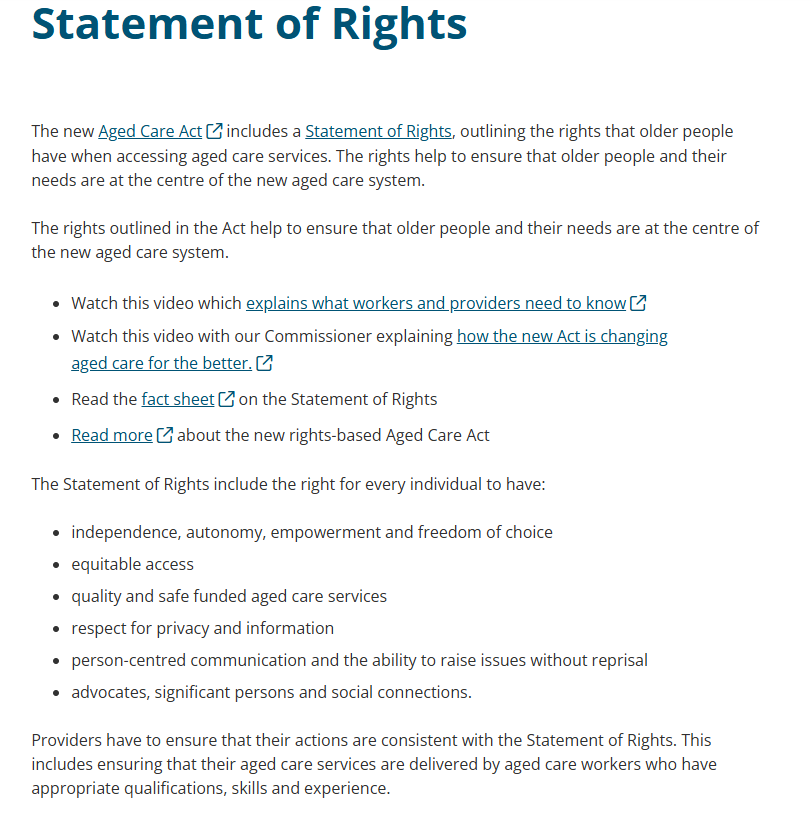
Statement of Rights - Providers
This resource provides information for providers about the Statement of Rights. The Statement of Rights promote quality and safe care for older persons accessing, or seeking to access, funded aged care services. The rights help to ensure that older people and their needs are at the centre of the new aged care system.
This page includes information about what the Statement of Rights means for providers, and has links to additional resources about the rights, including videos and fact sheets.
National Aged Care Design Principles and Guidelines
This guide provides guidance on different systems and tools that can be used in residential aged care and community settings. It includes topics such as clinical handover and continuity of care (medication management), information technology systems, My Aged Care, quality improvement, and more. This resource complements Part A: Common clinical conditions in aged care and Part B: General approaches to aged care of the RACGP aged care clinical guide (Silver Book).
National Aged Care Advocacy Program (NACAP)
This resource outlines the National Aged Care Advocacy Program (NACAP), which provides free and confidential advocacy services to older people receiving government-subsidised aged care. It helps people understand their rights, navigate the aged care system, and resolve issues. It also offers education and support to aged care providers to ensure they uphold these rights.
This resource may refer to information that will be updated from 1 November 2025 to align with the new Aged Care Act and Quality Standards.
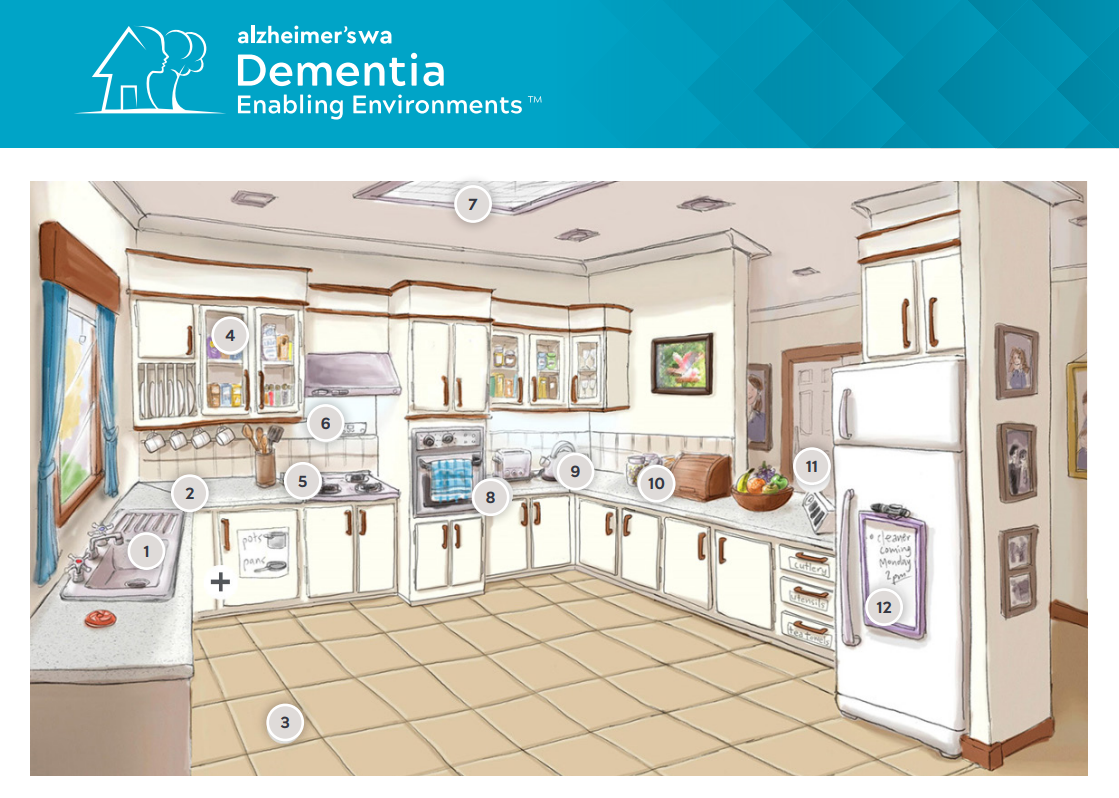
Dementia enabling environments - Adapt a home: Kitchen
This resource, developed by Alzheimer's WA, is a Dementia Enabling Environments illustration information sheet about adapting a home, focusing on the kitchen. It includes principles to integrate enabling design and make changes within the physical environment to maximise enablement and wellbeing for people living with dementia.
This resource was developed by a state/territory government or organisation and therefore its applicability and usefulness may be limited.