The Quality Standards Resource Centre helps extend understanding of the strengthened Aged Care Quality Standards, which took effect from 1 November 2025. You can search for resources by using keywords, or filtering by standard, outcome and audience. Before using the Resource Centre, please read the terms of use.
National framework for advance care planning documents
This resource provides a nationally consistent framework for advance care planning documents in Australia. It outlines principles, ethical considerations, and best practices for creating, implementing, and accessing advance care plans, including Advance Care Directives. It aims to guide policymakers, administrators, and healthcare providers in recognising people’s values, preferences, and rights regarding future care.
This resource may refer to information that will be updated from 1 November 2025 to align with the new Aged Care Act and Quality Standards.
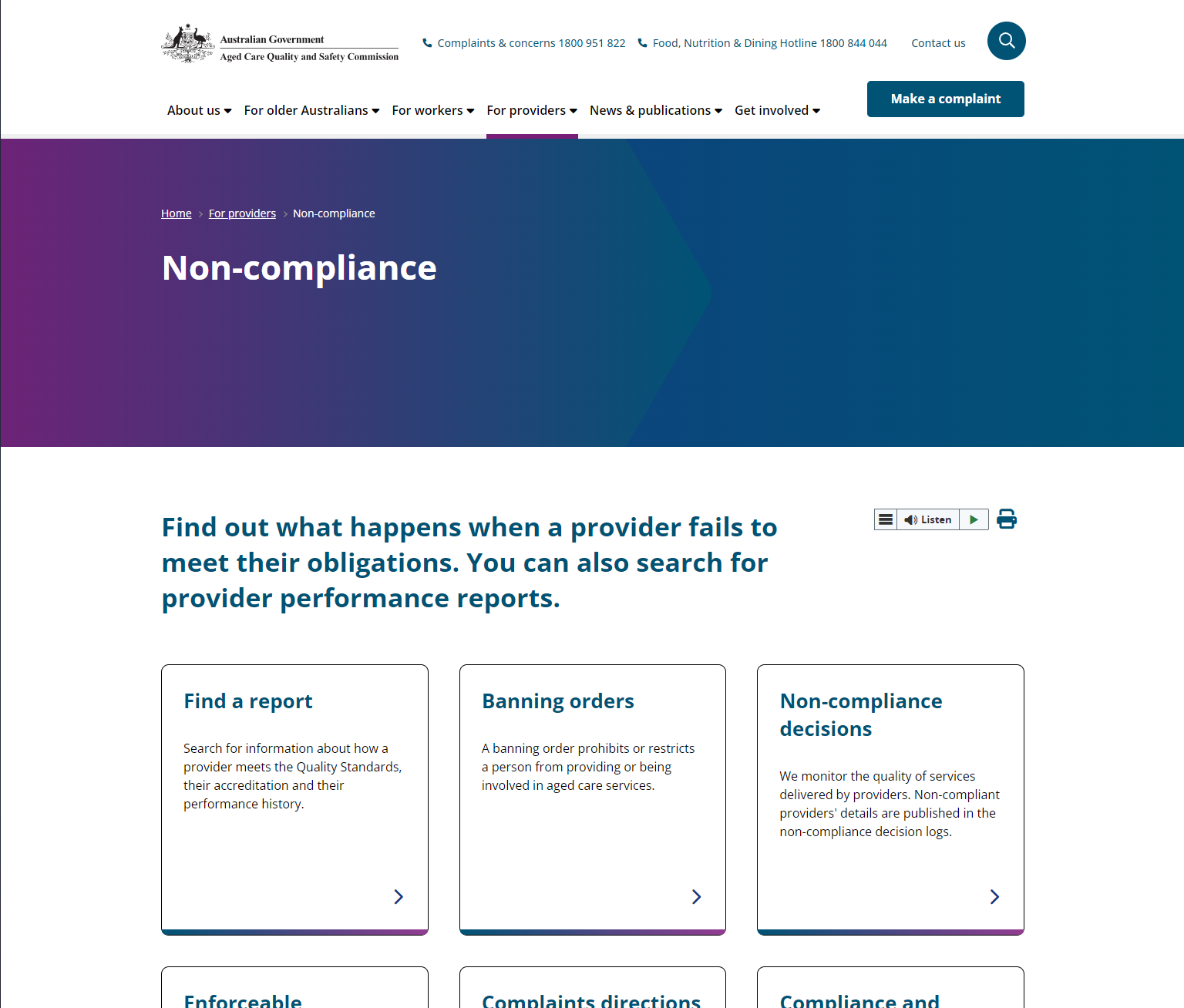
Non-compliance
This resource outlines the processes for managing non-compliance in aged care services. It includes information on banning orders, enforceable undertakings, and how the Commission addresses non-compliance through monitoring, complaints directions, and enforcement policies. Providers can also search for performance reports to track compliance.
This resource may refer to information that will be updated from 1 November 2025 to align with the new Aged Care Act and Quality Standards.
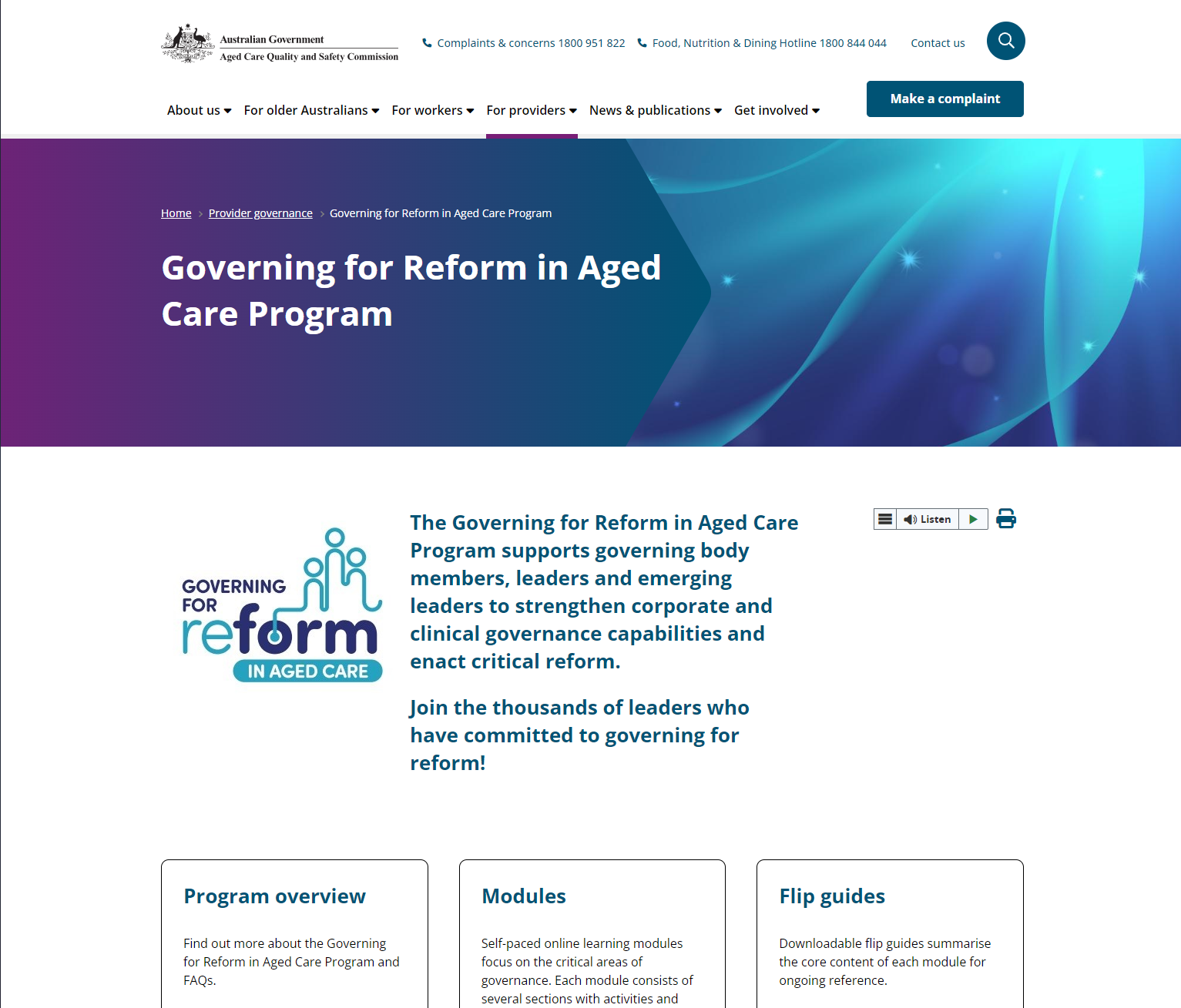
Governing for Reform in Aged Care Program
This resource outlines the Governing for Reform in Aged Care Program, designed to strengthen corporate and clinical governance capabilities for aged care leaders. It provides tools, online learning modules, webinars, and podcasts to support governance improvement and help leaders engage in reform efforts.
This resource may refer to information that will be updated from 1 November 2025 to align with the new Aged Care Act and Quality Standards.
Provider Governance Policy
Under the new Act, registered providers will need to meet certain governance obligations.
Our Provider Governance Policy outlines our expectations of providers and guiding principles of good governance. It includes:
- definitions and principles of good governance
- provider governance obligations
- how we collect provider governance information
- how we respond to provider governance risks.
 Provider Governance Policy (PDF 2.07 MB)
Your questions answered – Compliance
In this video, Peter Edwards, Executive Director, Compliance and Enforcement Group, answers your questions about how we will manage non-compliance from 1 November 2025.

What is open disclosure? - video
This video explains open disclosure and what older people can expect from their registered provider during the process. It highlights key aspects such as communication, transparency, and how concerns will be addressed.
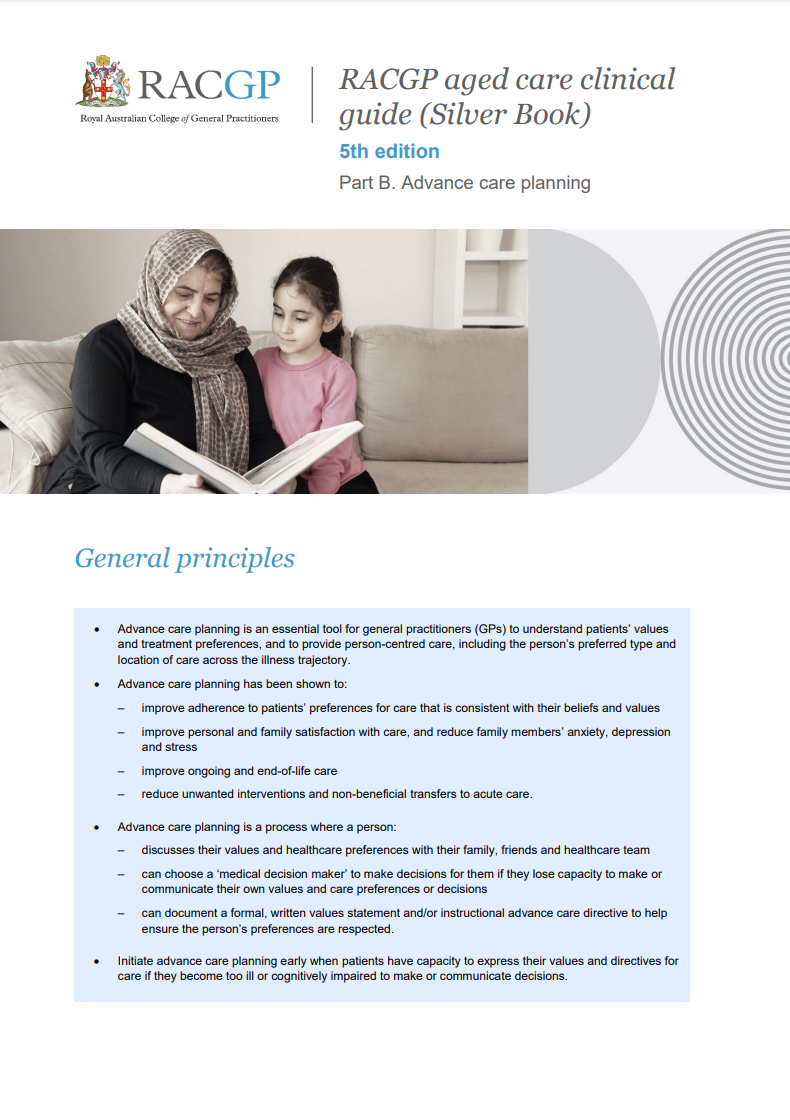
RACGP aged care clinical guide (Silver Book) - Part B - Advance care planning
This guide covers advance care planning for older adults, detailing the process of discussing patients' values, appointing a decision-maker, and documenting preferences for future care. It outlines the general practitioner’s role, steps for initiating discussions, assessing decision-making capacity, storing care plans, and ensuring patients' wishes are respected during their illness trajectory.
Effective incident management education pack
The Effective incident management education pack is designed for providers to deliver to their own staff. It can be delivered in full or delivered as a series of shorter sessions where you can focus on the sections that are most relevant to your setting or the time you have available.
This pack will support your staff to understand the role they play in effectively managing incidents at your aged care service and help them understand what an incident management system is and its key elements.

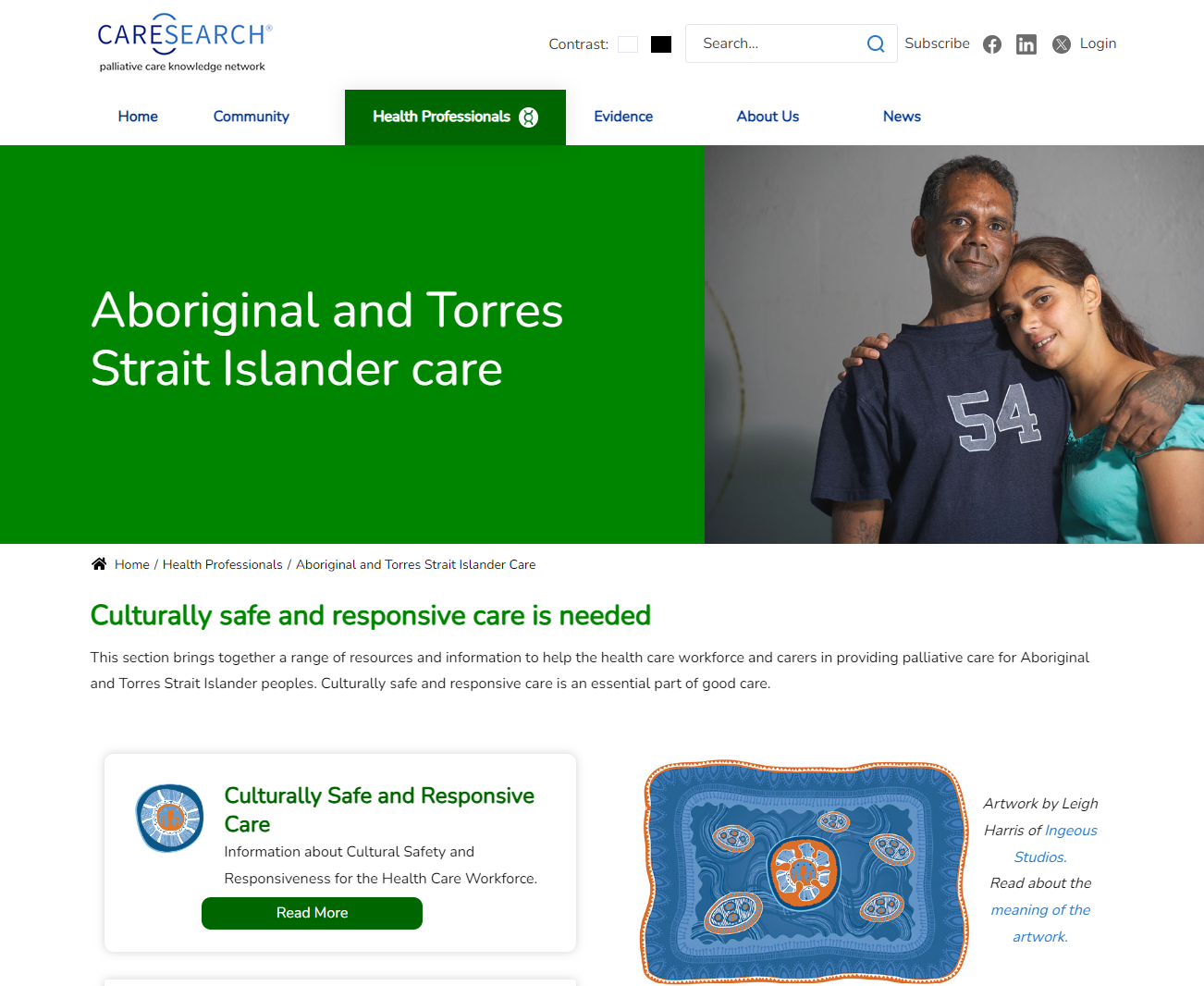
Palliative care knowledge network - Aboriginal and Torres Strait Islander care
This resource provides culturally safe and responsive palliative care information for Aboriginal and Torres Strait Islander peoples. It includes guidance for health professionals on culturally appropriate care, patient and family journeys, and relevant research and practices to support respectful and effective healthcare for Indigenous communities.
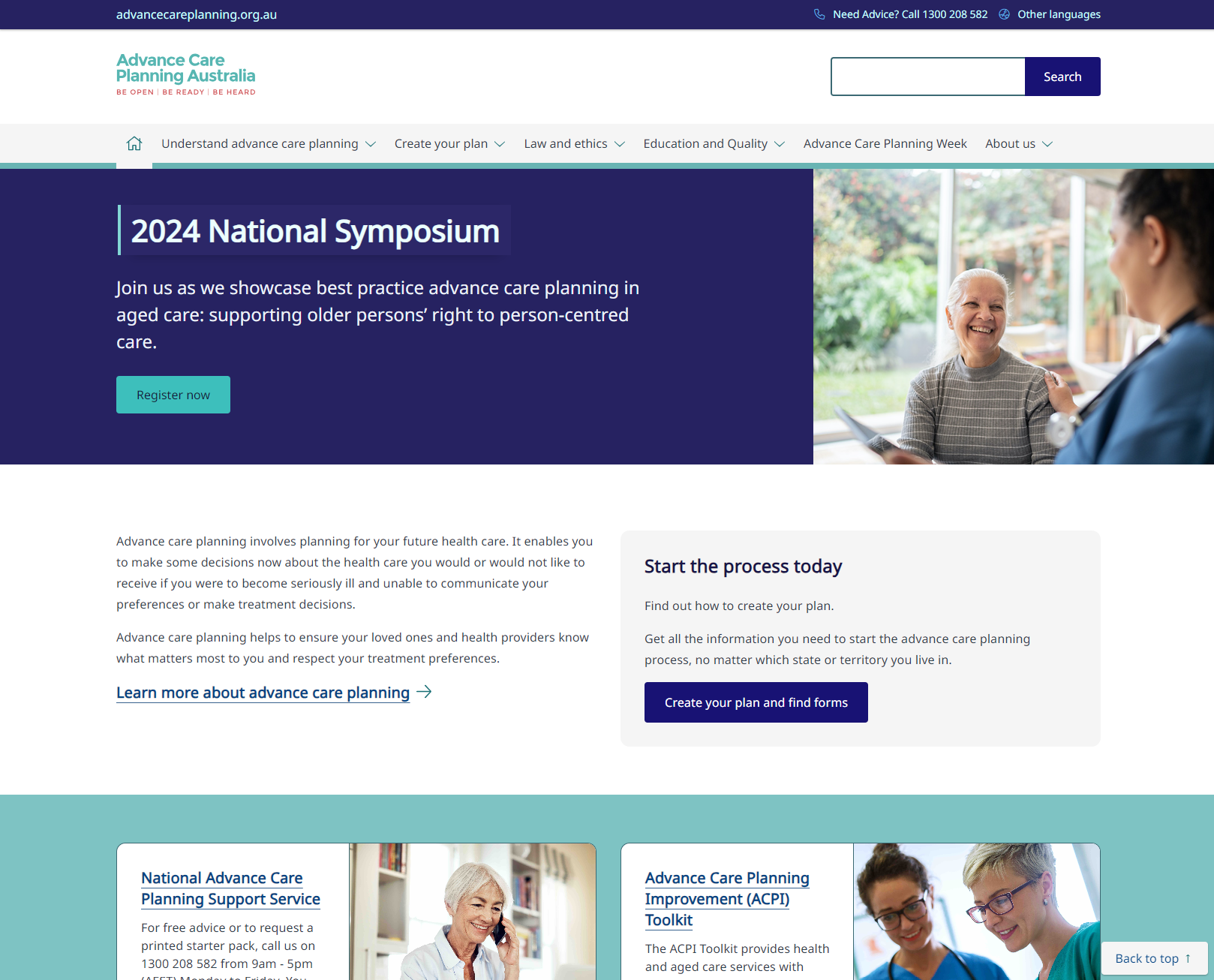
Advance Care Planning Australia
This resource provides information on advance care planning, which enables people to make decisions about their future health care in case they are unable to communicate their preferences. It helps ensure that healthcare providers and loved ones understand and respect their treatment choices. The resource includes tools, forms, and advice for creating an advance care plan.
Quality improvement guidance for aged care providers
This resource offers guidance for aged care providers on implementing continuous quality improvement processes. It explains the ‘Plan, Do, Check, Act’ model to monitor and enhance care quality, using data and feedback to address issues. It also provides practical examples and tools to support providers in improving care and meeting regulatory requirements. This resource may refer to information that will be updated from 1 November 2025 to align with the new Aged Care Act and Quality Standards.

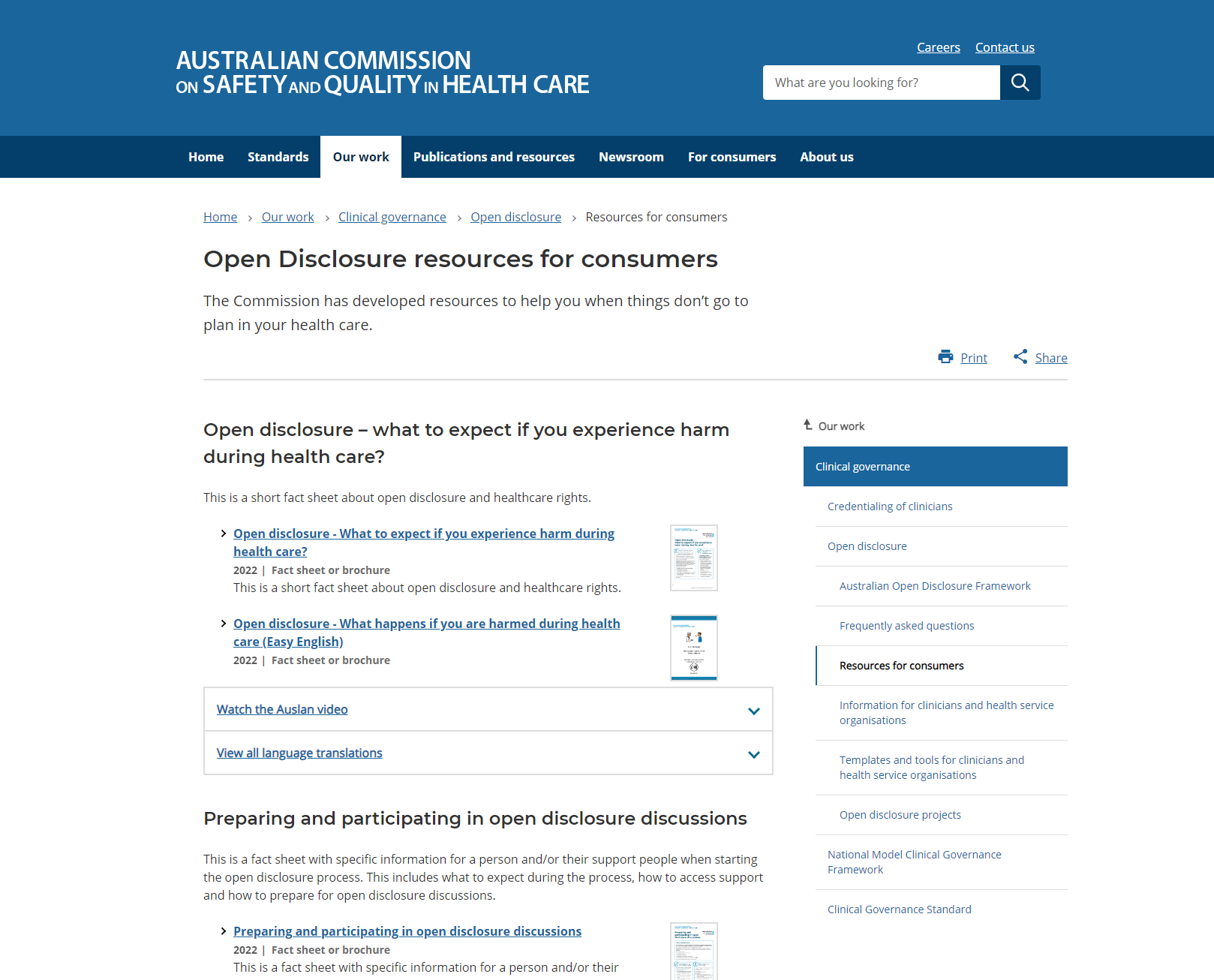
Open Disclosure resources for consumers
This resource provides information on open disclosure in healthcare, explaining what people should expect if harm occurs during care. It includes fact sheets in various languages and outlines how to prepare for open disclosure discussions. The resource aims to support transparent communication and improve care safety across healthcare settings, including aged care. This resource may refer to information that will be updated from 1 November 2025 to align with the new Aged Care Act and Quality Standards.
Financial and Prudential Monitoring, Compliance and Intervention Framework
This resource outlines the Financial and Prudential Monitoring, Compliance and Intervention Framework for aged care providers. It aims to enhance financial transparency, requiring stricter reporting, oversight, and adherence to prudential standards. The framework helps ensure financial stability, protects refundable accommodation deposits, and supports the continuity of care in residential aged care. It includes phased implementation and future regulatory changes.

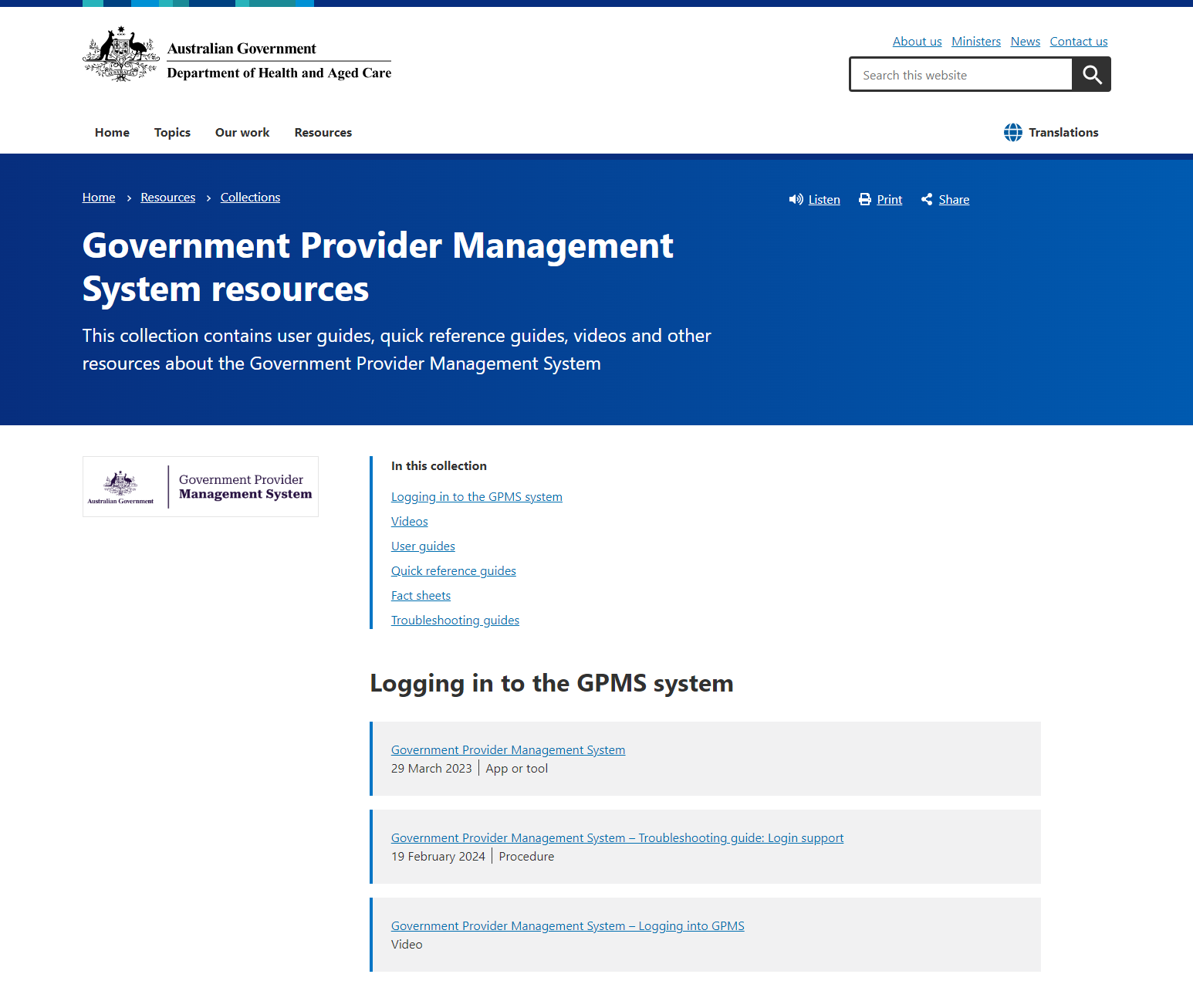
Government Provider Management System resources
This resource provides user guides, quick reference materials, and videos to support aged care providers in using the Government Provider Management System (GPMS). It covers essential tasks such as managing user details, financial reporting, and service information. The GPMS ensures accurate and efficient data management for regulatory compliance and operational oversight in aged care services.
This resource may refer to information that will be updated from 1 November 2025 to align with the new Aged Care Act and Quality Standards.
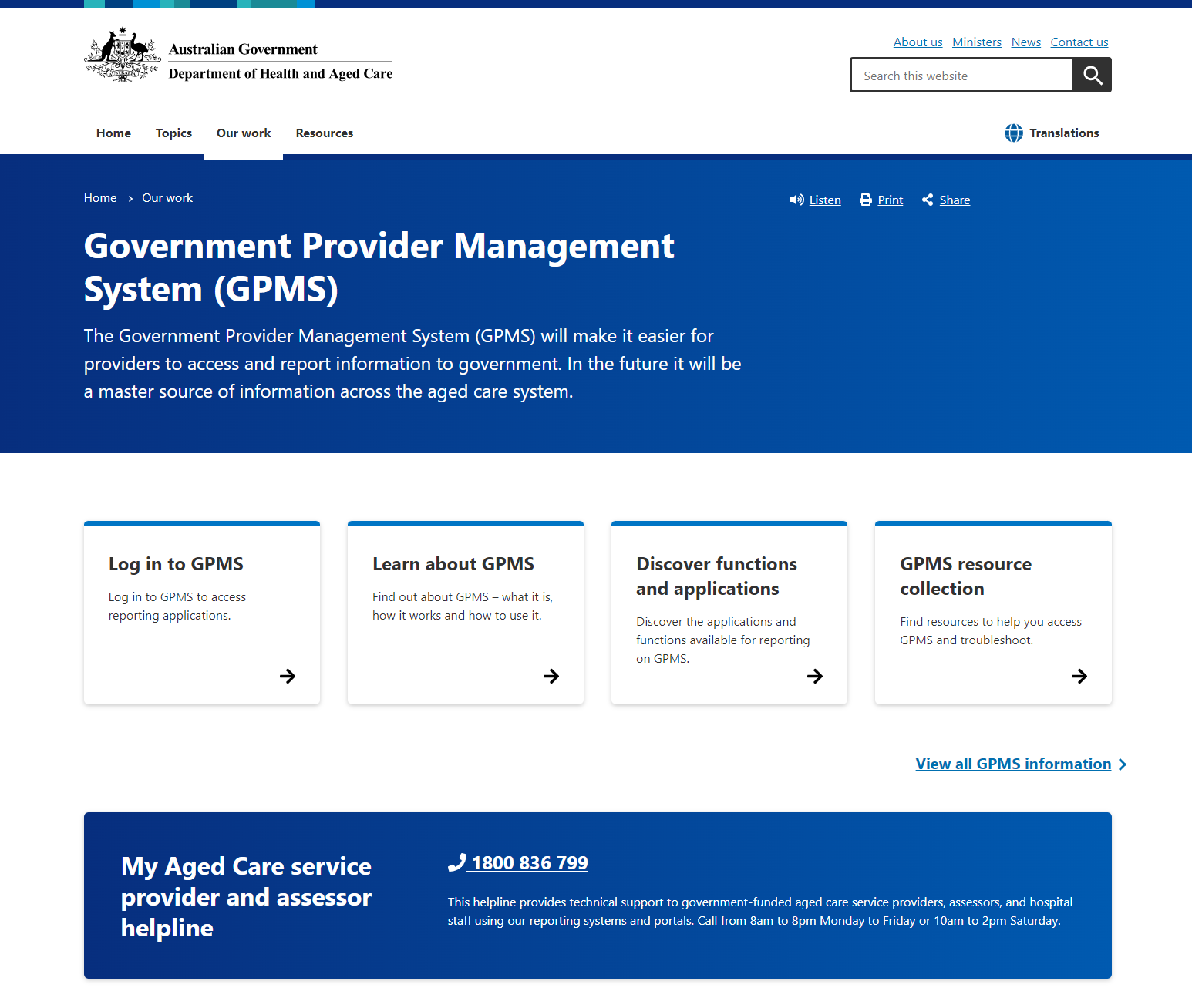
Government Provider Management System (GPMS)
This resource provides an overview of the Government Provider Management System (GPMS), designed to simplify access to and reporting of information by aged care providers to the government. It includes user guides, fact sheets, and troubleshooting support for managing organisational details, notifications, and financial reporting in compliance with aged care requirements.
This resource may refer to information that will be updated from 1 November 2025 to align with the new Aged Care Act and Quality Standards.
Quarterly Financial Report resources
This resource provides information and templates for the Quarterly Financial Report (QFR), required for approved aged care providers. It includes data definitions, templates, frequently asked questions, and guidance for reporting on finances, labour costs, and other operational data. This resource may refer to information that will be updated from 1 November 2025 to align with the new Aged Care Act and Quality Standards.
In our care into your hands: Aboriginal stories about approaching the end of life
This 2015 resource shares Aboriginal and Torres Strait Islander stories about approaching end of life, emphasising cultural practices and the role of storytelling in palliative care. It offers insight into supporting culturally sensitive care for people nearing the end of life.
This resource was developed by a state/territory government or organisation and therefore its applicability and usefulness may be limited.
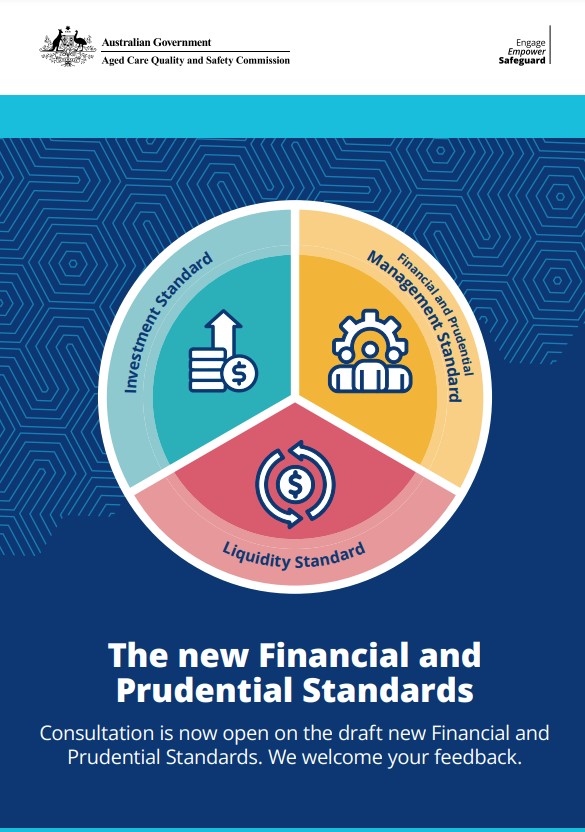
The new Financial and Prudential Standards
The new Financial and Prudential Standards will be introduced with the commencement of the new Aged Care Act. The new Standards set out the minimum requirements for good financial and prudential management of registered aged care providers. Registered providers must comply with the Financial and Prudential Standards that apply to them as a condition of their registration.
The new Financial and Prudential Standards (PDF 1.59 MB)
Aboriginal and Torres Strait Islander Discussion Starter – Working Out What’s Right For You
This resource includes information and tools to support thinking and talking about wishes and preferences for care at the end of life. This resource has been developed for Aboriginal and/or Torres Strait Islander peoples, their community, and those working with them. The resource also includes information about identifying decision makers and advance care planning.
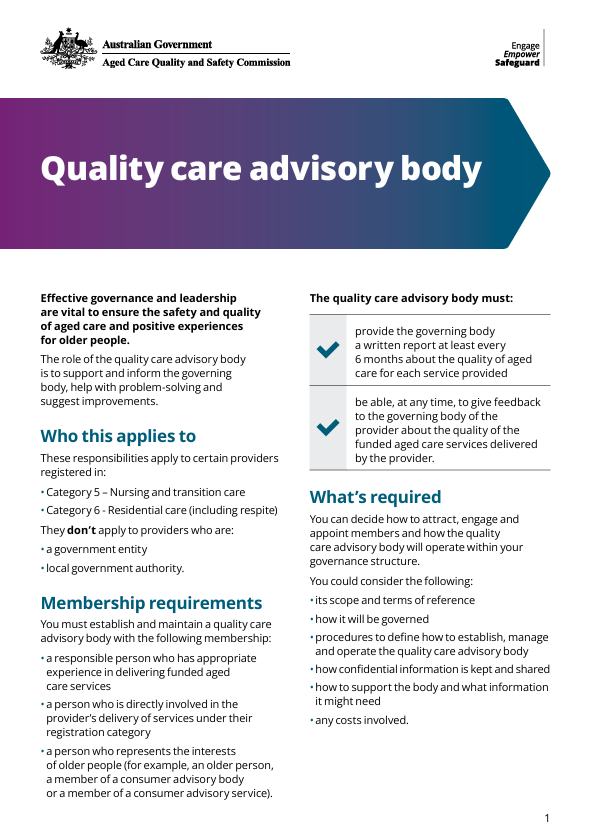
Quality care advisory body fact sheet
Explains the quality care advisory body obligations, including who must be on the advisory body and what actions, reports and feedback are required.
Quality care advisory body fact sheet (PDF 196.24 KB)