The Quality Standards Resource Centre helps extend understanding of the strengthened Aged Care Quality Standards, which take effect from 1 November 2025. The Resource Centre will be updated to reflect key changes made to the draft strengthened Standards. You can search for resources by using keywords, or filtering by standard, outcome, audience and theme. Before using the Resource Centre, please read the terms of use.
Electronic prescriptions
This resource provides an overview of electronic prescriptions, which offer a digital alternative to paper prescriptions. It explains how electronic prescriptions can be issued by healthcare providers and stored on digital devices for convenience. The resource also details the benefits of the Active Script List (ASL) for managing multiple prescriptions, enhancing efficiency and medicine safety.

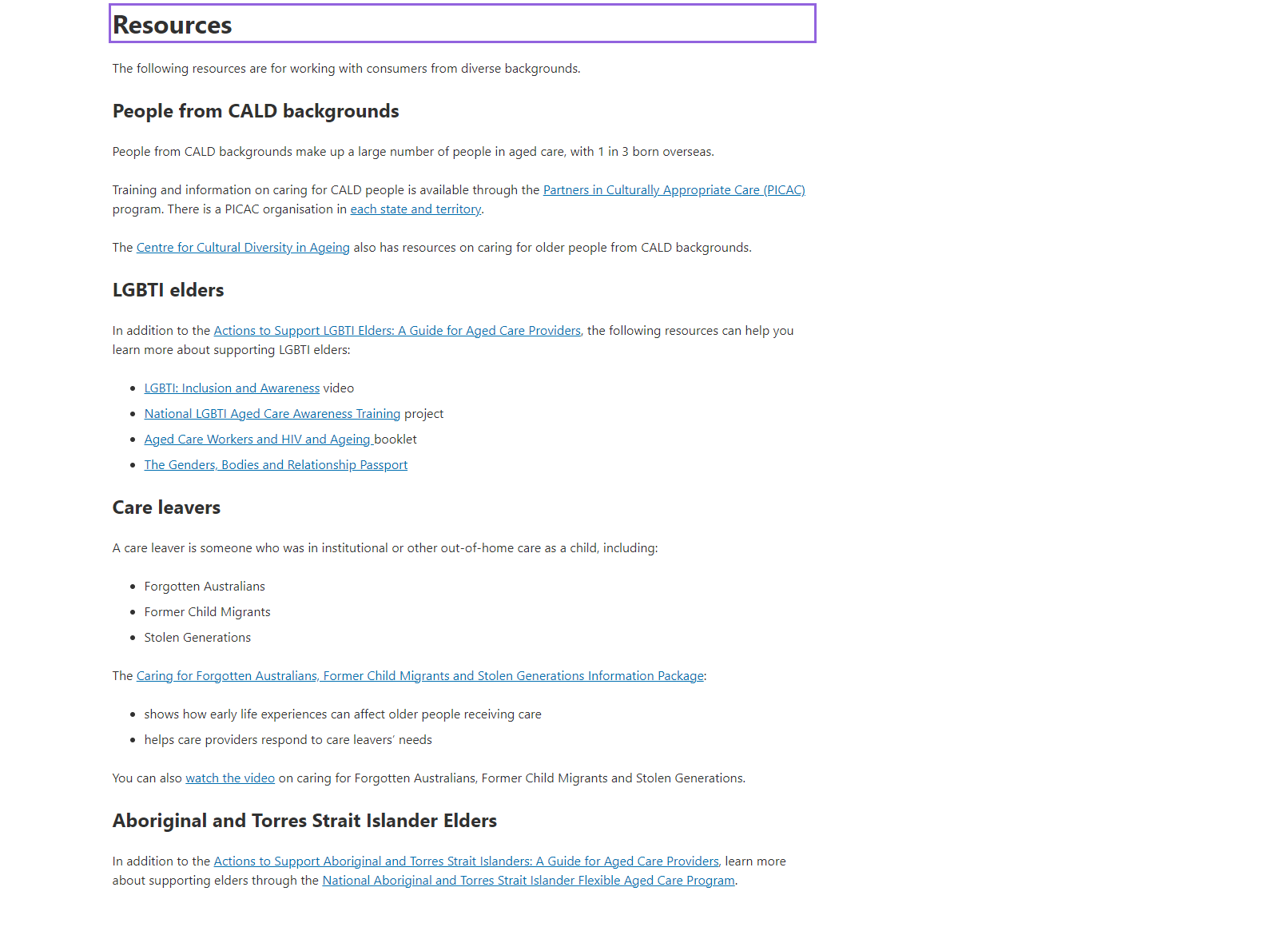
Working with diverse groups in aged care - Resources
This resource provides guidance for aged care providers on working with people from diverse backgrounds. It includes information on caring for people from culturally and linguistically diverse (CALD) backgrounds, LGBTI elders, care leavers, and Aboriginal and Torres Strait Islander Elders. Training programs and resources are available to support culturally appropriate care. This resource may refer to information that will be updated from 1 November 2025 to align with the new Aged Care Act and Quality Standards.
Quality improvement guidance for aged care providers
This resource offers guidance for aged care providers on implementing continuous quality improvement processes. It explains the ‘Plan, Do, Check, Act’ model to monitor and enhance care quality, using data and feedback to address issues. It also provides practical examples and tools to support providers in improving care and meeting regulatory requirements. This resource may refer to information that will be updated from 1 November 2025 to align with the new Aged Care Act and Quality Standards.

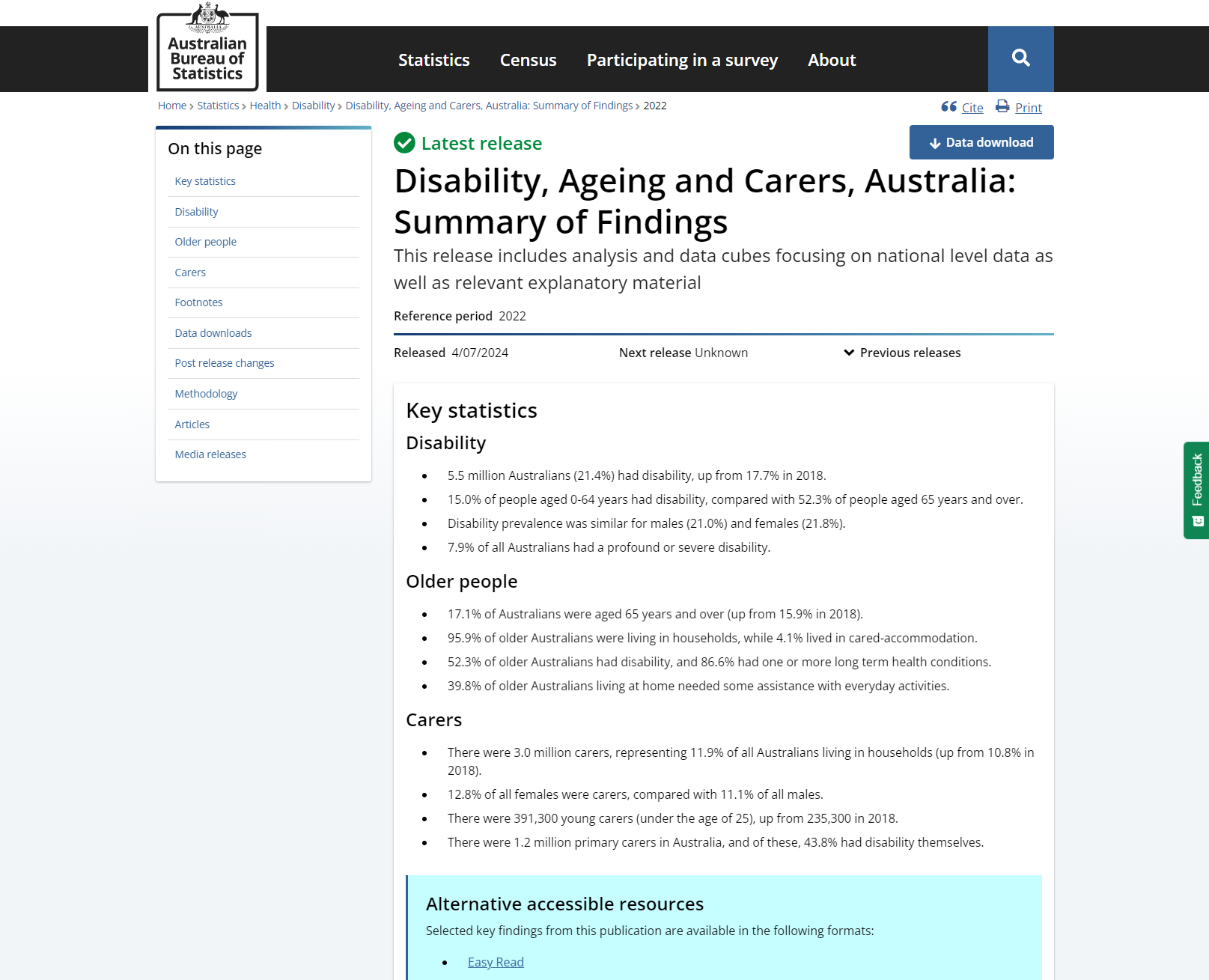
Disability, Ageing and Carers, Australia: Summary of Findings
This resource provides key statistics and findings on disability, ageing, and carers in Australia. It offers insights into the prevalence of disability, living arrangements, health conditions, and the needs for assistance among older adults. It also includes data on informal and formal care providers, highlighting the importance of support services for those aged 65 years and over in aged care settings.
Implementing the Comprehensive Care Standard - Clinical assessment and diagnosis
This document provides guidance on implementing the clinical assessment and diagnosis element of the Comprehensive Care Standard (National Safety and Quality Health Service Standards). It helps clinicians identify a person’s conditions or needs through examination and investigation. The resource supports safe, patient-centred care, improving diagnostic accuracy and promoting teamwork in healthcare settings, including aged care.
This resource may refer to information that will be updated from 1 November 2025 to align with the new Aged Care Act and Quality Standards.
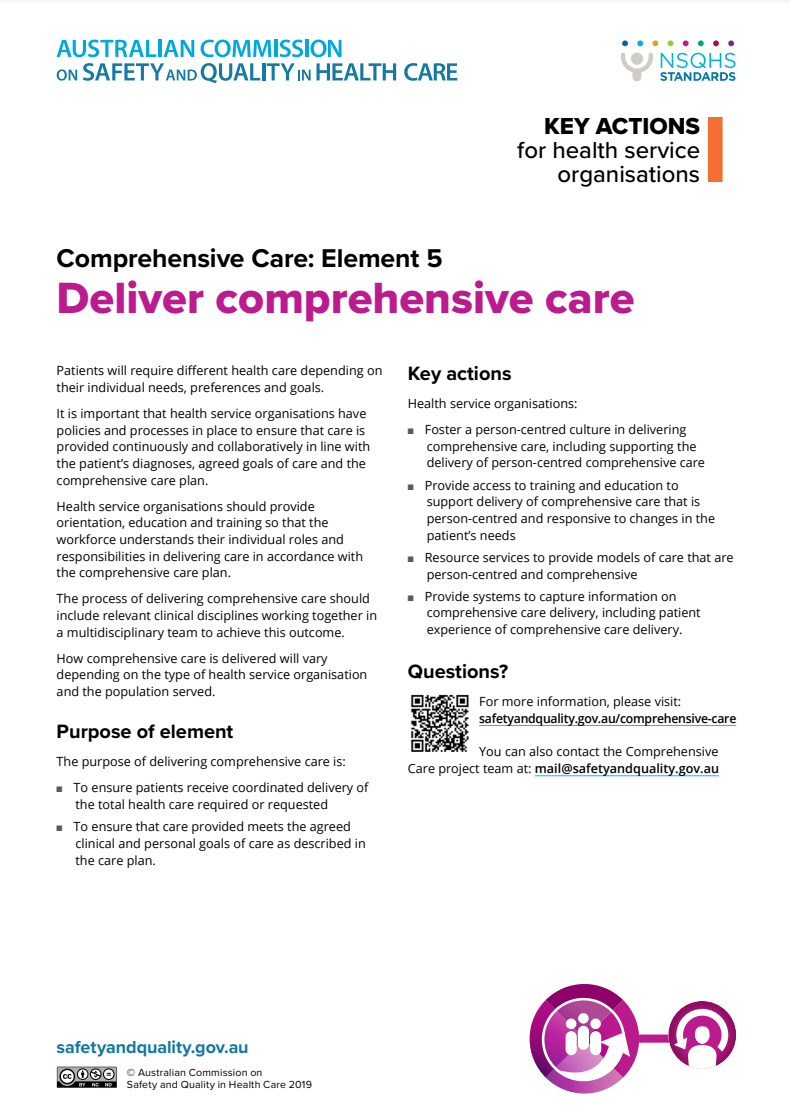
Comprehensive Care - Element 5: Deliver comprehensive care - Actions for health service organisations
This resource outlines the key actions for health service organisations to deliver comprehensive care. It ensures care is provided continuously and collaboratively, aligning with the patient’s diagnoses, goals, and care plan. It promotes a person-centred, multidisciplinary approach, with staff training to support comprehensive care delivery. Applicable to multiple settings, including aged care.
This resource may refer to information that will be updated from 1 November 2025 to align with the new Aged Care Act and Quality Standards.
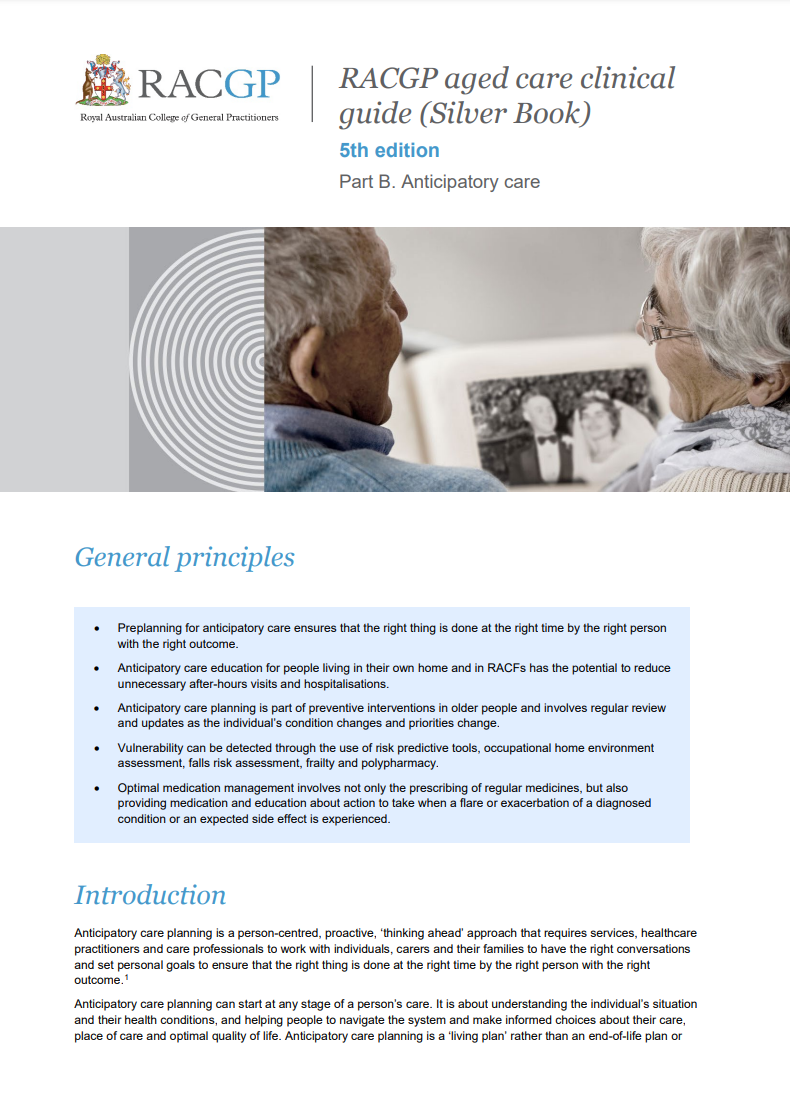
RACGP aged care clinical guide (Silver Book) - Part B - Anticipatory care
This guide outlines anticipatory care planning for older adults, focusing on proactive and person-centred approaches. It details triggers for care planning, identifying vulnerability, medication management, and the use of 'as needed' (PRN) medicines for various conditions like allergic reactions, asthma, diabetes, falls, and palliative care. It includes specific recommendations for developing individualised care plans and appropriate interventions for maintaining health and quality of life.
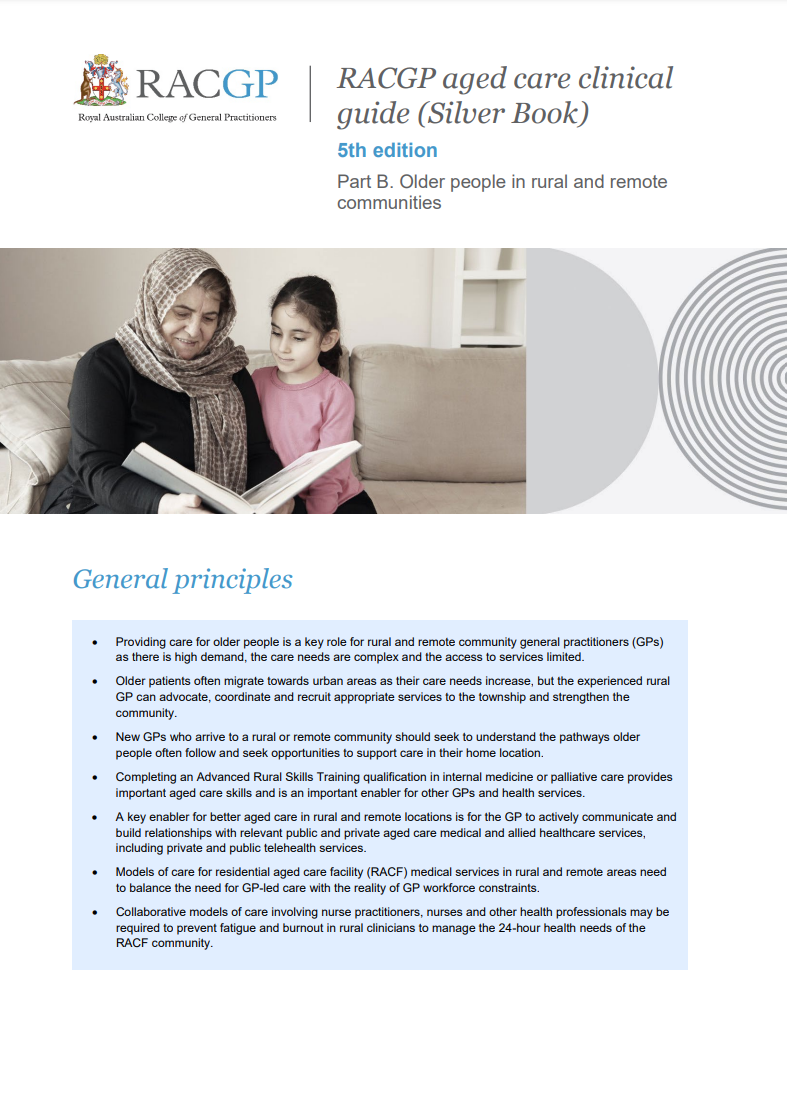
RACGP aged care clinical guide (Silver Book) - Part B - Older people in rural and remote communities
This guide discusses providing aged care in rural and remote communities, focusing on the unique needs of older residents, the role of GPs in care coordination, and overcoming challenges like limited services and workforce shortages. It covers building telehealth connections, establishing collaborative care models, and offers a checklist for newly arrived GPs to support quality care for older adults.
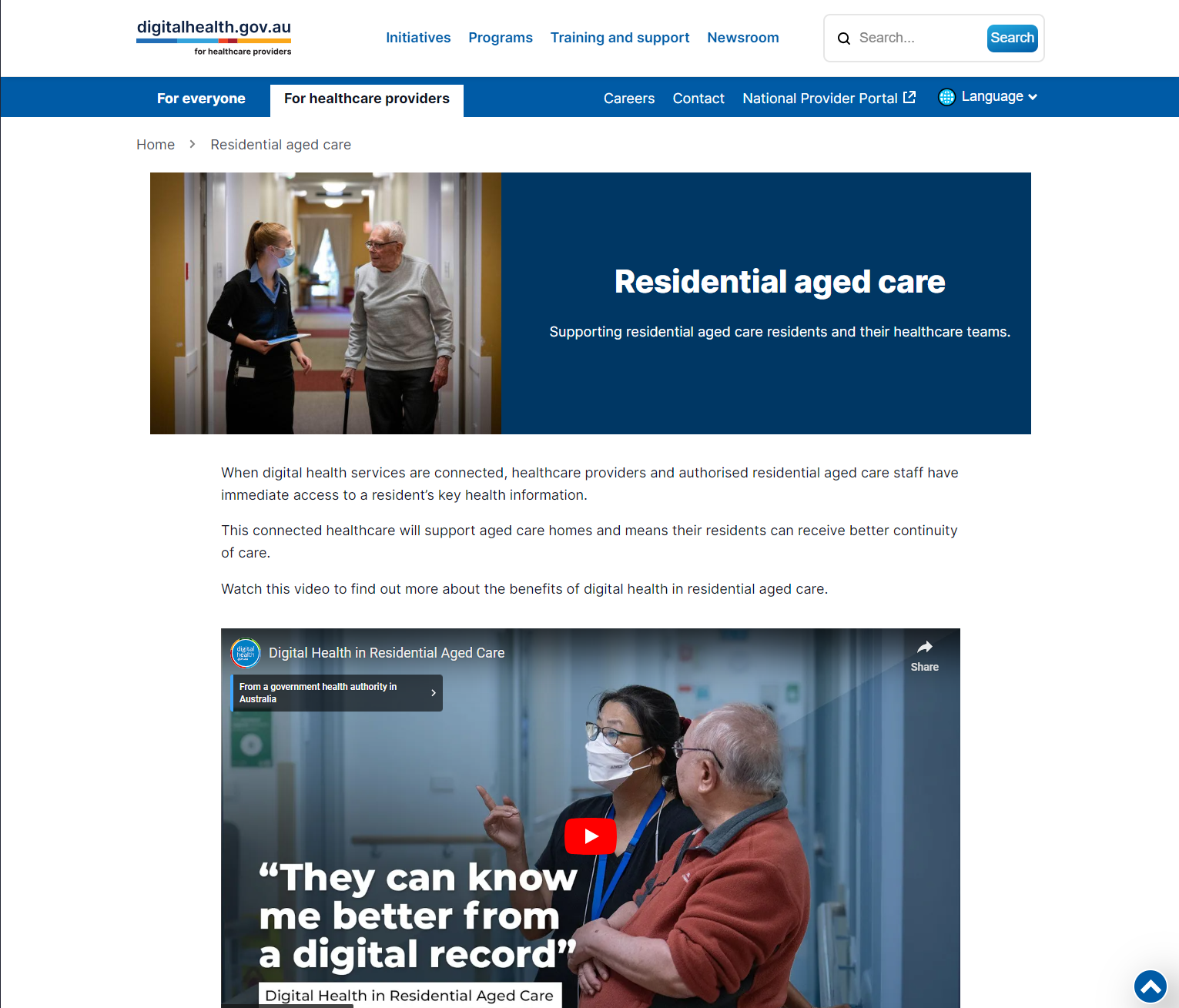
Residential aged care - Supporting residential aged care residents and their healthcare teams
This resource provides information on digital health tools available for residential aged care providers. It covers how these tools, including My Health Record, support care coordination, improve health outcomes, and enable secure information sharing between healthcare providers to enhance the quality of aged care services.
Goal setting
This resource discusses the role of goal setting in enhancing rehabilitation, reablement, and restorative care for older people. It highlights the value of involving older people in defining goals and the positive impact of goal setting on engagement, daily function, and quality of life.
National Aged Care Mandatory Quality Indicator Program (QI Program)
This resource provides information on the National Aged Care Mandatory Quality Indicator Program (QI Program). The program gathers data on 11 quality indicators from residential aged care services to enhance care standards and outcomes for residents. It includes resources, quick guides, consultation papers, and surveys for improving quality indicators in both residential and in-home aged care services.
This resource may refer to information that will be updated from 1 November 2025 to align with the new Aged Care Act and Quality Standards.
Creating behaviour support plans that better support residents
This document outlines the development of behaviour support plans (BSPs) in aged care, focusing on person-centred assessments, identification of triggers, tailored strategies, and regular reviews. It highlights the involvement of healthcare professionals and adherence to care principles to effectively manage residents’ behavioural changes and improve their quality of life.
This resource may refer to information that will be updated from 1 November 2025 to align with the new Aged Care Act and Quality Standards.
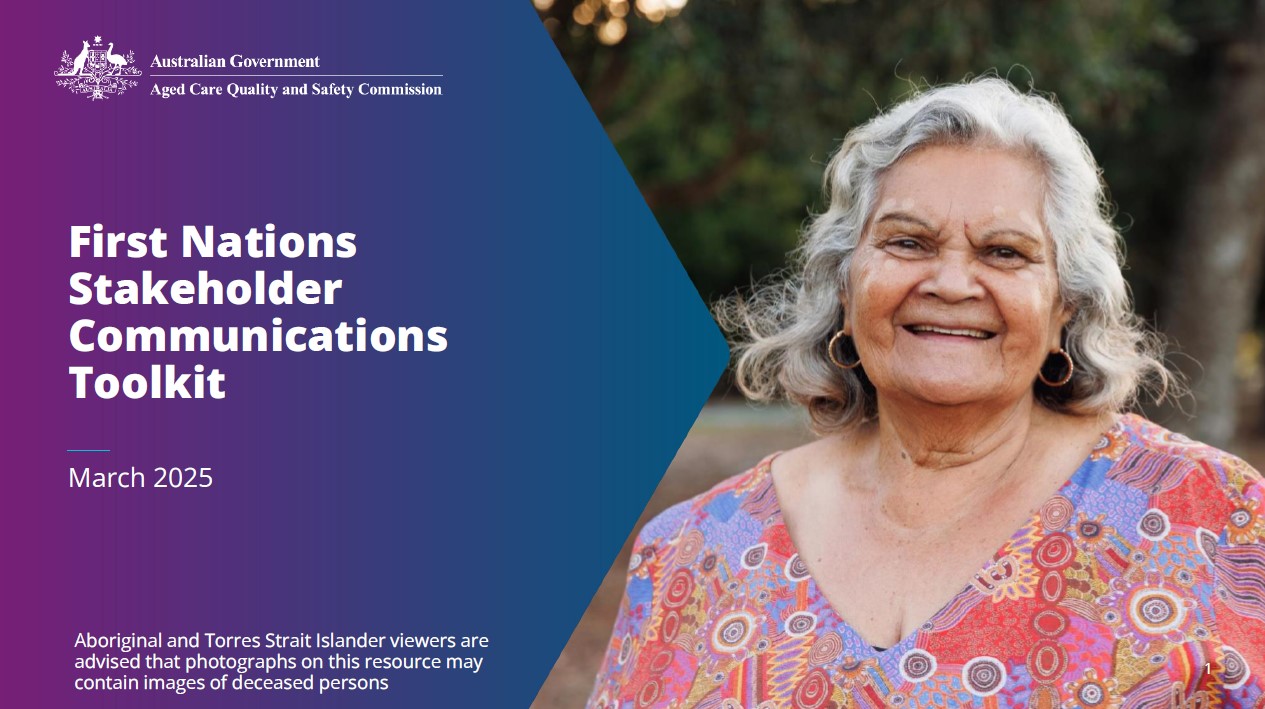
First Nations - Stakeholder Communications Toolkit
This Toolkit is designed for First Nations stakeholders including providers, workers and others involved in providing aged care services for First Nations people. We’ve developed it to make it easy for you to share relevant resources with your networks and members