The Quality Standards Resource Centre helps extend understanding of the strengthened Aged Care Quality Standards, which take effect from 1 November 2025. The Resource Centre will be updated to reflect key changes made to the draft strengthened Standards. You can search for resources by using keywords, or filtering by standard, outcome, audience and theme. Before using the Resource Centre, please read the terms of use.
Healthy Ageing
This resource is a collection of resources on the Tasmanian Government Department of Health webpage about healthy ageing. It includes resources about malnutrition screening, being physically active, and eating well.
This resource was developed by a state/territory government or organisation and therefore its applicability and usefulness may be limited.

What is open disclosure? - video
This video explains open disclosure and what older people can expect from their registered provider during the process. It highlights key aspects such as communication, transparency, and how concerns will be addressed.

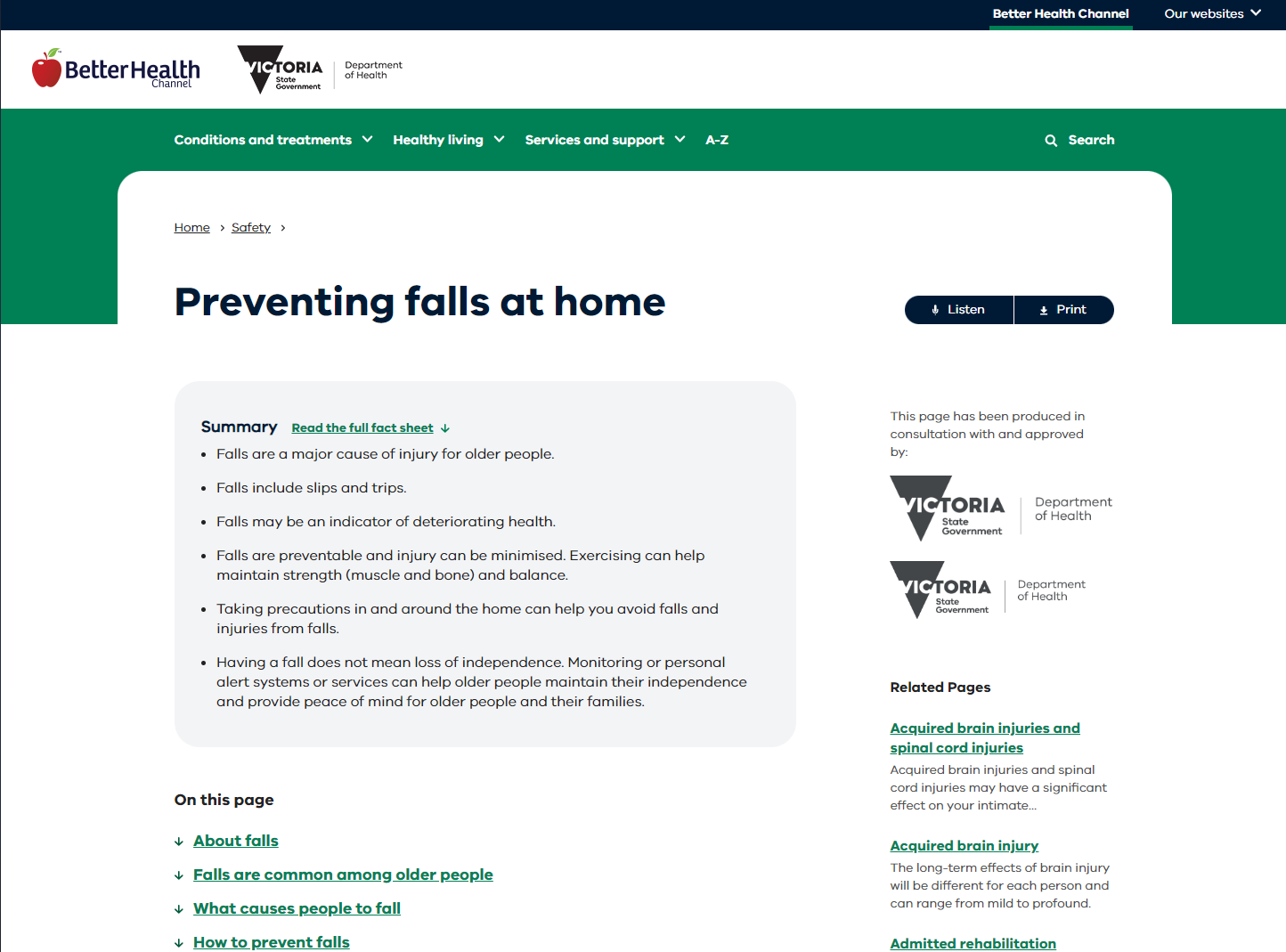
Preventing falls at home
This resource provides information on preventing falls at home for older people. It explains common causes of falls, such as poor lighting and slippery surfaces, and offers practical solutions like home modifications, exercise, and footwear adjustments. The document emphasises maintaining safety in and around the home to reduce the risk of falls.
This resource was developed by a state/territory government or organisation and therefore its applicability and usefulness may be limited.
Effective incident management education pack
The Effective incident management education pack is designed for providers to deliver to their own staff. It can be delivered in full or delivered as a series of shorter sessions where you can focus on the sections that are most relevant to your setting or the time you have available.
This pack will support your staff to understand the role they play in effectively managing incidents at your aged care service and help them understand what an incident management system is and its key elements.

Cultural Respect Framework 2016-2026 for Aboriginal and Torres Strait Islander health
This resource outlines a national approach to building a culturally respectful health system for Aboriginal and Torres Strait Islander people. It focuses on 6 domains, including communication, workforce development, and data evaluation, to ensure culturally safe, accessible care. It is applicable to aged care, helping providers meet cultural safety standards and improve health outcomes for Aboriginal and Torres Strait Islander people.
Quality improvement guidance for aged care providers
This resource offers guidance for aged care providers on implementing continuous quality improvement processes. It explains the ‘Plan, Do, Check, Act’ model to monitor and enhance care quality, using data and feedback to address issues. It also provides practical examples and tools to support providers in improving care and meeting regulatory requirements. This resource may refer to information that will be updated from 1 November 2025 to align with the new Aged Care Act and Quality Standards.

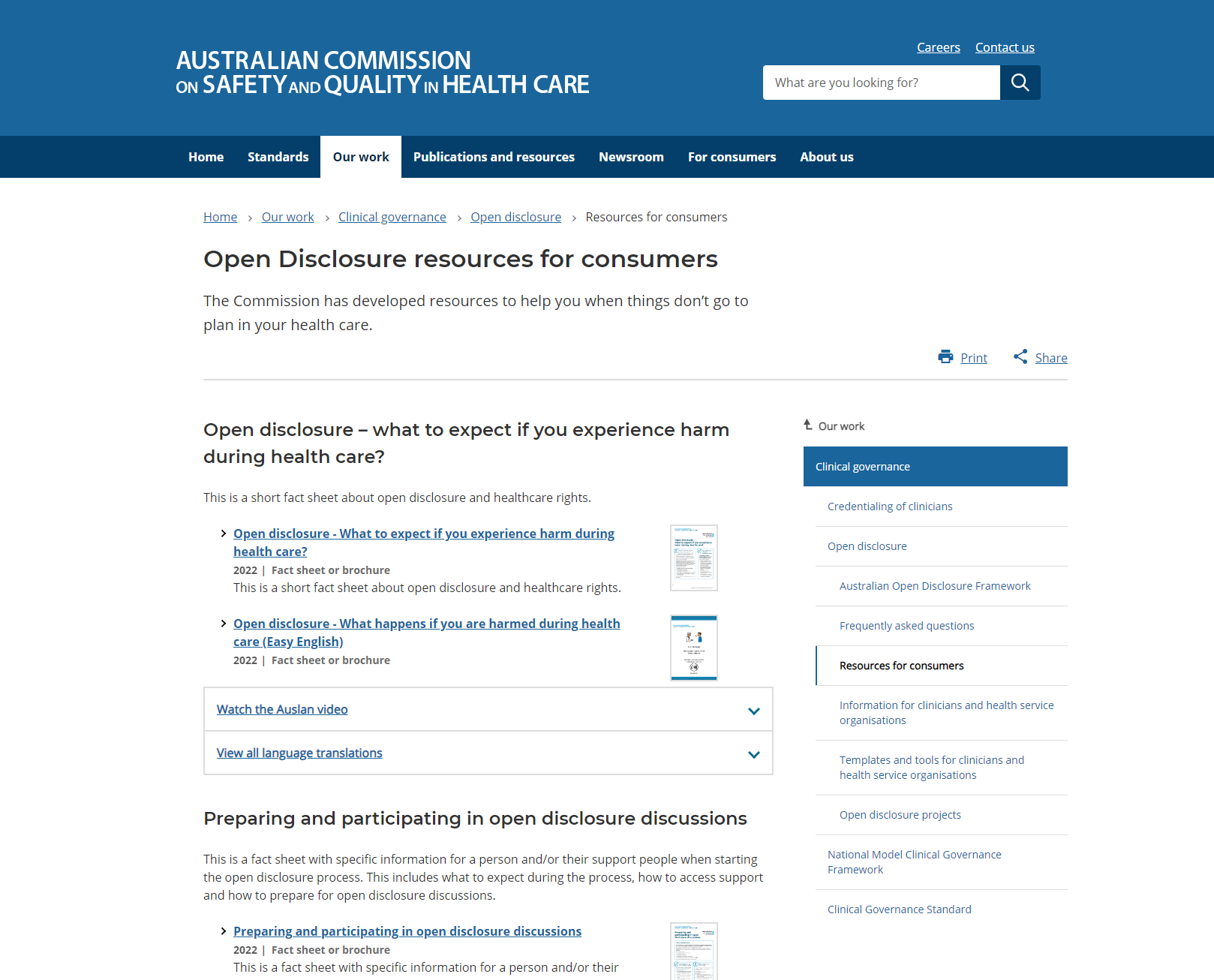
Open Disclosure resources for consumers
This resource provides information on open disclosure in healthcare, explaining what people should expect if harm occurs during care. It includes fact sheets in various languages and outlines how to prepare for open disclosure discussions. The resource aims to support transparent communication and improve care safety across healthcare settings, including aged care. This resource may refer to information that will be updated from 1 November 2025 to align with the new Aged Care Act and Quality Standards.
Self-Care Matters Aged Care
This resource supports aged care workers in managing stress and maintaining mental and physical wellbeing. It includes videos and tools focused on self-care strategies, such as mindfulness, relaxation, and personalised self-care planning. The resource is designed to help prevent burnout and promote resilience in delivering high-quality care in aged care settings.
Financial and Prudential Monitoring, Compliance and Intervention Framework
This resource outlines the Financial and Prudential Monitoring, Compliance and Intervention Framework for aged care providers. It aims to enhance financial transparency, requiring stricter reporting, oversight, and adherence to prudential standards. The framework helps ensure financial stability, protects refundable accommodation deposits, and supports the continuity of care in residential aged care. It includes phased implementation and future regulatory changes.

Government Provider Management System resources
This resource provides user guides, quick reference materials, and videos to support aged care providers in using the Government Provider Management System (GPMS). It covers essential tasks such as managing user details, financial reporting, and service information. The GPMS ensures accurate and efficient data management for regulatory compliance and operational oversight in aged care services.
This resource may refer to information that will be updated from 1 November 2025 to align with the new Aged Care Act and Quality Standards.
Government Provider Management System (GPMS)
This resource provides an overview of the Government Provider Management System (GPMS), designed to simplify access to and reporting of information by aged care providers to the government. It includes user guides, fact sheets, and troubleshooting support for managing organisational details, notifications, and financial reporting in compliance with aged care requirements.
This resource may refer to information that will be updated from 1 November 2025 to align with the new Aged Care Act and Quality Standards.
Quarterly Financial Report resources
This resource provides information and templates for the Quarterly Financial Report (QFR), required for approved aged care providers. It includes data definitions, templates, frequently asked questions, and guidance for reporting on finances, labour costs, and other operational data. This resource may refer to information that will be updated from 1 November 2025 to align with the new Aged Care Act and Quality Standards.
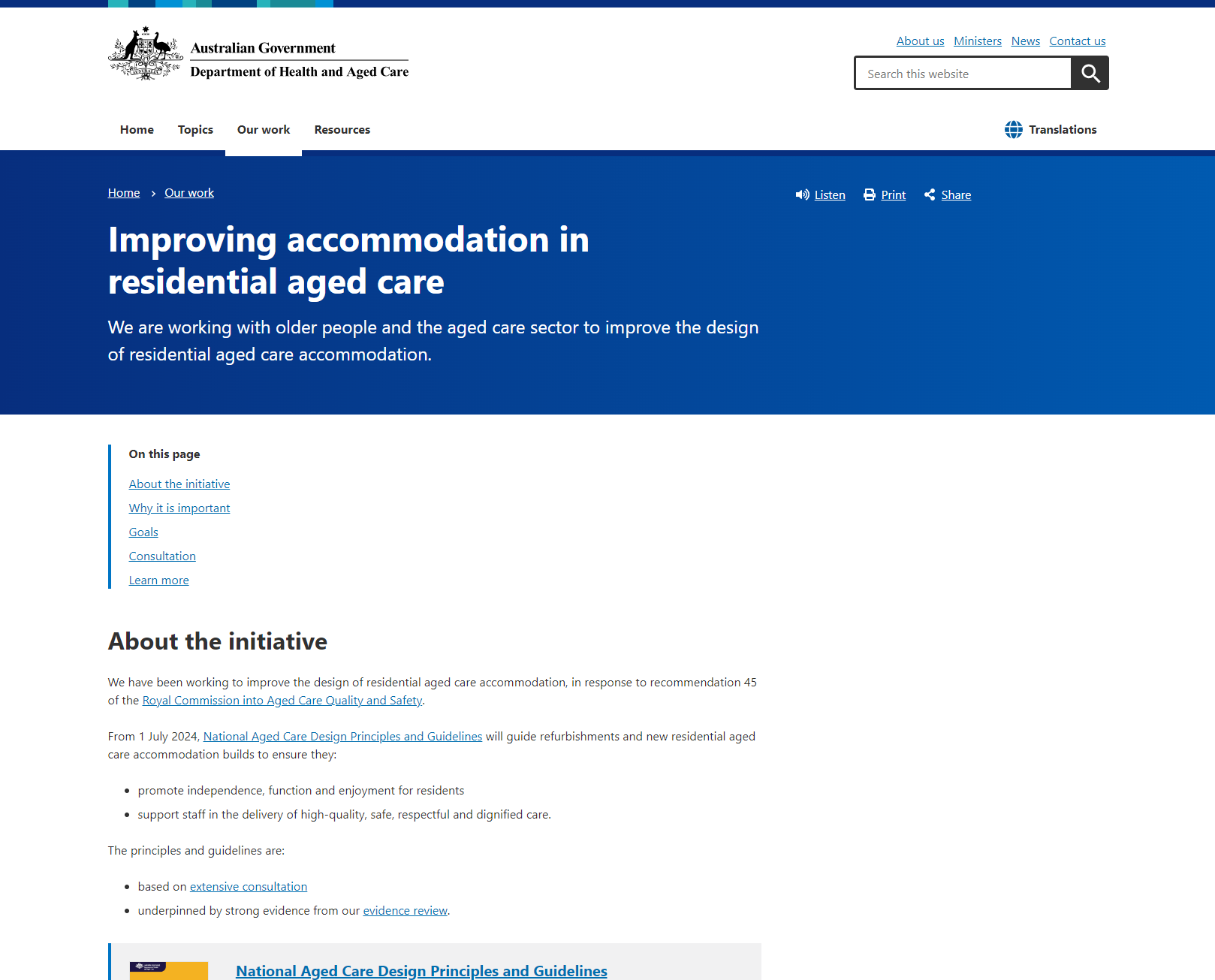
Improving accommodation in residential aged care
This resource provides information on improving accommodation in residential aged care through the National Aged Care Design Principles and Guidelines, effective from July 2024. It covers areas such as creating dementia-friendly environments, improving access to outdoor spaces, fostering community connections, and ensuring privacy. The guidelines aim to promote independence and a home-like atmosphere.
This resource may refer to information that will be updated from 1 November 2025 to align with the new Aged Care Act and Quality Standards.
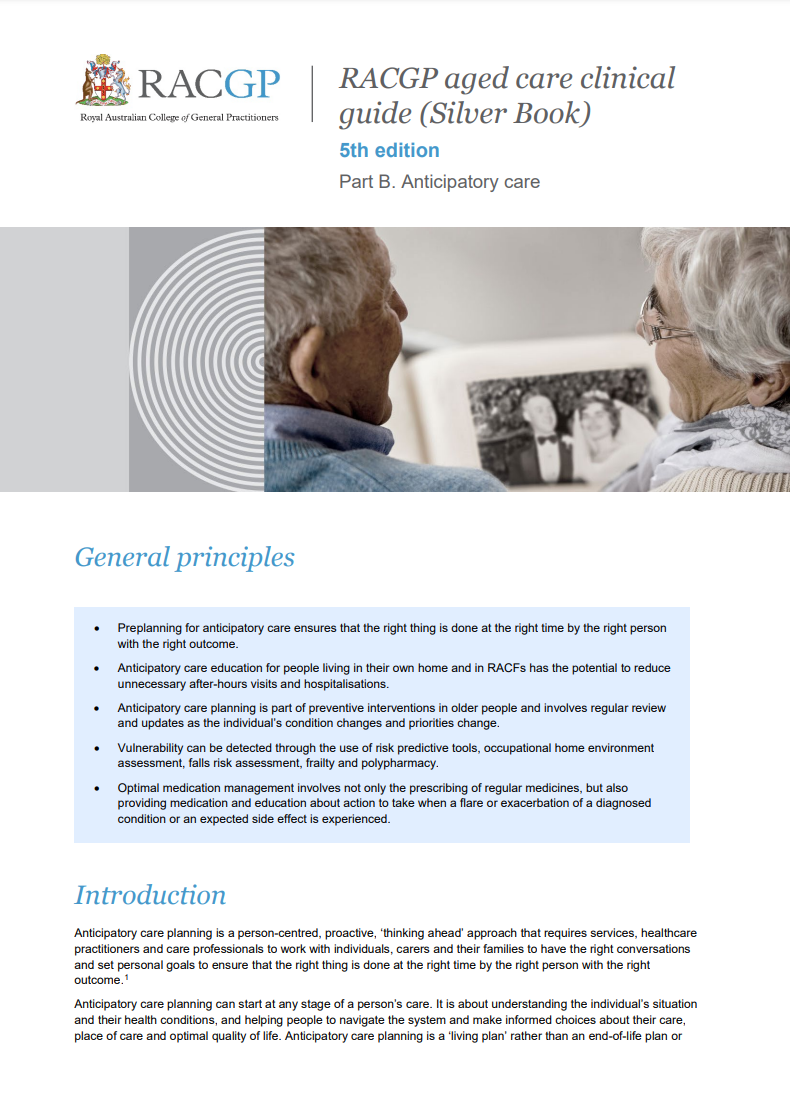
RACGP aged care clinical guide (Silver Book) - Part B - Anticipatory care
This guide outlines anticipatory care planning for older adults, focusing on proactive and person-centred approaches. It details triggers for care planning, identifying vulnerability, medication management, and the use of 'as needed' (PRN) medicines for various conditions like allergic reactions, asthma, diabetes, falls, and palliative care. It includes specific recommendations for developing individualised care plans and appropriate interventions for maintaining health and quality of life.
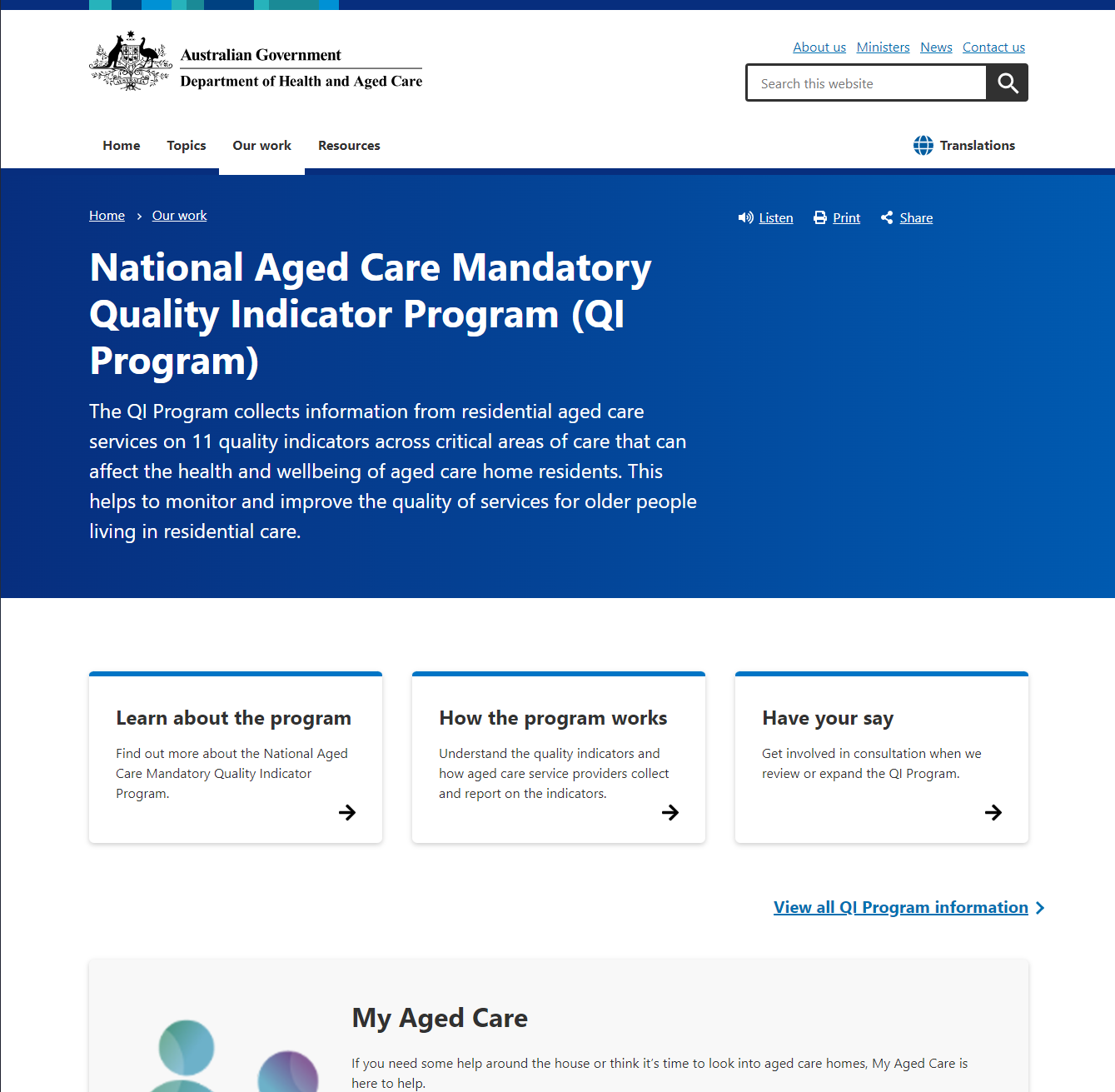
National Aged Care Mandatory Quality Indicator Program (QI Program)
This resource provides information on the National Aged Care Mandatory Quality Indicator Program (QI Program). The program gathers data on 11 quality indicators from residential aged care services to enhance care standards and outcomes for residents. It includes resources, quick guides, consultation papers, and surveys for improving quality indicators in both residential and in-home aged care services.
This resource may refer to information that will be updated from 1 November 2025 to align with the new Aged Care Act and Quality Standards.
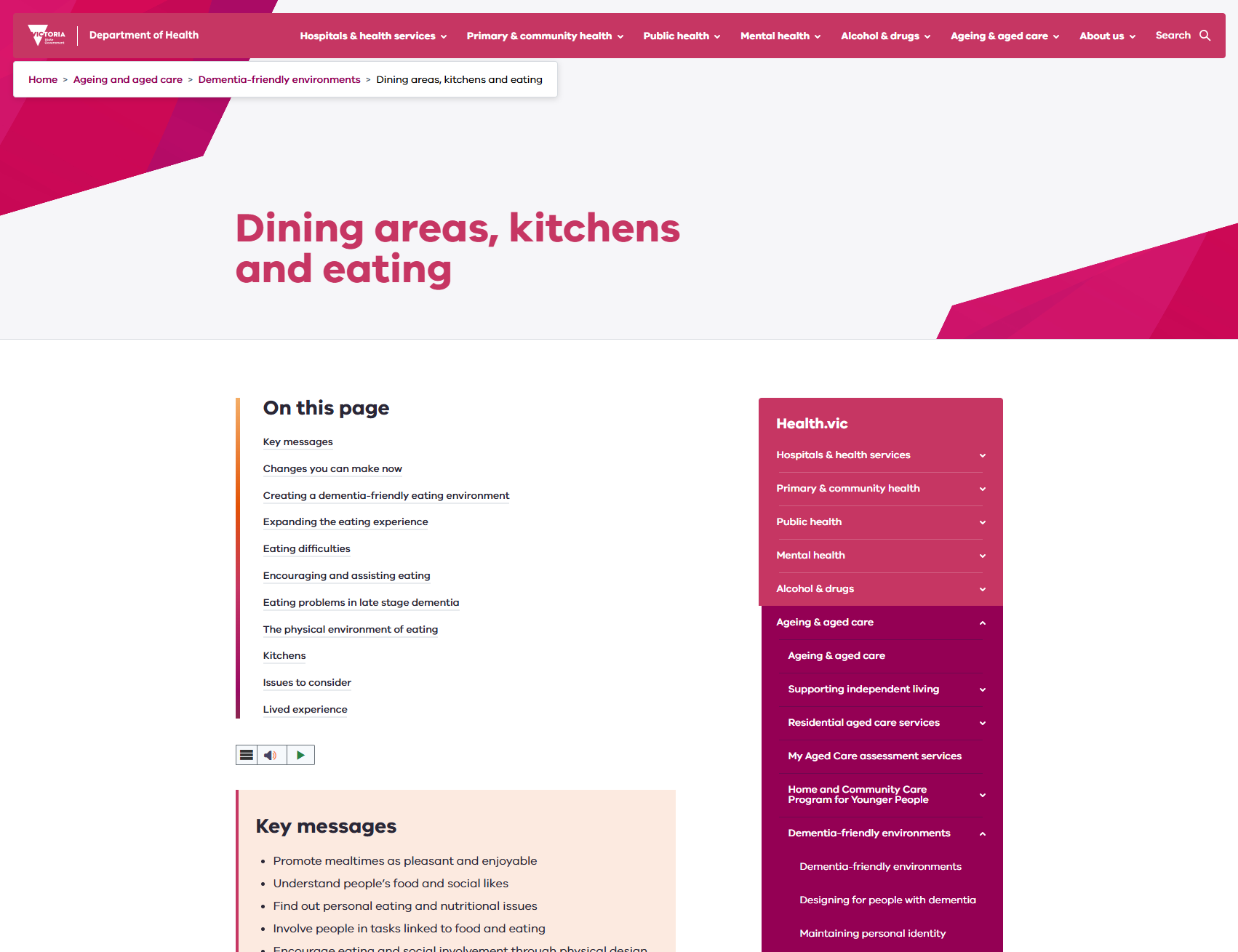
Dementia-friendly environments - Dining areas, kitchens and eating
This resource provides guidelines for creating dementia-friendly dining and kitchen spaces, emphasising sensory engagement, personalised meal experiences, and a home-like environment. It includes practical adjustments for lighting, noise, seating, and social interaction to enhance dining enjoyment.
This resource was developed by a state/territory government or organisation and therefore its applicability and usefulness may be limited.
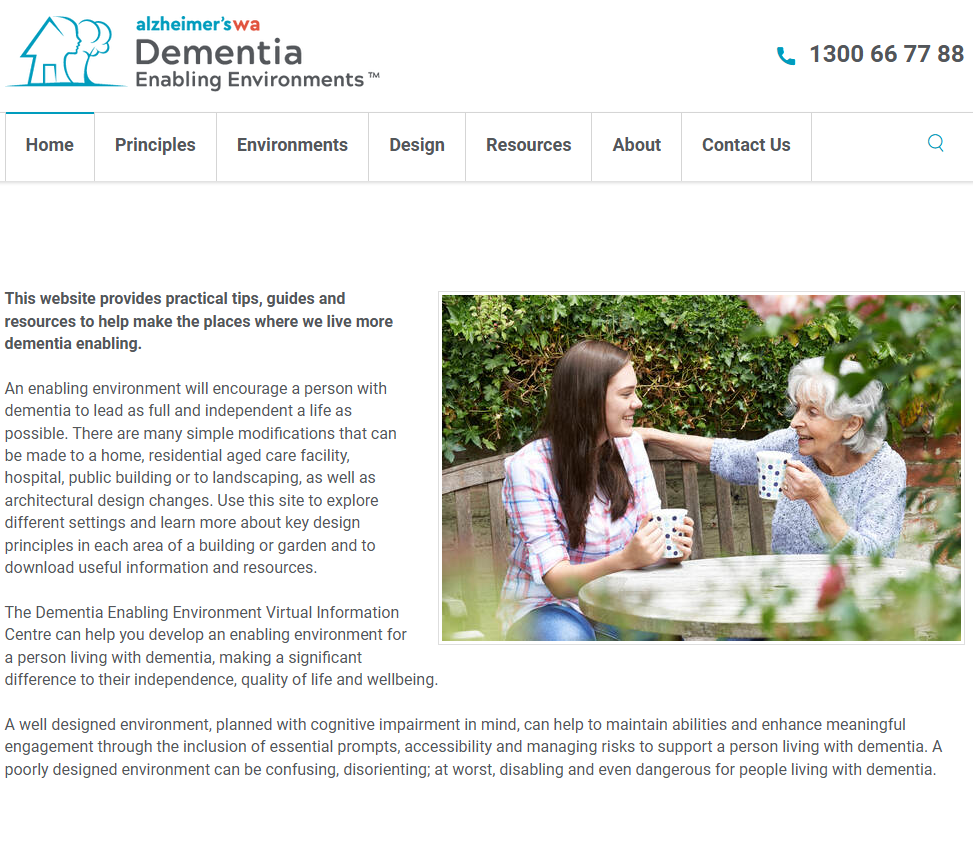
Dementia enabling environments
The Dementia Enabling Environments website, developed by Alzheimer's WA, provides guidance and resources to help create enabling environments for a person living with dementia. It includes design principles for different environment types, include home and residential aged care facilities.
This resource was developed by a state/territory government or organisation and therefore its applicability and usefulness may be limited.
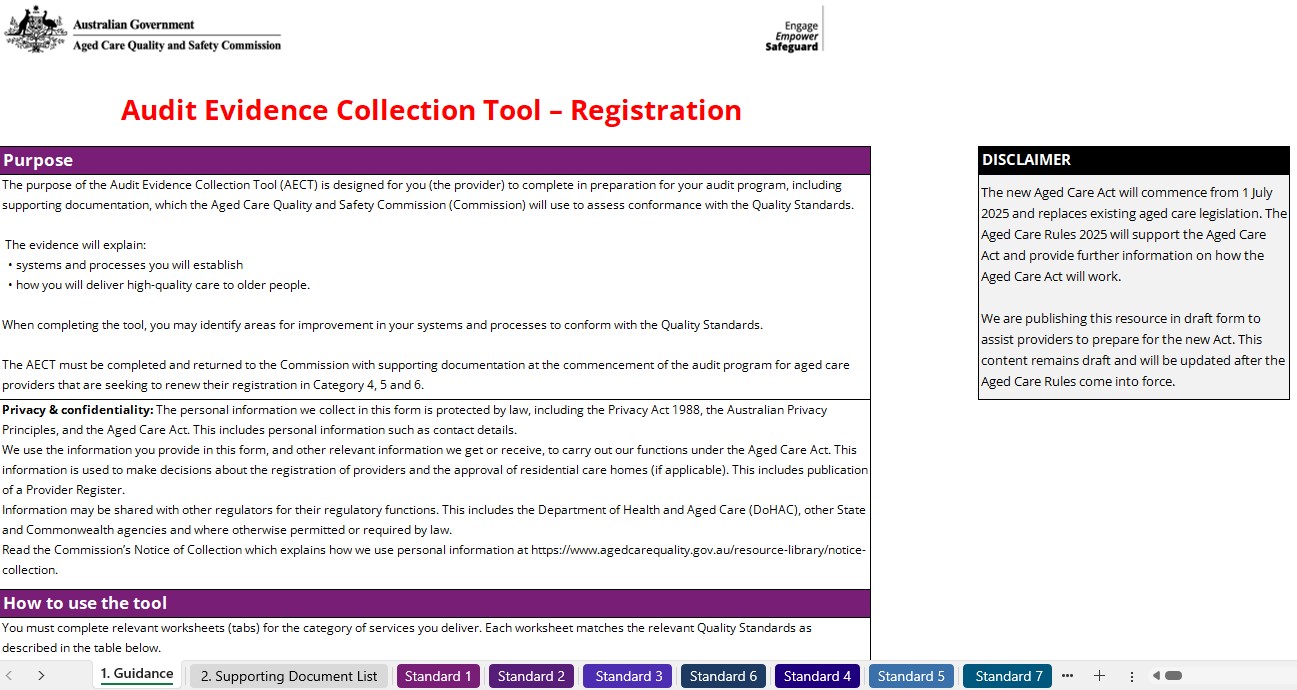
Audit Evidence Collection Tool (AECT) – Registration
Organisations or persons must complete the Audit Evidence Collection Tool (AECT) – Registration as part of the initial registration audit. This is compulsory for organisations or persons applying for registration in categories 4, 5 and 6 from 1 November 2025.
The registration audit helps us to understand if the organisation or person can conform with the related strengthened Aged Care Quality Standards.
We use this tool to collect evidence about:
 Audit Evidence Collection Tool (AECT) – Registration (XLSX 457.4 KB)
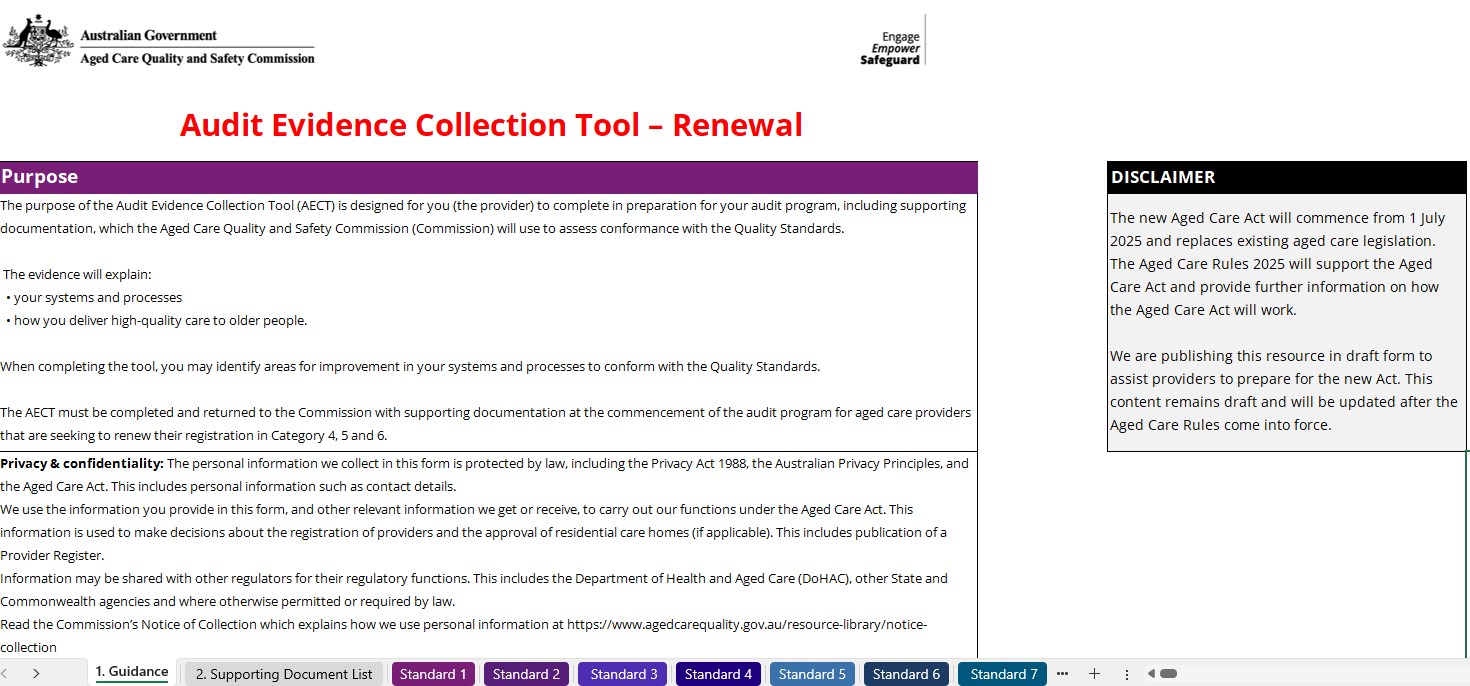
Audit Evidence Collection Tool (AECT) – Renewal
Providers must complete the Audit Evidence Collection Tool (AECT) – Renewal as part of a renewal audit in registration categories 4, 5 and 6. This is compulsory for providers from 1 November 2025.
Providers only need to complete this tool once as part of the audit program.
The renewal audit helps us to understand if the provider can conform with the related strengthened Aged Care Quality Standards.
We use this tool to collect evidence about:
- your systems and processes
- how you deliver high-quality care to older people.
Audit Evidence Collection Tool (AECT) – Renewal (XLSX 418.69 KB)
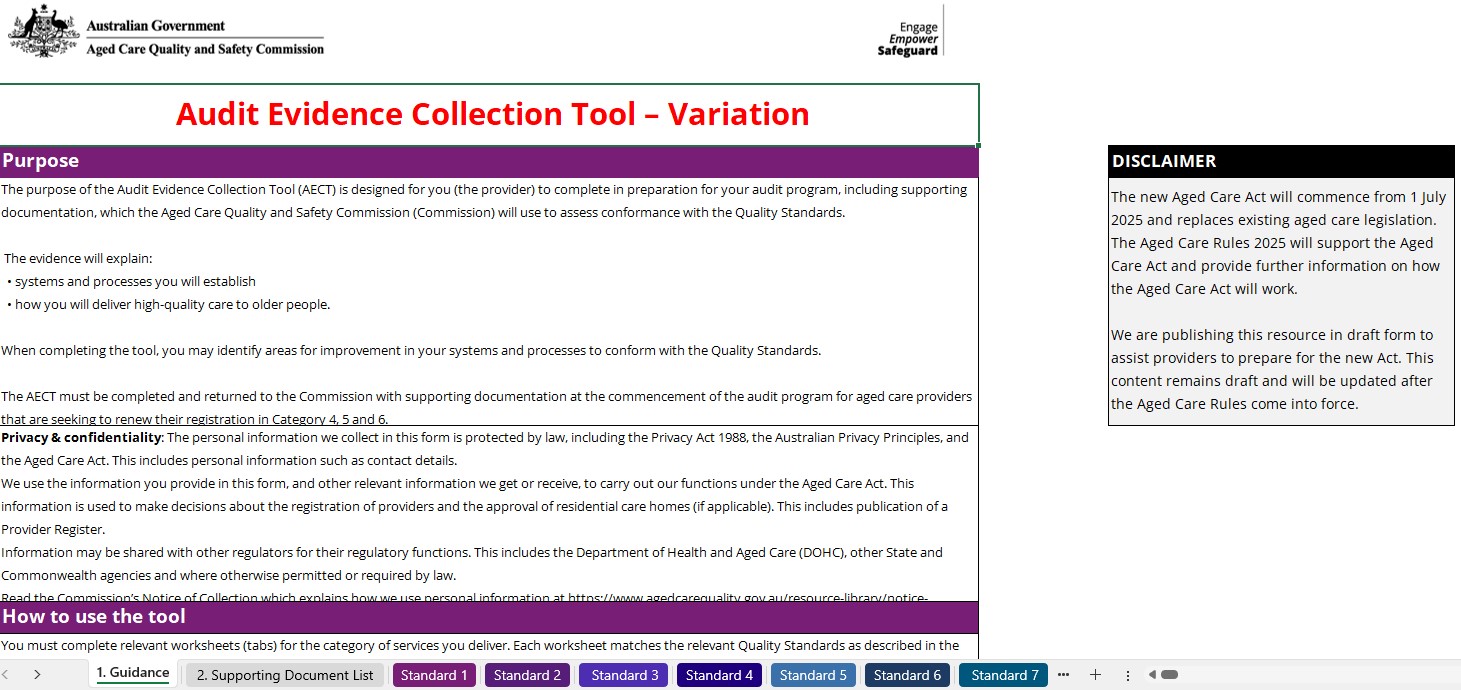
Audit Evidence Collection Tool (AECT) – Variation
Providers must complete the Audit Evidence Collection Tool (AECT) – Variation as part of a variation audit, where they are asking to add categories 4, 5 or 6 to their registration. This is compulsory for providers from 1 November 2025.
The variation audit helps us to understand if the provider can conform with the related strengthened Aged Care Quality Standards.
We use this tool to collect evidence about:
- the systems and processes you will establish
- how you will deliver high-quality care to older people.
Audit Evidence Collection Tool (AECT) – Variation (XLSX 453.08 KB)