Aged care laws in Australia have now changed. The new Aged Care Act 2024 and Aged Care Rules 2025 now apply. While we complete updating of our website, including draft guidance and other materials, to align with the new laws, providers are advised to refer to the new Act and Rules for any required clarification of their obligations and legal responsibilities. Thank you for your patience.

Quality Standards Resource Centre

The Quality Standards Resource Centre helps extend understanding of the strengthened Aged Care Quality Standards, which take effect from 1 November 2025. The Resource Centre will be updated to reflect key changes made to the draft strengthened Standards. You can search for resources by using keywords, or filtering by standard, outcome, audience and theme. Before using the Resource Centre, please read the terms of use.

Displaying 1 to 14 of 14 result(s)
/quality-standards/kimberley-indigenous-cognitive-assessment-kica

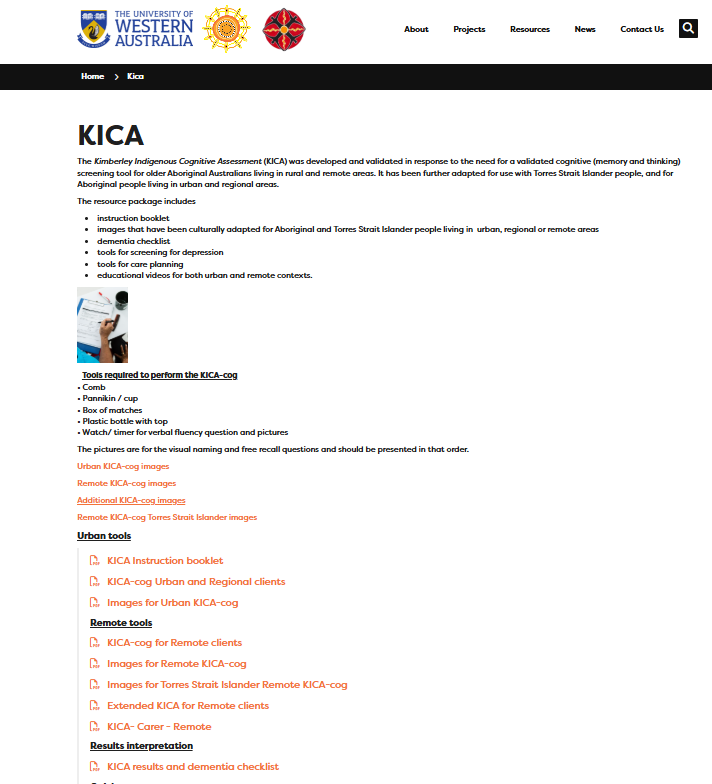
Kimberley Indigenous Cognitive Assessment (KICA)

Tool

The Kimberley Indigenous Cognitive Assessment (KICA) is a cognitive screening tool for older Aboriginal Australians living in rural and remote areas. It has been adapted for use with Torres Strait Islander people, and for Aboriginal people living in urban and regional areas.

This resource was developed by a state/territory government or organisation and therefore its applicability and usefulness may be limited.
Author
External resource
Key Theme
Assessment and planning, Delivering comprehensive care and services
Standard
3: The Care and Services, 5: Clinical Care
Outcomes
3.1 Assessment and planning, 5.6 Cognitive impairment  
Kimberley Indigenous Cognitive Assessment (KICA)
/quality-standards/malnutrition-universal-screening-tool

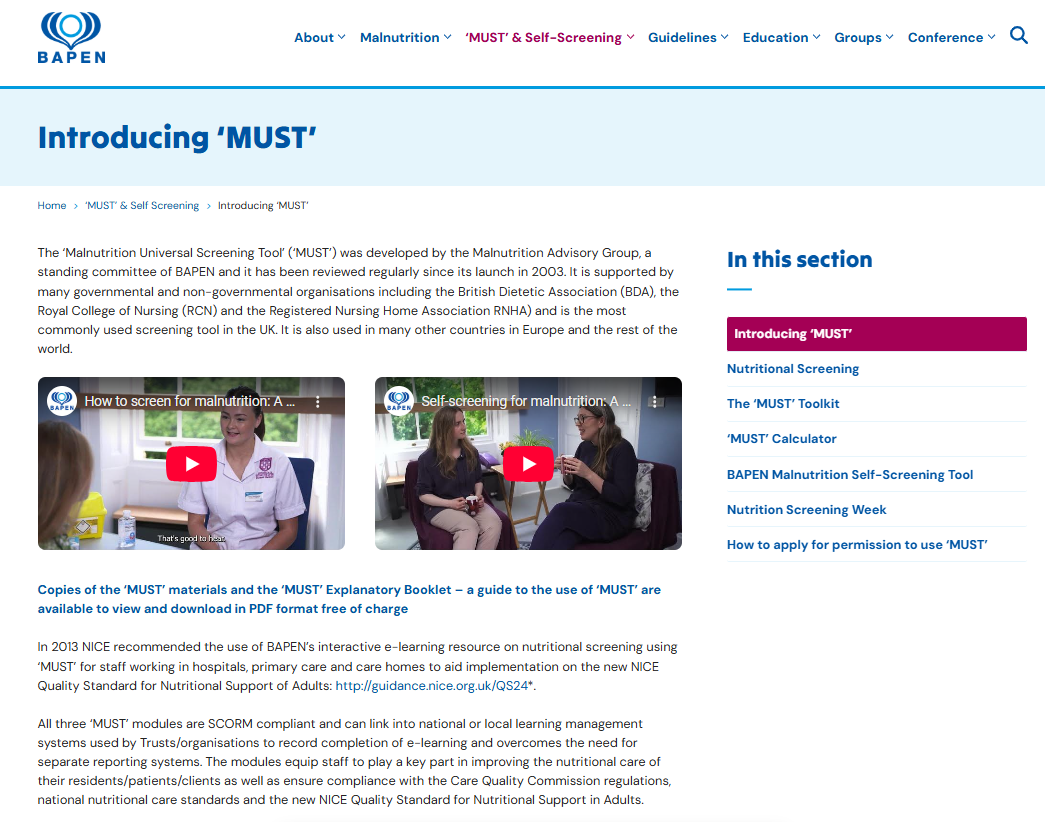
Malnutrition Universal Screening Tool

Tool

The ‘Malnutrition Universal Screening Tool’ (‘MUST’) is a widely used tool for identifying malnutrition risk in adults across various settings. It includes interactive e-learning modules with case studies and assessments, helping staff improve nutritional care and meet quality standards.

This resource was developed internationally and therefore its applicability and usefulness may be limited.
Author
External resource
Key Theme
Assessment and planning, Clinical safety, Food and nutrition
Standard
3: The Care and Services, 5: Clinical Care, 6: Food and Nutrition
Outcomes
3.1 Assessment and planning, 5.5: Safety of clinical care services, 6.2: Assessment of nutritional needs and preferences
Malnutrition Universal Screening Tool
/quality-standards/what-mini-nutritional-assessment-mna

What is the Mini Nutritional Assessment (MNA)?

Guidance, Tool

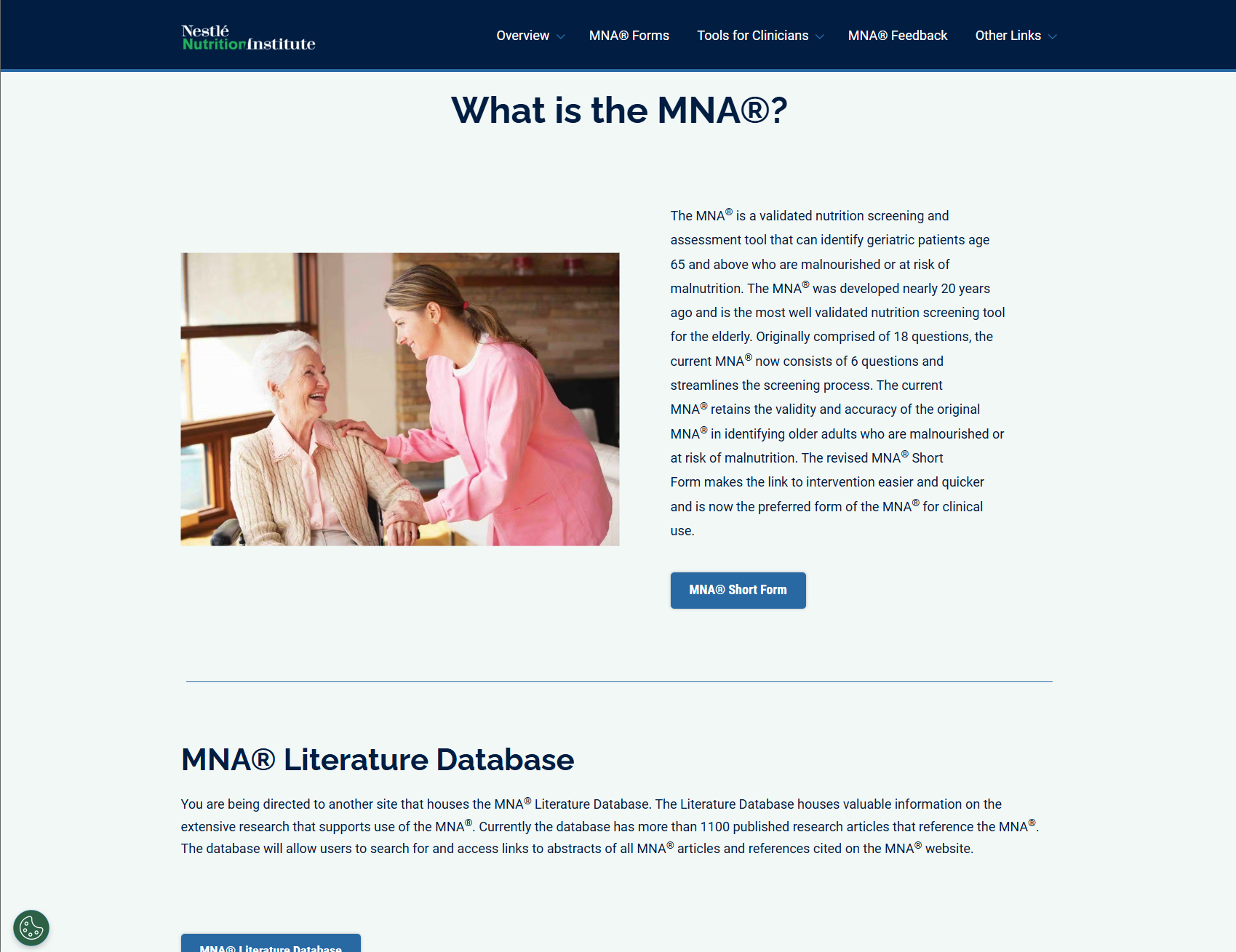
This resource is a validated nutrition screening and assessment tool to identify malnutrition or risk of malnutrition in people aged 65 and older. It includes an easy-to-use short form for quick identification and intervention planning.

This resource was developed internationally and therefore its applicability and usefulness may be limited.
Author
External resource
Key Theme
Assessment and planning, Clinical safety, Food and nutrition
Standard
3: The Care and Services, 5: Clinical Care, 6: Food and Nutrition
Outcomes
3.1 Assessment and planning, 5.5: Safety of clinical care services, 6.2: Assessment of nutritional needs and preferences
What is the Mini Nutritional Assessment (MNA)?
/quality-standards/guide-completing-mini-nutritional-assessment-short-form

A guide to completing the Mini Nutritional Assessment – Short Form

Tool

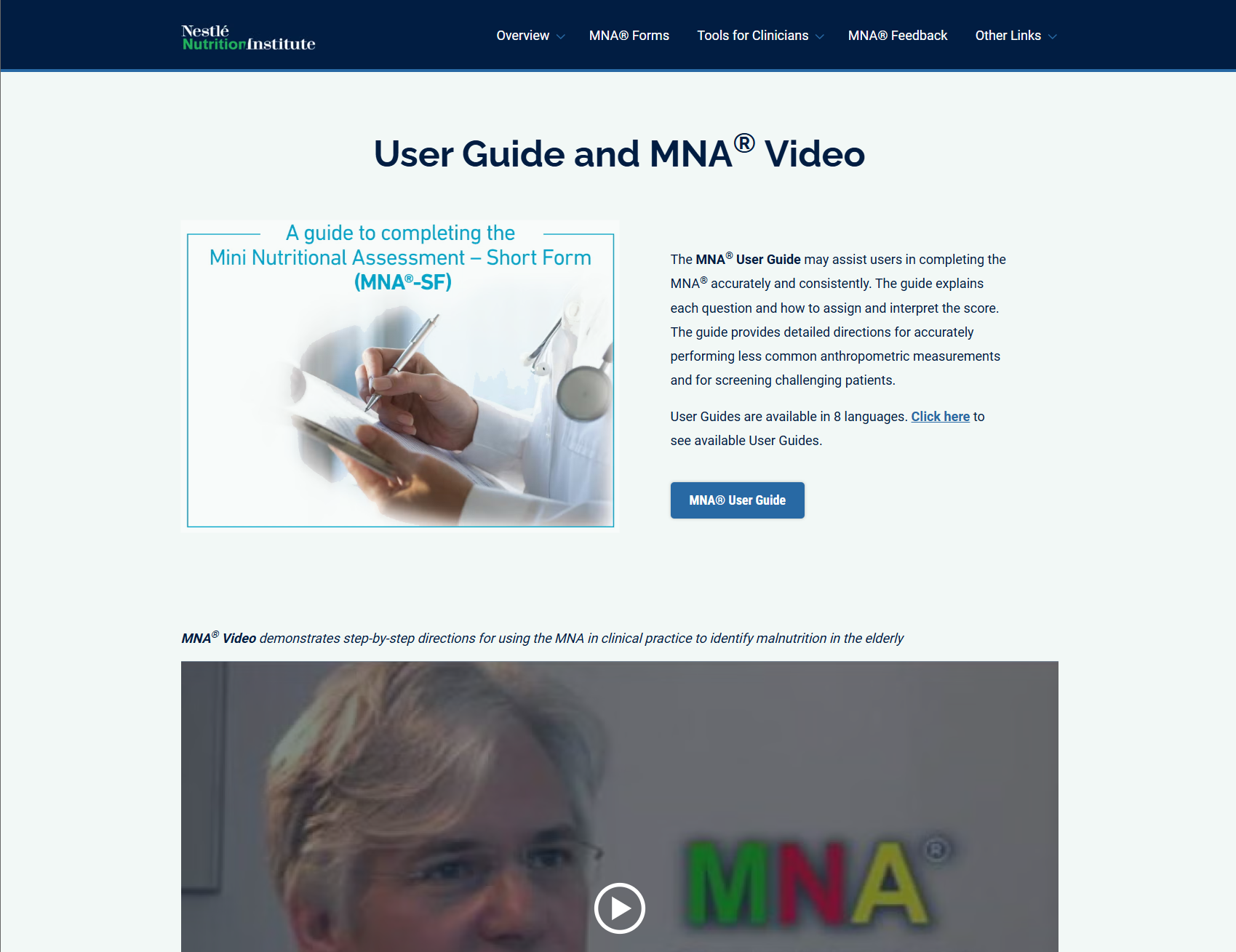
This resource is a guide and video for using the Mini Nutritional Assessment (MNA) to identify malnutrition in older people. It explains question scoring, interpretation, and measurement procedures, with a video demonstration.

This resource was developed internationally and therefore its applicability and usefulness may be limited.
Author
External resource
Key Theme
Assessment and planning, Clinical safety, Food and nutrition
Standard
3: The Care and Services, 5: Clinical Care, 6: Food and Nutrition
Outcomes
3.1 Assessment and planning, 5.5: Safety of clinical care services, 6.2: Assessment of nutritional needs and preferences
A guide to completing the Mini Nutritional Assessment – Short Form
/quality-standards/eat-10-swallowing-screening-tool

EAT-10: A Swallowing Screening Tool

Tool
Published date

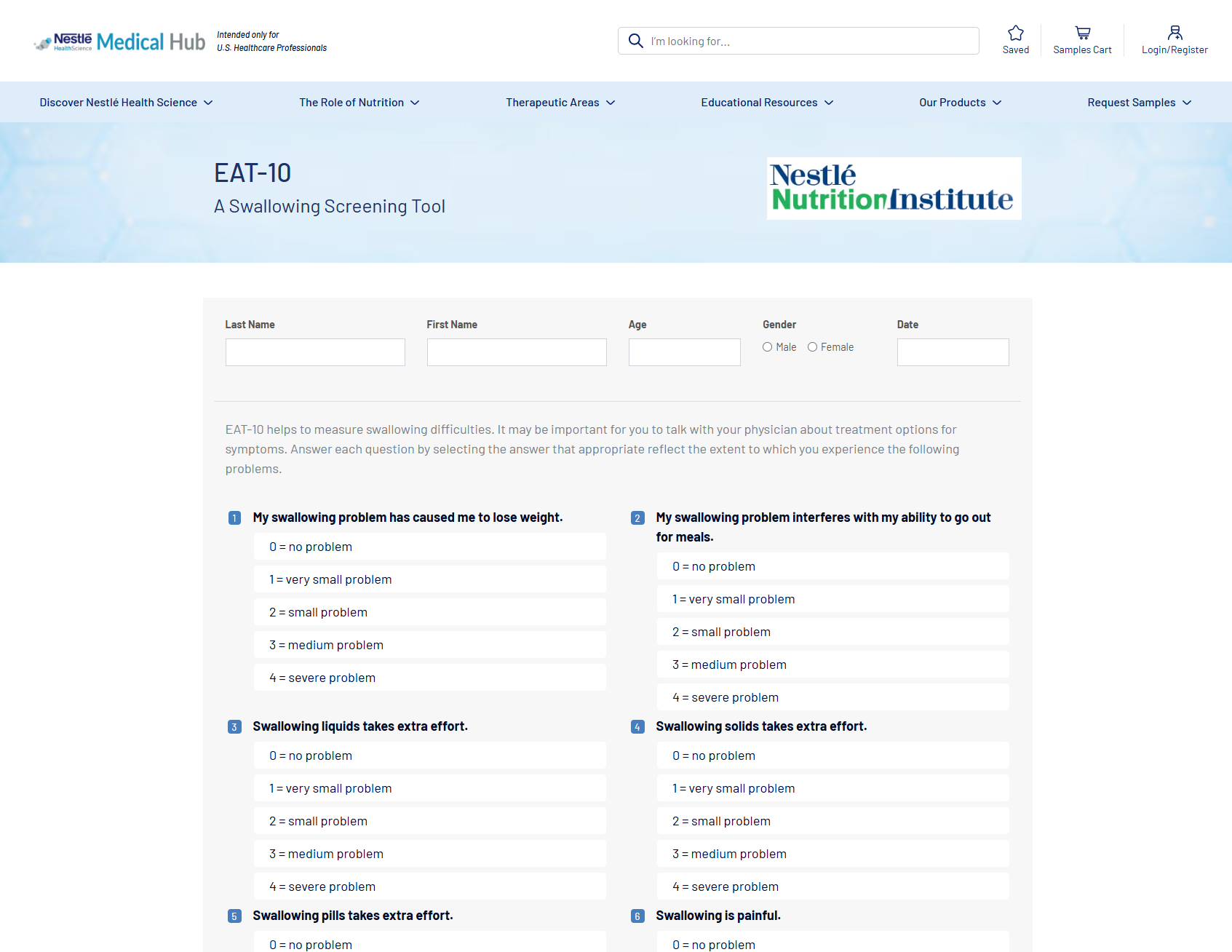
This resource offers a self-assessment tool to screen for swallowing difficulties by rating various aspects of swallowing function. A score of 3 or higher suggests potential issues that may require discussion with a healthcare provider.

This resource was developed internationally and therefore its applicability and usefulness may be limited.
Author
External resource
Key Theme
Assessment and planning, Clinical safety, Food and nutrition
Standard
3: The Care and Services, 5: Clinical Care, 6: Food and Nutrition
Outcomes
3.1 Assessment and planning, 5.5: Safety of clinical care services, 6.2: Assessment of nutritional needs and preferences
EAT-10: A Swallowing Screening Tool
/quality-standards/translating-and-interpreting-service-tis-national

Translating and Interpreting Service (TIS National)

Guidance, Tool

The Translating and Interpreting Service (TIS National) provides interpreting support for people with limited English proficiency and agencies requiring assistance to communicate with non-English-speaking clients. Services include telephone, on-site, and video interpreting, with options for both government and fee-paying clients across Australia.
Author
External resource
Key Theme
Person-centred care, Delivering comprehensive care and services
Standard
1: The Individual, 3: The Care and Services
Outcomes
1.1: Person-centred care, 3.3: Communicating for safety and quality
Translating and Interpreting Service (TIS National)
/quality-standards/trauma-informed-care-and-practice-organisational-toolkit

Trauma-informed Care and Practice Organisational Toolkit

Tool

This toolkit provides guidance for organisations on implementing trauma-informed care practices, aiming to improve safety, trust, and empowerment in care settings. It outlines strategies to adapt policies, environments, and staff approaches to better support people with trauma histories in various care environments.
Author
External resource
Key Theme
Person-centred care, Accountability and quality system, Delivering comprehensive care and services
Standard
1: The Individual, 2: The Organisation, 3: The Care and Services
Outcomes
1.1: Person-centred care, 2.3: Accountability, quality system and policies and procedures, 3.2: Delivery of funded aged care services
Trauma-informed Care and Practice Organisational Toolkit
/quality-standards/supported-decision-making

Supported decision-making

Tool

This resource explains supported decision-making, a process that helps people retain control over choices in their lives, even with cognitive challenges. It outlines how aged care providers can support people’s decisions, providing information in accessible formats and respecting autonomy, as endorsed by national and international rights frameworks.
Author
External resource
Key Theme
Choice, independence and quality of life, Assessment and planning
Standard
1: The Individual, 3: The Care and Services
Outcomes
1.3: Choice, independence and quality of life, 3.1 Assessment and planning
Supported decision-making
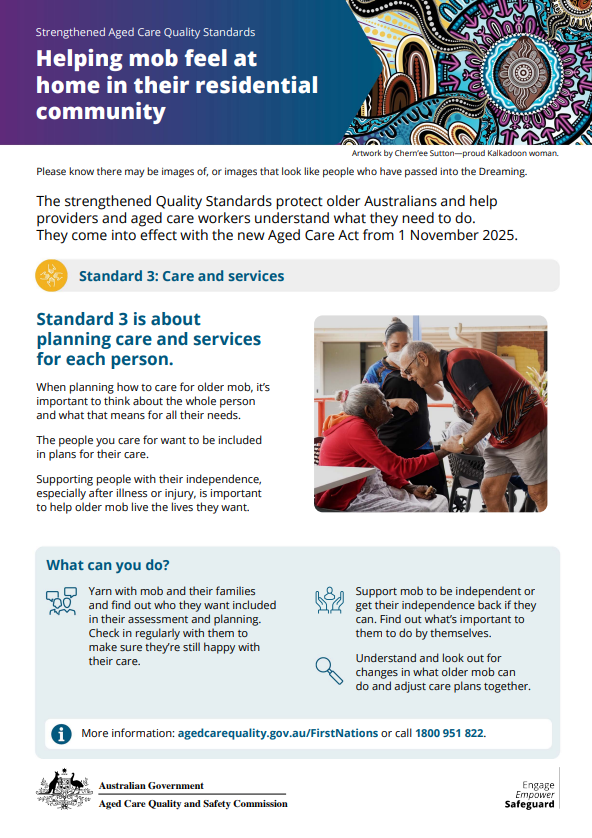
/quality-standards/first-nations-workplace-poster-standard-3-care-and-services

First Nations – Workplace poster – Standard 3 Care and services

Poster
Published date

These workplace standards posters demonstrate the strengthened Standards and what they mean for aged care providers and workers. You can print these out and display them around your workplace.

Author
Aged Care Quality & Safety Commission
Standard
3: The Care and Services
Planning person-centred care and services for older mob
/quality-standards/poster-principles-safe-and-high-quality-transitions-care

Poster - Principles of safe and high-quality transitions of care

Poster
Published date

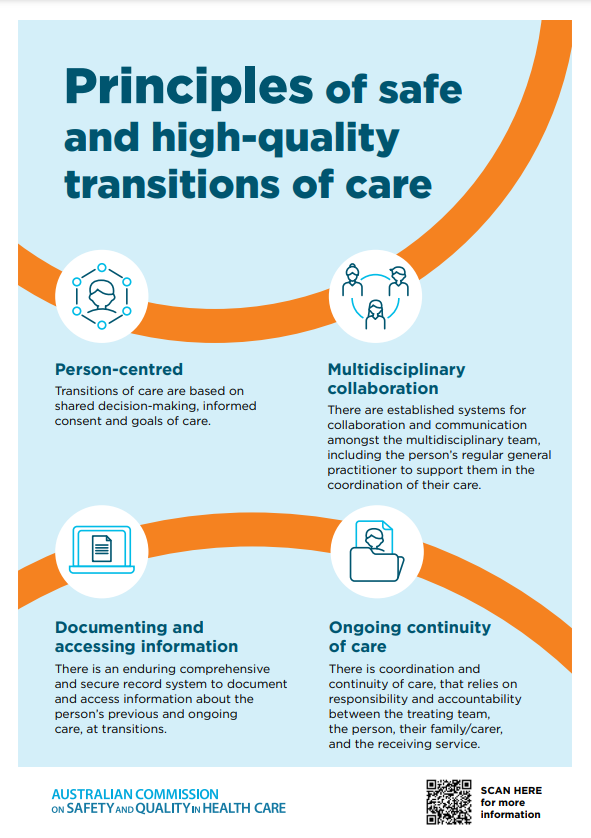
This resource outlines the principles of safe and high-quality transitions of care. It highlights the importance of person-centred care, multidisciplinary collaboration, and clear communication between providers. It ensures coordination, accountability, and secure documentation to support continuity of care when transferring people between care settings. This resource may refer to information that will be updated from 1 November 2025 to align with the new Aged Care Act and Quality Standards.
Author
Australian Commission On Safety And Quality In Health Care
Key Theme
Care coordination and transitions
Standard
3: The Care and Services, 7: The Residential Community
Outcomes
3.4: Planning and coordination of funded aged care services, 7.2: Transitions
Poster - Principles of safe and high-quality transitions of care
/quality-standards/food-and-drink-your-aged-care-supporting-informed-choice-and-risk-staff-poster

Food and drink in your aged care - supporting informed choice and risk - staff poster

Poster
Published date

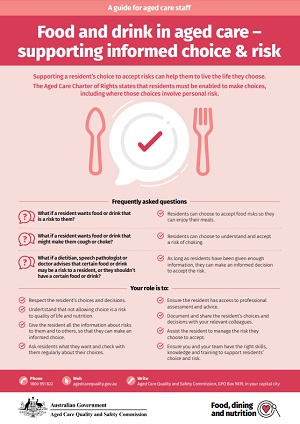
This resource provides guidance for aged care staff on supporting older people's informed choices regarding food and drink, even when those choices involve personal risks. It encourages staff to respect resident autonomy, provide information on risks, document decisions, and ensure access to professional advice, promoting dignity and quality of life in care settings. This resource may refer to information that will be updated from 1 November 2025 to align with the new Aged Care Act and Quality Standards. 
 

Author
Aged Care Quality & Safety Commission
Key Theme
Choice, independence and quality of life, Food and nutrition, Delivering comprehensive care and services
Standard
1: The Individual, 3: The Care and Services, 6: Food and Nutrition, 7: The Residential Community
Outcomes
3.2: Delivery of funded aged care services, 1.3: Choice, independence and quality of life, 6.3: Provision of food and drinks, 7.1: Daily living
thumbnail food and drink poster
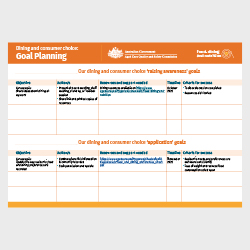
/quality-standards/goal-planning-tool

Goal planning tool

Guides, Tool
Published date

This resource is a goal planning tool designed to support aged care providers in improving food, dining, nutrition, and consumer choice. It helps providers set objectives, track progress, and implement actions to enhance service quality, ensuring that people’s preferences and dietary needs are consistently met​. 

This resource may refer to information that will be updated from 1 November 2025 to align with the new Aged Care Act and Quality Standards. 

Goal planning tool  (PDF  899.52 KB)
Author
Aged Care Quality & Safety Commission
Key Theme
Choice, independence and quality of life, Assessment and planning
Standard
3: The Care and Services, 1: The Individual
Outcomes
3.1 Assessment and planning, 1.3: Choice, independence and quality of life
Goal planning document with an orange header and two tables with four columns and three rows
/quality-standards/first-nations-digital-flipchart-your-rights-aged-care

First Nations - Digital Flipchart - Your rights in aged care

Presentations, Tool
Published date

A visual guide for conversations between providers/workers and older people about aged care. It includes notes for providers/workers to help guide the conversation.

Author
Aged Care Quality & Safety Commission
Key Theme
Feedback and complaints management system, Assessment and planning, Person-centred care
Standard
1: The Individual, 2: The Organisation, 3: The Care and Services
Outcomes
1.1: Person-centred care, 2.6b: Complaints and feedback management for individuals, 3.1 Assessment and planning
Your rights in aged care cover page
/quality-standards/first-nations-stakeholder-communications-toolkit

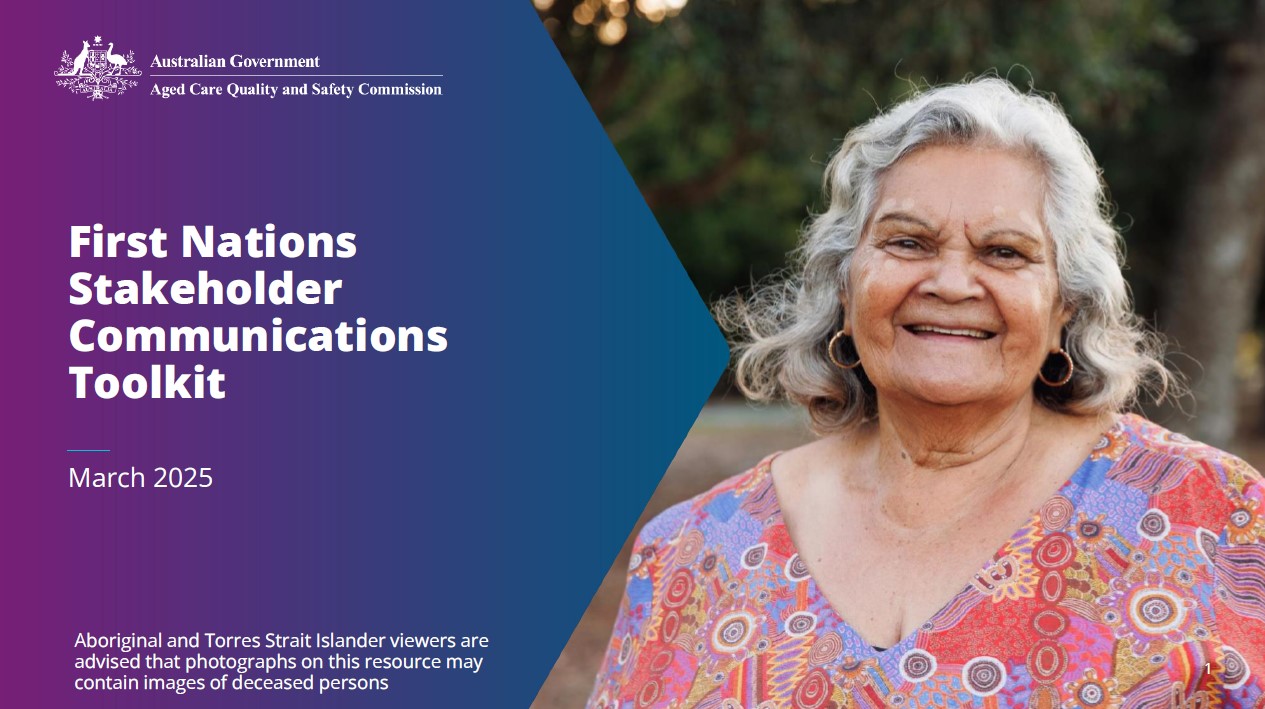
First Nations - Stakeholder Communications Toolkit

Guidance, Tool
Published date
Last Updated

This Toolkit is designed for First Nations stakeholders including providers, workers and others involved in providing aged care services for First Nations people. We’ve developed it to make it easy for you to share relevant resources with your networks and members

Author
Aged Care Quality & Safety Commission
Key Theme
Person-centred care, Corporate and clinical governance, Delivering comprehensive care and services
Standard
1: The Individual, 2: The Organisation, 3: The Care and Services
Outcomes
1.1: Person-centred care, 2.1: Partnering with individuals, 3.2: Delivery of funded aged care services
First Nations Resources – Communications Toolkit