The Quality Standards Resource Centre helps extend understanding of the strengthened Aged Care Quality Standards, which took effect from 1 November 2025. You can search for resources by using keywords, or filtering by standard, outcome and audience. Before using the Resource Centre, please read the terms of use.
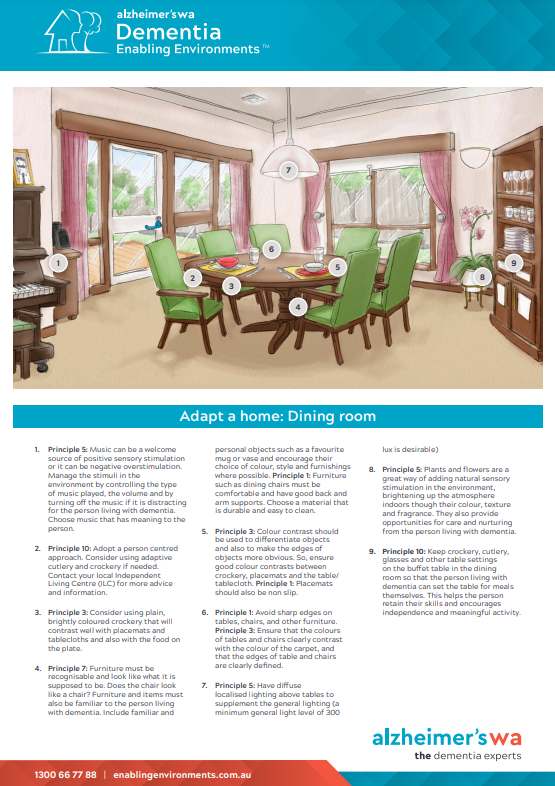
Dementia enabling environments - Adapt a home: Dining room
This resource, developed by Alzheimer's WA, is a Dementia Enabling Environments illustration information sheet about adapting a home, focusing on the dining room. It includes principles to integrate enabling design and make changes within the physical environment to maximise enablement and wellbeing for people living with dementia.
This resource was developed by a state/territory government or organisation and therefore its applicability and usefulness may be limited.
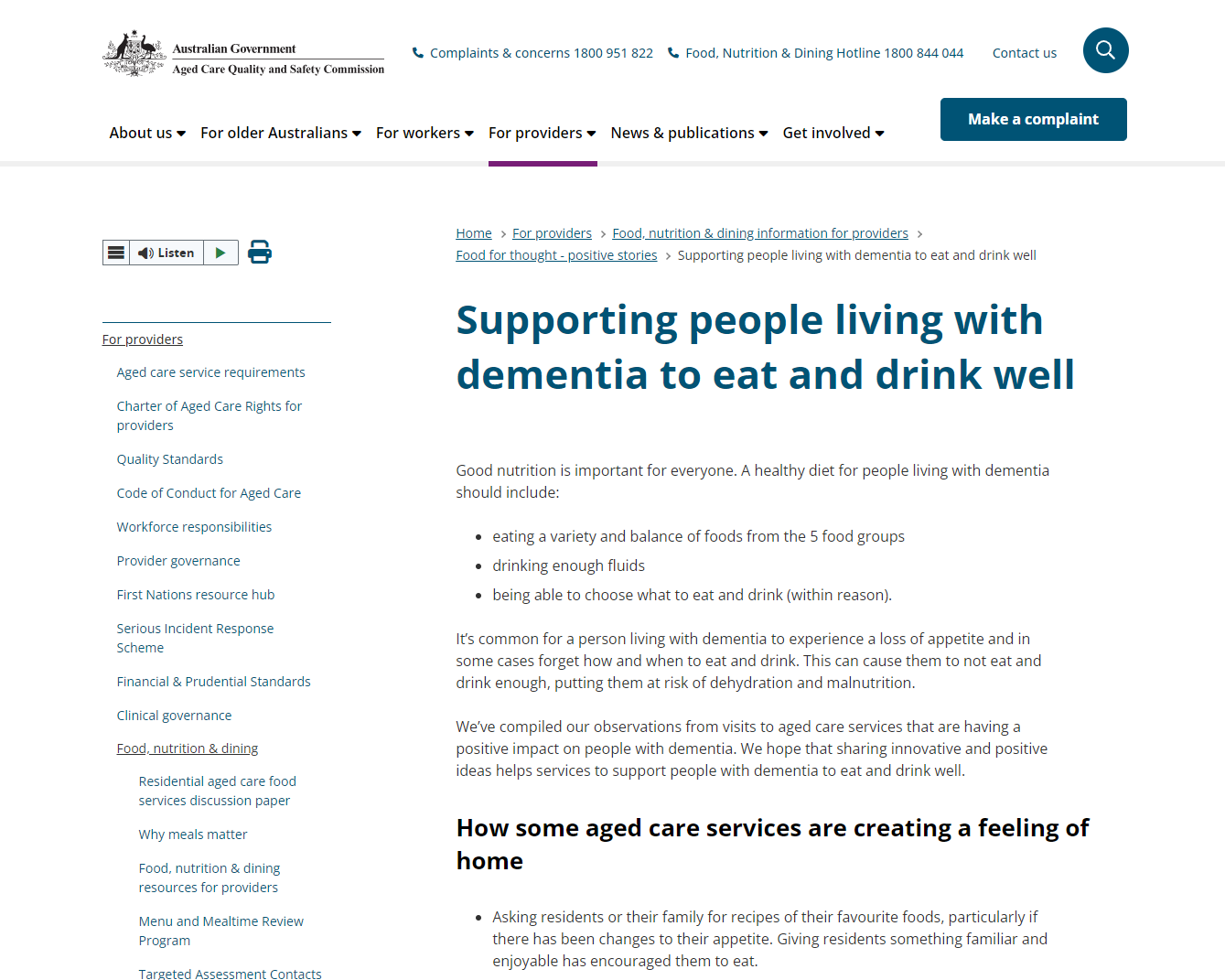
Supporting people living with dementia to eat and drink well
This resource provides guidance for aged care services on how to support people living with dementia to eat and drink well. It highlights innovative approaches such as creating familiar, enjoyable meals, reducing mealtime interruptions, and offering 24-hour access to nutritious foods. These strategies help address challenges like malnutrition and dehydration.
This resource may refer to information that will be updated from 1 November 2025 to align with the new Aged Care Act and Quality Standards.
Infection prevention and control in aged care - Cognitive decline and dementia
How to create an environment with strong infection prevention and control practices while continuing to provide a positive experience for people with cognitive decline and dementia.
This resource may refer to information that will be updated from 1 November 2025 to align with the new Aged Care Act and Quality Standards

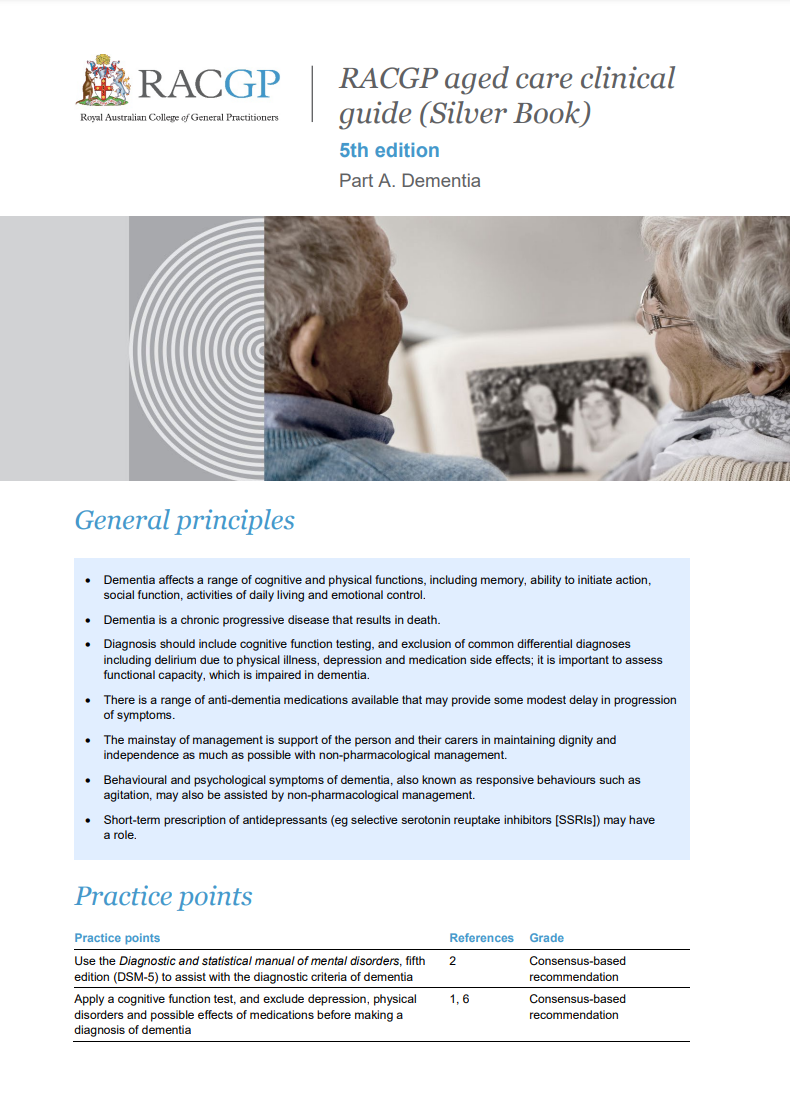
RACGP aged care clinical guide (Silver Book) - Part A - Dementia
This resource offers guidance on diagnosing and managing dementia, covering its impact on cognitive and physical functions, screening methods, and differential diagnoses. It discusses appropriate use of medications, non-pharmacological approaches, and ongoing care plans for supporting those with dementia. It includes practical recommendations on cognitive assessments, functional reviews, and medication management.
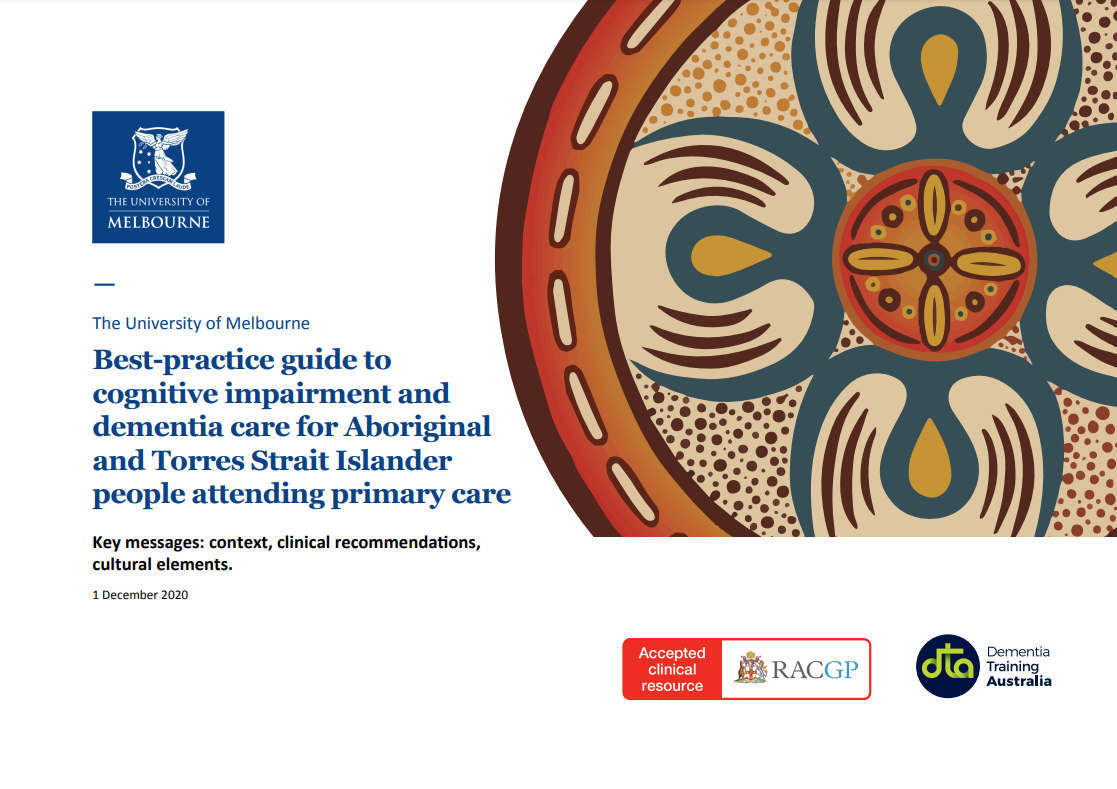
Cognitive impairment and dementia care for Aboriginal and Torres Strait Islander people
This resource is a best-practice guide to cognitive impairment and dementia care for Aboriginal and Torres Strait Islander people attending primary health care. It combines clinical evidence with cultural principles, addressing health promotion, prevention, detection, and management of dementia, while also providing culturally informed recommendations on end-of-life care and support for carers within the context of primary care services.
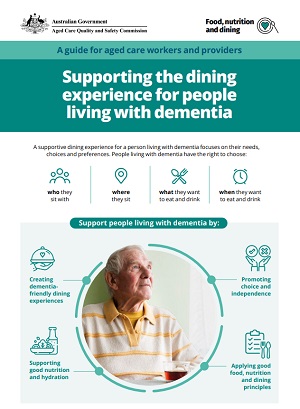
Supporting the dining experience for people living with dementia – Providers and workers guide
This guide is about how to support people living with dementia to maintain good nutrition and enjoy positive dining experiences.
This resource may refer to information that will be updated from 1 November 2025 to align with the new Aged Care Act and Quality Standards.
Half the story: A guide to meaningful consultation with people living with dementia, families and carers
This resource is a guide for meaningful consultation with people living with dementia, their families, and carers. It covers planning, ethical considerations, communication methods, and ways to improve accessibility. The guide offers strategies to ensure the voices of those living with dementia are respected, valued, and effectively integrated into decision-making processes.
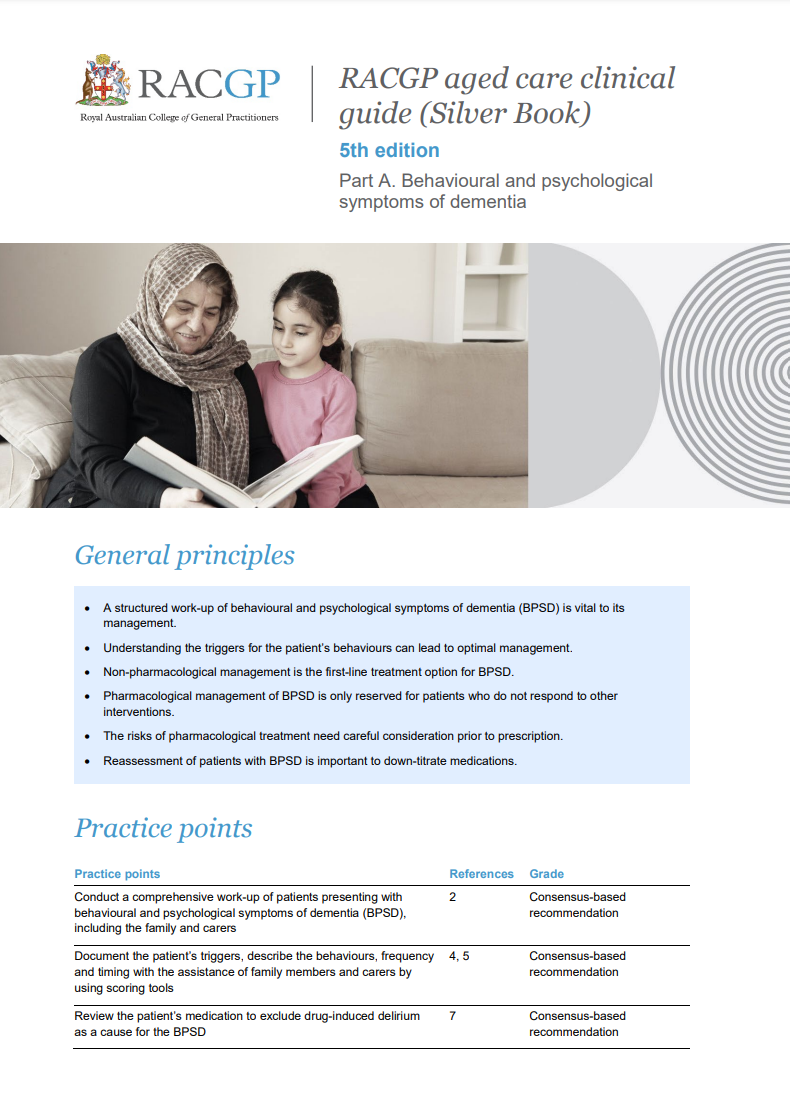
RACGP aged care clinical guide (Silver Book) - Part A - Behavioural and psychological symptoms of dementia
This guide offers principles and practice points for assessing and managing behavioural and psychological symptoms of dementia (BPSD) in aged care. It includes frameworks for comprehensive patient assessment, non-pharmacological and pharmacological interventions, medication review, and personalised care plans to improve care outcomes for dementia patients.
How to support everyday decision-making for people living with dementia in residential aged care: A guide for care workers
This guide offers practical strategies for care workers to support people with dementia in making everyday decisions within residential aged care settings. It covers communication techniques, promoting choice in personal care and daily activities, understanding body language, and emphasises person-centred care while respecting residents' preferences, dignity, and rights.
Designing dementia-friendly care environments
This resource provides guidance for professionals on designing dementia-friendly care environments to help people living with dementia to make the best of everyday life. It includes dementia enabling environment principles and an example of how to design a space using the principles. The resource also includes links to other Dementia Australia resources about developing a dementia-friendly environment.
Familiar Places Webinar 2 – Bedrooms and Dining Areas
This webpage provides a video webinar focused on familiar places, such as bedrooms and dining areas, for dementia care environments. It offers insights into how these spaces can be designed to support the wellbeing of people living with dementia, with a particular emphasis on creating comfortable and familiar settings.
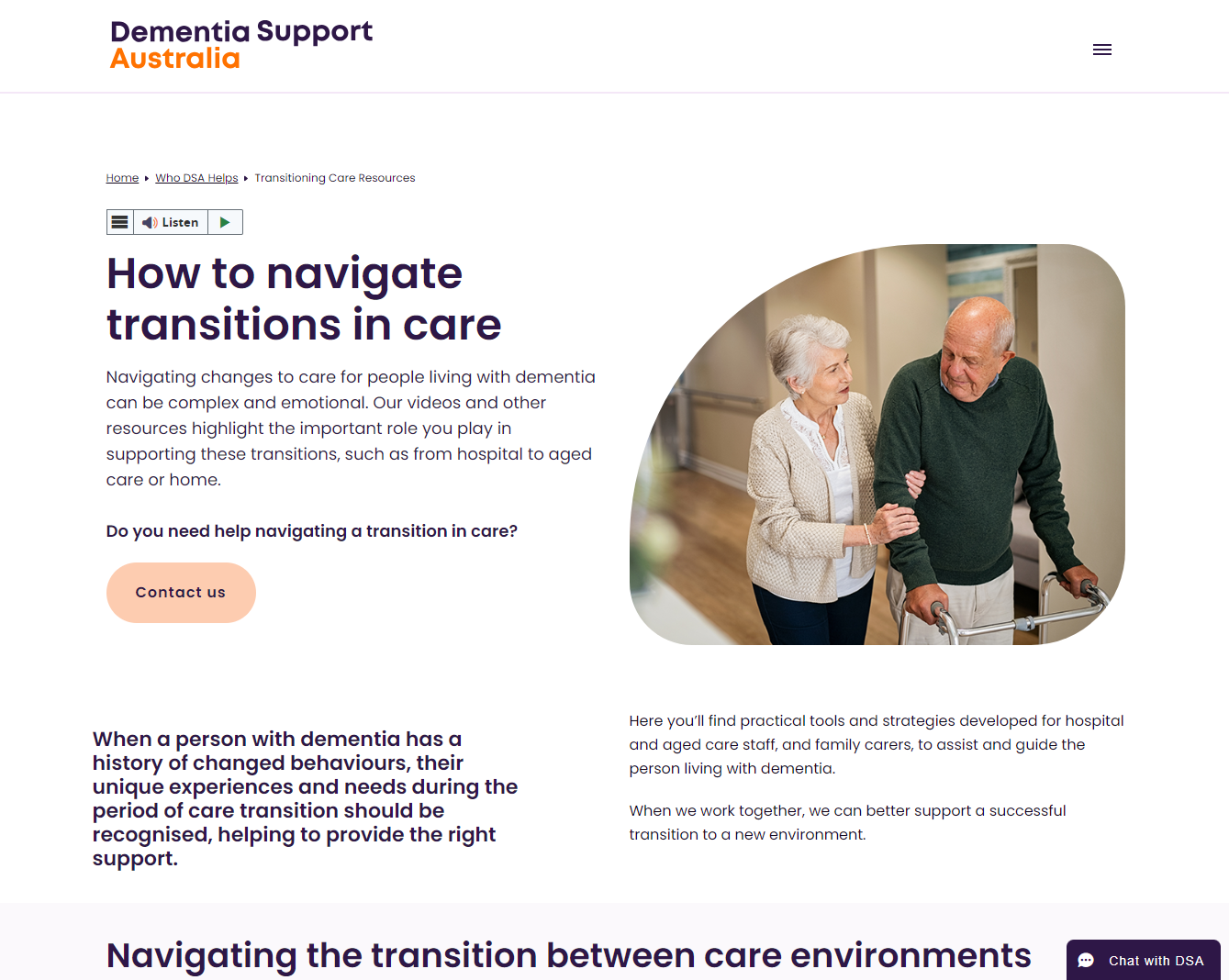
How to navigate transitions in care
This resource offers tools and strategies for navigating care transitions for people living with dementia. It provides support to hospital, aged care staff, and family carers, ensuring that the unique needs of those with dementia are met during transitions, such as moving from hospital to aged care or home.
Abbey Pain Scale
This resource introduces the Abbey Pain Scale, a non-verbal pain assessment tool designed for identifying pain in people living with dementia. It aids healthcare professionals in recognising pain behaviours in those unable to communicate their needs effectively, supporting timely and appropriate pain management interventions.
Bedrooms and privacy
This resource offers guidance on maintaining personal identity for people with dementia by fostering respect, independence, and communication. It suggests environmental and social modifications to enhance dignity, such as personalising spaces, supporting mobility, and addressing unmet needs.
This resource was developed by a state/territory government or organisation, and therefore its applicability and usefulness may be limited.
Maintaining personal identity
This resource offers guidance on maintaining personal identity for people with dementia by fostering respect, independence, and communication. It suggests environmental and social modifications to enhance dignity, such as personalising spaces, supporting mobility, and addressing unmet needs.
This resource was developed by a state/territory government or organisation, and therefore its applicability and usefulness may be limited.
Dementia-friendly environments - Personal enjoyment
This resource provides guidance on fostering personal enjoyment for people with dementia, encouraging meaningful activities based on life history and familiar roles. It includes ideas for sensory engagement, physical activity, and social connection in home-like settings.
This resource was developed by a state/territory government or organisation and therefore its applicability and usefulness may be limited.
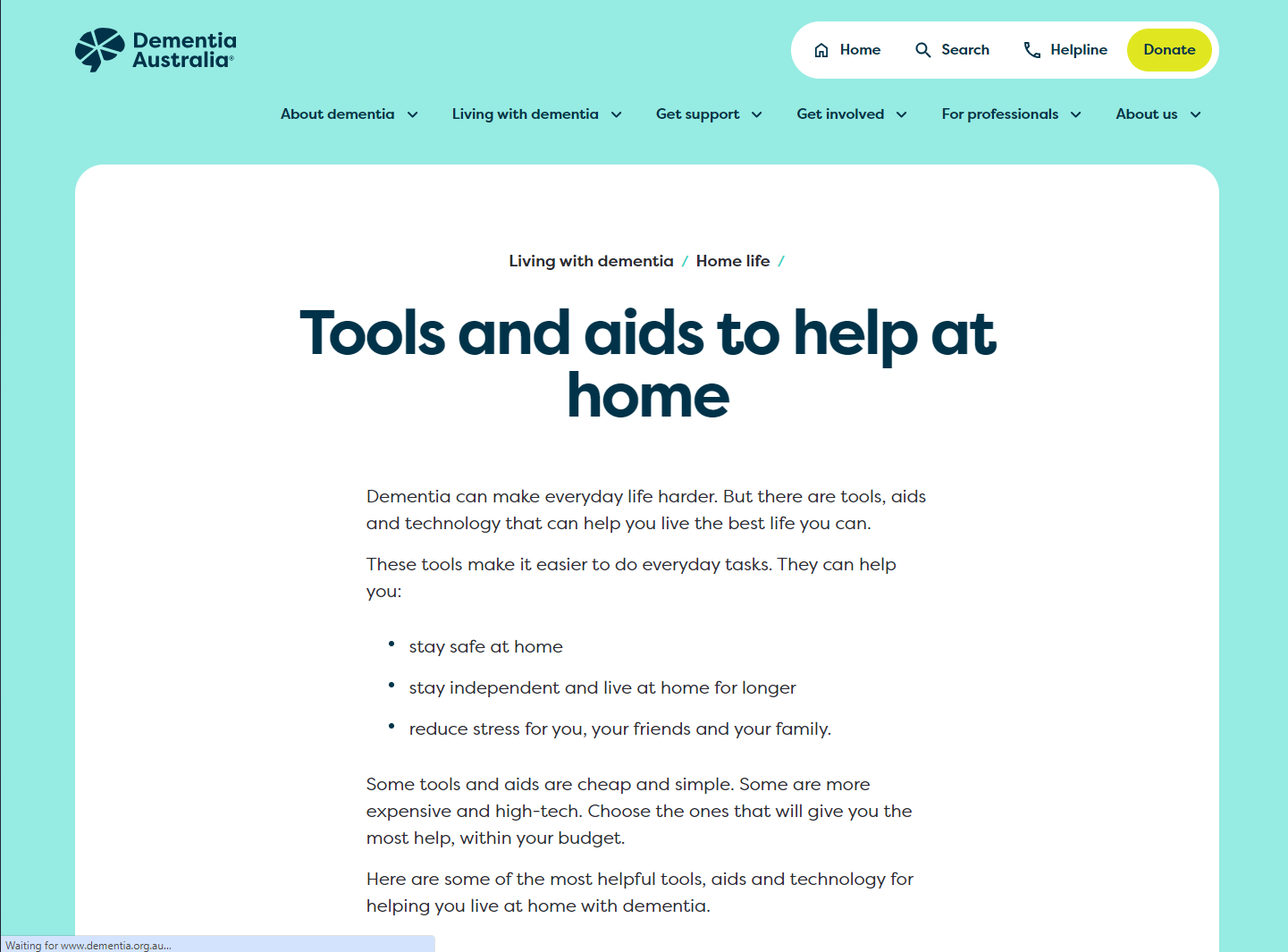
Tools and aids to help at home
This resource outlines tools, aids, and technology to help people with dementia live safely and independently at home. It includes medication reminders, safety devices, communication tools, and sensory aids. The document provides guidance on selecting appropriate tools to support daily tasks, reduce stress, and maintain quality of life at home.
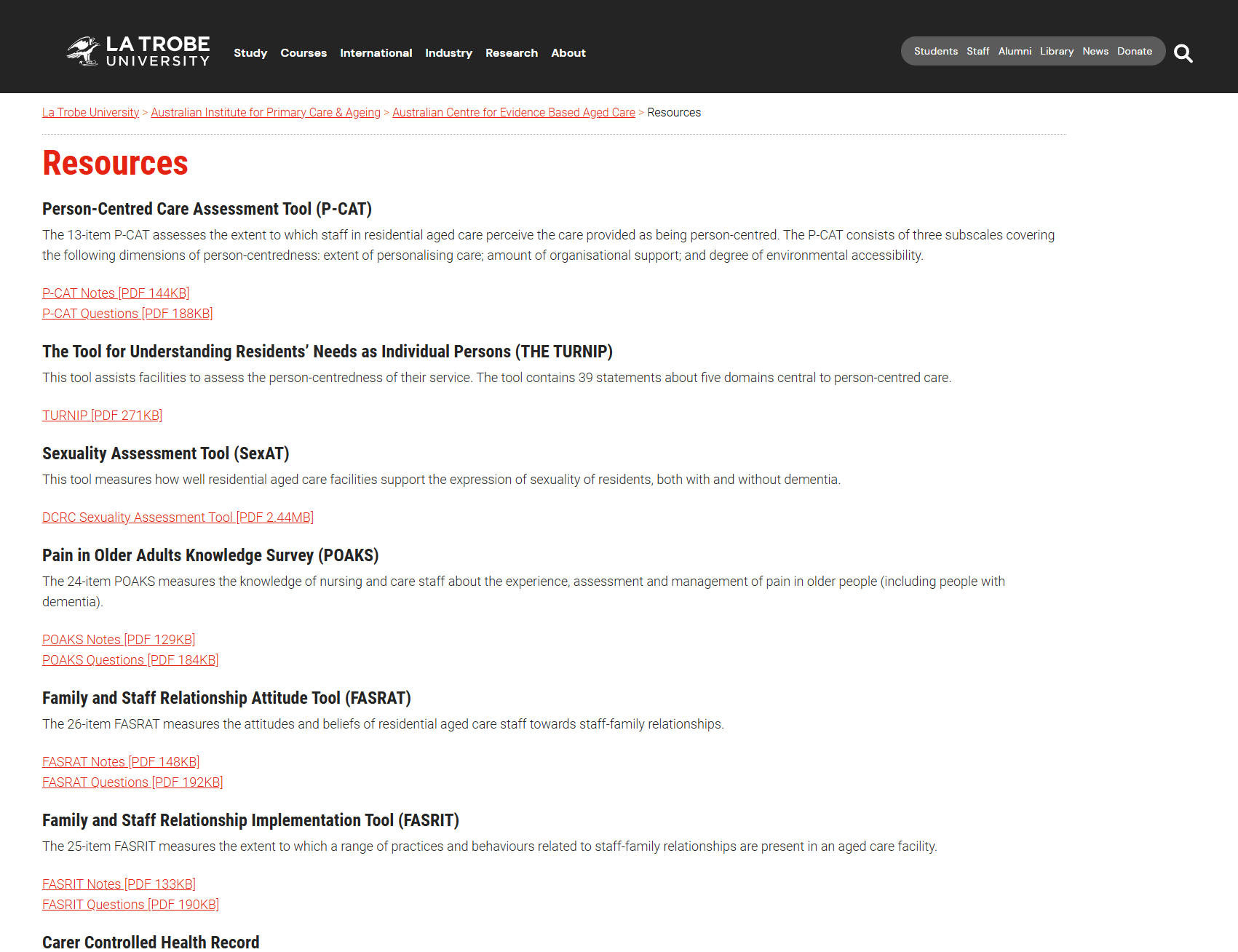
Australian Centre for Evidence Based Aged Care - Resources
This resource provides a collection of tools and guidelines for improving person-centred care in aged care settings. It includes assessments on care personalisation, pain management, staff-family relationships, and support for sexuality and decision-making for people with dementia.
This resource was developed by a state/territory government or organisation and therefore its applicability and usefulness may be limited.
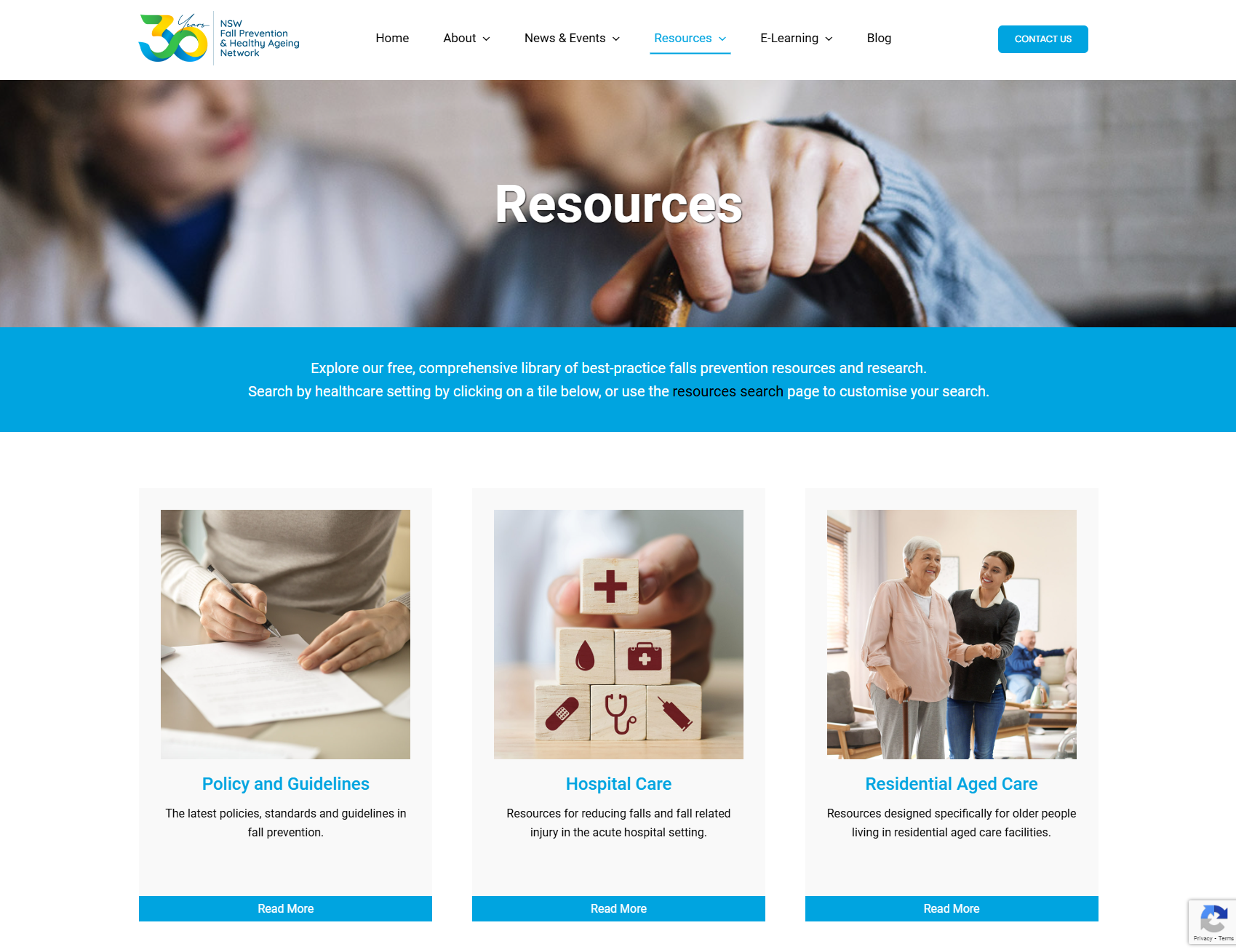
NSW Fall Prevention and Healthy Ageing Network - Resources
This resource provides a comprehensive library of best-practice resources for falls prevention and healthy ageing across various care settings. It offers materials tailored to hospital, residential, community, and dementia care environments, supporting safe and active ageing
This resource was developed by a state/territory government or organisation and therefore its applicability and usefulness may be limited.
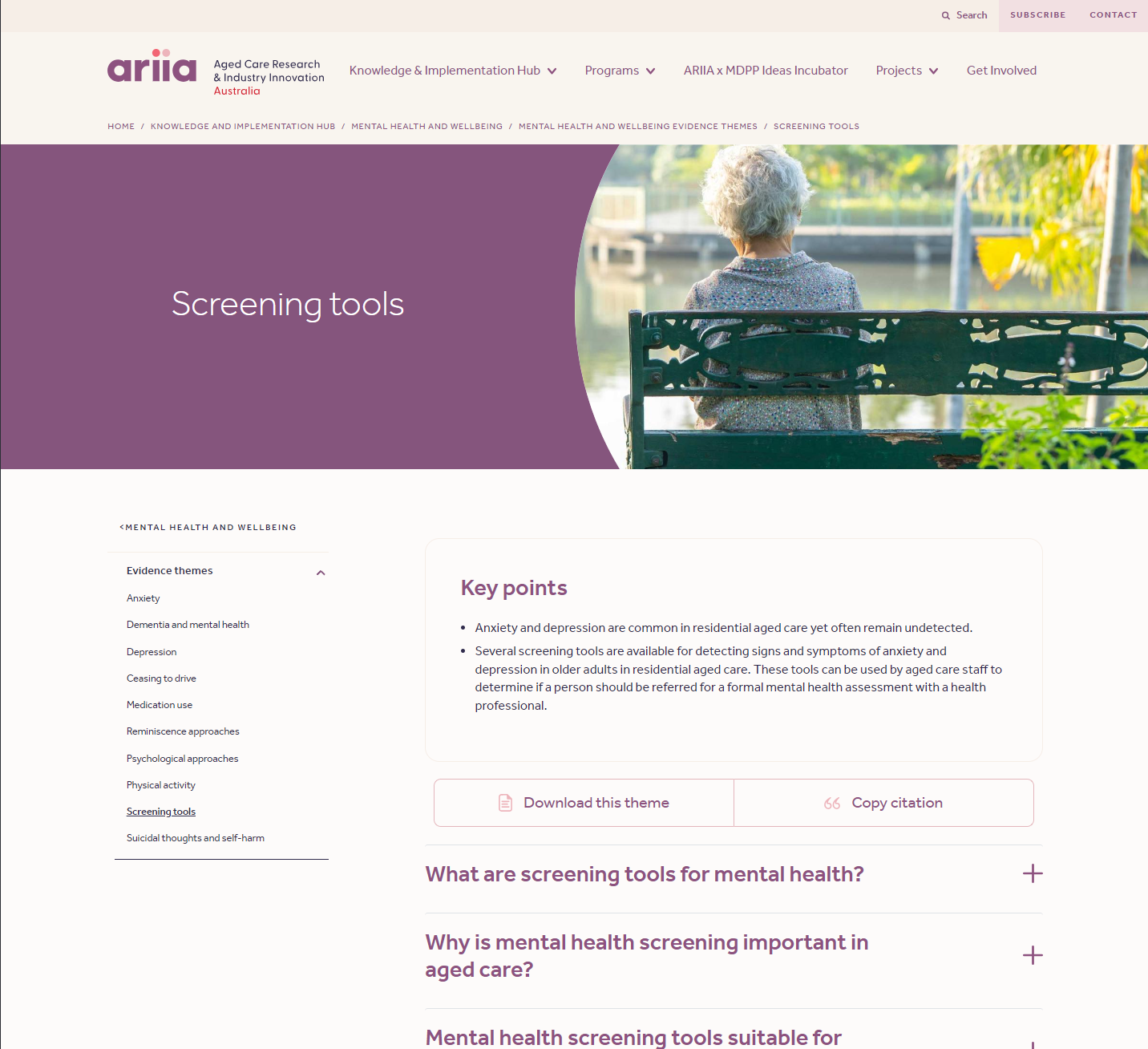
Mental health and wellbeing - Screening tools
This resource covers screening tools for detecting anxiety and depression in older adults, especially in residential aged care. It discusses the importance of mental health screening, steps individuals and organisations can take, choosing appropriate tools, and highlights tools such as the Geriatric Depression Scale and Cornell Scale for Depression in Dementia. It emphasises early detection and routine mental health screening in aged care.