The Quality Standards Resource Centre helps extend understanding of the strengthened Aged Care Quality Standards, which took effect from 1 November 2025. You can search for resources by using keywords, or filtering by standard, outcome and audience. Before using the Resource Centre, please read the terms of use.
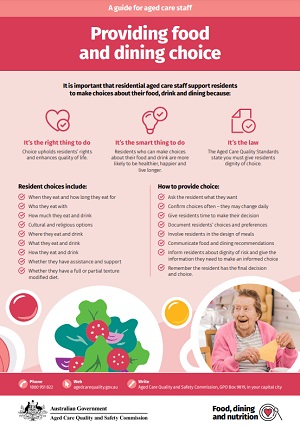
Providing food and dining choice - aged care staff poster
This guide supports aged care staff in providing food and dining choices for residents. It outlines the importance of upholding residents' rights to choose, enhancing their health and quality of life. The guide recommends confirming preferences regularly, involving residents in meal planning, and respecting individual choices regarding when, where, and what they eat or drink. This resource may refer to information that will be updated from 1 November 2025 to align with the new Aged Care Act and Quality Standards.
 Providing food and dining choice - aged care staff poster (PDF 445.57 KB)
Measurement tools for assessing quality of life, consumer satisfaction and consumer experience across residential and in-home aged care: Summary Report
This report reviews validated tools for measuring quality of life, consumer satisfaction, and experience in aged care, assessing their suitability for residential and home care. It provides an evidence-based ranking of tools to support aged care providers in quality improvement, accountability, and aligning with the National Aged Care Quality Indicator Program.
This resource may refer to information that will be updated from 1 November 2025 to align with the new Aged Care Act and Quality Standards.
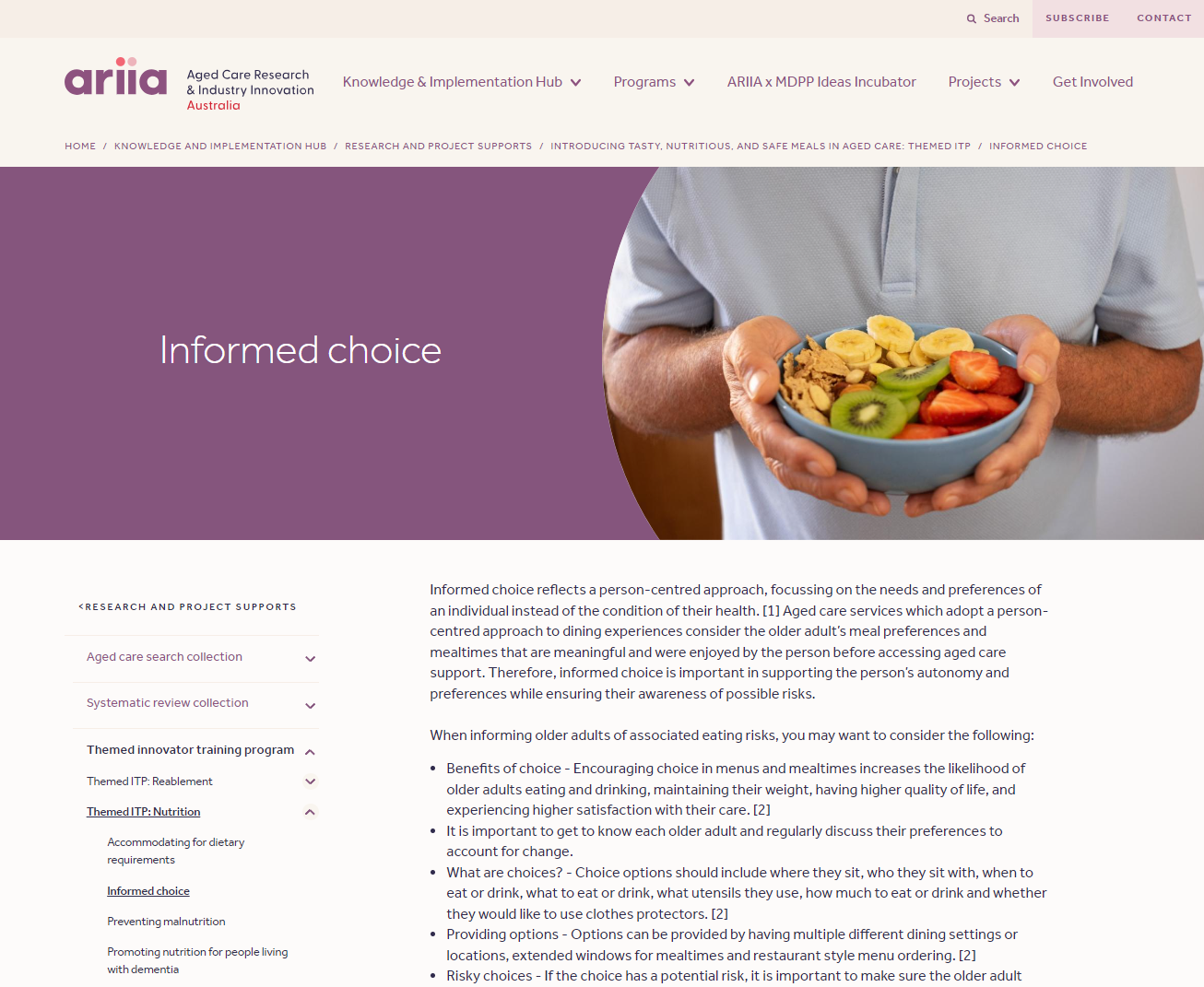
Nutrition - Informed choice
This resource discusses the importance of informed choice in aged care dining, emphasising a person-centred approach. It highlights the benefits of offering choice in meals and mealtimes, outlines how to manage decisions that involve risk, and provides tools for aged care workers to support resident autonomy while ensuring safety and satisfaction.
This resource may refer to information that will be updated from 1 November 2025 to align with the new Aged Care Act and Quality Standards.
NSQHS Standards User Guide for the Health Care of People with Intellectual Disability
This resource provides guidance for the health care of people with intellectual disability. The user guide is part of the Australian Commission on Safety and Quality in Health Care's National Safety and Quality Health Service (NSQHS) Standards. The resource was developed in response to significant evidence of poor health outcomes for people with intellectual disability in Australia’s health system.
This resource may refer to information that will be updated from 1 November 2025 to align with the new Aged Care Act and Quality Standards.
National Safety and Quality Health Service Standards (second edition)
This resource outlines the second edition of the National Safety and Quality Health Service (NSQHS) Standards. It aims to protect people from harm and improve healthcare quality. The 8 standards cover areas like clinical governance, infection control, and medication safety, supporting aged care providers in meeting safety and quality expectations.
This resource may refer to information that will be updated from 1 November 2025 to align with the new Aged Care Act and Quality Standards.
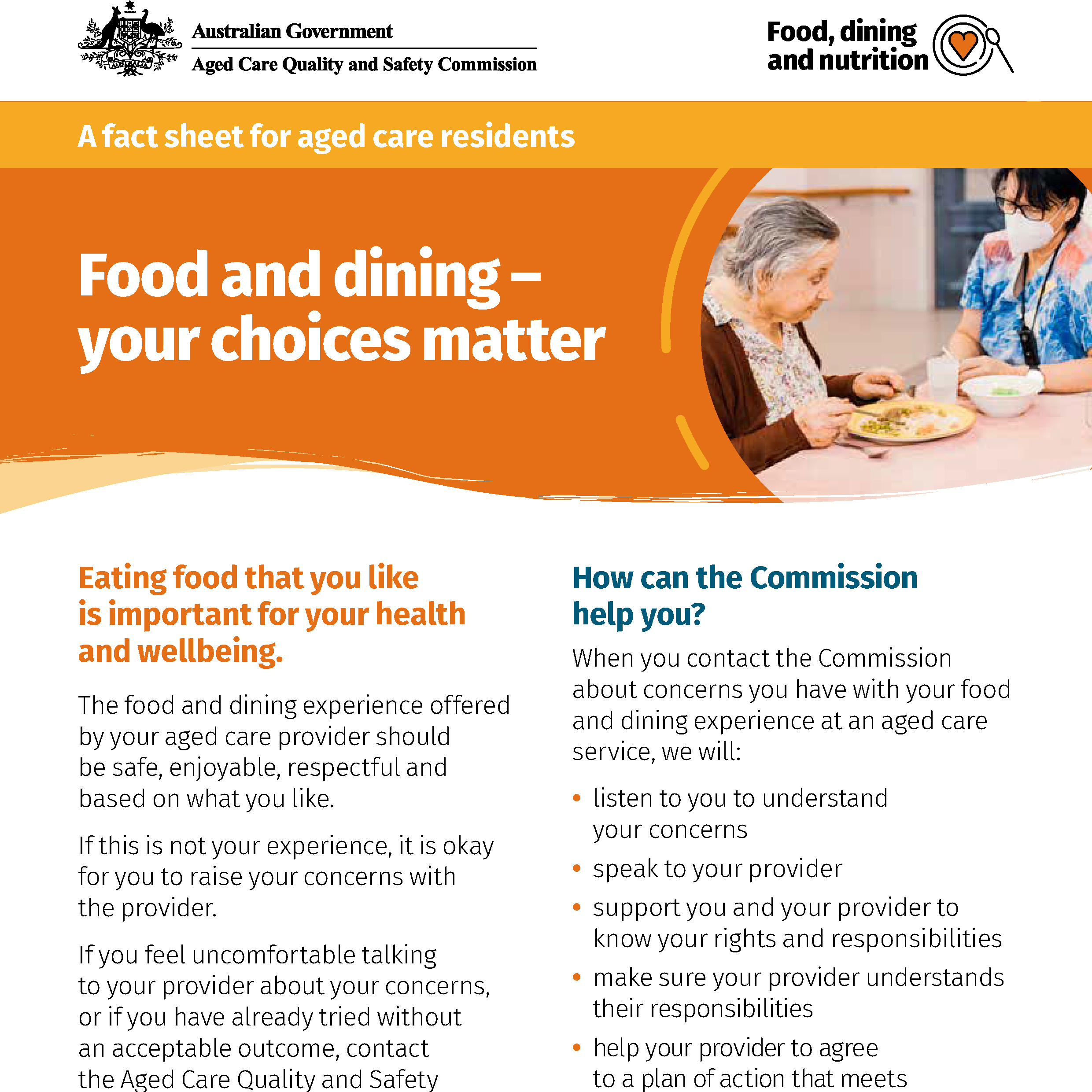
Food and dining - your choices matter
This fact sheet informs aged care residents of their rights to safe, enjoyable, and respectful dining experiences. It outlines steps for raising concerns with providers about food and dining, offers a preference form for residents to communicate their dietary needs, and provides contact information for support services if issues remain unresolved. This resource may refer to information that will be updated from 1 November 2025 to align with the new Aged Care Act and Quality Standards.
English - Food and dining – your choices matter (PDF 484.79 KB)
Arabic - تهمّّنا تفضيلاتكم في الطعام وعادات الأكل (PDF 767.17 KB)
Chinese Simplified - 食品和餐饮—— 您的选择很重要 (PDF 785.39 KB)
Chinese Traditional - 食品和餐飲—— 您的選擇很重要 (PDF 788.7 KB)
French - Alimentation et repas – vos choix sont importants (PDF 684.4 KB)
German - Essen und Speisen – Ihre Wahl zählt (PDF 686.18 KB)
Greek - Φαγητό και γεύματα – οι επιλογές σας έχουν σημασία (PDF 690.89 KB)
Hungarian - Ételek és étkezés – az Ön döntése számít (PDF 684.42 KB)
Macedonian - Храна и јадење - вашиот избор е важен (PDF 683.21 KB)
Maltese - L-ikel u l-ikliet - l-għażliet tiegħek huma importanti (PDF 685.65 KB)
Russian - Питание и прием пищи: ваш выбор имеет значение (PDF 682.53 KB)
Serbian - Храна и обедовање – ваш избор је важан (PDF 681.46 KB)
Spanish - Alimentos y comidas: sus preferencias importan (PDF 679.42 KB)
Older Persons Advocacy Network
This resource provides information on aged care advocacy services, offering free and confidential support to older people receiving government-funded aged care. It includes resources to help people understand their rights, navigate the aged care system, and access advocacy for issues such as care quality, decision-making, and protection from harm.
This resource may refer to information that will be updated from 1 November 2025 to align with the new Aged Care Act and Quality Standards.
National Model Clinical Governance Framework
This framework provides a consistent national approach to clinical governance in healthcare, focusing on governance structures, leadership, culture, safety and quality improvement systems, clinical performance, care environment, and consumer partnerships. It supports healthcare organisations in developing systems to ensure accountability, safety, quality of care, and continuous improvement, following the NSQHS Standards.
This resource may refer to information that will be updated from 1 November 2025 to align with the new Aged Care Act and Quality Standards.
How to support everyday decision-making for people living with dementia in residential aged care: A guide for care workers
This guide offers practical strategies for care workers to support people with dementia in making everyday decisions within residential aged care settings. It covers communication techniques, promoting choice in personal care and daily activities, understanding body language, and emphasises person-centred care while respecting residents' preferences, dignity, and rights.
Digital health - For healthcare providers
This resource provides guidance for aged care assessors and service providers on accessing and using the My Aged Care portals. It outlines steps for setting up secure access through authentication methods, managing organisation information, and creating staff accounts, supporting efficient service delivery and assessment processes.
This resource may refer to information that will be updated from 1 July 2025 to align with the new Aged Care Act and Quality Standards.
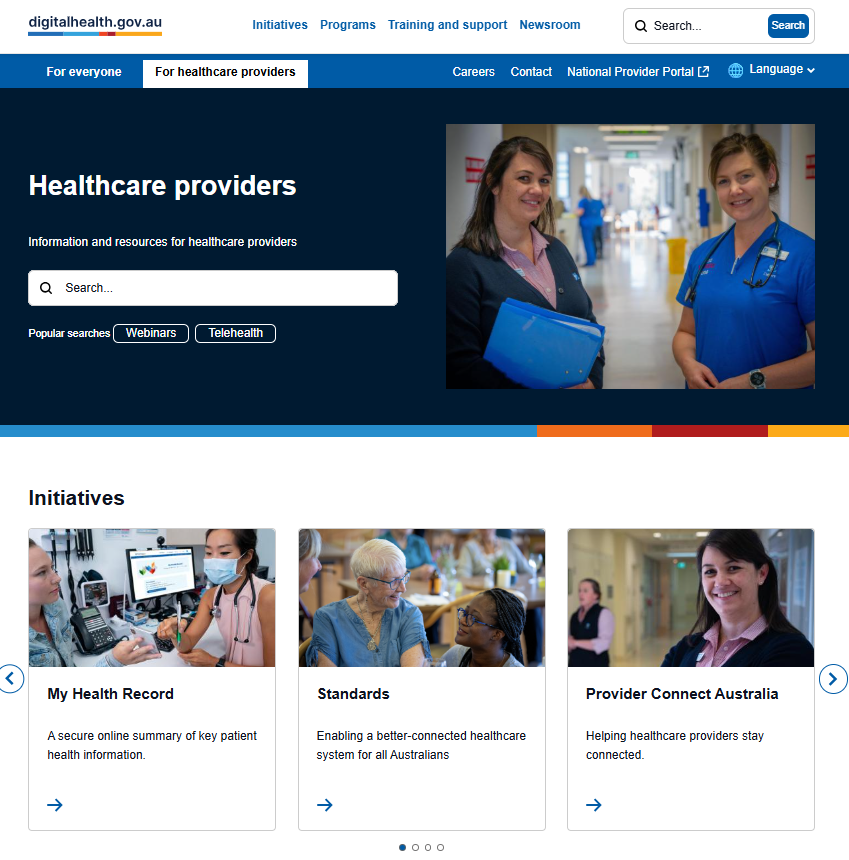
Tips for Careworkers: Culturally Responsive Care - Communication
This resource provides practice tip sheets for care workers, focusing on culturally responsive care for people from culturally and linguistically diverse backgrounds. It outlines communication strategies, emphasising person-centred care, cultural sensitivity, and effective interaction with patients and families, especially at the end of life.
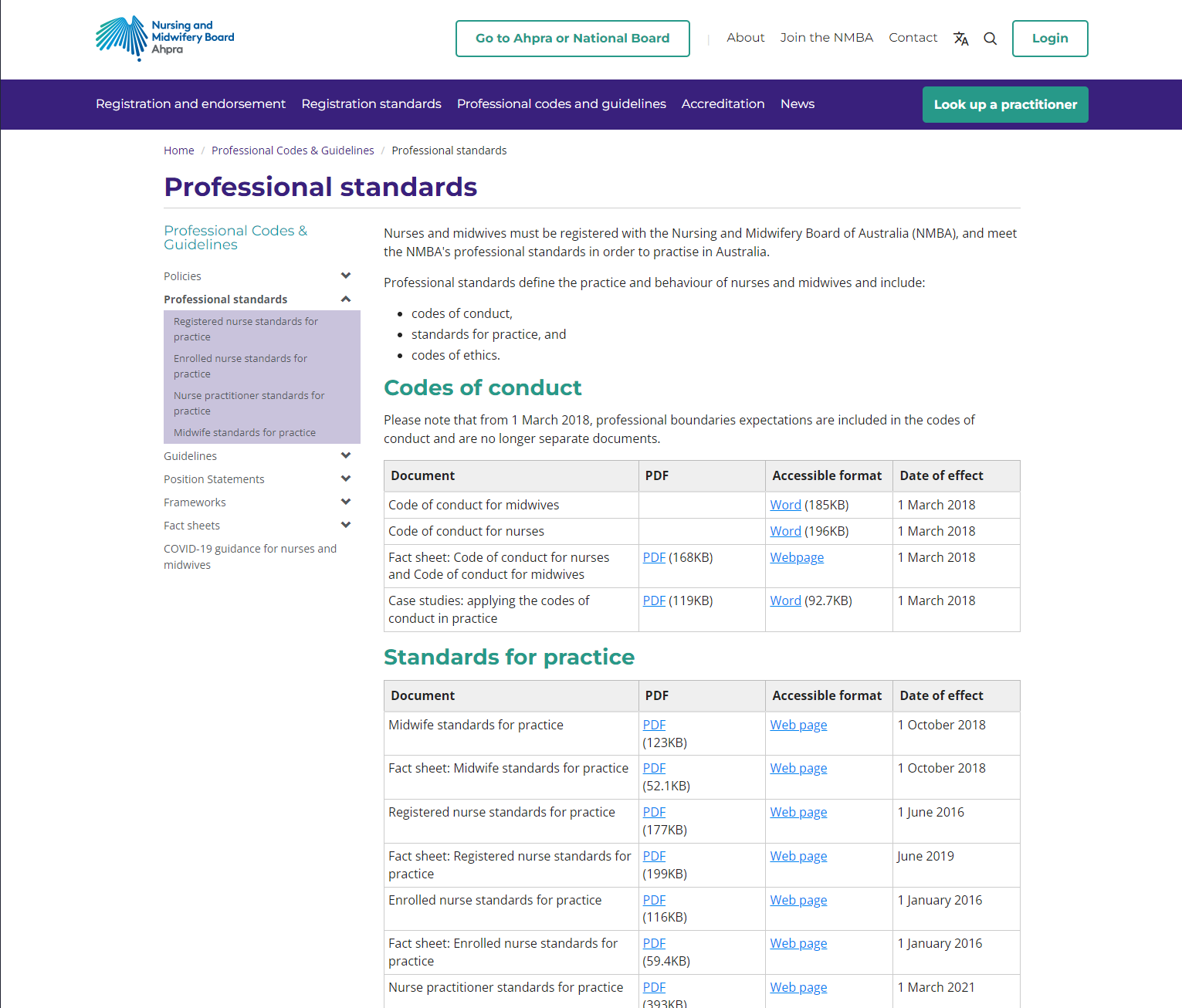
Nursing and Midwifery Board - Professional standards
This resource outlines the professional standards required for nurses and midwives to practise in Australia, including codes of conduct, standards for practice, and codes of ethics. It provides access to various documents, fact sheets, and guidelines that define the expected practice and behaviour for different nursing roles.
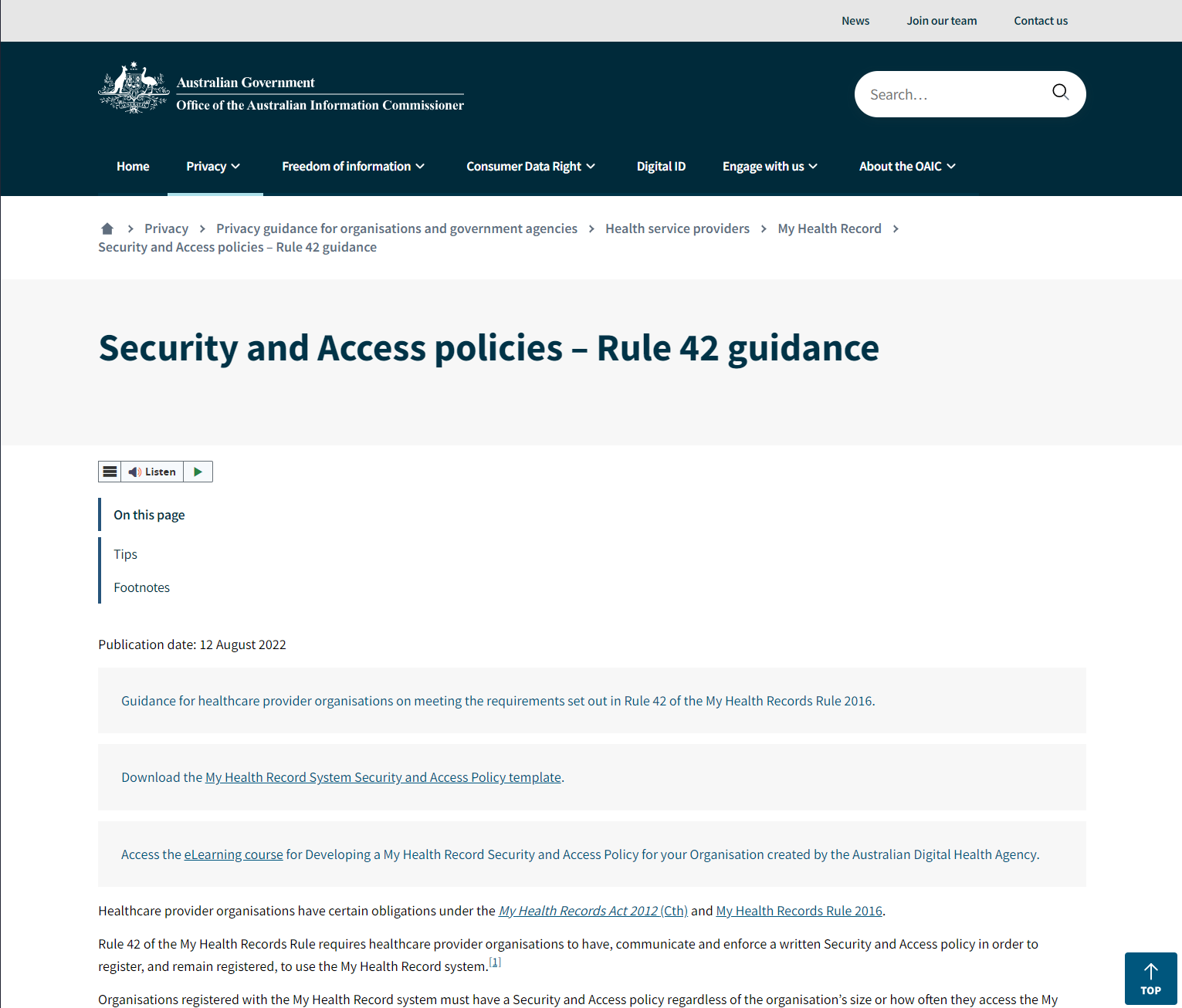
Security and access policies - Rule 42 guidance
This resource provides guidance for healthcare provider organisations to meet Rule 42 of the My Health Records Rule 2016. It covers creating, communicating, and enforcing a written Security and Access policy to access the My Health Record system, addressing authorisation, training, security measures, and risk mitigation.
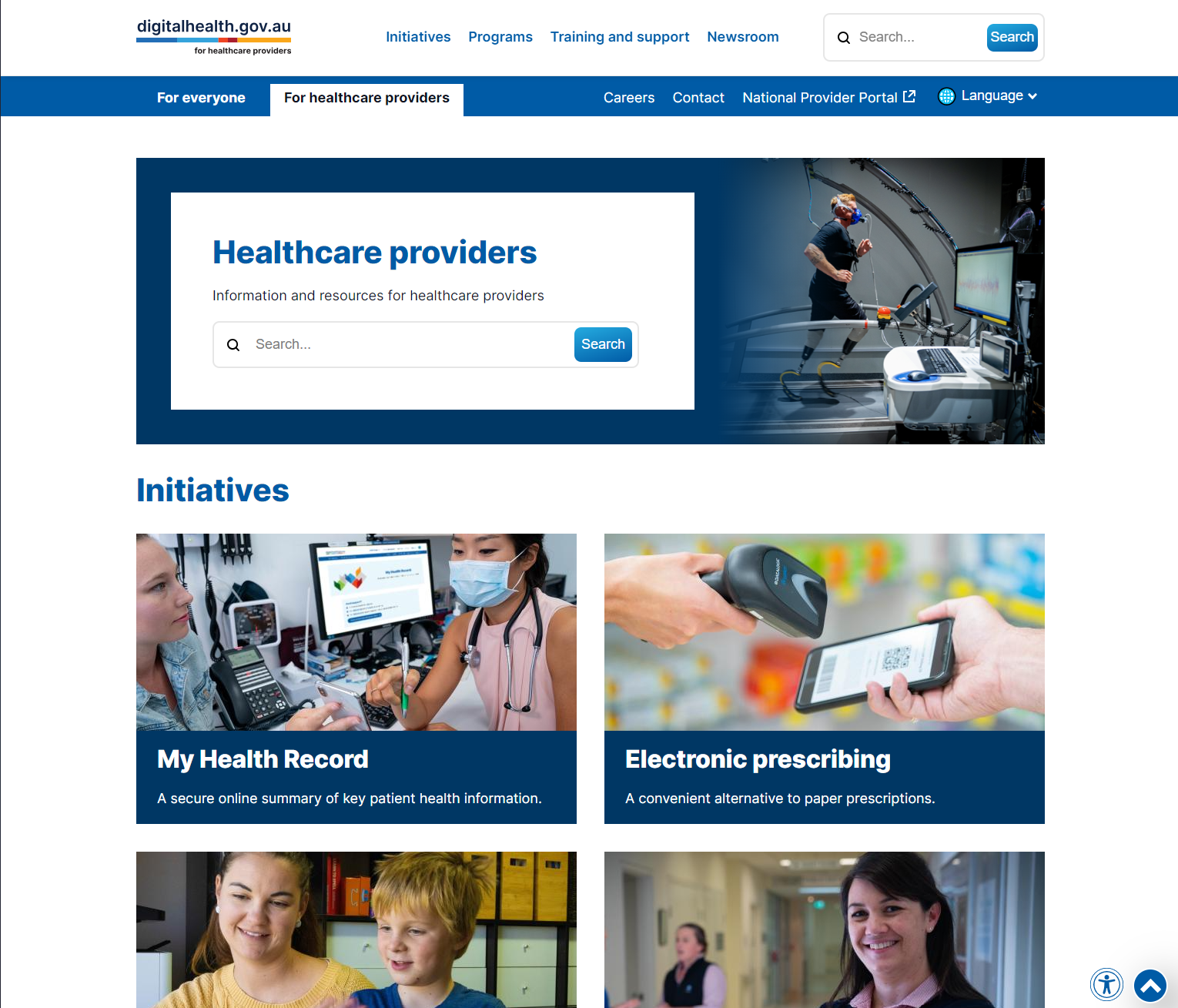
National Clinical Terminology Service
This resource provides information for healthcare providers on digital health tools and initiatives. It covers services such as My Health Record, secure messaging, electronic prescriptions, and telehealth. It supports providers in using digital technologies to enhance healthcare delivery and improve patient outcomes.
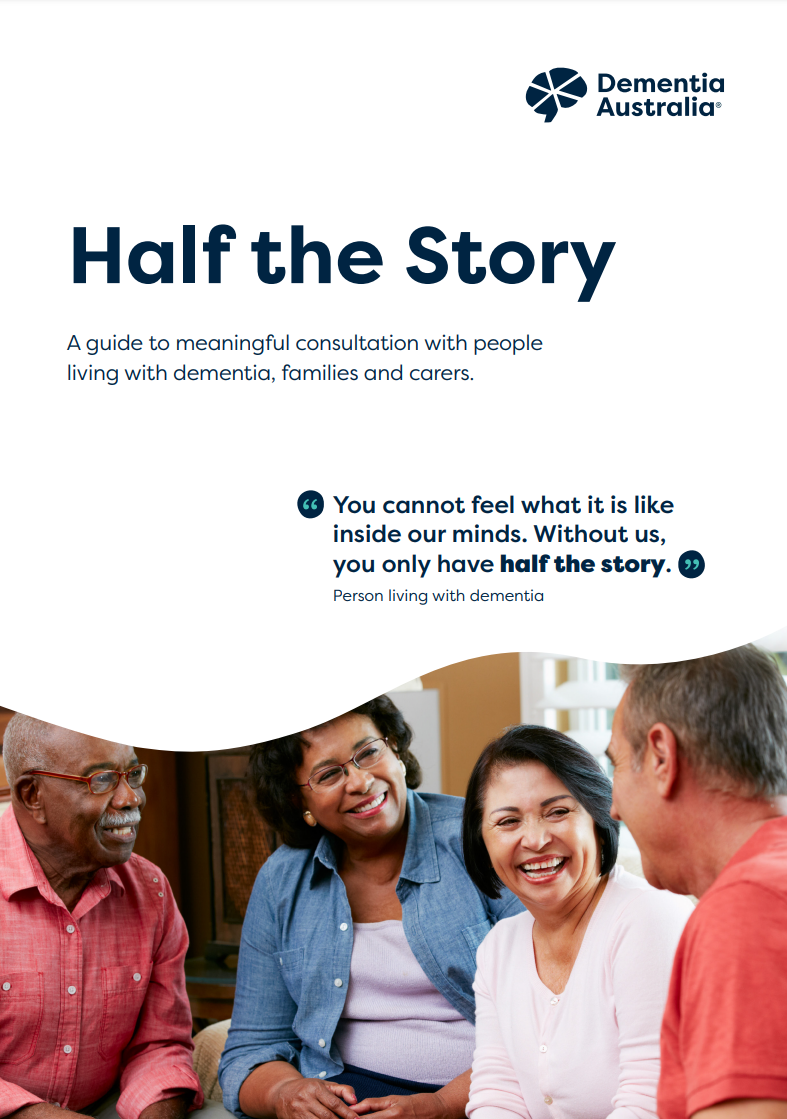
Half the story: A guide to meaningful consultation with people living with dementia, families and carers
This resource is a guide for meaningful consultation with people living with dementia, their families, and carers. It covers planning, ethical considerations, communication methods, and ways to improve accessibility. The guide offers strategies to ensure the voices of those living with dementia are respected, valued, and effectively integrated into decision-making processes.
Tips for Careworkers: First Australians – Communication
This resource offers guidance on culturally appropriate communication with Aboriginal and Torres Strait Islander people in aged care. It highlights the importance of respecting cultural identity, involving family, and providing person-centred care. The resource provides practical tips for careworkers to ensure culturally sensitive and respectful communication.
Electronic prescribing
This resource outlines the framework for electronic prescribing, offering an alternative to paper prescriptions for healthcare providers and consumers. It explains the benefits of electronic prescriptions, such as reducing errors, improving efficiency, and supporting medication safety. The resource also covers technical and legislative requirements for implementing electronic prescriptions in various healthcare settings.
This resource may refer to information that will be updated from 1 November 2025 to align with the new Aged Care Act and Quality Standards.
Digital Health Developer Portal - Aged Care Clinical Information System Standards v1.0
This resource outlines the Aged Care Clinical Information System (ACCIS) Standards version 1.0, which sets minimum software requirements for clinical information and electronic medication management systems in aged care. The standards support interoperability, data sharing, and improved care quality by enabling safe and efficient clinical decision-making and information exchange between care providers.
Aged Care Clinical Information System (ACCIS) Standards
This resource outlines the Aged Care Clinical Information System (ACCIS) Standards, providing minimum software requirements for clinical information systems used in aged care. It supports interoperability, data sharing, and safe clinical decision-making. The standards aim to enhance care coordination, improve data accuracy, and ensure compliance with privacy and security protocols within residential aged care settings.
Electronic prescriptions
This resource provides an overview of electronic prescriptions, which offer a digital alternative to paper prescriptions. It explains how electronic prescriptions can be issued by healthcare providers and stored on digital devices for convenience. The resource also details the benefits of the Active Script List (ASL) for managing multiple prescriptions, enhancing efficiency and medicine safety.