The Quality Standards Resource Centre helps extend understanding of the strengthened Aged Care Quality Standards, which took effect from 1 November 2025. You can search for resources by using keywords, or filtering by standard, outcome and audience. Before using the Resource Centre, please read the terms of use.
Cultural considerations in Food, Nutrition and Dining
This resource provides guidance on incorporating cultural considerations into food, nutrition, and dining in aged care settings. It highlights the importance of understanding diverse dietary preferences, religious practices, and family dynamics to support person-centred care, improve wellbeing, and promote inclusivity within the aged care environment.
This resource may refer to information that will be updated from 1 November 2025 to align with the new Aged Care Act and Quality Standards.
Food for thought - positive stories
This resource shares positive stories about food, nutrition, and dining improvements in aged care facilities. It highlights initiatives that enhance the dining experience, including resident involvement in meal planning, use of fresh and seasonal ingredients, and creating more social and enjoyable mealtime environments. These stories demonstrate best practices and innovative approaches to improve resident satisfaction and wellbeing.
Food, nutrition & dining: resources for workers
This resource provides aged care workers with tools to enhance food, nutrition, and dining experiences for people in their care. It includes practical guides on offering choice, managing swallowing difficulties, promoting oral health, and creating an enjoyable dining environment, all while ensuring adherence to aged care standards.
This resource may refer to information that will be updated from 1 November 2025 to align with the new Aged Care Act and Quality Standards.
Food, nutrition & dining: resources for providers
This resource provides tools and guidance for aged care providers to ensure quality food, nutrition, and dining experiences. It includes hotlines, resources for dining, choice, swallowing, and oral health, as well as webinars, research findings, and practical tips to support older adults' wellbeing and meet care standards.
This resource may refer to information that will be updated from 1 November 2025 to align with the new Aged Care Act and Quality Standards.
QI Program Module 7 – Activities of daily living
This resource explains the importance of measuring activities of daily living (ADLs) for older people in residential aged care. It guides providers on using the Barthel Index to assess ADLs quarterly, helping identify risks of functional decline and implement strategies to maintain independence and improve quality of life. This resource may refer to information that will be updated from 1 November 2025 to align with the new Aged Care Act and Quality Standards.
Partners in Culturally Appropriate Care (PICAC)
This resource supports aged care providers in delivering culturally appropriate care for people from culturally and linguistically diverse (CALD) backgrounds. It offers free training, workshops, and resources, helping providers understand and respect diverse needs, ensuring safe, inclusive, and culturally responsive care across all settings.
This resource may refer to information that will be updated from 1 November 2025 to align with the new Aged Care Act and Quality Standards.
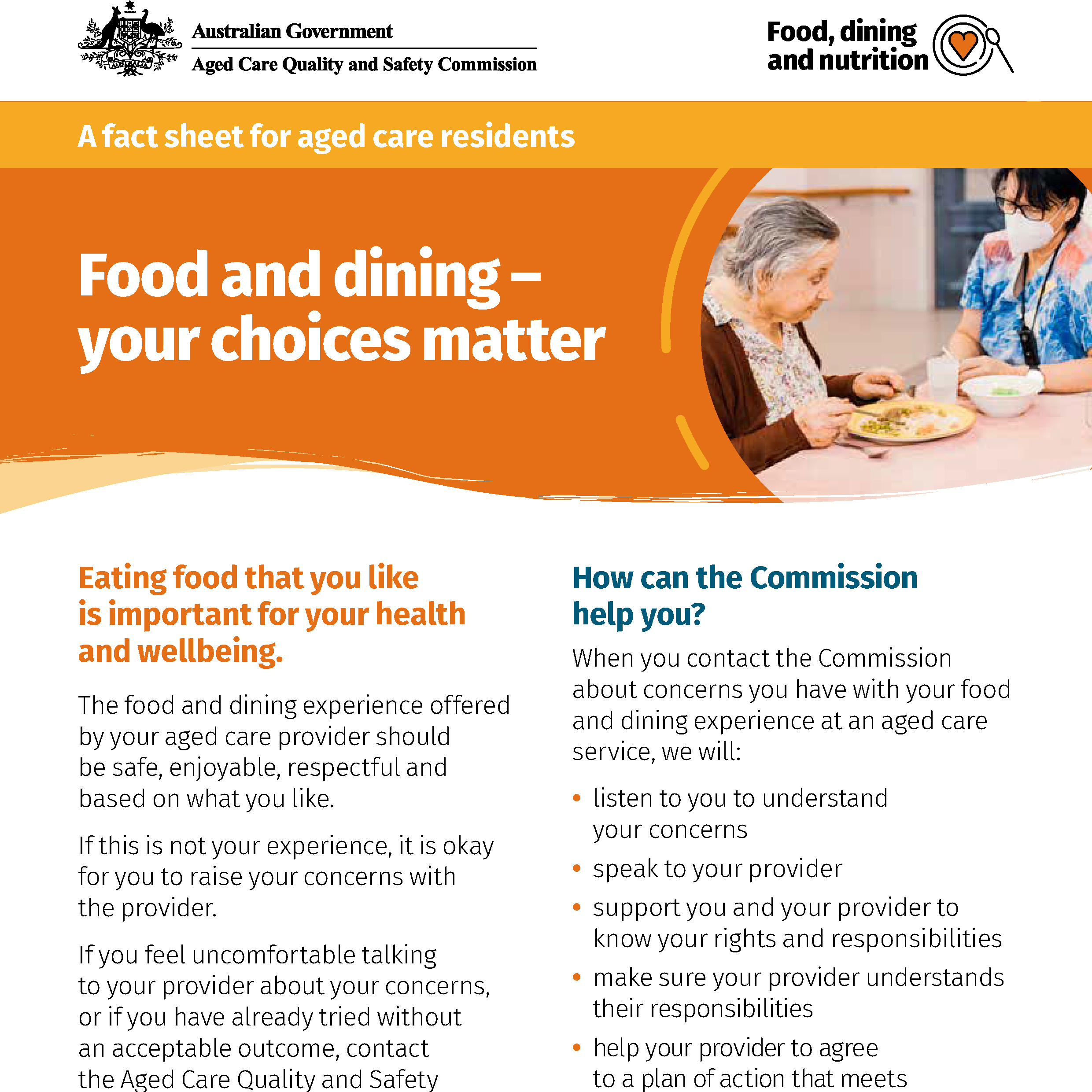
Food and dining - your choices matter
This fact sheet informs aged care residents of their rights to safe, enjoyable, and respectful dining experiences. It outlines steps for raising concerns with providers about food and dining, offers a preference form for residents to communicate their dietary needs, and provides contact information for support services if issues remain unresolved. This resource may refer to information that will be updated from 1 November 2025 to align with the new Aged Care Act and Quality Standards.
 English - Food and dining – your choices matter (PDF 484.79 KB)
Arabic - تهمّّنا تفضيلاتكم في الطعام وعادات الأكل (PDF 767.17 KB)
Chinese Simplified - 食品和餐饮—— 您的选择很重要 (PDF 785.39 KB)
Chinese Traditional - 食品和餐飲—— 您的選擇很重要 (PDF 788.7 KB)
French - Alimentation et repas – vos choix sont importants (PDF 684.4 KB)
German - Essen und Speisen – Ihre Wahl zählt (PDF 686.18 KB)
Greek - Φαγητό και γεύματα – οι επιλογές σας έχουν σημασία (PDF 690.89 KB)
Hungarian - Ételek és étkezés – az Ön döntése számít (PDF 684.42 KB)
Macedonian - Храна и јадење - вашиот избор е важен (PDF 683.21 KB)
Maltese - L-ikel u l-ikliet - l-għażliet tiegħek huma importanti (PDF 685.65 KB)
Russian - Питание и прием пищи: ваш выбор имеет значение (PDF 682.53 KB)
Serbian - Храна и обедовање – ваш избор је важан (PDF 681.46 KB)
Spanish - Alimentos y comidas: sus preferencias importan (PDF 679.42 KB)
English - Food and dining – your choices matter (PDF 484.79 KB)
Arabic - تهمّّنا تفضيلاتكم في الطعام وعادات الأكل (PDF 767.17 KB)
Chinese Simplified - 食品和餐饮—— 您的选择很重要 (PDF 785.39 KB)
Chinese Traditional - 食品和餐飲—— 您的選擇很重要 (PDF 788.7 KB)
French - Alimentation et repas – vos choix sont importants (PDF 684.4 KB)
German - Essen und Speisen – Ihre Wahl zählt (PDF 686.18 KB)
Greek - Φαγητό και γεύματα – οι επιλογές σας έχουν σημασία (PDF 690.89 KB)
Hungarian - Ételek és étkezés – az Ön döntése számít (PDF 684.42 KB)
Macedonian - Храна и јадење - вашиот избор е важен (PDF 683.21 KB)
Maltese - L-ikel u l-ikliet - l-għażliet tiegħek huma importanti (PDF 685.65 KB)
Russian - Питание и прием пищи: ваш выбор имеет значение (PDF 682.53 KB)
Serbian - Храна и обедовање – ваш избор је важан (PDF 681.46 KB)
Spanish - Alimentos y comidas: sus preferencias importan (PDF 679.42 KB)
Case study - Safe and Appropriate use of Psychotropic Medicines - Residential Aged Care
This resource is a fictional scenario that follows an older person’s care pathway with a residential aged care provider. The resource focuses on the systems and processes to support high-quality care of older people living with cognitive impairment. It includes 4 key priority areas: person-centred care, medication management, managing changed behaviours and transitions of care.
This resource may refer to information that will be updated from 1 November 2025 to align with the new Aged Care Act and Quality Standards.
Case study - Safe and Appropriate use of Psychotropic Medicines - In-home Aged Care
This resource is a fictional scenario that follows an older person’s care pathway with an in-home aged care provider. The resource focuses on the systems and processes to support high-quality care of older people living with dementia. It includes 4 key priority areas: person-centred care, medication management, managing changed behaviours and transitions of care.
This resource may refer to information that will be updated from 1 November 2025 to align with the new Aged Care Act and Quality Standards.

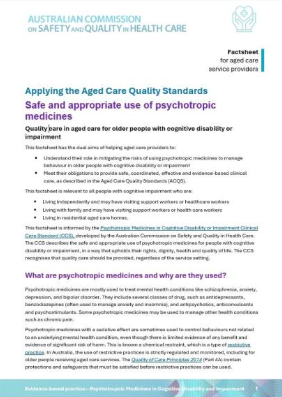
Safe and appropriate use of psychotropic medicines for aged care - Fact sheet
This fact sheet is informed by the Psychotropic Medicines in Cognitive Disability or Impairment Clinical Care Standard (CCS), developed by the Australian Commission on Safety and Quality in Health Care. The CCS describes the safe and appropriate use of psychotropic medicines for people with cognitive disability or impairment, in a way that upholds their rights, dignity, health and quality of life.
This resource may refer to information that will be updated from 1 November 2025 to align with the new Aged Care Act and Quality Standards.
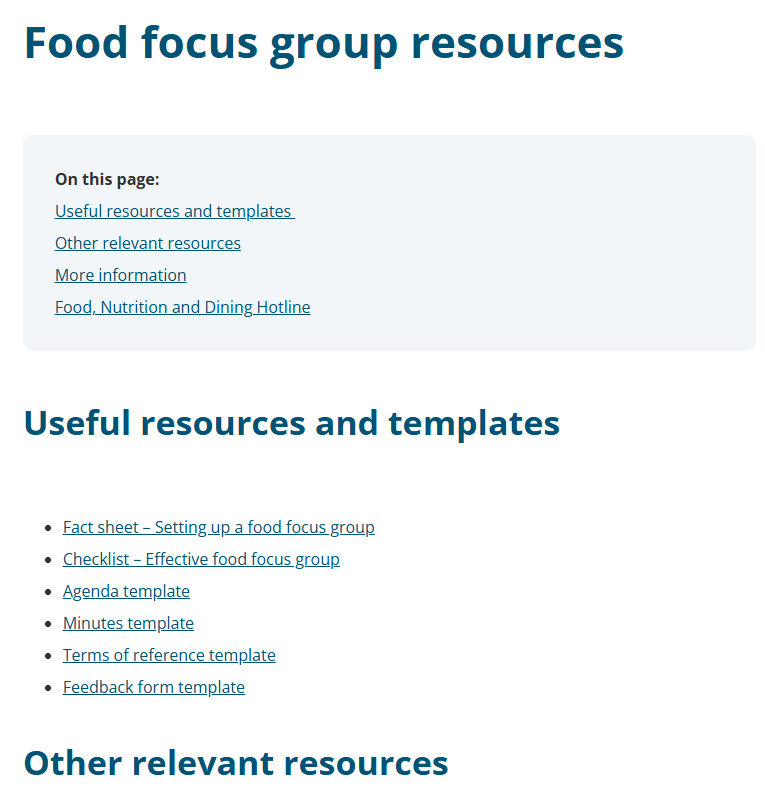
Food focus group resources
This resource is a collection of resources about food focus groups. It includes a fact sheet about setting up a food focus group and a checklist for an effective food focus group. It also contains associated templates, including agenda, minutes, terms of reference and feedback form.
This resource may refer to information that will be updated from 1 November 2025 to align with the new Aged Care Act and Quality Standards.
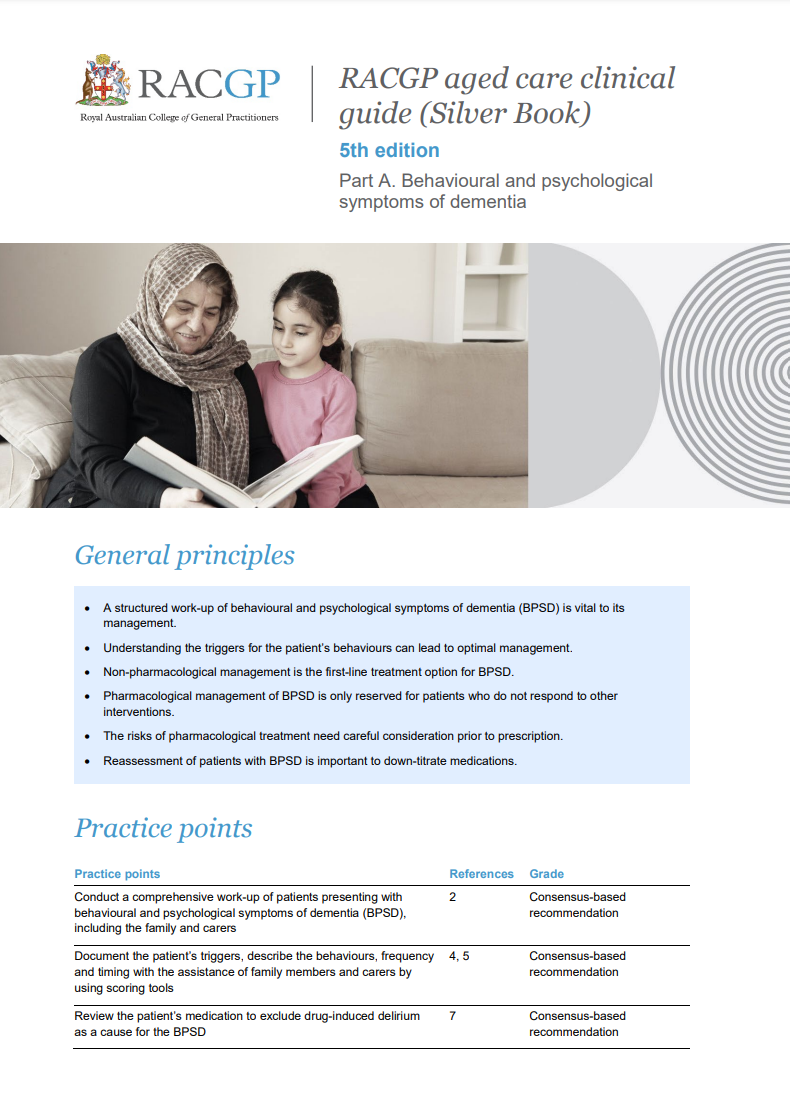
RACGP aged care clinical guide (Silver Book) - Part A - Behavioural and psychological symptoms of dementia
This guide offers principles and practice points for assessing and managing behavioural and psychological symptoms of dementia (BPSD) in aged care. It includes frameworks for comprehensive patient assessment, non-pharmacological and pharmacological interventions, medication review, and personalised care plans to improve care outcomes for dementia patients.
RACGP aged care clinical guide (Silver Book) - Part A - Dementia
This resource offers guidance on diagnosing and managing dementia, covering its impact on cognitive and physical functions, screening methods, and differential diagnoses. It discusses appropriate use of medications, non-pharmacological approaches, and ongoing care plans for supporting those with dementia. It includes practical recommendations on cognitive assessments, functional reviews, and medication management.
RACGP aged care clinical guide (Silver Book) - Part B - Multiculturalism in aged care
This guide discusses multiculturalism in aged care, addressing the diverse needs of culturally and linguistically diverse (CALD) older adults. It covers healthcare principles, communication strategies, clinical considerations, and culturally tailored approaches for areas like medication management, dementia, mental health, nutrition, and substance use. It also provides practical advice for general practitioners, carers, and aged care facilities to deliver culturally safe and effective care.
RACGP aged care clinical guide (Silver Book) - Part B - Older Aboriginal and Torres Strait Islander people
This guide addresses barriers faced by Aboriginal and Torres Strait Islander peoples in accessing aged care, such as cultural safety, geographic challenges, and geriatric syndromes experienced at younger ages. It discusses the importance of culturally appropriate care, the use of specific assessment tools, and the unique needs of the Stolen Generation within residential and community settings.
RACGP aged care clinical guide (Silver Book) - Part B - Supporting independent living in older people
This guide discusses strategies for supporting independent living in older adults, covering concepts of healthy ageing, using aged care services, respite care, and re-aligning function. It highlights the role of general practitioners in promoting autonomy, addressing individual needs, and avoiding ageist language while facilitating access to community or residential care services.
RACGP aged care clinical guide (Silver Book) - Part B - Disability in aged care
This guide addresses the management of disabilities in older adults, including mobility, cognitive impairments, developmental disabilities, hearing and visual impairment, psychiatric conditions, and neurodegenerative disorders. It outlines approaches for general practitioners to provide holistic care, monitor health risks, adapt support systems, and coordinate with allied health professionals in residential aged care settings.
RACGP aged care clinical guide (Silver Book) - Part B - Care of older LGBTI people
This guide addresses the healthcare needs of older LGBTI people, covering areas such as mental health, substance use, chronic disease risks, and the importance of inclusive care. It provides strategies for culturally safe practices, promoting wellbeing, recognising abuse, and details standards for LGBTI-inclusive services, such as organisational capability and consumer participation.
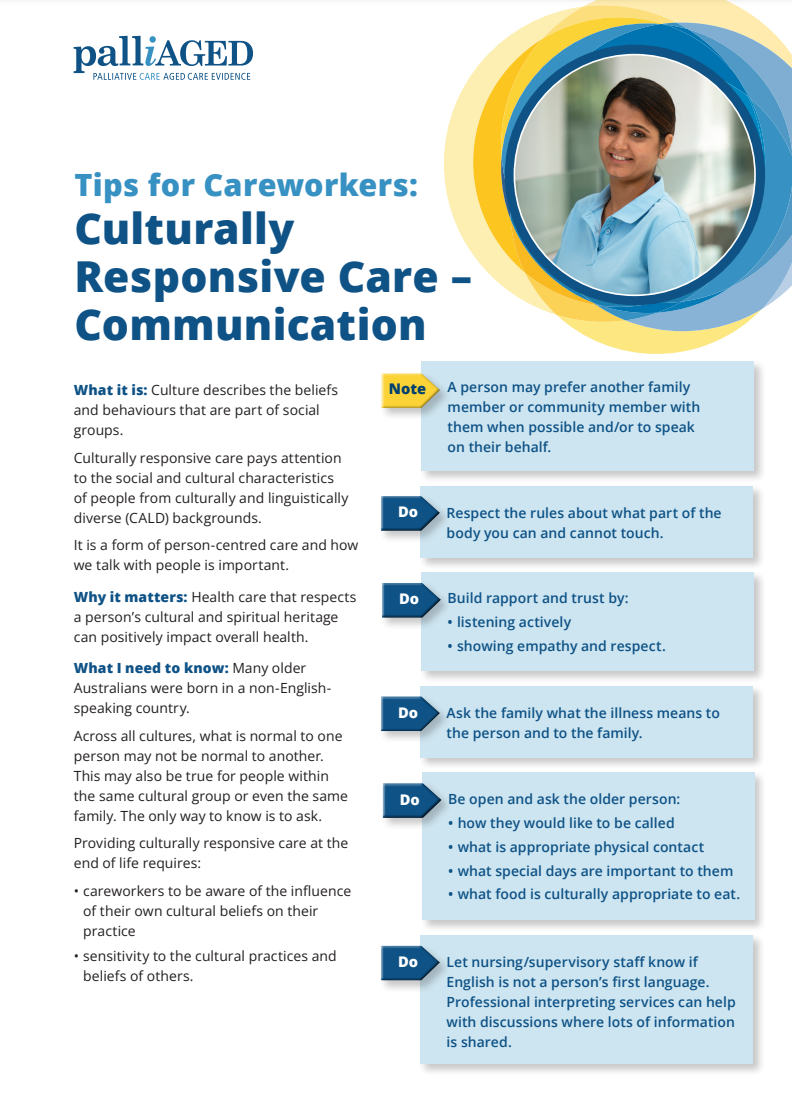
Tips for Careworkers: Culturally Responsive Care - Communication
This resource provides practice tip sheets for care workers, focusing on culturally responsive care for people from culturally and linguistically diverse backgrounds. It outlines communication strategies, emphasising person-centred care, cultural sensitivity, and effective interaction with patients and families, especially at the end of life.
Dementia & Our Mob
This resource provides information about dementia in Aboriginal and Torres Strait Islander communities. It covers the effects on mind, body, and spirit, the prevalence among older and younger people, risk factors like genetics and lifestyle, and the types of dementia most common in these communities. It emphasises the importance of cultural understanding in dementia care.