The Quality Standards Resource Centre helps extend understanding of the strengthened Aged Care Quality Standards, which took effect from 1 November 2025. You can search for resources by using keywords, or filtering by standard, outcome and audience. Before using the Resource Centre, please read the terms of use.
Provision of Equipment by Aged Care Organisations
This resource provides guidance for aged care organisations on supplying and managing equipment and aids for care recipients. It outlines the responsibilities for ensuring that all equipment is safe, clean, and fit for purpose. The document also covers subcontractor equipment and highlights the importance of regular maintenance and risk assessments.
This resource may refer to information that will be updated from 1 November 2025 to align with the new Aged Care Act and Quality Standards.
National Safety and Quality Health Service Standards (second edition)
This resource outlines the second edition of the National Safety and Quality Health Service (NSQHS) Standards. It aims to protect people from harm and improve healthcare quality. The 8 standards cover areas like clinical governance, infection control, and medication safety, supporting aged care providers in meeting safety and quality expectations.
This resource may refer to information that will be updated from 1 November 2025 to align with the new Aged Care Act and Quality Standards.
Healthy Ageing
This resource is a collection of resources on the Tasmanian Government Department of Health webpage about healthy ageing. It includes resources about malnutrition screening, being physically active, and eating well.
This resource was developed by a state/territory government or organisation and therefore its applicability and usefulness may be limited.
National Model Clinical Governance Framework
This framework provides a consistent national approach to clinical governance in healthcare, focusing on governance structures, leadership, culture, safety and quality improvement systems, clinical performance, care environment, and consumer partnerships. It supports healthcare organisations in developing systems to ensure accountability, safety, quality of care, and continuous improvement, following the NSQHS Standards.
This resource may refer to information that will be updated from 1 November 2025 to align with the new Aged Care Act and Quality Standards.
Preventing falls at home
This resource provides information on preventing falls at home for older people. It explains common causes of falls, such as poor lighting and slippery surfaces, and offers practical solutions like home modifications, exercise, and footwear adjustments. The document emphasises maintaining safety in and around the home to reduce the risk of falls.
This resource was developed by a state/territory government or organisation and therefore its applicability and usefulness may be limited.
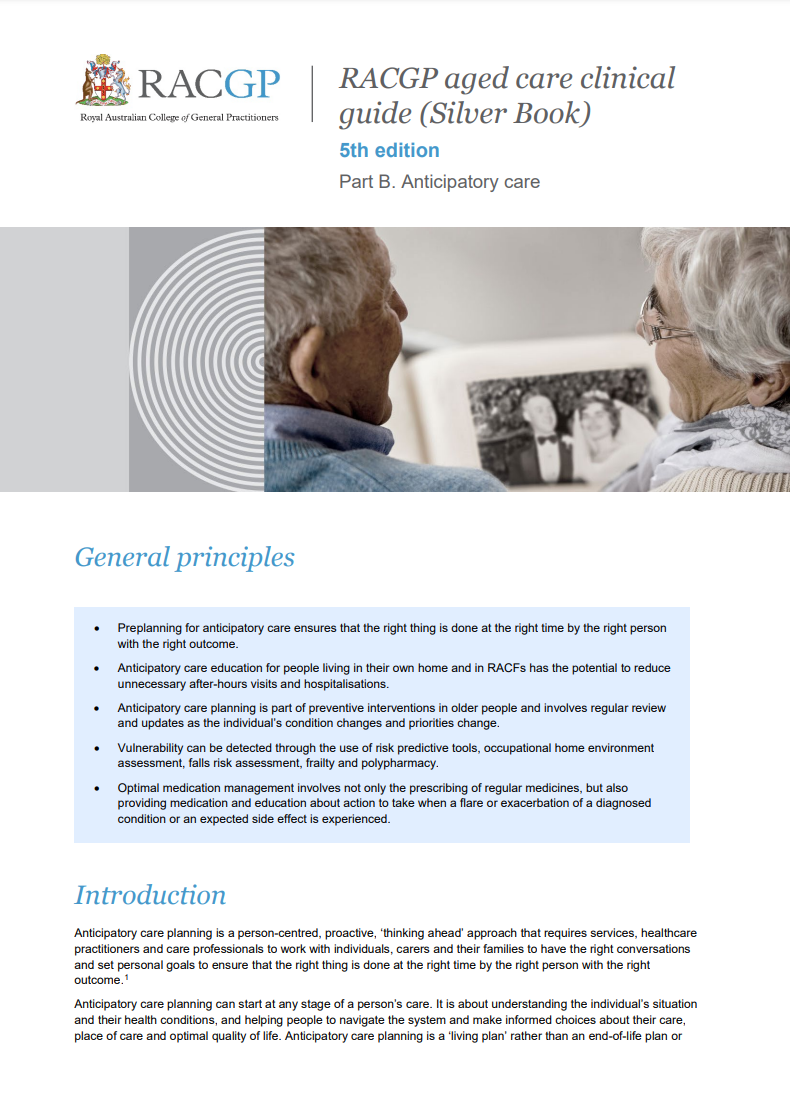
RACGP aged care clinical guide (Silver Book) - Part B - Anticipatory care
This guide outlines anticipatory care planning for older adults, focusing on proactive and person-centred approaches. It details triggers for care planning, identifying vulnerability, medication management, and the use of 'as needed' (PRN) medicines for various conditions like allergic reactions, asthma, diabetes, falls, and palliative care. It includes specific recommendations for developing individualised care plans and appropriate interventions for maintaining health and quality of life.
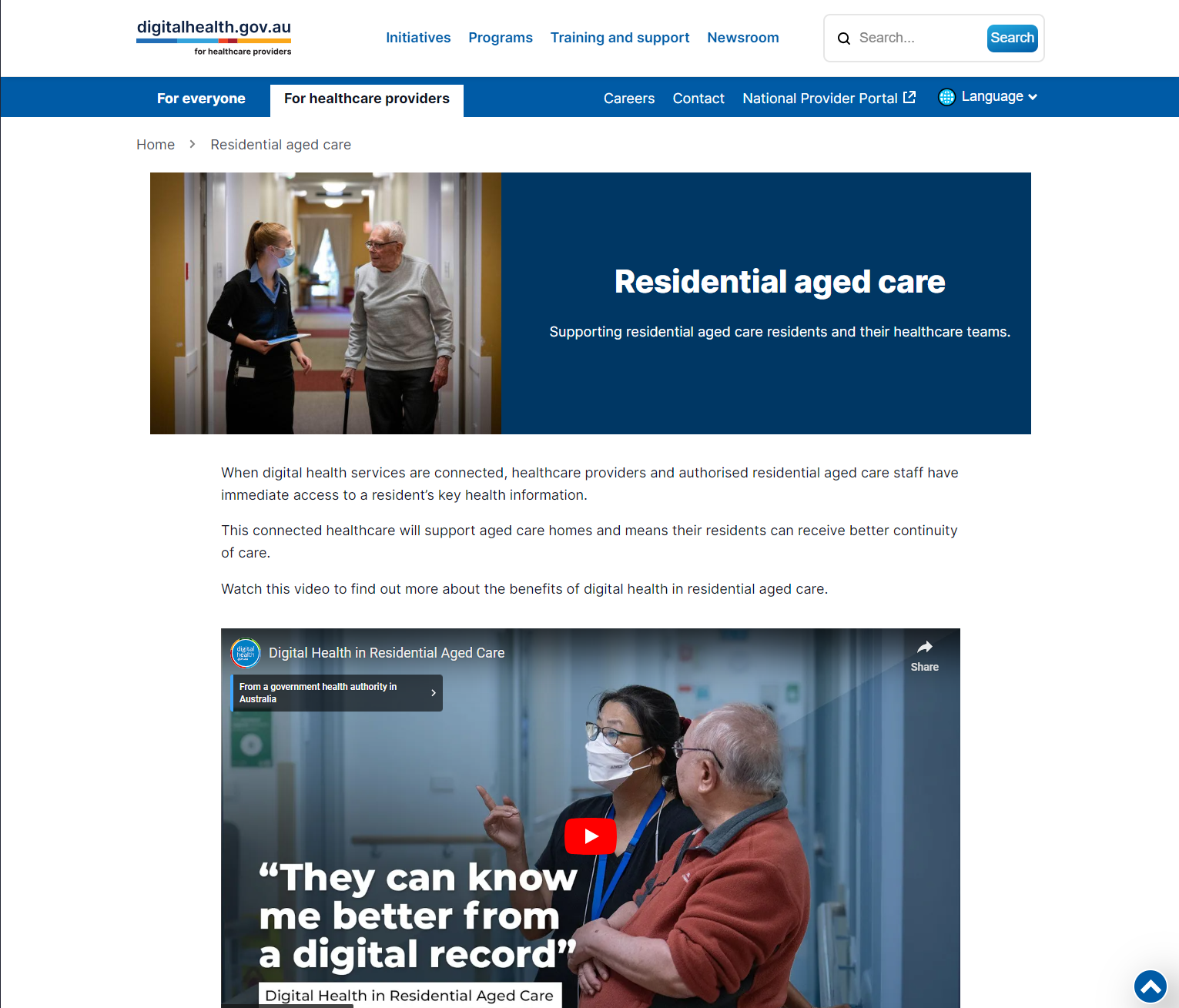
Residential aged care - Supporting residential aged care residents and their healthcare teams
This resource provides information on digital health tools available for residential aged care providers. It covers how these tools, including My Health Record, support care coordination, improve health outcomes, and enable secure information sharing between healthcare providers to enhance the quality of aged care services.
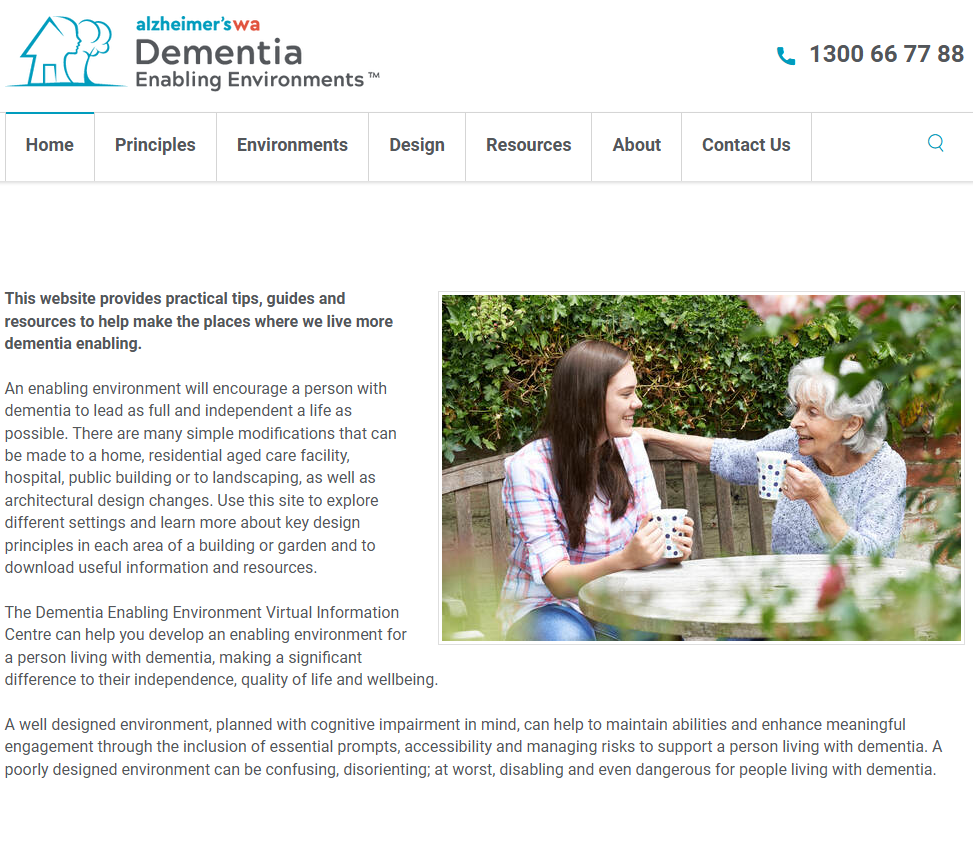
Dementia enabling environments
The Dementia Enabling Environments website, developed by Alzheimer's WA, provides guidance and resources to help create enabling environments for a person living with dementia. It includes design principles for different environment types, include home and residential aged care facilities.
This resource was developed by a state/territory government or organisation and therefore its applicability and usefulness may be limited.
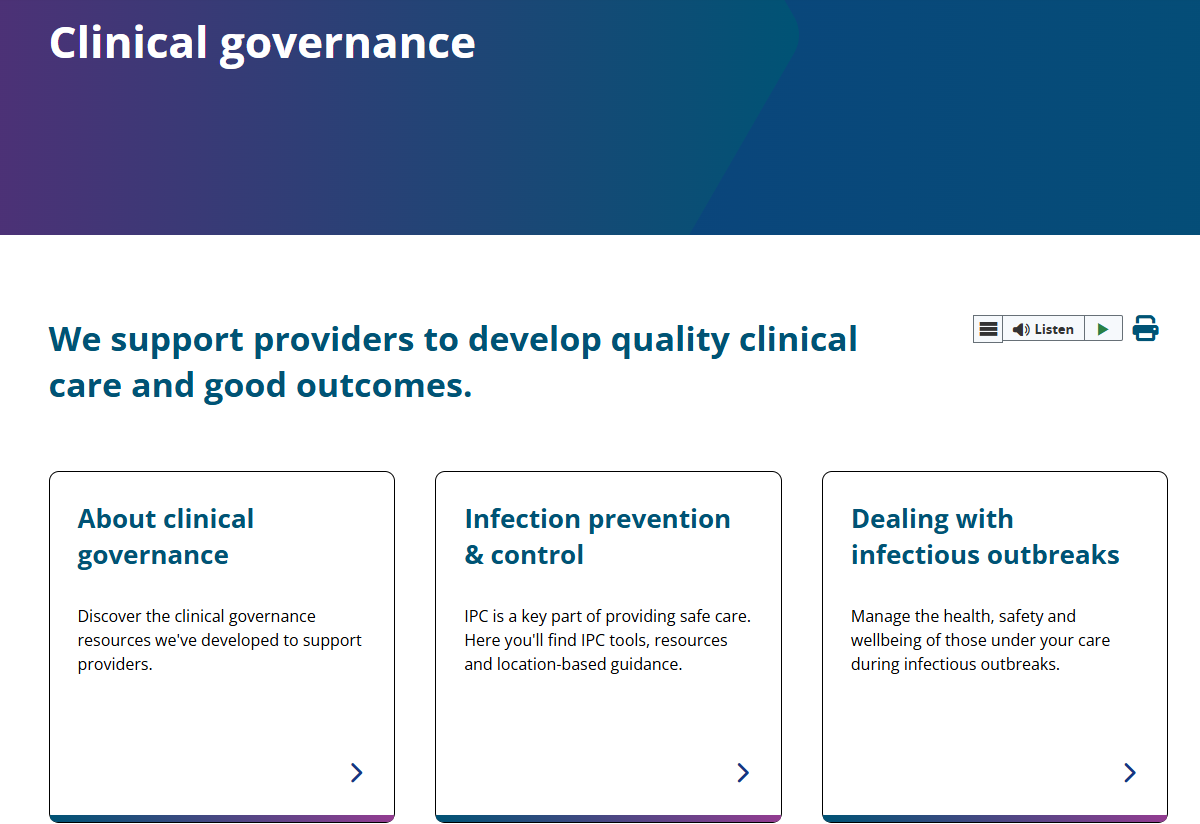
Clinical governance
This page provides information about clinical governance. It includes links to topics including infection and prevention control, dealing with infectious outbreaks, medication management, wound care and restrictive practices. This resource may refer to information that will be updated from 1 November 2025 to align with the new Aged Care Act and Quality Standards.
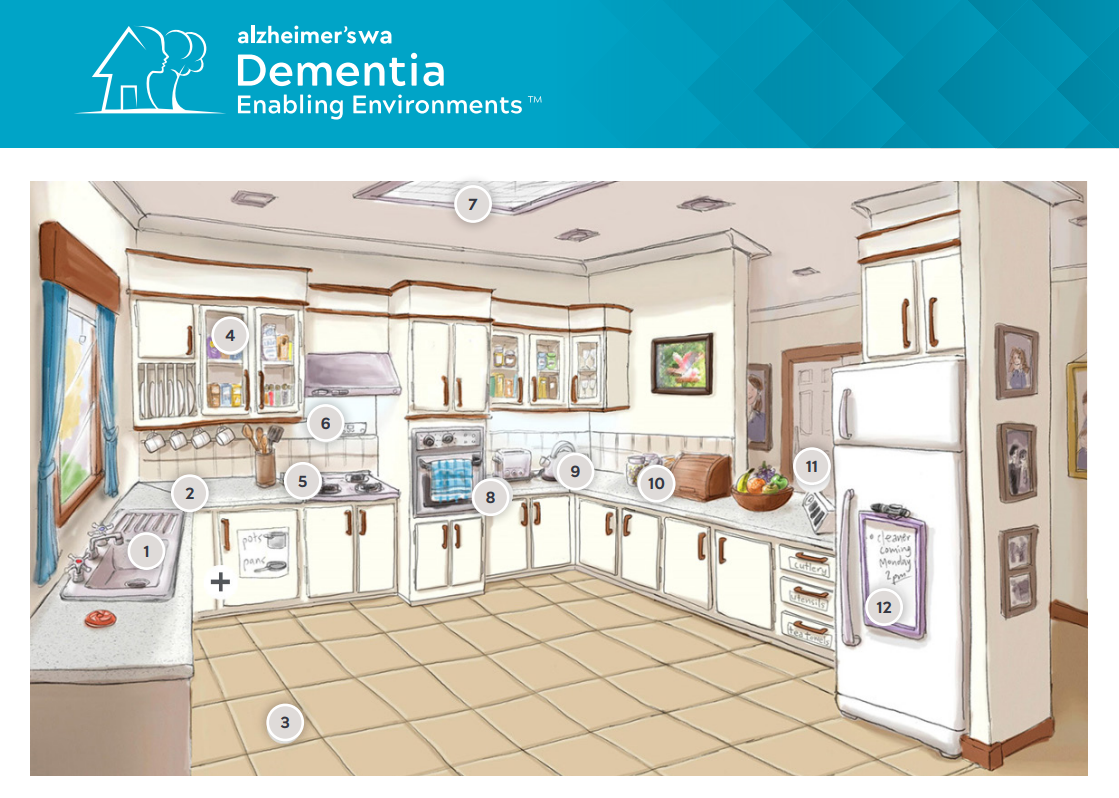
Dementia enabling environments - Adapt a home: Kitchen
This resource, developed by Alzheimer's WA, is a Dementia Enabling Environments illustration information sheet about adapting a home, focusing on the kitchen. It includes principles to integrate enabling design and make changes within the physical environment to maximise enablement and wellbeing for people living with dementia.
This resource was developed by a state/territory government or organisation and therefore its applicability and usefulness may be limited.
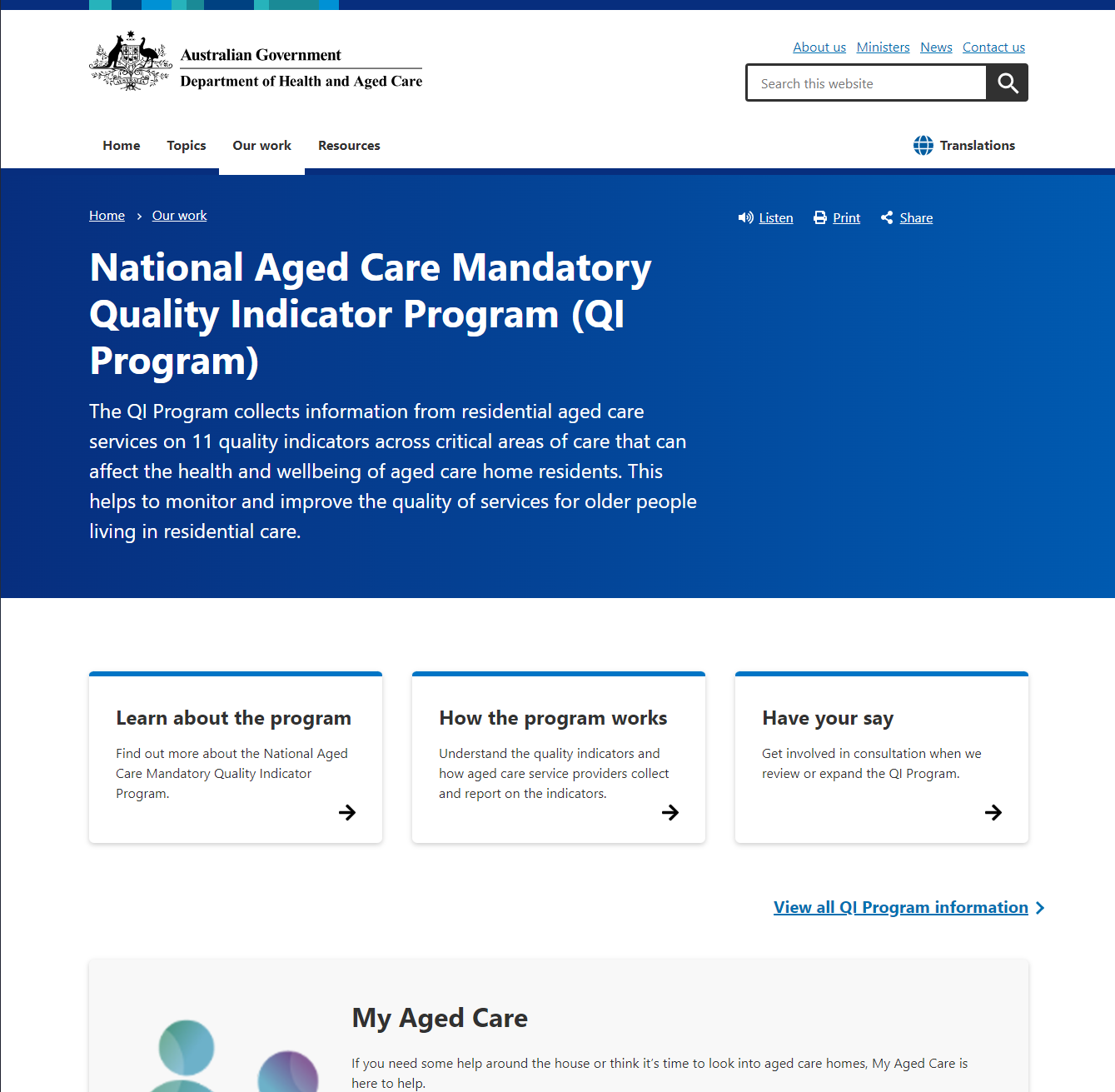
National Aged Care Mandatory Quality Indicator Program (QI Program)
This resource provides information on the National Aged Care Mandatory Quality Indicator Program (QI Program). The program gathers data on 11 quality indicators from residential aged care services to enhance care standards and outcomes for residents. It includes resources, quick guides, consultation papers, and surveys for improving quality indicators in both residential and in-home aged care services.
This resource may refer to information that will be updated from 1 November 2025 to align with the new Aged Care Act and Quality Standards.
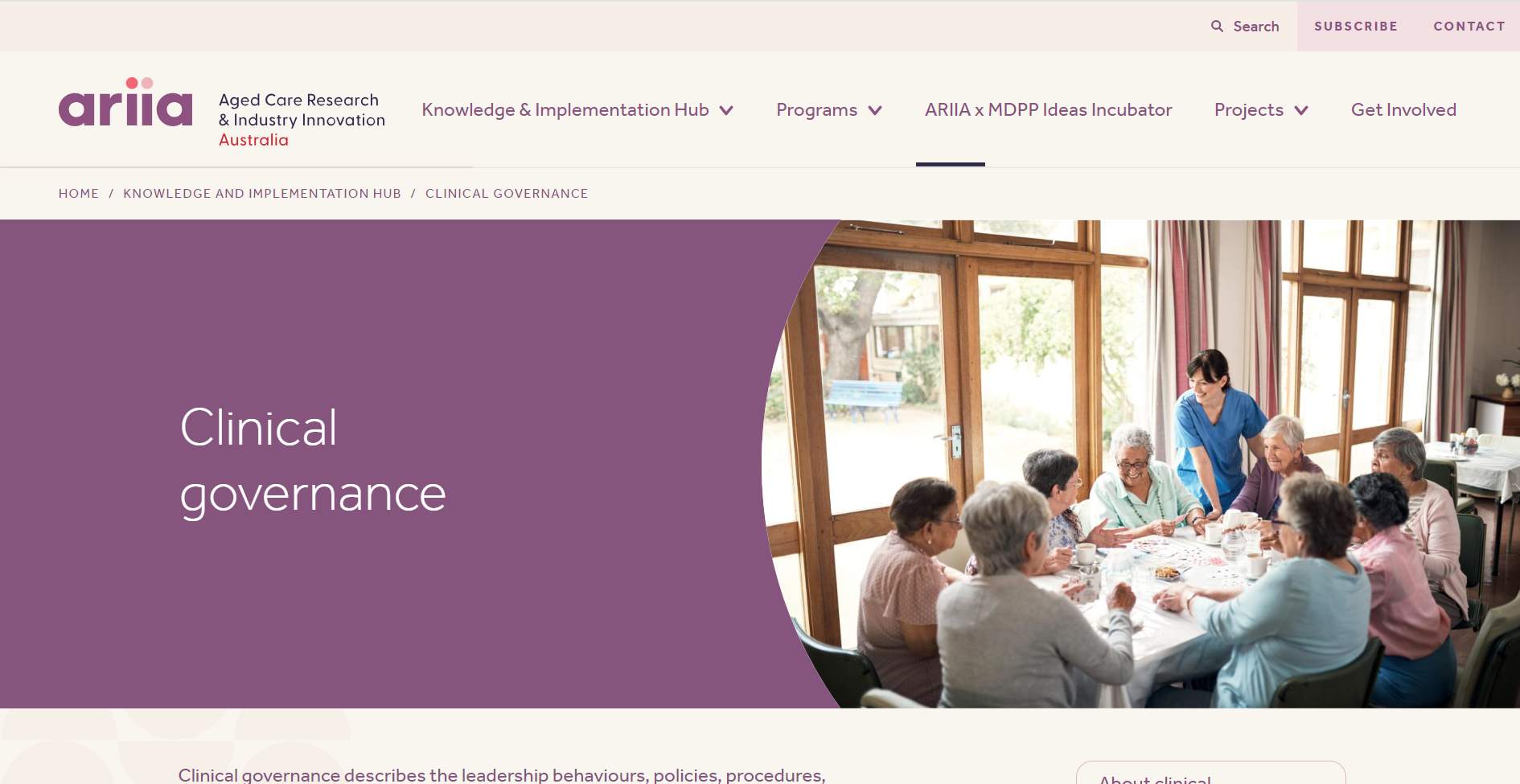
Knowledge and Implementation Hub - Clinical governance
This resource discusses clinical governance in aged care, highlighting its importance in delivering safe, high-quality care. It includes evidence-based resources, themes on governance like leadership, culture, consumer partnerships, and workforce strategies, and provides access to research projects, reviews, and practical guidance to support care quality improvements.
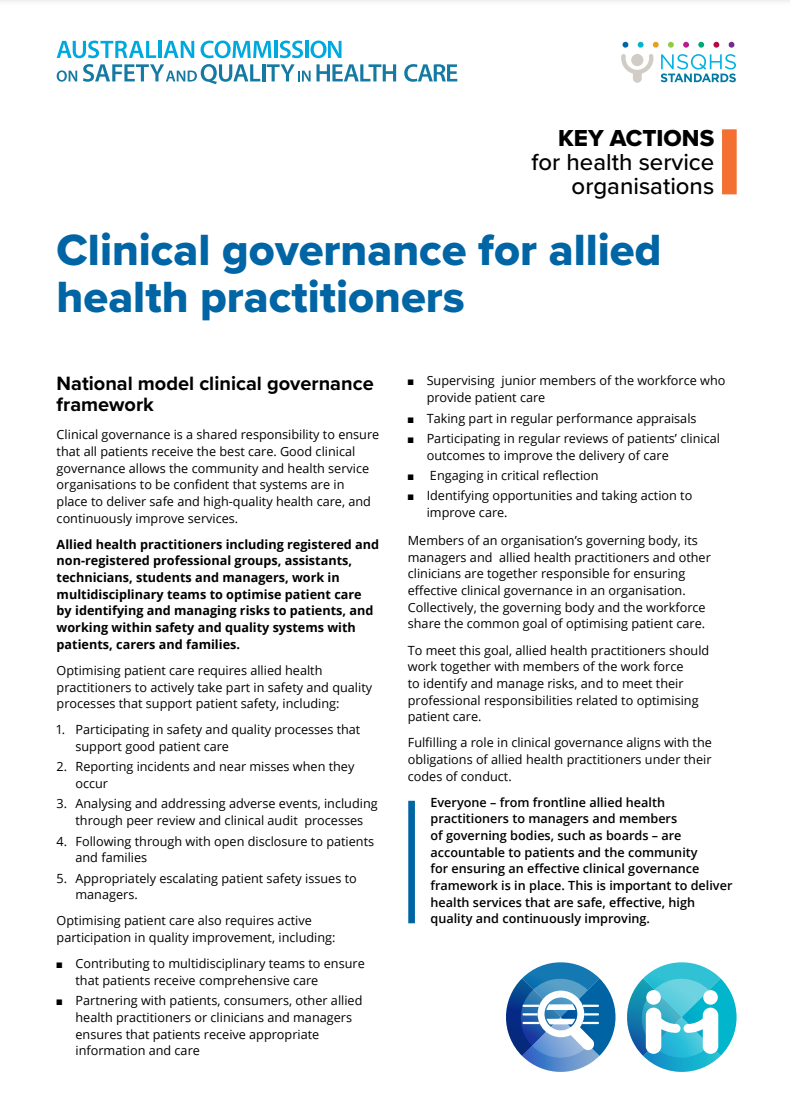
Clinical governance for allied health practitioners
This fact sheet identifies the clinical governance and roles and responsibilities of allied health practitioners. It provides information on the National Model Clinical Governance Framework and lists the roles and responsibilities across Governance, leadership and culture, patient safety and quality systems, clinical performance and effectiveness and safe environment for the delivery of care.
This resource may refer to information that will be updated from 1 November 2025 to align with the new Aged Care Act and Quality Standards.
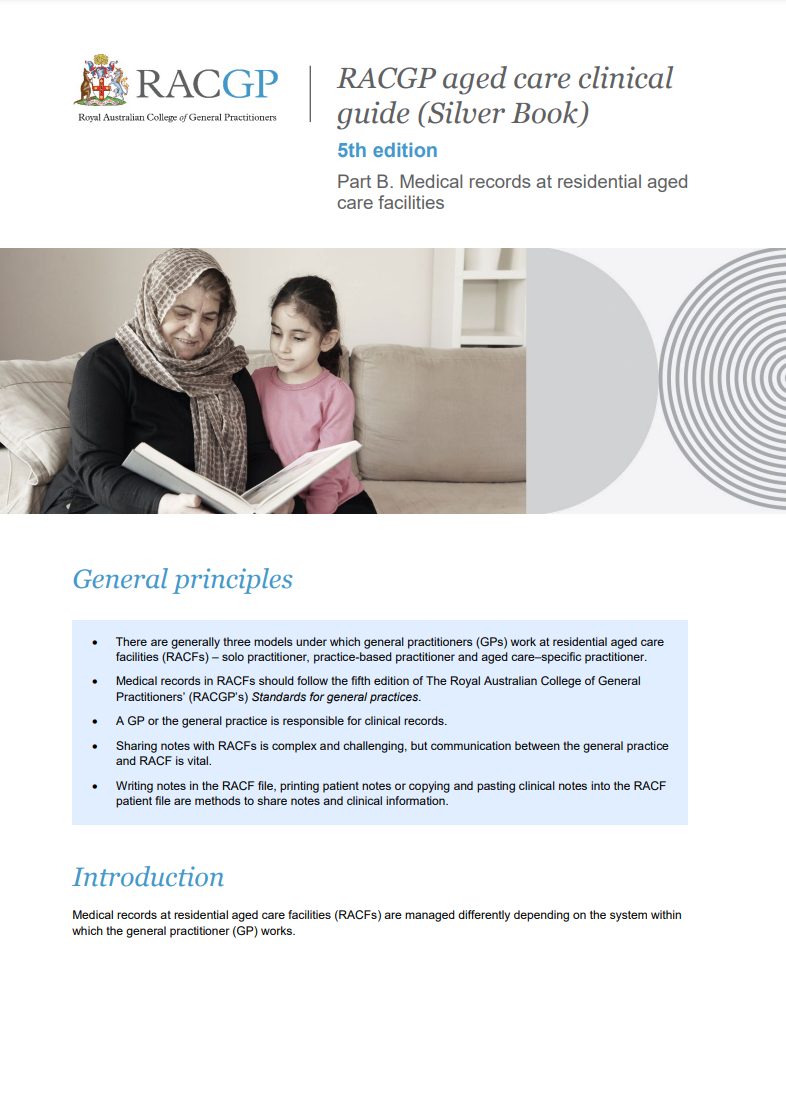
RACGP aged care clinical guide (Silver Book) - Part B - Medical records at residential aged care facilities
This guide covers managing medical records in residential aged care facilities (RACFs). It describes different practitioner models (solo, practice-based, aged care-specific) and provides standards for record-keeping, sharing notes, and maintaining clinical governance. The guide suggests methods for transferring medical information to RACF staff, including printing, electronic sharing, and handover notes.
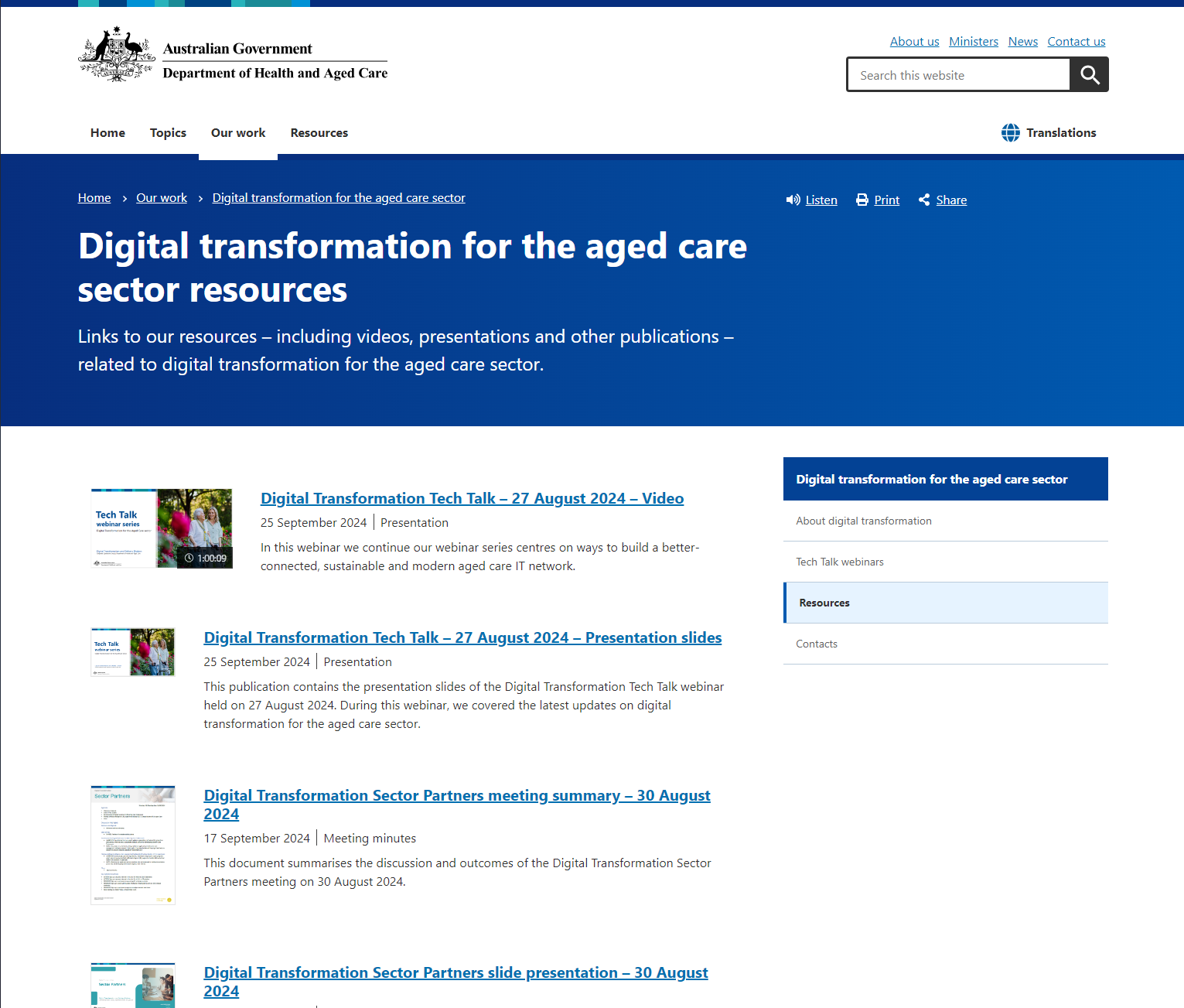
Digital transformation for the aged care sector resources
This resource provides access to various materials related to digital transformation in the aged care sector, including videos, presentations, and meeting summaries. It offers insights into building a modern, connected aged care IT network and shares updates from sector partner meetings on digital transformation initiatives.
This resource may refer to information that will be updated from 1 November 2025 to align with the new Aged Care Act and Quality Standards.
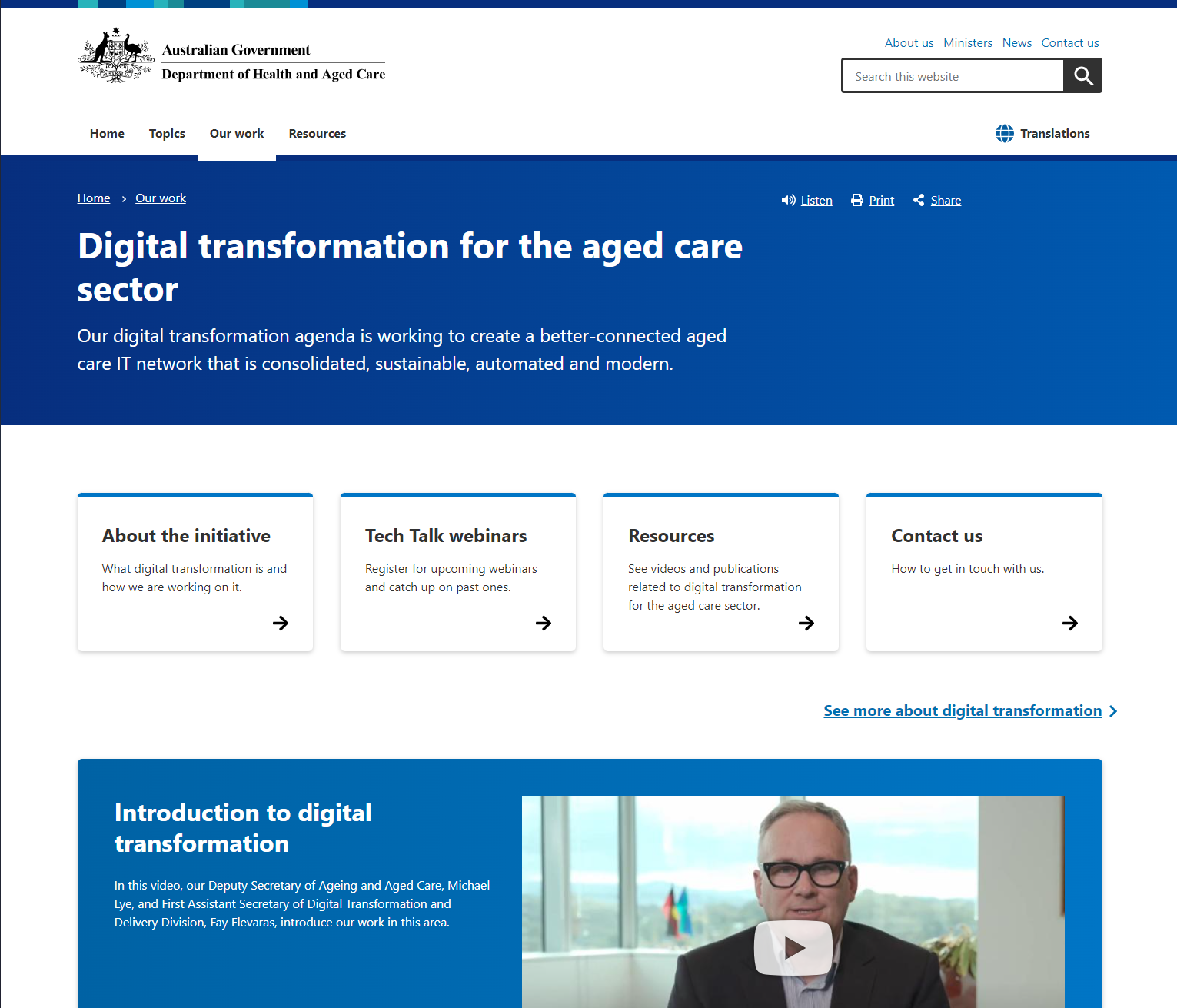
Digital transformation for the aged care sector
This resource outlines the digital transformation agenda for the aged care sector in Australia, focusing on creating a consolidated, sustainable, and modern IT network. It includes strategies for improving connections between clients, providers, and the government, offering webinars and resources to support this transition.
This resource may refer to information that will be updated from 1 November 2025 to align with the new Aged Care Act and Quality Standards.
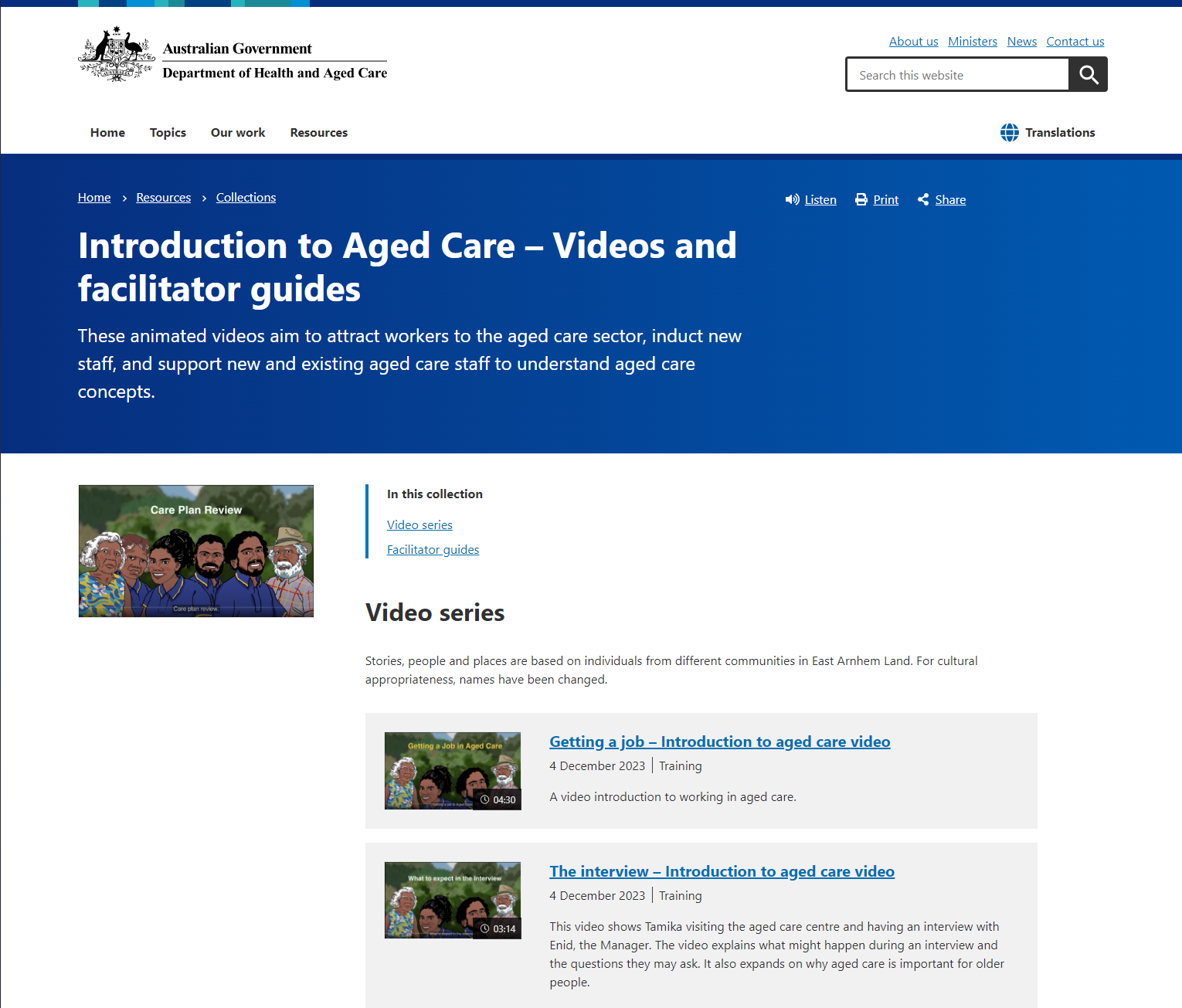
Introduction to Aged Care – Videos and facilitator guides
This resource provides videos and facilitator guides to support the training and induction of aged care workers. It covers various key concepts, including duty of care, infection control, wellness, reablement, and safe practices. The aim is to enhance the understanding and quality of aged care services.
This resource may refer to information that will be updated from 1 November 2025 to align with the new Aged Care Act and Quality Standards.
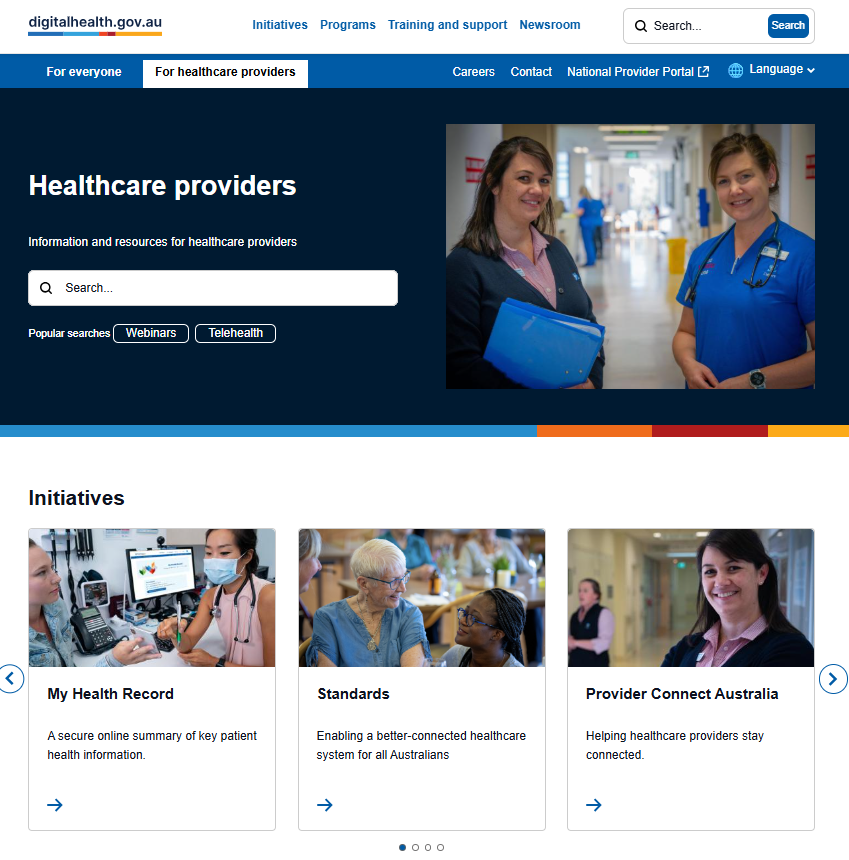
Digital health - For healthcare providers
This resource provides guidance for aged care assessors and service providers on accessing and using the My Aged Care portals. It outlines steps for setting up secure access through authentication methods, managing organisation information, and creating staff accounts, supporting efficient service delivery and assessment processes.
This resource may refer to information that will be updated from 1 July 2025 to align with the new Aged Care Act and Quality Standards.
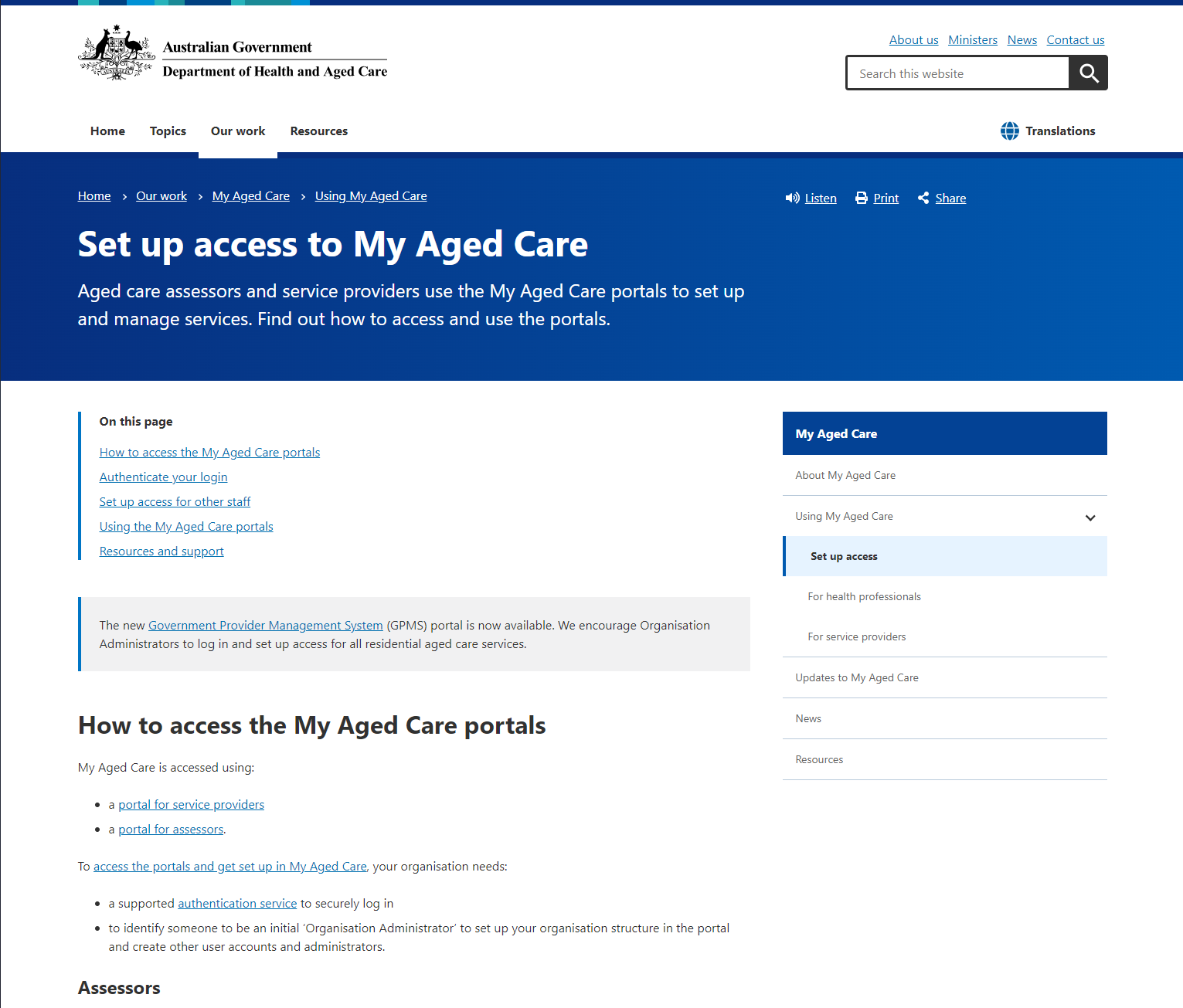
Set up access to My Aged Care
This resource provides guidance for aged care assessors and service providers on accessing and using the My Aged Care portals. It outlines steps for setting up secure access through authentication methods, managing organisation information, and creating staff accounts, supporting efficient service delivery and assessment processes.
This resource may refer to information that will be updated from 1 November 2025 to align with the new Aged Care Act and Quality Standards.
National Clinical Terminology Service
This resource provides information for healthcare providers on digital health tools and initiatives. It covers services such as My Health Record, secure messaging, electronic prescriptions, and telehealth. It supports providers in using digital technologies to enhance healthcare delivery and improve patient outcomes.