
The Quality Standards Resource Centre helps extend understanding of the strengthened Aged Care Quality Standards, which took effect from 1 November 2025. You can search for resources by using keywords, or filtering by standard, outcome and audience. Before using the Resource Centre, please read the terms of use.
National Aboriginal and Torres Strait Islander Flexible Aged Care Program
This resource provides information on the National Aboriginal and Torres Strait Islander Flexible Aged Care Program. The program funds flexible and culturally appropriate aged care services for Aboriginal and Torres Strait Islander communities, mainly in rural and remote areas. It covers service provider requirements, funding processes, and adaptations to ongoing aged care reforms.
This resource may refer to information that will be updated from 1 November 2025 to align with the new Aged Care Act and Quality Standards.
National Consensus Statement - Essential elements for recognising and responding to acute physical deterioration
This consensus statement outlines essential elements for recognising and responding to acute physiological deterioration in healthcare settings. It covers clinical processes like vital signs monitoring, diagnosis, and rapid response systems, as well as organisational aspects such as leadership, education, and evaluation. It provides generic information that can be applied to the aged care setting.
This resource may refer to information that will be updated from 1 November 2025 to align with the new Aged Care Act and Quality Standards.
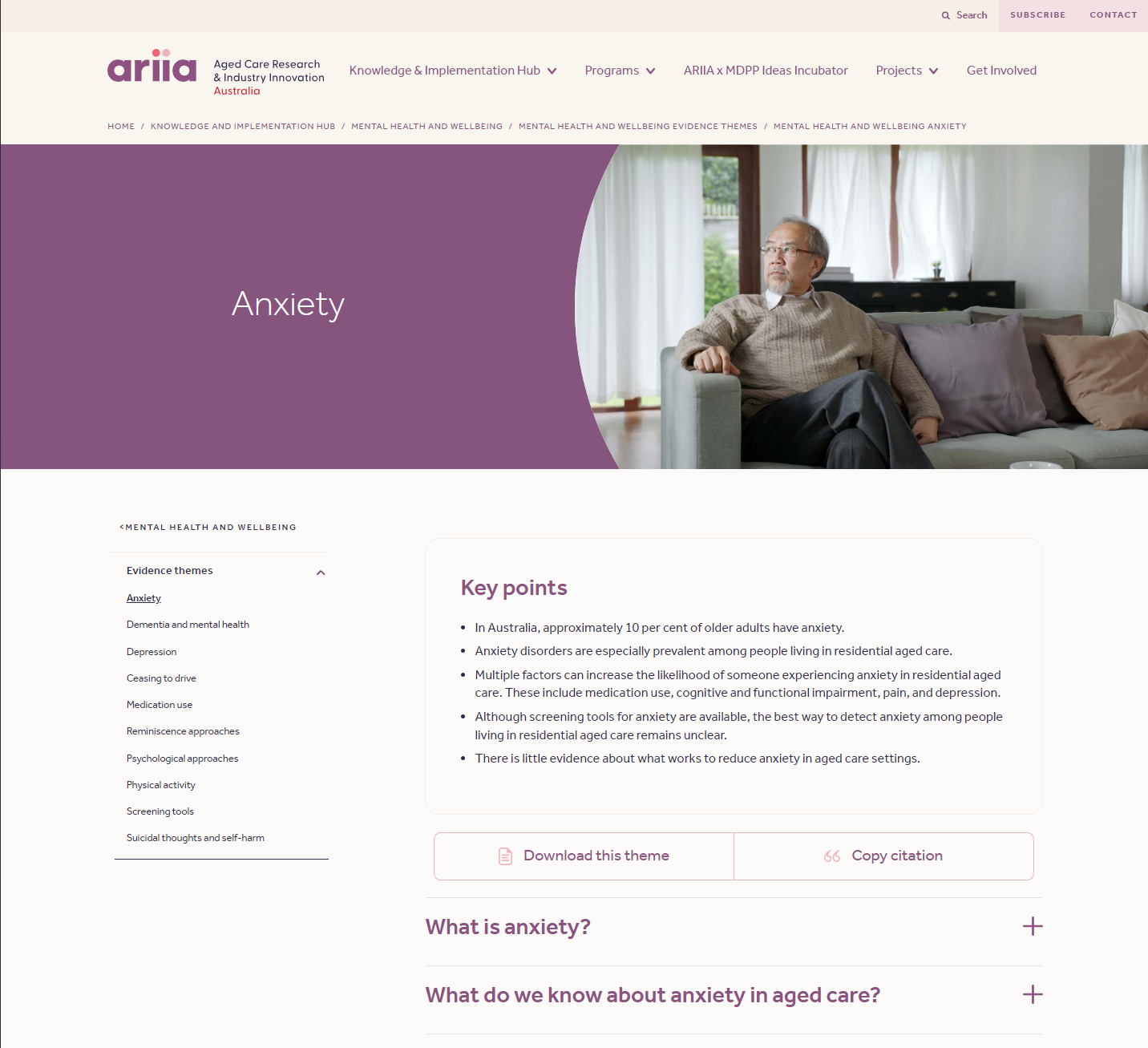
Mental health and wellbeing - Anxiety
This resource provides information on anxiety among older adults, especially those in residential aged care. It outlines risk factors, detection tools, and effectiveness of non-pharmacological interventions such as reminiscence therapy and cognitive behavioural therapy. It also provides guidance on what both individuals and organisations can do to prevent and manage anxiety effectively.
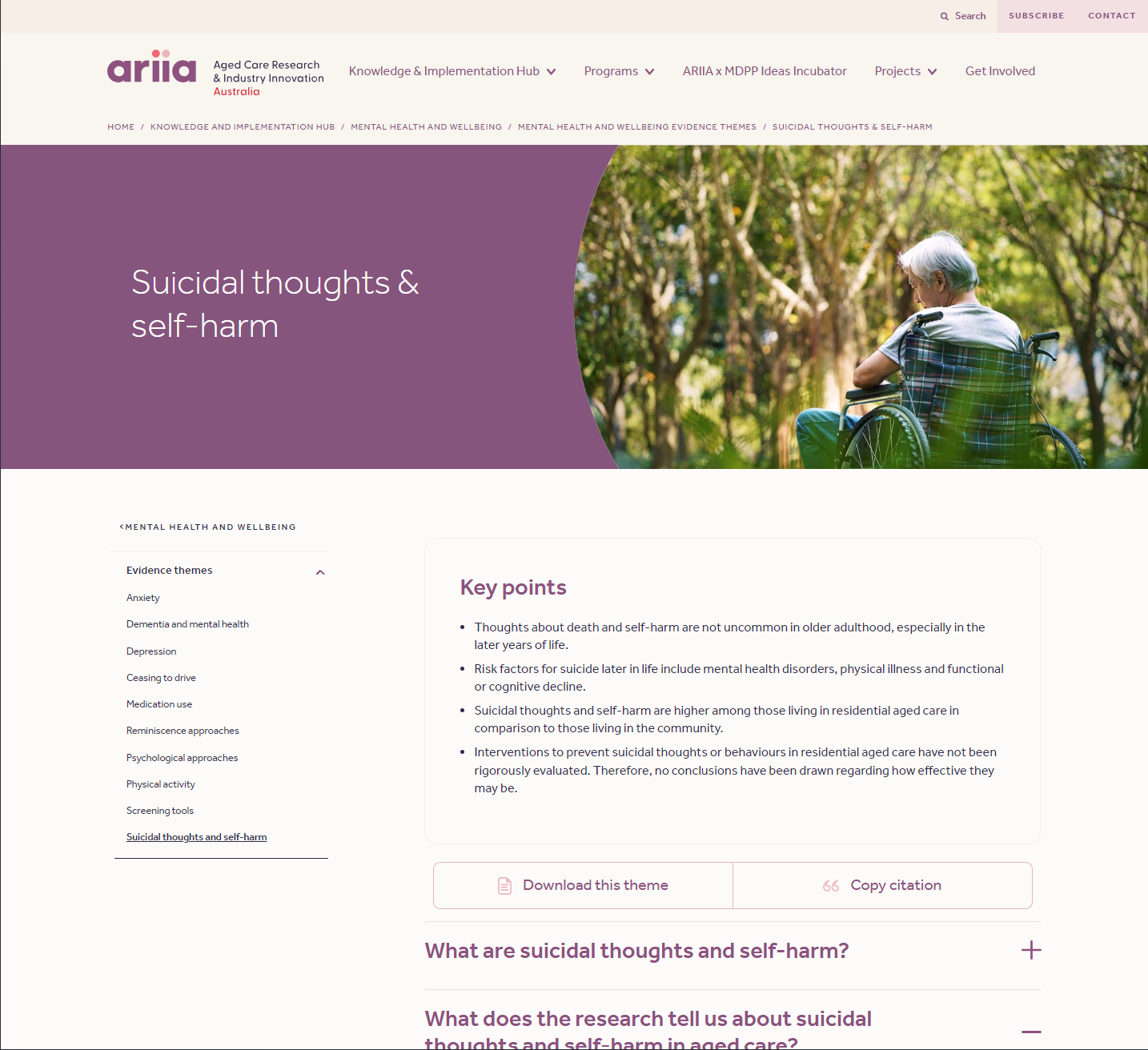
Mental health and wellbeing - Suicidal thoughts and self-harm
This resource examines suicidal thoughts and self-harm in older adults, particularly in residential aged care. It discusses associated risk factors, the prevalence of mental health conditions, what organisations and individuals can do and gaps in understanding suicide risk. It also reviews interventions, highlighting the need for mental health assessments and training to improve detection and care.
Mental health and wellbeing - Screening tools
This resource covers screening tools for detecting anxiety and depression in older adults, especially in residential aged care. It discusses the importance of mental health screening, steps individuals and organisations can take, choosing appropriate tools, and highlights tools such as the Geriatric Depression Scale and Cornell Scale for Depression in Dementia. It emphasises early detection and routine mental health screening in aged care.
Mental health and wellbeing - Depression
This resource provides information on depression in older adults, particularly in residential aged care. It discusses risk factors, detection tools, and treatment approaches, including psychotherapy, music-based interventions, and exercise. It also provides guidance on what both individuals and organisations can do to prevent and manage depression effectively.
RACGP aged care clinical guide (Silver Book) - Part B - Abuse of older people
This resource provides guidance on recognising, assessing, and managing abuse of older people in various settings, including residential aged care. It covers types of abuse (financial, emotional, physical, sexual, neglect), risk factors, barriers to disclosure, and steps for prevention. The document also includes recommendations for safety planning, intervention strategies, and resources for support across Australian states and territories.
RACGP aged care clinical guide (Silver Book) - Part A - Behavioural and psychological symptoms of dementia
This guide offers principles and practice points for assessing and managing behavioural and psychological symptoms of dementia (BPSD) in aged care. It includes frameworks for comprehensive patient assessment, non-pharmacological and pharmacological interventions, medication review, and personalised care plans to improve care outcomes for dementia patients.
RACGP aged care clinical guide (Silver Book) - Part A - Dementia
This resource offers guidance on diagnosing and managing dementia, covering its impact on cognitive and physical functions, screening methods, and differential diagnoses. It discusses appropriate use of medications, non-pharmacological approaches, and ongoing care plans for supporting those with dementia. It includes practical recommendations on cognitive assessments, functional reviews, and medication management.
RACGP aged care clinical guide (Silver Book) - Part B - Multiculturalism in aged care
This guide discusses multiculturalism in aged care, addressing the diverse needs of culturally and linguistically diverse (CALD) older adults. It covers healthcare principles, communication strategies, clinical considerations, and culturally tailored approaches for areas like medication management, dementia, mental health, nutrition, and substance use. It also provides practical advice for general practitioners, carers, and aged care facilities to deliver culturally safe and effective care.
RACGP aged care clinical guide (Silver Book) - Part B - Older Aboriginal and Torres Strait Islander people
This guide addresses barriers faced by Aboriginal and Torres Strait Islander peoples in accessing aged care, such as cultural safety, geographic challenges, and geriatric syndromes experienced at younger ages. It discusses the importance of culturally appropriate care, the use of specific assessment tools, and the unique needs of the Stolen Generation within residential and community settings.
RACGP aged care clinical guide (Silver Book) - Part B - Medical records at residential aged care facilities
This guide covers managing medical records in residential aged care facilities (RACFs). It describes different practitioner models (solo, practice-based, aged care-specific) and provides standards for record-keeping, sharing notes, and maintaining clinical governance. The guide suggests methods for transferring medical information to RACF staff, including printing, electronic sharing, and handover notes.
RACGP aged care clinical guide (Silver Book) - Part B - Supporting independent living in older people
This guide discusses strategies for supporting independent living in older adults, covering concepts of healthy ageing, using aged care services, respite care, and re-aligning function. It highlights the role of general practitioners in promoting autonomy, addressing individual needs, and avoiding ageist language while facilitating access to community or residential care services.
RACGP aged care clinical guide (Silver Book) - Part B - Care of older LGBTI people
This guide addresses the healthcare needs of older LGBTI people, covering areas such as mental health, substance use, chronic disease risks, and the importance of inclusive care. It provides strategies for culturally safe practices, promoting wellbeing, recognising abuse, and details standards for LGBTI-inclusive services, such as organisational capability and consumer participation.
RACGP aged care clinical guide (Silver Book) - Part B - Advance care planning
This guide covers advance care planning for older adults, detailing the process of discussing patients' values, appointing a decision-maker, and documenting preferences for future care. It outlines the general practitioner’s role, steps for initiating discussions, assessing decision-making capacity, storing care plans, and ensuring patients' wishes are respected during their illness trajectory.
RACGP aged care clinical guide (Silver Book) - Part B - Families and carers
This guide focuses on the role of families and carers in supporting older adults, covering topics like consent, communication, self-care, and bereavement support. It includes practical advice on involving carers in healthcare planning, respecting patient confidentiality, and resources for additional support, ensuring comprehensive care for both patients and carers.
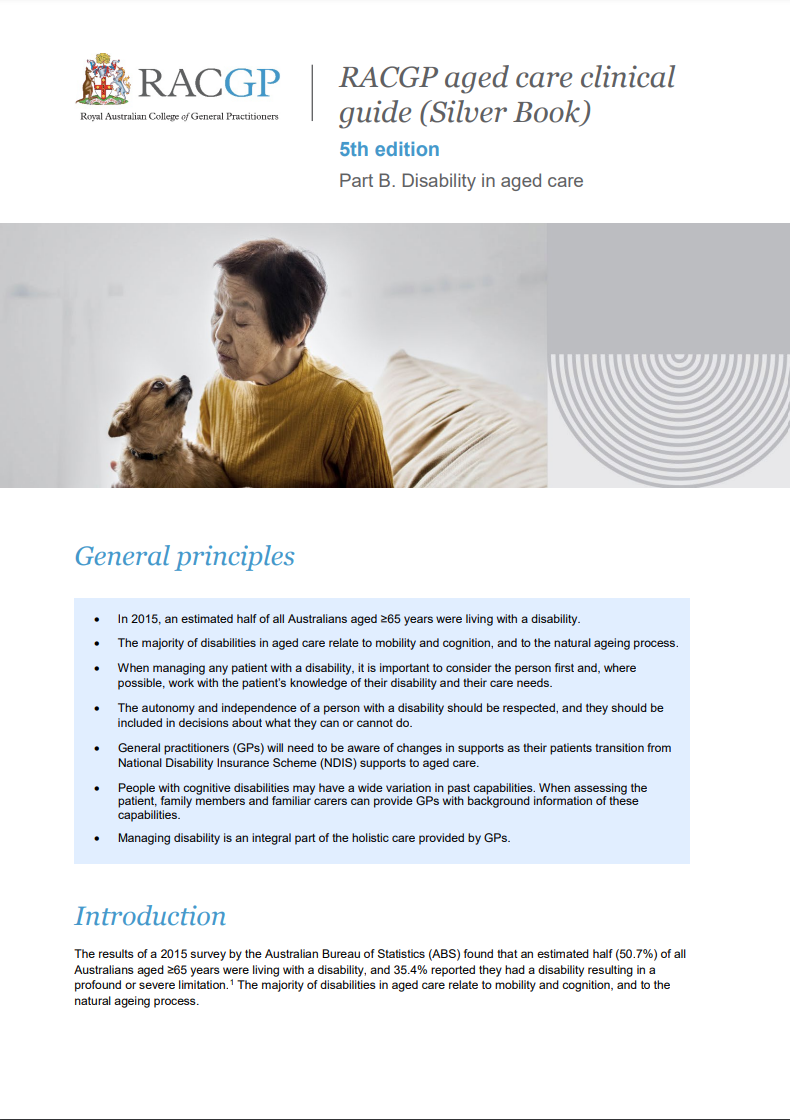
RACGP aged care clinical guide (Silver Book) - Part B - Disability in aged care
This guide addresses the management of disabilities in older adults, including mobility, cognitive impairments, developmental disabilities, hearing and visual impairment, psychiatric conditions, and neurodegenerative disorders. It outlines approaches for general practitioners to provide holistic care, monitor health risks, adapt support systems, and coordinate with allied health professionals in residential aged care settings.
RACGP aged care clinical guide (Silver Book) - Part B - Collaboration and multidisciplinary team-based care
This guide focuses on collaboration and multidisciplinary care for older adults, particularly in residential aged care. It outlines the benefits of team-based care, effective team structures, shared goals, defined roles, building trust, communication, and measurable processes to improve health outcomes. It provides practical tips for effective teamwork and highlights the importance of coordinating care among various healthcare professionals.
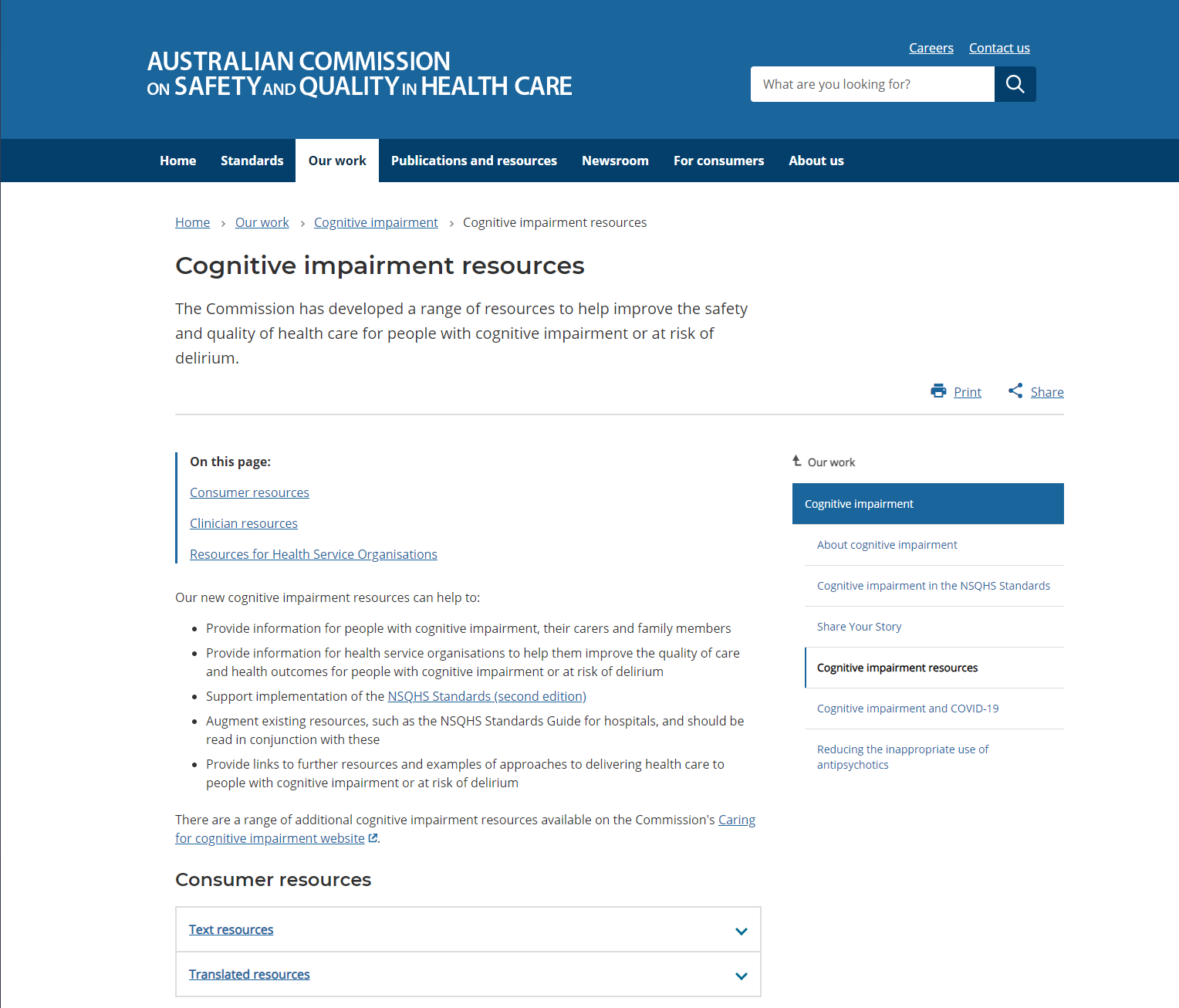
Cognitive impairment resources
This resource provides a range of materials developed to improve the safety and quality of healthcare for people with cognitive impairment or at risk of delirium. It includes guides, fact sheets, and standards for consumers, clinicians, and health service organisations, supporting the implementation of best practice and quality care.
This resource may refer to information that will be updated from 1 November 2025 to align with the new Aged Care Act and Quality Standards.
RACGP aged care clinical guide (Silver Book) - Part B - General approaches to aged care
This resource, part of the RACGP Silver Book, provides guidance for general practitioners on delivering healthcare to older people in both residential aged care facilities and the community. It addresses challenges of ageing, healthcare delivery, and principles of medical care, offering practical advice to ensure appropriate and effective management of older patients.




