The Quality Standards Resource Centre helps extend understanding of the strengthened Aged Care Quality Standards, which took effect from 1 November 2025. You can search for resources by using keywords, or filtering by standard, outcome and audience. Before using the Resource Centre, please read the terms of use.
RACGP aged care clinical guide (Silver Book) - Part B - Disability in aged care
This guide addresses the management of disabilities in older adults, including mobility, cognitive impairments, developmental disabilities, hearing and visual impairment, psychiatric conditions, and neurodegenerative disorders. It outlines approaches for general practitioners to provide holistic care, monitor health risks, adapt support systems, and coordinate with allied health professionals in residential aged care settings.
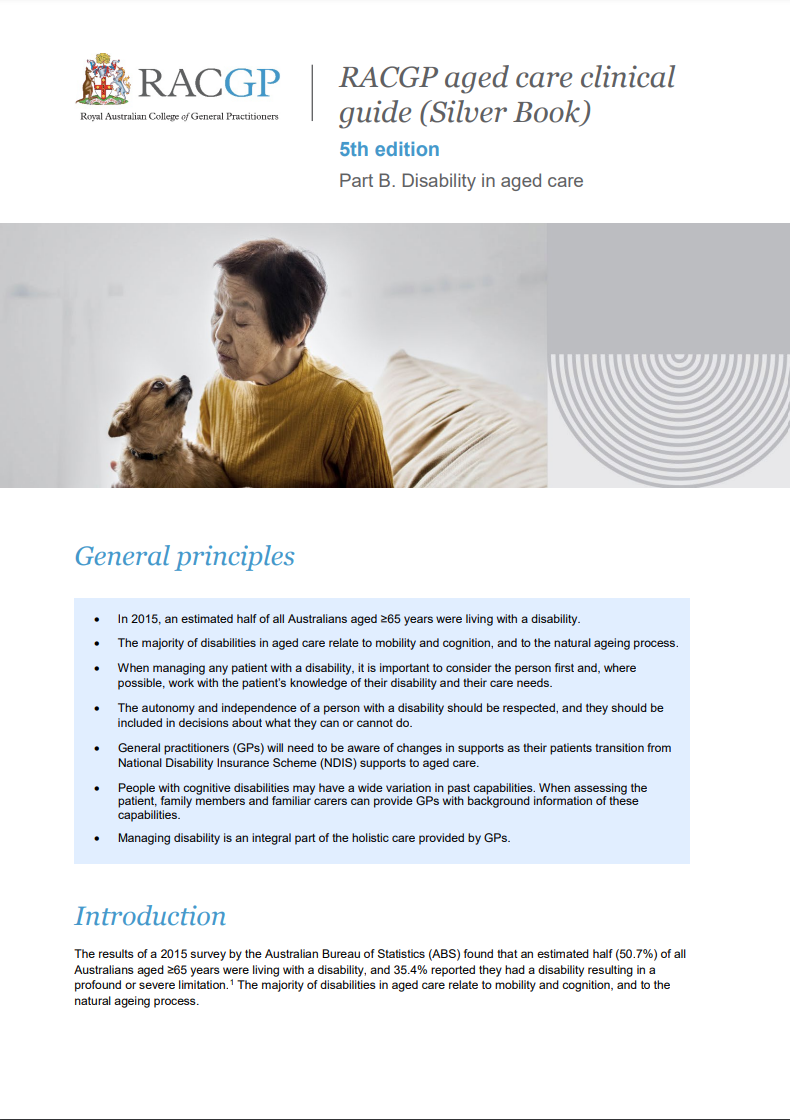
RACGP aged care clinical guide (Silver Book) - Part A - Palliative and end-of-life care
This guide focuses on palliative and end-of-life care, detailing general principles, illness trajectories, the role of general practitioners, and practical recommendations for patient-cantered care. It provides consensus-based guidelines for initiating advance care planning, symptom management, team-based end-of-life care, medication use, and supporting both patients and their families. It includes information on the transition from chronic disease treatment to a palliative approach and includes tools for clinical decision-making.
RACGP aged care clinical guide (Silver Book) - Part B - Collaboration and multidisciplinary team-based care
This guide focuses on collaboration and multidisciplinary care for older adults, particularly in residential aged care. It outlines the benefits of team-based care, effective team structures, shared goals, defined roles, building trust, communication, and measurable processes to improve health outcomes. It provides practical tips for effective teamwork and highlights the importance of coordinating care among various healthcare professionals.
Cognitive impairment resources
This resource provides a range of materials developed to improve the safety and quality of healthcare for people with cognitive impairment or at risk of delirium. It includes guides, fact sheets, and standards for consumers, clinicians, and health service organisations, supporting the implementation of best practice and quality care.
This resource may refer to information that will be updated from 1 November 2025 to align with the new Aged Care Act and Quality Standards.
RACGP aged care clinical guide (Silver Book) - Part A - Frailty
This guide discusses frailty in older adults, detailing assessment methods, risk factors, and management strategies. It includes annual frailty assessments, involvement of multidisciplinary teams (physiotherapists, dietitians), recommendations for physical activity, nutrition support, vitamin D supplementation, medication review, and interventions to reduce complications such as falls and malnutrition in aged care.
RACGP aged care clinical guide (Silver Book) - Part A - Medication management
This guide covers medication management in aged care, addressing the use of multiple medications, reviewing prescriptions, and the role of multidisciplinary teams. It outlines principles for safe medication practices, deprescribing, administering medication, managing adverse events, and conducting medication reviews. It also provides guidelines for storage, disposal, and modification of medications.
RACGP aged care clinical guide (Silver Book) - Part A - Common clinical conditions in aged care
This guide serves as a reference for general practitioners managing common clinical conditions in aged care. It includes principles of diagnosis, management, and patient-centred care, with considerations for multimorbidity, polypharmacy, and palliative care. The guide aims to support tailored healthcare plans based on individual patient needs in residential and community settings.
RACGP aged care clinical guide (Silver Book) - Part B - General approaches to aged care
This resource, part of the RACGP Silver Book, provides guidance for general practitioners on delivering healthcare to older people in both residential aged care facilities and the community. It addresses challenges of ageing, healthcare delivery, and principles of medical care, offering practical advice to ensure appropriate and effective management of older patients.
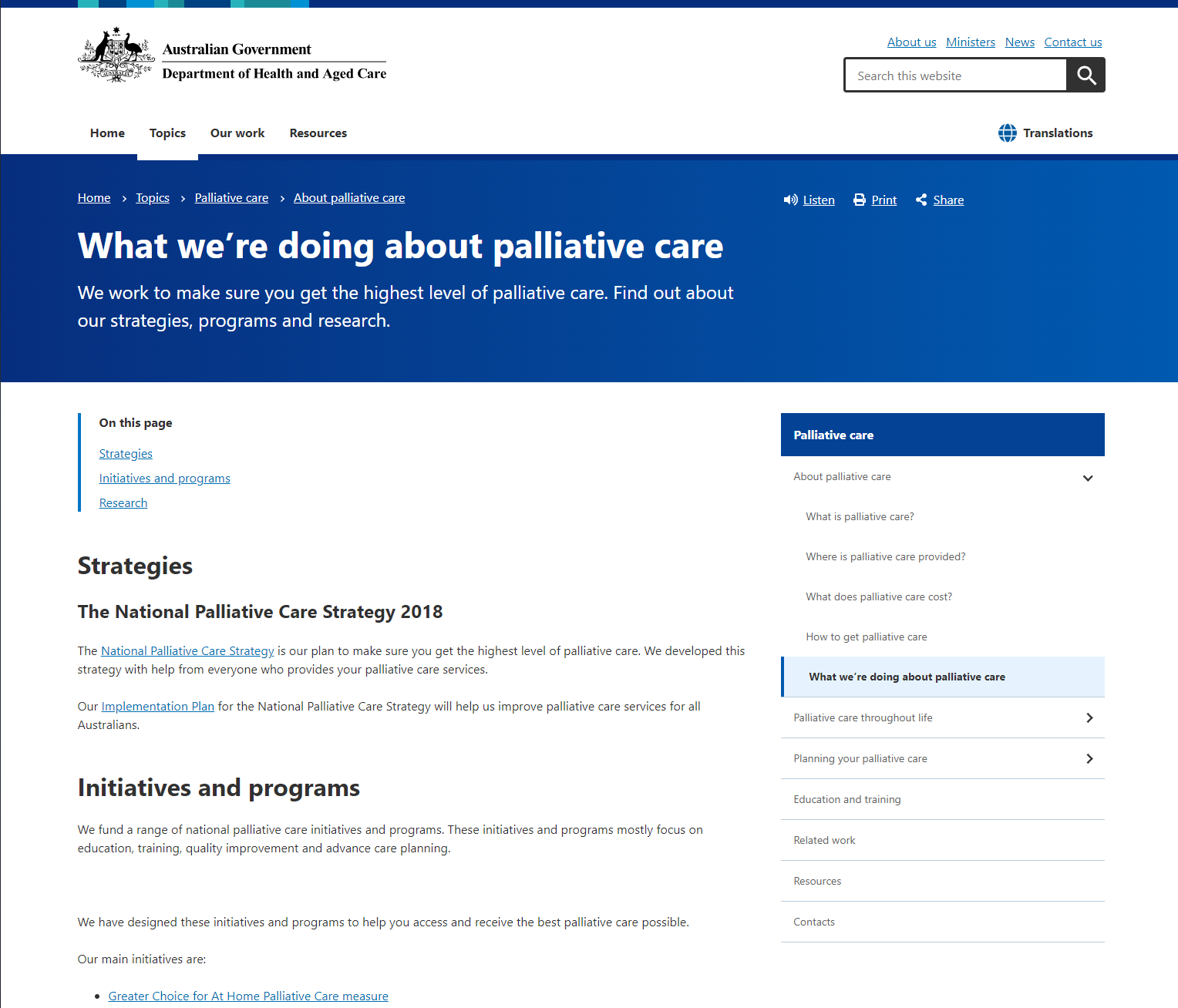
What we’re doing about palliative care
This resource outlines the Australian Government’s strategies, initiatives, and research for improving palliative care. It details the National Palliative Care Strategy, workforce training, and key programs such as at-home and aged care measures. It also highlights the National Framework for Advance Care Planning, ensuring access to quality palliative care across Australia.
This resource may refer to information that will be updated from 1 November 2025 to align with the new Aged Care Act and Quality Standards.
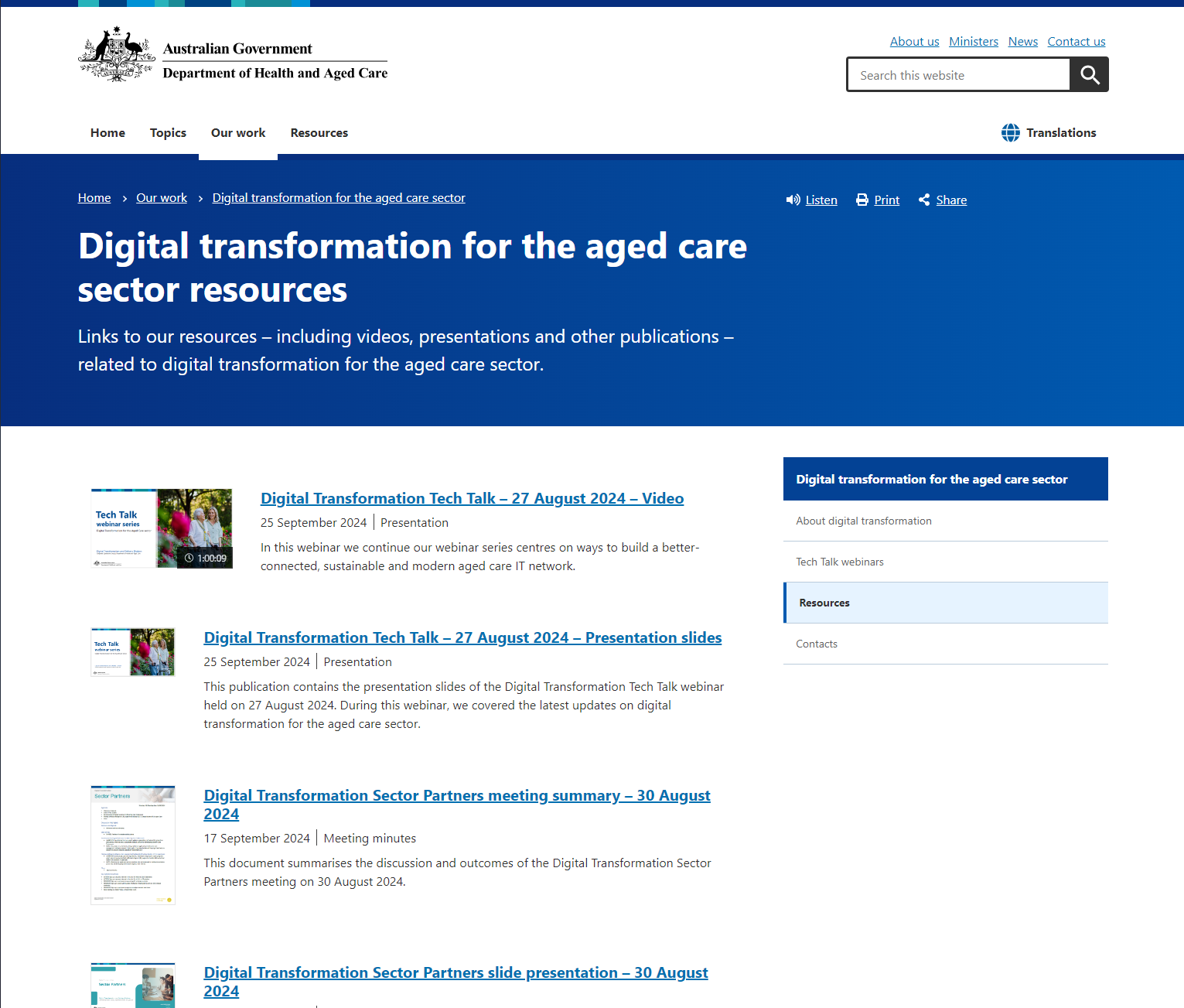
Digital transformation for the aged care sector resources
This resource provides access to various materials related to digital transformation in the aged care sector, including videos, presentations, and meeting summaries. It offers insights into building a modern, connected aged care IT network and shares updates from sector partner meetings on digital transformation initiatives.
This resource may refer to information that will be updated from 1 November 2025 to align with the new Aged Care Act and Quality Standards.
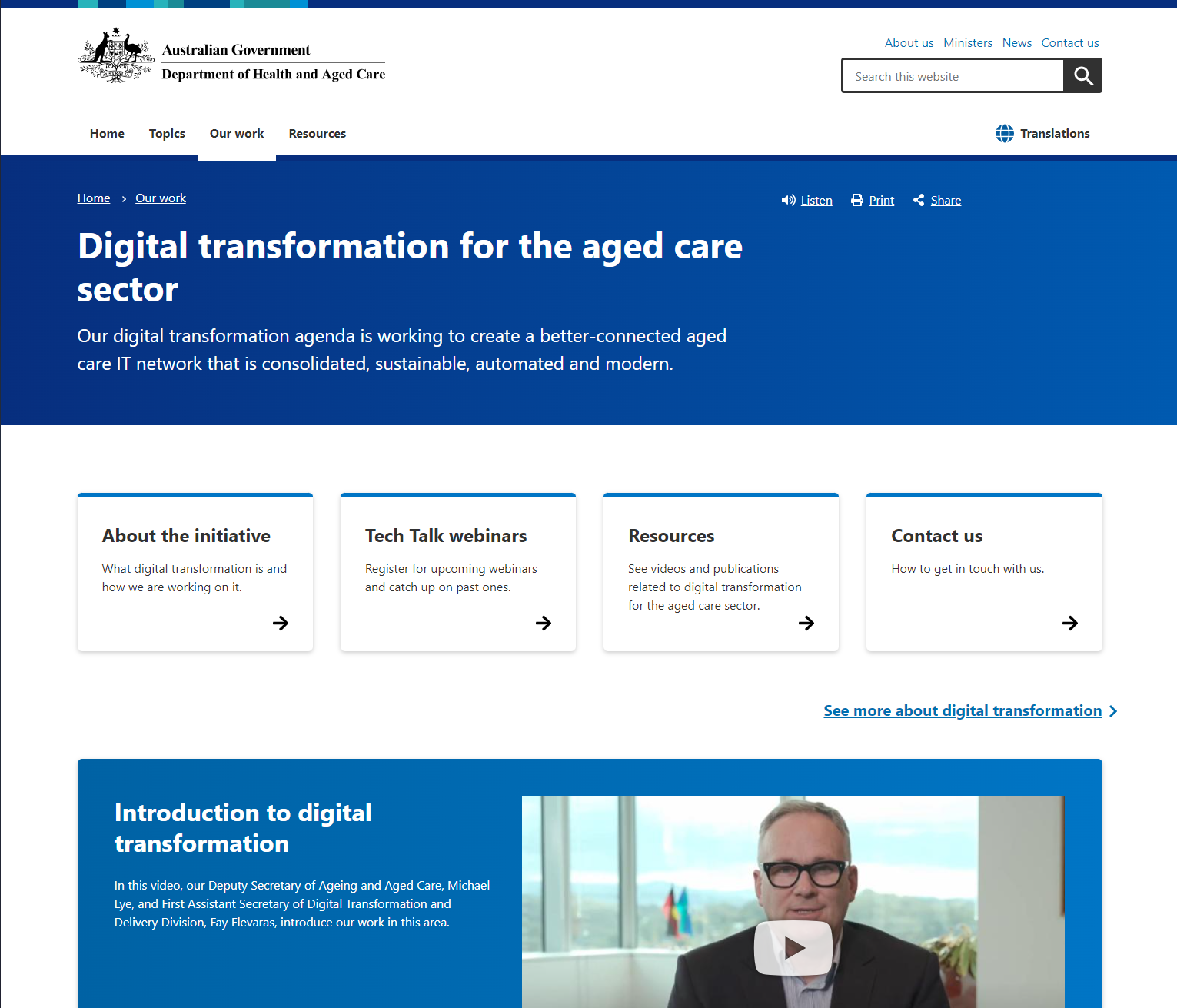
Digital transformation for the aged care sector
This resource outlines the digital transformation agenda for the aged care sector in Australia, focusing on creating a consolidated, sustainable, and modern IT network. It includes strategies for improving connections between clients, providers, and the government, offering webinars and resources to support this transition.
This resource may refer to information that will be updated from 1 November 2025 to align with the new Aged Care Act and Quality Standards.
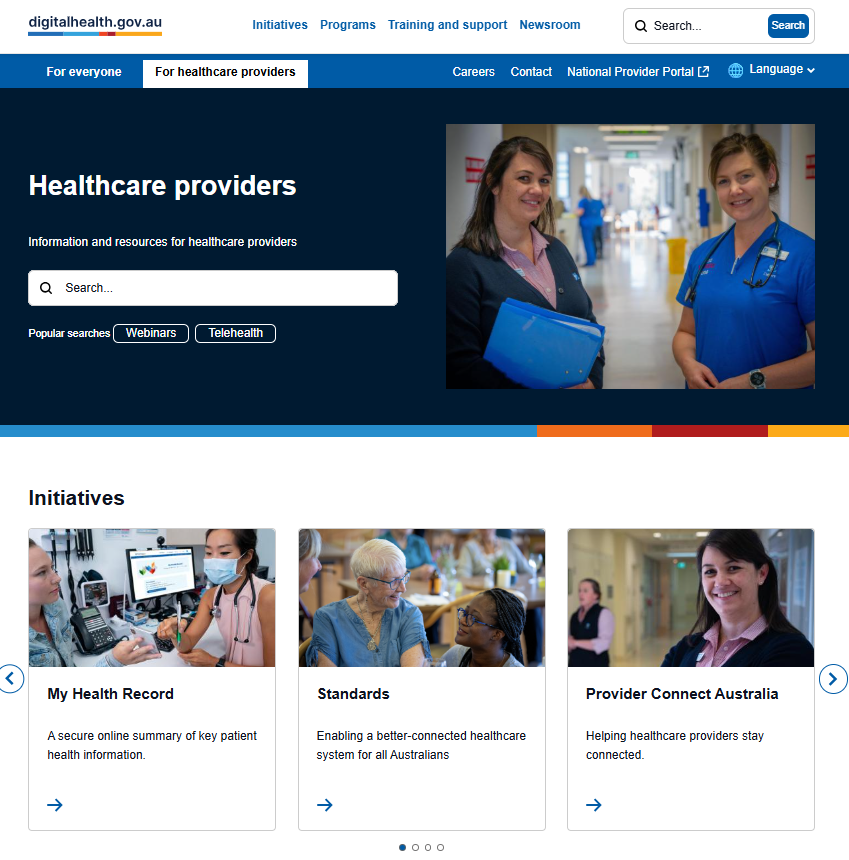
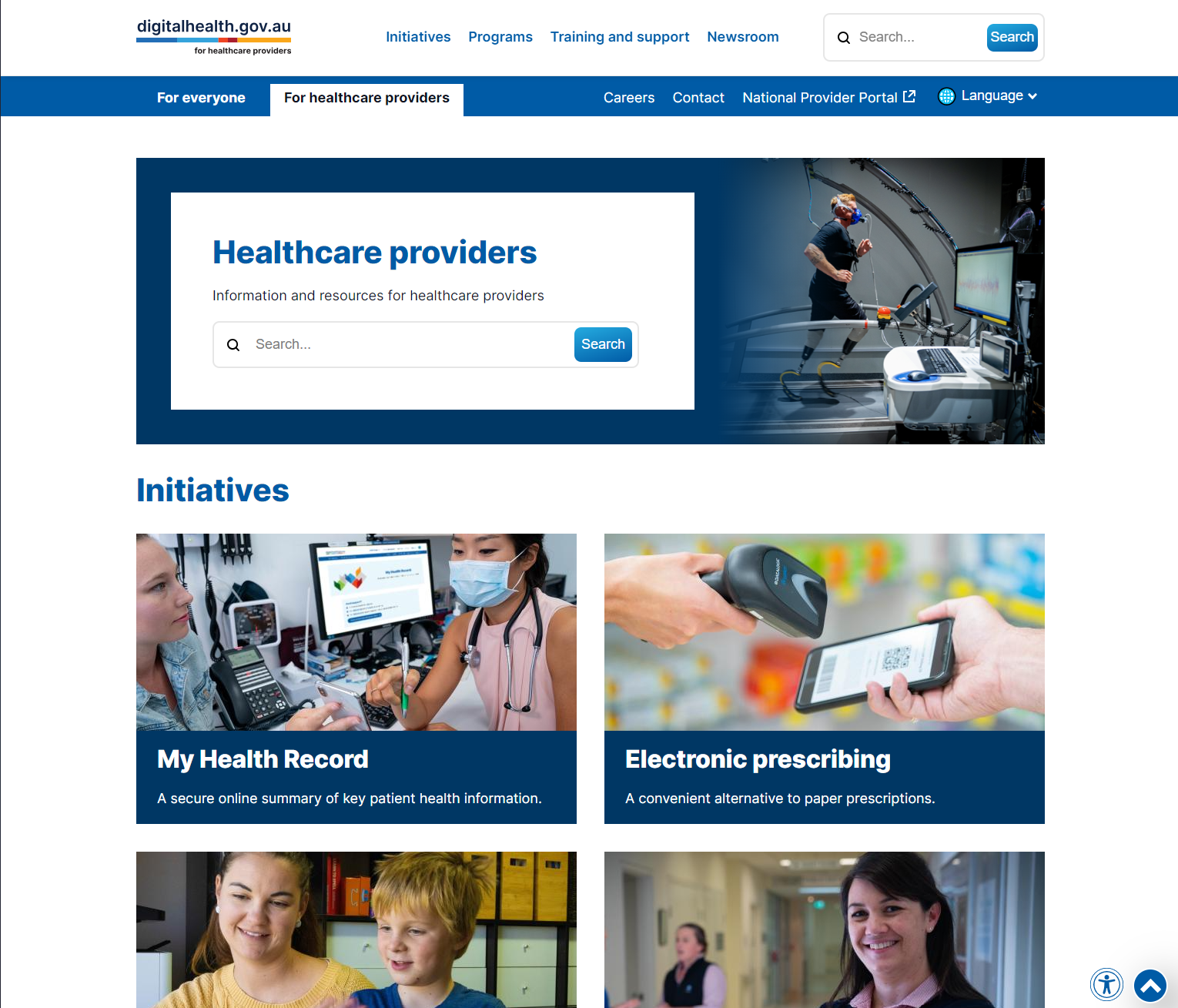
Digital health - For healthcare providers
This resource provides guidance for aged care assessors and service providers on accessing and using the My Aged Care portals. It outlines steps for setting up secure access through authentication methods, managing organisation information, and creating staff accounts, supporting efficient service delivery and assessment processes.
This resource may refer to information that will be updated from 1 July 2025 to align with the new Aged Care Act and Quality Standards.
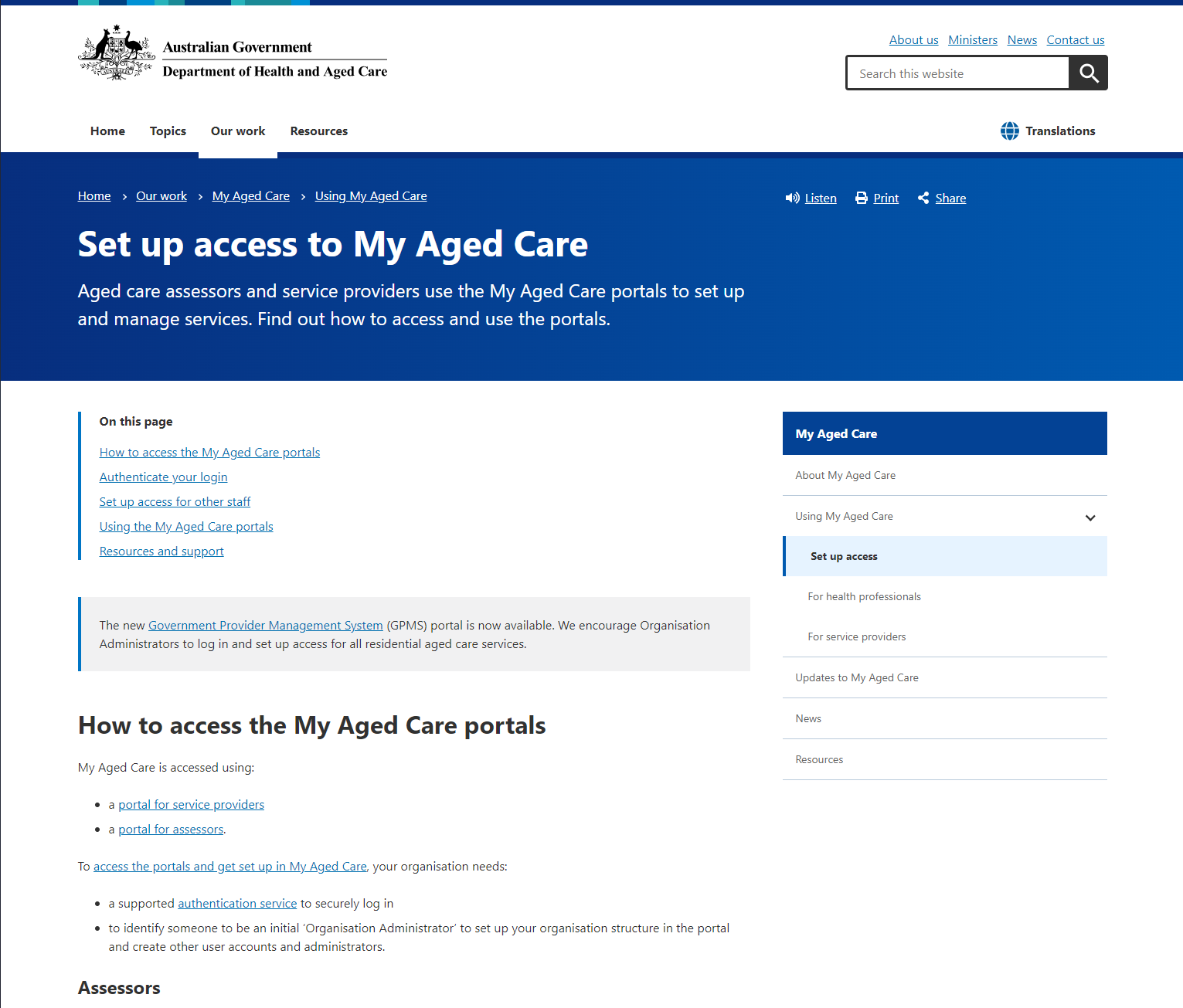
Set up access to My Aged Care
This resource provides guidance for aged care assessors and service providers on accessing and using the My Aged Care portals. It outlines steps for setting up secure access through authentication methods, managing organisation information, and creating staff accounts, supporting efficient service delivery and assessment processes.
This resource may refer to information that will be updated from 1 November 2025 to align with the new Aged Care Act and Quality Standards.
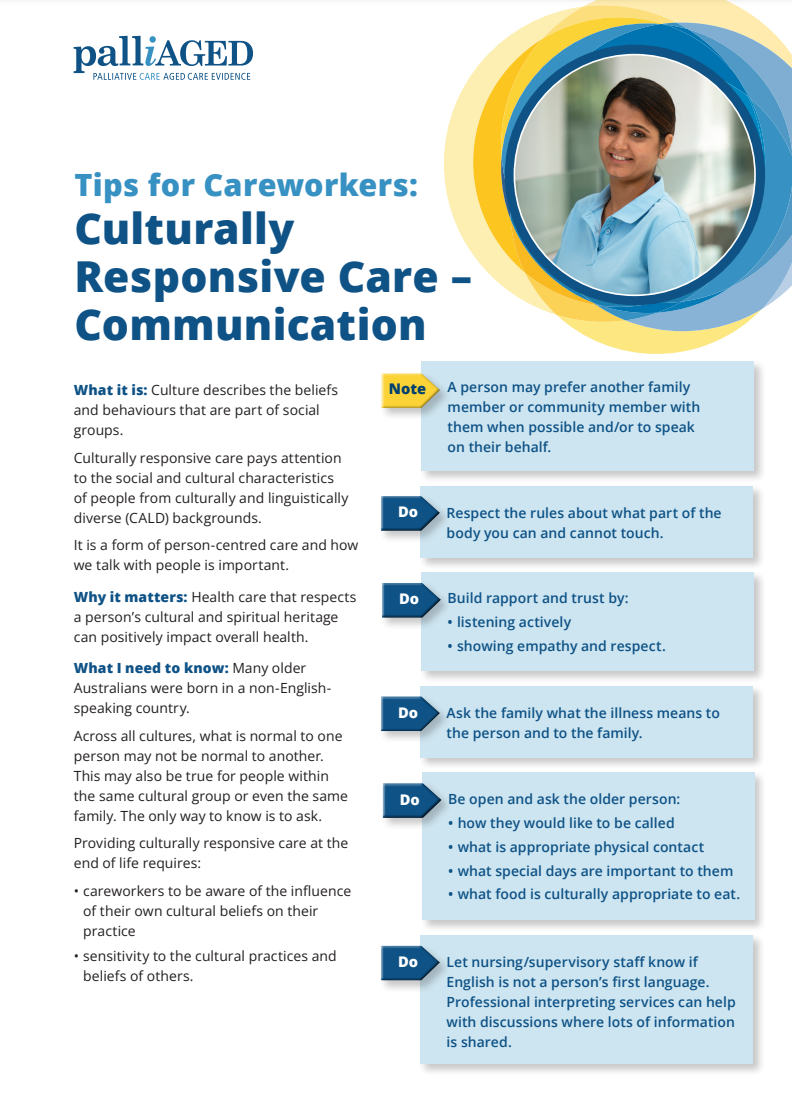
Tips for Careworkers: Culturally Responsive Care - Communication
This resource provides practice tip sheets for care workers, focusing on culturally responsive care for people from culturally and linguistically diverse backgrounds. It outlines communication strategies, emphasising person-centred care, cultural sensitivity, and effective interaction with patients and families, especially at the end of life.
How to talk about dementia
This resource provides guidance on using accurate, respectful, and non-stigmatising language when discussing dementia. It emphasises avoiding negative terms, promoting dignity, and listening to individuals' preferences. It includes suggestions for talking about dementia symptoms, behaviour, and the impacts of dementia on individuals and their families, promoting understanding and reducing discrimination.
National Clinical Terminology Service
This resource provides information for healthcare providers on digital health tools and initiatives. It covers services such as My Health Record, secure messaging, electronic prescriptions, and telehealth. It supports providers in using digital technologies to enhance healthcare delivery and improve patient outcomes.
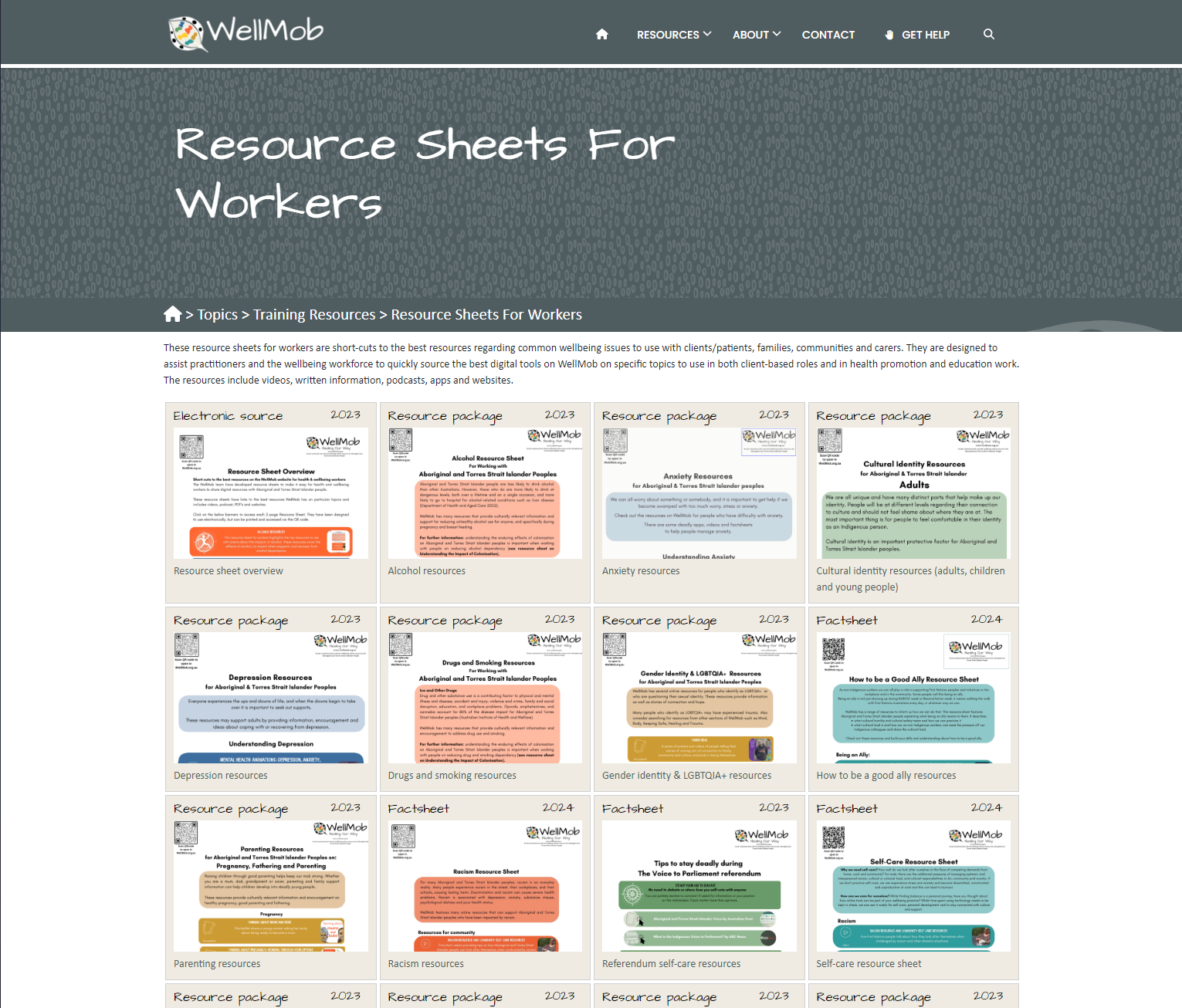
Resource sheets for workers – Social, emotional and cultural wellbeing online resources for Aboriginal and Torres Strait Islander People
This resource offers a collection of topic-based resource sheets for workers, covering wellbeing issues relevant to Aboriginal and Torres Strait Islander communities. It includes information on topics like alcohol, anxiety, cultural identity, depression, and trauma. The resources consist of videos, fact sheets, podcasts, apps, and websites to support practitioners and the wellbeing workforce.
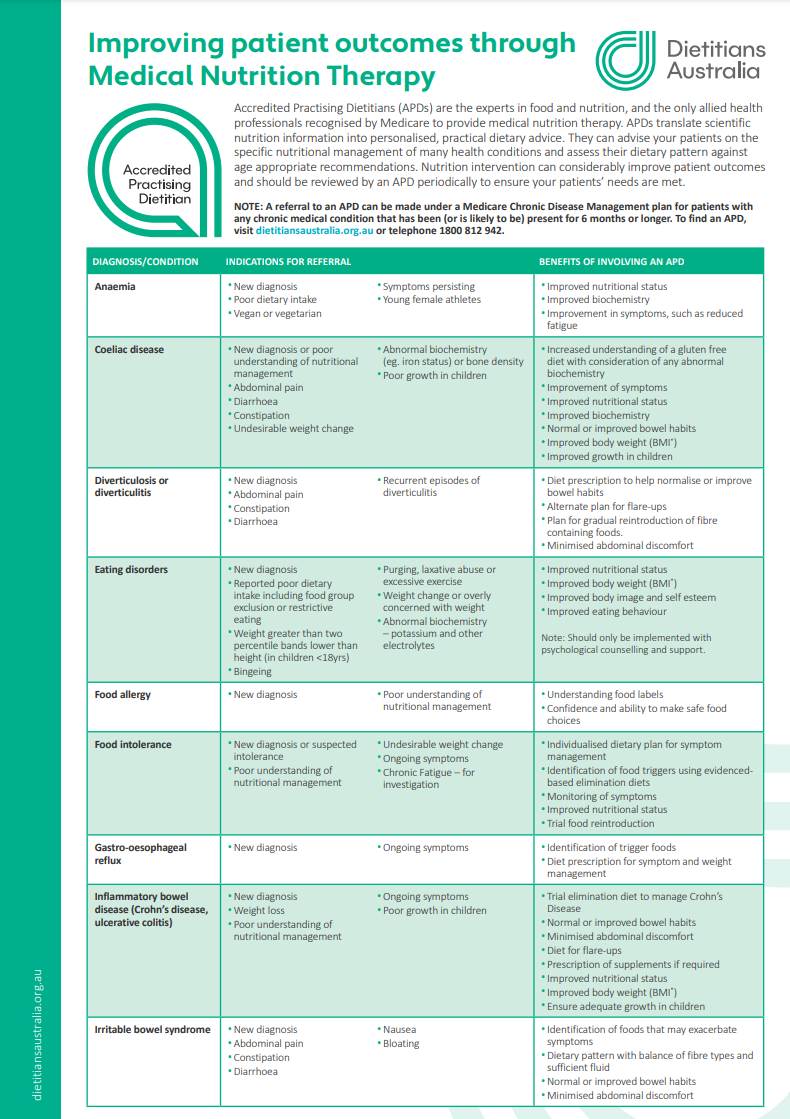
Improving patient outcomes through Medical Nutrition Therapy
This resource outlines the role of Accredited Practising Dietitians (APDs) in medical nutrition therapy across various health conditions, including those common in aged care. It includes indications for referral to an APD and highlights benefits such as improved nutritional status, symptom management, and enhanced health outcomes. This resource may apply to healthcare contexts outside of aged care. Please consider the applicability of this resource to your care setting.
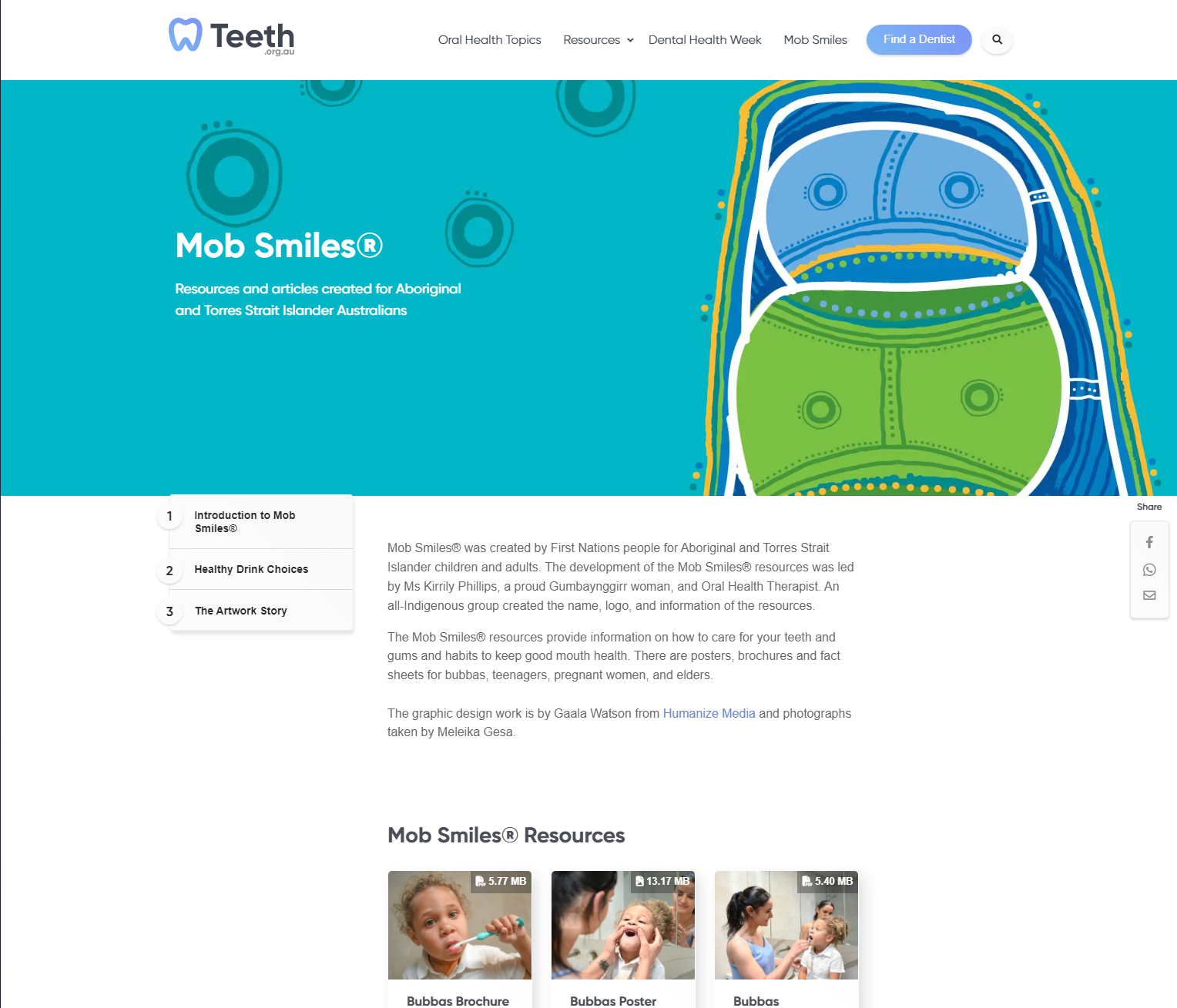
Mob Smiles - Resources and articles created for Aboriginal and Torres Strait Islander Australians
This resource, Mob Smiles, provides culturally appropriate oral health information for Aboriginal and Torres Strait Islander people. It includes brochures, posters, and fact sheets tailored for different life stages such as children, teenagers, elders, and pregnant women. The content focuses on dental care, healthy habits, and oral health education.
Clinical governance and quality improvement to support medication management
This resource outlines clinical governance and quality improvement systems to support safe medication management. It requires health service organisations to implement systems for procuring, prescribing, dispensing, and monitoring medicines.
This resource may refer to information that will be updated from 1 November 2025 to align with the new Aged Care Act and Quality Standards.