The Quality Standards Resource Centre helps extend understanding of the strengthened Aged Care Quality Standards, which took effect from 1 November 2025. You can search for resources by using keywords, or filtering by standard, outcome and audience. Before using the Resource Centre, please read the terms of use.
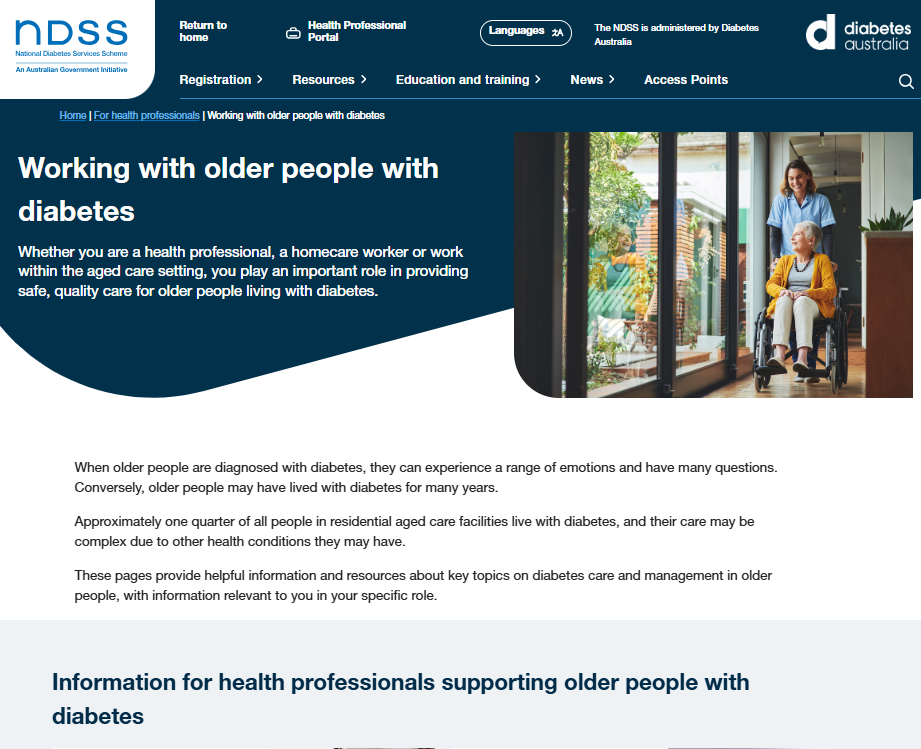
Working with older people with diabetes
This resource provides materials for health professionals supporting older people with diabetes. Resources cover diabetes symptoms and management, blood glucose monitoring, diabetes medication, healthy eating, and more, aiming to improve quality care.
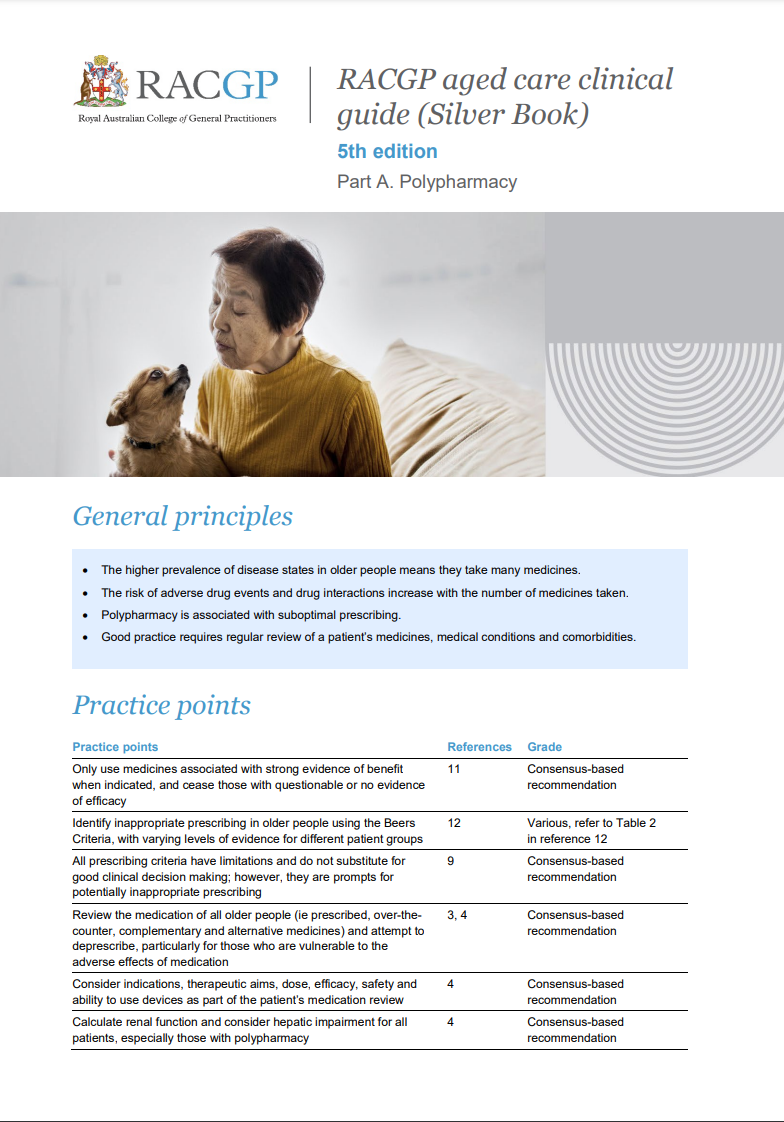
RACGP aged care clinical guide (Silver Book) - Part A - Polypharmacy
This guide addresses polypharmacy in aged care, focusing on identifying inappropriate prescribing and reviewing all medications, including prescription, over-the-counter and complementary and alternative medicines. It includes recommendations for reducing medication use through deprescribing, ensuring medication safety, and regular review of renal and hepatic functions. Tools such as Beers Criteria and other screening frameworks are provided to support optimal medication management in older adults.
RACGP aged care clinical guide (Silver Book) - Part A - Deprescribing
This guide focuses on deprescribing in aged care, aiming to reduce unnecessary or potentially harmful medications. It provides a framework for reviewing medication, assessing risks and benefits, developing tapering plans, and involving multidisciplinary teams. It provides recommendations including; patient-cantered communication, establishing written plans for medication withdrawal, and monitoring outcomes to improve quality of life.
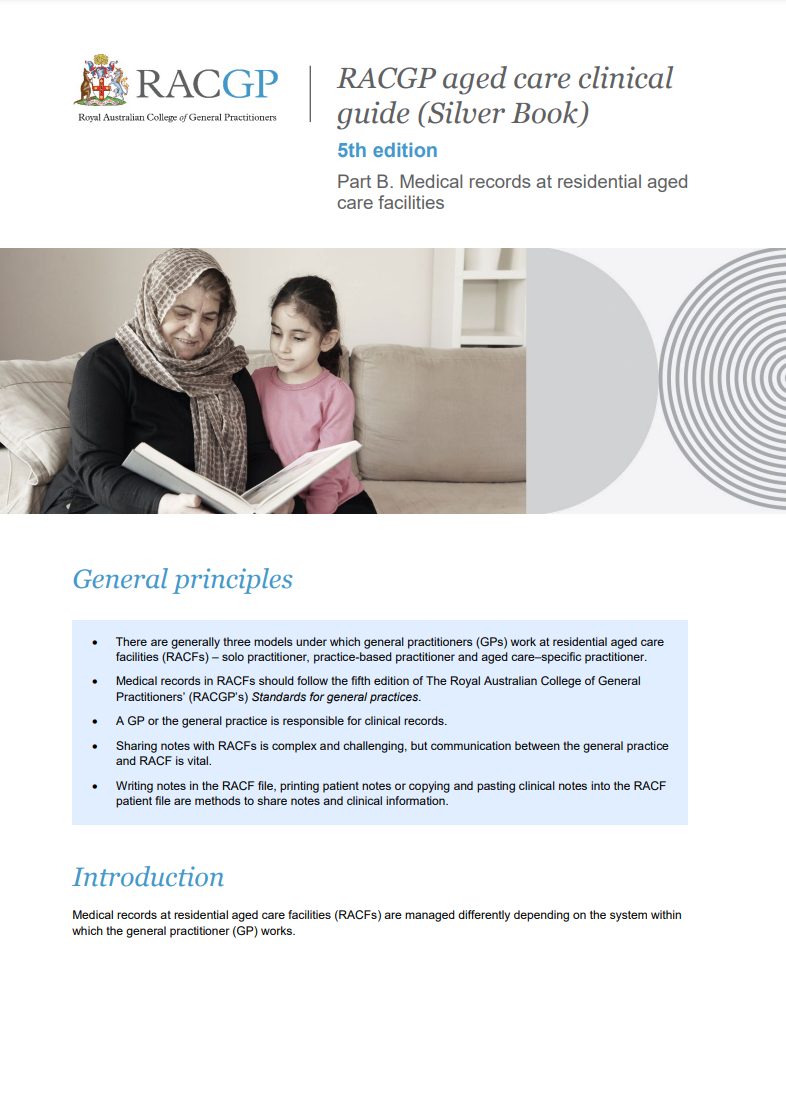
RACGP aged care clinical guide (Silver Book) - Part B - Medical records at residential aged care facilities
This guide covers managing medical records in residential aged care facilities (RACFs). It describes different practitioner models (solo, practice-based, aged care-specific) and provides standards for record-keeping, sharing notes, and maintaining clinical governance. The guide suggests methods for transferring medical information to RACF staff, including printing, electronic sharing, and handover notes.
RACGP aged care clinical guide (Silver Book) - Part A - Medication management
This guide covers medication management in aged care, addressing the use of multiple medications, reviewing prescriptions, and the role of multidisciplinary teams. It outlines principles for safe medication practices, deprescribing, administering medication, managing adverse events, and conducting medication reviews. It also provides guidelines for storage, disposal, and modification of medications.
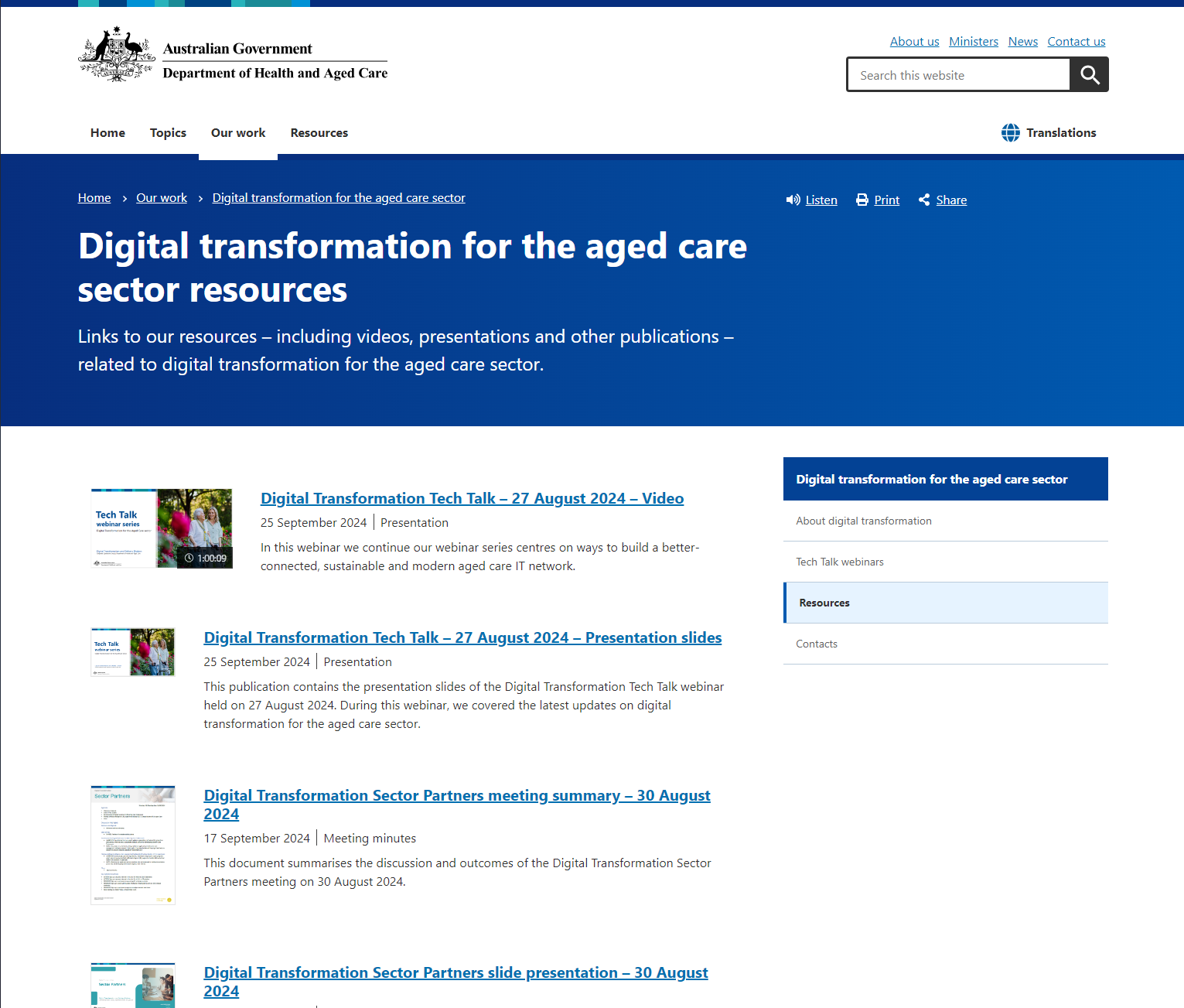
Digital transformation for the aged care sector resources
This resource provides access to various materials related to digital transformation in the aged care sector, including videos, presentations, and meeting summaries. It offers insights into building a modern, connected aged care IT network and shares updates from sector partner meetings on digital transformation initiatives.
This resource may refer to information that will be updated from 1 November 2025 to align with the new Aged Care Act and Quality Standards.
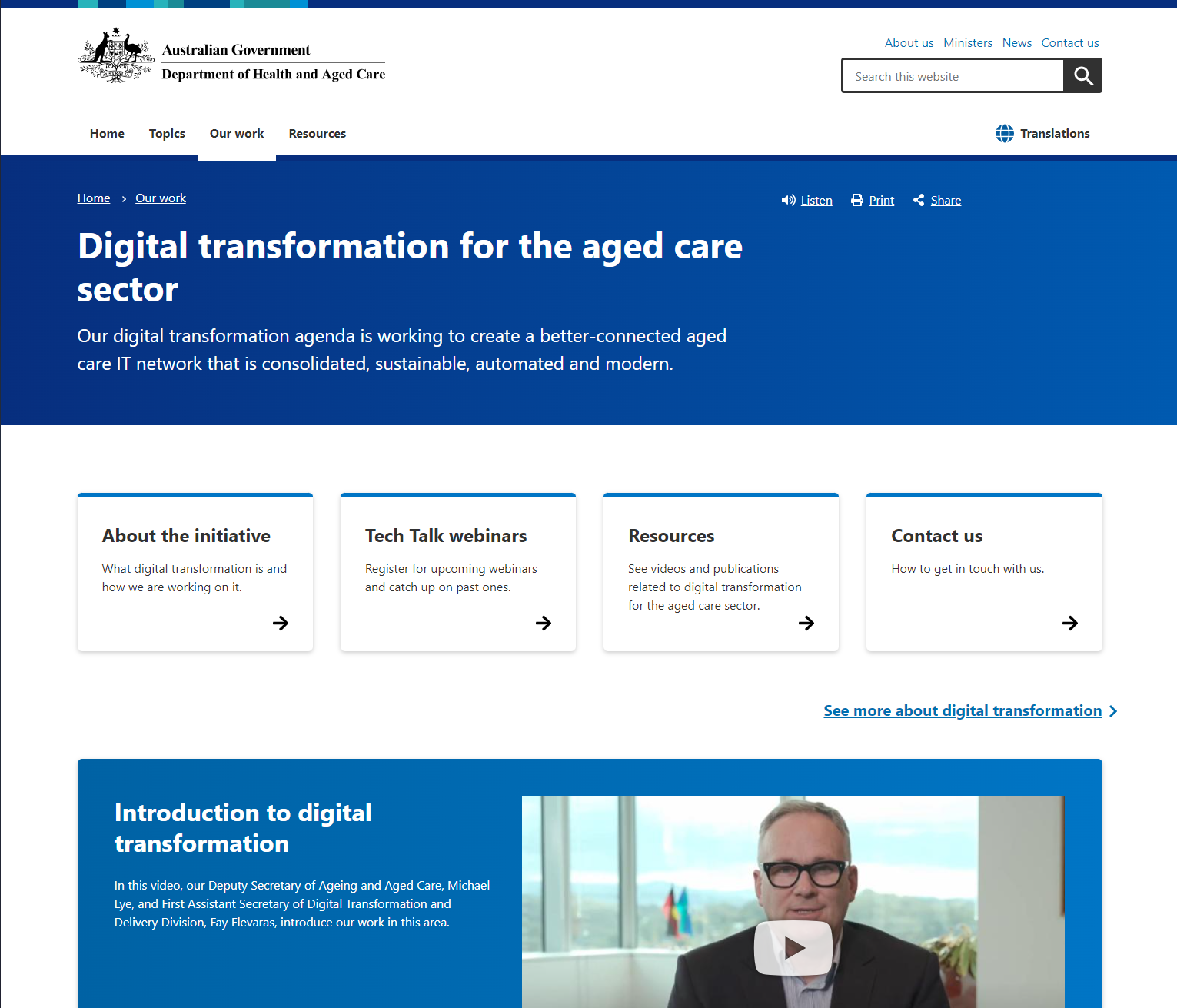
Digital transformation for the aged care sector
This resource outlines the digital transformation agenda for the aged care sector in Australia, focusing on creating a consolidated, sustainable, and modern IT network. It includes strategies for improving connections between clients, providers, and the government, offering webinars and resources to support this transition.
This resource may refer to information that will be updated from 1 November 2025 to align with the new Aged Care Act and Quality Standards.
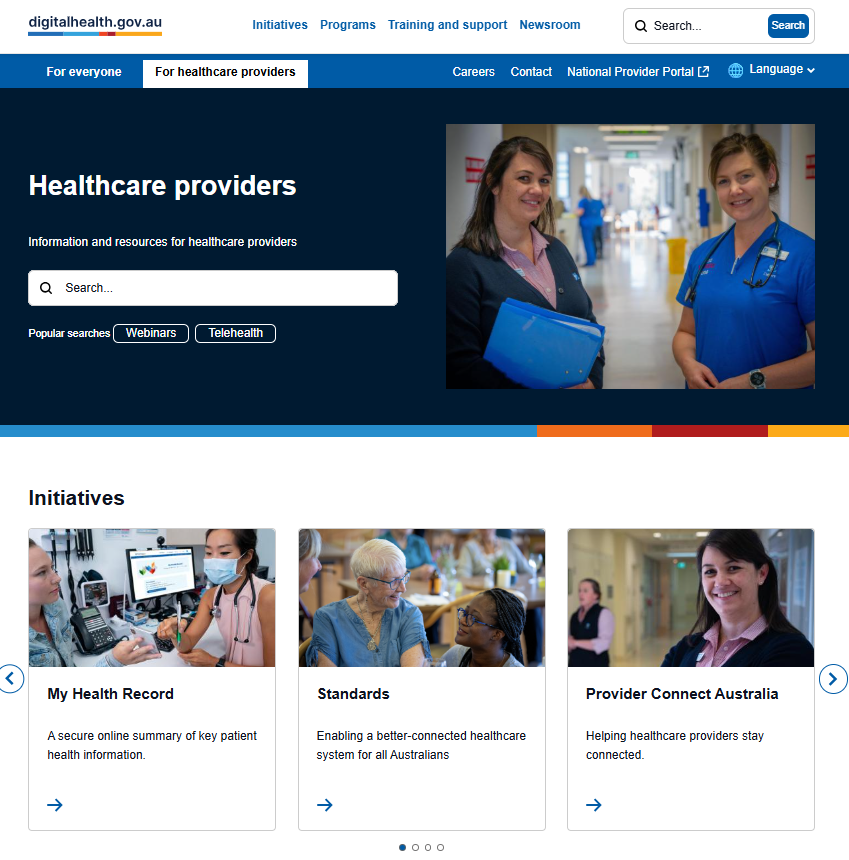
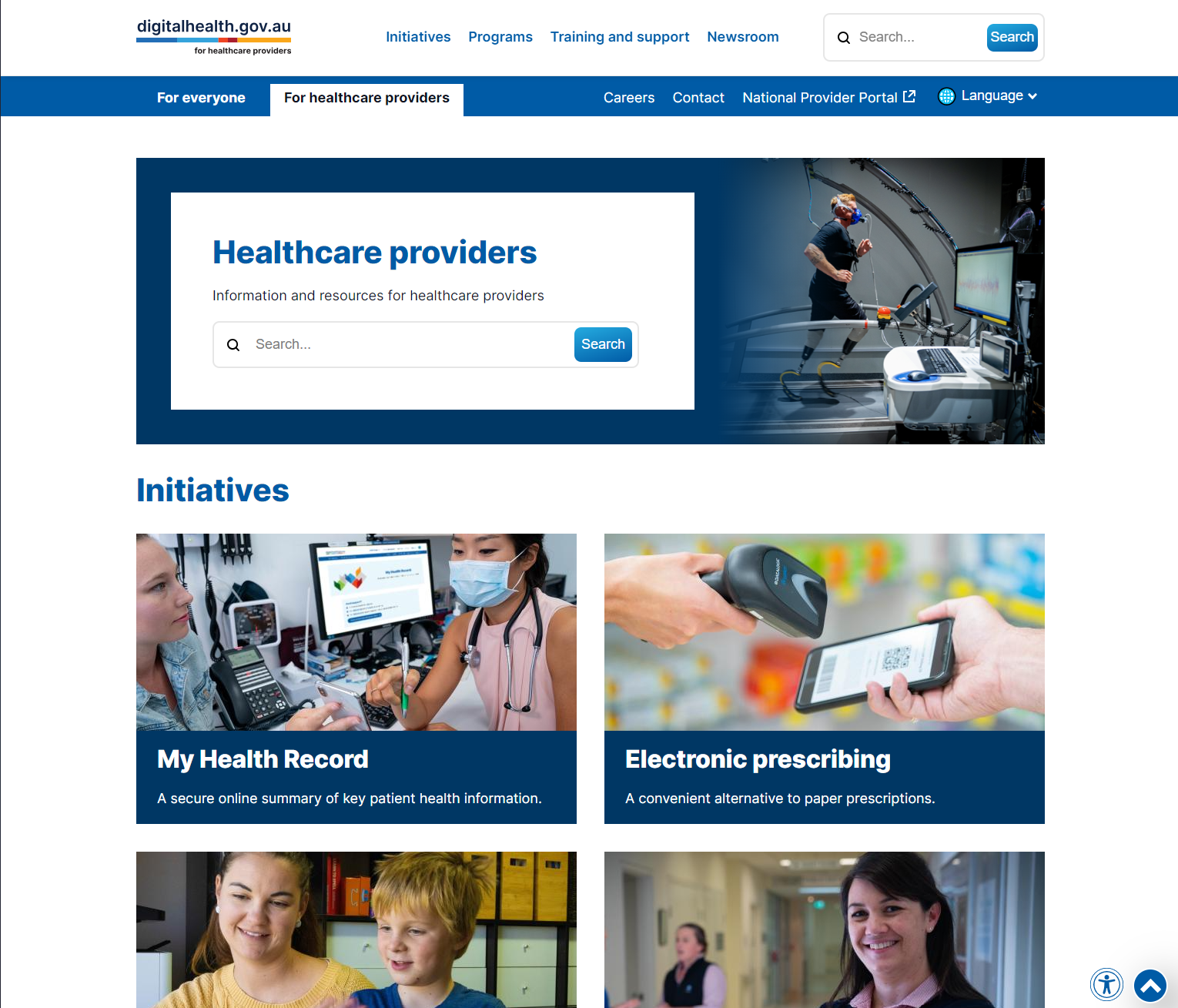
Digital health - For healthcare providers
This resource provides guidance for aged care assessors and service providers on accessing and using the My Aged Care portals. It outlines steps for setting up secure access through authentication methods, managing organisation information, and creating staff accounts, supporting efficient service delivery and assessment processes.
This resource may refer to information that will be updated from 1 July 2025 to align with the new Aged Care Act and Quality Standards.
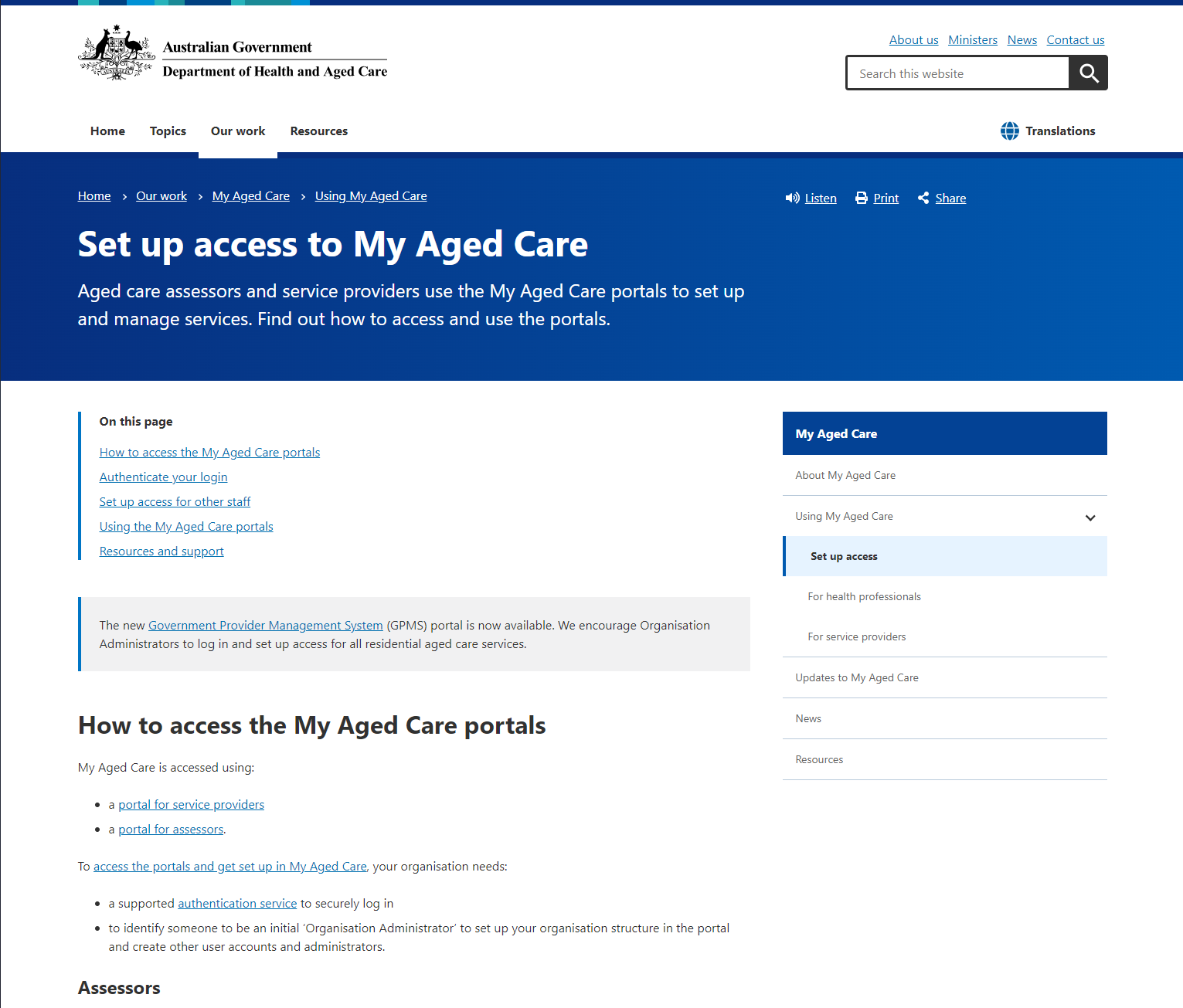
Set up access to My Aged Care
This resource provides guidance for aged care assessors and service providers on accessing and using the My Aged Care portals. It outlines steps for setting up secure access through authentication methods, managing organisation information, and creating staff accounts, supporting efficient service delivery and assessment processes.
This resource may refer to information that will be updated from 1 November 2025 to align with the new Aged Care Act and Quality Standards.
National Clinical Terminology Service
This resource provides information for healthcare providers on digital health tools and initiatives. It covers services such as My Health Record, secure messaging, electronic prescriptions, and telehealth. It supports providers in using digital technologies to enhance healthcare delivery and improve patient outcomes.
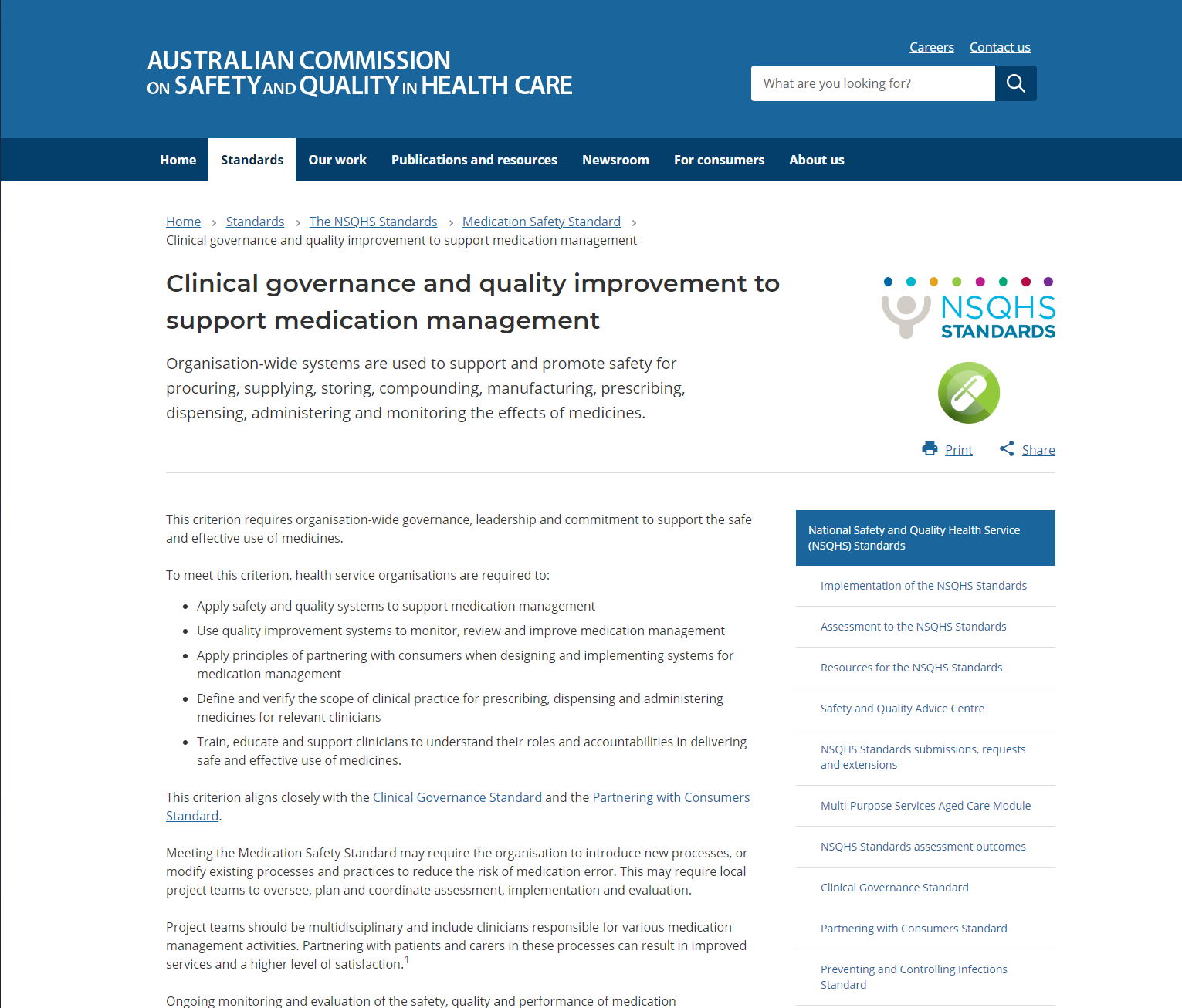
Clinical governance and quality improvement to support medication management
This resource outlines clinical governance and quality improvement systems to support safe medication management. It requires health service organisations to implement systems for procuring, prescribing, dispensing, and monitoring medicines.
This resource may refer to information that will be updated from 1 November 2025 to align with the new Aged Care Act and Quality Standards.
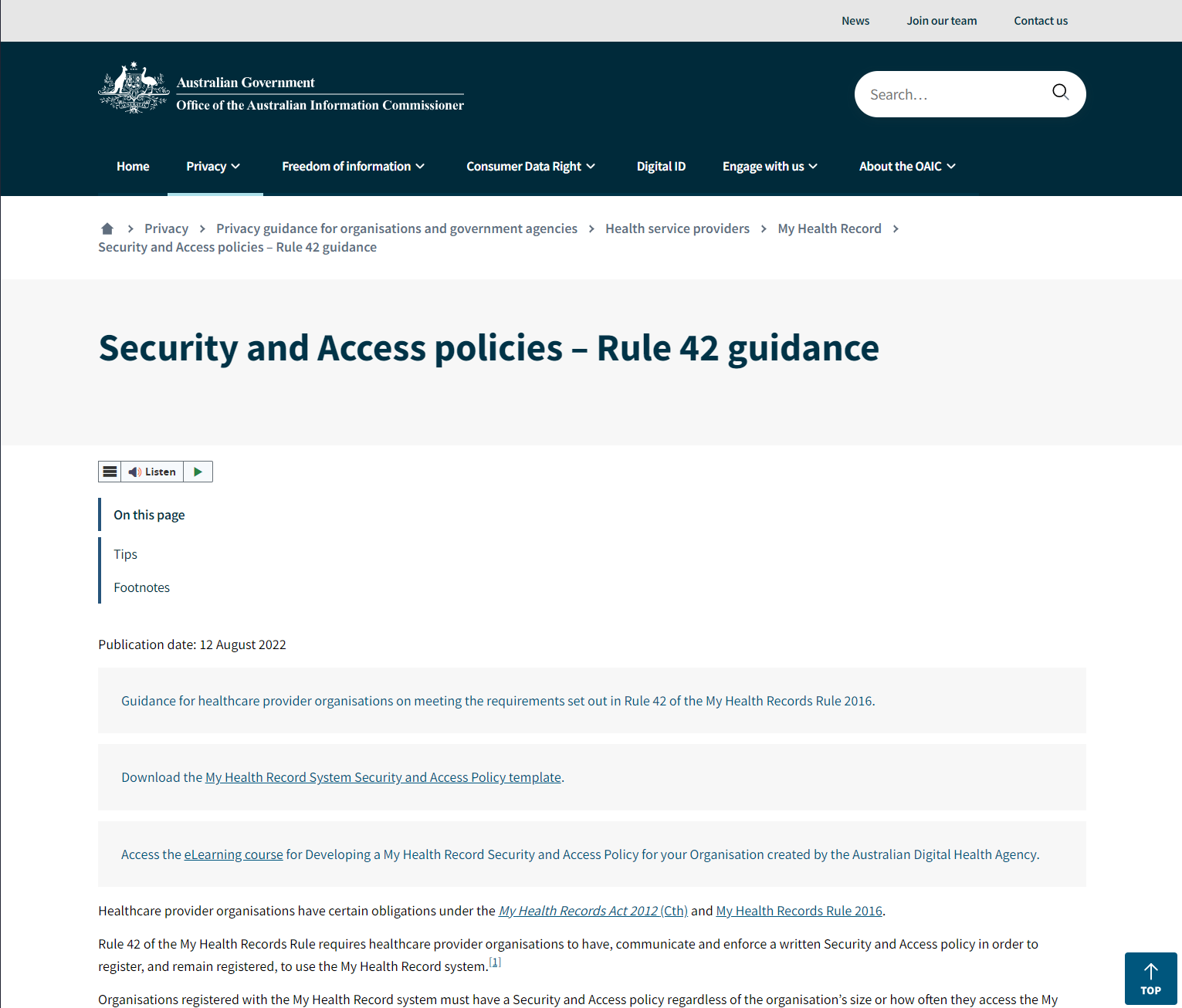
Security and access policies - Rule 42 guidance
This resource provides guidance for healthcare provider organisations to meet Rule 42 of the My Health Records Rule 2016. It covers creating, communicating, and enforcing a written Security and Access policy to access the My Health Record system, addressing authorisation, training, security measures, and risk mitigation.
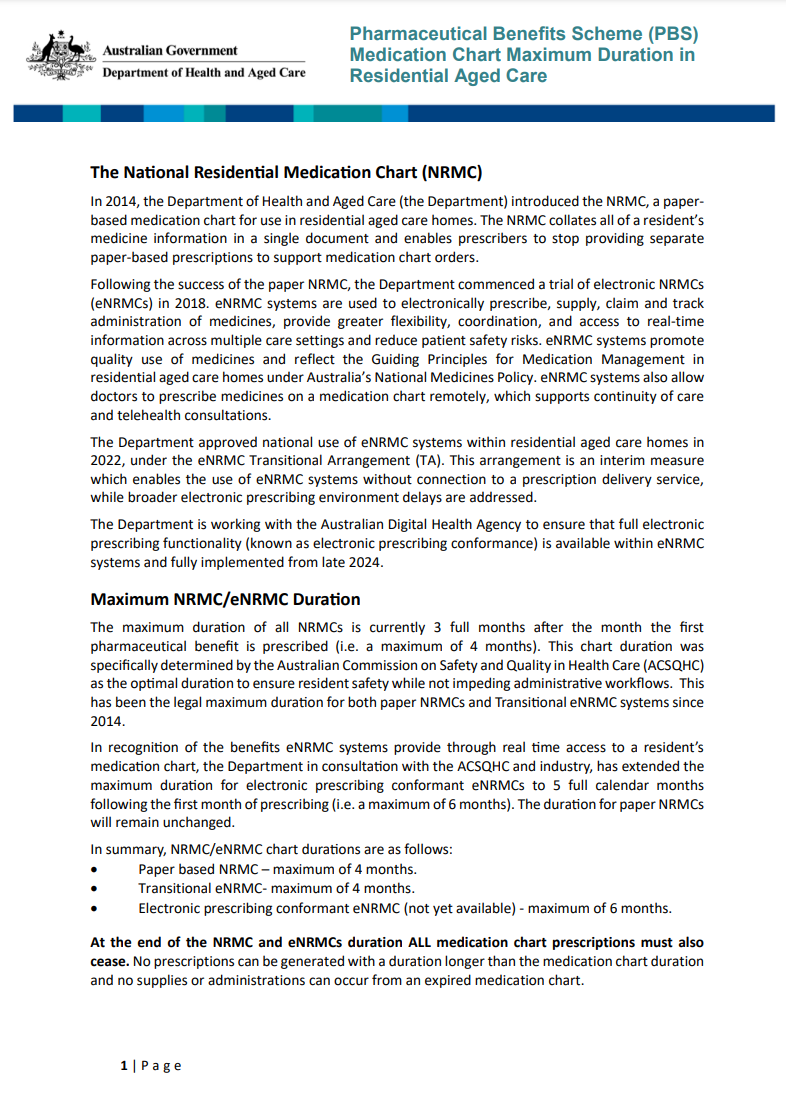
Pharmaceutical Benefits Scheme (PBS) medication chart maximum duration in residential aged care
This resource outlines the Pharmaceutical Benefits Scheme (PBS) medication chart's maximum duration in residential aged care. It explains the use of both paper-based and electronic National Residential Medication Charts (NRMC), highlighting their role in managing prescriptions, medication supply, and administration. The document provides guidance on compliance, chart expiry, and medication safety within aged care facilities.
This resource may refer to information that will be updated from 1 November 2025 to align with the new Aged Care Act and Quality Standards.
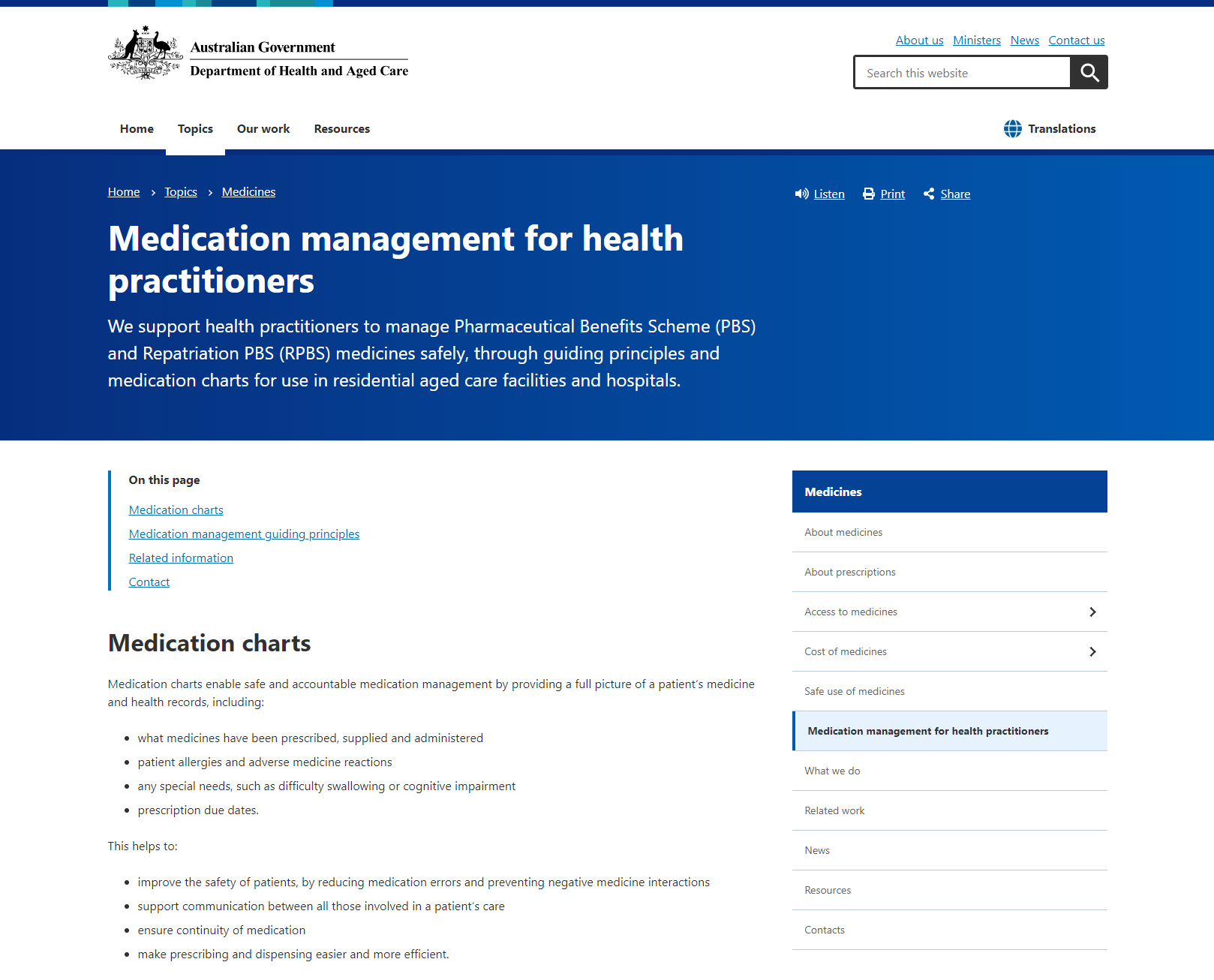
Medication management for health practitioners
This resource supports health practitioners in managing medicines through the use of medication charts in aged care facilities and hospitals. It provides guidelines for safe prescribing, administration, and communication. The resource includes both paper-based and electronic medication chart systems to reduce errors, improve patient safety, and streamline medication management processes in aged care settings.
This resource may refer to information that will be updated from 1 November 2025 to align with the new Aged Care Act and Quality Standards.
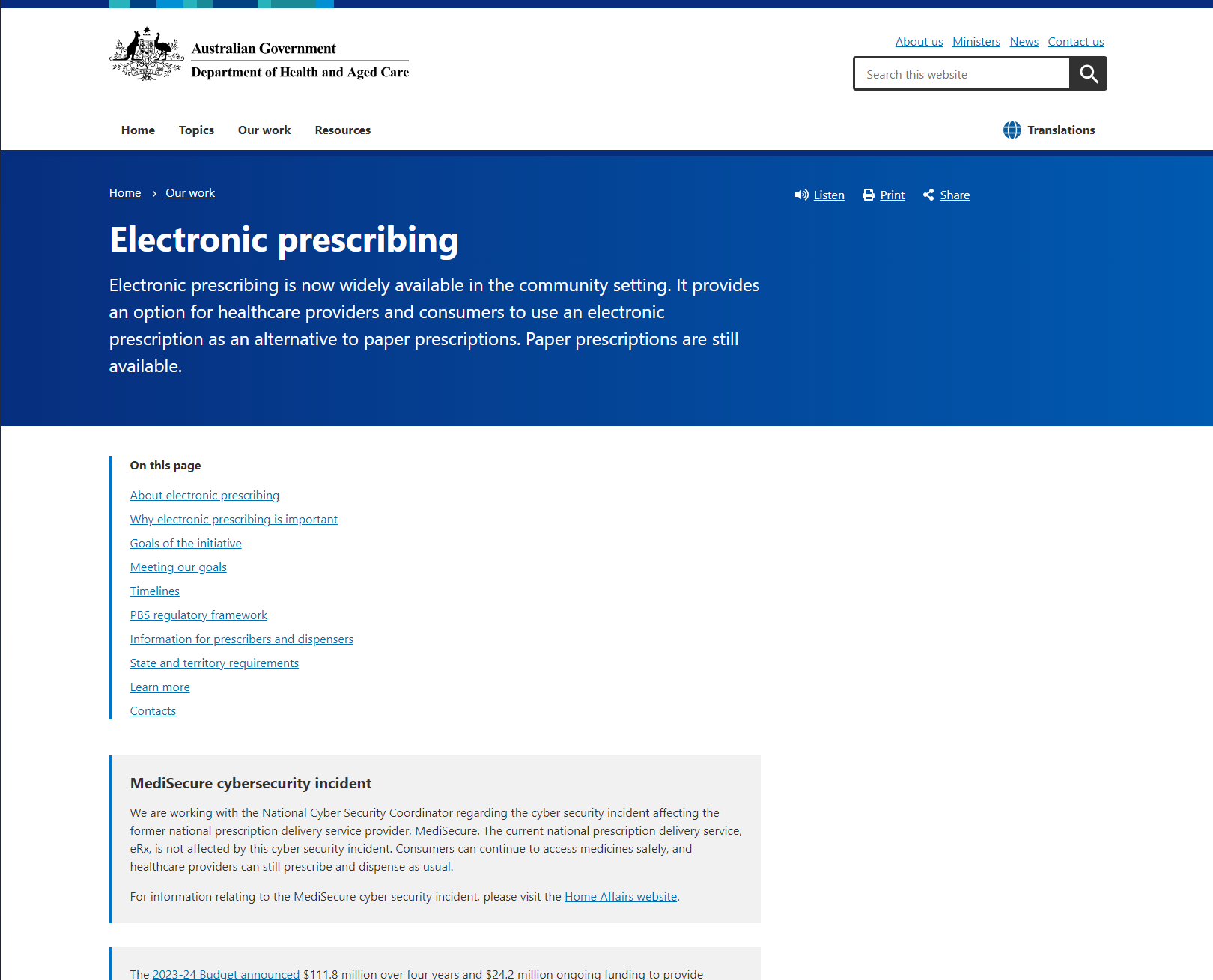
Electronic prescribing
This resource outlines the framework for electronic prescribing, offering an alternative to paper prescriptions for healthcare providers and consumers. It explains the benefits of electronic prescriptions, such as reducing errors, improving efficiency, and supporting medication safety. The resource also covers technical and legislative requirements for implementing electronic prescriptions in various healthcare settings.
This resource may refer to information that will be updated from 1 November 2025 to align with the new Aged Care Act and Quality Standards.
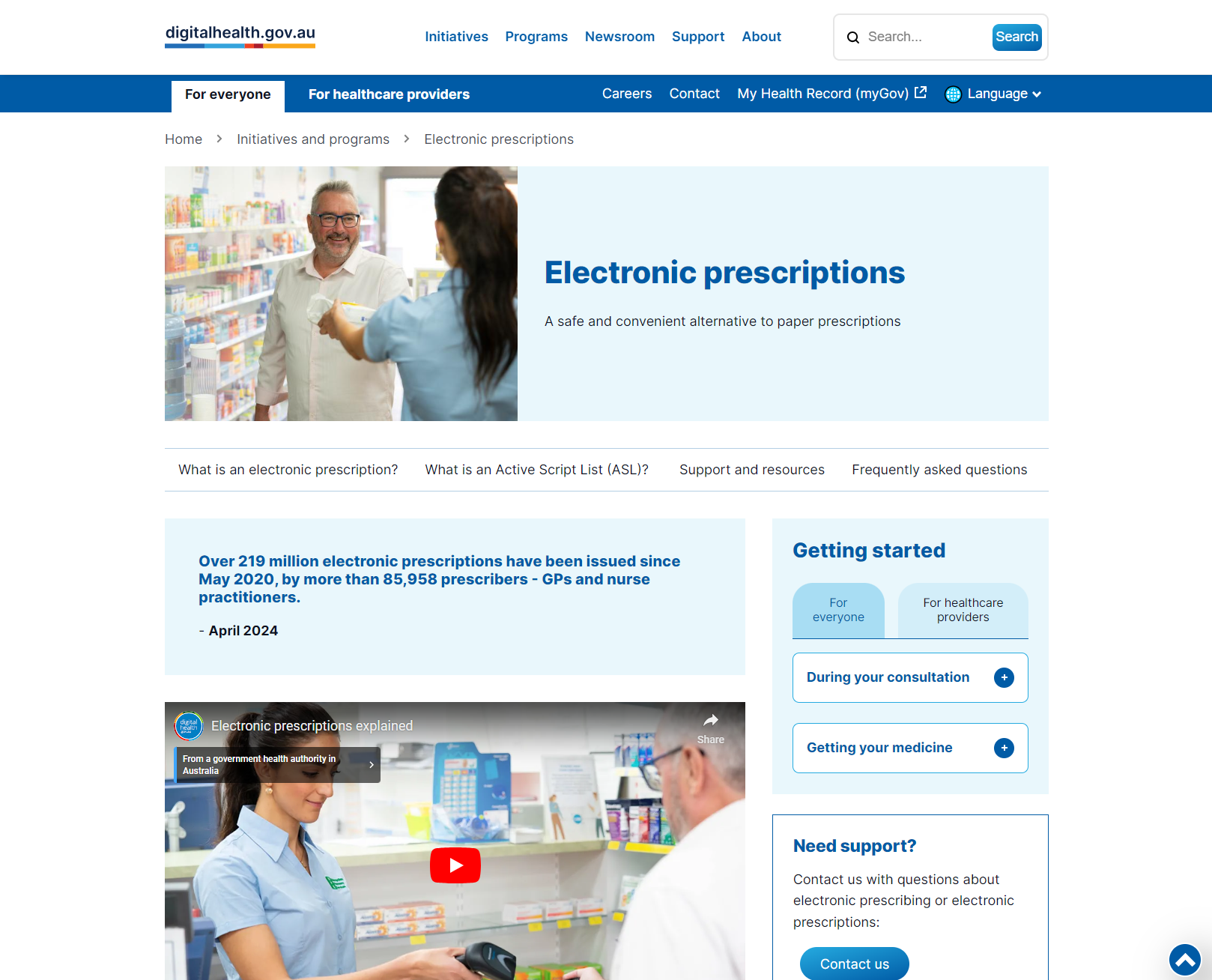
Electronic prescriptions
This resource provides an overview of electronic prescriptions, which offer a digital alternative to paper prescriptions. It explains how electronic prescriptions can be issued by healthcare providers and stored on digital devices for convenience. The resource also details the benefits of the Active Script List (ASL) for managing multiple prescriptions, enhancing efficiency and medicine safety.
Digital Health Developer Portal - Aged Care Clinical Information System Standards v1.0
This resource outlines the Aged Care Clinical Information System (ACCIS) Standards version 1.0, which sets minimum software requirements for clinical information and electronic medication management systems in aged care. The standards support interoperability, data sharing, and improved care quality by enabling safe and efficient clinical decision-making and information exchange between care providers.
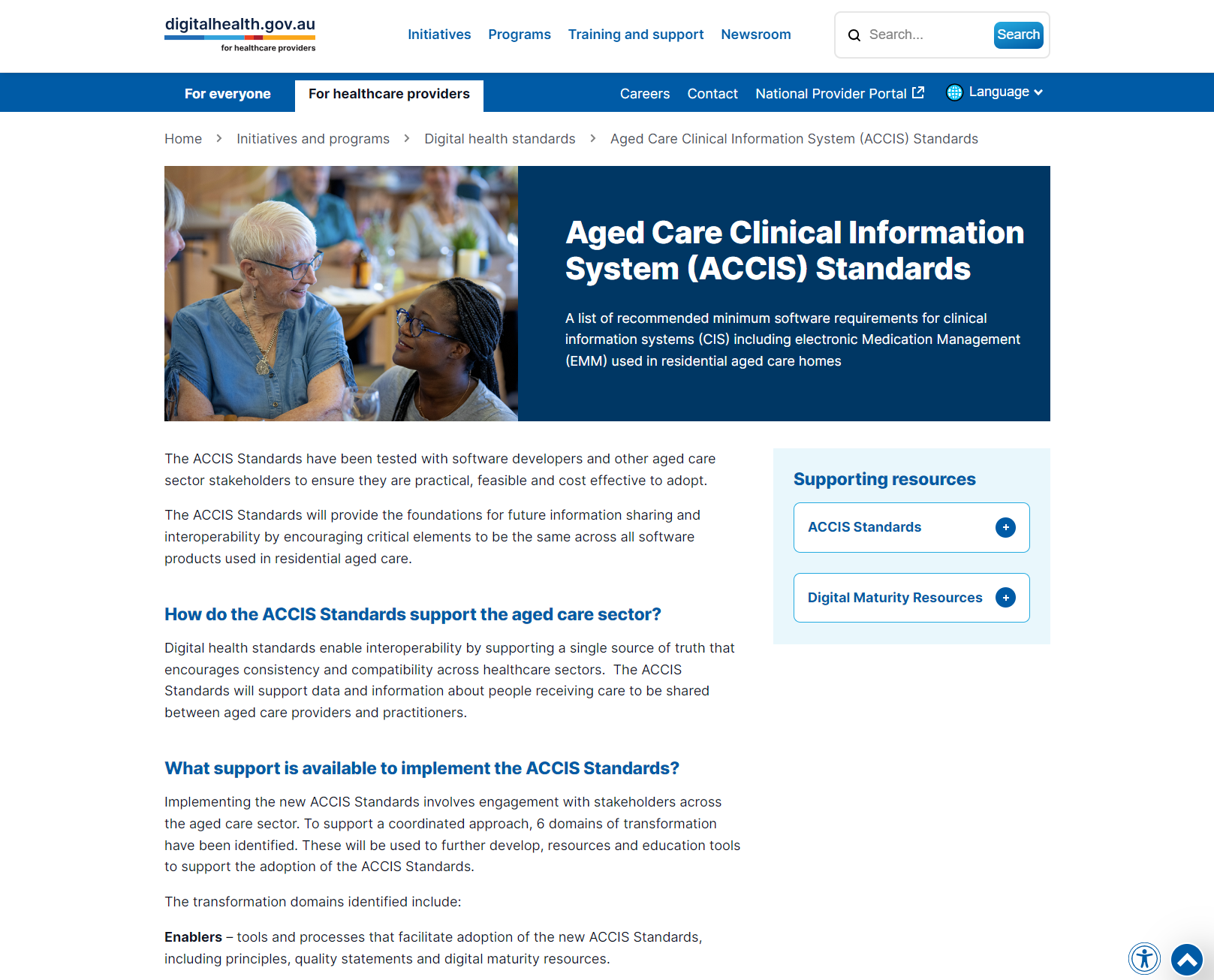
Aged Care Clinical Information System (ACCIS) Standards
This resource outlines the Aged Care Clinical Information System (ACCIS) Standards, providing minimum software requirements for clinical information systems used in aged care. It supports interoperability, data sharing, and safe clinical decision-making. The standards aim to enhance care coordination, improve data accuracy, and ensure compliance with privacy and security protocols within residential aged care settings.