The Quality Standards Resource Centre helps extend understanding of the strengthened Aged Care Quality Standards, which took effect from 1 November 2025. You can search for resources by using keywords, or filtering by standard, outcome and audience. Before using the Resource Centre, please read the terms of use.
RACGP aged care clinical guide (Silver Book) - Part B - Older Aboriginal and Torres Strait Islander people
This guide addresses barriers faced by Aboriginal and Torres Strait Islander peoples in accessing aged care, such as cultural safety, geographic challenges, and geriatric syndromes experienced at younger ages. It discusses the importance of culturally appropriate care, the use of specific assessment tools, and the unique needs of the Stolen Generation within residential and community settings.
RACGP aged care clinical guide (Silver Book) - Part B - Supporting independent living in older people
This guide discusses strategies for supporting independent living in older adults, covering concepts of healthy ageing, using aged care services, respite care, and re-aligning function. It highlights the role of general practitioners in promoting autonomy, addressing individual needs, and avoiding ageist language while facilitating access to community or residential care services.
RACGP aged care clinical guide (Silver Book) - Part B - Palliative care approach
This guide outlines a palliative care approach for patients with life-limiting conditions, focusing on improving quality of life through early assessment, pain relief, and addressing psychosocial and spiritual needs. It describes the role of general practitioners in delivering person-centred care, engaging families, and ensuring collaborative, holistic support in both residential aged care and community settings.
RACGP aged care clinical guide (Silver Book) - Part B - Care of older LGBTI people
This guide addresses the healthcare needs of older LGBTI people, covering areas such as mental health, substance use, chronic disease risks, and the importance of inclusive care. It provides strategies for culturally safe practices, promoting wellbeing, recognising abuse, and details standards for LGBTI-inclusive services, such as organisational capability and consumer participation.
RACGP aged care clinical guide (Silver Book) - Part B - Advance care planning
This guide covers advance care planning for older adults, detailing the process of discussing patients' values, appointing a decision-maker, and documenting preferences for future care. It outlines the general practitioner’s role, steps for initiating discussions, assessing decision-making capacity, storing care plans, and ensuring patients' wishes are respected during their illness trajectory.
RACGP aged care clinical guide (Silver Book) - Part B - Disability in aged care
This guide addresses the management of disabilities in older adults, including mobility, cognitive impairments, developmental disabilities, hearing and visual impairment, psychiatric conditions, and neurodegenerative disorders. It outlines approaches for general practitioners to provide holistic care, monitor health risks, adapt support systems, and coordinate with allied health professionals in residential aged care settings.
RACGP aged care clinical guide (Silver Book) - Part A - Palliative and end-of-life care
This guide focuses on palliative and end-of-life care, detailing general principles, illness trajectories, the role of general practitioners, and practical recommendations for patient-cantered care. It provides consensus-based guidelines for initiating advance care planning, symptom management, team-based end-of-life care, medication use, and supporting both patients and their families. It includes information on the transition from chronic disease treatment to a palliative approach and includes tools for clinical decision-making.
RACGP aged care clinical guide (Silver Book) - Part B - Collaboration and multidisciplinary team-based care
This guide focuses on collaboration and multidisciplinary care for older adults, particularly in residential aged care. It outlines the benefits of team-based care, effective team structures, shared goals, defined roles, building trust, communication, and measurable processes to improve health outcomes. It provides practical tips for effective teamwork and highlights the importance of coordinating care among various healthcare professionals.
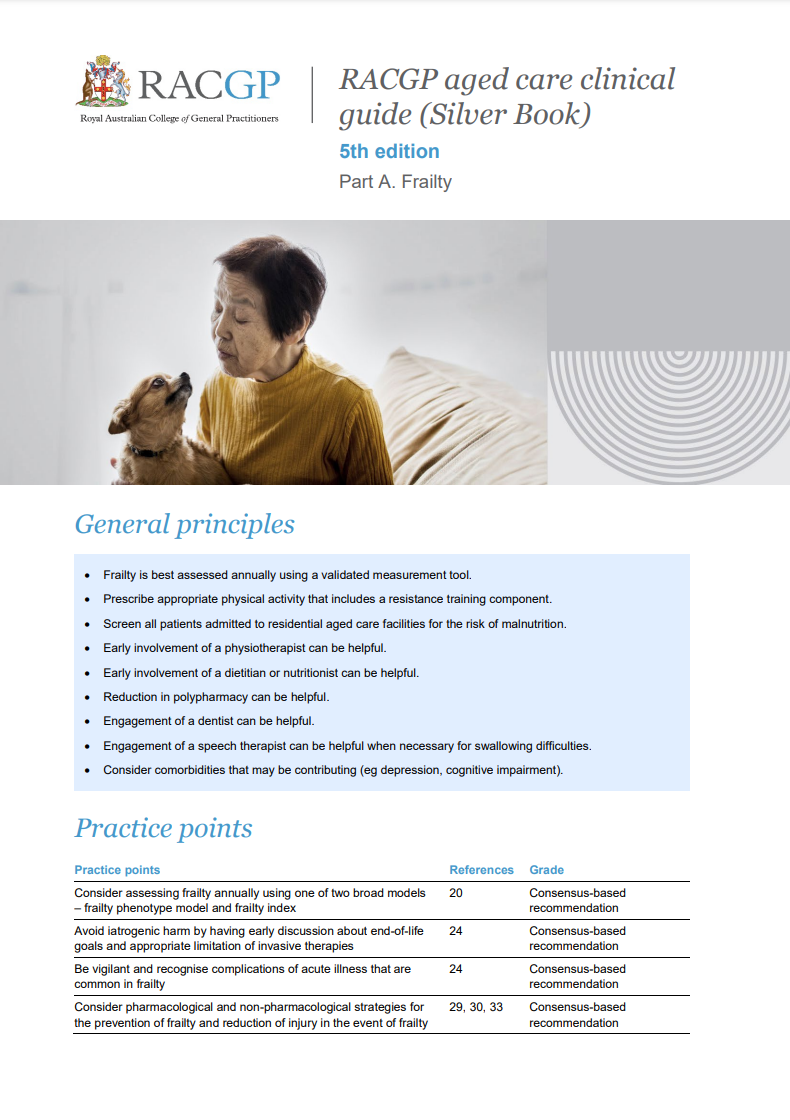
RACGP aged care clinical guide (Silver Book) - Part A - Frailty
This guide discusses frailty in older adults, detailing assessment methods, risk factors, and management strategies. It includes annual frailty assessments, involvement of multidisciplinary teams (physiotherapists, dietitians), recommendations for physical activity, nutrition support, vitamin D supplementation, medication review, and interventions to reduce complications such as falls and malnutrition in aged care.
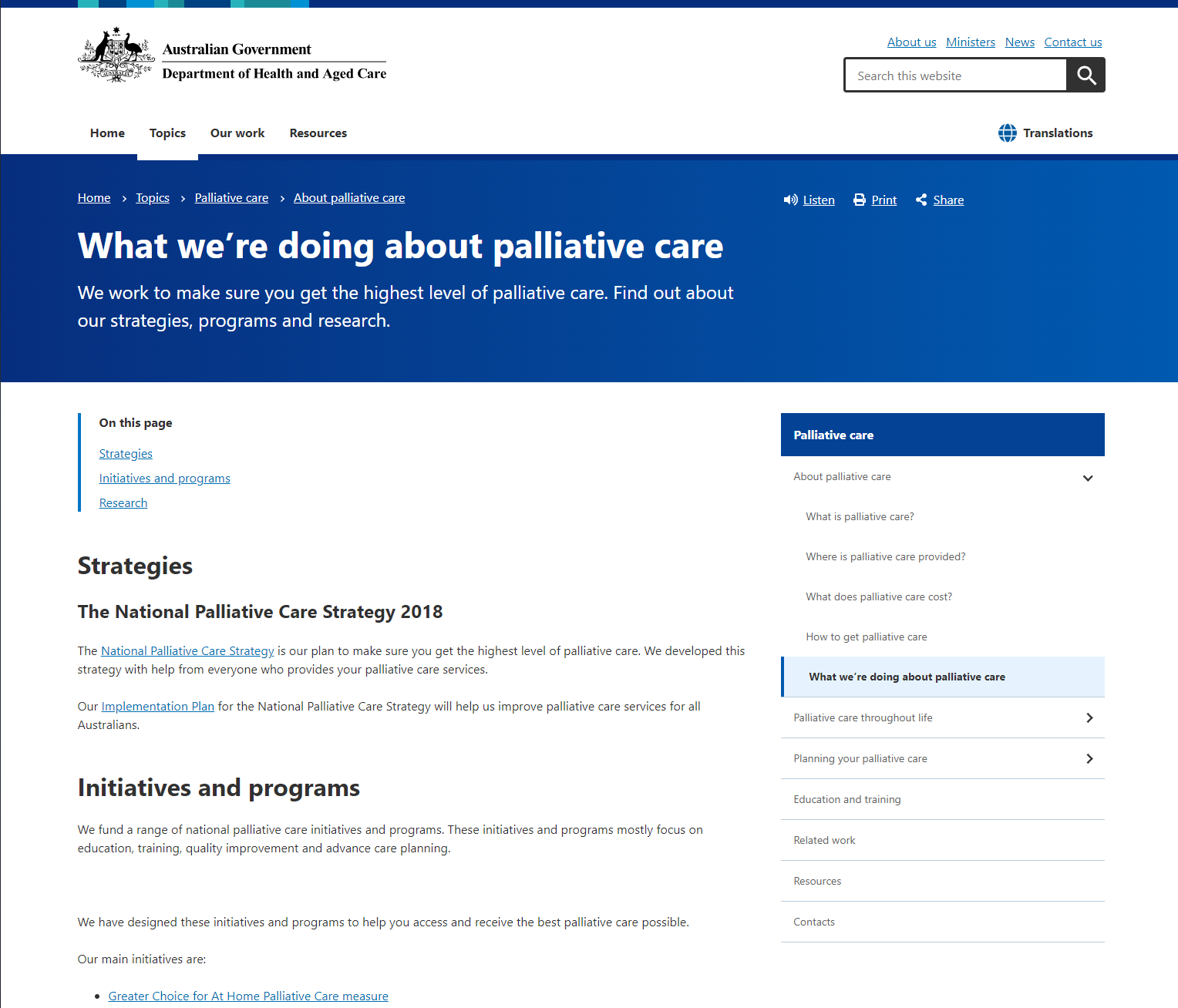
What we’re doing about palliative care
This resource outlines the Australian Government’s strategies, initiatives, and research for improving palliative care. It details the National Palliative Care Strategy, workforce training, and key programs such as at-home and aged care measures. It also highlights the National Framework for Advance Care Planning, ensuring access to quality palliative care across Australia.
This resource may refer to information that will be updated from 1 November 2025 to align with the new Aged Care Act and Quality Standards.
National Consensus Statement: Essential elements for safe and high-quality end-of-life care
This resource outlines the National Consensus Statement on essential elements for safe and high-quality end-of-life care in Australia. It provides guiding principles, care processes, and organisational processes, focusing on person-centred communication, multidisciplinary collaboration, and culturally appropriate care. The statement is designed for healthcare workers, service executives, and policy makers to enhance end-of-life care delivery.
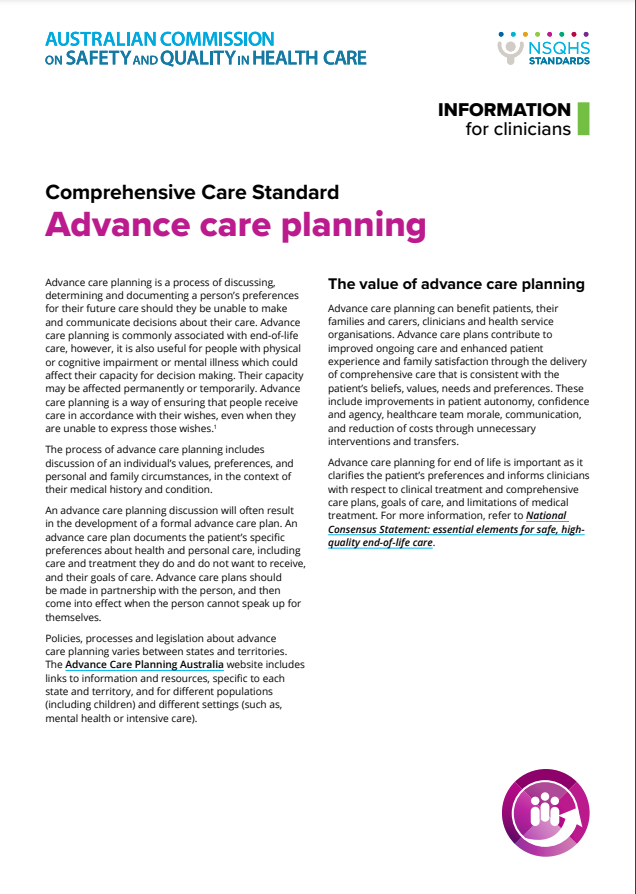
Advance care planning - Information for clinicians
This resource guides clinicians on the importance of advance care planning, particularly for those with life-limiting illnesses, chronic conditions, or cognitive impairment. It outlines the need for early conversations about patient preferences and comprehensive care, ensuring decisions are documented, shared, and align with clinical handover processes to respect patient autonomy and improve care outcomes.
This resource may refer to information that will be updated from 1 November 2025 to align with the new Aged Care Act and Quality Standards.
Delivering and supporting comprehensive end-of-life care user guide
This guide provides practical strategies for health service organisations and clinicians to deliver comprehensive end-of-life care. It aligns with the National Safety and Quality Health Service Standards, focusing on patient-centred communication, care components, triggers for recognising end-of-life, and organisational support through leadership, education, and evaluation.
This resource may refer to information that will be updated from 1 November 2025 to align with the new Aged Care Act and Quality Standards.
End-of-life care - clinical basics
This resource provides key actions for clinicians delivering end-of-life care. It highlights the shift from curative to palliative approaches, emphasising communication, patient dignity, symptom management, medication review, and decision-making. It includes strategies for managing common symptoms and minimising risks to ensure safe, high-quality care in the last days of life.
This resource may refer to information that will be updated from 1 November 2025 to align with the new Aged Care Act and Quality Standards.
National framework for advance care planning documents
This resource provides a nationally consistent framework for advance care planning documents in Australia. It outlines principles, ethical considerations, and best practices for creating, implementing, and accessing advance care plans, including Advance Care Directives. It aims to guide policymakers, administrators, and healthcare providers in recognising people’s values, preferences, and rights regarding future care.
This resource may refer to information that will be updated from 1 November 2025 to align with the new Aged Care Act and Quality Standards.
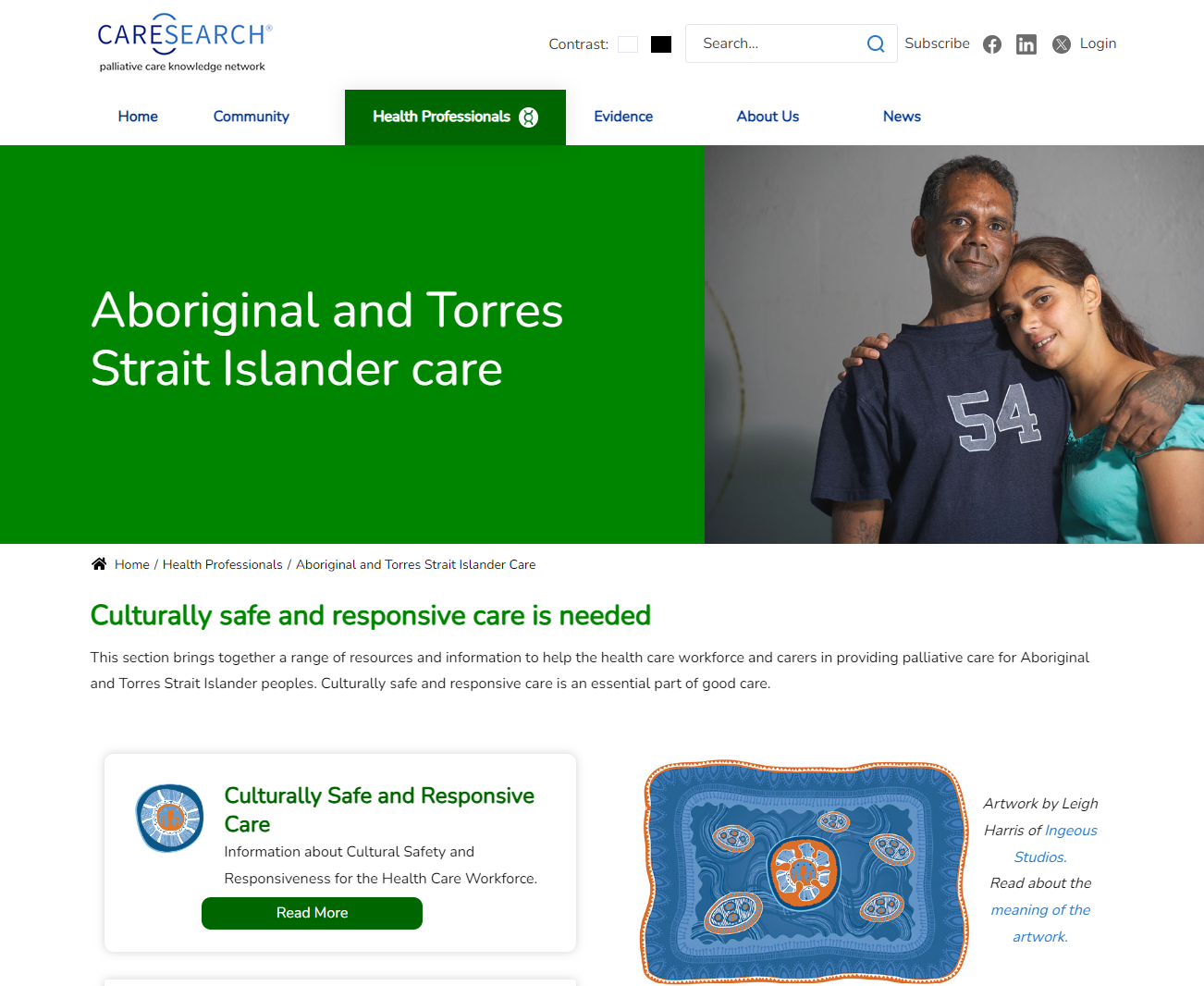
Palliative care knowledge network - Aboriginal and Torres Strait Islander care
This resource provides culturally safe and responsive palliative care information for Aboriginal and Torres Strait Islander peoples. It includes guidance for health professionals on culturally appropriate care, patient and family journeys, and relevant research and practices to support respectful and effective healthcare for Indigenous communities.
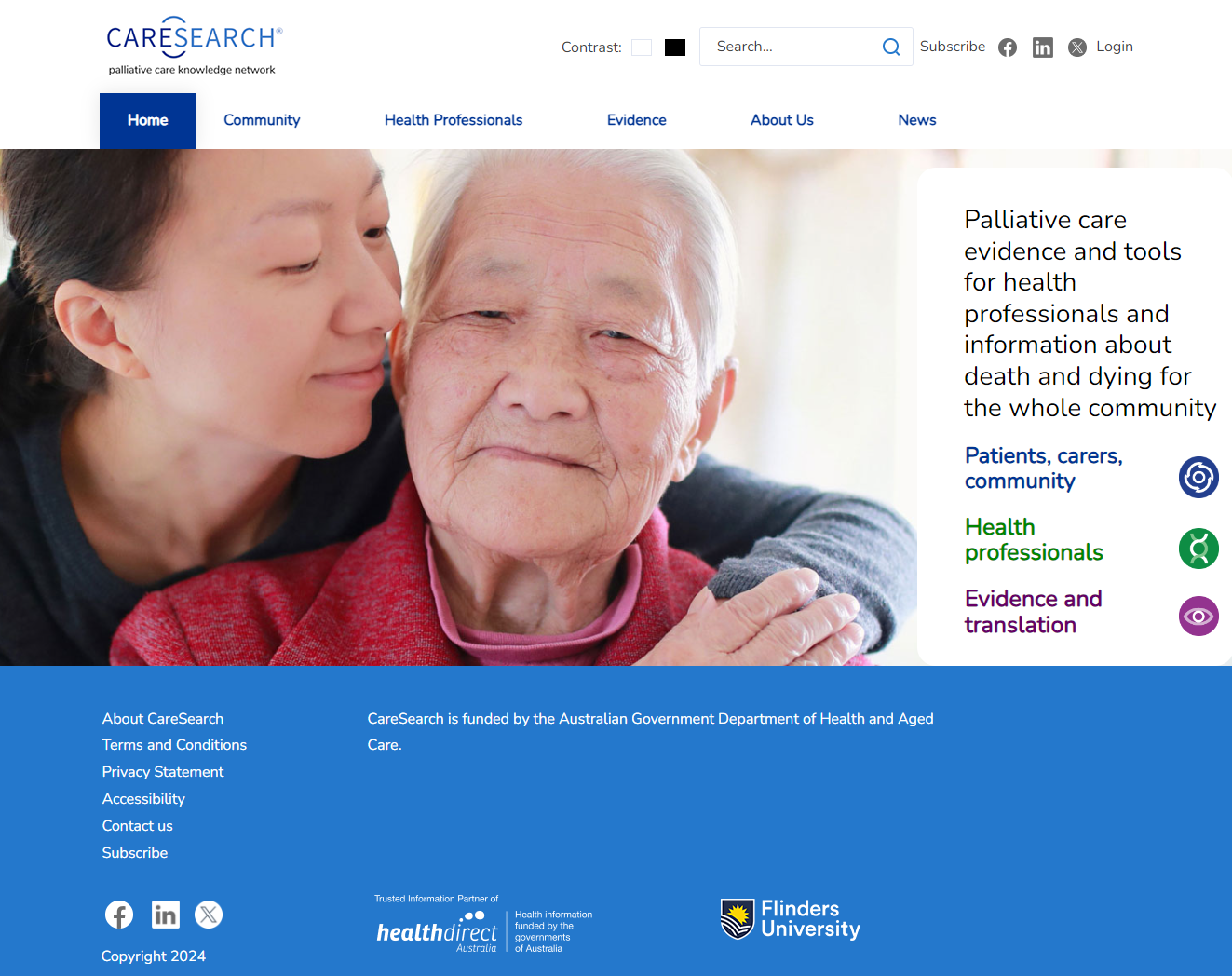
Palliative care knowledge network
This resource provides evidence-based information and resources on palliative care for health professionals, patients and carers. It covers clinical practice, education, research, and service delivery. The platform aims to improve understanding, decision-making, and quality of care for people with life-limiting illnesses and their families.
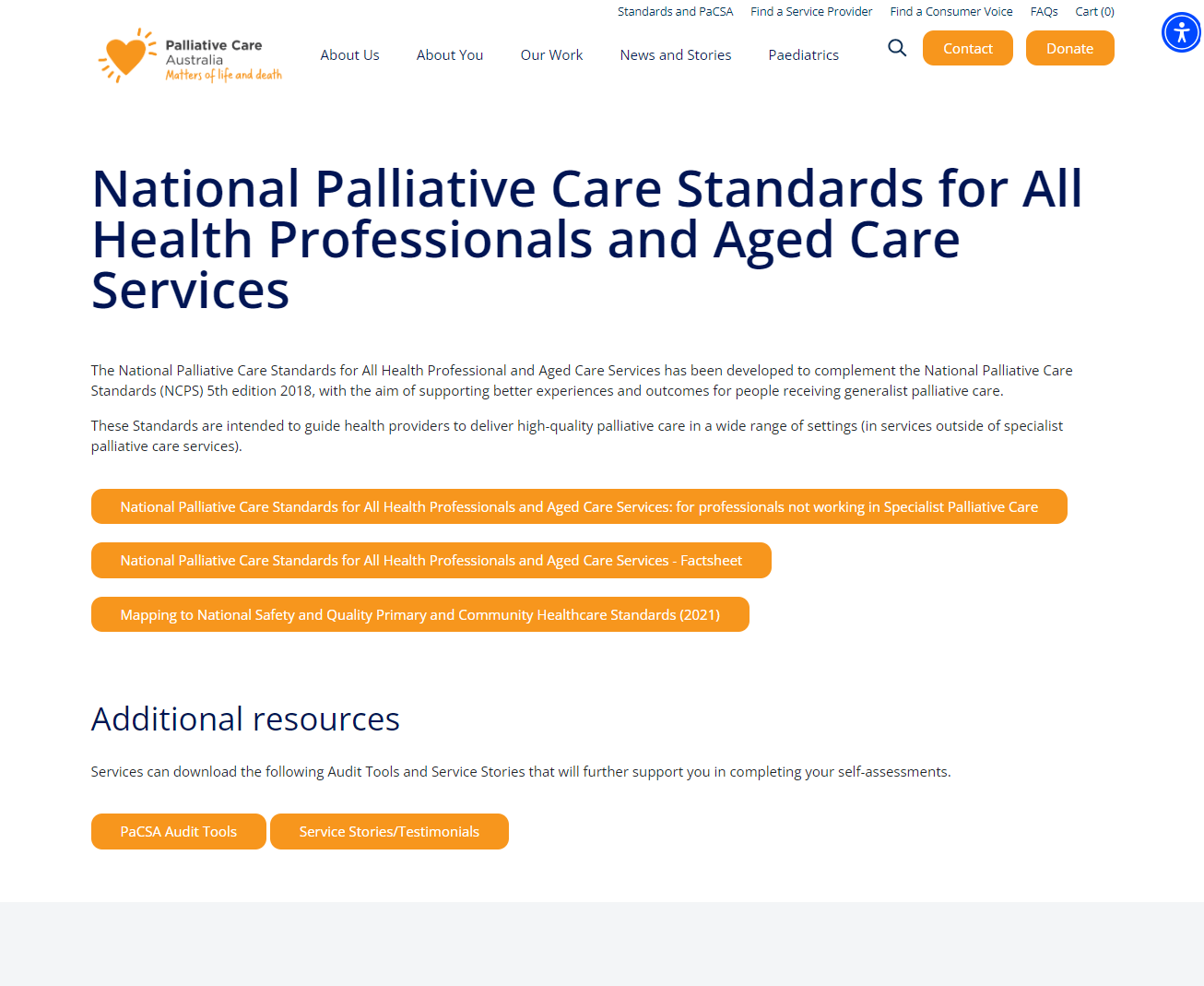
National Palliative Care Standards for All Health Professionals and Aged Care Services
The National Palliative Care Standards provide guidance for all health professionals and aged care services to deliver high-quality generalist palliative care. They support improved experiences and outcomes for people receiving care, and are intended for use across diverse care settings. Resources like audit tools and fact sheets are available to aid self-assessment and adherence to these standards.
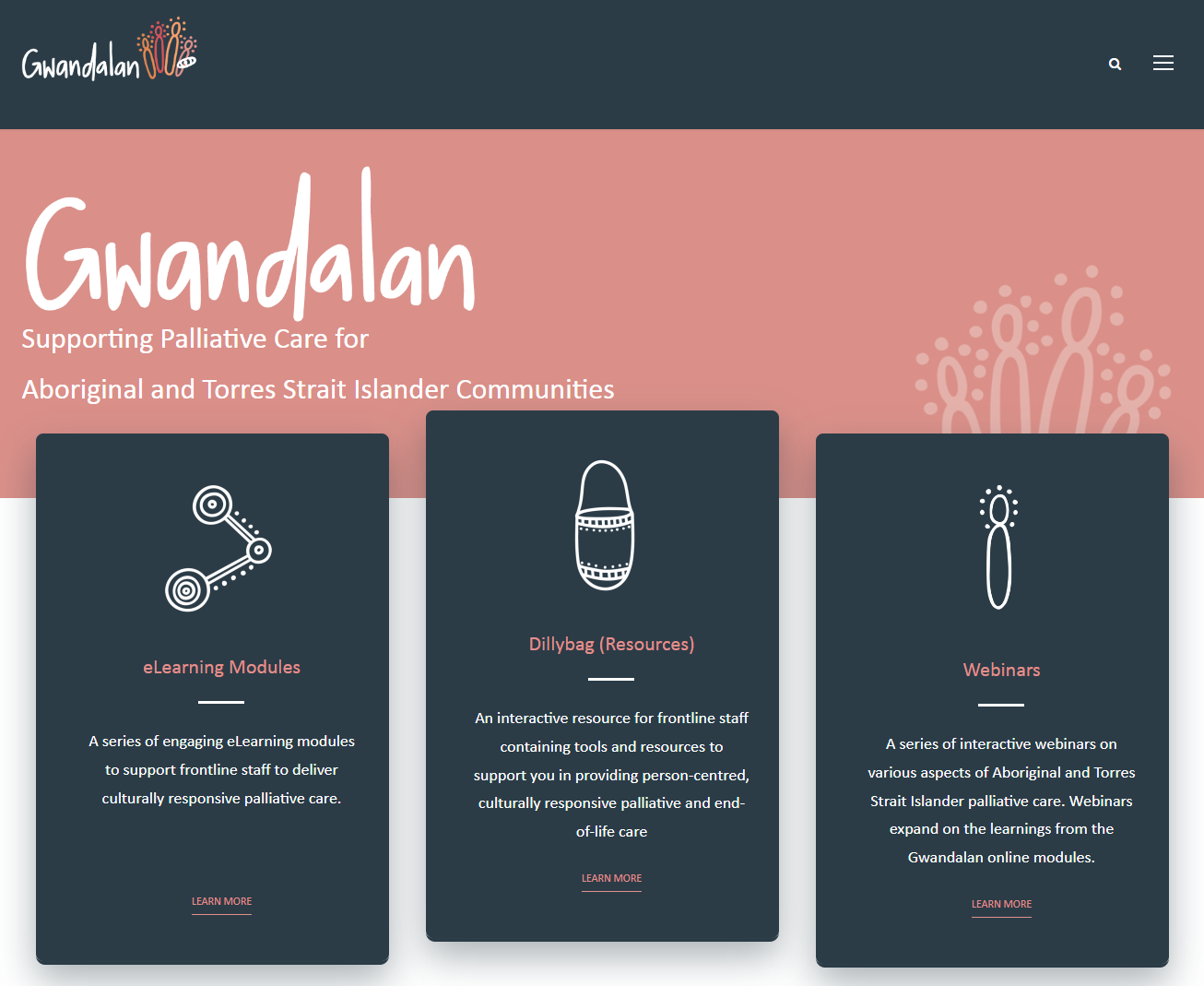
Gwandalan – Supporting Palliative Care for Aboriginal and Torres Strait Islander Communities
This resource provides culturally appropriate palliative care education and support for Aboriginal and Torres Strait Islander communities. It includes resources, videos, and training materials aimed at improving understanding, communication, and care practices in end-of-life care, integrating cultural beliefs and values to enhance quality care for Indigenous Australians.
Program of Experience in the Palliative Approach (PEPA)
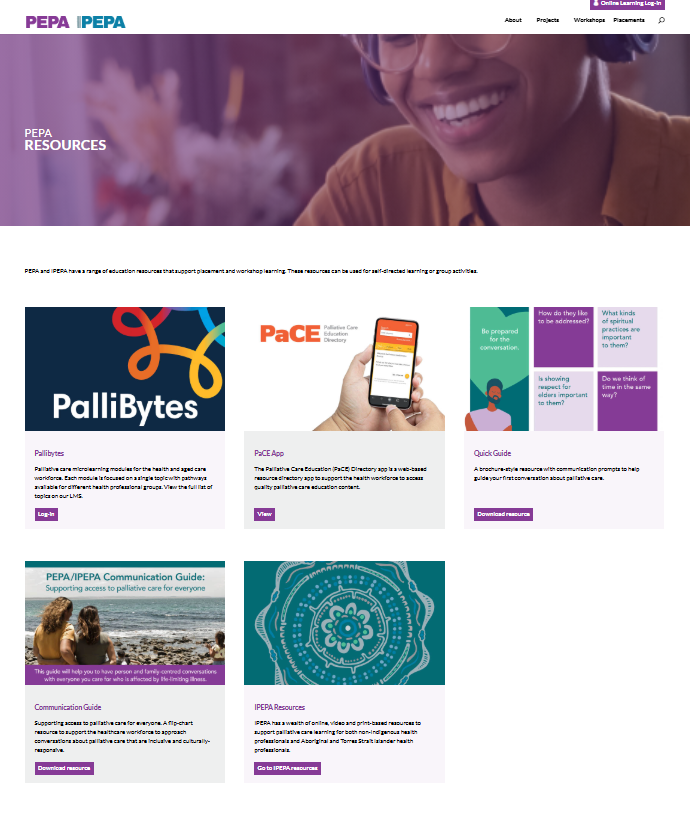
This page provides resources about palliative care for health professionals. The education resources support placement and workshop learning, but can be used for self-directed learning.