The Quality Standards Resource Centre helps extend understanding of the strengthened Aged Care Quality Standards, which took effect from 1 November 2025. You can search for resources by using keywords, or filtering by standard, outcome and audience. Before using the Resource Centre, please read the terms of use.
Your questions answered – Compliance
In this video, Peter Edwards, Executive Director, Compliance and Enforcement Group, answers your questions about how we will manage non-compliance from 1 November 2025.

Preventing falls in residential aged care services - Fact sheet
This fact sheet supports the Falls Guidelines for Australian Residential Aged Care Services. It includes recommendations from the falls guidelines about multifaceted interventions, exercise, hip protectors, dairy food provision, vitamin D supplements, and osteoporosis medicines.
This resource may refer to information that will be updated from 1 November 2025 to align with the new Aged Care Act and Quality Standards.
Preventing falls in community care - Fact sheet
This fact sheet supports the Falls Guidelines for Community Care. It includes recommendations from the falls guidelines including exercise to prevent falls, home safety interventions, multi component interventions, and single interventions for specific risk factors.
This resource may refer to information that will be updated from 1 November 2025 to align with the new Aged Care Act and Quality Standards.
Safe and appropriate use of psychotropic medicines for aged care - Fact sheet
This fact sheet is informed by the Psychotropic Medicines in Cognitive Disability or Impairment Clinical Care Standard (CCS), developed by the Australian Commission on Safety and Quality in Health Care. The CCS describes the safe and appropriate use of psychotropic medicines for people with cognitive disability or impairment, in a way that upholds their rights, dignity, health and quality of life.
This resource may refer to information that will be updated from 1 November 2025 to align with the new Aged Care Act and Quality Standards.
What is open disclosure? - video
This video explains open disclosure and what older people can expect from their registered provider during the process. It highlights key aspects such as communication, transparency, and how concerns will be addressed.

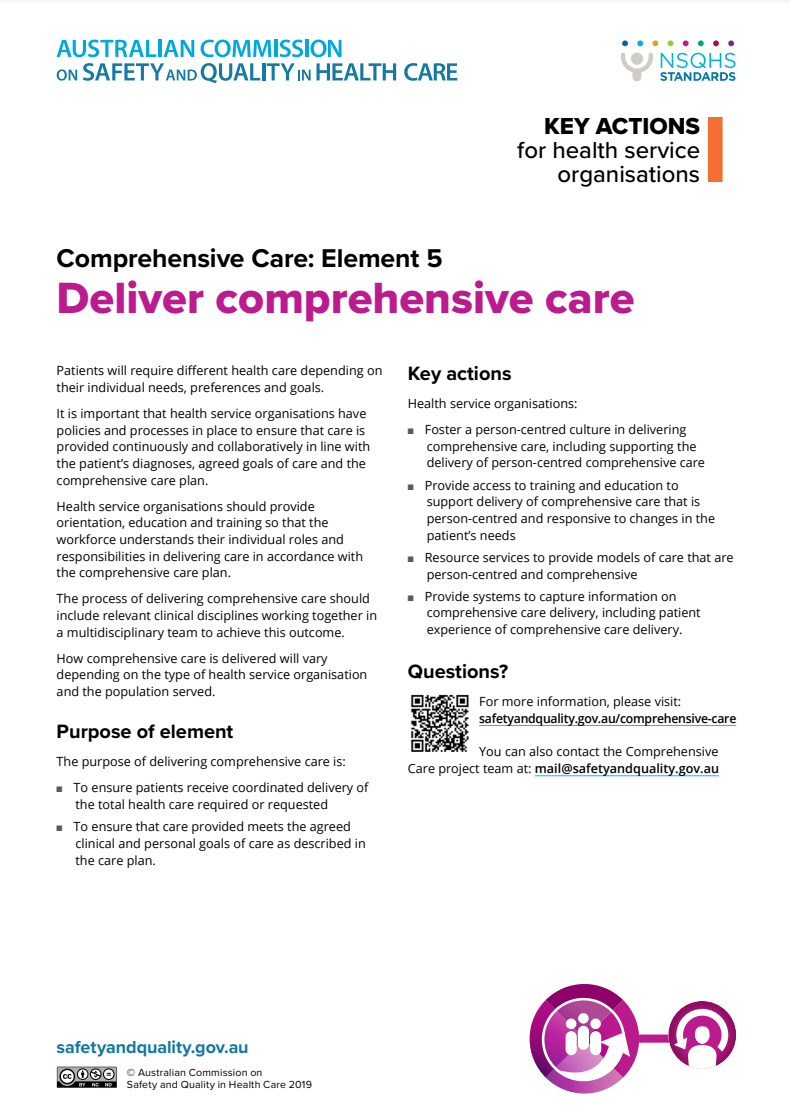
Fact sheet - Improving antimicrobial prescribing through selective reporting of antimicrobials
This fact sheet provides guidance on improving antimicrobial prescribing through selective reporting of antimicrobials for health service organisations and primary care providers. It includes information on diagnostic stewardship, definitions and the importance of selective reporting and other relevant information to support organisations and providers.
This resource may refer to information that will be updated from 1 November 2025 to align with the new Aged Care Act and Quality Standards.
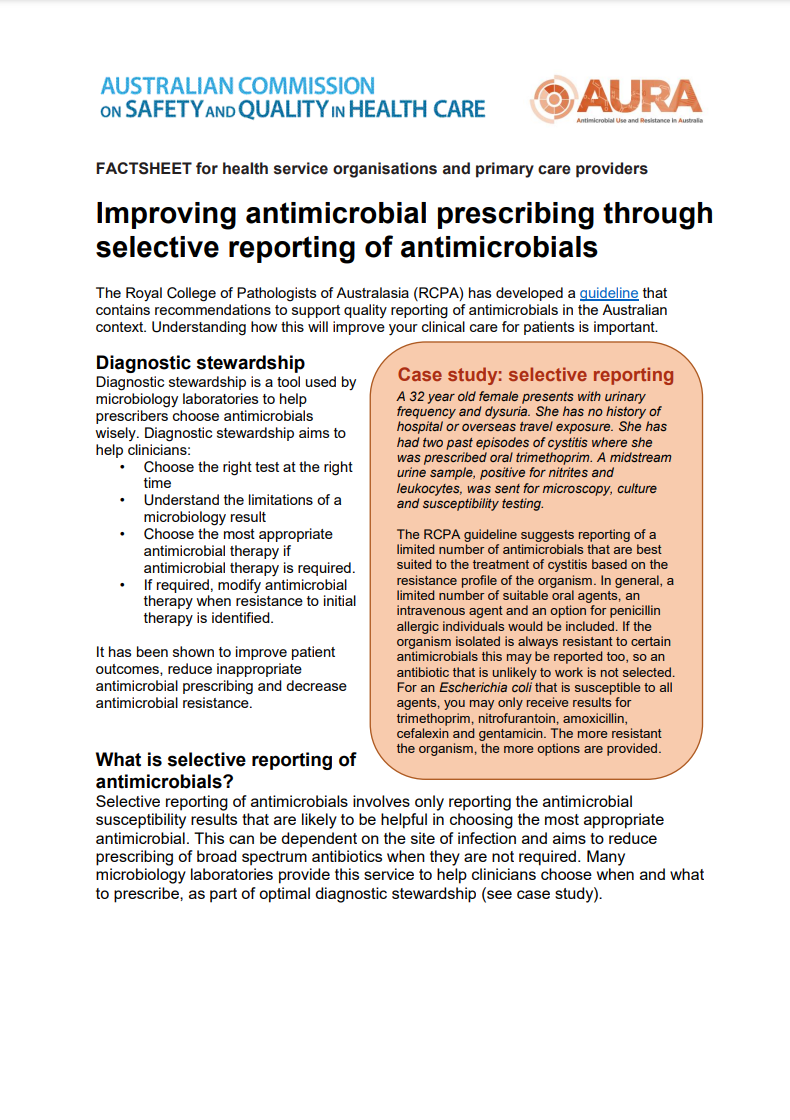
Preventing falls at home
This resource provides information on preventing falls at home for older people. It explains common causes of falls, such as poor lighting and slippery surfaces, and offers practical solutions like home modifications, exercise, and footwear adjustments. The document emphasises maintaining safety in and around the home to reduce the risk of falls.
This resource was developed by a state/territory government or organisation and therefore its applicability and usefulness may be limited.
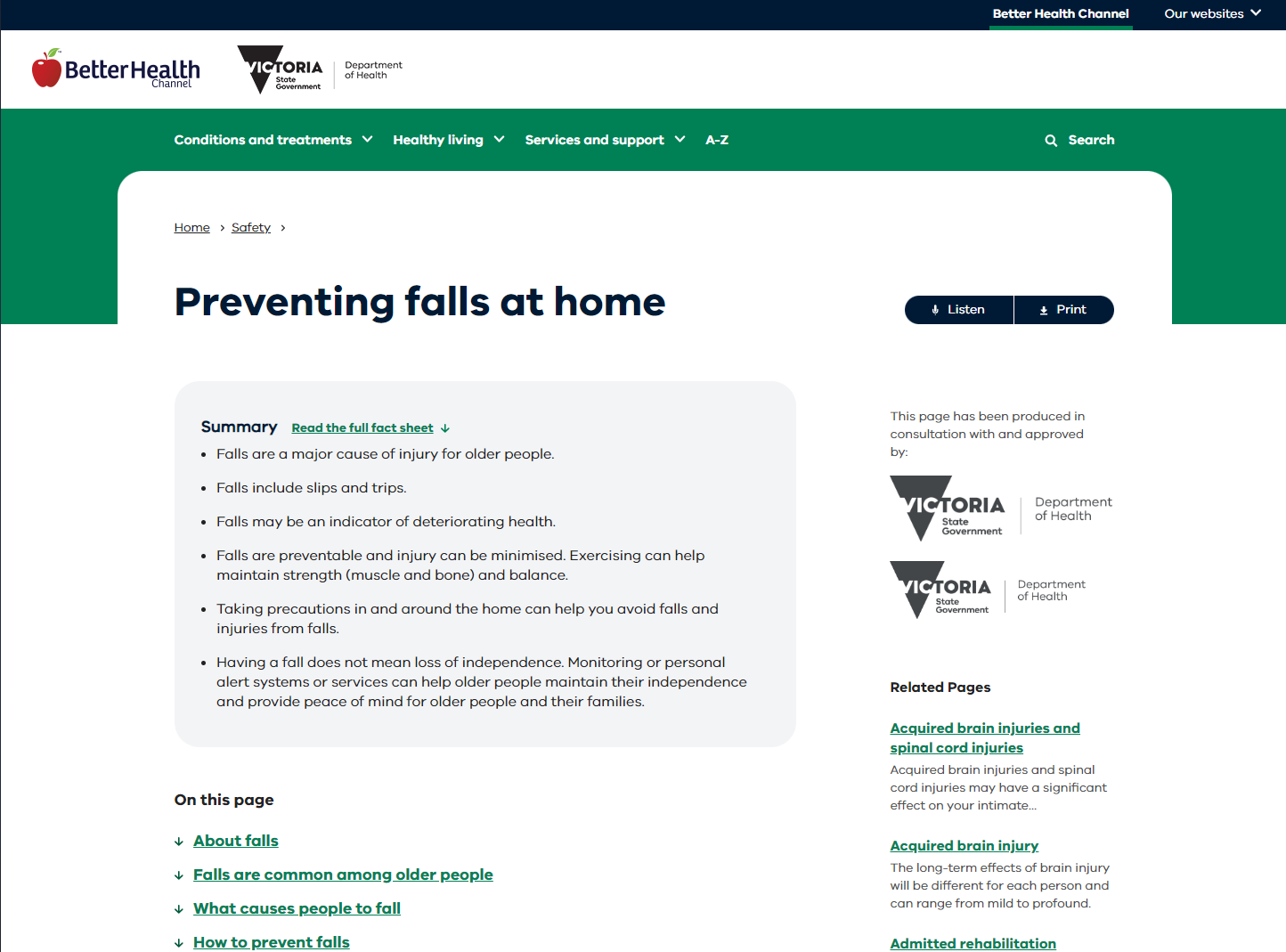
Risk awareness and incident response – Introduction to aged care video
This resource provides a training video for aged care staff on risk awareness and incident response. It demonstrates how to identify potential risks and manage escalating situations effectively in an aged care setting. The video offers practical guidance on maintaining safety for both staff and people in care during incidents, emphasising the importance of calm communication and post-incident reflection. This resource may refer to information that will be updated from 1 November 2025 to align with the new Aged Care Act and Quality Standards.
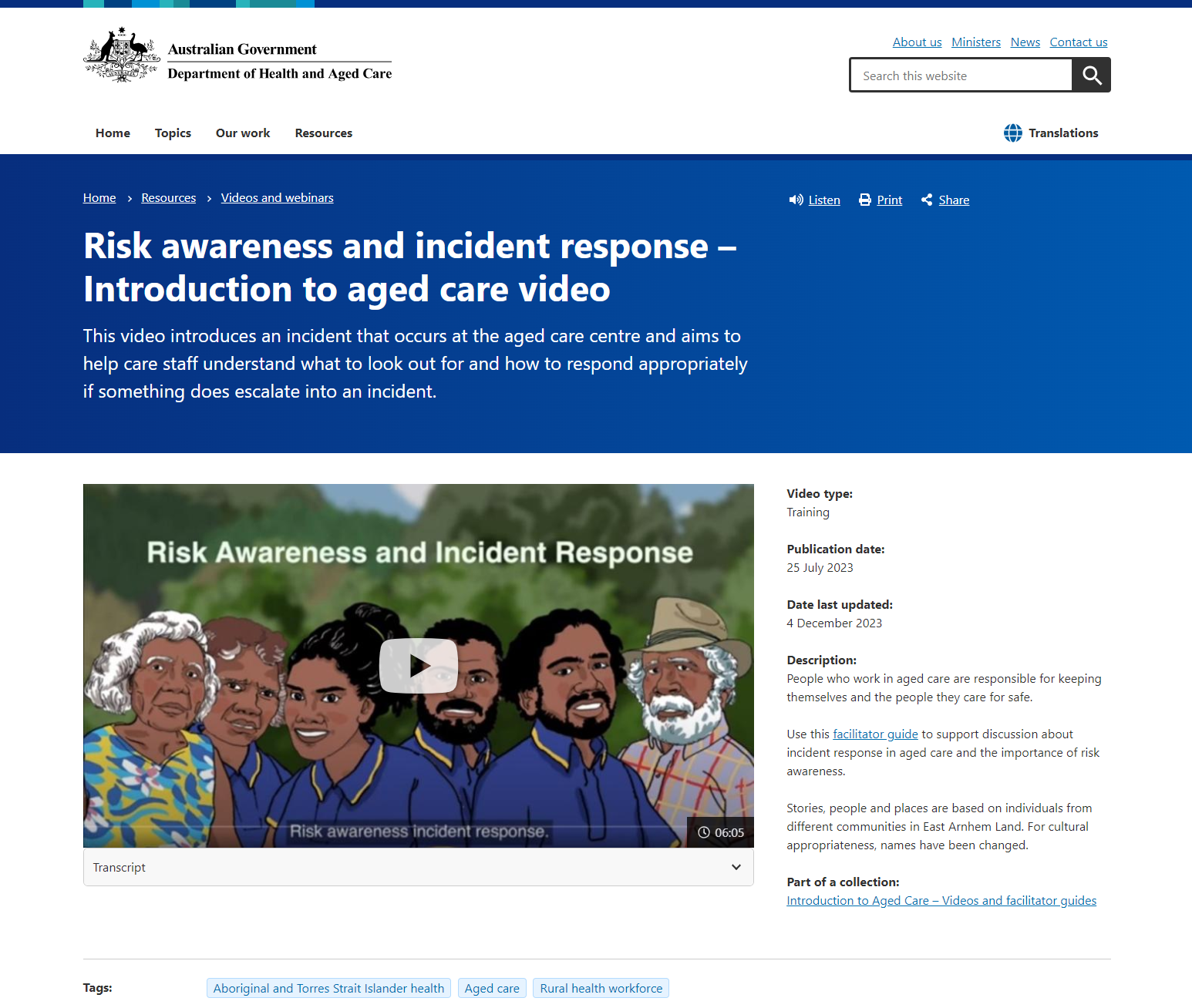
Comprehensive Care - Element 5: Deliver comprehensive care - Actions for health service organisations
This resource outlines the key actions for health service organisations to deliver comprehensive care. It ensures care is provided continuously and collaboratively, aligning with the patient’s diagnoses, goals, and care plan. It promotes a person-centred, multidisciplinary approach, with staff training to support comprehensive care delivery. Applicable to multiple settings, including aged care.
This resource may refer to information that will be updated from 1 November 2025 to align with the new Aged Care Act and Quality Standards.
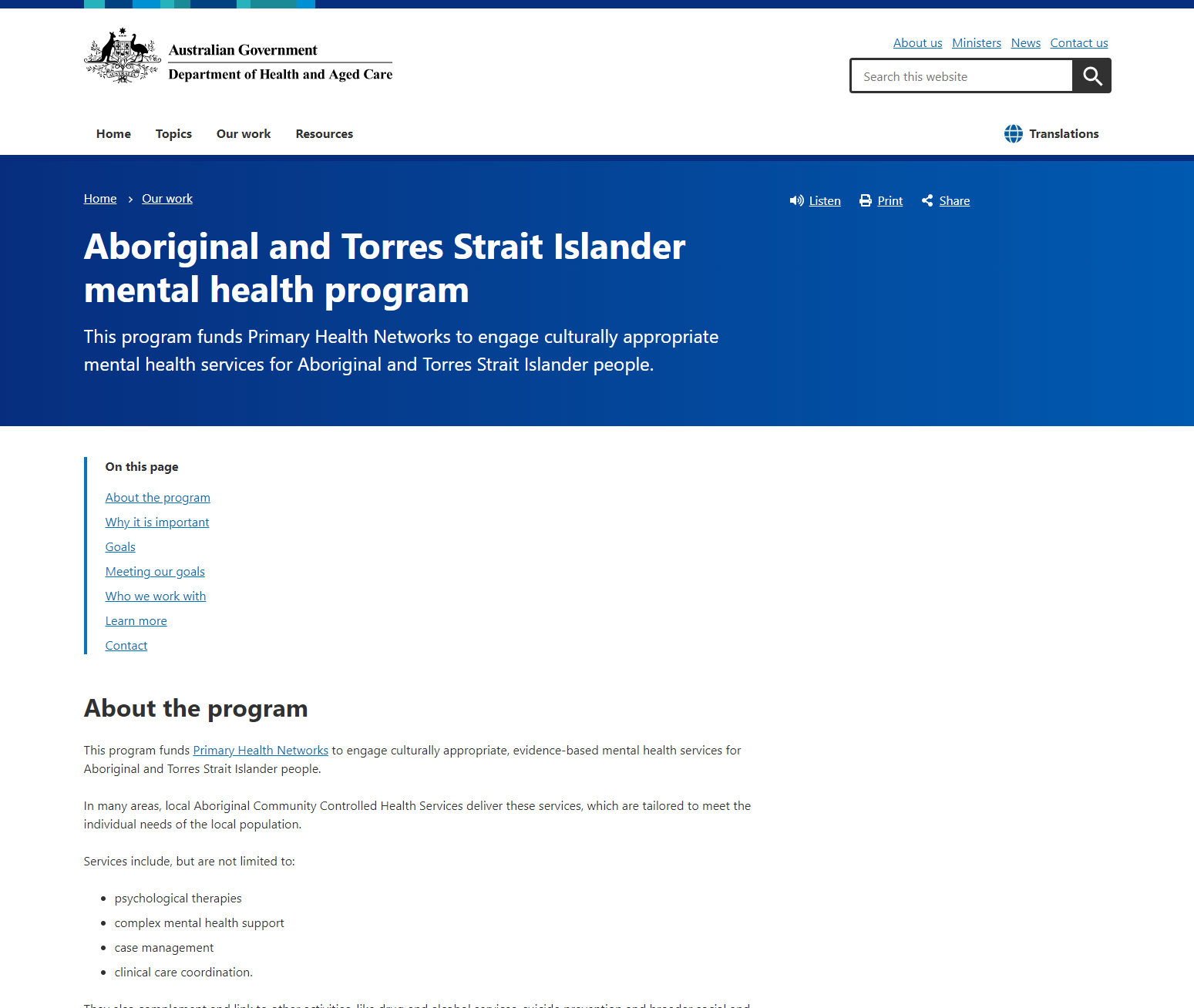
Aboriginal and Torres Strait Islander mental health program
This resource provides information on a mental health program for Aboriginal and Torres Strait Islander people. It includes funding for culturally appropriate mental health services, offering psychological therapies, complex care, and clinical coordination. The program integrates with other services such as drug and alcohol support and suicide prevention initiatives.
This resource may refer to information that will be updated from 1 July 2025 to align with the new Aged Care Act and Quality Standards.
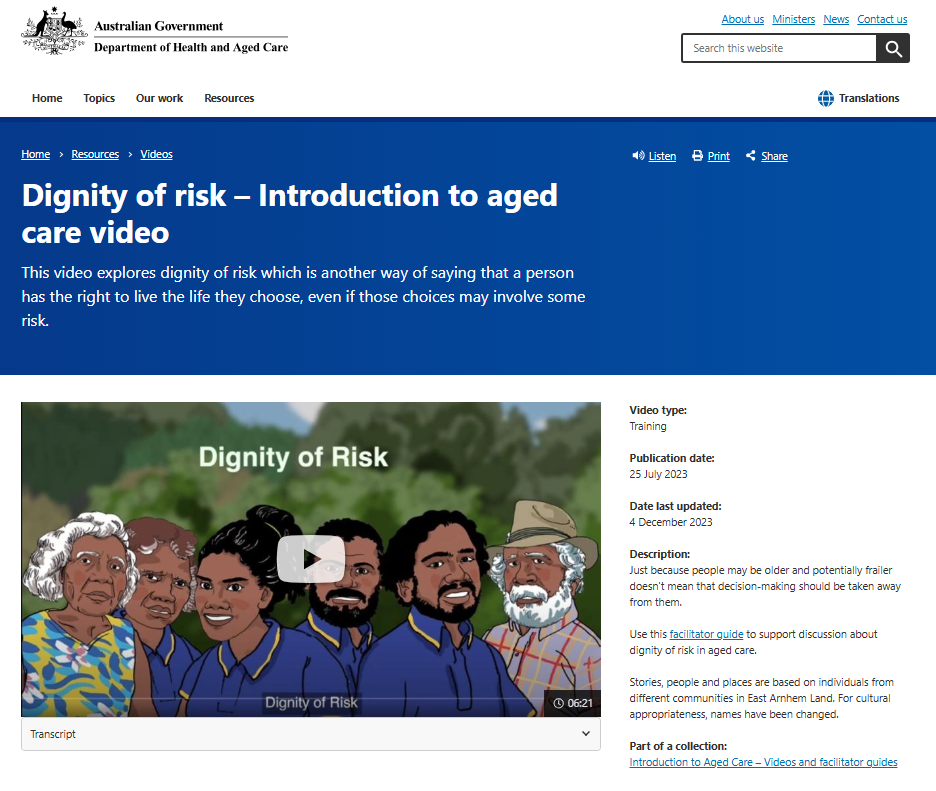
Dignity of risk – Introduction to aged care video
This video explains the concept of dignity of risk in aged care, emphasising that older people have the right to make their own choices, even when those choices involve risks. It provides examples of how care providers can support decision-making while promoting safety and respect for individual autonomy.
This resource may refer to information that will be updated from 1 November 2025 to align with the new Aged Care Act and Quality Standards.
First Nations - YouTube videos
This resource includes a series of YouTube videos developed by the Aged Care Quality and Safety Commission. Australian First Nations older people discuss good quality, culturally appropriate and safe aged care, including person-centred care, rights and how to speak up about care. This resource may refer to information that will be updated from 1 November 2025 to align with the new Aged Care Act and Quality Standards.

About the Food, Nutrition and Dining Hotline – provider and worker fact sheet
This resource provides information about the Food, Nutrition, and Dining Hotline, which offers advice and addresses concerns regarding food and dining in aged care. It allows aged care providers, staff, residents, families, and carers to raise issues about nutrition, menu planning, and dining experiences to improve quality and care outcomes. This resource may refer to information that will be updated from 1 November 2025 to align with the new Aged Care Act and Quality Standards.
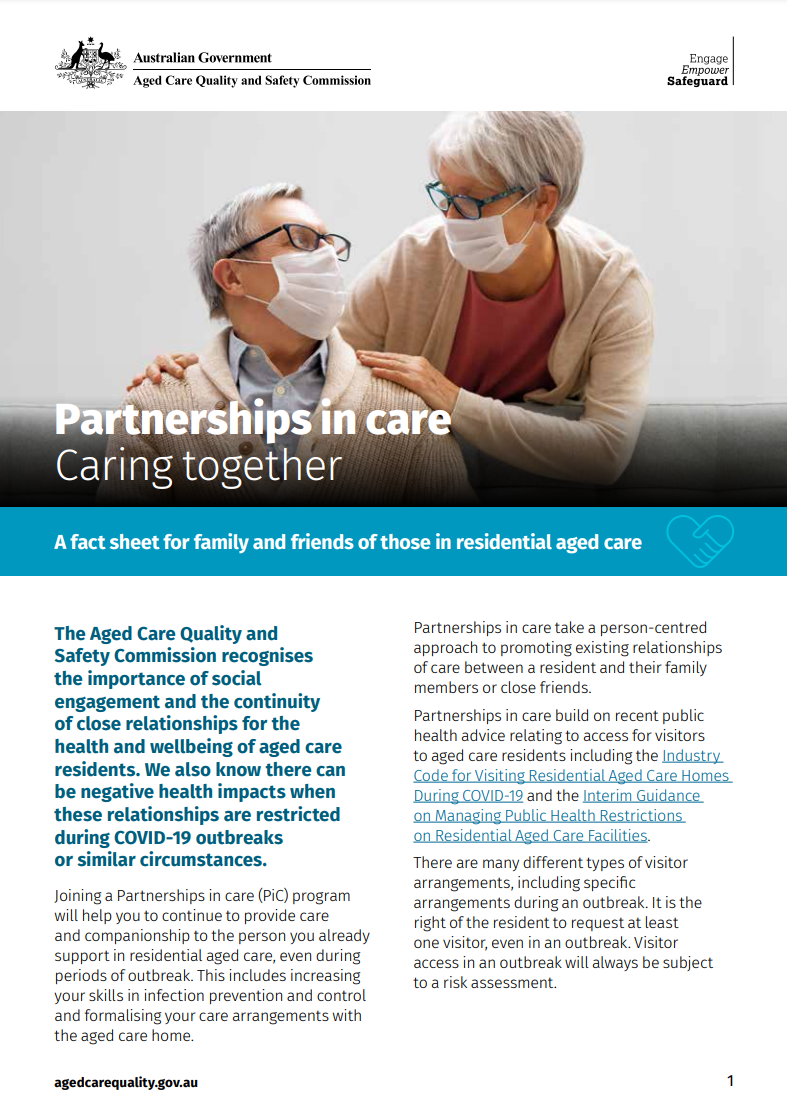
Partnering in care - Caring together
This resource outlines the Partnerships in Care (PiC) programme, which encourages family and friends to support companionship and care for people in aged care, even during outbreak situations. It provides guidance on infection control, visitation protocols, and formal engagement with care activities to enhance resident well-being in a safe, structured manner.
This resource may refer to information that will be updated from 1 November 2025 to align with the new Aged Care Act and Quality Standards.
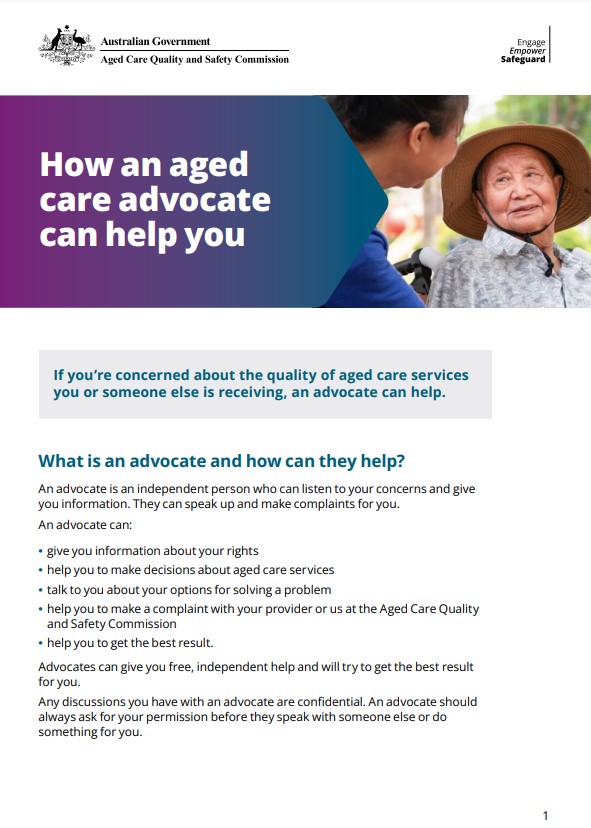
How an aged care advocate can help you
If you are concerned about the quality of the aged care service you or the person you represent is receiving, an advocacy service may be able to help.
 How an aged care advocate can help you – fact sheet (PDF 267.87 KB)
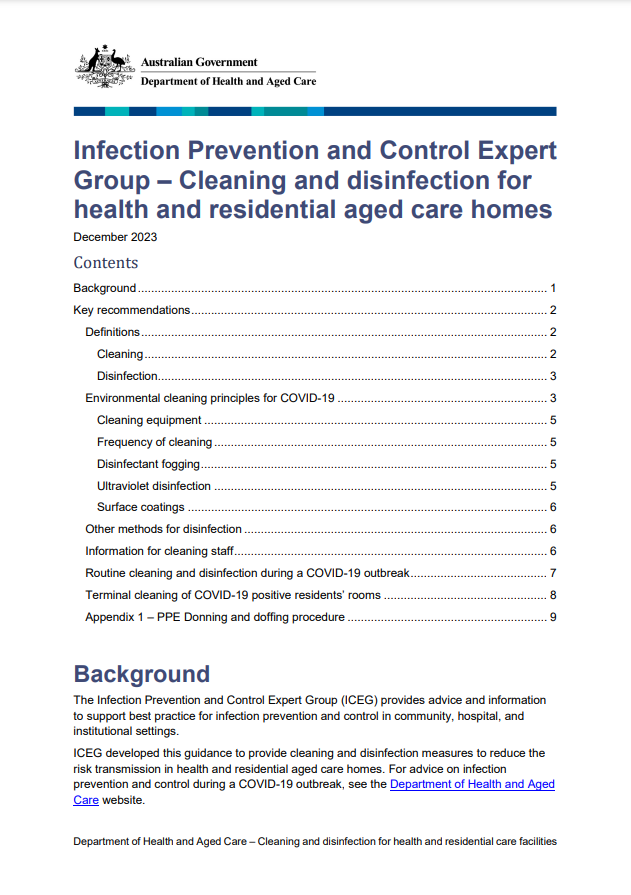
Coronavirus (COVID-19) cleaning and disinfection for health and residential aged care homes
This resource provides cleaning and disinfection guidance for health and residential aged care homes to reduce the transmission of COVID-19. It outlines cleaning protocols, frequency, and the use of appropriate disinfectants, ensuring safety for staff and residents. The document also covers procedures for cleaning after suspected or confirmed COVID-19 cases.
This resource may refer to information that will be updated from 1 November 2025 to align with the new Aged Care Act and Quality Standards.
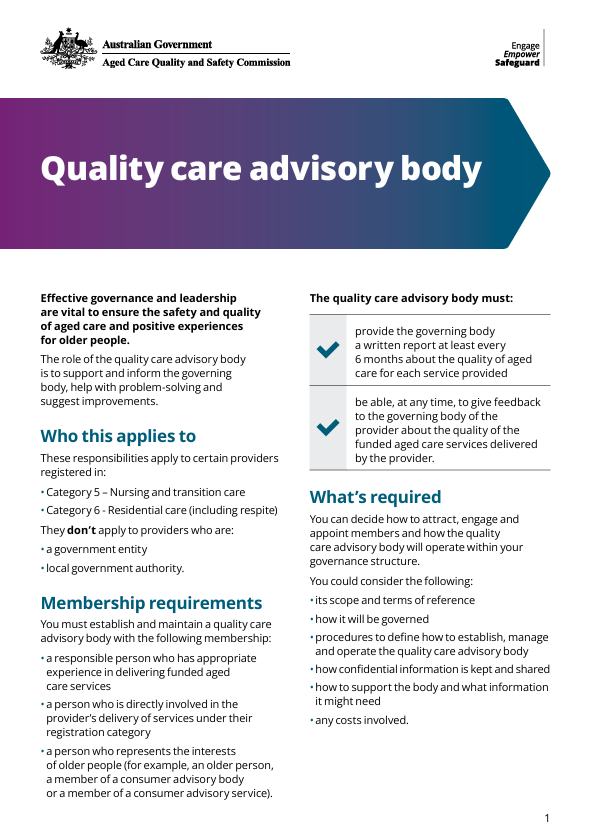
Quality care advisory body fact sheet
Explains the quality care advisory body obligations, including who must be on the advisory body and what actions, reports and feedback are required.
Quality care advisory body fact sheet (PDF 196.24 KB)
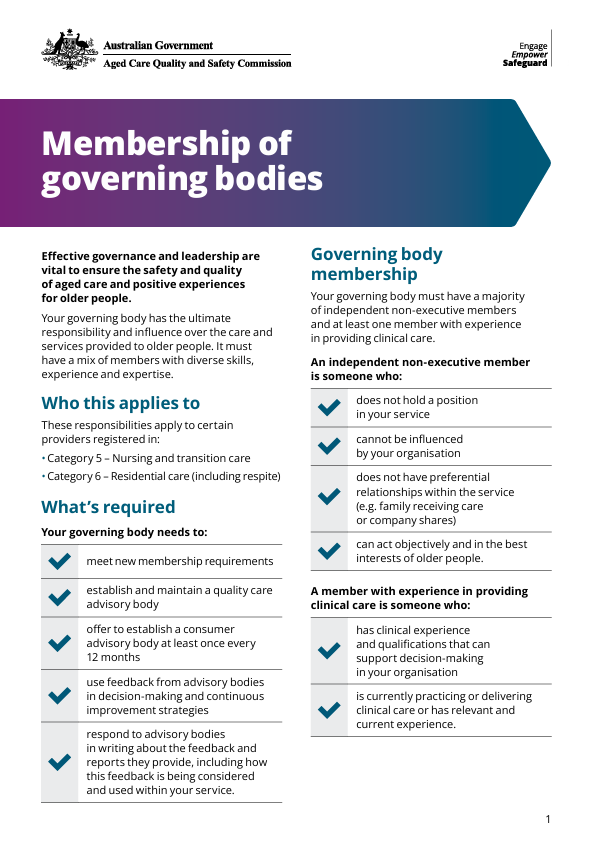
Membership of governing bodies fact sheet
Explains the governing body membership requirements, including what ‘independent non-executive’ and ‘clinical care experience’ mean, and how to apply for a determination if you can’t meet one or both requirements.
Membership of governing bodies fact sheet (PDF 214.43 KB)
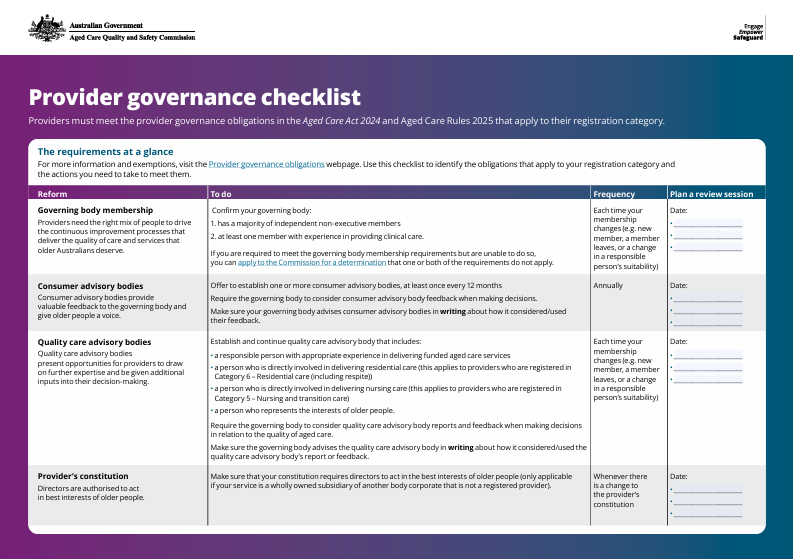
Provider governance checklist
Provides a way for you to identify which governance obligations apply to your registration category, and to plan and record the actions and review dates you need to meet them.
Provider governance checklist (PDF 370.5 KB)
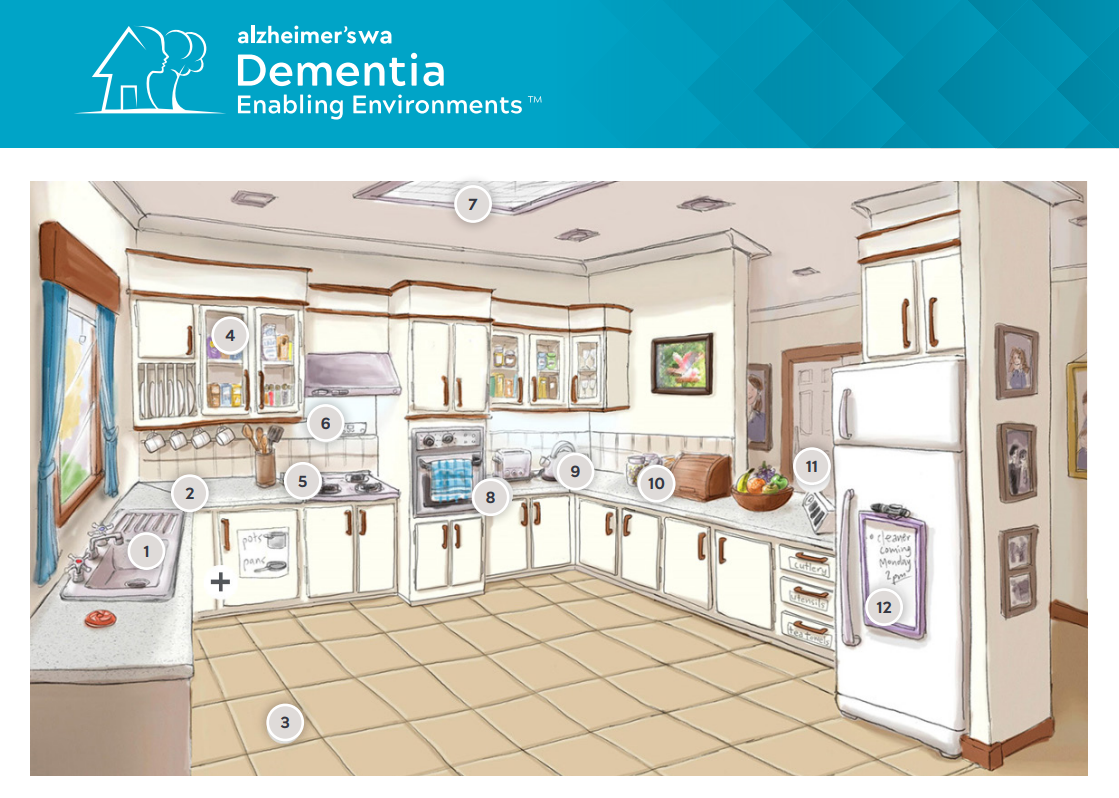
Dementia enabling environments - Adapt a home: Kitchen
This resource, developed by Alzheimer's WA, is a Dementia Enabling Environments illustration information sheet about adapting a home, focusing on the kitchen. It includes principles to integrate enabling design and make changes within the physical environment to maximise enablement and wellbeing for people living with dementia.
This resource was developed by a state/territory government or organisation and therefore its applicability and usefulness may be limited.