The Quality Standards Resource Centre helps extend understanding of the strengthened Aged Care Quality Standards, which took effect from 1 November 2025. You can search for resources by using keywords, or filtering by standard, outcome and audience. Before using the Resource Centre, please read the terms of use.
Preventing and Controlling Infections Standard
The Preventing and Controlling Infections Standard (National Safety and Quality Health Service Standards) outlines infection prevention and control strategies, antimicrobial stewardship, the safe use of resources, and evidence-based practices. It aims to minimise infection risks and ensure the safety of people receiving care and workforce members. It also supports compliance with infection control standards in healthcare and aged care settings. This resource may apply to healthcare contexts outside of aged care and please consider the applicability of this resource to your care setting.
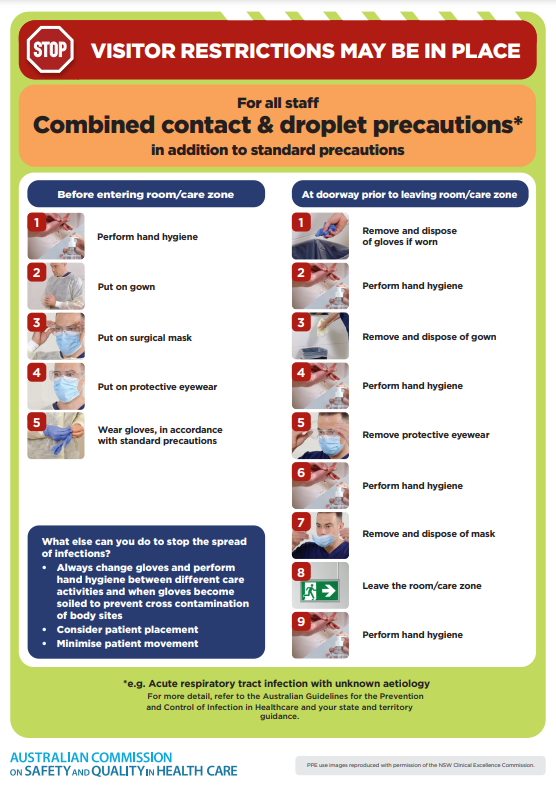
Infection Prevention and Control Poster – Combined contact and droplet precautions
This poster outlines combined contact and droplet precautions for infection prevention and control, in addition to standard precautions. It provides guidance on the use of personal protective equipment (PPE) and other measures to reduce the transmission of infectious agents through direct contact and respiratory droplets.
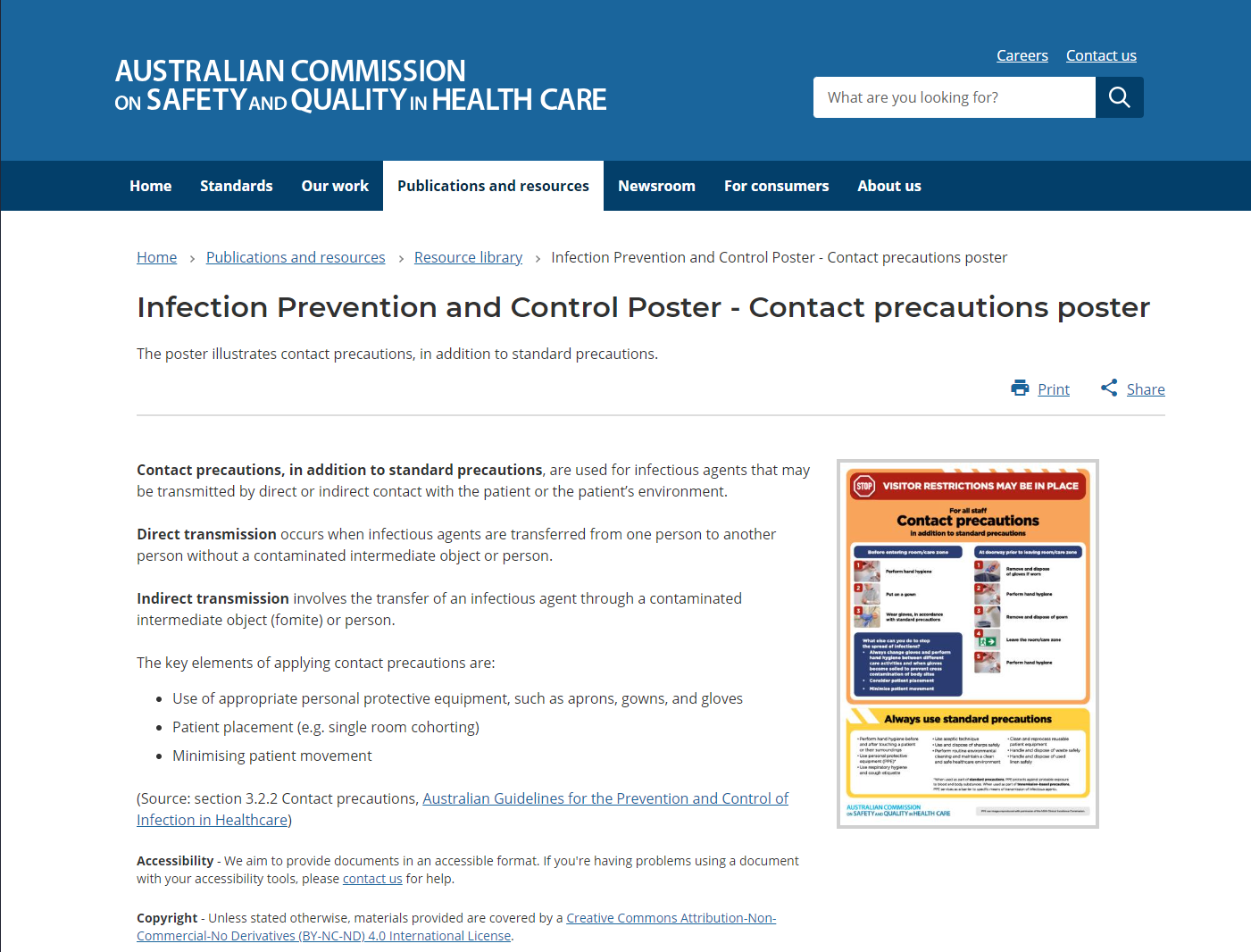
Infection Prevention and Control Poster - Contact precautions poster
This poster outlines contact precautions for infection prevention and control, in addition to standard precautions. It provides guidance on preventing the transmission of infectious agents through direct or indirect contact. Key elements include using personal protective equipment, proper patient placement, and minimising patient movement. This resource may apply to healthcare contexts outside of aged care. Please consider the applicability of this resource to your care setting.
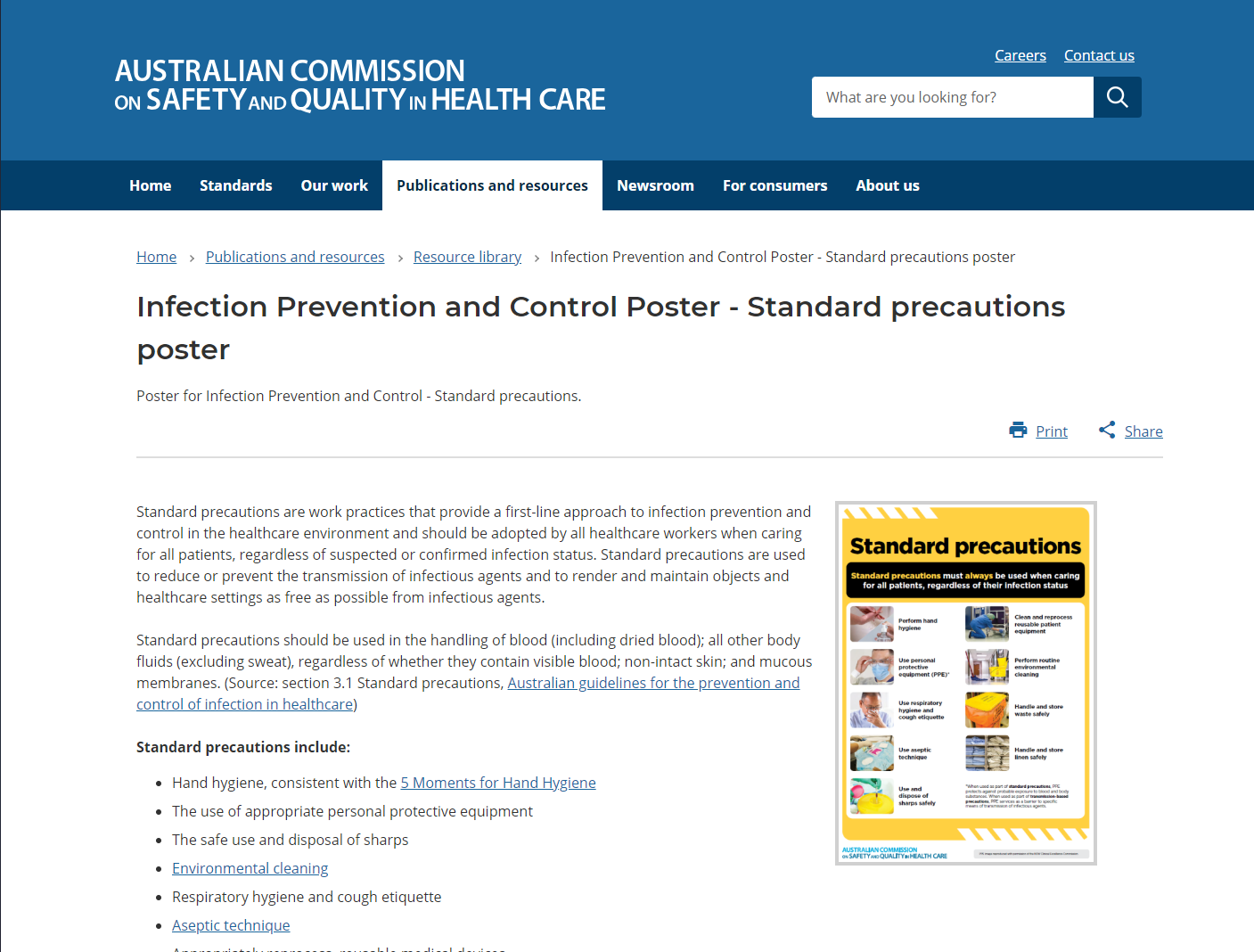
Infection Prevention and Control Poster - Standard precautions poster
This resource is a poster on standard precautions for infection prevention and control in healthcare. It outlines essential practices such as hand hygiene, personal protective equipment use, environmental cleaning, and waste management. The poster helps healthcare workers minimise infection risks and maintain safe care environments. This resource may apply to healthcare contexts outside of aged care. Please consider the applicability of this resource to your care setting.
Recommendations for the control of carbapenemase-producing Enterobacterales
This resource provides guidance on preventing and managing carbapenemase-producing Enterobacterales (CPE) in healthcare. It covers screening, outbreak control, and environmental cleaning, helping to reduce antimicrobial resistance. The resource supports infection control policies and aims to enhance safety in aged care and health service organisations.
This resource may refer to information that will be updated from 1 November 2025 to align with the new Aged Care Act and Quality Standards.
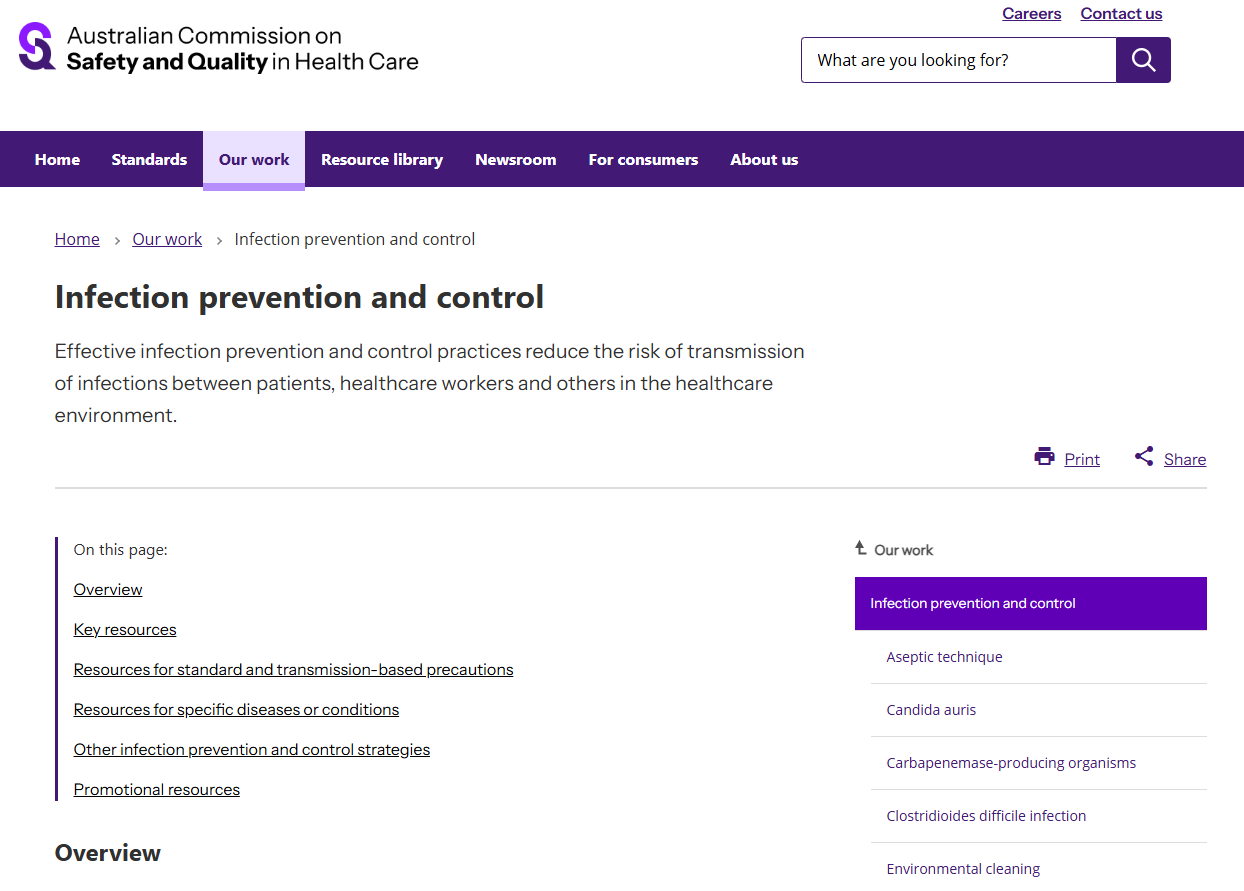
Infection prevention and control - ACSQH
This resource provides guidelines to reduce infection transmission risks in healthcare settings. It provides information on standard and transmission-based precautions, specific diseases or conditions, other infection prevention and control strategies and promotional resources practices such as hand hygiene, use of personal protective equipment, and environmental cleaning.
This resource may refer to information that will be updated from 1 November 2025 to align with the new Aged Care Act and Quality Standards.
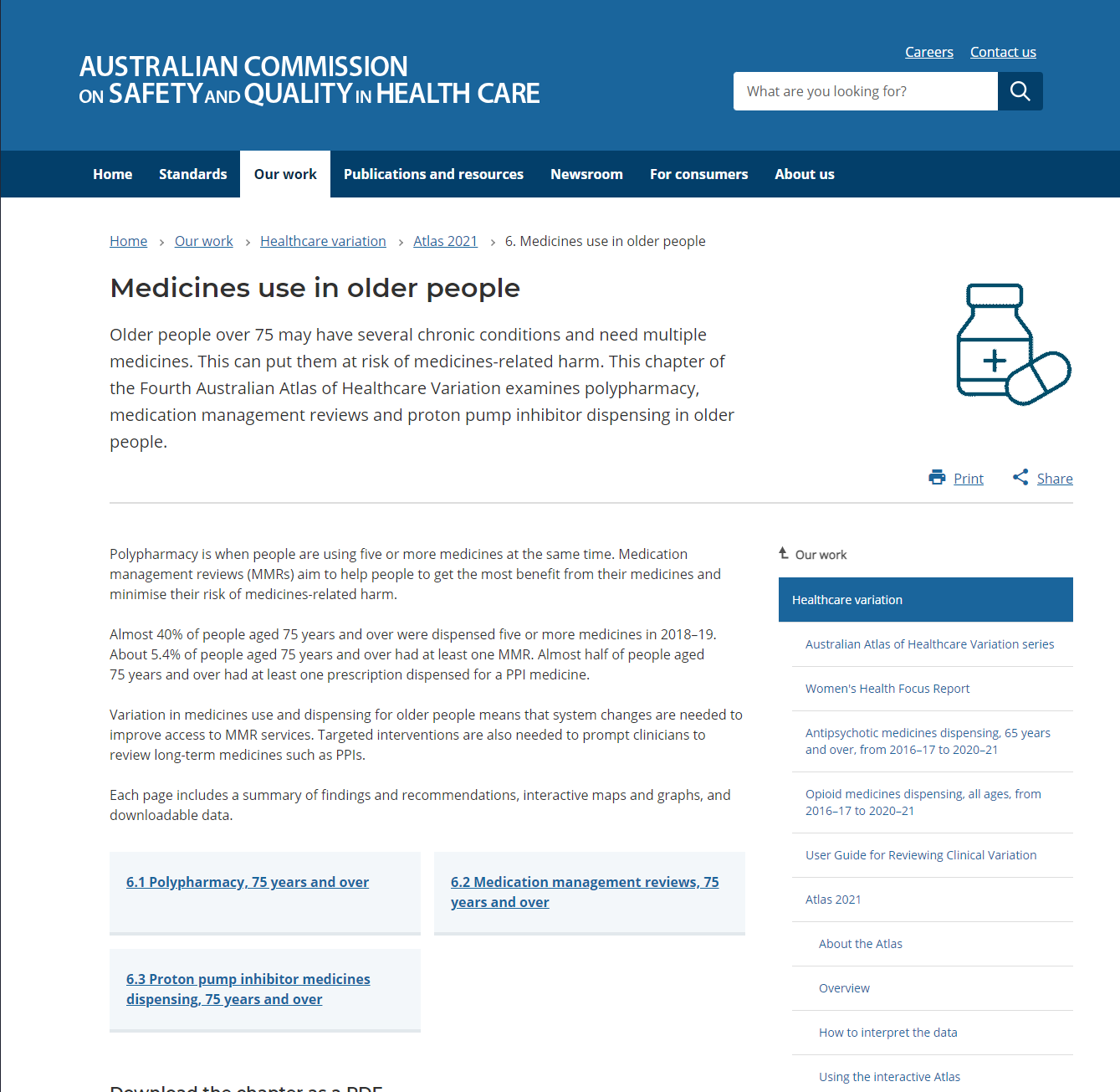
Medicines use in older people
This resource is chapter six of the Fourth Atlas 2021 of Healthcare Variations. The chapter examines medicines use in people aged 75 and over, focusing on polypharmacy, medication management reviews (MMRs), and proton pump inhibitor (PPI) dispensing. It highlights variations in medication use and recommends improving access to MMR services and interventions for safe, effective medication use in older populations.
National Safety and Quality Digital Mental Health Standards
These standards outline frameworks to ensure the safety and quality of digital mental health services in Australia. It includes standards for clinical and technical governance, partnering with consumers, and delivering a safe model of care. The standards aim to improve service quality, protect users, and establish guidelines for best practices across digital platforms.
This resource may refer to information that will be updated from 1 November 2025 to align with the new Aged Care Act and Quality Standards.
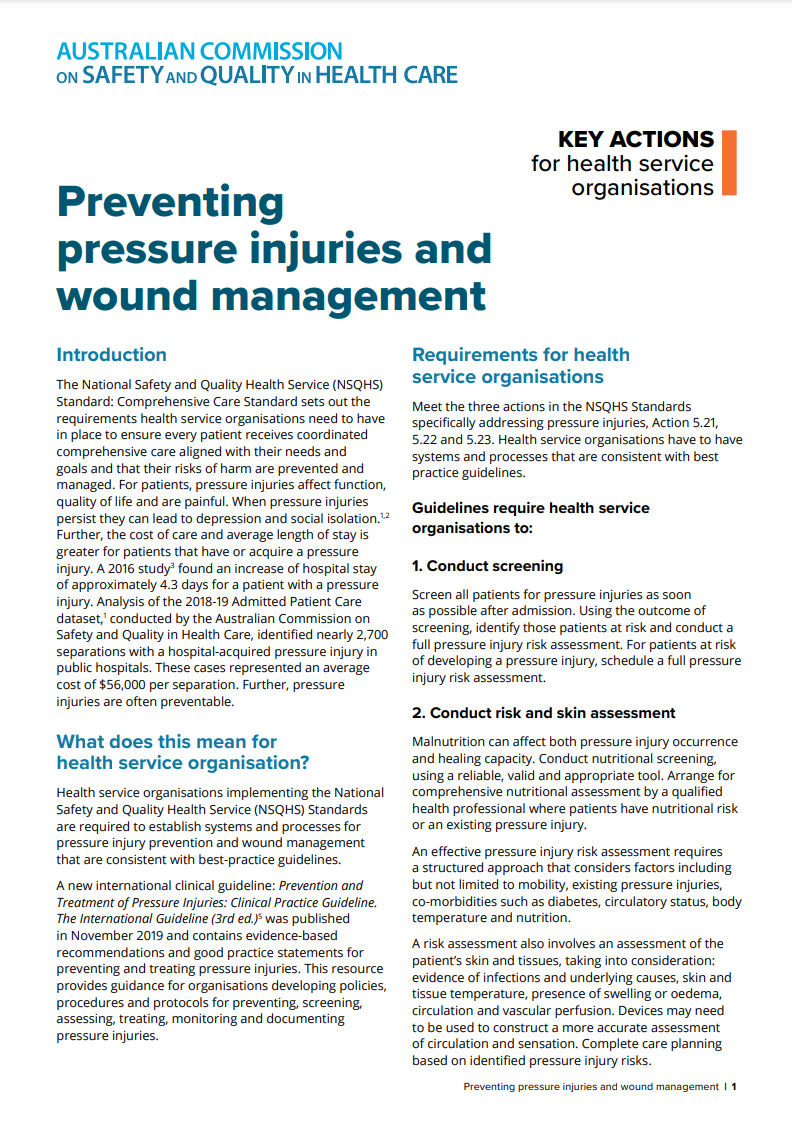
NSQHS Standards - Preventing pressure injuries and wound management
This resource provides guidance for organisations developing policies, procedures and protocols for preventing, screening, assessing, treating, monitoring and documenting pressure injuries. The fact sheet also provides a pressure injury flowchart for adult hospital admissions.
This resource may refer to information that will be updated from 1 November 2025 to align with the new Aged Care Act and Quality Standards.
High risk medicines resources
This resource provides guidance on high-risk medicines, including safety alerts, notices, and best practices for safe prescribing, dispensing, and administration. It includes information on insulin and anticoagulant safety, monitoring tools, and best practice recommendations to improve medication safety and reduce harm from high-risk medications across healthcare settings.
This resource may refer to information that will be updated from 1 November 2025 to align with the new Aged Care Act and Quality Standards.
National Consensus Statement - Essential elements for recognising and responding to acute physical deterioration
This consensus statement outlines essential elements for recognising and responding to acute physiological deterioration in healthcare settings. It covers clinical processes like vital signs monitoring, diagnosis, and rapid response systems, as well as organisational aspects such as leadership, education, and evaluation. It provides generic information that can be applied to the aged care setting.
This resource may refer to information that will be updated from 1 November 2025 to align with the new Aged Care Act and Quality Standards.
Cognitive impairment resources
This resource provides a range of materials developed to improve the safety and quality of healthcare for people with cognitive impairment or at risk of delirium. It includes guides, fact sheets, and standards for consumers, clinicians, and health service organisations, supporting the implementation of best practice and quality care.
This resource may refer to information that will be updated from 1 November 2025 to align with the new Aged Care Act and Quality Standards.
Clinical governance and quality improvement to support medication management
This resource outlines clinical governance and quality improvement systems to support safe medication management. It requires health service organisations to implement systems for procuring, prescribing, dispensing, and monitoring medicines.
This resource may refer to information that will be updated from 1 November 2025 to align with the new Aged Care Act and Quality Standards.
Caring for Cognitive Impairment
This resource outlines support for health service organisations to provide safe, high-quality care for people with cognitive impairment, especially during COVID-19. It includes new intellectual disability resources, fact sheets, posters, and guidance aligned with the National Safety and Quality Health Service (NSQHS) Standards to improve patient outcomes and care experiences.
This resource may refer to information that will be updated from 1 November 2025 to align with the new Aged Care Act and Quality Standards.
National Consensus Statement: Essential elements for safe and high-quality end-of-life care
This resource outlines the National Consensus Statement on essential elements for safe and high-quality end-of-life care in Australia. It provides guiding principles, care processes, and organisational processes, focusing on person-centred communication, multidisciplinary collaboration, and culturally appropriate care. The statement is designed for healthcare workers, service executives, and policy makers to enhance end-of-life care delivery.
Advance care planning - Information for clinicians
This resource guides clinicians on the importance of advance care planning, particularly for those with life-limiting illnesses, chronic conditions, or cognitive impairment. It outlines the need for early conversations about patient preferences and comprehensive care, ensuring decisions are documented, shared, and align with clinical handover processes to respect patient autonomy and improve care outcomes.
This resource may refer to information that will be updated from 1 November 2025 to align with the new Aged Care Act and Quality Standards.
Delivering and supporting comprehensive end-of-life care user guide
This guide provides practical strategies for health service organisations and clinicians to deliver comprehensive end-of-life care. It aligns with the National Safety and Quality Health Service Standards, focusing on patient-centred communication, care components, triggers for recognising end-of-life, and organisational support through leadership, education, and evaluation.
This resource may refer to information that will be updated from 1 November 2025 to align with the new Aged Care Act and Quality Standards.
End-of-life care - clinical basics
This resource provides key actions for clinicians delivering end-of-life care. It highlights the shift from curative to palliative approaches, emphasising communication, patient dignity, symptom management, medication review, and decision-making. It includes strategies for managing common symptoms and minimising risks to ensure safe, high-quality care in the last days of life.
This resource may refer to information that will be updated from 1 November 2025 to align with the new Aged Care Act and Quality Standards.
End-of-life care - Last days of life
This resource provides guidance on end-of-life care during the last days of life, relevant for aged care settings. It focuses on maintaining comfort, managing symptoms, and reducing unnecessary interventions. Clinicians are supported in offering compassionate care, addressing potential emergencies, and involving family members while ensuring that older people are treated with dignity during their final days.
This resource may refer to information that will be updated from 1 November 2025 to align with the new Aged Care Act and Quality Standards.
NSQHS Standards User guide for Aboriginal and Torres Strait Islander health
The resource provides a guide for health service organisations to improve care for Aboriginal and Torres Strait Islander people, focusing on 6 specific actions. It highlights strategies to build partnerships, enhance cultural competency, and ensure equitable, safe, and high-quality care.
This resource may refer to information that will be updated from 1 November 2025 to align with the new Aged Care Act and Quality Standards.