The Quality Standards Resource Centre helps extend understanding of the strengthened Aged Care Quality Standards, which took effect from 1 November 2025. You can search for resources by using keywords, or filtering by standard, outcome and audience. Before using the Resource Centre, please read the terms of use.
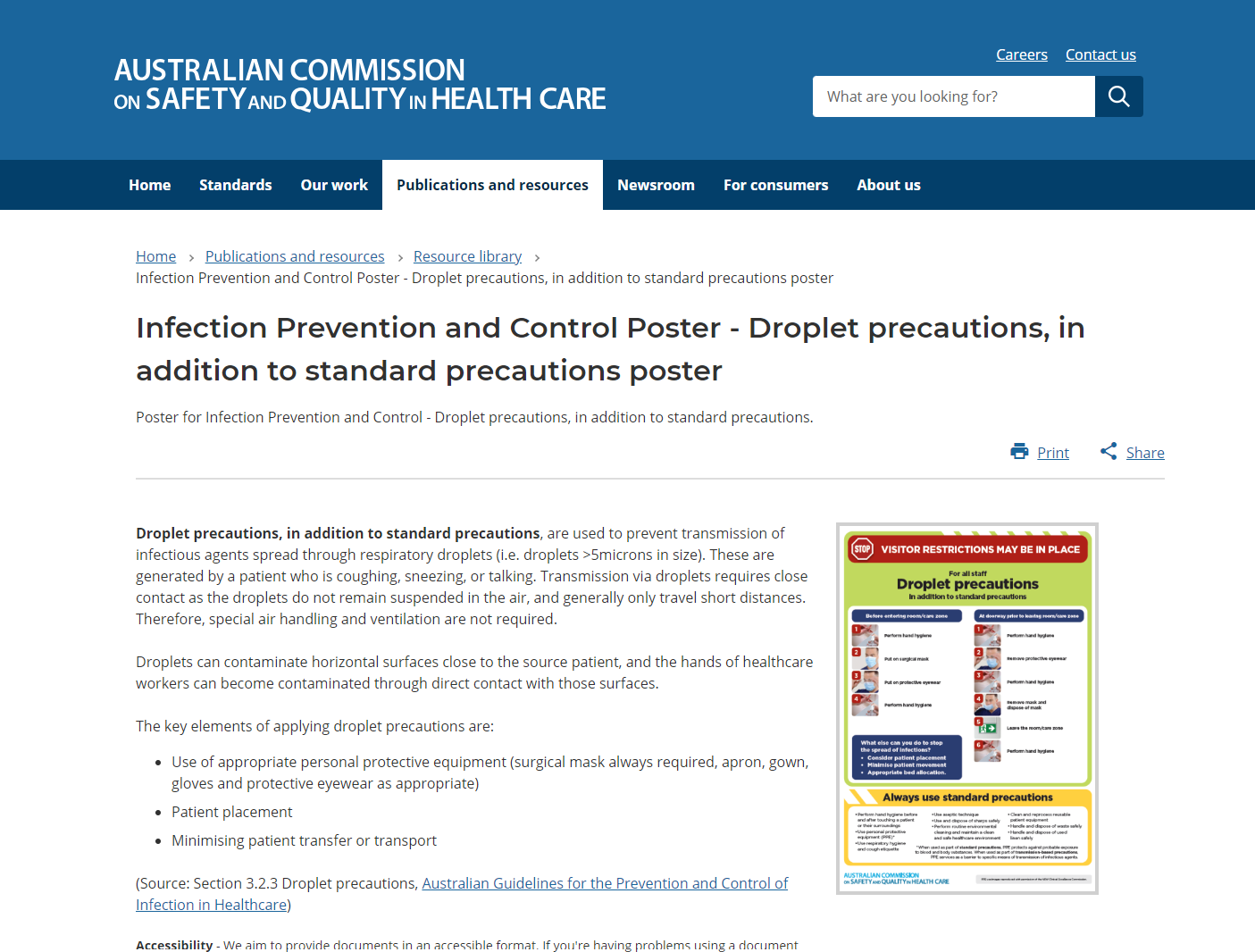
Infection Prevention and Control Poster - Droplet precautions, in addition to standard precautions poster
This resource is a poster on droplet precautions, in addition to standard precautions, for infection prevention. It outlines measures to prevent the transmission of infectious agents spread through respiratory droplets, such as using appropriate personal protective equipment (PPE), patient placement, and minimising patient transport. This resource may apply to healthcare contexts outside of aged care. Please consider the applicability of this resource to your care setting.
Preventing and Controlling Infections Standard
The Preventing and Controlling Infections Standard (National Safety and Quality Health Service Standards) outlines infection prevention and control strategies, antimicrobial stewardship, the safe use of resources, and evidence-based practices. It aims to minimise infection risks and ensure the safety of people receiving care and workforce members. It also supports compliance with infection control standards in healthcare and aged care settings. This resource may apply to healthcare contexts outside of aged care and please consider the applicability of this resource to your care setting.
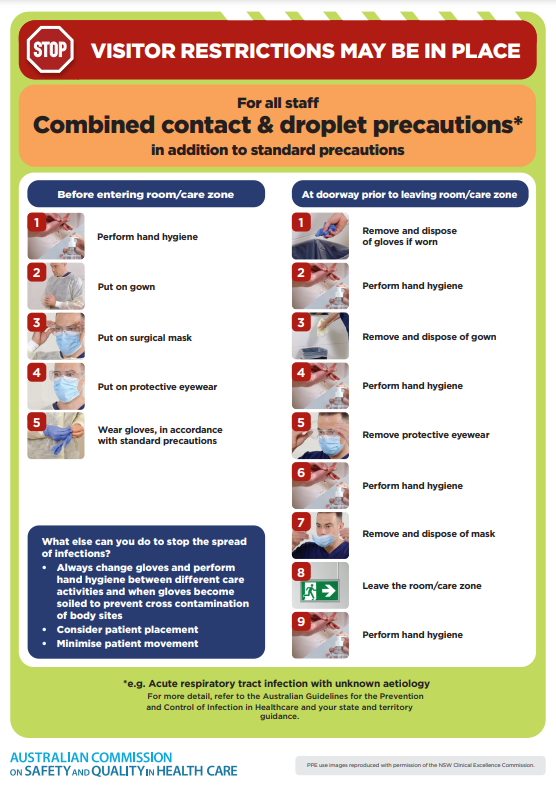
Infection Prevention and Control Poster – Combined contact and droplet precautions
This poster outlines combined contact and droplet precautions for infection prevention and control, in addition to standard precautions. It provides guidance on the use of personal protective equipment (PPE) and other measures to reduce the transmission of infectious agents through direct contact and respiratory droplets.
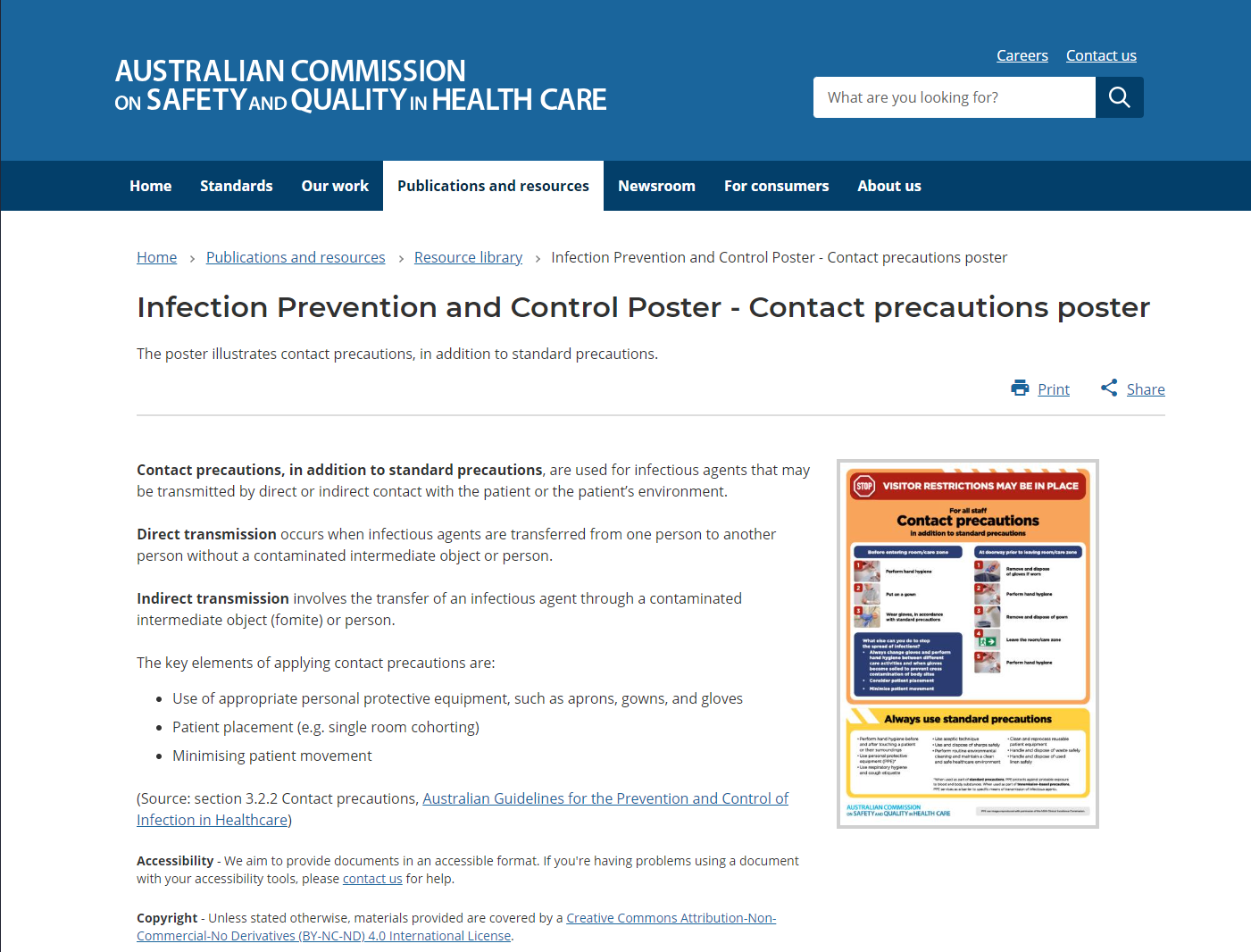
Infection Prevention and Control Poster - Contact precautions poster
This poster outlines contact precautions for infection prevention and control, in addition to standard precautions. It provides guidance on preventing the transmission of infectious agents through direct or indirect contact. Key elements include using personal protective equipment, proper patient placement, and minimising patient movement. This resource may apply to healthcare contexts outside of aged care. Please consider the applicability of this resource to your care setting.
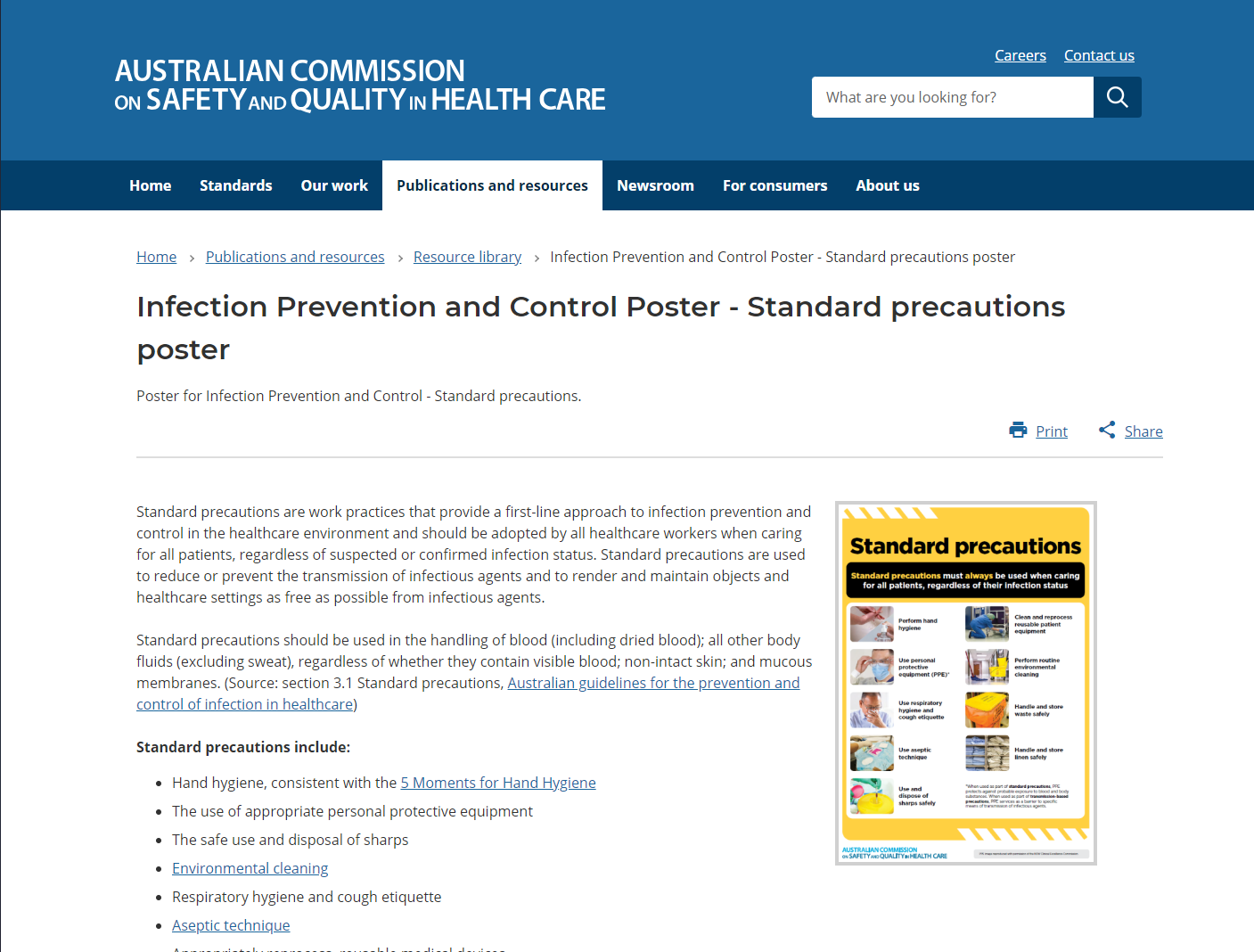
Infection Prevention and Control Poster - Standard precautions poster
This resource is a poster on standard precautions for infection prevention and control in healthcare. It outlines essential practices such as hand hygiene, personal protective equipment use, environmental cleaning, and waste management. The poster helps healthcare workers minimise infection risks and maintain safe care environments. This resource may apply to healthcare contexts outside of aged care. Please consider the applicability of this resource to your care setting.
Recommendations for the control of carbapenemase-producing Enterobacterales
This resource provides guidance on preventing and managing carbapenemase-producing Enterobacterales (CPE) in healthcare. It covers screening, outbreak control, and environmental cleaning, helping to reduce antimicrobial resistance. The resource supports infection control policies and aims to enhance safety in aged care and health service organisations.
This resource may refer to information that will be updated from 1 November 2025 to align with the new Aged Care Act and Quality Standards.
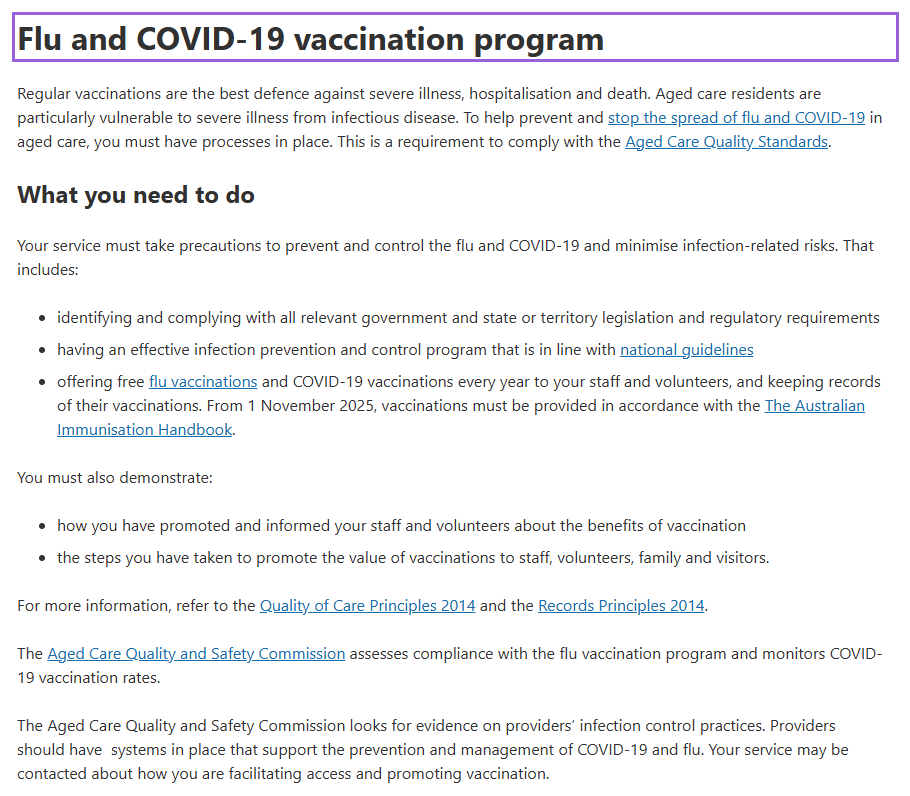
Flu and COVID-19 vaccination program
This resource outlines the flu and COVID-19 vaccination program for residential aged care providers. It includes information about what services must do to take precautions to prevent and control the flu and COVID-19 and minimise infection-related risks. This resource may refer to information that will be updated from 1 November 2025 to align with the new Aged Care Act and Quality Standards.
Antimicrobial Stewardship Self-Assessment Tool and User Guide
This tool and user guide supports residential aged care services in self-assessing their antimicrobial stewardship (AMS) practices. It covers AMS governance, policies, education, monitoring, and feedback, aiming to improve antibiotic use and reduce risks associated with antimicrobial resistance. The resources helps identify gaps and develop action plans to enhance AMS activities and patient care. This resource may refer to information that will be updated from 1 July 2025 to align with the new Aged Care Act and Quality Standards.

Infection prevention and control - ACSQH
This resource provides guidelines to reduce infection transmission risks in healthcare settings. It provides information on standard and transmission-based precautions, specific diseases or conditions, other infection prevention and control strategies and promotional resources practices such as hand hygiene, use of personal protective equipment, and environmental cleaning.
This resource may refer to information that will be updated from 1 November 2025 to align with the new Aged Care Act and Quality Standards.
Government support for providers and workers
This resource outlines government support for aged care providers managing COVID-19 outbreaks. It covers information on infection prevention measures, vaccination assistance, and mental health resources to help providers maintain care quality and safety during outbreaks.
This resource may refer to information that will be updated from 1 November 2025 to align with the new Aged Care Act and Quality Standards.
Infection prevention and control in aged care - Cognitive decline and dementia
How to create an environment with strong infection prevention and control practices while continuing to provide a positive experience for people with cognitive decline and dementia.
This resource may refer to information that will be updated from 1 November 2025 to align with the new Aged Care Act and Quality Standards
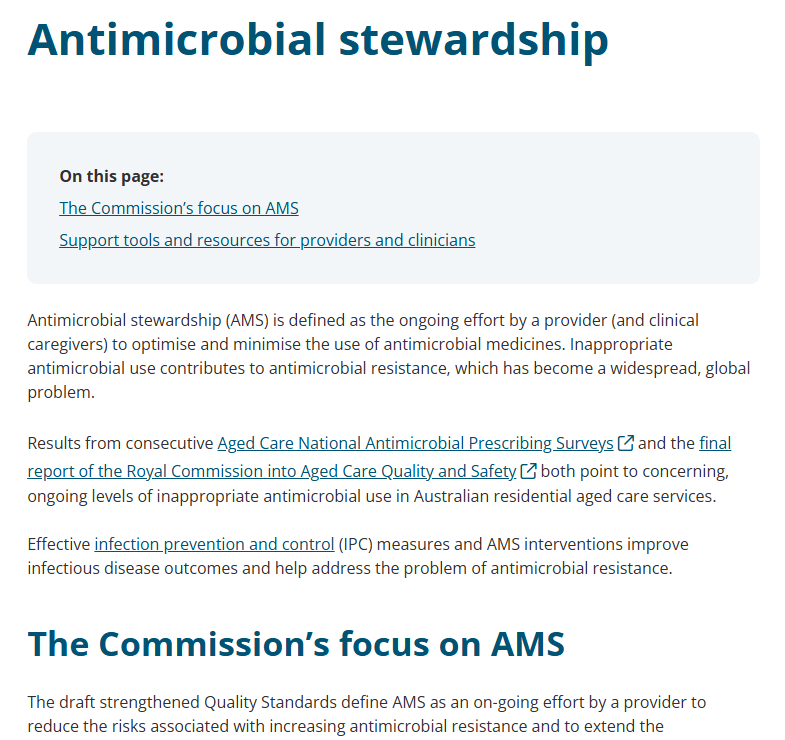
Antimicrobial stewardship
This resource addresses antimicrobial stewardship (AMS) in aged care, focusing on optimising antimicrobial use to combat antimicrobial resistance. It includes tools, self-assessment guides, and quality improvement strategies to reduce inappropriate antibiotic use, particularly for urinary tract infections. It supports providers in improving infection prevention and control within their services.
This resource may refer to information that will be updated from 1 November 2025 to align with the new Aged Care Act and Quality Standards.
New Aged Care Infection Prevention and Control Guide – Webinar
This resource provides an overview of a webinar discussing the new Aged Care Infection Prevention and Control (IPC) Guide. It explains how aged care providers can apply infection prevention principles to minimise risks, meet the Aged Care Quality Standards, and develop local IPC policies and procedures tailored to their services.
This resource may refer to information that will be updated from 1 November 2025 to align with the new Aged Care Act and Quality Standards.
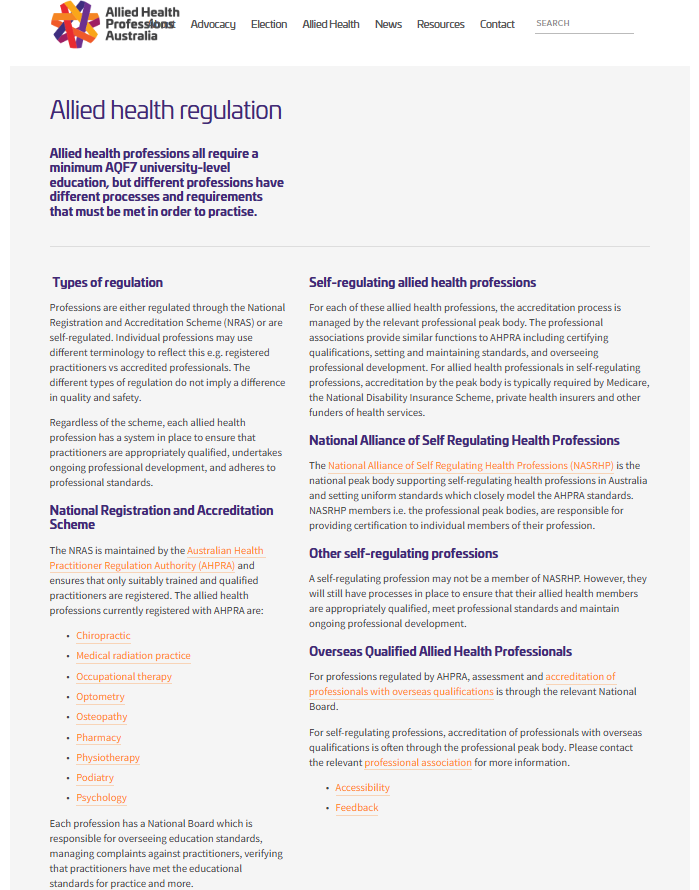
Allied health regulation
This resource provides information about the regulation of allied health professions in Australia. It includes those registered under the National Registration and Accreditation Scheme (NRAS) and self-regulating professions managed by professional peak bodies. It also provides links to further information about allied health professions currently registered with AHPRA and information for overseas-qualified practitioners.
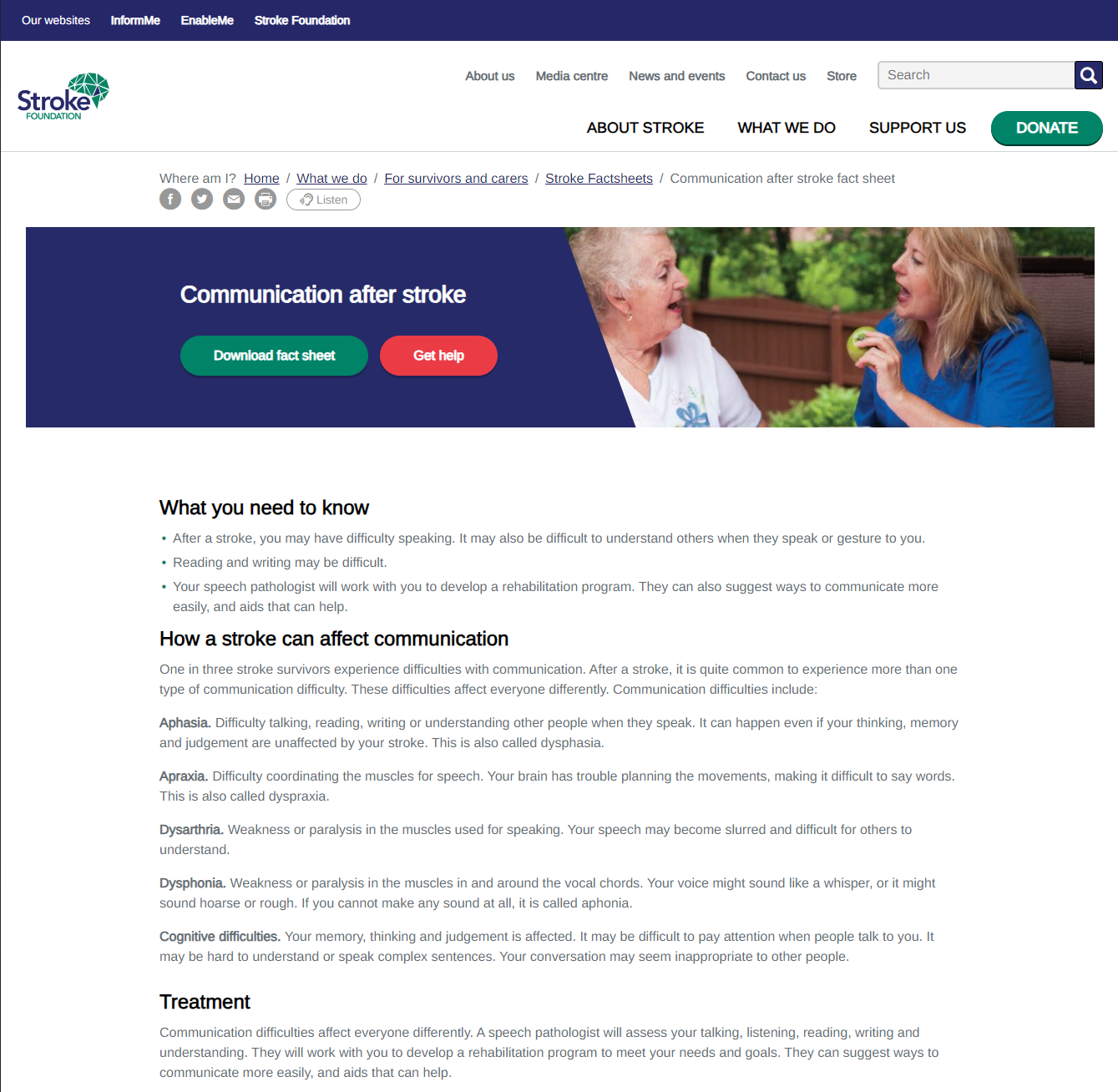
Communication after stroke
This resource provides information on communication difficulties an person may encounter after experiencing a stroke. It discusses how strokes can affect communication, treatment to assist with communication, information on recovery, communication tips for family and friends and help resources for individuals.
National Consensus Statement - Essential elements for recognising and responding to acute physical deterioration
This consensus statement outlines essential elements for recognising and responding to acute physiological deterioration in healthcare settings. It covers clinical processes like vital signs monitoring, diagnosis, and rapid response systems, as well as organisational aspects such as leadership, education, and evaluation. It provides generic information that can be applied to the aged care setting.
This resource may refer to information that will be updated from 1 November 2025 to align with the new Aged Care Act and Quality Standards.
About speech pathologists - Aged care
This resource discusses the role of speech pathologists in supporting older people with communication and swallowing disorders caused by ageing, neurological conditions, and other health factors. It highlights the prevalence of communication and swallowing difficulties in aged care, their impacts, and how speech pathology services promote independence, participation, and quality of life through assessment, therapy, and tailored interventions.
RACGP aged care clinical guide (Silver Book) - Part B - Physiology of ageing
This guide reviews the physiological changes associated with ageing across multiple body systems, including cardiovascular, nervous, renal, respiratory, gastrointestinal, immune, skin, haematological, endocrine, and musculoskeletal systems. It also discusses clinical manifestations of these changes, implications for care, and provides recommendations for adjusting clinical practice to meet the needs of older adults, including medication reviews, hydration, mobility support, and preventive health strategies.
RACGP aged care clinical guide (Silver Book) - Part B - Geriatric syndromes
This guide outlines the challenges of diagnosing and managing geriatric syndromes, describing clusters like immobility, instability, incontinence, frailty, sarcopenia, and cognitive impairment. It introduces the 'Geriatric 5Ms' framework: Mind, Mobility, Medications, Mult complexity, and Matters Most, which assists in comprehensive assessment and care planning for older adults, focusing on mental health, physical function, medication review, complex health needs, and care goals.
RACGP aged care clinical guide (Silver Book) - Part B - Principles of multimorbidity
This guide discusses managing multimorbidity, which involves the presence of multiple chronic diseases and their impact on older adults' quality of life and independence. It outlines the role of general practitioners in care coordination, shared decision-making, and holistic care approaches, considering the benefits and risks of interventions across residential and community care settings.