The Quality Standards Resource Centre helps extend understanding of the strengthened Aged Care Quality Standards, which took effect from 1 November 2025. You can search for resources by using keywords, or filtering by standard, outcome and audience. Before using the Resource Centre, please read the terms of use.
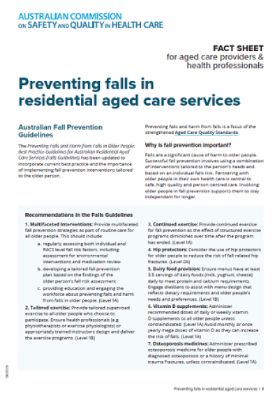
Preventing falls in residential aged care services - Fact sheet
This fact sheet supports the Falls Guidelines for Australian Residential Aged Care Services. It includes recommendations from the falls guidelines about multifaceted interventions, exercise, hip protectors, dairy food provision, vitamin D supplements, and osteoporosis medicines.
This resource may refer to information that will be updated from 1 November 2025 to align with the new Aged Care Act and Quality Standards.
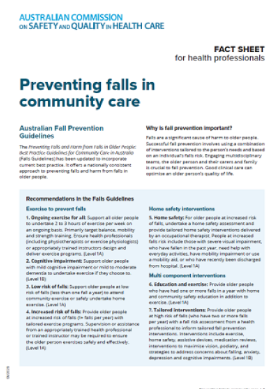
Preventing falls in community care - Fact sheet
This fact sheet supports the Falls Guidelines for Community Care. It includes recommendations from the falls guidelines including exercise to prevent falls, home safety interventions, multi component interventions, and single interventions for specific risk factors.
This resource may refer to information that will be updated from 1 November 2025 to align with the new Aged Care Act and Quality Standards.
Falls Guidelines for Australian Residential Aged Care Services
The Preventing Falls and Harm from Falls in Older People: Best Practice Guidelines for Australian Residential Aged Care Services has been developed for use by health professionals and the aged care workforce.
This resource may refer to information that will be updated from 1 November 2025 to align with the new Aged Care Act and Quality Standards.
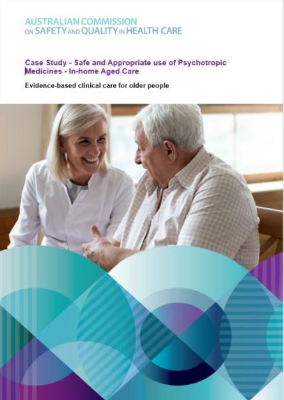
Case study - Safe and Appropriate use of Psychotropic Medicines - In-home Aged Care
This resource is a fictional scenario that follows an older person’s care pathway with an in-home aged care provider. The resource focuses on the systems and processes to support high-quality care of older people living with dementia. It includes 4 key priority areas: person-centred care, medication management, managing changed behaviours and transitions of care.
This resource may refer to information that will be updated from 1 November 2025 to align with the new Aged Care Act and Quality Standards.
Safe and appropriate use of psychotropic medicines for aged care - Fact sheet
This fact sheet is informed by the Psychotropic Medicines in Cognitive Disability or Impairment Clinical Care Standard (CCS), developed by the Australian Commission on Safety and Quality in Health Care. The CCS describes the safe and appropriate use of psychotropic medicines for people with cognitive disability or impairment, in a way that upholds their rights, dignity, health and quality of life.
This resource may refer to information that will be updated from 1 November 2025 to align with the new Aged Care Act and Quality Standards.
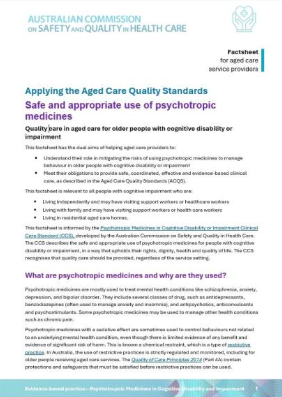
National Model Clinical Governance Framework
This framework provides a consistent national approach to clinical governance in healthcare, focusing on governance structures, leadership, culture, safety and quality improvement systems, clinical performance, care environment, and consumer partnerships. It supports healthcare organisations in developing systems to ensure accountability, safety, quality of care, and continuous improvement, following the NSQHS Standards.
This resource may refer to information that will be updated from 1 November 2025 to align with the new Aged Care Act and Quality Standards.
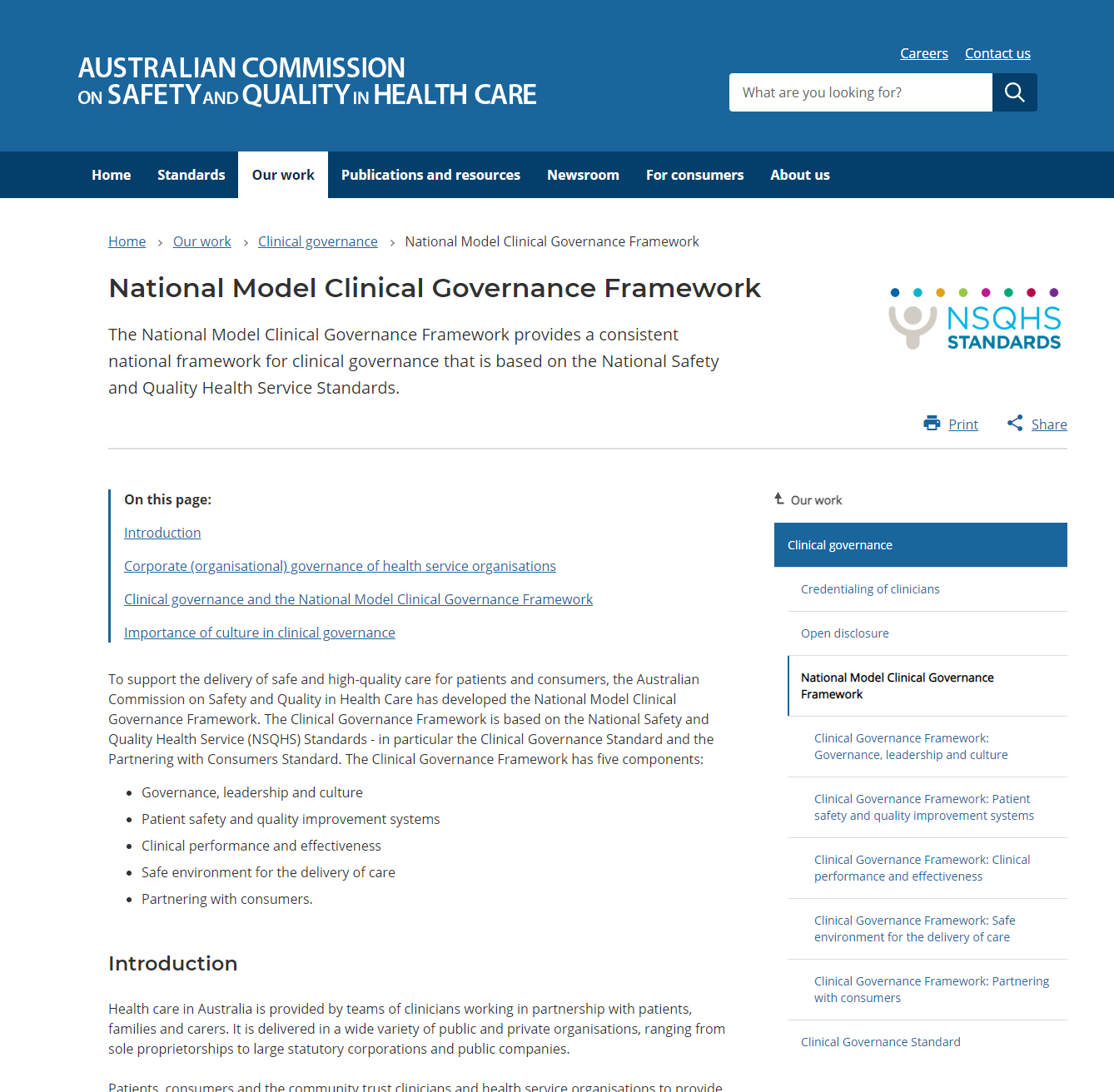
Fact sheet - Improving antimicrobial prescribing through selective reporting of antimicrobials
This fact sheet provides guidance on improving antimicrobial prescribing through selective reporting of antimicrobials for health service organisations and primary care providers. It includes information on diagnostic stewardship, definitions and the importance of selective reporting and other relevant information to support organisations and providers.
This resource may refer to information that will be updated from 1 November 2025 to align with the new Aged Care Act and Quality Standards.
Incontinence associated dermatitis and pressure injury
This resource provides guidance on managing incontinence-associated dermatitis (IAD) and pressure injuries (PI) in aged care. It highlights the differences between IAD and PI, emphasises the need for timely assessment and monitoring, and outlines strategies for prevention, including proper skin care, repositioning, and using appropriate continence products to prevent skin damage.
This resource may refer to information that will be updated from 1 November 2025 to align with the new Aged Care Act and Quality Standards.
Infection prevention & control resources
This resource provides guidance on infection prevention and control for aged care providers, outlining responsibilities to make sure safety and minimise infection risks. It covers the development of infection control programs, training requirements, governance, and compliance with national standards, supporting the delivery of safe, high-quality care in residential aged care settings.
This resource may refer to information that will be updated from 1 July 2025 to align with the new Aged Care Act and Quality Standards.
Preventing falls at home
This resource provides information on preventing falls at home for older people. It explains common causes of falls, such as poor lighting and slippery surfaces, and offers practical solutions like home modifications, exercise, and footwear adjustments. The document emphasises maintaining safety in and around the home to reduce the risk of falls.
This resource was developed by a state/territory government or organisation and therefore its applicability and usefulness may be limited.
Implementing the Comprehensive Care Standard - Clinical assessment and diagnosis
This document provides guidance on implementing the clinical assessment and diagnosis element of the Comprehensive Care Standard (National Safety and Quality Health Service Standards). It helps clinicians identify a person’s conditions or needs through examination and investigation. The resource supports safe, patient-centred care, improving diagnostic accuracy and promoting teamwork in healthcare settings, including aged care.
This resource may refer to information that will be updated from 1 November 2025 to align with the new Aged Care Act and Quality Standards.
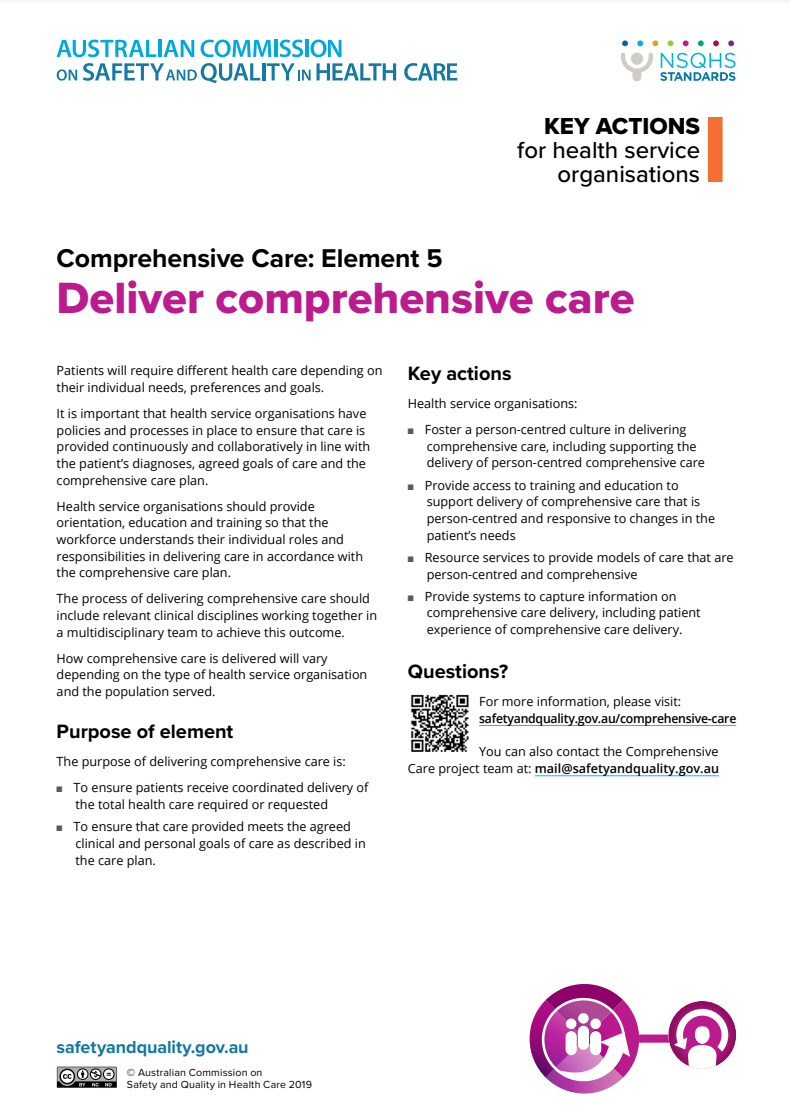
Comprehensive Care - Element 5: Deliver comprehensive care - Actions for health service organisations
This resource outlines the key actions for health service organisations to deliver comprehensive care. It ensures care is provided continuously and collaboratively, aligning with the patient’s diagnoses, goals, and care plan. It promotes a person-centred, multidisciplinary approach, with staff training to support comprehensive care delivery. Applicable to multiple settings, including aged care.
This resource may refer to information that will be updated from 1 November 2025 to align with the new Aged Care Act and Quality Standards.
Implementing the Comprehensive Care Standard - Review and improve comprehensive care delivery
This resource provides guidance for reviewing and improving comprehensive care delivery. It outlines how to assess if care meets clinical and personal needs, mitigates risks, and achieves intended outcomes. Relevant to aged care, it helps clinicians and managers implement continuous quality improvement in care delivery processes.
This resource may refer to information that will be updated from 1 November 2025 to align with the new Aged Care Act and Quality Standards.
NSQMHCMO Standards Guide for Service Providers
This guide helps service providers implement the National Safety and Quality Mental Health Standards for Community Managed Organisations. It covers governance, care models, and quality systems. While focused on mental health services, elements like governance and quality may be relevant to aged care. This resource may refer to information that will be updated from 1 November 2025 to align with the new Aged Care Act and Quality Standards.
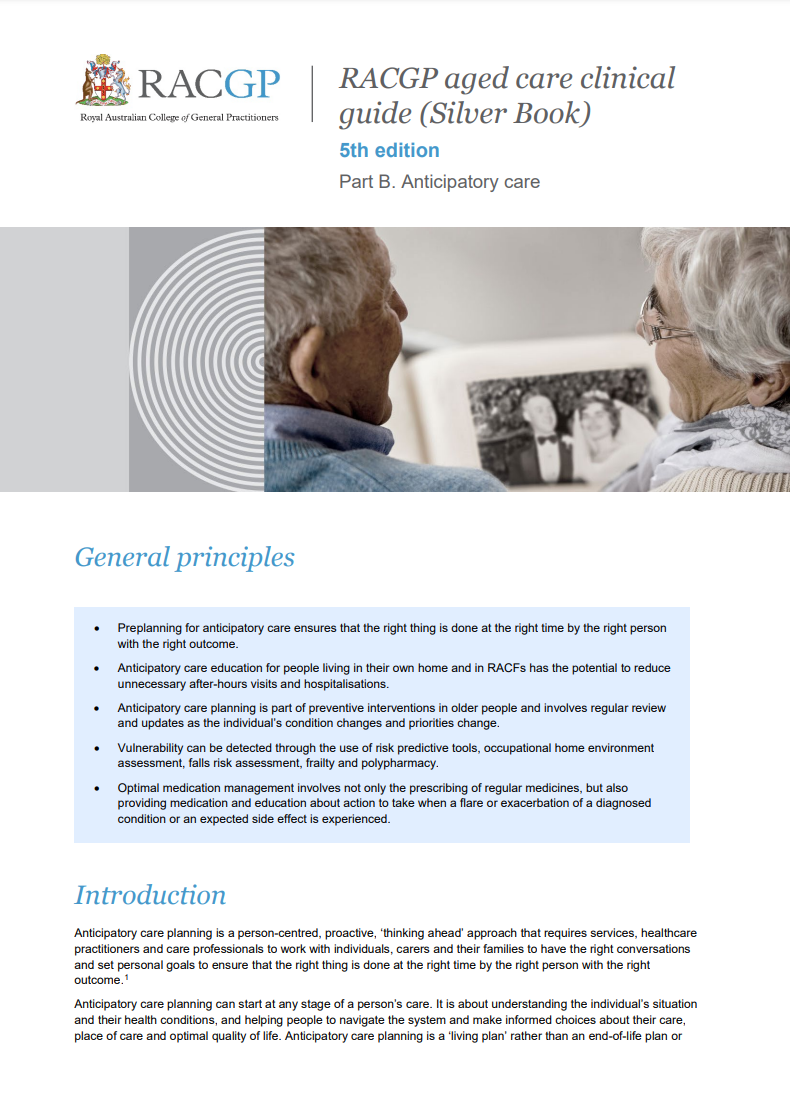
RACGP aged care clinical guide (Silver Book) - Part B - Anticipatory care
This guide outlines anticipatory care planning for older adults, focusing on proactive and person-centred approaches. It details triggers for care planning, identifying vulnerability, medication management, and the use of 'as needed' (PRN) medicines for various conditions like allergic reactions, asthma, diabetes, falls, and palliative care. It includes specific recommendations for developing individualised care plans and appropriate interventions for maintaining health and quality of life.
Aboriginal and Torres Strait Islander mental health program
This resource provides information on a mental health program for Aboriginal and Torres Strait Islander people. It includes funding for culturally appropriate mental health services, offering psychological therapies, complex care, and clinical coordination. The program integrates with other services such as drug and alcohol support and suicide prevention initiatives.
This resource may refer to information that will be updated from 1 July 2025 to align with the new Aged Care Act and Quality Standards.
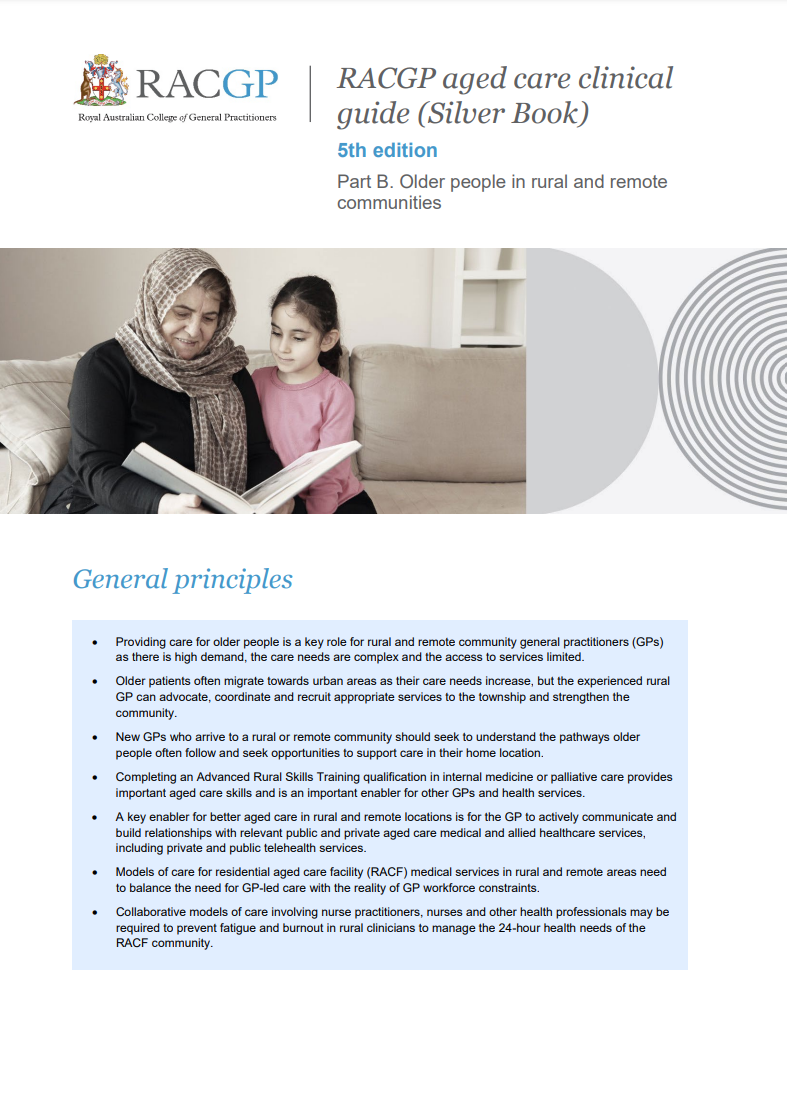
RACGP aged care clinical guide (Silver Book) - Part B - Older people in rural and remote communities
This guide discusses providing aged care in rural and remote communities, focusing on the unique needs of older residents, the role of GPs in care coordination, and overcoming challenges like limited services and workforce shortages. It covers building telehealth connections, establishing collaborative care models, and offers a checklist for newly arrived GPs to support quality care for older adults.
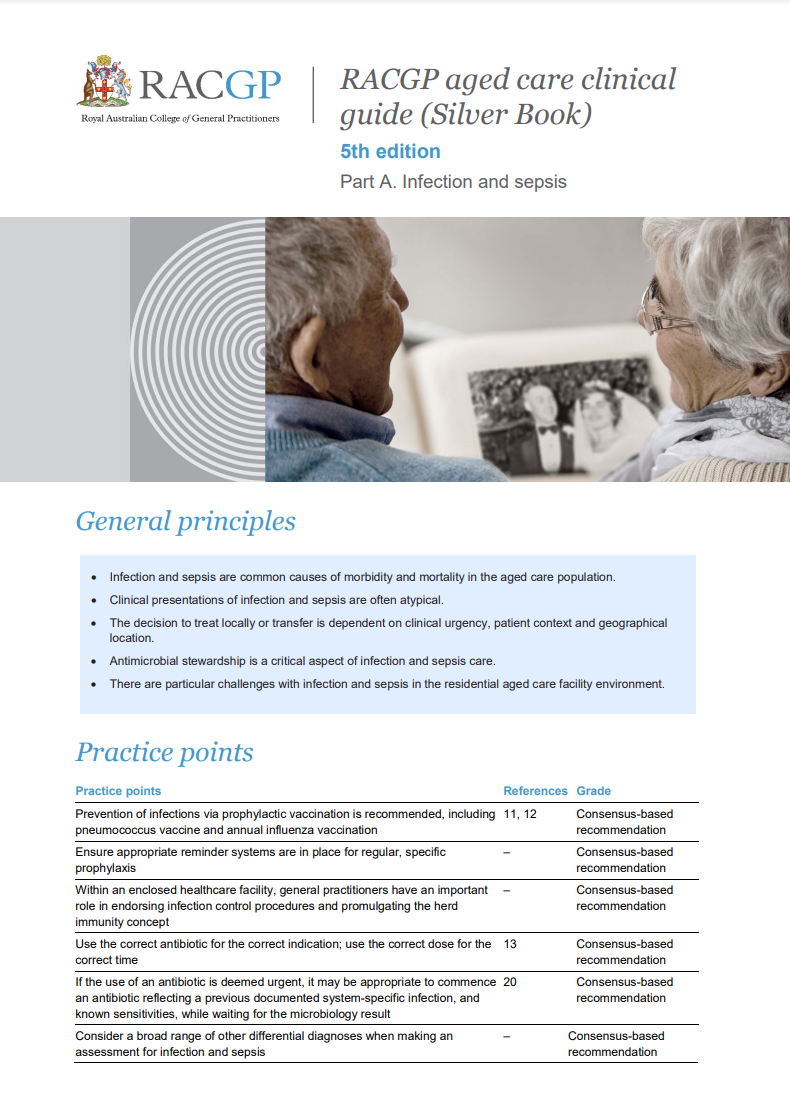
RACGP aged care clinical guide (Silver Book) - Part A - Infection and sepsis
This guide provides information on preventing and managing infections and sepsis in aged care settings. It includes recommendations on vaccination, antibiotic stewardship, recognising symptoms, and managing conditions such as respiratory, urinary tract, skin, and gastrointestinal infections. It also covers risk assessment, treatment considerations, and the role of general practitioners in infection control.
Aseptic technique
This resource provides information on aseptic techniques to support service provides adapt practices to protect patients from healthcare-associated infections and healthcare workers from contact with blood, body fluid and body tissue. It provides guides for implementation, principles of aseptic technique and safe use of chlorhexidine.
This resource may refer to information that will be updated from 1 July 2025 to align with the new Aged Care Act and Quality Standards.
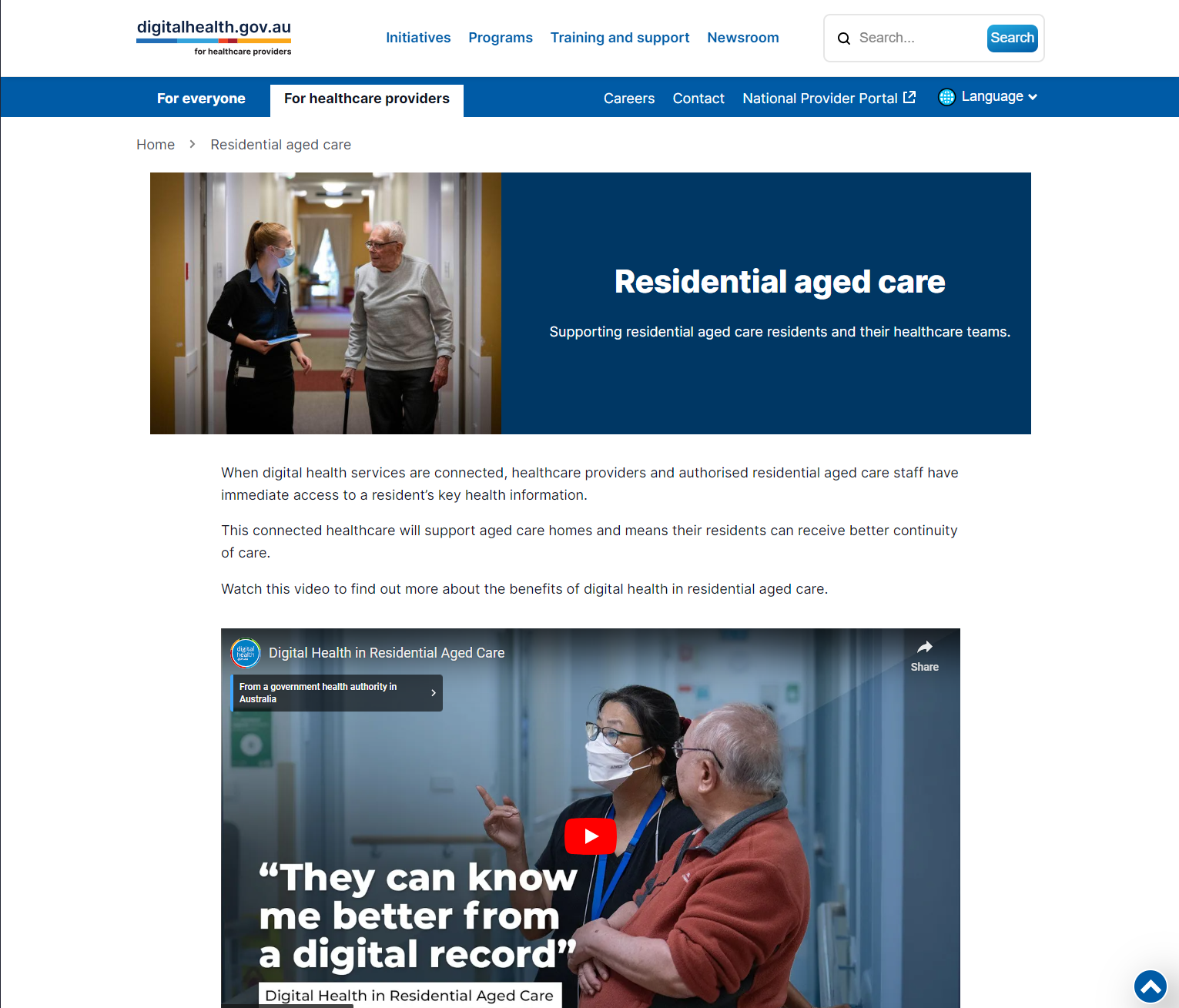
Residential aged care - Supporting residential aged care residents and their healthcare teams
This resource provides information on digital health tools available for residential aged care providers. It covers how these tools, including My Health Record, support care coordination, improve health outcomes, and enable secure information sharing between healthcare providers to enhance the quality of aged care services.