The Quality Standards Resource Centre helps extend understanding of the strengthened Aged Care Quality Standards, which took effect from 1 November 2025. You can search for resources by using keywords, or filtering by standard, outcome and audience. Before using the Resource Centre, please read the terms of use.
Global strategy on infection prevention and control
This resource provides a global framework for infection prevention and control (IPC) in healthcare settings, aiming to reduce healthcare-associated infections and antimicrobial resistance. It offers strategic directions for achieving measurable improvements by 2030, supporting patient safety, healthcare worker protection, and sustainable health outcomes worldwide.
This resource was developed internationally and therefore its applicability and usefulness may be limited.
Infection prevention and control systems
This resource provides a detailed overview of infection prevention and control systems in healthcare settings. It highlights the use of standard and transmission-based precautions, hand hygiene, aseptic techniques, and workforce immunisation. The document outlines strategies to reduce infection risks and maintain clean, safe environments, ensuring comprehensive infection control management.
Infection Prevention and Control Advisory Committee
This resource outlines the role of the Infection Prevention and Control (IPC) Advisory Committee. The committee provides strategic advice to support national initiatives related to infection prevention and control, focusing on compliance with safety standards, infection surveillance, and improving engagement with clinicians and consumers to enhance IPC practices.
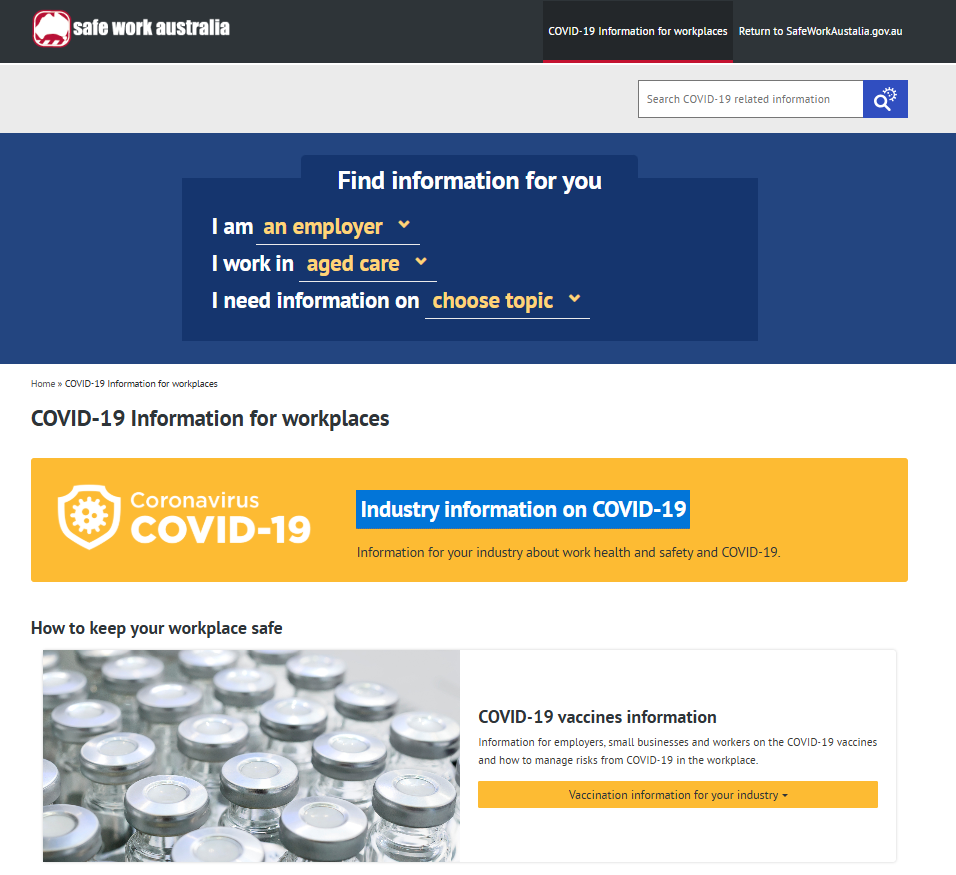
COVID-19 Information for workplaces - General
This resource provides guidance on minimising the spread of COVID-19, including aged care settings. It outlines vaccine information, risk assessments, physical distancing, hygiene and rapid antigen testing in the workplace. It also contains key resources such as signage, posters and translated information.
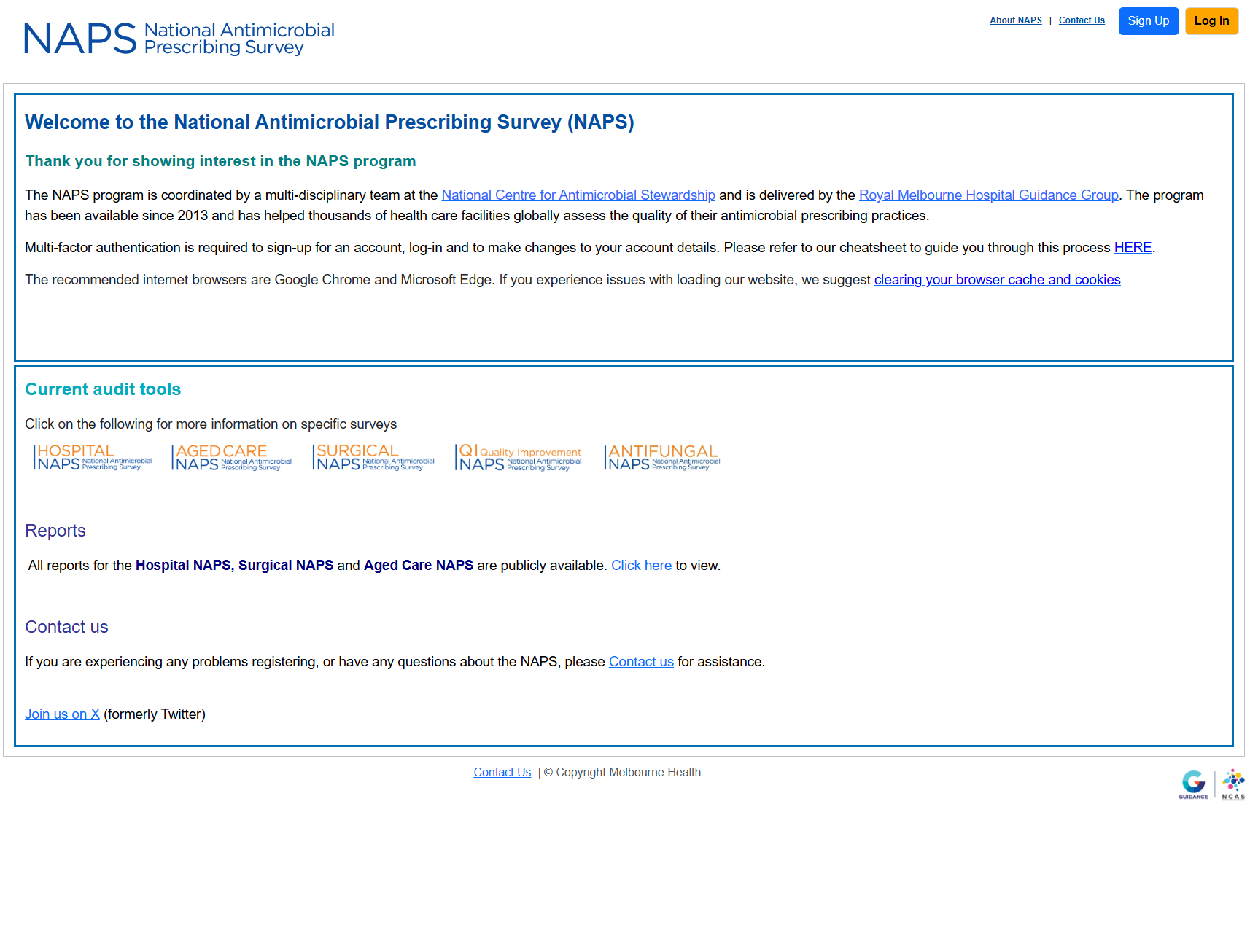
National Antimicrobial Prescribing Survey (NAPS)
This survey resource provides a framework for assessing antimicrobial prescribing practices in aged care and other health settings. It supports health facilities in evaluating the appropriateness of antimicrobial use through audit tools and data collection, contributing to antimicrobial stewardship and improved patient care quality.
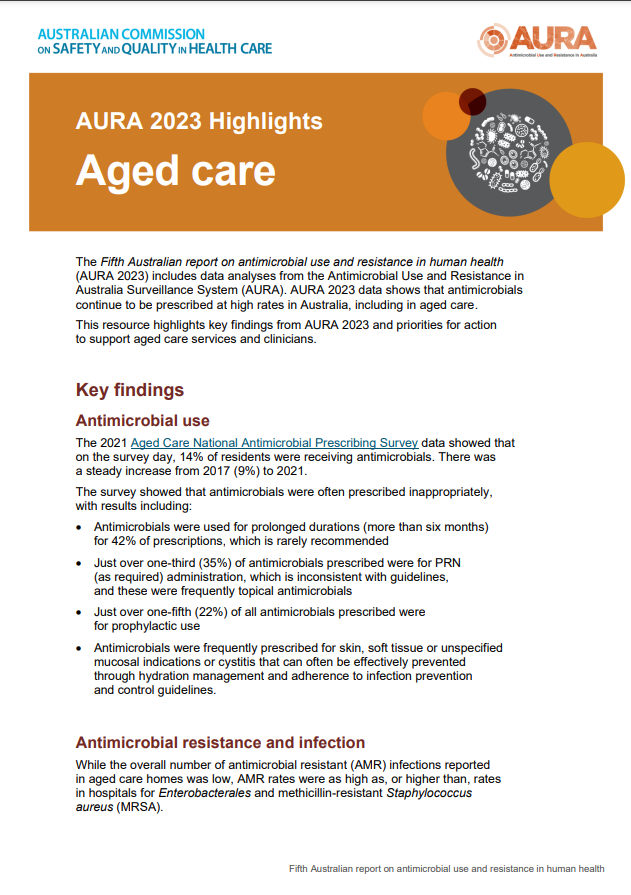
AURA 2023 Highlights for Aged care
This resource summarises key findings from the AURA 2023 report, focusing on antimicrobial use and resistance in aged care. It provides priorities for action to reduce inappropriate prescriptions, promote antimicrobial stewardship, and improve infection prevention and control in aged care settings, aligning with quality standards to enhance care for older people.
This resource may refer to information that will be updated from 1 November 2025 to align with the new Aged Care Act and Quality Standards.
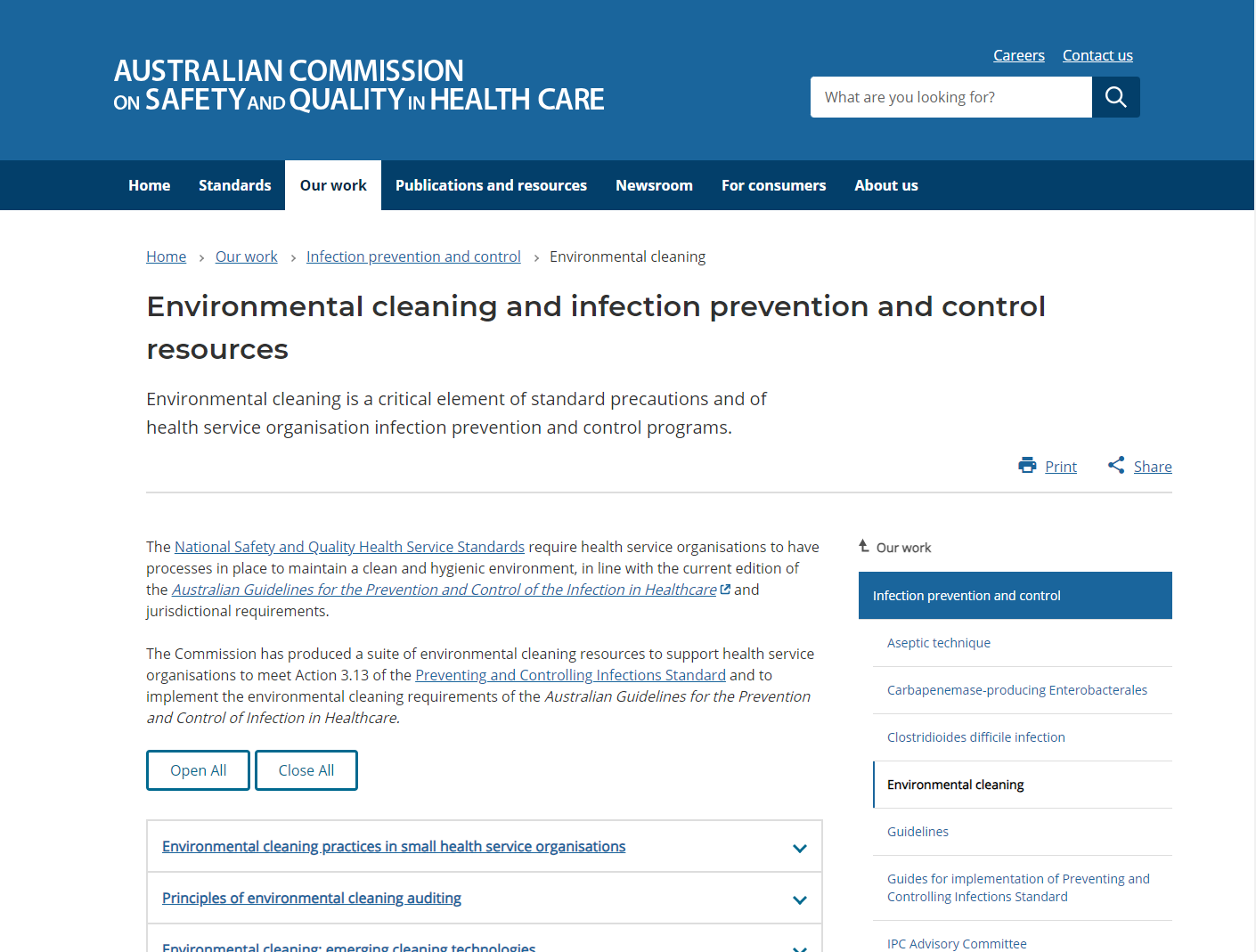
Environmental cleaning and infection prevention and control resources
This resource offers a range of environmental cleaning and infection prevention tools for healthcare settings, including guidelines for small organisations, cleaning audits, product selection, and emerging cleaning technologies. It supports aged care providers in maintaining clean, hygienic environments, helping them comply with infection control standards and ensure safety.
This resource may refer to information that will be updated from 1 November 2025 to align with the new Aged Care Act and Quality Standards.
Workforce responsibilities
This resource outlines the workforce responsibilities of aged care providers, including the legal obligation to provide skilled staff and support their workforce. It details mandatory requirements such as 24/7 registered nurse coverage and care minutes for residential aged care services.
This resource may refer to information that will be updated from 1 November 2025 to align with the new Aged Care Act and Quality Standards.
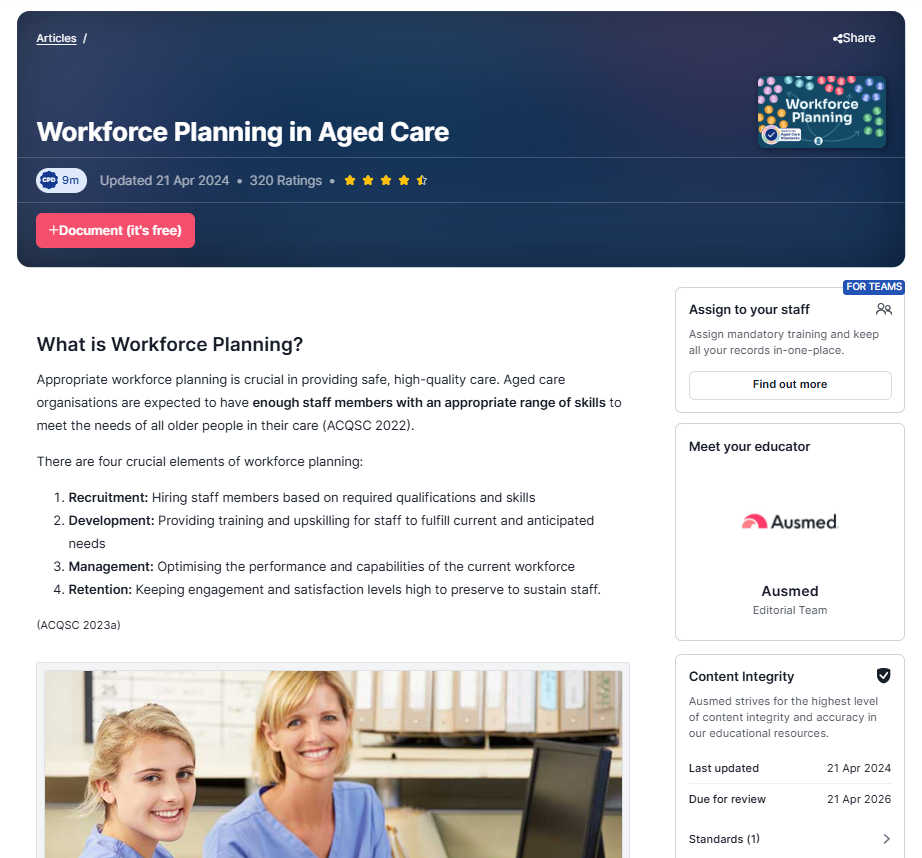
Workforce planning in aged care
This resource provides guidance about workforce planning in aged care. It includes information about workforce composition, current requirements and why it's important. It highlights the importance of the care experience, including continuity of care. This resource may refer to information that will be updated from 1 November 2025 to align with the new Aged Care Act and Quality Standards.
Communicable Diseases Network Australia (CDNA)
This resource provides an overview of the Communicable Diseases Network Australia (CDNA), which coordinates national surveillance and prevention of communicable diseases. It outlines CDNA’s role in managing outbreaks, developing policy, and strengthening disease control. The document supports collaboration with national and international partners to prevent and manage disease outbreaks effectively.
This resource may refer to information that will be updated from 1 November 2025 to align with the new Aged Care Act and Quality Standards.
COVID-19 vaccine advice and recommendations for 2024
This resource provides the latest COVID-19 vaccine advice for 2024. It covers primary vaccination doses, booster eligibility, general facts about vaccines and the latest data for case numbers and vaccinations. It also includes vaccine information for specific groups of people including Aboriginal and Torres Strait Islander people, people in aged care and people with disability.
This resource may refer to information that will be updated from 1 November 2025 to align with the new Aged Care Act and Quality Standards.
Governing for Reform in Aged Care - Practical tools
This resource provides practical tools for aged care governing bodies and executives to support governance processes. It includes templates for audit planning, risk management, performance reporting, and compliance monitoring, helping providers ensure effective oversight and decision-making aligned with the Aged Care Quality Standards.
This resource may refer to information that will be updated from 1 November 2025 to align with the new Aged Care Act and Quality Standards.
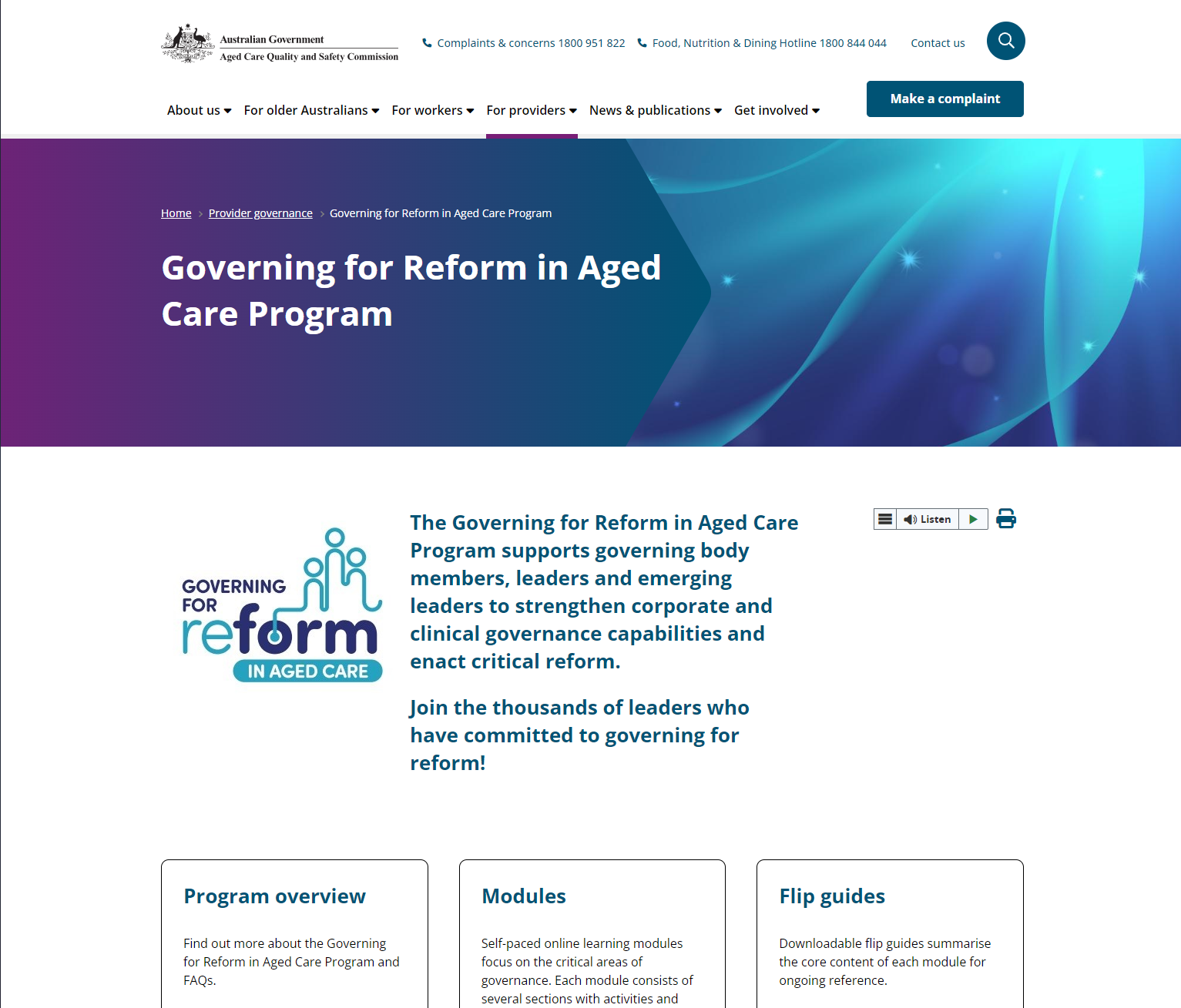
Staphylococcus aureus bloodstream infection (SABSI) prevention resources
This resource offers guidelines for preventing Staphylococcus aureus bloodstream infections (SABSI) in healthcare settings. It covers infection control strategies, including hand hygiene, device management, and surgical site care, helping organisations reduce infection risks and comply with national SABSI prevention standards.
This resource may refer to information that will be updated from 1 November 2025 to align with the new Aged Care Act and Quality Standards.
IPC resource collection
This is an Infection and Prevention Control (IPC) resource tool. This tool can be used by both residential and home care providers to access key pieces of information and reference materials on infection prevention and control. The tool provides access to specific information by selecting a relevant topic and sub-topic.
This resource may refer to information that will be updated from 1 November 2025 to align with the new Aged Care Act and Quality Standards.
National Aboriginal and Torres Strait Islander Health Workforce Strategic Framework and Implementation Plan 2021–2031
This resource is separated into 2 parts: the vision, objectives and target; and the strategic framework and implementation plan. This plan has 6 overarching strategic directions. These directions support the ongoing development of the size, capability and capacity of the Aboriginal and Torres Strait Islander health workforce.
This resource may refer to information that will be updated from 1 November 2025 to align with the new Aged Care Act and Quality Standards.

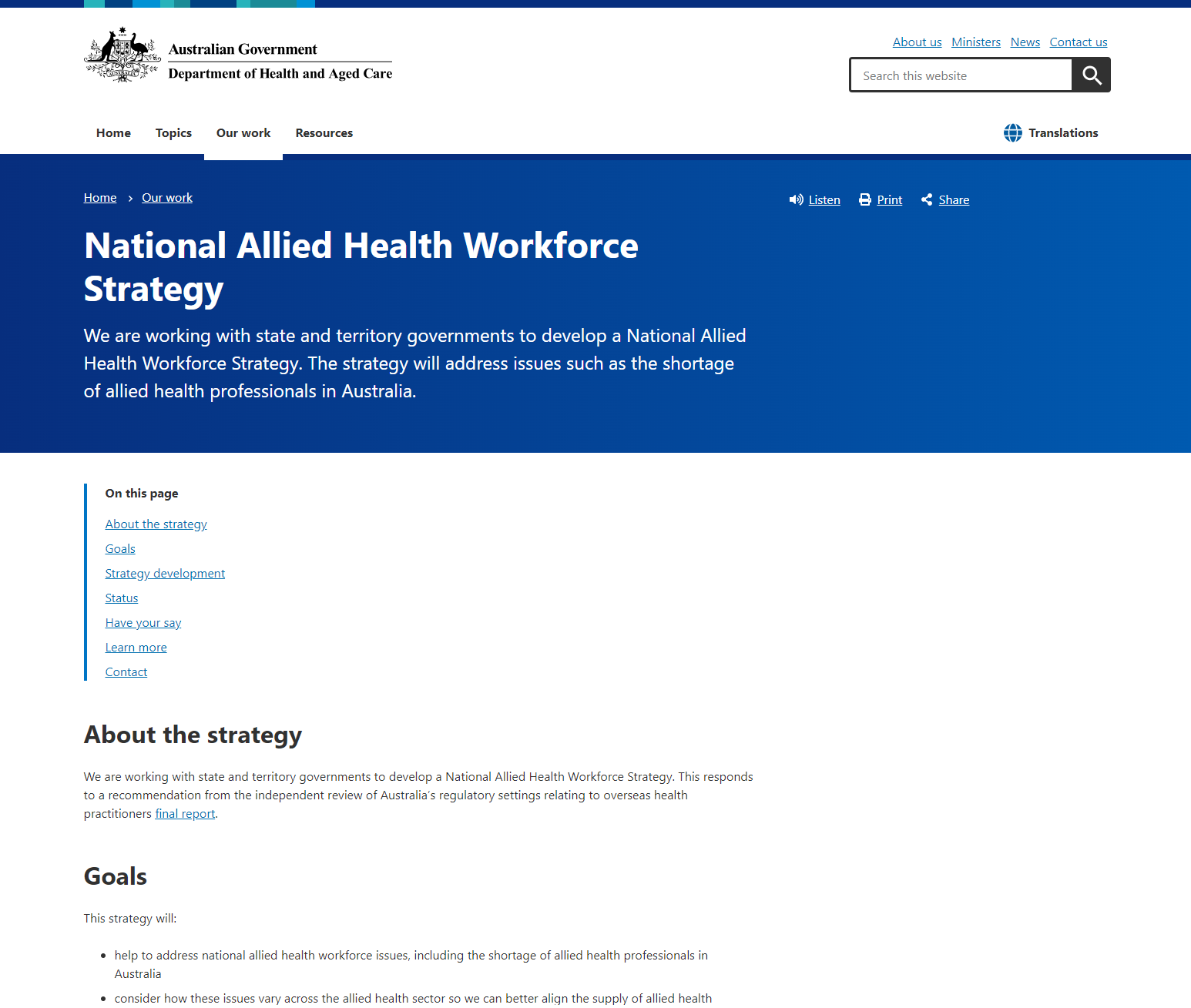
National Allied Health Workforce Strategy
The National Allied Health Workforce Strategy outlines a plan to address workforce challenges, including the shortage of allied health professionals in Australia. It focuses on aligning the supply of professionals with current and future needs, ensuring workforce safety and quality, and enhancing sector-specific data collection. The strategy aims to support workforce planning and development.
This resource may refer to information that will be updated from 1 November 2025 to align with the new Aged Care Act and Quality Standards.
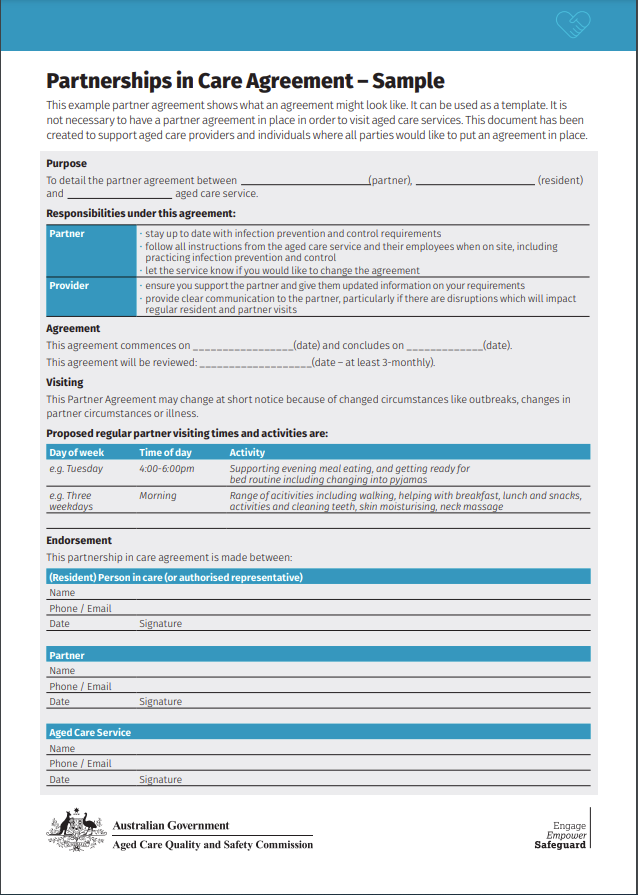
Partnerships in Care Agreement – Sample
This resource is a sample of what a partner agreement might look like. It can be used as a template. This document has been created to support aged care providers and individuals where all parties would like to put an agreement in place.
This resource may refer to information that will be updated from 1 November 2025 to align with the new Aged Care Act and Quality Standards.
 Partnerships in Care Agreement – Sample (PDF 108.45 KB)
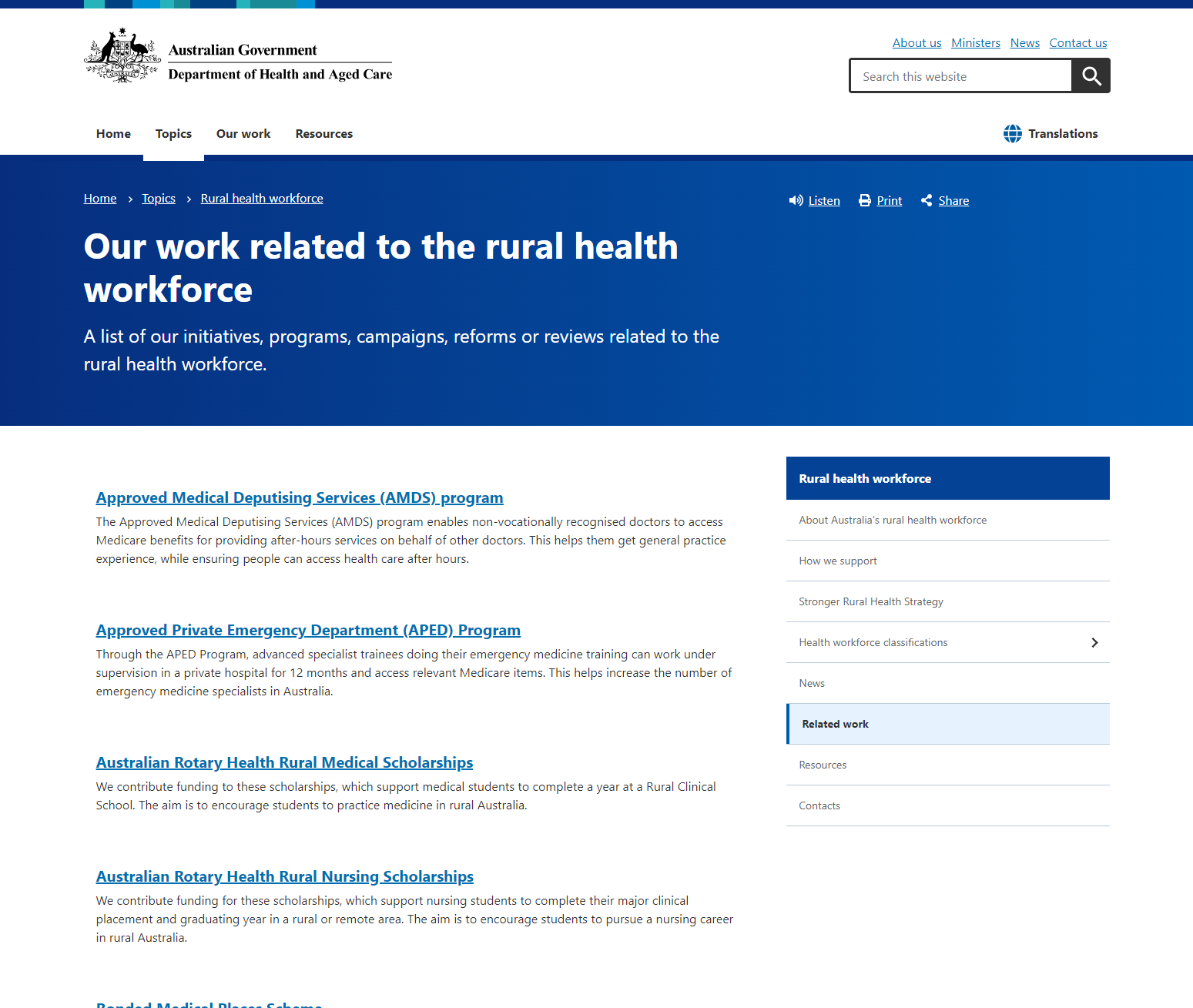
Our work related to the rural health workforce
This resource provides an overview of various initiatives and programs supporting the rural health workforce in Australia. It includes training programs, scholarships, and recruitment schemes aimed at addressing workforce shortages in rural and remote areas. The resource outlines efforts to improve healthcare access and quality through targeted support for medical and nursing professionals. This resource may refer to information that will be updated from 1 November 2025 to align with the new Aged Care Act and Quality Standards.
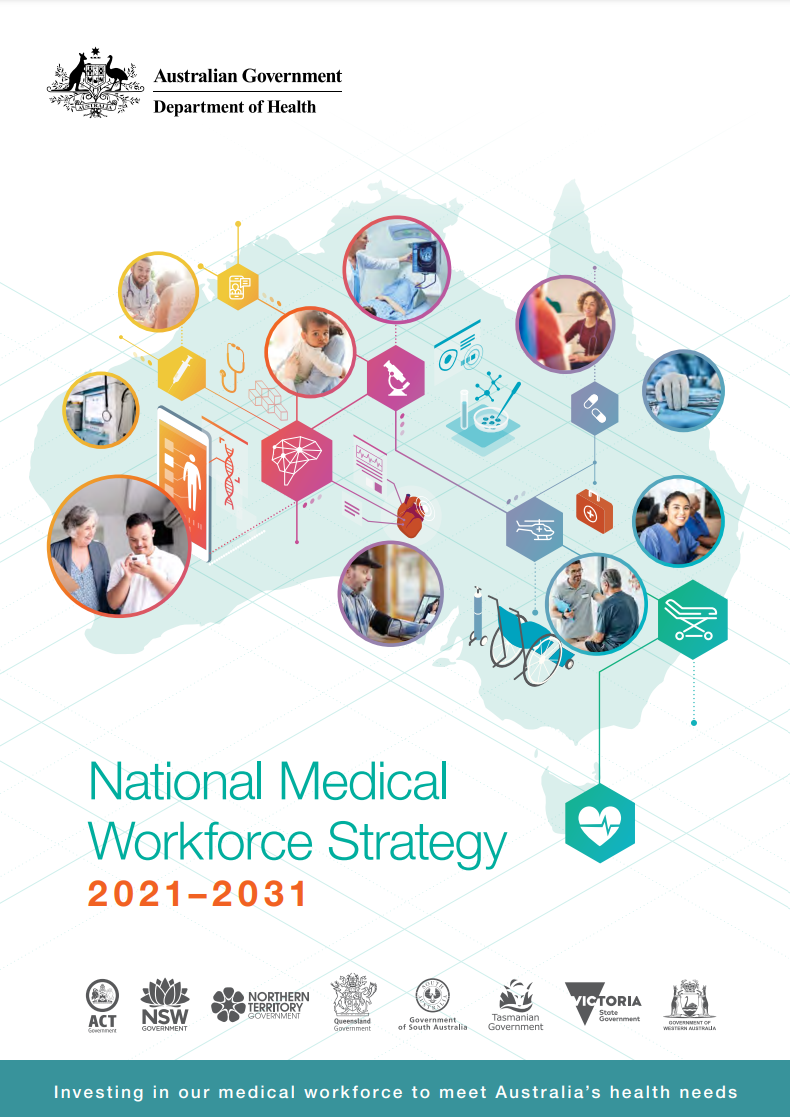
National Medical Workforce Strategy 2021–2031
This resource outlines the National Medical Workforce Strategy 2021–2031, developed to guide long-term medical planning across Australia. It provides a structured approach to creating a sustainable, well-trained medical workforce. The strategy includes 25 actions under 5 priority areas: collaboration, rebalancing supply, reforming training, building generalist capabilities, and ensuring workforce flexibility.
This resource may refer to information that will be updated from 1 November 2025 to align with the new Aged Care Act and Quality Standards.
National Notifiable Diseases Surveillance System (NNDSS)
This resource provides an overview of the National Notifiable Diseases Surveillance System (NNDSS), which tracks over 70 diseases that pose a risk to public health in Australia. It helps identify disease trends, supports outbreak responses, and informs public health policies. The system collects de-identified data from states and territories to ensure coordinated disease management.
This resource may refer to information that will be updated from 1 November 2025 to align with the new Aged Care Act and Quality Standards.