The Quality Standards Resource Centre helps extend understanding of the strengthened Aged Care Quality Standards, which took effect from 1 November 2025. You can search for resources by using keywords, or filtering by standard, outcome and audience. Before using the Resource Centre, please read the terms of use.
Medication safety in transitions of care: technical report
This resource outlines key actions to improve medication safety during transitions of care, focusing on reducing medication discrepancies and patient harm. It emphasises structured reconciliation, workforce training, patient engagement, and enhanced information systems.
This resource was developed internationally and therefore its applicability and usefulness may be limited.
Medication safety in polypharmacy: technical report
This resource provides guidance on safe medication management in polypharmacy, focusing on patient-centred approaches, team collaboration, and systematic reviews for people with long-term conditions. It includes tools and case studies to support health professionals.
This resource was developed internationally and therefore its applicability and usefulness may be limited.
Global strategy on infection prevention and control
This resource provides a global framework for infection prevention and control (IPC) in healthcare settings, aiming to reduce healthcare-associated infections and antimicrobial resistance. It offers strategic directions for achieving measurable improvements by 2030, supporting patient safety, healthcare worker protection, and sustainable health outcomes worldwide.
This resource was developed internationally and therefore its applicability and usefulness may be limited.
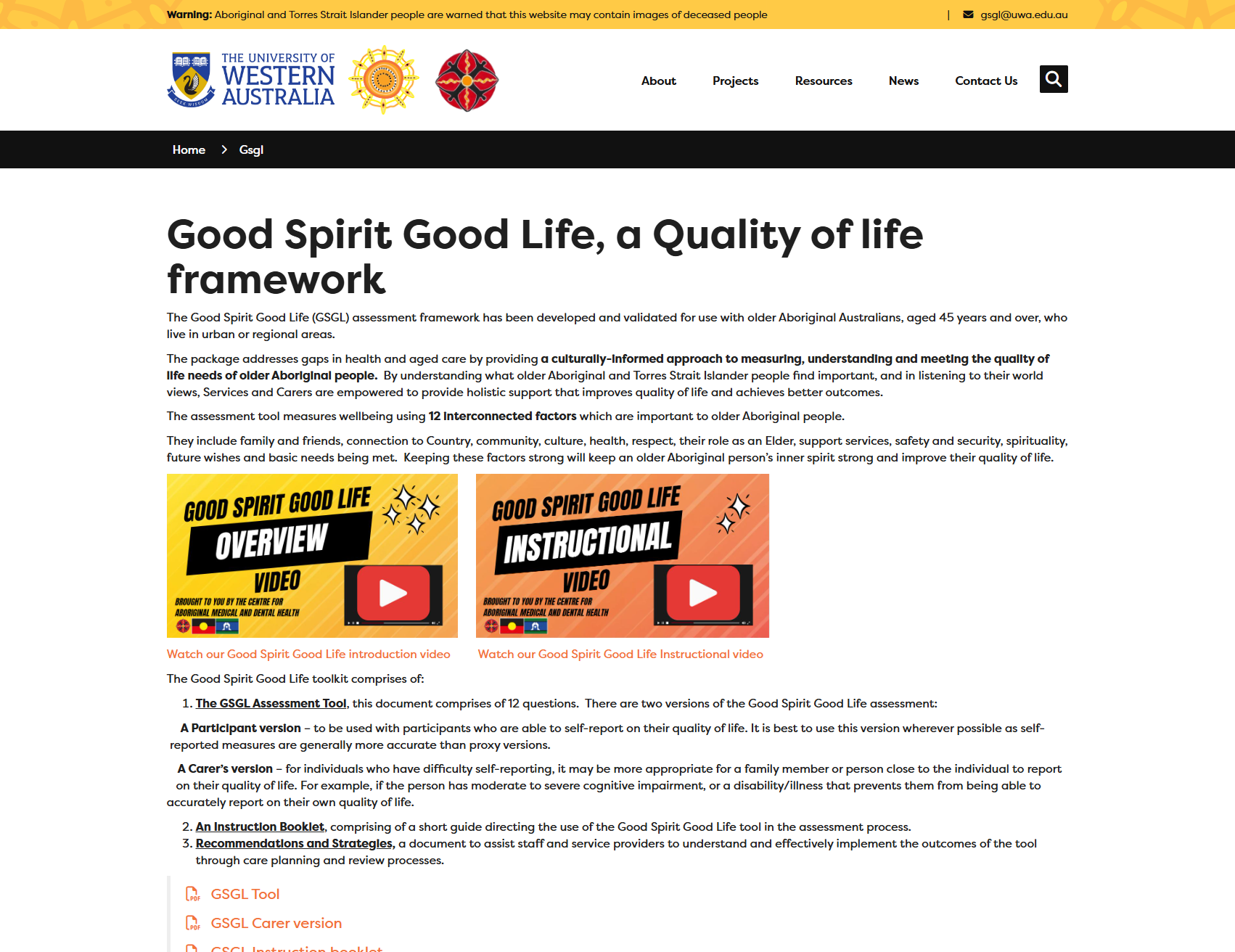
Good Spirit Good Life - a Quality of life framework
This resource describes the Good Spirit Good Life (GSGL) framework for assessing the quality of life of older Aboriginal people, focusing on culturally important factors such as connection to Country, family, and spirituality. It includes tools for both self-reporting and carer-assisted reporting.
This resource was developed by a state/territory government or organisation and therefore its applicability and usefulness may be limited.
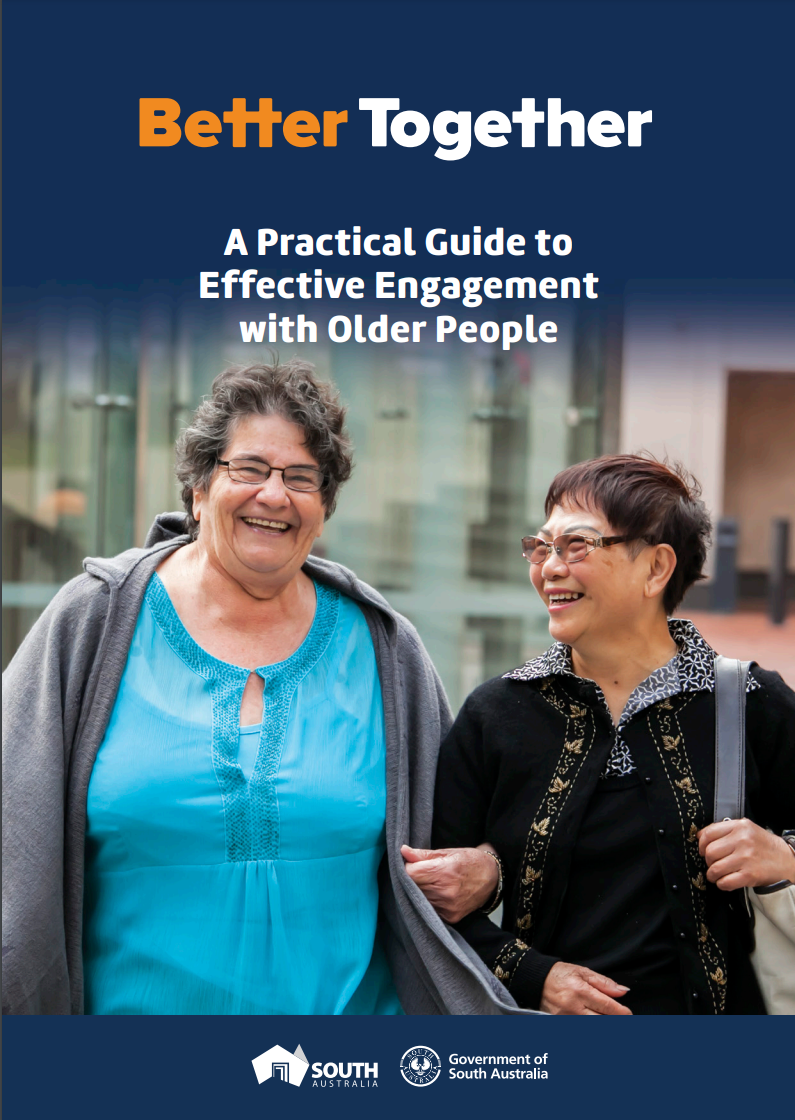
Better Together: A practical guide to effective engagement with older people
This resource offers practical guidance on effective engagement with older people, highlighting diverse communication methods, cultural sensitivity, and inclusive strategies to capture meaningful input. It supports collaborative relationships and respectful dialogue with older people in decision-making processes.
This resource was developed by a state/territory government or organisation and therefore its applicability and usefulness may be limited.
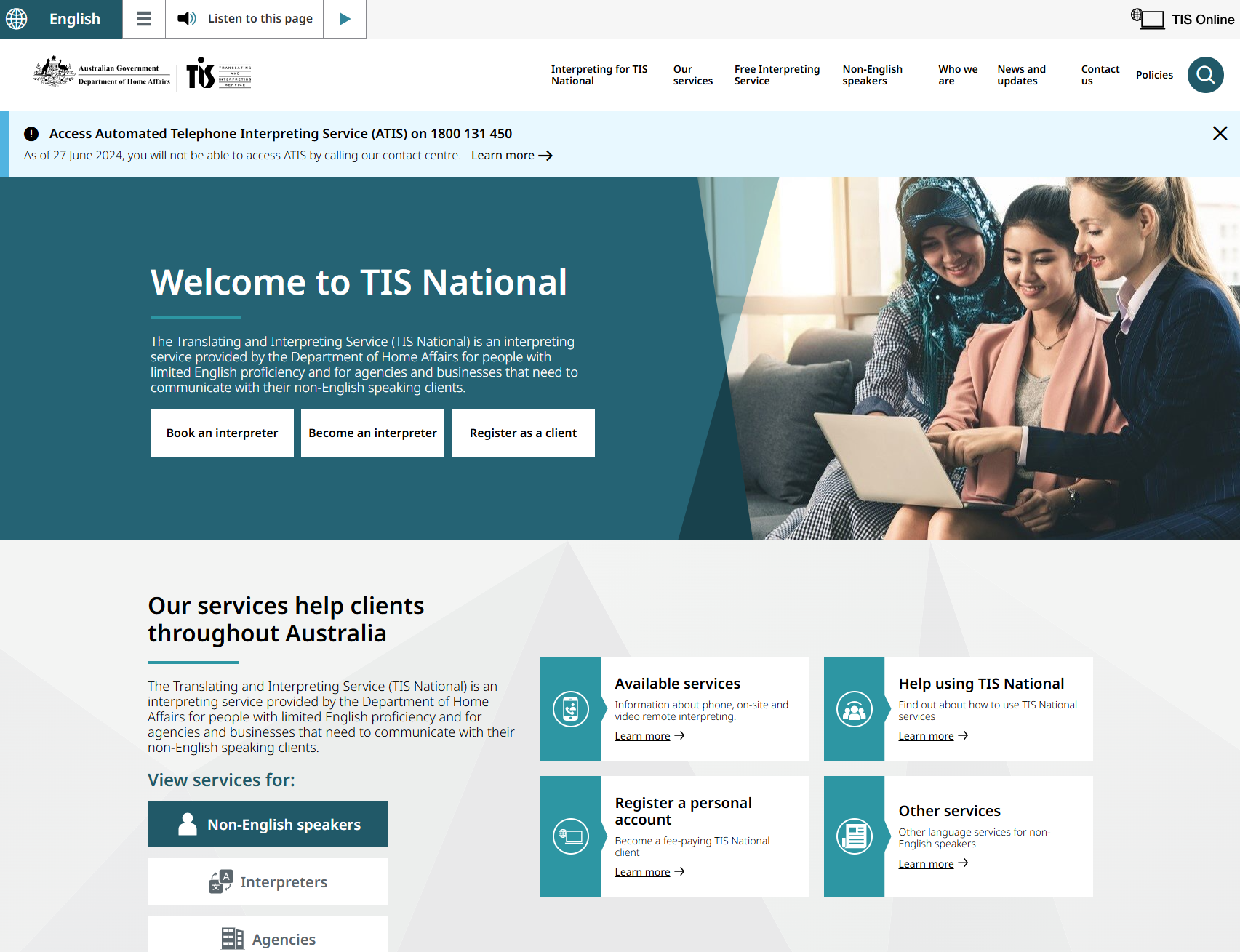
Translating and Interpreting Service (TIS National)
The Translating and Interpreting Service (TIS National) provides interpreting support for people with limited English proficiency and agencies requiring assistance to communicate with non-English-speaking clients. Services include telephone, on-site, and video interpreting, with options for both government and fee-paying clients across Australia.
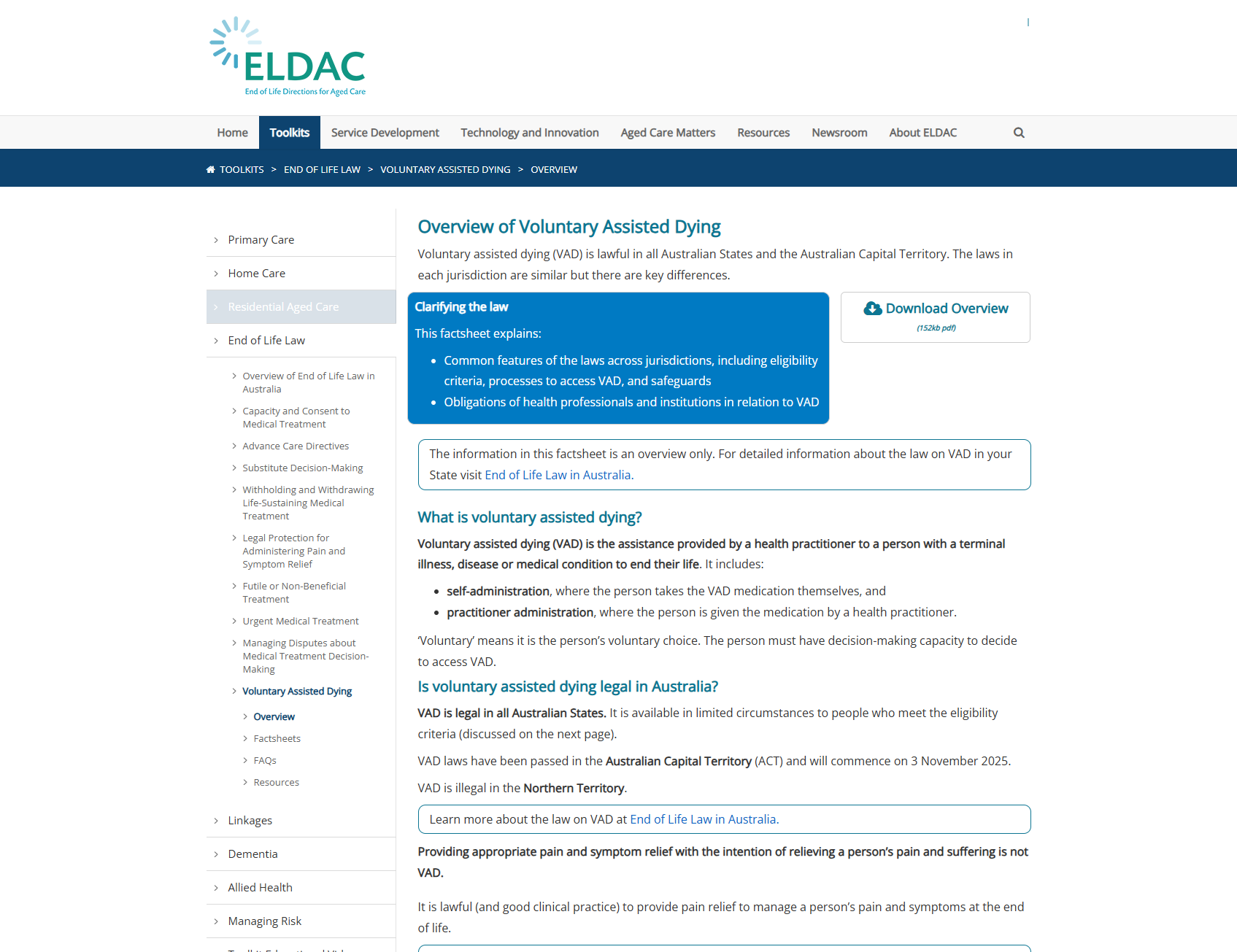
Overview of Voluntary Assisted Dying
This resource provides an overview of voluntary assisted dying (VAD) in Australia, detailing eligibility criteria, procedures, and legal requirements. It covers how VAD laws vary across jurisdictions, safeguards in place, and responsibilities for health professionals and institutions. Health professionals can conscientiously object but may still have legal responsibilities.
Conformant clinical software products
This resource provides a register of conformant clinical software products that meet national digital health requirements, enabling functions like My Health Record access, health summary uploads, and prescription management. Organisations using the register should verify entries’ currency and accuracy as updates depend on software developers.
Infection prevention and control systems
This resource provides a detailed overview of infection prevention and control systems in healthcare settings. It highlights the use of standard and transmission-based precautions, hand hygiene, aseptic techniques, and workforce immunisation. The document outlines strategies to reduce infection risks and maintain clean, safe environments, ensuring comprehensive infection control management.
Infection Prevention and Control Advisory Committee
This resource outlines the role of the Infection Prevention and Control (IPC) Advisory Committee. The committee provides strategic advice to support national initiatives related to infection prevention and control, focusing on compliance with safety standards, infection surveillance, and improving engagement with clinicians and consumers to enhance IPC practices.
Trauma-informed Care and Practice Organisational Toolkit
This toolkit provides guidance for organisations on implementing trauma-informed care practices, aiming to improve safety, trust, and empowerment in care settings. It outlines strategies to adapt policies, environments, and staff approaches to better support people with trauma histories in various care environments.
National Antimicrobial Prescribing Survey (NAPS)
This survey resource provides a framework for assessing antimicrobial prescribing practices in aged care and other health settings. It supports health facilities in evaluating the appropriateness of antimicrobial use through audit tools and data collection, contributing to antimicrobial stewardship and improved patient care quality.
Better use of medications in aged care
This discussion paper explores strategies to improve medication management in aged care, including reducing inappropriate prescriptions and promoting non-pharmacological interventions. It reviews current interventions' effectiveness, highlights the use of psychotropic medications, and identifies areas for improving practices through multifaceted and multidisciplinary approaches for better resident outcomes and healthcare quality.
This resource may refer to information that will be updated from 1 November 2025 to align with the new Aged Care Act and Quality Standards.

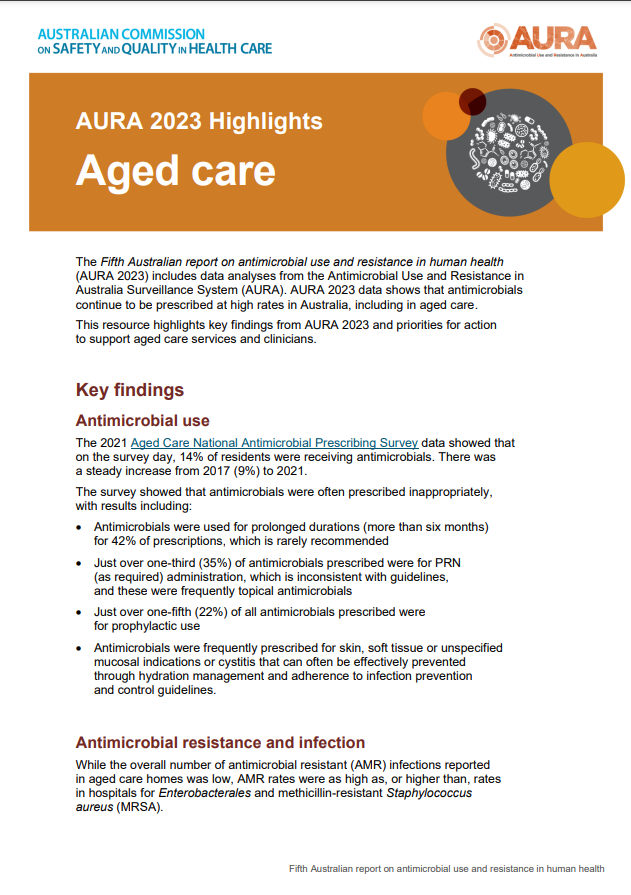
AURA 2023 Highlights for Aged care
This resource summarises key findings from the AURA 2023 report, focusing on antimicrobial use and resistance in aged care. It provides priorities for action to reduce inappropriate prescriptions, promote antimicrobial stewardship, and improve infection prevention and control in aged care settings, aligning with quality standards to enhance care for older people.
This resource may refer to information that will be updated from 1 November 2025 to align with the new Aged Care Act and Quality Standards.
ARIIA Knowledge and Implementation Hub - Resources
The ARIIA Resources Hub is an evidence-based guide that supports innovation across the aged care sector. It provides a comprehensive collection of tools, guidelines, and frameworks for aged care providers, focusing on technology adoption, clinical standards, and care improvement strategies. The hub offers resources to enhance service quality and support the digital transformation of aged care.
This resource may refer to information that will be updated from 1 November 2025 to align with the new Aged Care Act and Quality Standards.
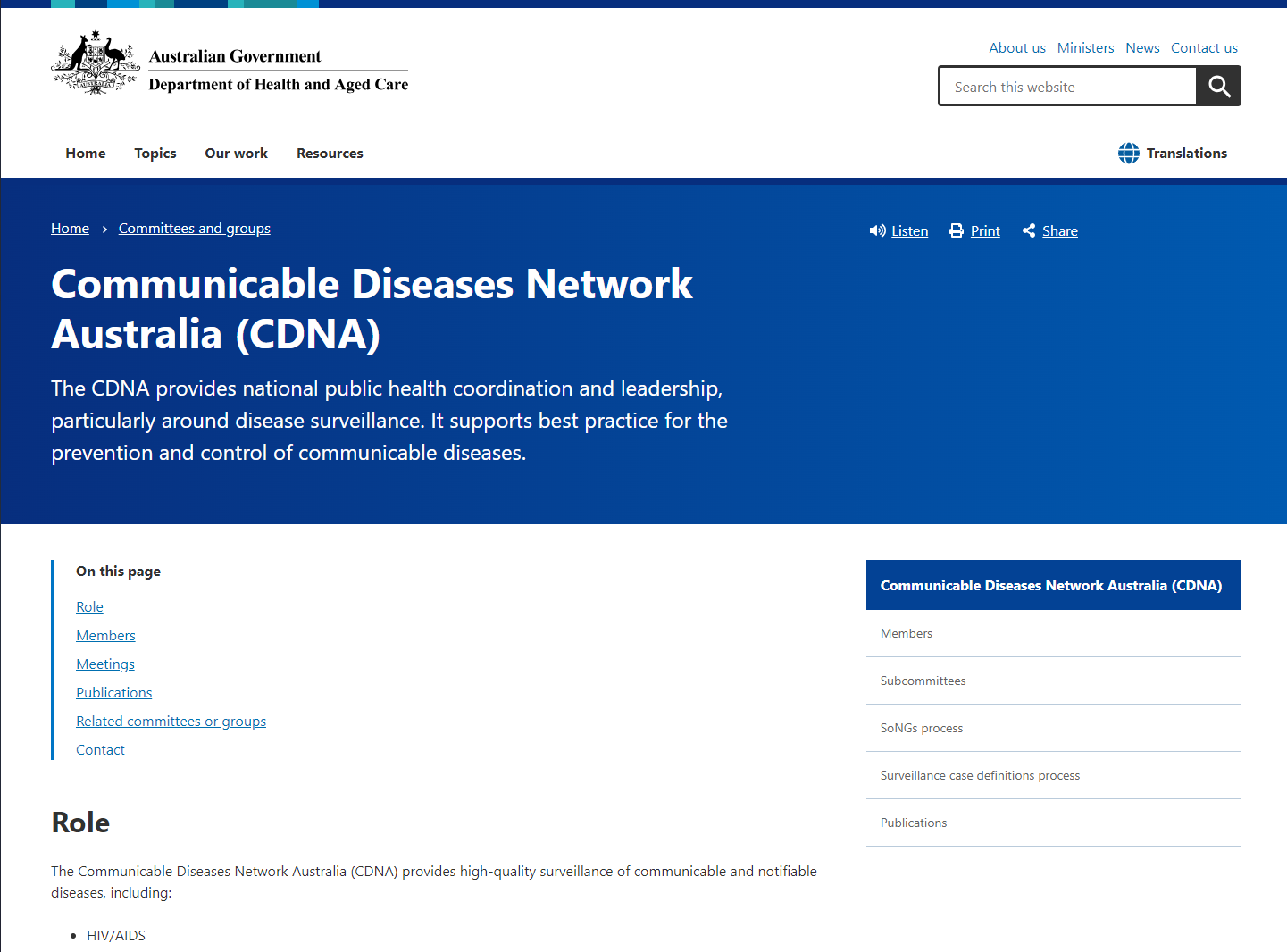
Communicable Diseases Network Australia (CDNA)
This resource provides an overview of the Communicable Diseases Network Australia (CDNA), which coordinates national surveillance and prevention of communicable diseases. It outlines CDNA’s role in managing outbreaks, developing policy, and strengthening disease control. The document supports collaboration with national and international partners to prevent and manage disease outbreaks effectively.
This resource may refer to information that will be updated from 1 November 2025 to align with the new Aged Care Act and Quality Standards.
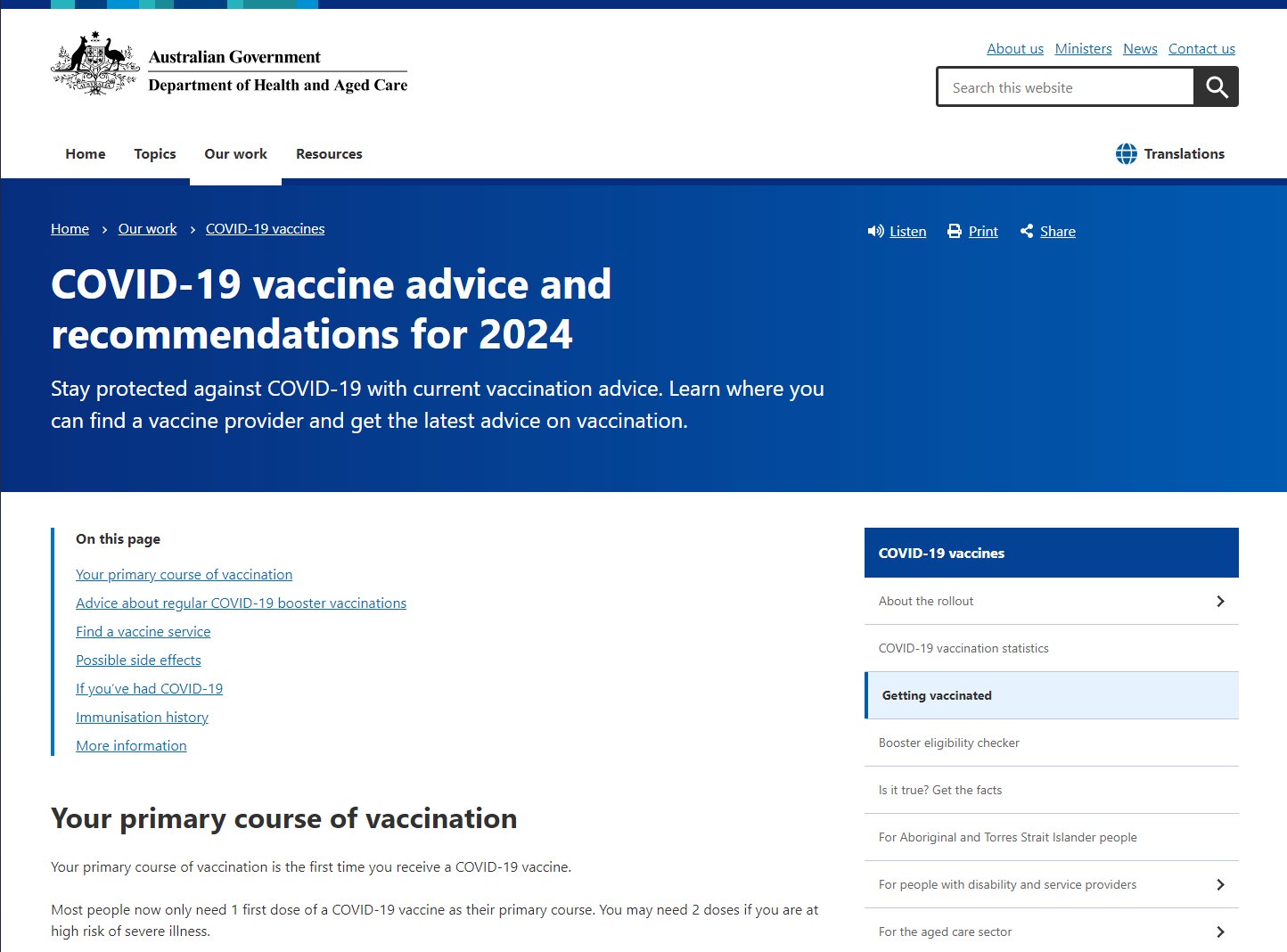
COVID-19 vaccine advice and recommendations for 2024
This resource provides the latest COVID-19 vaccine advice for 2024. It covers primary vaccination doses, booster eligibility, general facts about vaccines and the latest data for case numbers and vaccinations. It also includes vaccine information for specific groups of people including Aboriginal and Torres Strait Islander people, people in aged care and people with disability.
This resource may refer to information that will be updated from 1 November 2025 to align with the new Aged Care Act and Quality Standards.
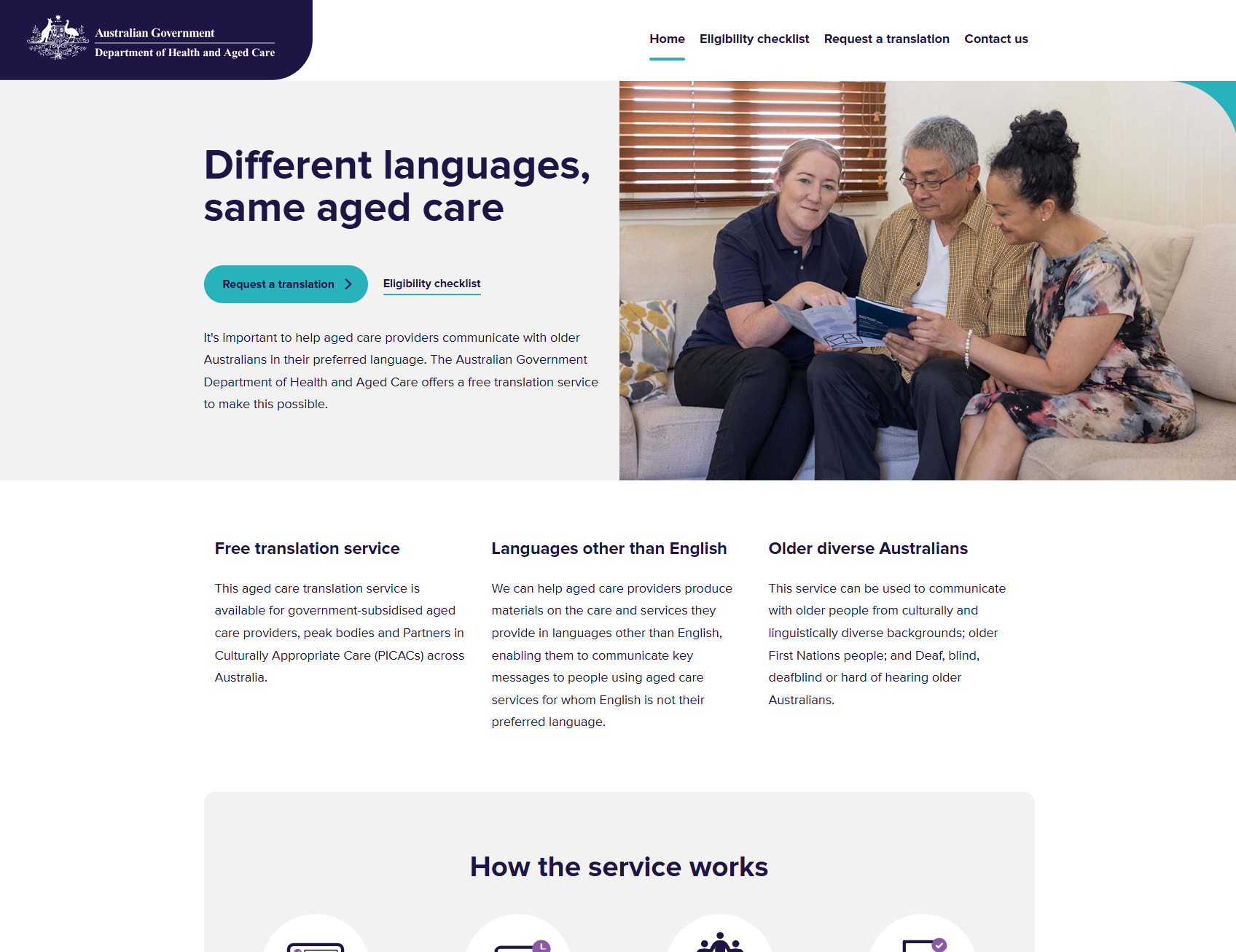
Different languages, same aged care
This resource provides information on a free translation service for government-subsidised aged care providers, enabling communication in languages other than English. It helps aged care providers reach diverse communities, including culturally and linguistically diverse individuals, First Nations people, and those who are Deaf or hard of hearing, supporting culturally inclusive care.
This resource may refer to information that will be updated from 1 November 2025 to align with the new Aged Care Act and Quality Standards.
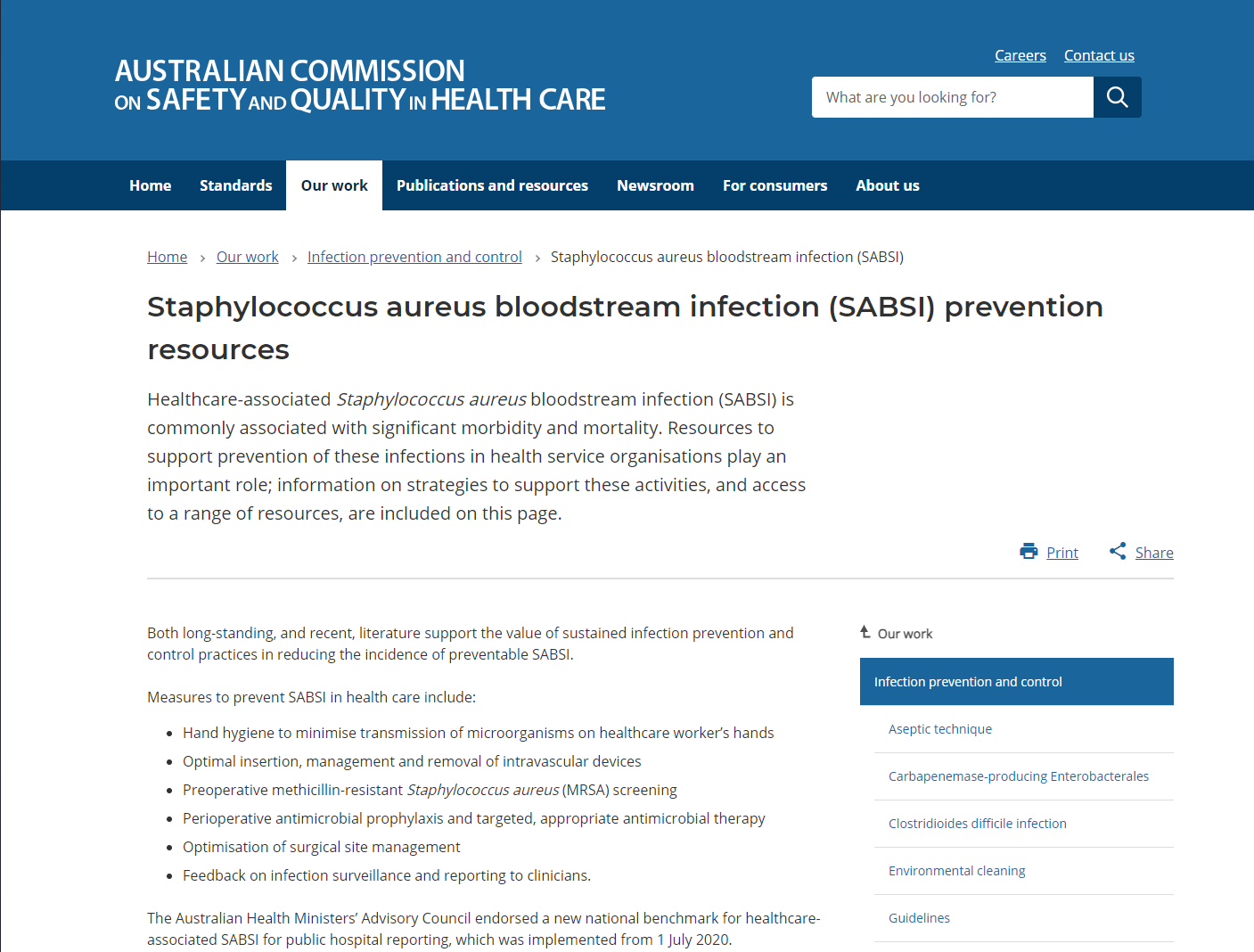
Staphylococcus aureus bloodstream infection (SABSI) prevention resources
This resource offers guidelines for preventing Staphylococcus aureus bloodstream infections (SABSI) in healthcare settings. It covers infection control strategies, including hand hygiene, device management, and surgical site care, helping organisations reduce infection risks and comply with national SABSI prevention standards.
This resource may refer to information that will be updated from 1 November 2025 to align with the new Aged Care Act and Quality Standards.
IPC resource collection
This is an Infection and Prevention Control (IPC) resource tool. This tool can be used by both residential and home care providers to access key pieces of information and reference materials on infection prevention and control. The tool provides access to specific information by selecting a relevant topic and sub-topic.
This resource may refer to information that will be updated from 1 November 2025 to align with the new Aged Care Act and Quality Standards.