The Quality Standards Resource Centre helps extend understanding of the strengthened Aged Care Quality Standards, which took effect from 1 November 2025. You can search for resources by using keywords, or filtering by standard, outcome and audience. Before using the Resource Centre, please read the terms of use.
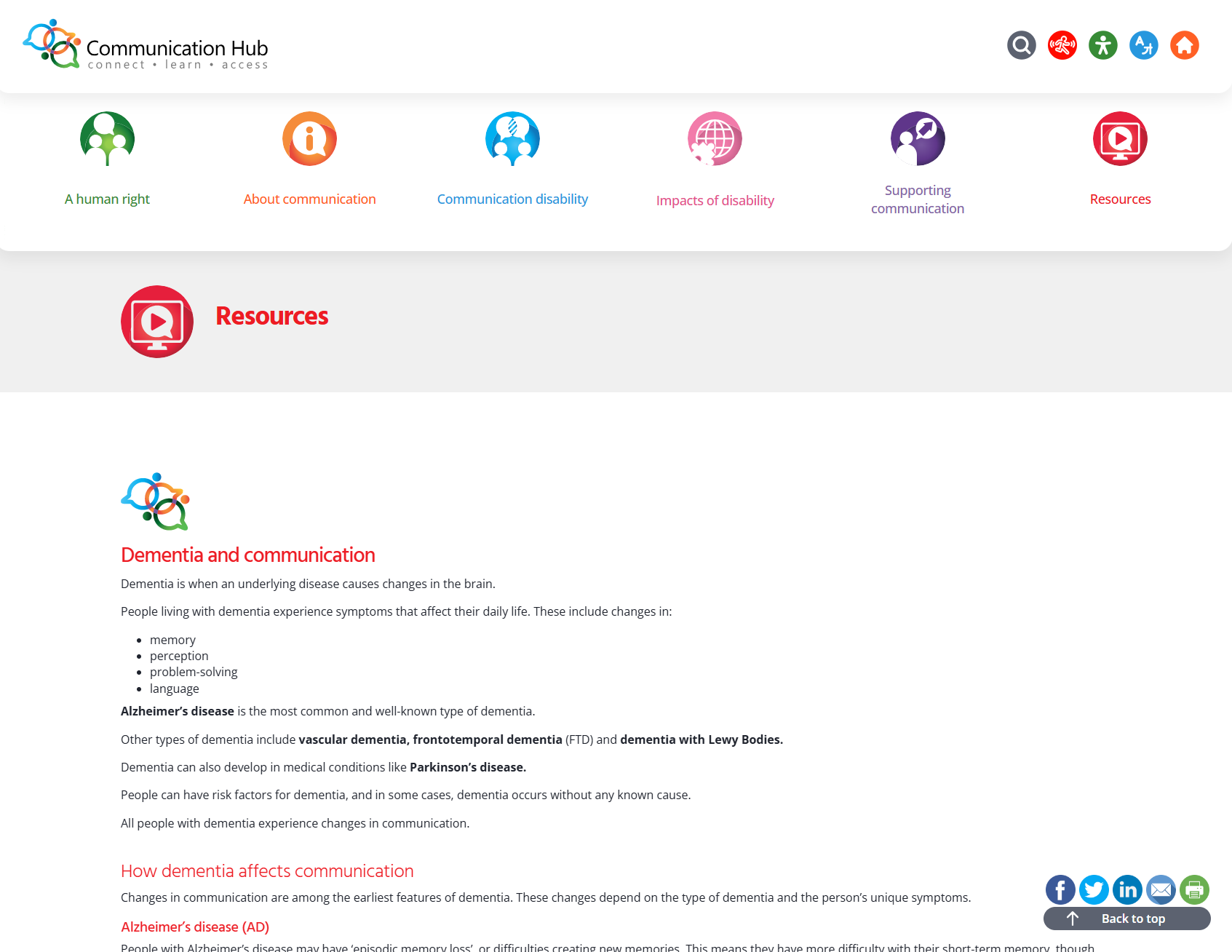
Dementia and communication - Resources
This resource discusses how dementia impacts communication abilities, including memory and language challenges. It offers practical strategies for enhancing conversations and maintaining connections, emphasising the role of speech pathologists in supporting communication. The resource provides guidance for family, friends, and caregivers to create dementia-friendly environments.
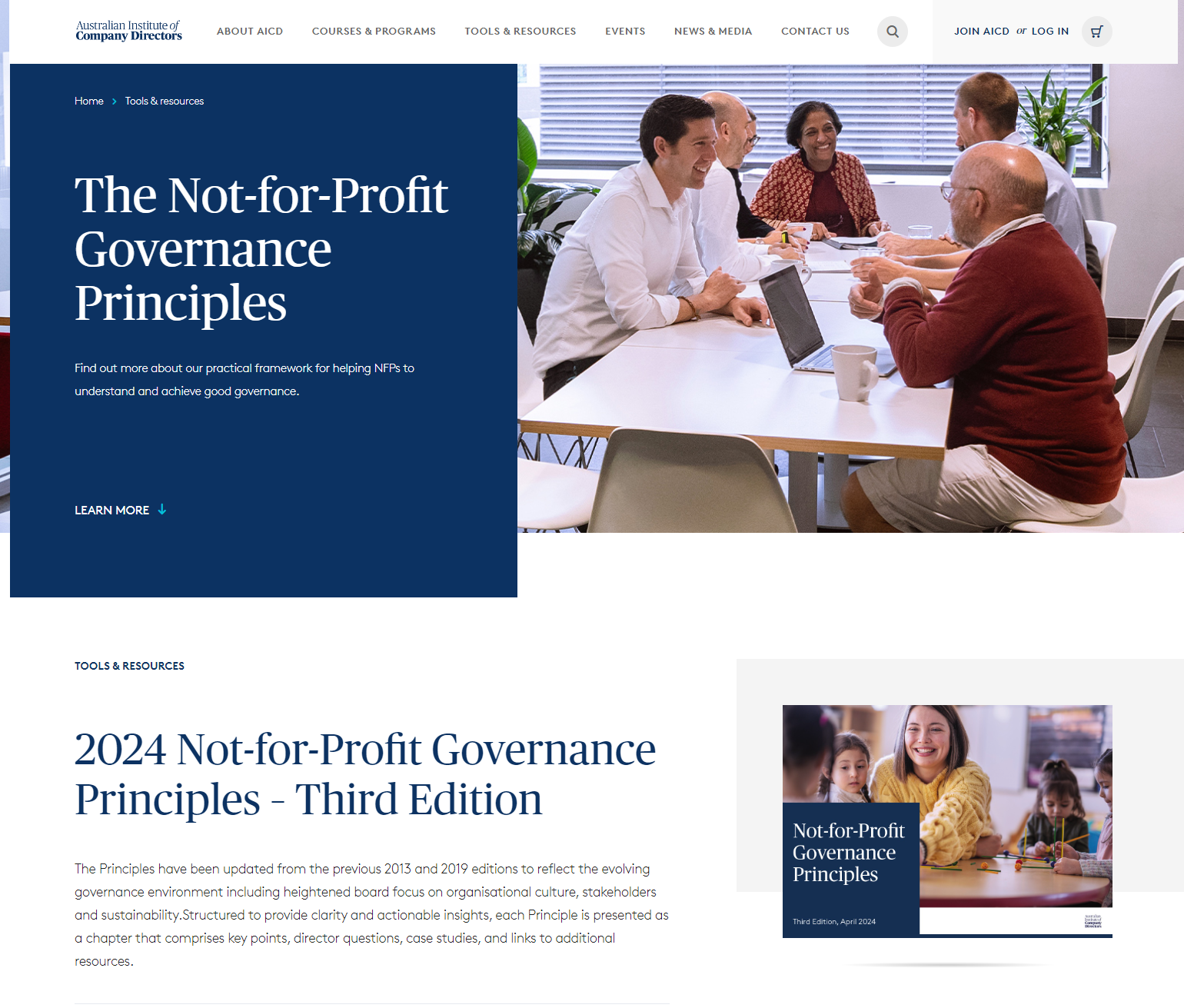
Not-for-Profit Governance Principles
This resource outlines the Not-for-Profit Governance Principles, a framework designed to help not-for-profit organisations, including aged care providers, achieve good governance. It covers key areas such as board roles, stakeholder engagement, risk management, and organisational culture. The principles provide practical guidance to improve governance practices, ensuring accountability and sustainability in the sector.
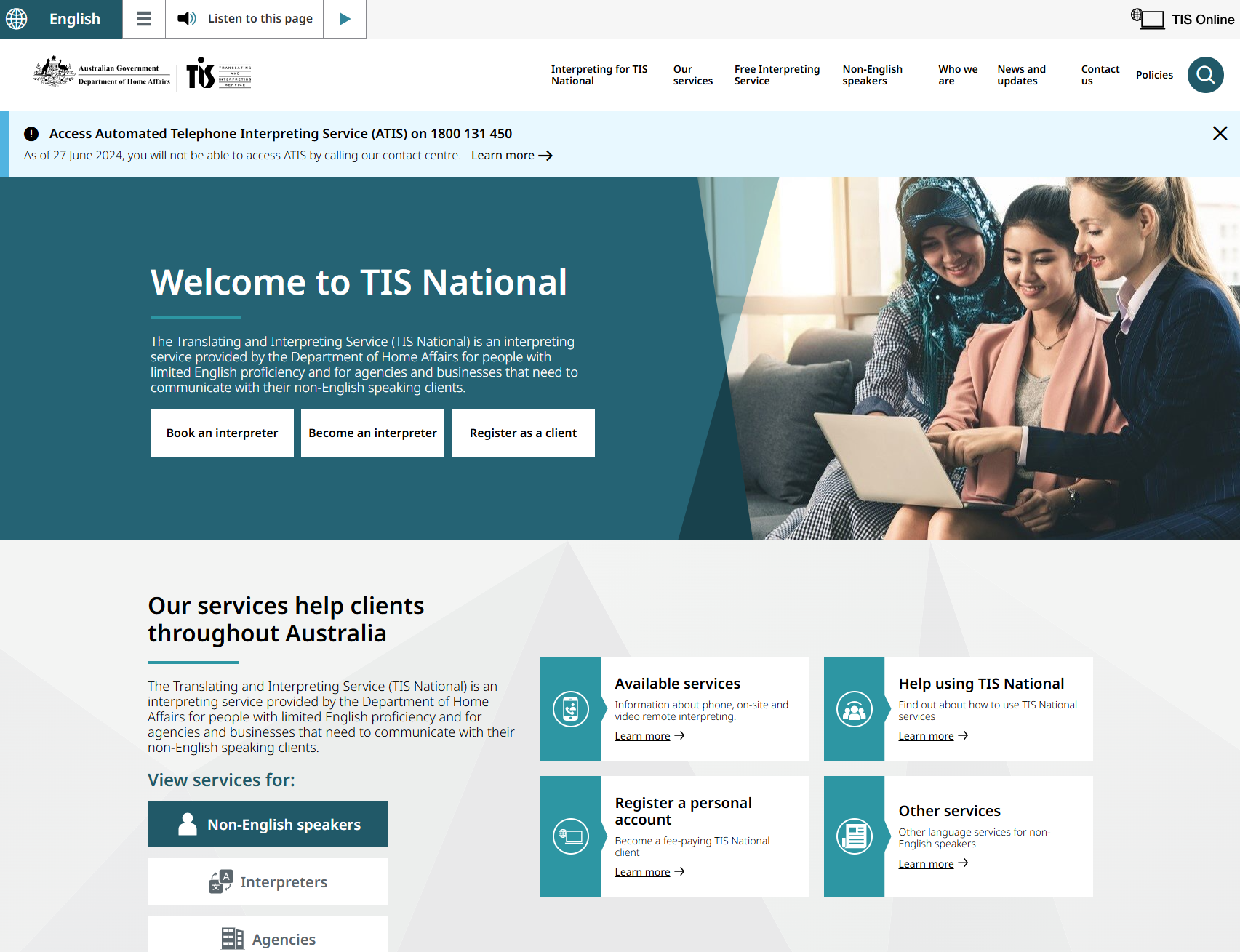
Translating and Interpreting Service (TIS National)
The Translating and Interpreting Service (TIS National) provides interpreting support for people with limited English proficiency and agencies requiring assistance to communicate with non-English-speaking clients. Services include telephone, on-site, and video interpreting, with options for both government and fee-paying clients across Australia.
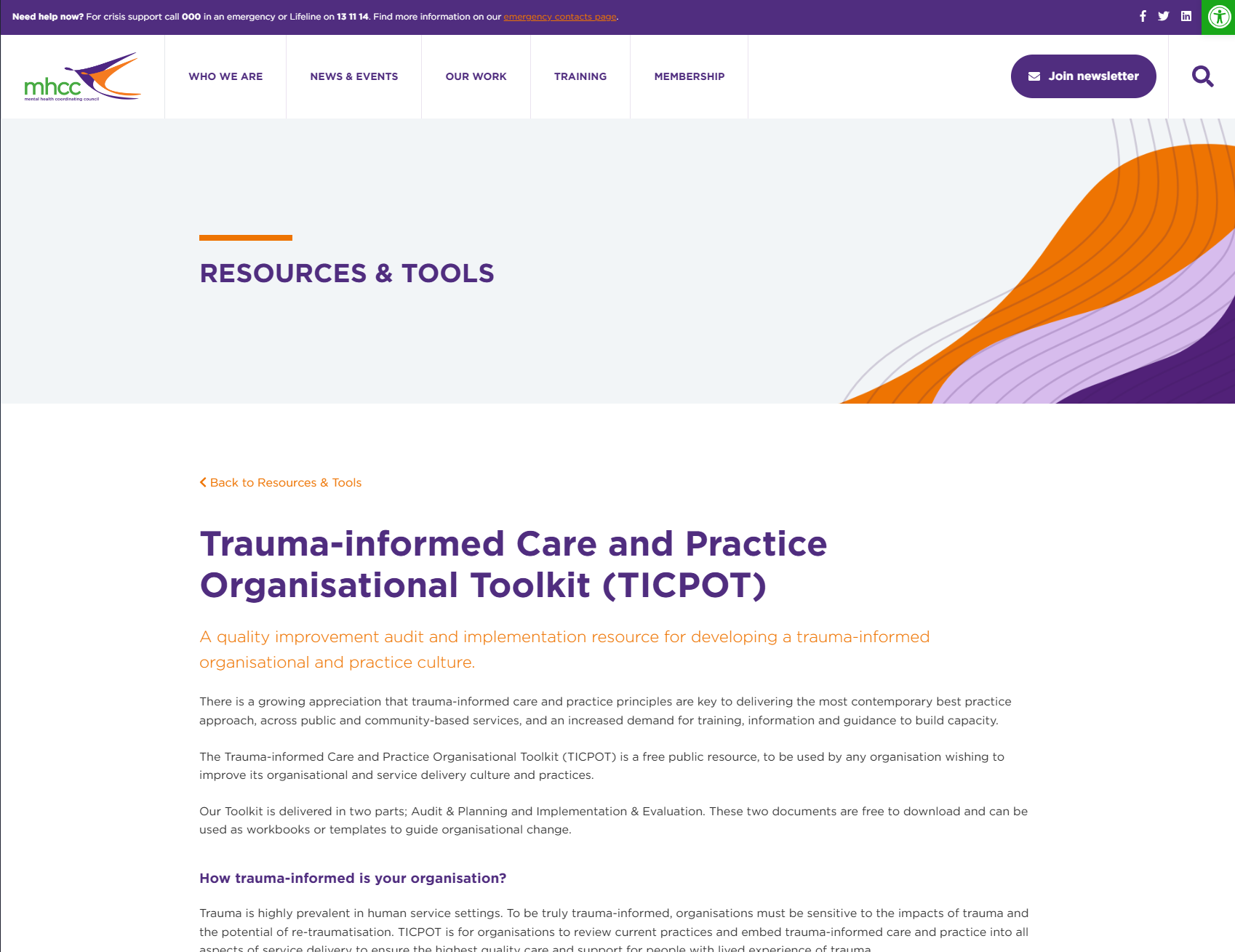
Trauma-informed Care and Practice Organisational Toolkit
This toolkit provides guidance for organisations on implementing trauma-informed care practices, aiming to improve safety, trust, and empowerment in care settings. It outlines strategies to adapt policies, environments, and staff approaches to better support people with trauma histories in various care environments.
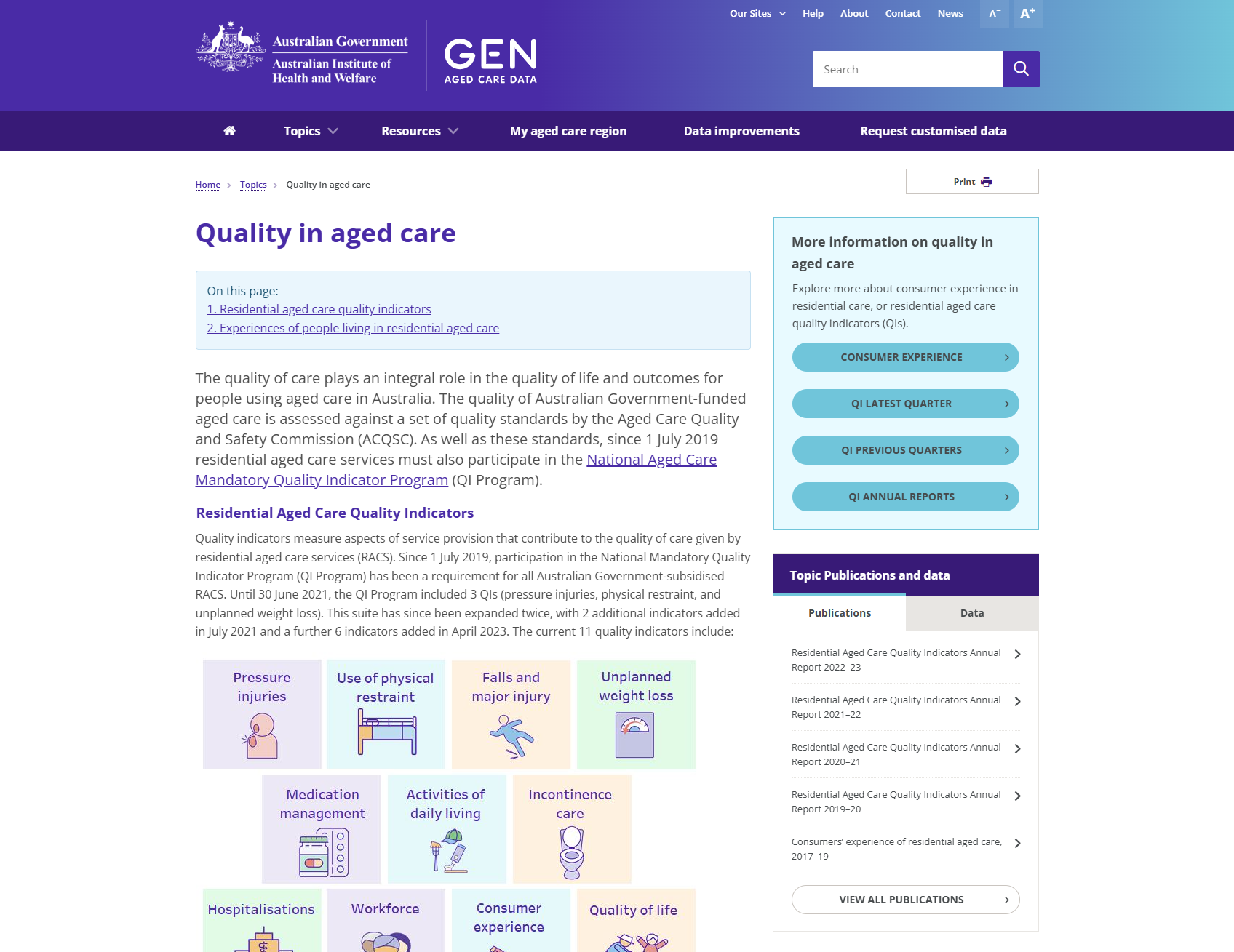
Quality in aged care - Gen Data Page
This resource provides an overview of quality indicators and consumer experience surveys in aged care. It details mandatory quality metrics, including physical and clinical indicators, and feedback from people in aged care, offering insights into service performance and supporting informed choices in aged care settings.
This resource may refer to information that will be updated from 1 November 2025 to align with the new Aged Care Act and Quality Standards.
Supporting Better Communication & Care
This webpage provides resources to help improve communication, care and support for people who are deaf, Deaf, hard of hearing, or who experience hearing loss. It includes 3 tools: Everyday Communication, Inclusive Healthcare, and Building Competency. There are also links to other relevant resources.
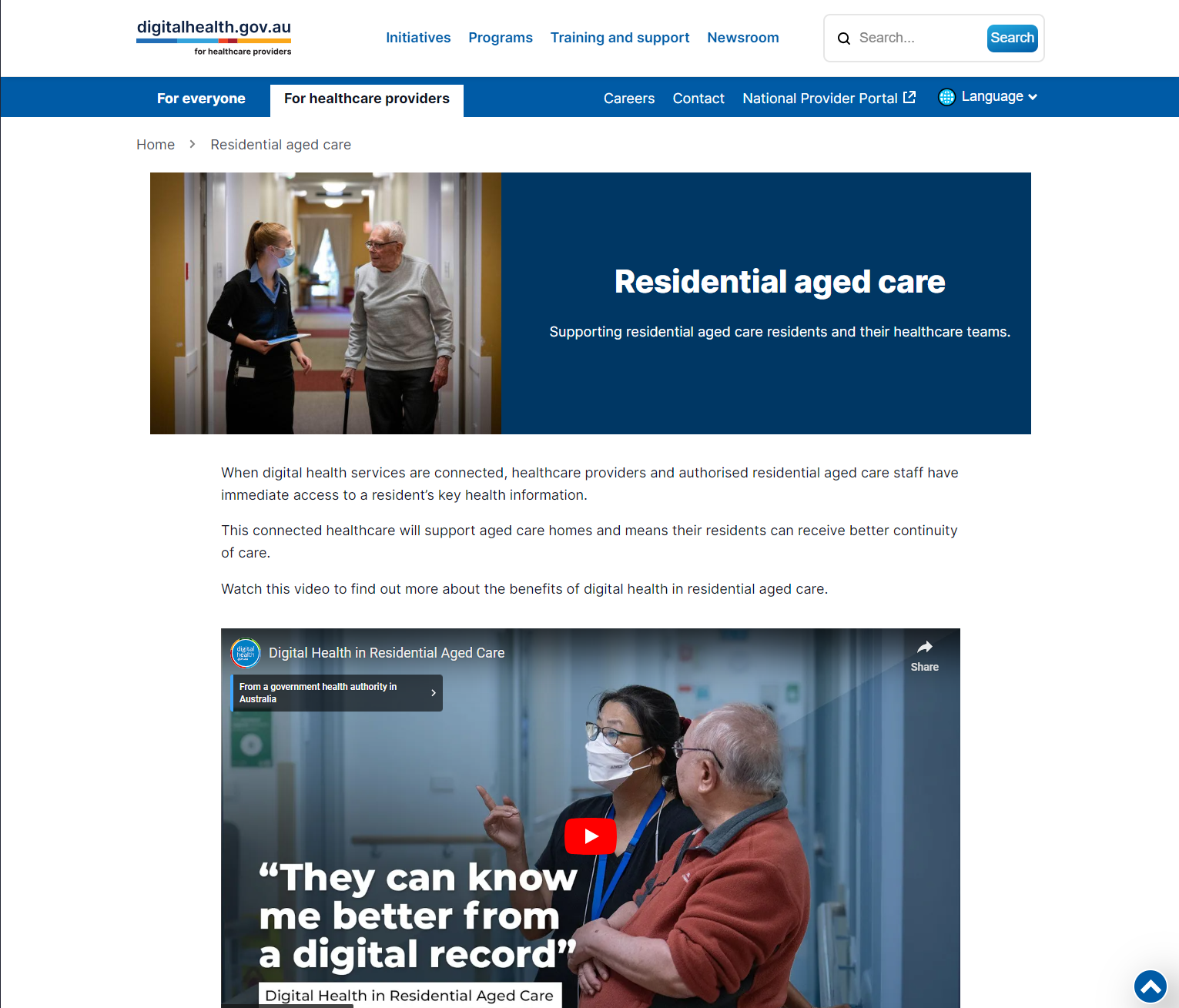
Residential aged care - Supporting residential aged care residents and their healthcare teams
This resource provides information on digital health tools available for residential aged care providers. It covers how these tools, including My Health Record, support care coordination, improve health outcomes, and enable secure information sharing between healthcare providers to enhance the quality of aged care services.
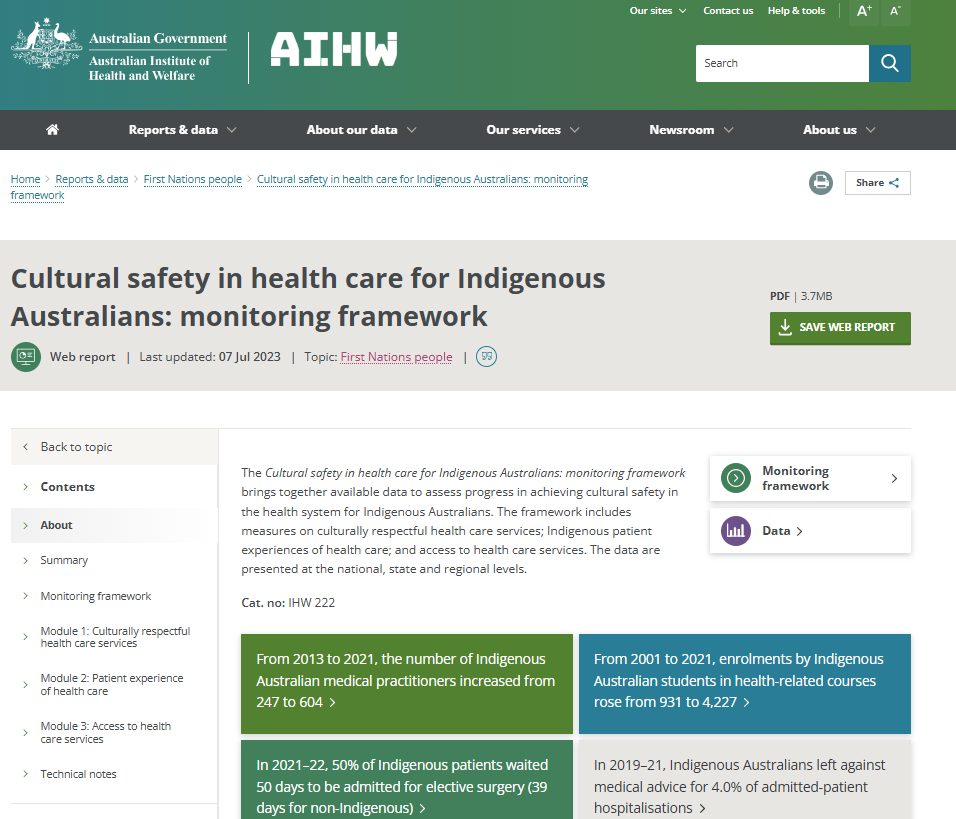
Cultural safety in health care for Indigenous Australians: monitoring framework
This resource uses available data to measure progress in achieving cultural safety in the health system for Aboriginal and Torres Strait Islander people. The monitoring framework covers 3 modules: Module 1 – Culturally respectful health care services; Module 2 – Patient experience of health care; and Module 3 – Access to health care services.
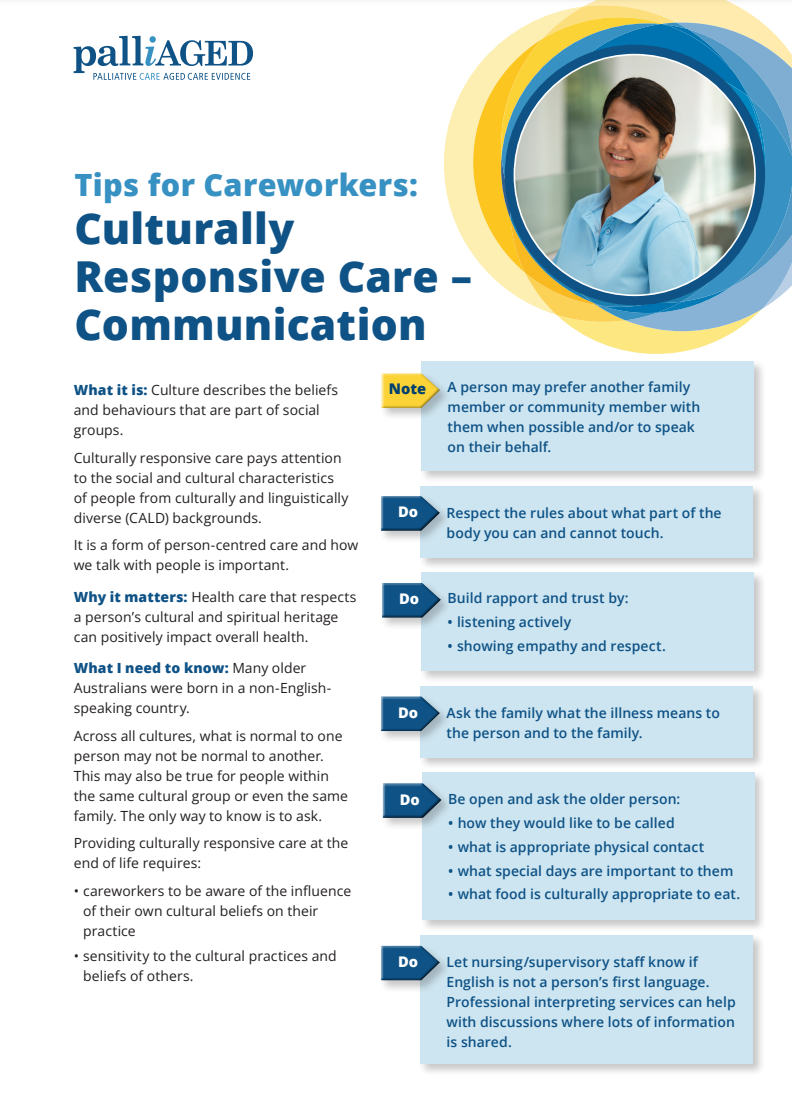
Tips for Careworkers: Culturally Responsive Care - Communication
This resource provides practice tip sheets for care workers, focusing on culturally responsive care for people from culturally and linguistically diverse backgrounds. It outlines communication strategies, emphasising person-centred care, cultural sensitivity, and effective interaction with patients and families, especially at the end of life.
How to talk about dementia
This resource provides guidance on using accurate, respectful, and non-stigmatising language when discussing dementia. It emphasises avoiding negative terms, promoting dignity, and listening to individuals' preferences. It includes suggestions for talking about dementia symptoms, behaviour, and the impacts of dementia on individuals and their families, promoting understanding and reducing discrimination.
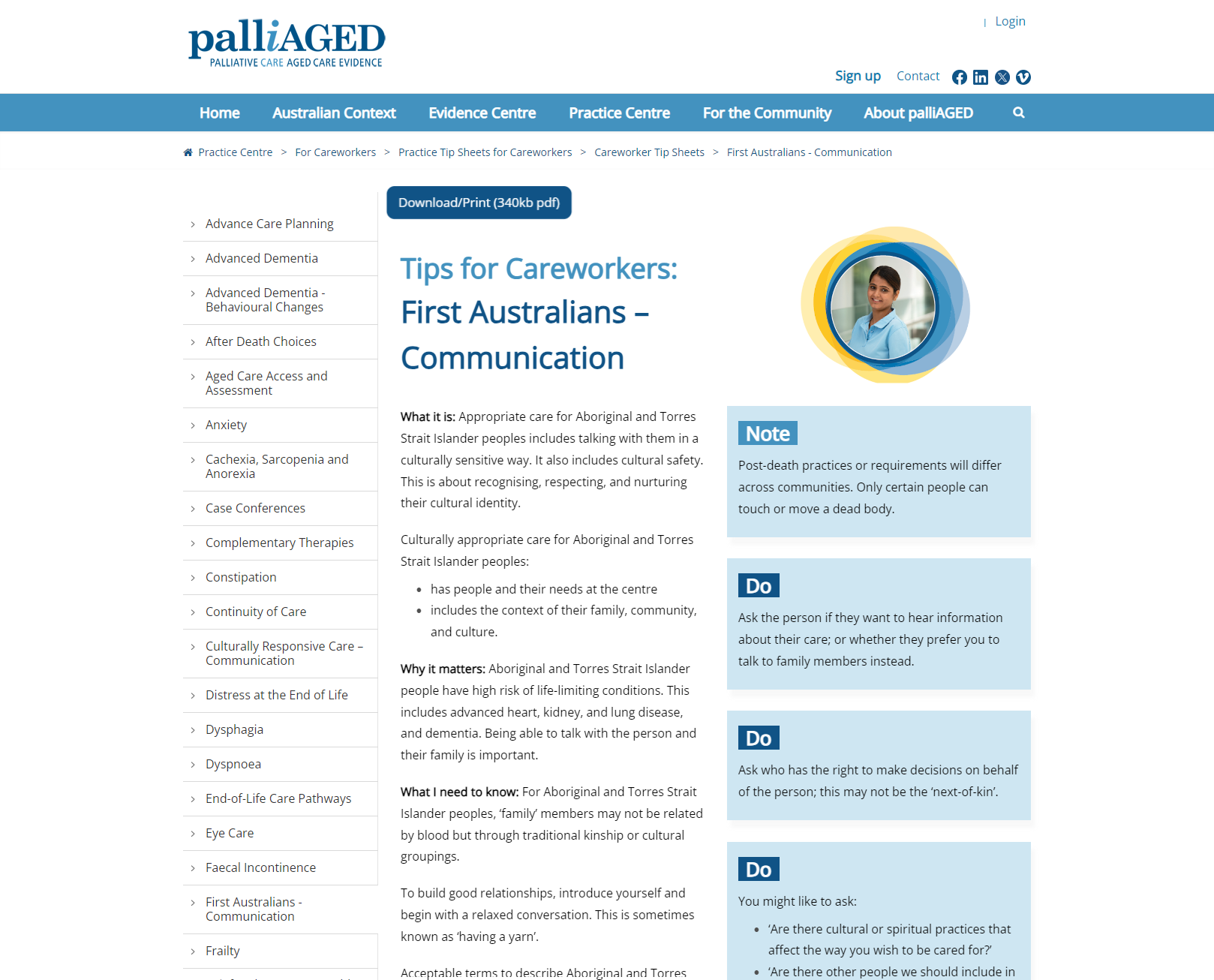
Tips for Careworkers: First Australians – Communication
This resource offers guidance on culturally appropriate communication with Aboriginal and Torres Strait Islander people in aged care. It highlights the importance of respecting cultural identity, involving family, and providing person-centred care. The resource provides practical tips for careworkers to ensure culturally sensitive and respectful communication.