The Quality Standards Resource Centre helps extend understanding of the strengthened Aged Care Quality Standards, which took effect from 1 November 2025. You can search for resources by using keywords, or filtering by standard, outcome and audience. Before using the Resource Centre, please read the terms of use.
ISBAR - Identify, Situation, Background, Assessment and Recommendation
This resource describes the ISBAR communication tool—Identify, Situation, Background, Assessment, Recommendation—used to improve safety during handovers in clinical settings. It includes adaptable resources like fact sheets and lanyard cards to support consistent, structured information transfer.
This resource was developed by a state/territory government or organisation and therefore its applicability and usefulness may be limited.
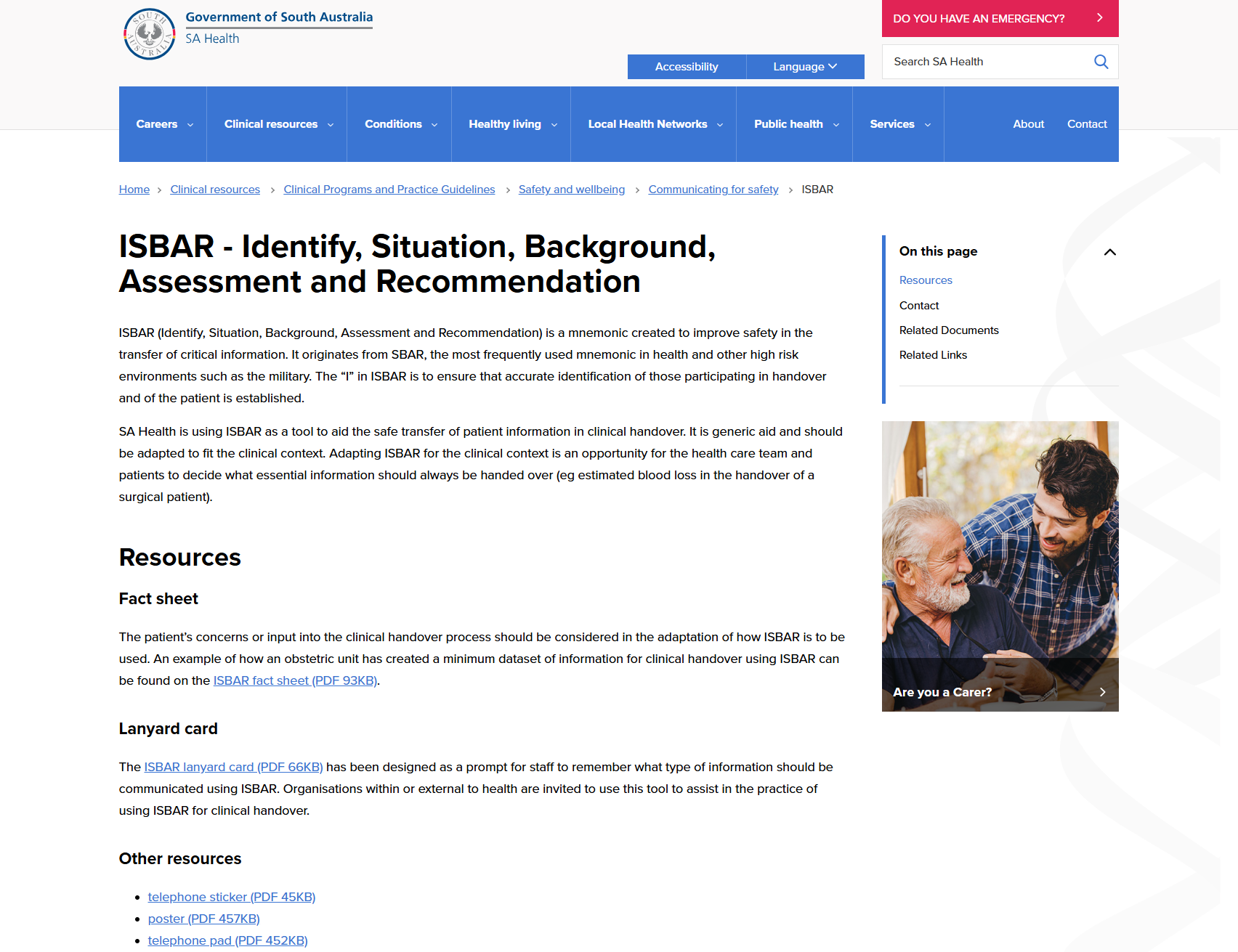
Goals of care document
This resource explains the purpose of a goals of care document, which outlines a person’s medical treatment goals and end of life care preferences. It describes how healthcare providers create and upload these documents to health records, supporting informed decision-making and access to care preferences.
Work-related psychological health and safety: A systematic approach to meeting your duties
This guide offers a systematic approach to managing work-related psychological health and safety, particularly under work health and safety (WHS) and workers’ compensation laws. It provides businesses with a structured methodology for preventing psychological harm, intervening early when signs of stress appear, and supporting workers' recovery and return to work. Though the guide is an archived document, it can still offer useful background on managing psychosocial hazards but does not reflect recent changes in regulations.
Mental health tips for aged care workers and managers
This resource provides mental health tips for aged care workers and managers during the COVID-19 pandemic. It includes strategies to manage stress, anxiety, and overall mental wellbeing. The resource offers evidence-based advice on recognising when extra support is needed and how to maintain mental health, helping aged care staff navigate challenging times effectively.
Workforce planning in aged care
This resource provides guidance about workforce planning in aged care. It includes information about workforce composition, current requirements and why it's important. It highlights the importance of the care experience, including continuity of care. This resource may refer to information that will be updated from 1 November 2025 to align with the new Aged Care Act and Quality Standards.
Care and Support Mental Health Resources
This resource offers mental health and trauma-informed care materials to support aged care, home care, and disability support workers. Developed with industry consultation, it provides strategies to improve worker wellbeing, manage workplace stress, and integrate trauma-informed practices, addressing common challenges like burnout and occupational stress.
Self-Care Matters Aged Care
This resource supports aged care workers in managing stress and maintaining mental and physical wellbeing. It includes videos and tools focused on self-care strategies, such as mindfulness, relaxation, and personalised self-care planning. The resource is designed to help prevent burnout and promote resilience in delivering high-quality care in aged care settings.
Code of conduct
This resource provides the National Boards' Code of Conduct, outlining the expected professional behaviour and ethical standards for registered health practitioners. It serves as a regulatory framework to ensure safe, ethical care, helping practitioners understand their responsibilities. The document is important for all registered practitioners to ensure they comply with these standards across healthcare settings.
RACGP aged care clinical guide (Silver Book) - Part B - Anticipatory care
This guide outlines anticipatory care planning for older adults, focusing on proactive and person-centred approaches. It details triggers for care planning, identifying vulnerability, medication management, and the use of 'as needed' (PRN) medicines for various conditions like allergic reactions, asthma, diabetes, falls, and palliative care. It includes specific recommendations for developing individualised care plans and appropriate interventions for maintaining health and quality of life.
RACGP aged care clinical guide (Silver Book) - Part B - Older people in rural and remote communities
This guide discusses providing aged care in rural and remote communities, focusing on the unique needs of older residents, the role of GPs in care coordination, and overcoming challenges like limited services and workforce shortages. It covers building telehealth connections, establishing collaborative care models, and offers a checklist for newly arrived GPs to support quality care for older adults.
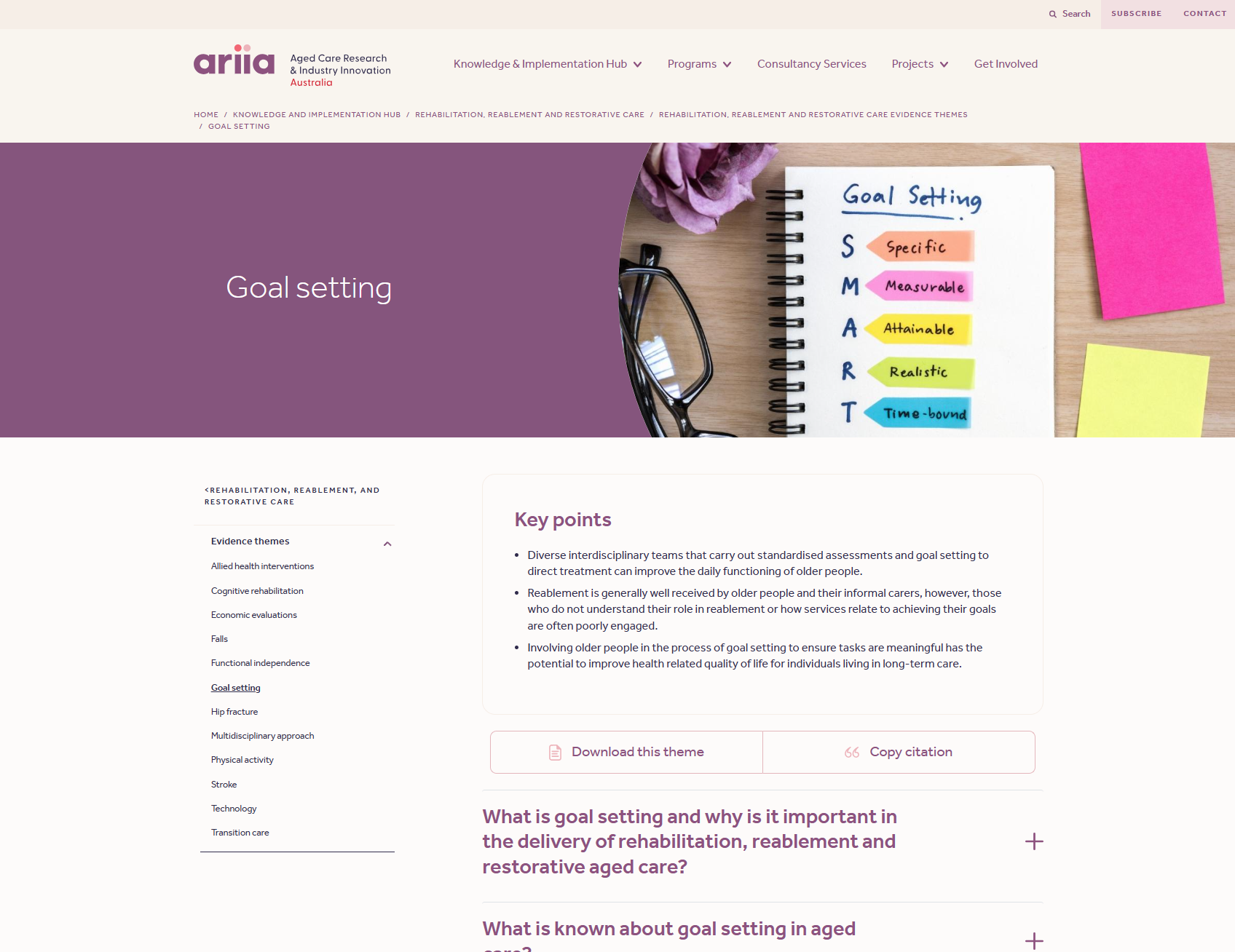
Goal setting
This resource discusses the role of goal setting in enhancing rehabilitation, reablement, and restorative care for older people. It highlights the value of involving older people in defining goals and the positive impact of goal setting on engagement, daily function, and quality of life.
Allied health regulation
This resource provides information about the regulation of allied health professions in Australia. It includes those registered under the National Registration and Accreditation Scheme (NRAS) and self-regulating professions managed by professional peak bodies. It also provides links to further information about allied health professions currently registered with AHPRA and information for overseas-qualified practitioners.
Communication after stroke
This resource provides information on communication difficulties an person may encounter after experiencing a stroke. It discusses how strokes can affect communication, treatment to assist with communication, information on recovery, communication tips for family and friends and help resources for individuals.
About speech pathologists - Aged care
This resource discusses the role of speech pathologists in supporting older people with communication and swallowing disorders caused by ageing, neurological conditions, and other health factors. It highlights the prevalence of communication and swallowing difficulties in aged care, their impacts, and how speech pathology services promote independence, participation, and quality of life through assessment, therapy, and tailored interventions.
RACGP aged care clinical guide (Silver Book) - Part B - Physiology of ageing
This guide reviews the physiological changes associated with ageing across multiple body systems, including cardiovascular, nervous, renal, respiratory, gastrointestinal, immune, skin, haematological, endocrine, and musculoskeletal systems. It also discusses clinical manifestations of these changes, implications for care, and provides recommendations for adjusting clinical practice to meet the needs of older adults, including medication reviews, hydration, mobility support, and preventive health strategies.
RACGP aged care clinical guide (Silver Book) - Part B - Geriatric syndromes
This guide outlines the challenges of diagnosing and managing geriatric syndromes, describing clusters like immobility, instability, incontinence, frailty, sarcopenia, and cognitive impairment. It introduces the 'Geriatric 5Ms' framework: Mind, Mobility, Medications, Mult complexity, and Matters Most, which assists in comprehensive assessment and care planning for older adults, focusing on mental health, physical function, medication review, complex health needs, and care goals.
RACGP aged care clinical guide (Silver Book) - Part B - Principles of multimorbidity
This guide discusses managing multimorbidity, which involves the presence of multiple chronic diseases and their impact on older adults' quality of life and independence. It outlines the role of general practitioners in care coordination, shared decision-making, and holistic care approaches, considering the benefits and risks of interventions across residential and community care settings.
RACGP aged care clinical guide (Silver Book) - Part A - Multimorbidity
This resource provides guidelines for managing patients with multimorbidity in aged care settings. It includes frameworks for assessing treatment burden, identifying patients at risk, and developing individualised care plans. It recommends validated tools for screening, a focus on quality of life, and strategies for medication review and care coordination.
RACGP aged care clinical guide (Silver Book) - Part B - Provision of after-hours aged care services
This guide details the provision of after-hours care for older adults in residential aged care facilities (RACFs) and the community. It covers collaborative agreements between GPs and RACFs, processes to reduce emergency department visits, hospital avoidance strategies, and the importance of coordinating multidisciplinary care. It also addresses infrastructure needs, support staff availability, and funding arrangements to ensure quality care during after-hours periods.
RACGP aged care clinical guide (Silver Book) - Part B - Multiculturalism in aged care
This guide discusses multiculturalism in aged care, addressing the diverse needs of culturally and linguistically diverse (CALD) older adults. It covers healthcare principles, communication strategies, clinical considerations, and culturally tailored approaches for areas like medication management, dementia, mental health, nutrition, and substance use. It also provides practical advice for general practitioners, carers, and aged care facilities to deliver culturally safe and effective care.