Aged care laws in Australia have now changed. The new Aged Care Act 2024 and Aged Care Rules 2025 now apply. While we complete updating of our website, including draft guidance and other materials, to align with the new laws, providers are advised to refer to the new Act and Rules for any required clarification of their obligations and legal responsibilities. Thank you for your patience.

Quality Standards Resource Centre

The Quality Standards Resource Centre helps extend understanding of the strengthened Aged Care Quality Standards, which take effect from 1 November 2025. The Resource Centre will be updated to reflect key changes made to the draft strengthened Standards. You can search for resources by using keywords, or filtering by standard, outcome, audience and theme. Before using the Resource Centre, please read the terms of use.

Displaying 1 to 20 of 27 result(s)
/quality-standards/palliaged-practice-centre

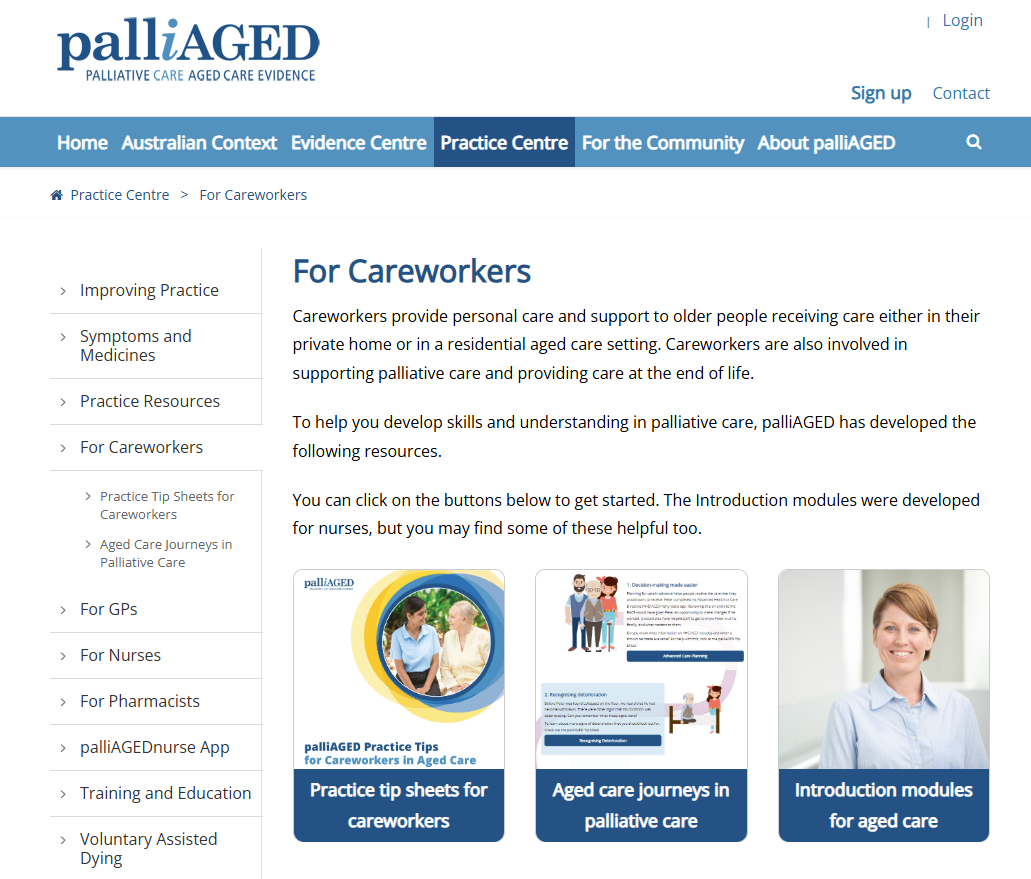
palliAGED - Practice Centre

Guidance

This resource provides information for care workers about palliative care. The Practice Centre provides links to, and information about, tools and resources to use in practice and improve care and outcomes in palliative care. It includes sections on improving practice, symptoms, medicines and tipsheets.
Author
External resource
Key Theme
Assessment and planning, Palliative and end of life care, Food and nutrition
Standard
3: The Care and Services, 5: Clinical Care, 6: Food and Nutrition
Outcomes
3.1 Assessment and planning, 5.7: Palliative care and end-of-life care, 6.2: Assessment of nutritional needs and preferences
palliAGED - Practice Centre
/quality-standards/palliaged-evidence-centre

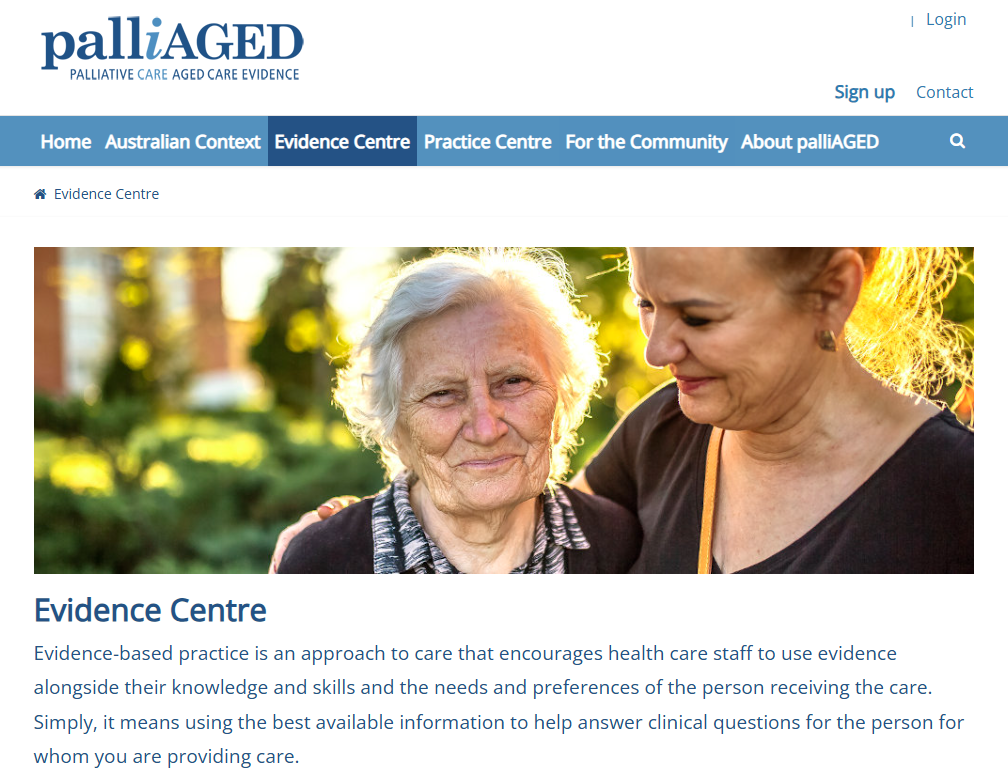
palliAGED - Evidence Centre

Guidance

This resource provides evidence-based information for the healthcare sector about palliative care. It includes evidence summaries on topics related to palliative care, such as advance care planning, advocacy, care coordination, goals of care, nutrition and needs assessment.
Author
External resource
Key Theme
Assessment and planning, Palliative and end of life care, Food and nutrition
Standard
3: The Care and Services, 5: Clinical Care, 6: Food and Nutrition
Outcomes
3.1 Assessment and planning, 5.7: Palliative care and end-of-life care, 6.2: Assessment of nutritional needs and preferences
palliAGED - Evidence Centre
/quality-standards/malnutrition-universal-screening-tool

Malnutrition Universal Screening Tool

Tool

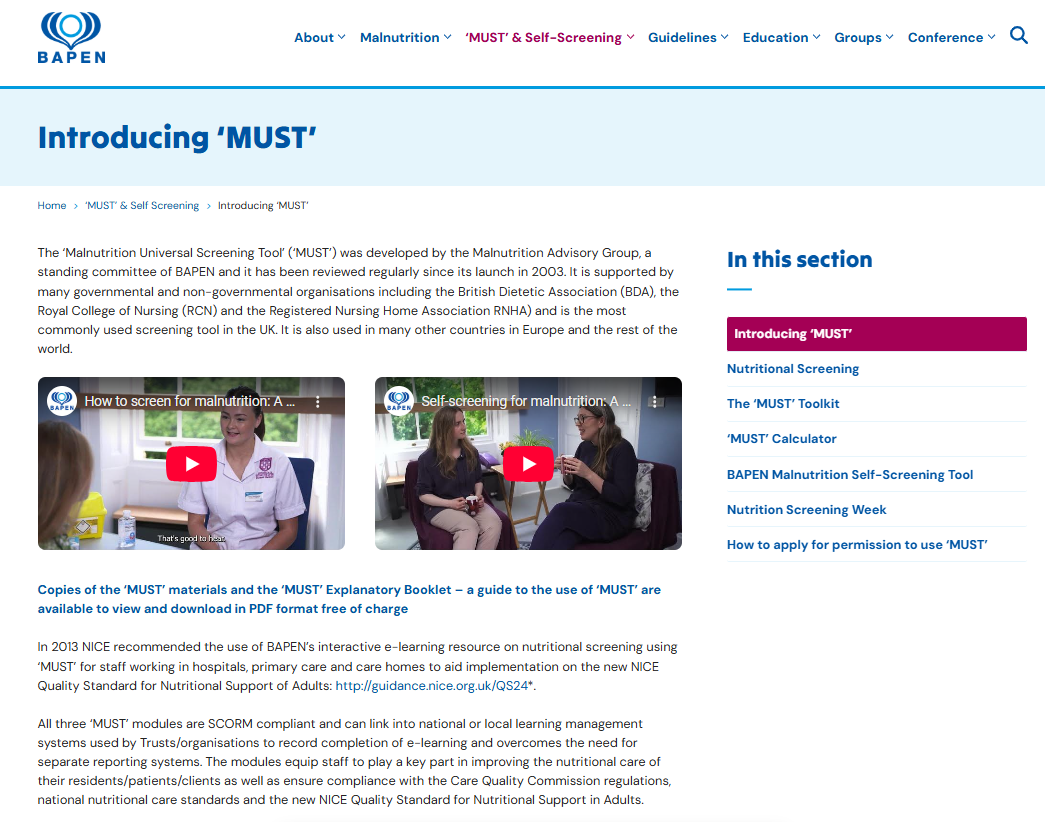
The ‘Malnutrition Universal Screening Tool’ (‘MUST’) is a widely used tool for identifying malnutrition risk in adults across various settings. It includes interactive e-learning modules with case studies and assessments, helping staff improve nutritional care and meet quality standards.

This resource was developed internationally and therefore its applicability and usefulness may be limited.
Author
External resource
Key Theme
Assessment and planning, Clinical safety, Food and nutrition
Standard
3: The Care and Services, 5: Clinical Care, 6: Food and Nutrition
Outcomes
3.1 Assessment and planning, 5.5: Safety of clinical care services, 6.2: Assessment of nutritional needs and preferences
Malnutrition Universal Screening Tool
/quality-standards/what-mini-nutritional-assessment-mna

What is the Mini Nutritional Assessment (MNA)?

Guidance, Tool

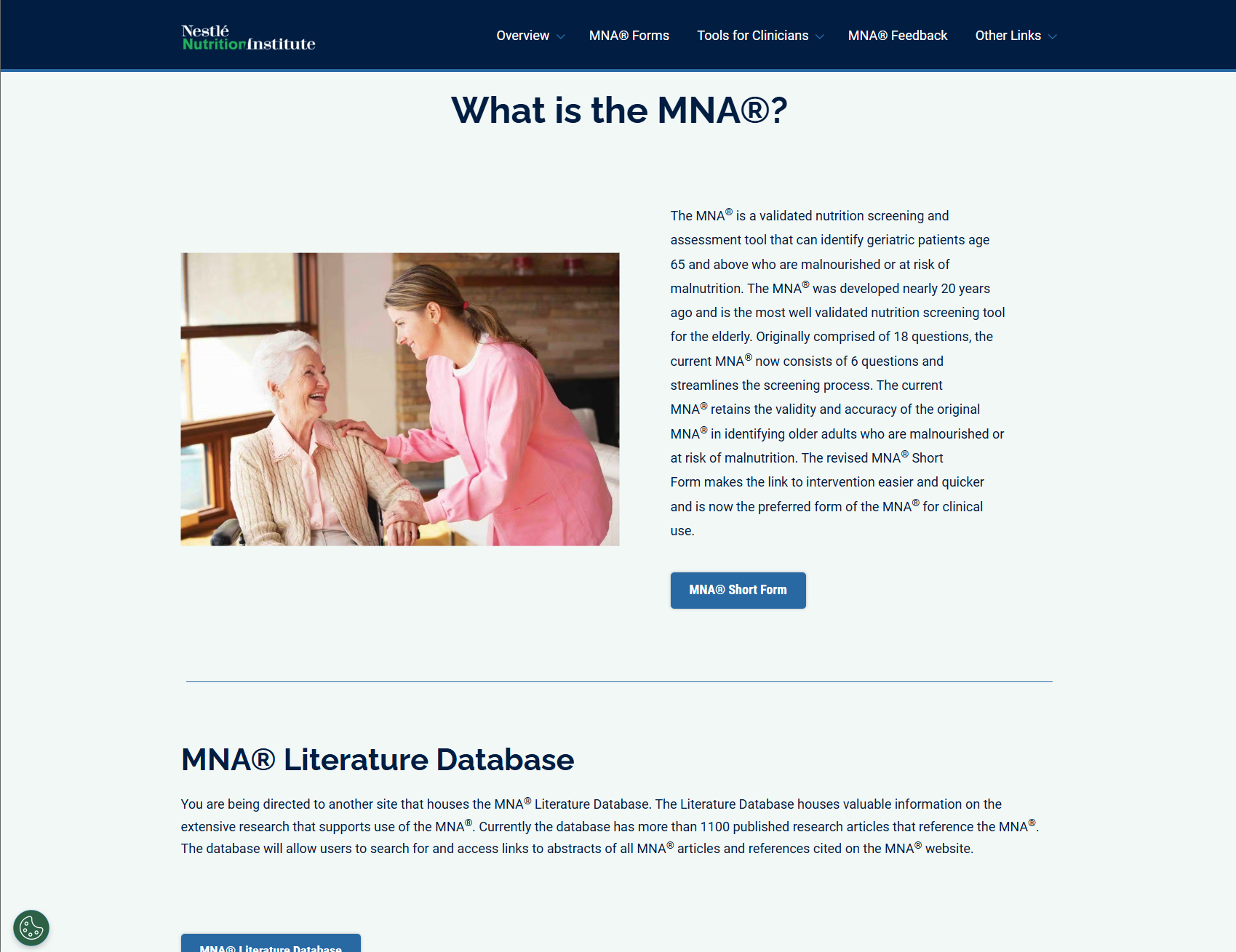
This resource is a validated nutrition screening and assessment tool to identify malnutrition or risk of malnutrition in people aged 65 and older. It includes an easy-to-use short form for quick identification and intervention planning.

This resource was developed internationally and therefore its applicability and usefulness may be limited.
Author
External resource
Key Theme
Assessment and planning, Clinical safety, Food and nutrition
Standard
3: The Care and Services, 5: Clinical Care, 6: Food and Nutrition
Outcomes
3.1 Assessment and planning, 5.5: Safety of clinical care services, 6.2: Assessment of nutritional needs and preferences
What is the Mini Nutritional Assessment (MNA)?
/quality-standards/guide-completing-mini-nutritional-assessment-short-form

A guide to completing the Mini Nutritional Assessment – Short Form

Tool

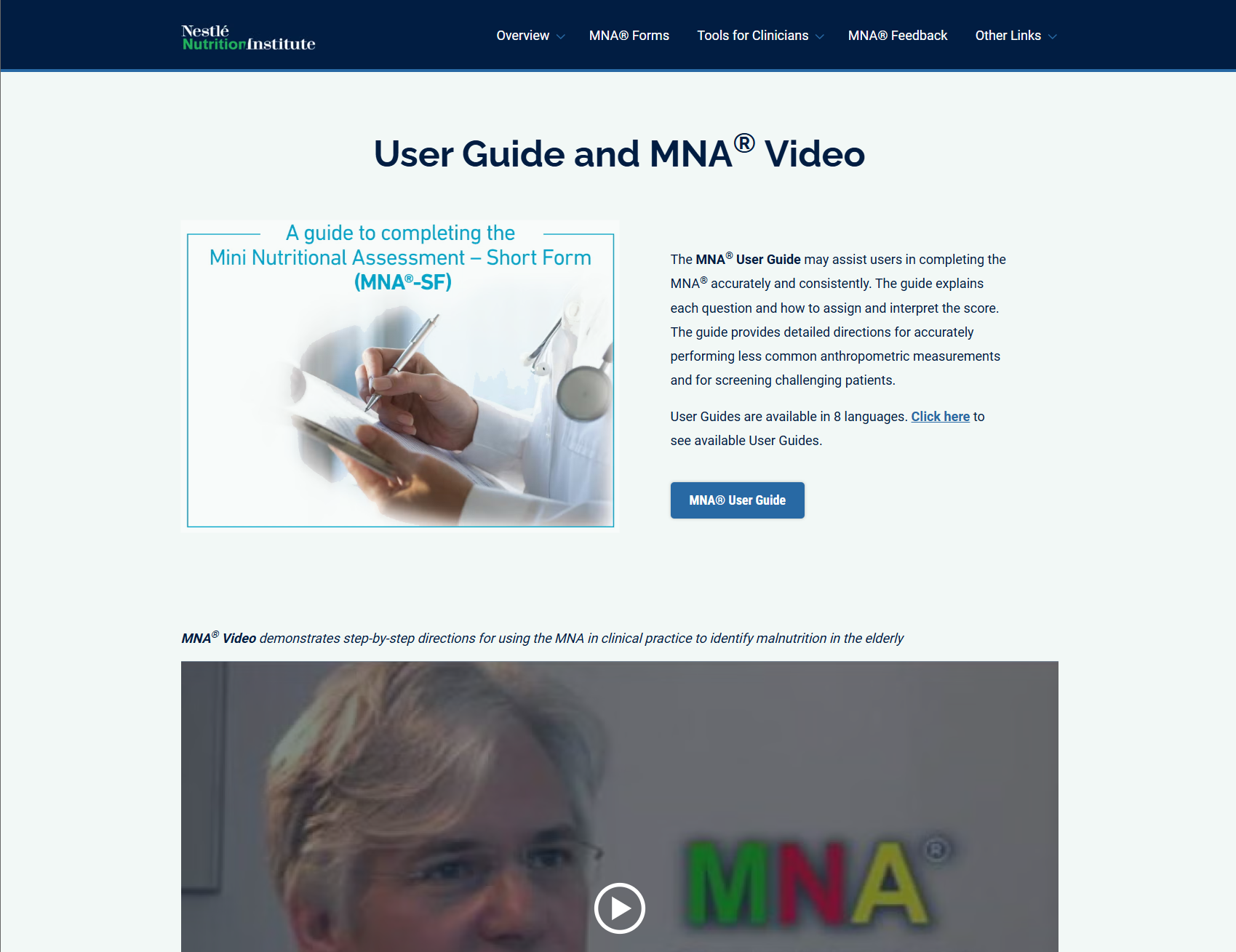
This resource is a guide and video for using the Mini Nutritional Assessment (MNA) to identify malnutrition in older people. It explains question scoring, interpretation, and measurement procedures, with a video demonstration.

This resource was developed internationally and therefore its applicability and usefulness may be limited.
Author
External resource
Key Theme
Assessment and planning, Clinical safety, Food and nutrition
Standard
3: The Care and Services, 5: Clinical Care, 6: Food and Nutrition
Outcomes
3.1 Assessment and planning, 5.5: Safety of clinical care services, 6.2: Assessment of nutritional needs and preferences
A guide to completing the Mini Nutritional Assessment – Short Form
/quality-standards/eat-10-swallowing-screening-tool

EAT-10: A Swallowing Screening Tool

Tool
Published date

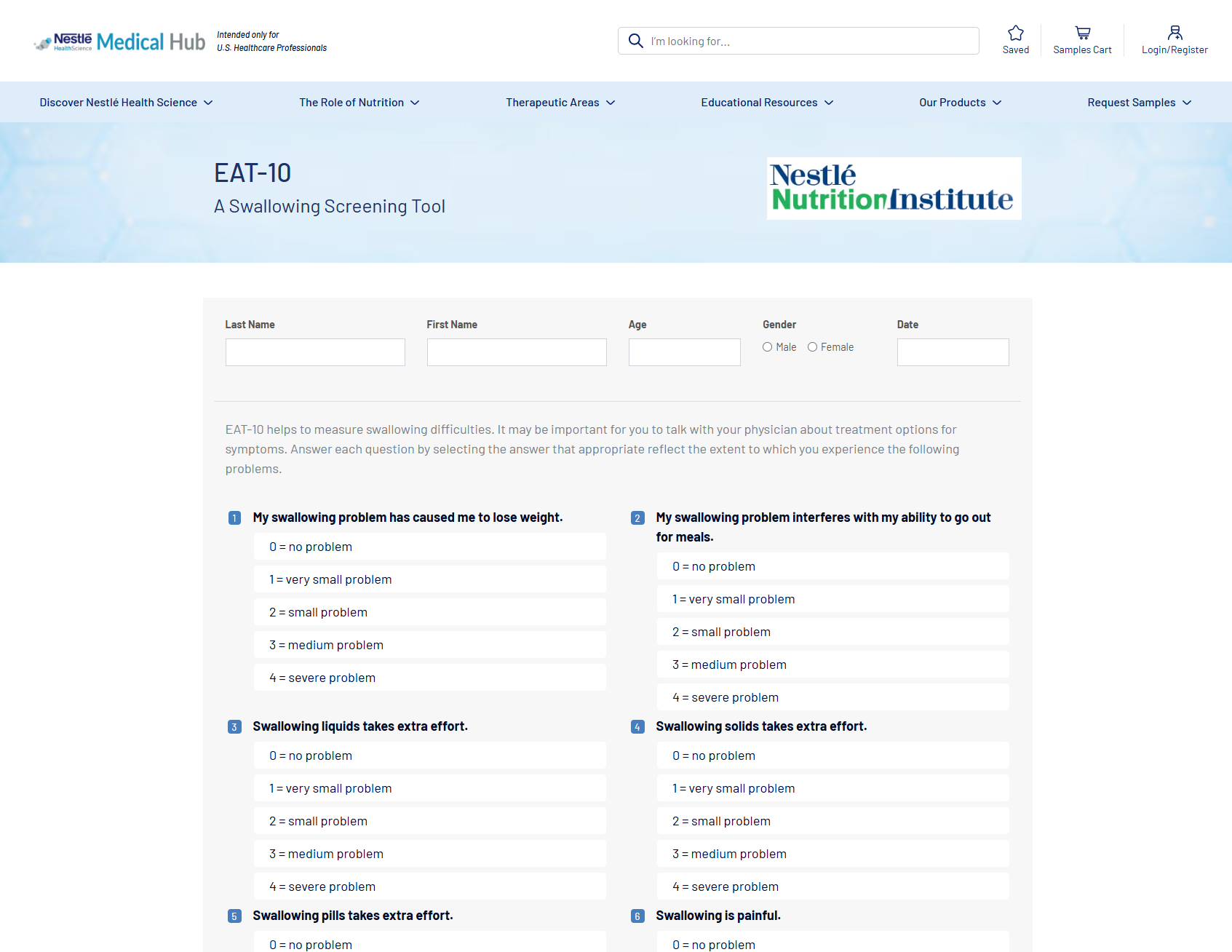
This resource offers a self-assessment tool to screen for swallowing difficulties by rating various aspects of swallowing function. A score of 3 or higher suggests potential issues that may require discussion with a healthcare provider.

This resource was developed internationally and therefore its applicability and usefulness may be limited.
Author
External resource
Key Theme
Assessment and planning, Clinical safety, Food and nutrition
Standard
3: The Care and Services, 5: Clinical Care, 6: Food and Nutrition
Outcomes
3.1 Assessment and planning, 5.5: Safety of clinical care services, 6.2: Assessment of nutritional needs and preferences
EAT-10: A Swallowing Screening Tool
/quality-standards/my-5-moments-hand-hygiene-focus-caring-patient-urinary-catheter

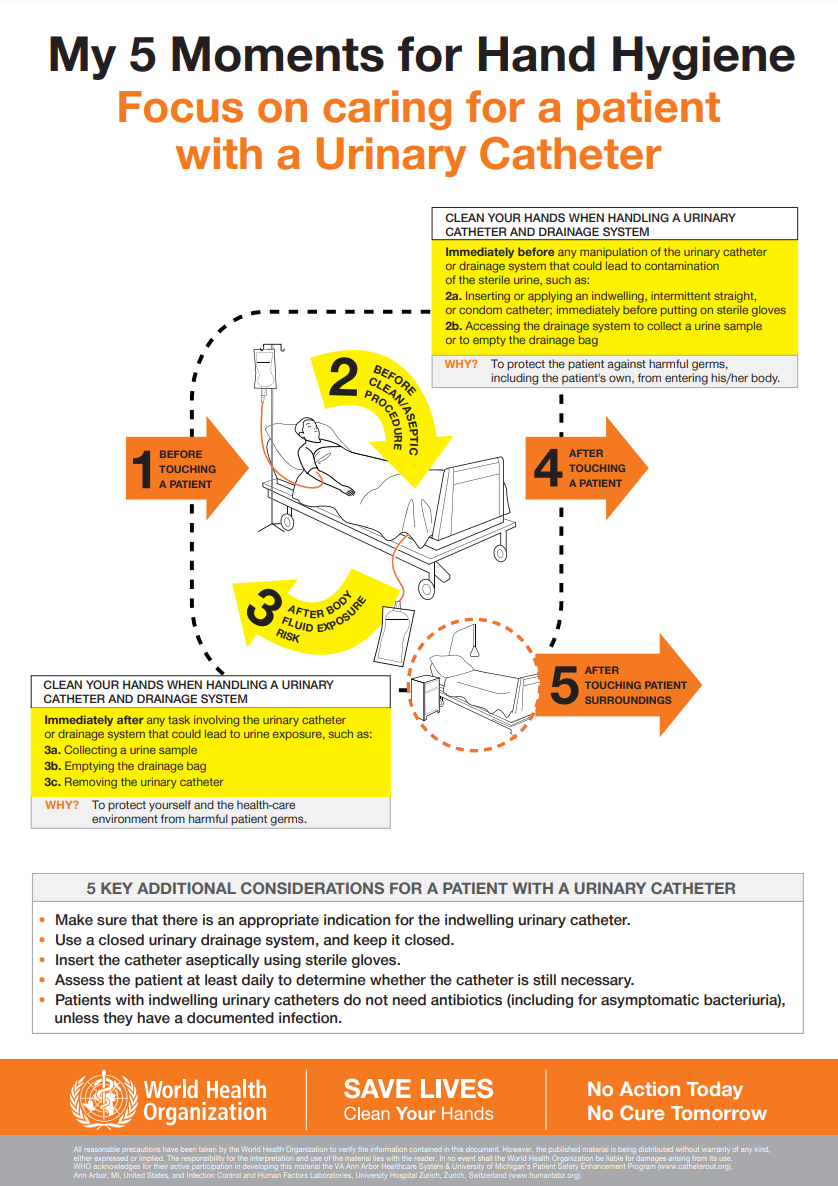
My 5 moments for hand hygiene: focus on caring for a patient with a urinary catheter

Poster
Published date

This resource outlines the ‘5 Moments for Hand Hygiene’ with specific considerations for patients with urinary catheters, aiming to minimise infection risks. It provides steps for appropriate hand hygiene before and after touching the patient, performing aseptic procedures, and handling catheter equipment.

This resource was developed internationally and therefore its applicability and usefulness may be limited.
Author
External resource
Key Theme
Infection prevention and control
Standard
4: The Environment, 5: Clinical Care
Outcomes
4.2: Infection prevention and control, 5.2: Preventing and controlling infections in delivering clinical care services
My 5 moments for hand hygiene: focus on caring for a patient with a urinary catheter
/quality-standards/global-strategy-infection-prevention-and-control

Global strategy on infection prevention and control

Guidance

This resource provides a global framework for infection prevention and control (IPC) in healthcare settings, aiming to reduce healthcare-associated infections and antimicrobial resistance. It offers strategic directions for achieving measurable improvements by 2030, supporting patient safety, healthcare worker protection, and sustainable health outcomes worldwide.

This resource was developed internationally and therefore its applicability and usefulness may be limited.
Author
External resource
Key Theme
Infection prevention and control
Standard
4: The Environment, 5: Clinical Care
Outcomes
4.2: Infection prevention and control, 5.2: Preventing and controlling infections in delivering clinical care services
Global strategy on infection prevention and control
/quality-standards/best-practice-food-and-nutrition-manual-aged-care

Best Practice Food and Nutrition Manual for Aged Care

Guidance
Published date

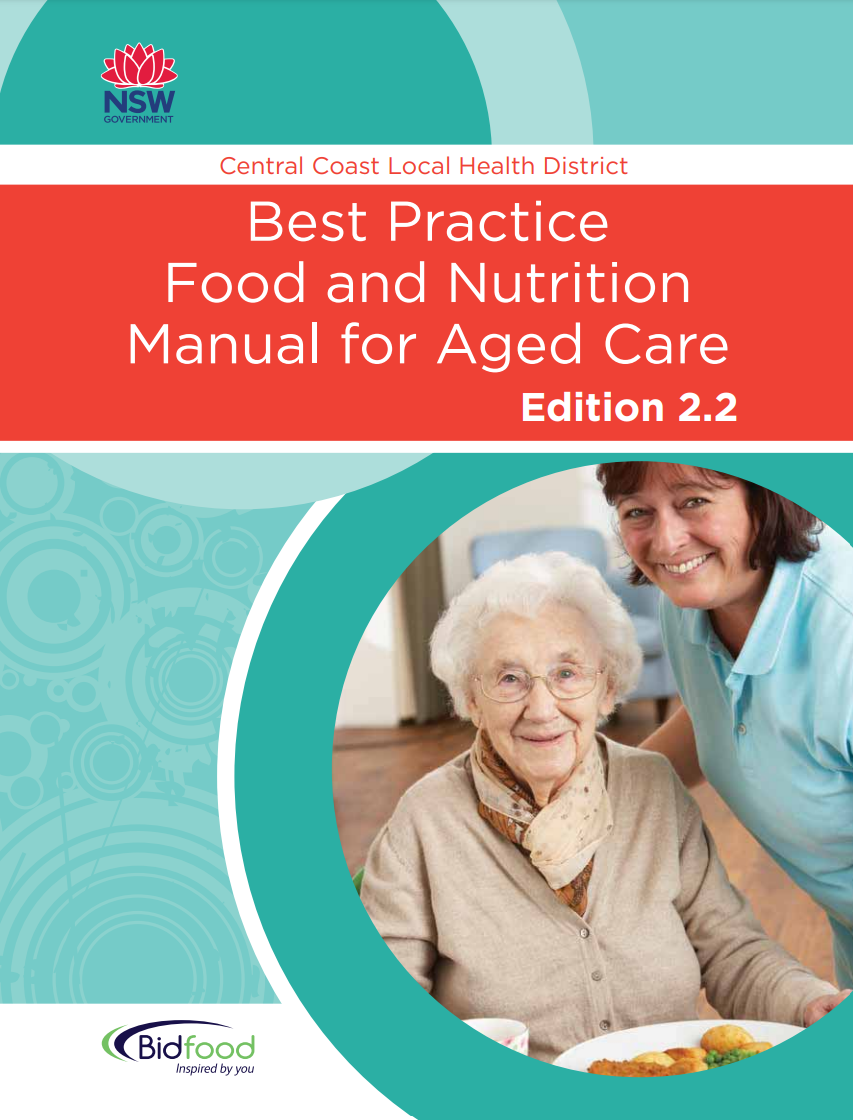
This manual offers practical guidelines on food and nutrition best practices in aged care homes, covering menu planning, meal enjoyment, hydration, and malnutrition prevention. It includes checklists, screening tools, and dietary considerations tailored to the needs of older people.

This resource was developed by a state/territory government or organisation and therefore its applicability and usefulness may be limited.
Author
External resource
Key Theme
Clinical safety, Food and nutrition
Standard
5: Clinical Care, 6: Food and Nutrition
Outcomes
5.5: Safety of clinical care services, 6.2: Assessment of nutritional needs and preferences, 6.3: Provision of food and drinks, 6.4: Dining experience
Best Practice Food and Nutrition Manual for Aged Care
/quality-standards/infection-control-guidelines

Infection Control Guidelines

Guidance
Last Updated

This resource provides infection control guidelines for managing infectious diseases in care settings, covering protocols for exposure to blood and body fluids, managing respiratory and gastrointestinal illnesses, and handling high-risk infections. It includes standard precautions, waste disposal, and cleaning procedures to maintain safety and reduce transmission.

This resource was developed by a state/territory government or organisation and therefore its applicability and usefulness may be limited.
Author
External resource
Key Theme
Infection prevention and control
Standard
4: The Environment, 5: Clinical Care
Outcomes
4.2: Infection prevention and control, 5.2: Preventing and controlling infections in delivering clinical care services
Infection Control Guidelines
/quality-standards/standardised-care-processes

Standardised care processes

Guidance
Last Updated

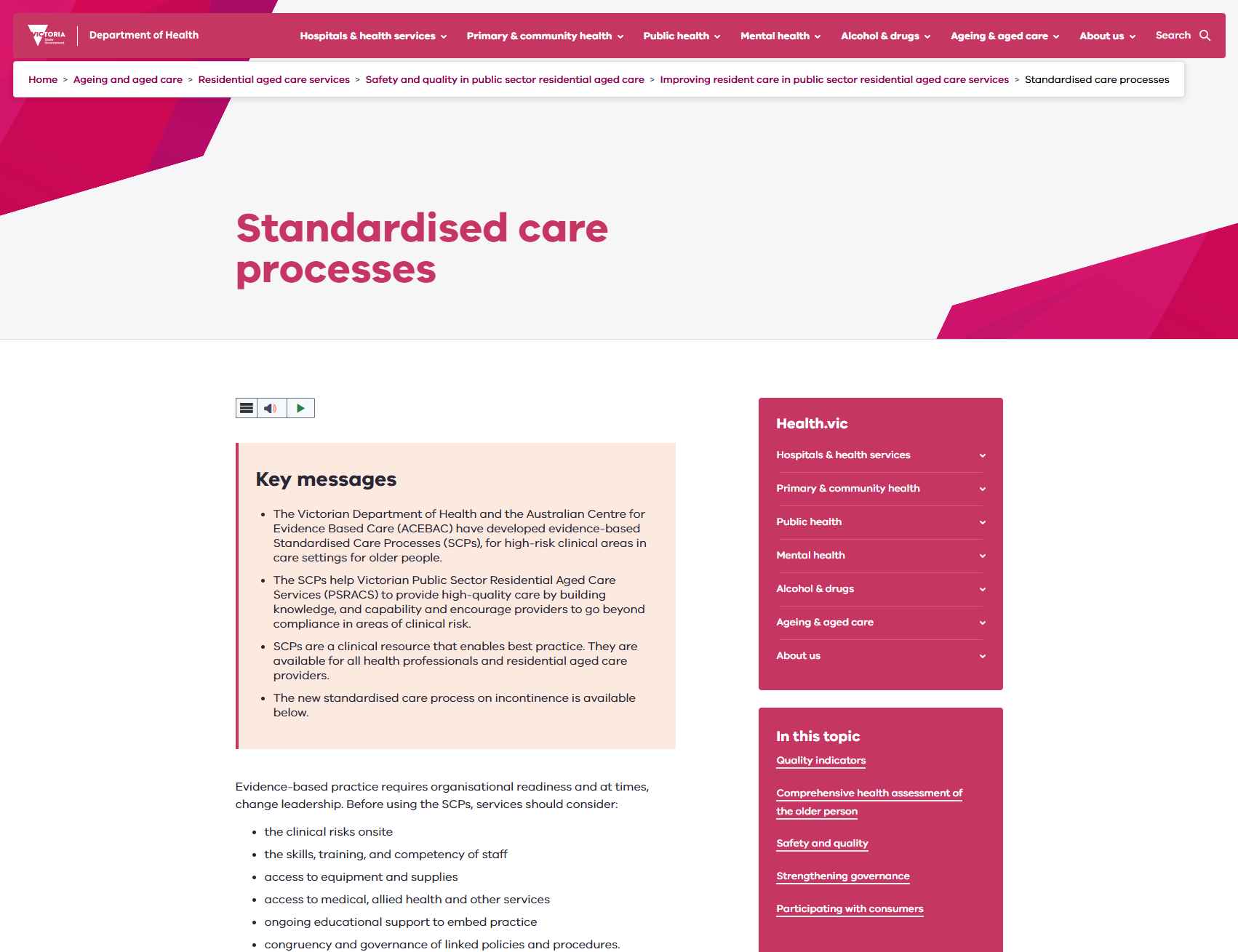
This resource offers evidence-based standardised care processes for aged care providers, covering high-risk clinical areas such as falls, pain, incontinence, and dehydration. It provides structured guidelines to support best practices, ensuring consistent and safe care for older people in residential settings.

This resource was developed by a state/territory government or organisation and therefore its applicability and usefulness may be limited.
Author
External resource
Key Theme
Medication management, Clinical safety, Delivering comprehensive care and services, Palliative and end of life care, Food and nutrition
Standard
5: Clinical Care, 6: Food and Nutrition
Outcomes
5.3: Safe and quality use of medicines, 5.5: Safety of clinical care services, 5.6 Cognitive impairment  , 5.7: Palliative care and end-of-life care, 6.2: Assessment of nutritional needs and preferences, 6.3: Provision of food and drinks
Standardised care processes
/quality-standards/my-healthy-home-home-health-factsheet-series

My healthy home: home health factsheet series

Fact sheet
Published date

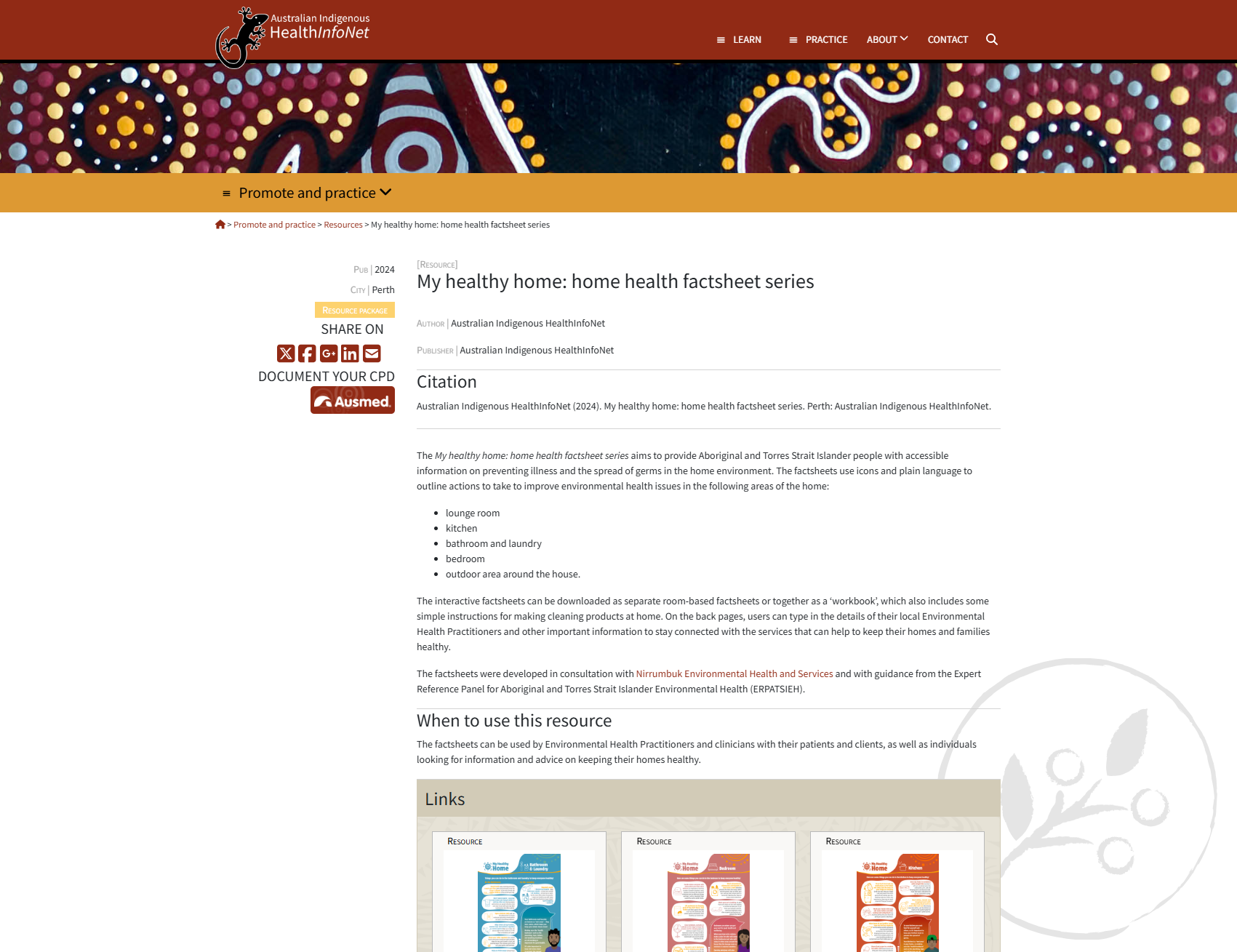
This resource offers accessible health information for Aboriginal and Torres Strait Islander people on preventing illness in the home. It includes room-based fact sheets with actions to improve environmental health, available as individual sheets or a workbook. This resource includes state-specific information and therefore its applicability and usefulness may be limited.
Author
External resource
Key Theme
Delivering comprehensive care and services, Environment, Infection prevention and control
Standard
4: The Environment, 5: Clinical Care
Outcomes
4.1a: Environment – services delivered in the individual’s home, 4.2: Infection prevention and control, 5.2: Preventing and controlling infections in delivering clinical care services
My healthy home: home health factsheet series
/quality-standards/covid-19-resource-kit

COVID-19 resource kit

Fact sheet, Guidance
Last Updated

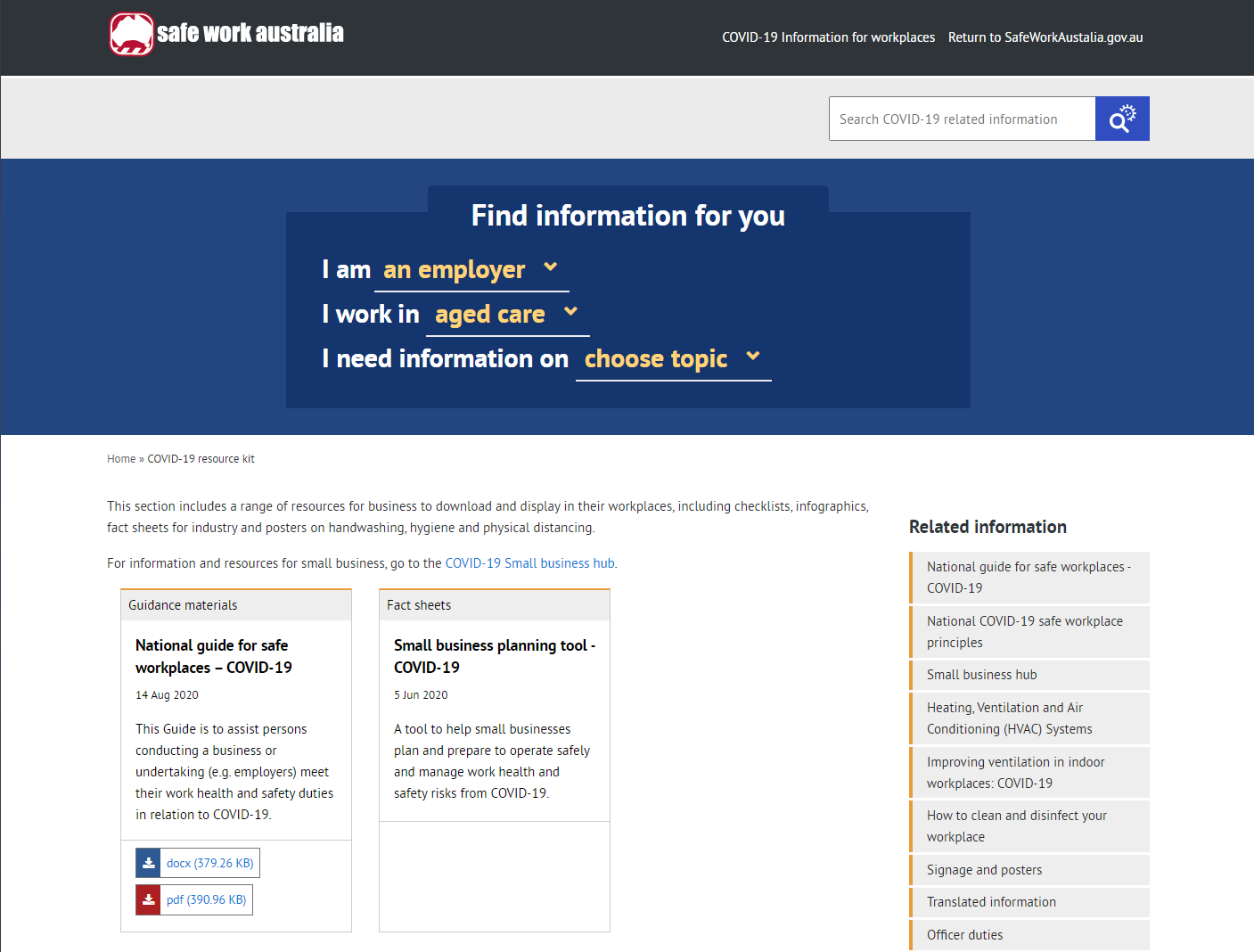
This resource kit provides downloadable tools for businesses, including aged care, to manage COVID-19 risks. It includes checklists, posters, and infographics covering hygiene, physical distancing, cleaning, and response actions if a worker contracts COVID-19. These materials help workplaces implement safe practices and reduce the spread of the virus.
Author
External resource
Key Theme
Infection prevention and control
Standard
4: The Environment, 5: Clinical Care
Outcomes
4.2: Infection prevention and control, 5.2: Preventing and controlling infections in delivering clinical care services
COVID-19 resource kit
/quality-standards/covid-19-information-workplaces-aged-care

COVID-19 Information for workplaces - Aged care

Guidance
Last Updated

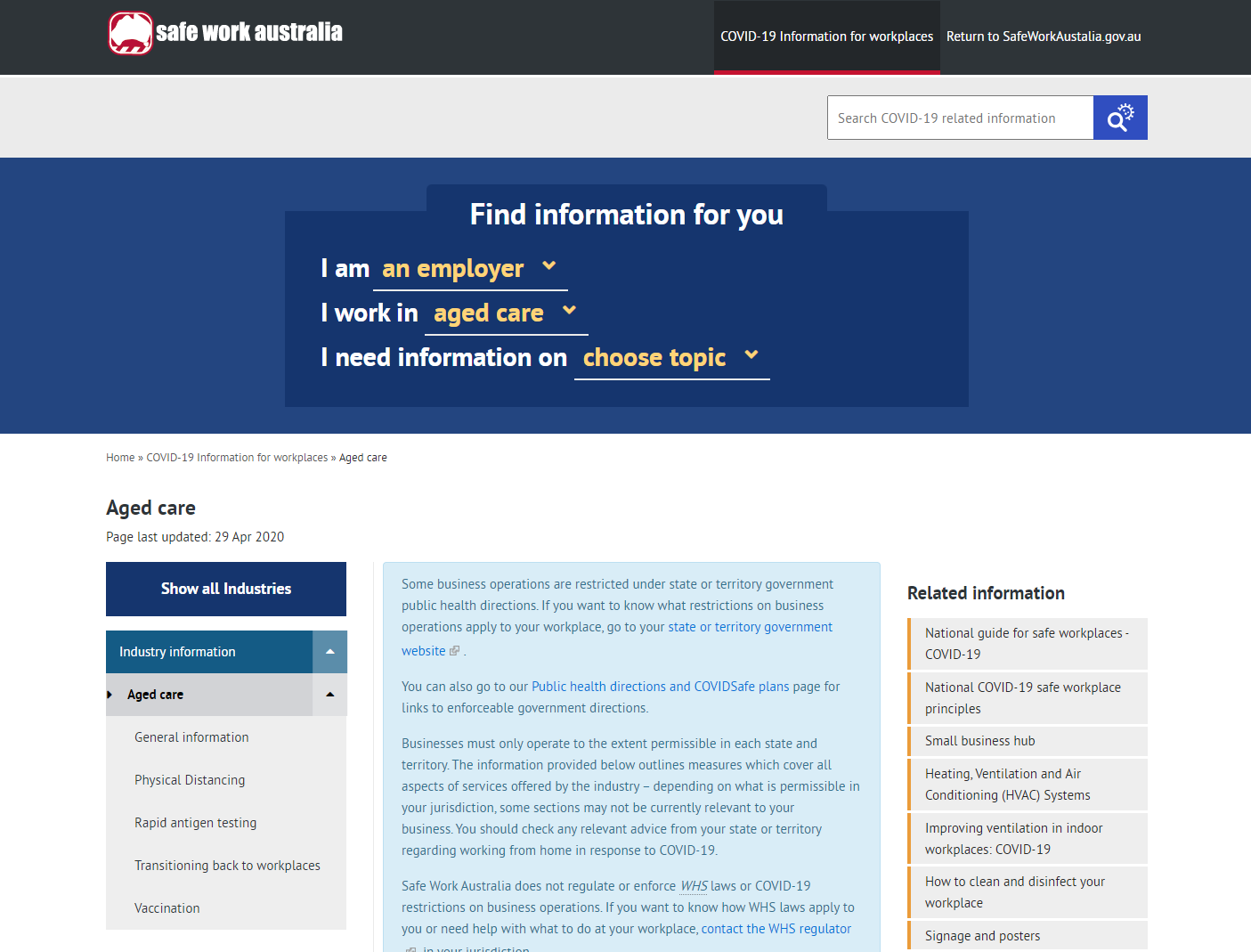
This resource provides work health and safety (WHS) guidance for the aged care industry during COVID-19. It includes information on employer responsibilities, safe workplace practices, and compliance with public health directions. It supports aged care providers in managing COVID-19 risks across various settings, including residential, respite, and in-home care services.
Author
External resource
Key Theme
Infection prevention and control
Standard
4: The Environment, 5: Clinical Care
Outcomes
4.2: Infection prevention and control, 5.2: Preventing and controlling infections in delivering clinical care services
COVID-19 Information for workplaces - Aged care
/quality-standards/respiratory-syncytial-virus-rsv

Respiratory syncytial virus (RSV)

Guidance
Last Updated

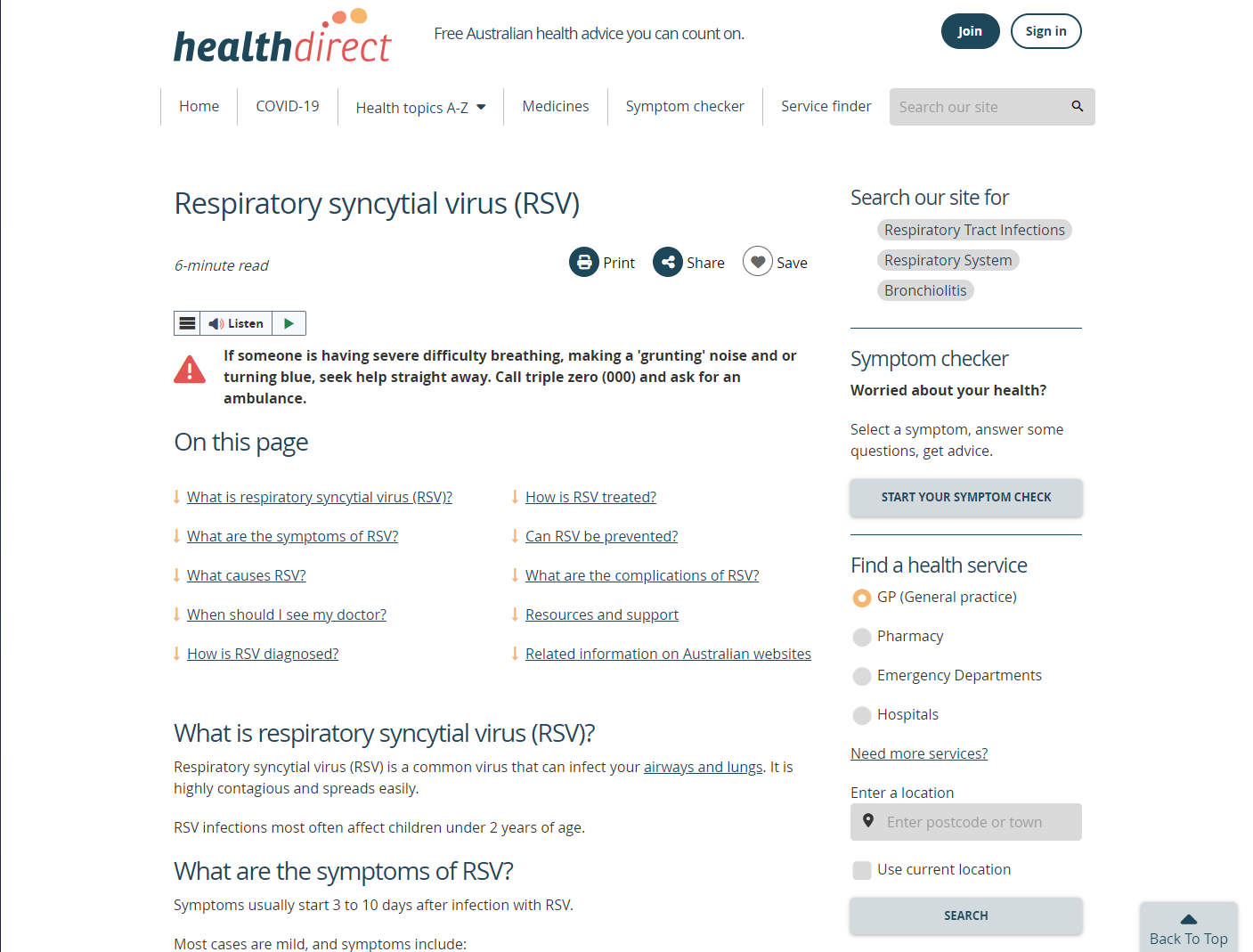
This resource explains respiratory syncytial virus (RSV), a common and highly contagious virus that affects the airways and lungs. It outlines symptoms, prevention, and potential complications, especially for young children and older adults. It also provides information on diagnosis, treatment, and recently approved vaccines for at-risk groups.
Author
External resource
Key Theme
Infection prevention and control
Standard
4: The Environment, 5: Clinical Care
Outcomes
4.2: Infection prevention and control, 5.2: Preventing and controlling infections in delivering clinical care services
Respiratory syncytial virus (RSV)
/quality-standards/national-antimicrobial-prescribing-survey-naps

National Antimicrobial Prescribing Survey (NAPS)

Tool

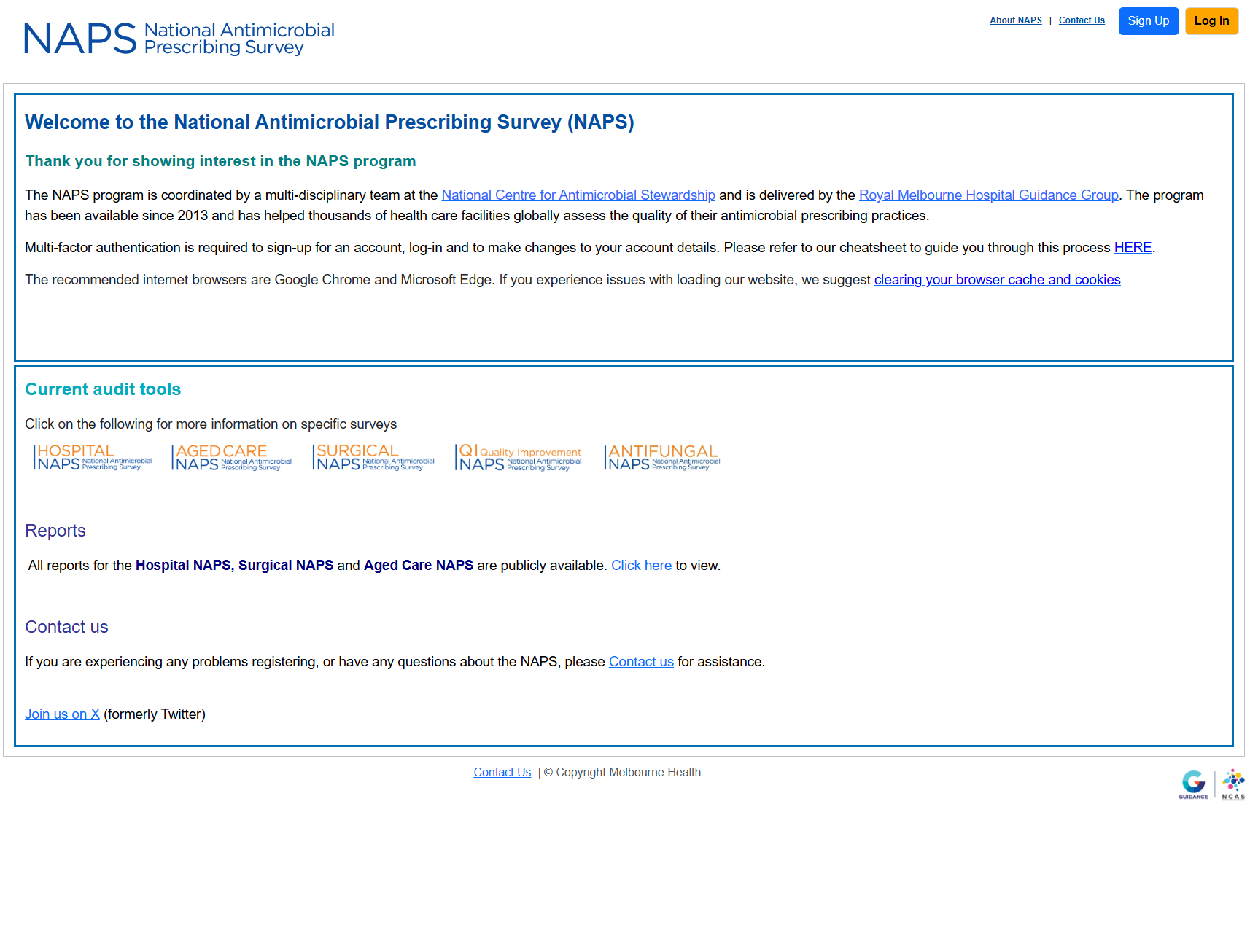
This survey resource provides a framework for assessing antimicrobial prescribing practices in aged care and other health settings. It supports health facilities in evaluating the appropriateness of antimicrobial use through audit tools and data collection, contributing to antimicrobial stewardship and improved patient care quality.
Author
External resource
Key Theme
Infection prevention and control
Standard
4: The Environment, 5: Clinical Care
Outcomes
4.2: Infection prevention and control, 5.2: Preventing and controlling infections in delivering clinical care services
National Antimicrobial Prescribing Survey (NAPS)
/quality-standards/laundry-and-infection-control-residential-aged-care

Laundry and Infection Control in Residential Aged Care

Guidance
Last Updated

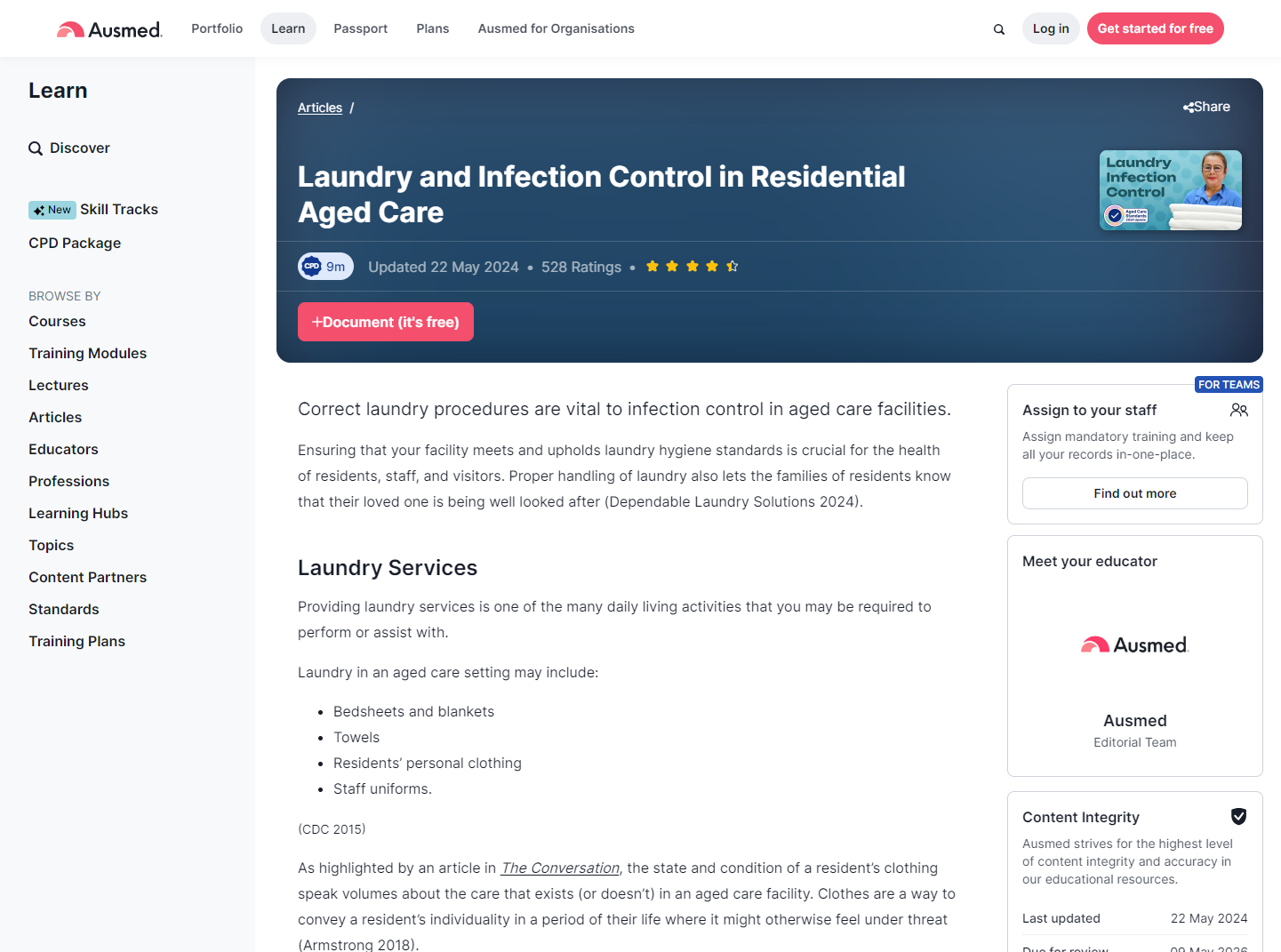
This resource provides guidance on proper laundry procedures in residential aged care to support infection control. It explains how to handle soiled linen, manage laundry services, and prevent contamination. The resource aligns with infection control standards, helping aged care providers meet hygiene requirements and reduce the risk of pathogen transmission. 

This resource may refer to information that will be updated from 1 November 2025 to align with the new Aged Care Act and Quality Standards.
Author
External resource
Key Theme
Infection prevention and control
Standard
4: The Environment, 5: Clinical Care
Outcomes
4.2: Infection prevention and control, 5.2: Preventing and controlling infections in delivering clinical care services
Laundry and Infection Control in Residential Aged Care
/quality-standards/first-aid-fact-sheet-choking-adult-or-child-over-1-year

First aid fact sheet - Choking adult or child (over 1 year)

Fact sheet
Last Updated

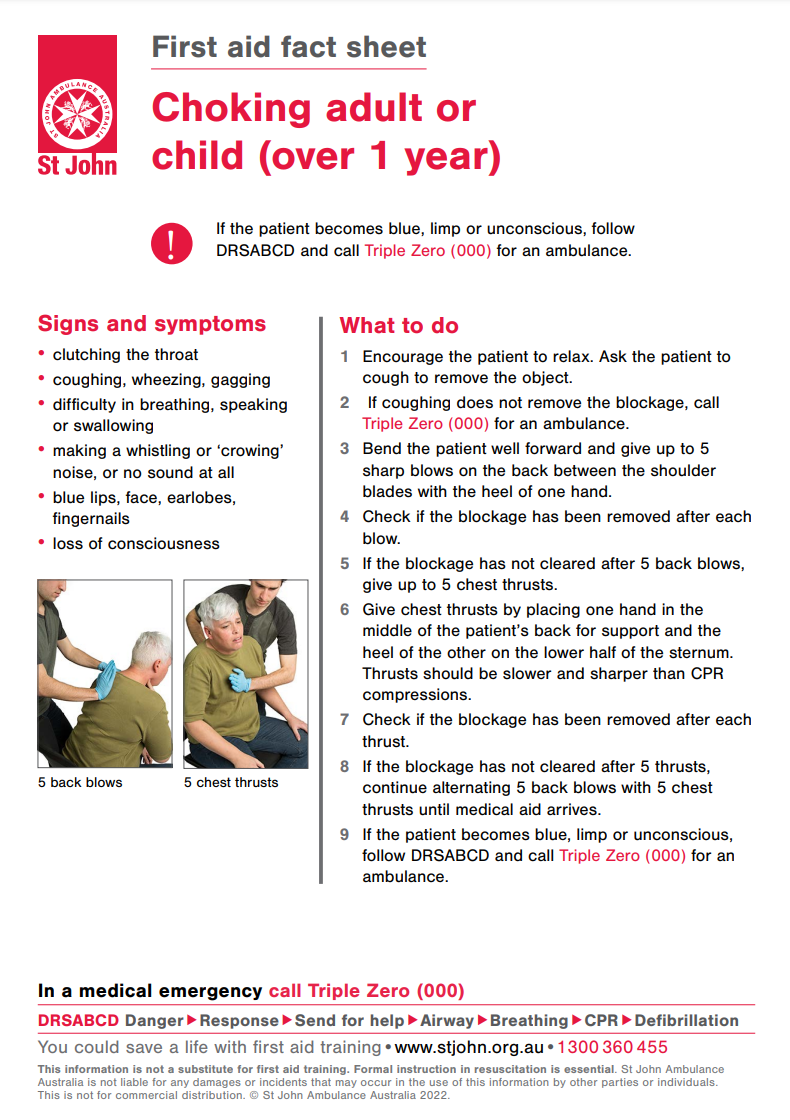
This fact sheet provides first aid instructions for choking in adults or children over one year. It details recognising choking symptoms and steps for emergency care and guidance to call emergency services if necessary.

Author
External resource
Key Theme
Food and nutrition, Clinical safety
Standard
6: Food and Nutrition, 5: Clinical Care
Outcomes
6.2: Assessment of nutritional needs and preferences, 5.5: Safety of clinical care services
First aid fact sheet -  Choking adult or child (over 1 year)
/quality-standards/improving-patient-outcomes-through-medical-nutrition-therapy

Improving patient outcomes through Medical Nutrition Therapy

Guidance
Published date

This resource outlines the role of Accredited Practising Dietitians (APDs) in medical nutrition therapy across various health conditions, including those common in aged care. It includes indications for referral to an APD and highlights benefits such as improved nutritional status, symptom management, and enhanced health outcomes. This resource may apply to healthcare contexts outside of aged care. Please consider the applicability of this resource to your care setting.

Author
External resource
Key Theme
Food and nutrition, Clinical safety
Standard
6: Food and Nutrition, 5: Clinical Care
Outcomes
6.2: Assessment of nutritional needs and preferences, 5.5: Safety of clinical care services
Improving patient outcomes through Medical Nutrition Therapy
/quality-standards/centre-cultural-diversity-ageing-resources

Centre for Cultural Diversity in Ageing - Resources

Guidance

This page offers a wide range of resources aimed at helping aged care providers deliver culturally inclusive services. It includes multilingual communication cards, cultural care plans, and practice guides that help address the cultural, linguistic, and spiritual needs of people in care. The resources make sure aged care services are accessible, safe, and appropriate for culturally and linguistically diverse populations​.

Author
External resource
Key Theme
Person-centred care, Corporate and clinical governance, Care coordination and transitions, Food and nutrition
Standard
1: The Individual, 2: The Organisation, 3: The Care and Services, 6: Food and Nutrition
Outcomes
1.1: Person-centred care, 2.1: Partnering with individuals, 3.2: Delivery of funded aged care services, 3.4: Planning and coordination of funded aged care services, 6.1: Partnering with individuals on food and drinks, 6.2: Assessment of nutritional needs and preferences
Centre for Cultural Diversity in Ageing - Resources