Aged care laws in Australia have now changed. The new Aged Care Act 2024 and Aged Care Rules 2025 now apply. While we complete updating of our website, including draft guidance and other materials, to align with the new laws, providers are advised to refer to the new Act and Rules for any required clarification of their obligations and legal responsibilities. Thank you for your patience.

Quality Standards Resource Centre

The Quality Standards Resource Centre helps extend understanding of the strengthened Aged Care Quality Standards, which take effect from 1 November 2025. The Resource Centre will be updated to reflect key changes made to the draft strengthened Standards. You can search for resources by using keywords, or filtering by standard, outcome, audience and theme. Before using the Resource Centre, please read the terms of use.

Displaying 1 to 6 of 6 result(s)
/quality-standards/malnutrition-universal-screening-tool

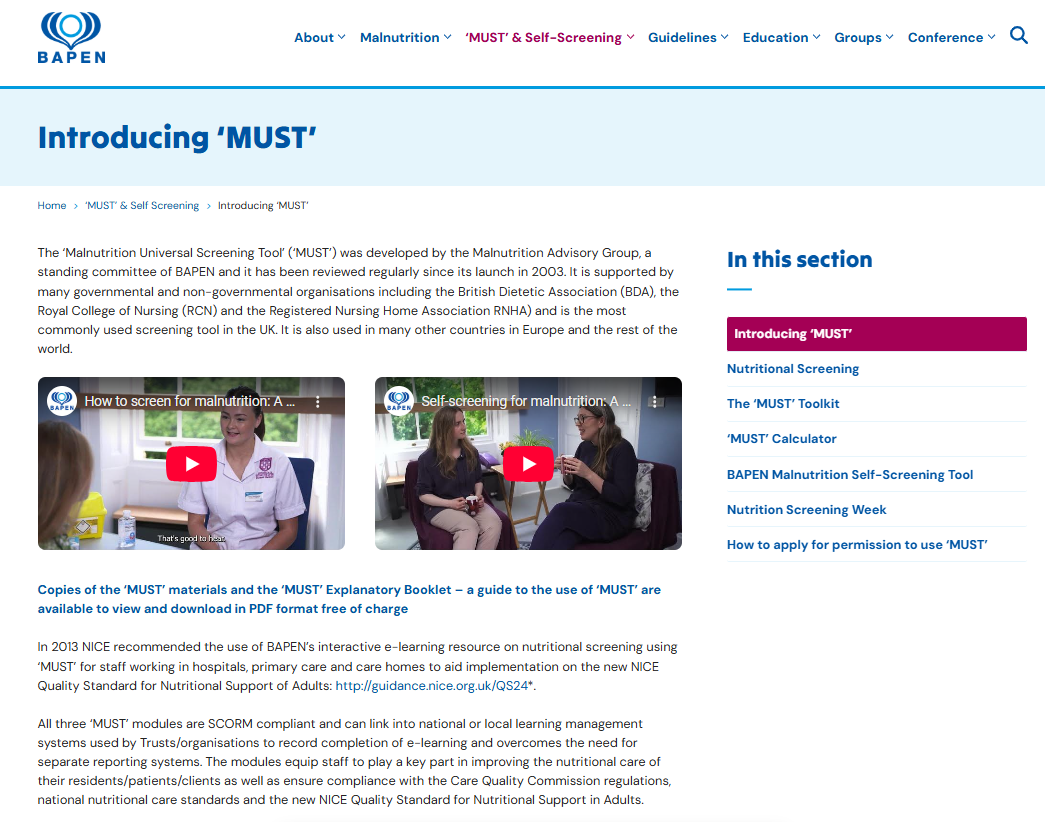
Malnutrition Universal Screening Tool

Tool

The ‘Malnutrition Universal Screening Tool’ (‘MUST’) is a widely used tool for identifying malnutrition risk in adults across various settings. It includes interactive e-learning modules with case studies and assessments, helping staff improve nutritional care and meet quality standards.

This resource was developed internationally and therefore its applicability and usefulness may be limited.
Author
External resource
Key Theme
Assessment and planning, Clinical safety, Food and nutrition
Standard
3: The Care and Services, 5: Clinical Care, 6: Food and Nutrition
Outcomes
3.1 Assessment and planning, 5.5: Safety of clinical care services, 6.2: Assessment of nutritional needs and preferences
Malnutrition Universal Screening Tool
/quality-standards/what-mini-nutritional-assessment-mna

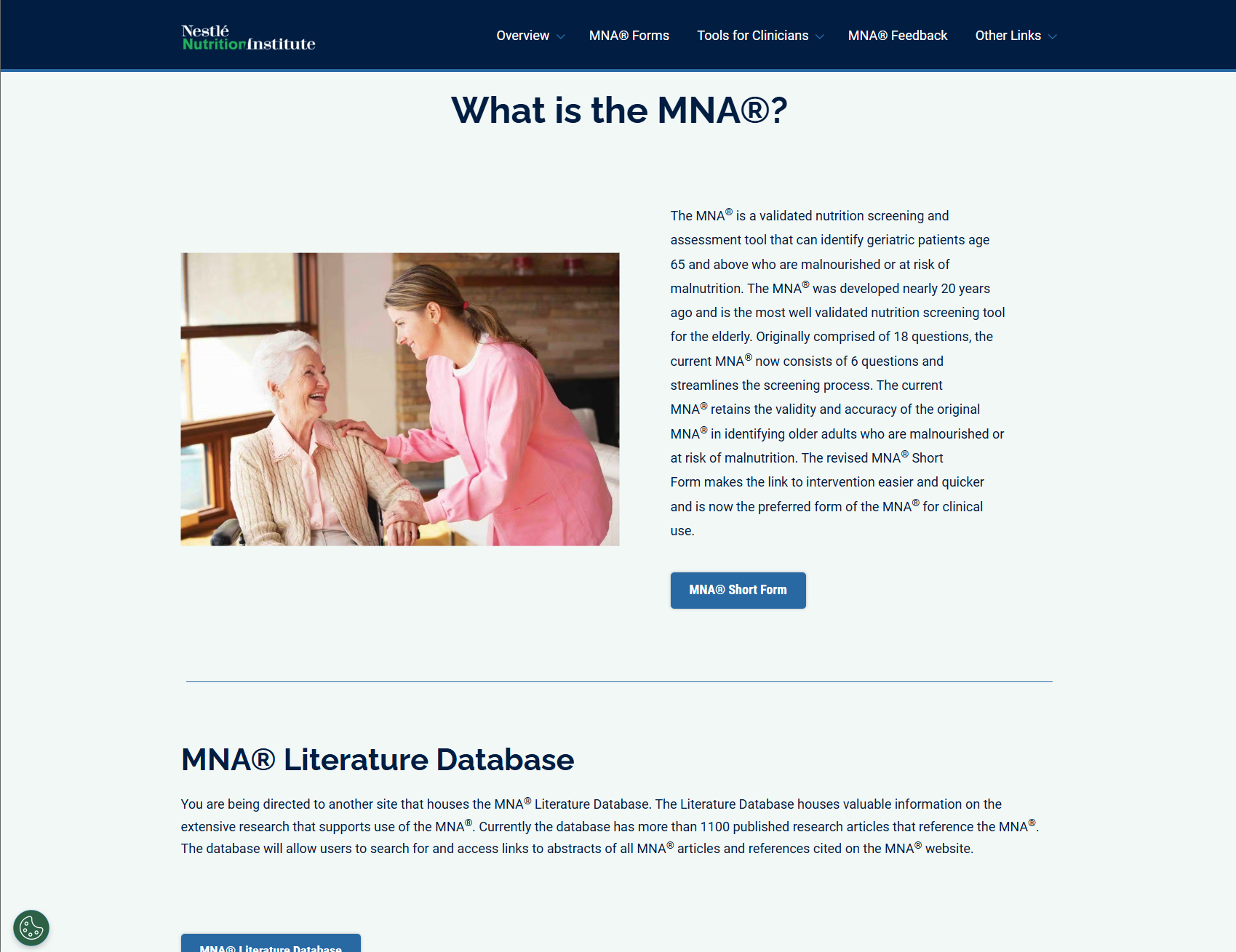
What is the Mini Nutritional Assessment (MNA)?

Guidance, Tool

This resource is a validated nutrition screening and assessment tool to identify malnutrition or risk of malnutrition in people aged 65 and older. It includes an easy-to-use short form for quick identification and intervention planning.

This resource was developed internationally and therefore its applicability and usefulness may be limited.
Author
External resource
Key Theme
Assessment and planning, Clinical safety, Food and nutrition
Standard
3: The Care and Services, 5: Clinical Care, 6: Food and Nutrition
Outcomes
3.1 Assessment and planning, 5.5: Safety of clinical care services, 6.2: Assessment of nutritional needs and preferences
What is the Mini Nutritional Assessment (MNA)?
/quality-standards/guide-completing-mini-nutritional-assessment-short-form

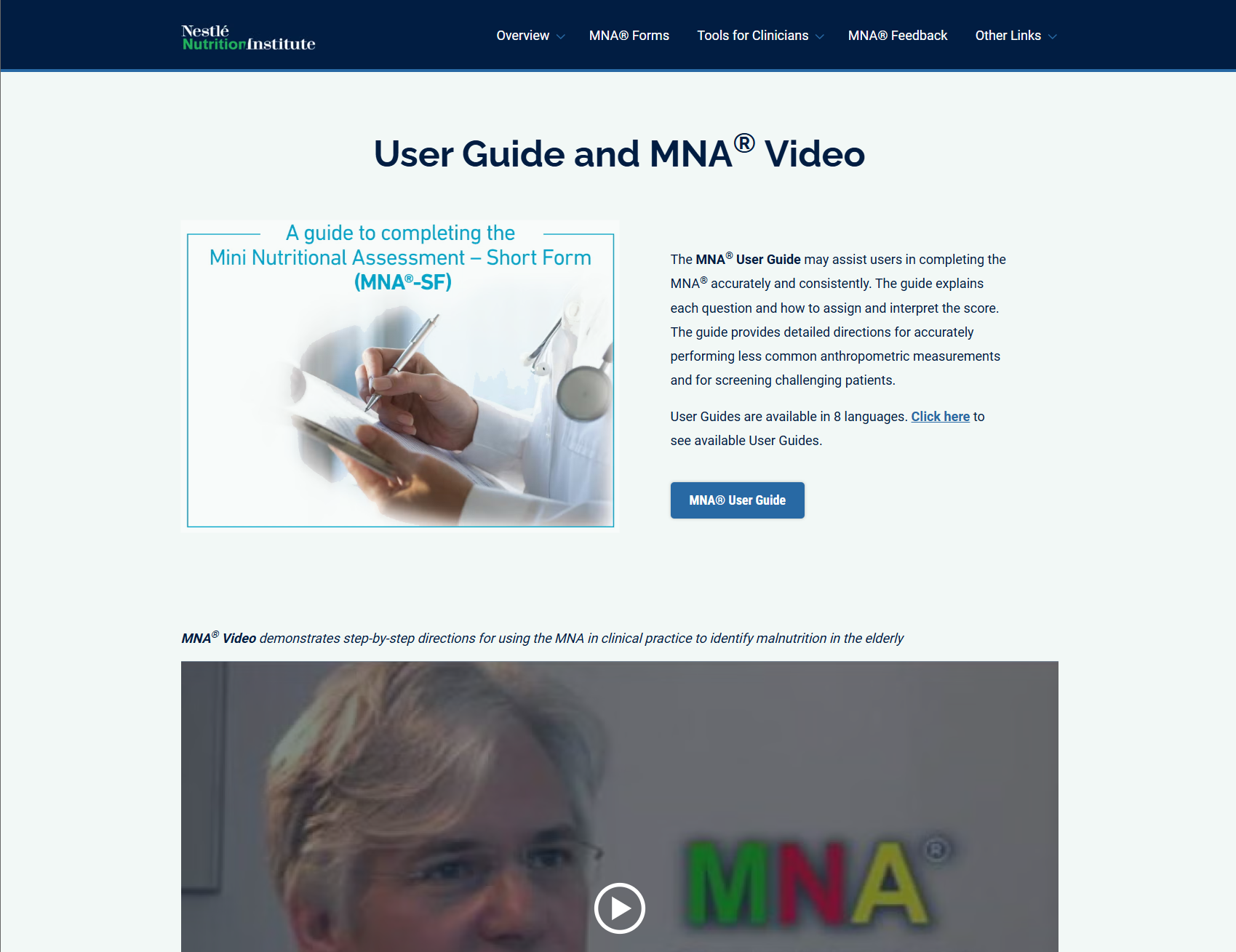
A guide to completing the Mini Nutritional Assessment – Short Form

Tool

This resource is a guide and video for using the Mini Nutritional Assessment (MNA) to identify malnutrition in older people. It explains question scoring, interpretation, and measurement procedures, with a video demonstration.

This resource was developed internationally and therefore its applicability and usefulness may be limited.
Author
External resource
Key Theme
Assessment and planning, Clinical safety, Food and nutrition
Standard
3: The Care and Services, 5: Clinical Care, 6: Food and Nutrition
Outcomes
3.1 Assessment and planning, 5.5: Safety of clinical care services, 6.2: Assessment of nutritional needs and preferences
A guide to completing the Mini Nutritional Assessment – Short Form
/quality-standards/eat-10-swallowing-screening-tool

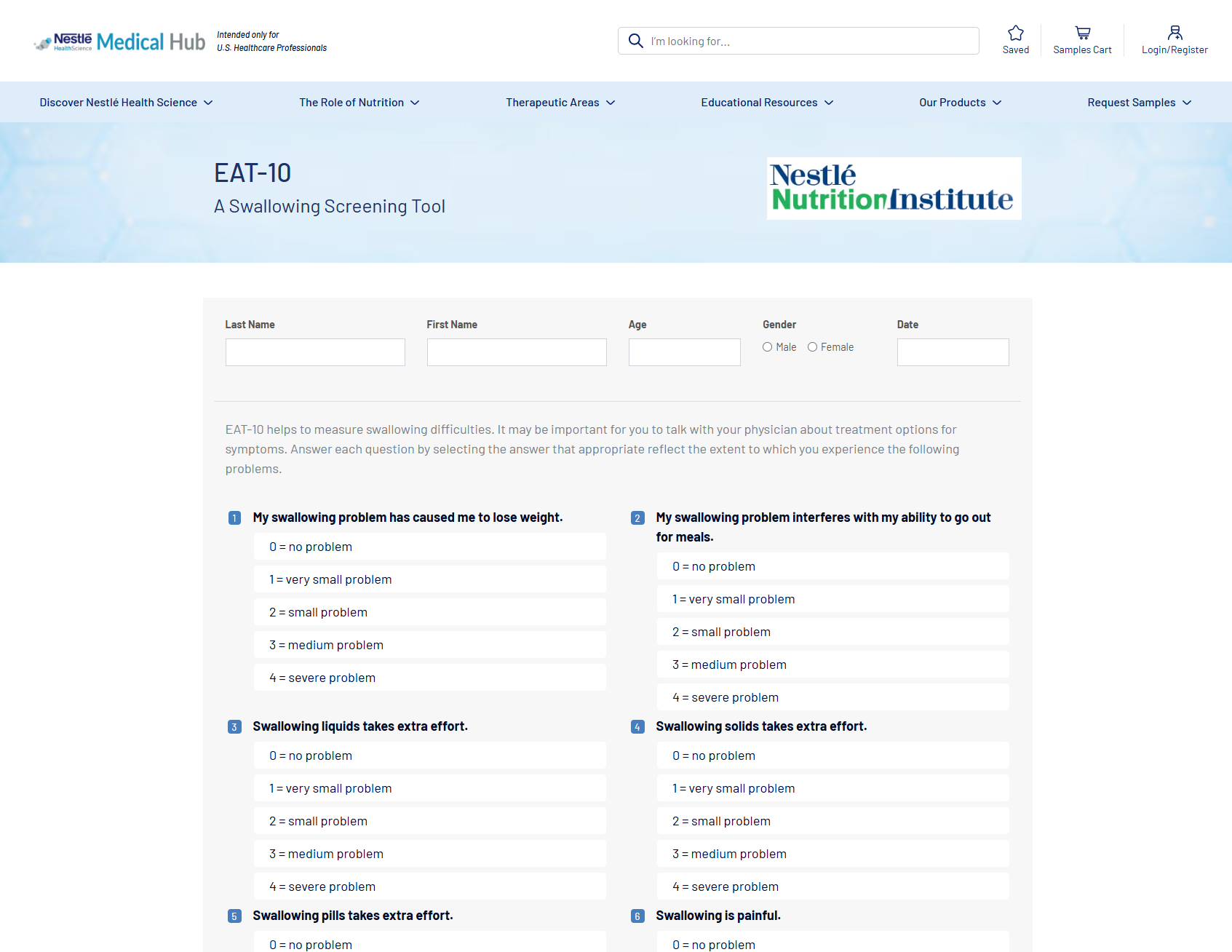
EAT-10: A Swallowing Screening Tool

Tool
Published date

This resource offers a self-assessment tool to screen for swallowing difficulties by rating various aspects of swallowing function. A score of 3 or higher suggests potential issues that may require discussion with a healthcare provider.

This resource was developed internationally and therefore its applicability and usefulness may be limited.
Author
External resource
Key Theme
Assessment and planning, Clinical safety, Food and nutrition
Standard
3: The Care and Services, 5: Clinical Care, 6: Food and Nutrition
Outcomes
3.1 Assessment and planning, 5.5: Safety of clinical care services, 6.2: Assessment of nutritional needs and preferences
EAT-10: A Swallowing Screening Tool
/quality-standards/food-nutrition-and-dining-stand-discussion-notes

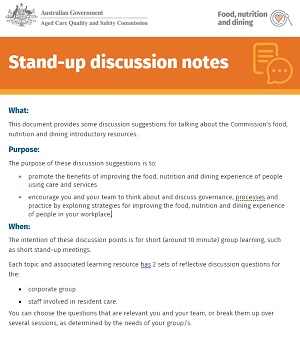
Food, nutrition and dining stand-up discussion notes

Presentations
Published date
Last Updated

This resource provides discussion notes to improve the food, nutrition, and dining experience in aged care settings. It includes reflective questions for corporate teams and care staff, focusing on governance, resident choice, oral health, and support for those with swallowing difficulties. The resource promotes continuous improvement and quality care through group discussions. This resource may refer to information that will be updated from 1 November 2025 to align with the new Aged Care Act and Quality Standards. 

Stand-up discussion notes  (DOCX  6.68 MB)
Author
Aged Care Quality & Safety Commission
Key Theme
Food and nutrition, Clinical safety
Standard
6: Food and Nutrition, 5: Clinical Care
Outcomes
5.5: Safety of clinical care services, 6.1: Partnering with individuals on food and drinks, 6.2: Assessment of nutritional needs and preferences, 6.3: Provision of food and drinks, 6.4: Dining experience
thumbnail image fnd stand-up discussion notes
/quality-standards/food-nutrition-and-dining-reflection-practice

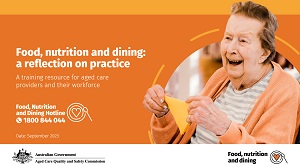
Food, nutrition and dining: a reflection on practice

Guides, Presentations
Published date
Last Updated

This training PowerPoint is a presentation that trainers/managers can download, customise and use to promote discussion and educate their staff to support and improve the food, nutrition and dining experience of consumers in their care.

The resource is designed to support reflective discussions about what ‘best practice’ looks like and a reflection on how it applies in practice.  This resource may refer to information that will be updated from 1 November 2025 to align with the new Aged Care Act and Quality Standards.


Author
Aged Care Quality & Safety Commission
Key Theme
Food and nutrition, Clinical safety
Standard
6: Food and Nutrition, 5: Clinical Care
Outcomes
5.5: Safety of clinical care services, 6.1: Partnering with individuals on food and drinks, 6.2: Assessment of nutritional needs and preferences, 6.3: Provision of food and drinks, 6.4: Dining experience
PowerPoint thumbnail image FND training