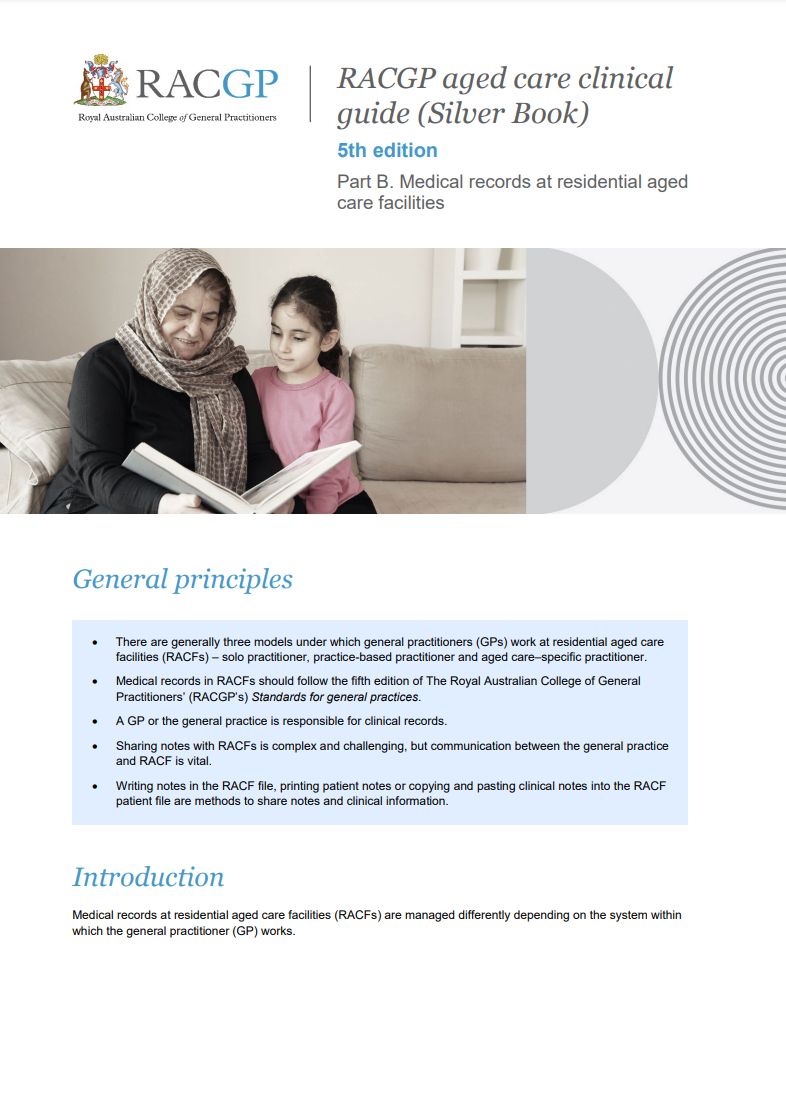
The Quality Standards Resource Centre helps extend understanding of the strengthened Aged Care Quality Standards, which took effect from 1 November 2025. You can search for resources by using keywords, or filtering by standard, outcome and audience. Before using the Resource Centre, please read the terms of use.
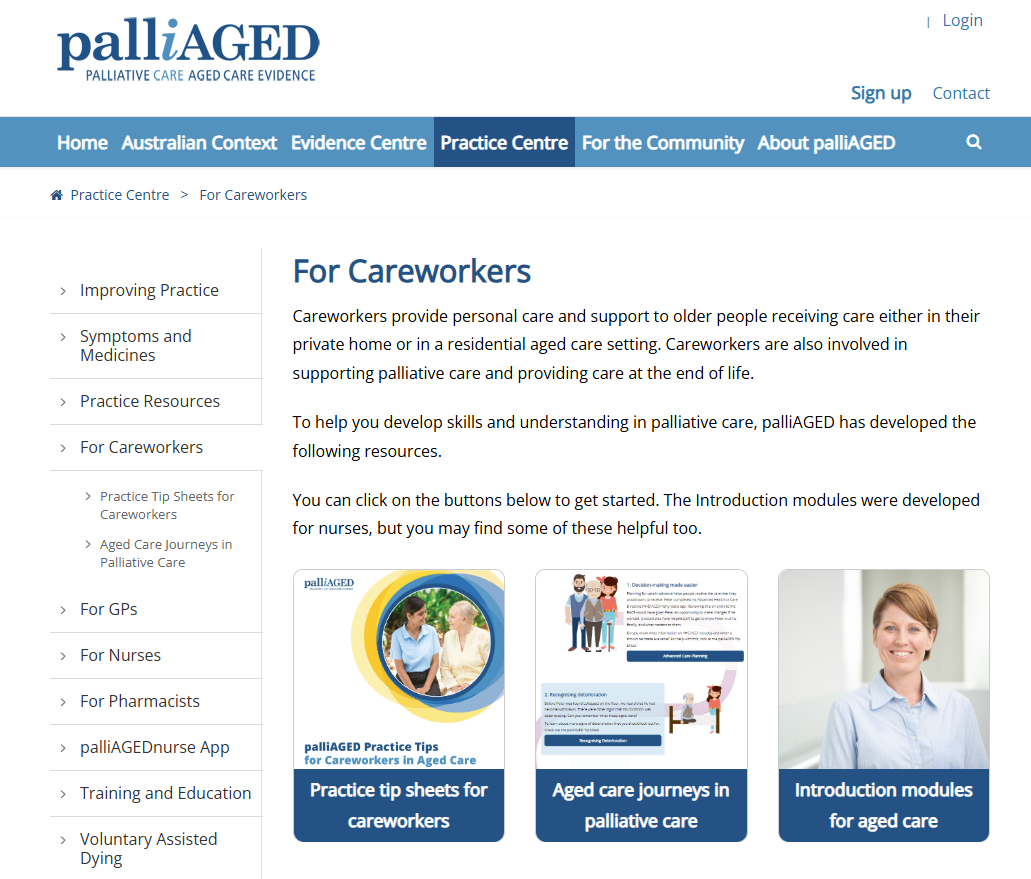
palliAGED - Practice Centre
This resource provides information for care workers about palliative care. The Practice Centre provides links to, and information about, tools and resources to use in practice and improve care and outcomes in palliative care. It includes sections on improving practice, symptoms, medicines and tipsheets.
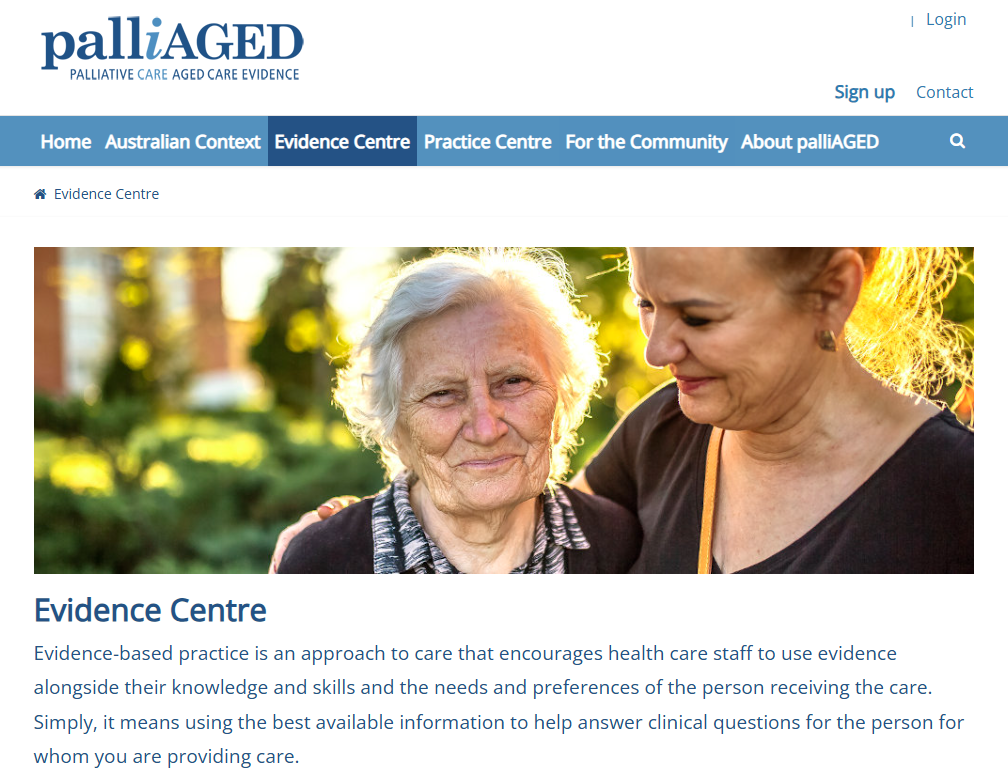
palliAGED - Evidence Centre
This resource provides evidence-based information for the healthcare sector about palliative care. It includes evidence summaries on topics related to palliative care, such as advance care planning, advocacy, care coordination, goals of care, nutrition and needs assessment.
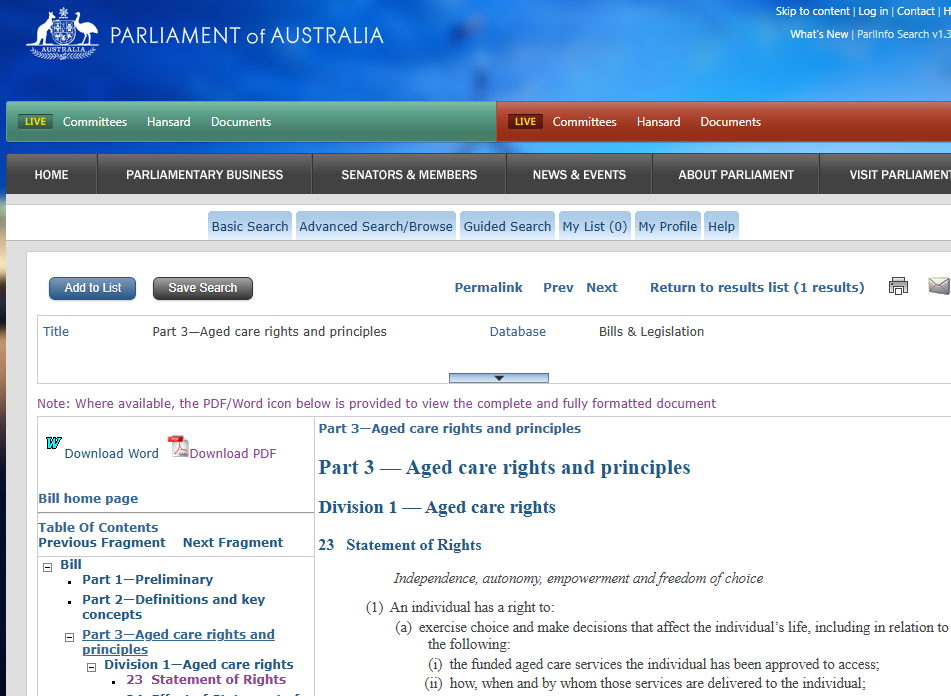
Part 3 - Aged care rights and principles
This resource is available on the Parliament of Australia website. It includes information about aged care rights and principles, including the Statement of Rights. The Statement of Rights outlines the rights that older people will have when accessing aged care services.
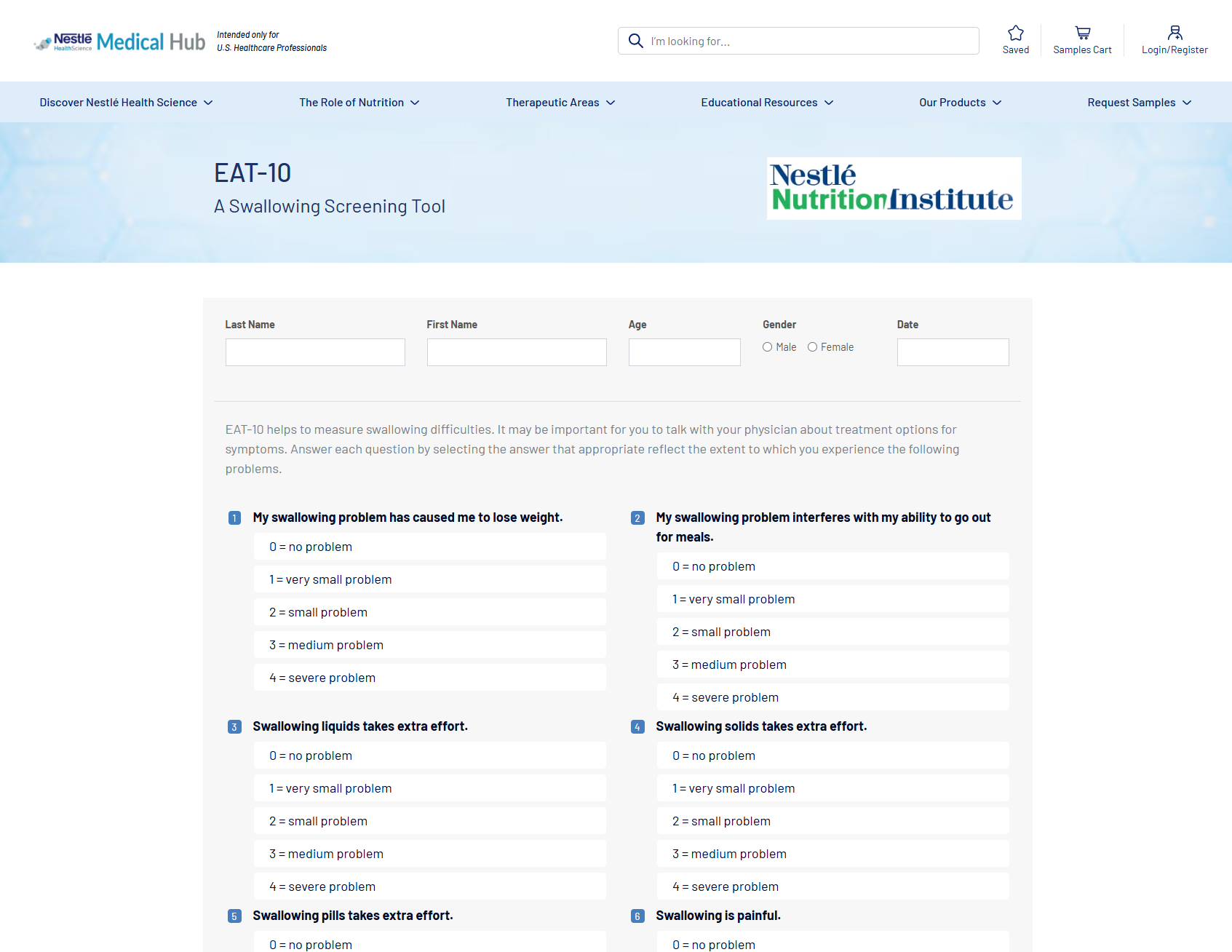
Malnutrition Universal Screening Tool
The ‘Malnutrition Universal Screening Tool’ (‘MUST’) is a widely used tool for identifying malnutrition risk in adults across various settings. It includes interactive e-learning modules with case studies and assessments, helping staff improve nutritional care and meet quality standards.
This resource was developed internationally and therefore its applicability and usefulness may be limited.
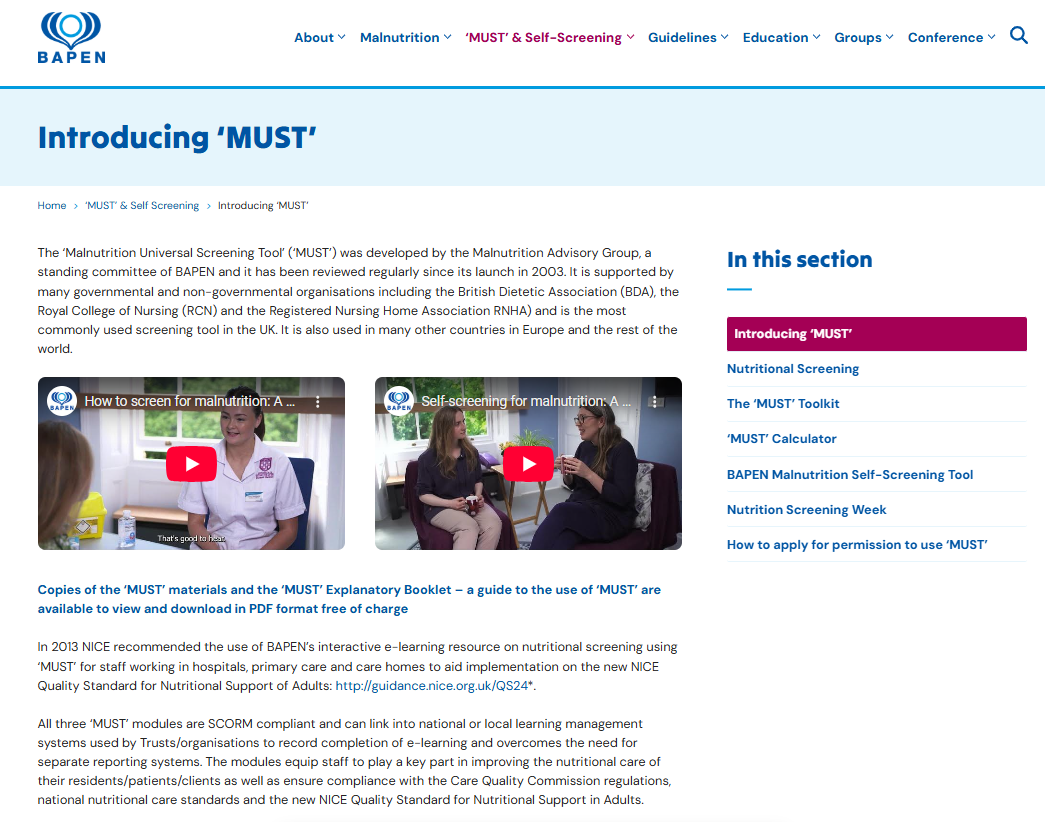
What is the Mini Nutritional Assessment (MNA)?
This resource is a validated nutrition screening and assessment tool to identify malnutrition or risk of malnutrition in people aged 65 and older. It includes an easy-to-use short form for quick identification and intervention planning.
This resource was developed internationally and therefore its applicability and usefulness may be limited.
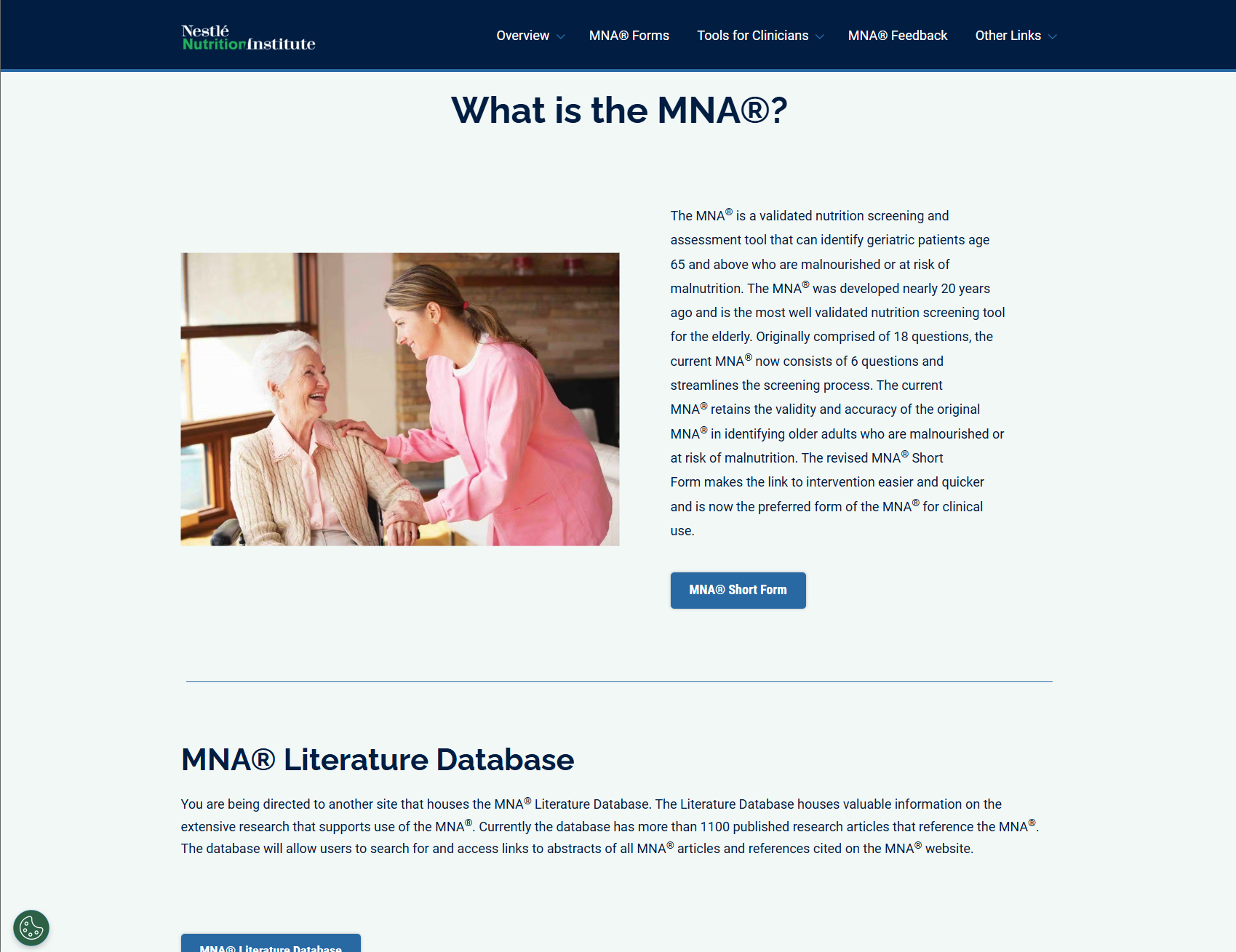
A guide to completing the Mini Nutritional Assessment – Short Form
This resource is a guide and video for using the Mini Nutritional Assessment (MNA) to identify malnutrition in older people. It explains question scoring, interpretation, and measurement procedures, with a video demonstration.
This resource was developed internationally and therefore its applicability and usefulness may be limited.
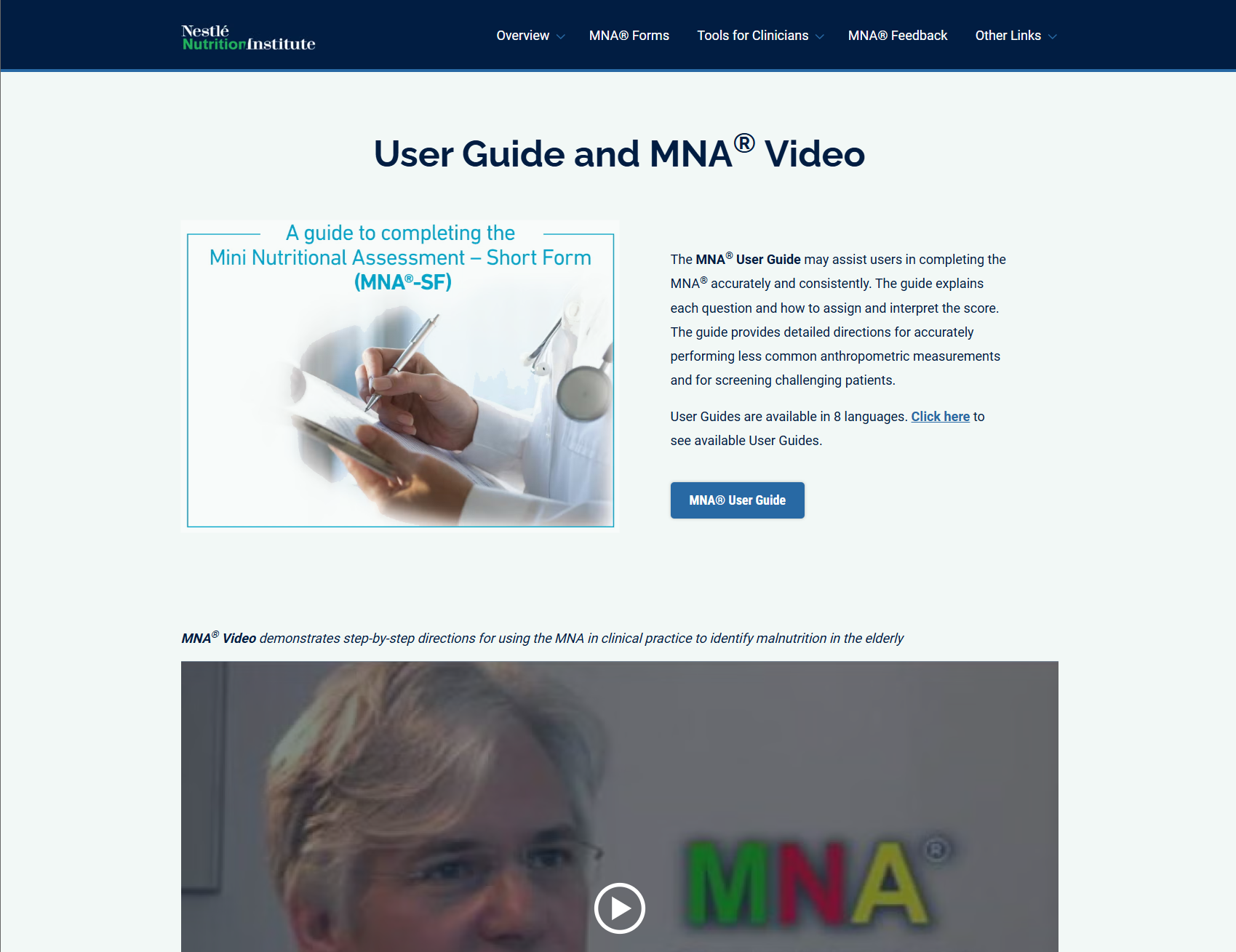
EAT-10: A Swallowing Screening Tool
This resource offers a self-assessment tool to screen for swallowing difficulties by rating various aspects of swallowing function. A score of 3 or higher suggests potential issues that may require discussion with a healthcare provider.
This resource was developed internationally and therefore its applicability and usefulness may be limited.
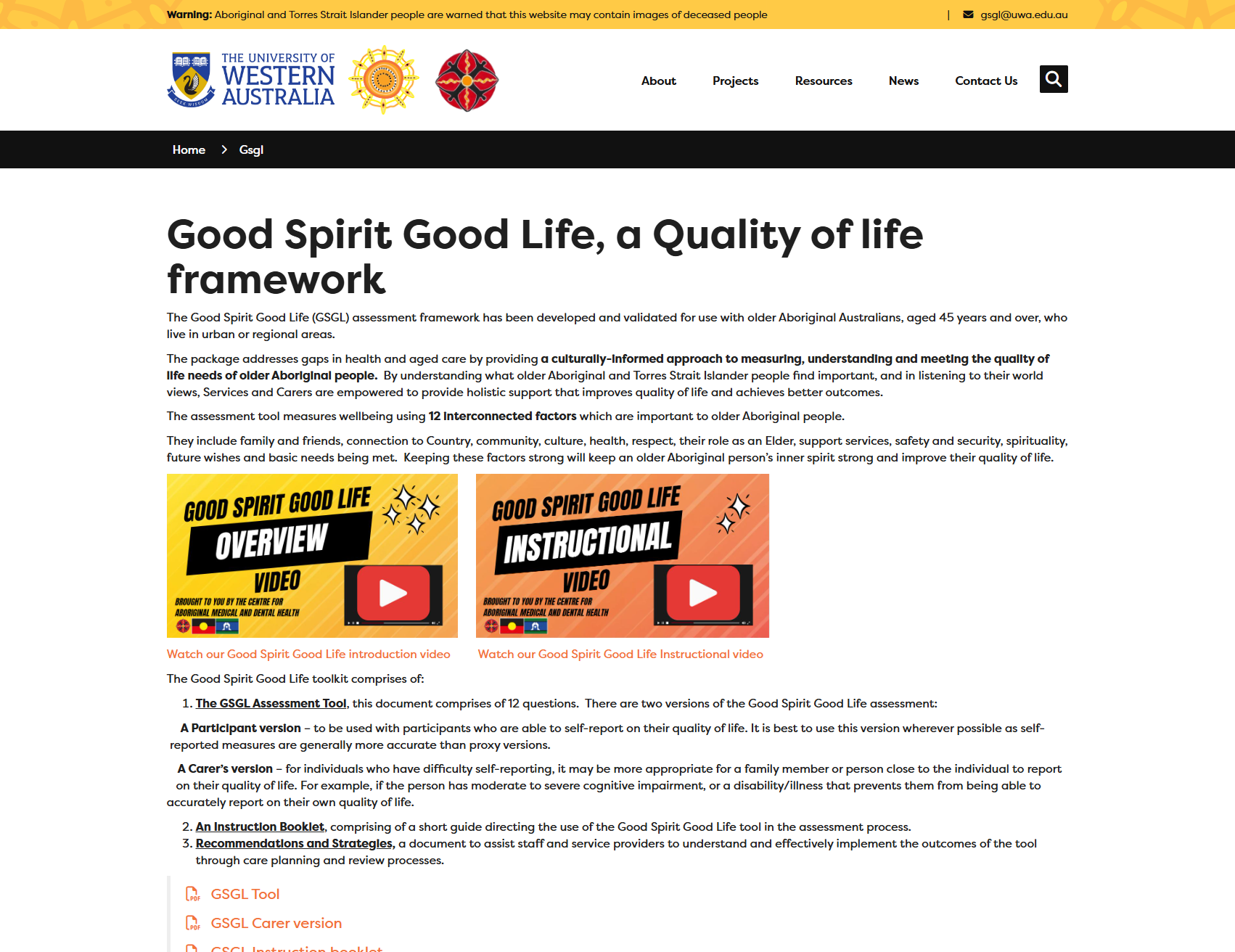
Good Spirit Good Life - a Quality of life framework
This resource describes the Good Spirit Good Life (GSGL) framework for assessing the quality of life of older Aboriginal people, focusing on culturally important factors such as connection to Country, family, and spirituality. It includes tools for both self-reporting and carer-assisted reporting.
This resource was developed by a state/territory government or organisation and therefore its applicability and usefulness may be limited.
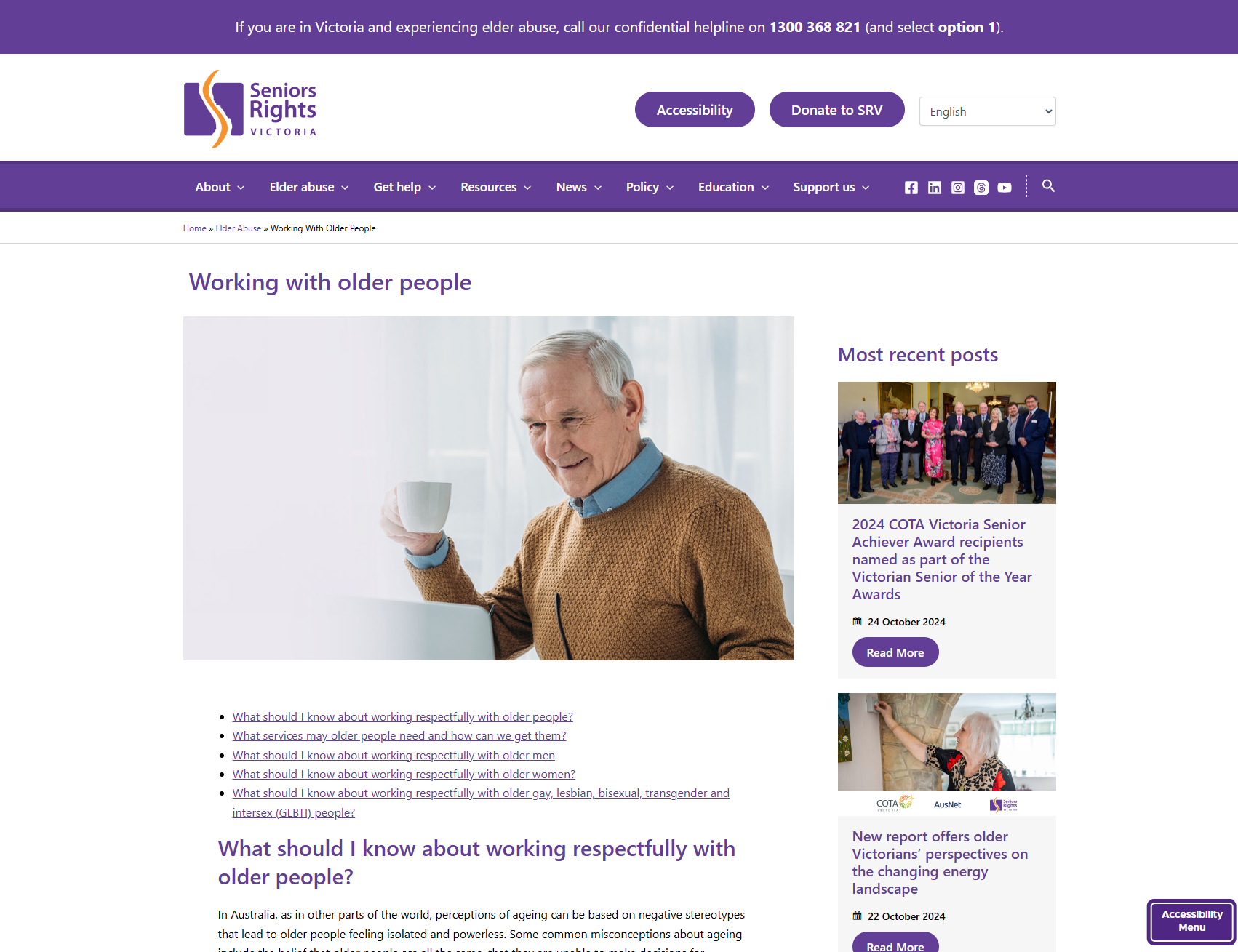
Working with older people
This resource offers guidance for working respectfully with older people, challenging stereotypes and promoting their rights to independence, dignity, and fair access to services. It emphasises communication strategies, recognising decision-making capacity, and understanding diverse needs across different groups.
This resource was developed by a state/territory government or organisation and therefore its applicability and usefulness may be limited.
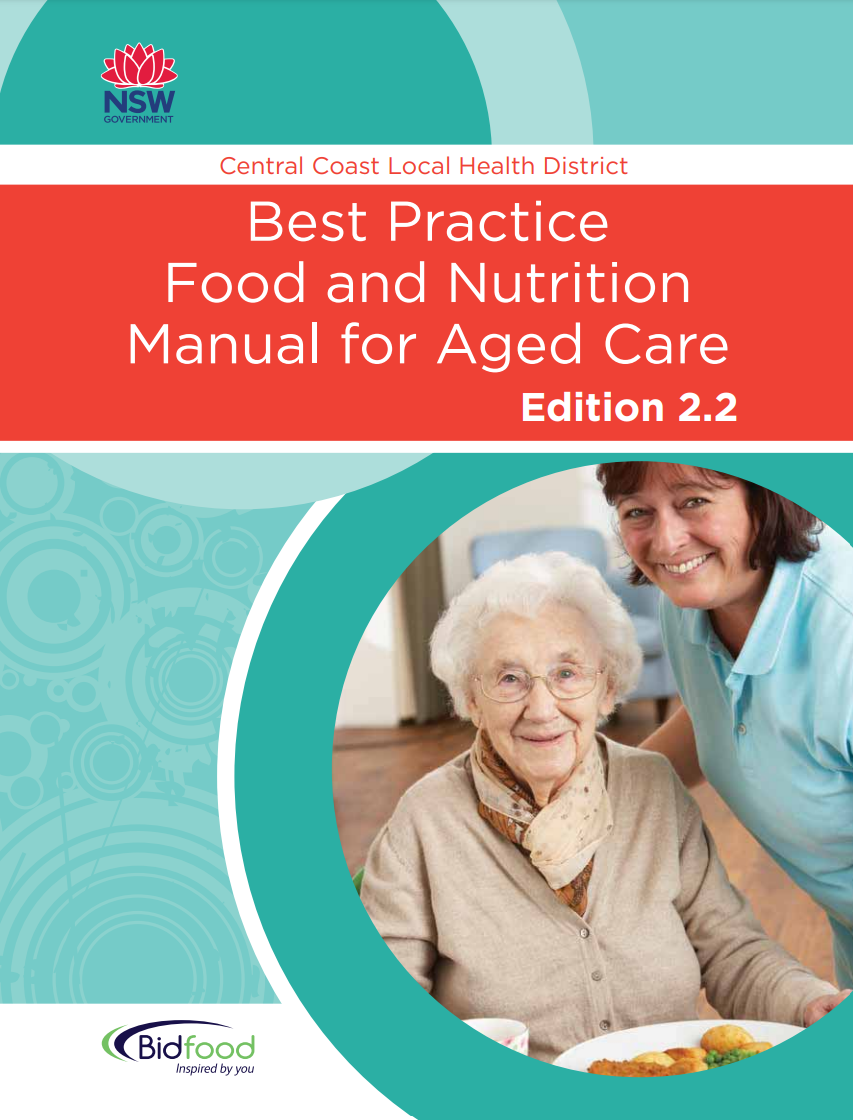
Best Practice Food and Nutrition Manual for Aged Care
This manual offers practical guidelines on food and nutrition best practices in aged care homes, covering menu planning, meal enjoyment, hydration, and malnutrition prevention. It includes checklists, screening tools, and dietary considerations tailored to the needs of older people.
This resource was developed by a state/territory government or organisation and therefore its applicability and usefulness may be limited.
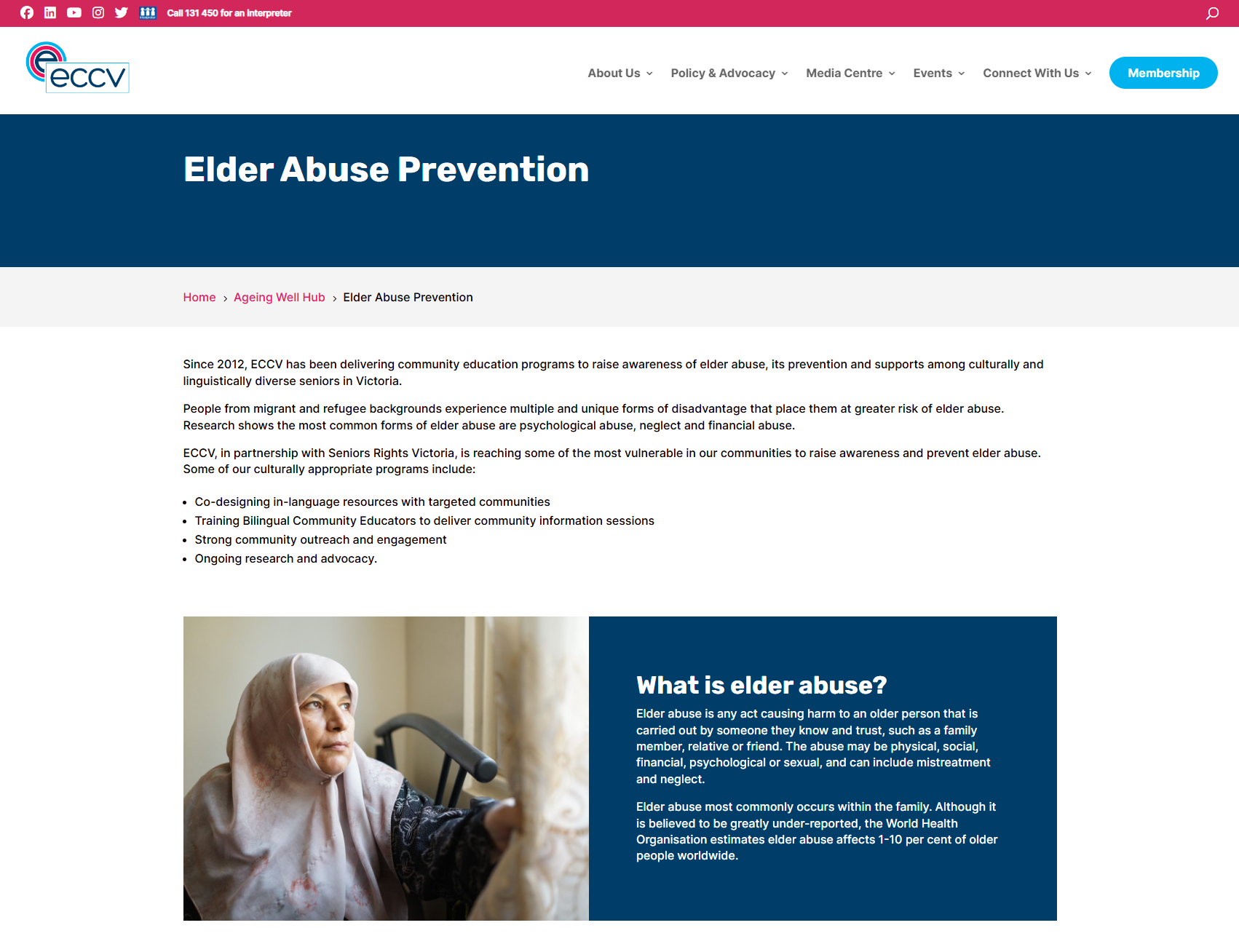
Elder Abuse Prevention
This resource provides community education and awareness programmes to prevent elder abuse, particularly for culturally and linguistically diverse seniors. It includes bilingual training for community educators, in-language resources, and guidance for recognising and addressing elder abuse through culturally appropriate methods.
This resource was developed by a state/territory government or organisation and therefore its applicability and usefulness may be limited.
Standardised care processes
This resource offers evidence-based standardised care processes for aged care providers, covering high-risk clinical areas such as falls, pain, incontinence, and dehydration. It provides structured guidelines to support best practices, ensuring consistent and safe care for older people in residential settings.
This resource was developed by a state/territory government or organisation and therefore its applicability and usefulness may be limited.
Maintaining personal identity
This resource offers guidance on maintaining personal identity for people with dementia by fostering respect, independence, and communication. It suggests environmental and social modifications to enhance dignity, such as personalising spaces, supporting mobility, and addressing unmet needs.
This resource was developed by a state/territory government or organisation, and therefore its applicability and usefulness may be limited.
Bedrooms and privacy
This resource offers guidance on maintaining personal identity for people with dementia by fostering respect, independence, and communication. It suggests environmental and social modifications to enhance dignity, such as personalising spaces, supporting mobility, and addressing unmet needs.
This resource was developed by a state/territory government or organisation, and therefore its applicability and usefulness may be limited.
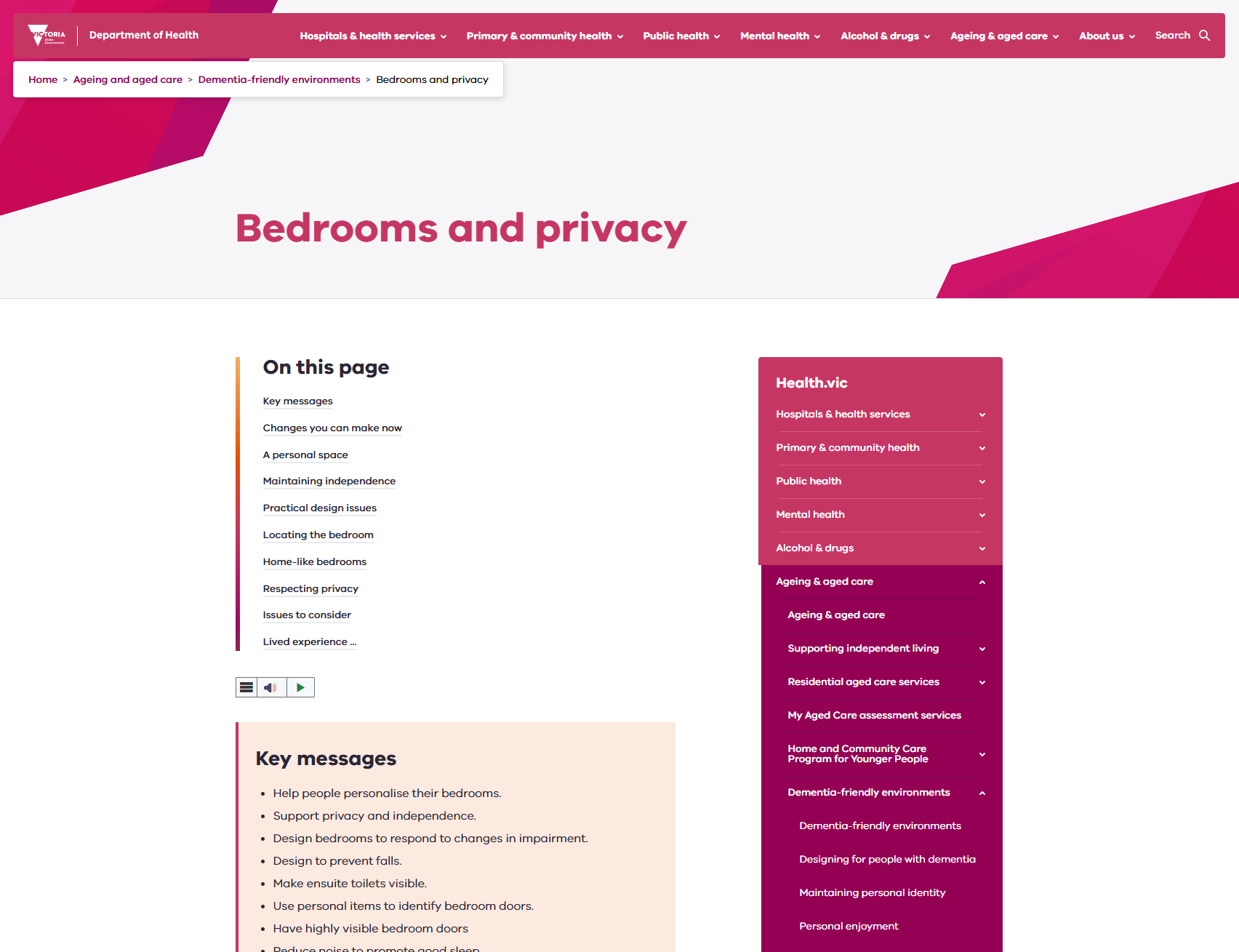
I need information on my rights
This resource provides information on aged care rights, including guidance on self-advocacy and accessing support. It offers resources, free educational sessions, and access to advocates for assistance with government-funded aged care services, empowering people to address concerns and understand their entitlements.
Protecting the Rights of Older Australians
This resource provides an overview of Australia’s approach to addressing the abuse of older people, including the National Plan, specialist services, awareness campaigns, and legal reforms. It aims to increase awareness, support prevention efforts, and offer accessible resources for those experiencing or at risk of abuse.
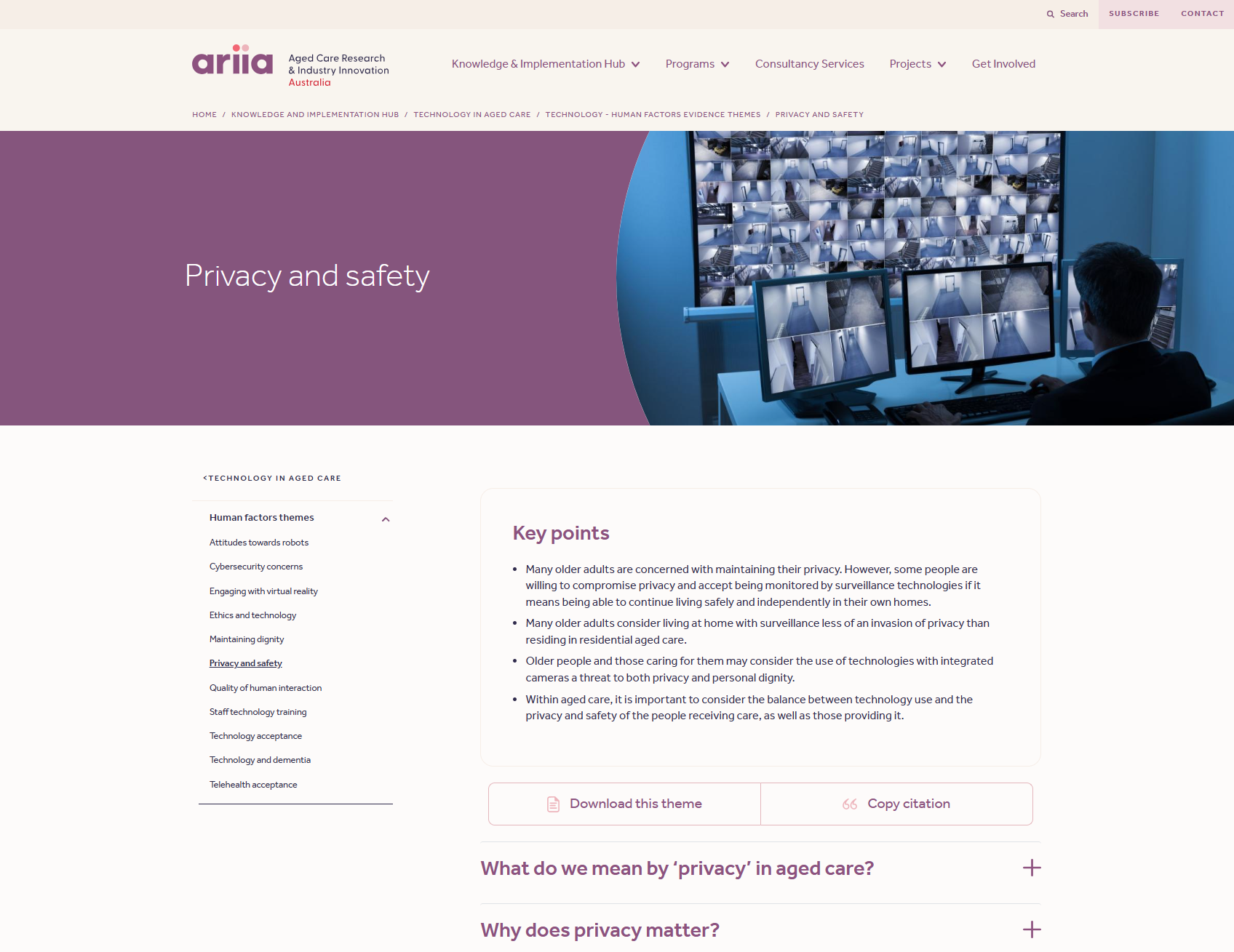
Privacy and safety
This resource addresses balancing privacy and safety for older people using technology in aged care. It highlights the importance of making sure surveillance technology supports independent living while respecting personal dignity, and it explores considerations for safety and privacy in care settings.
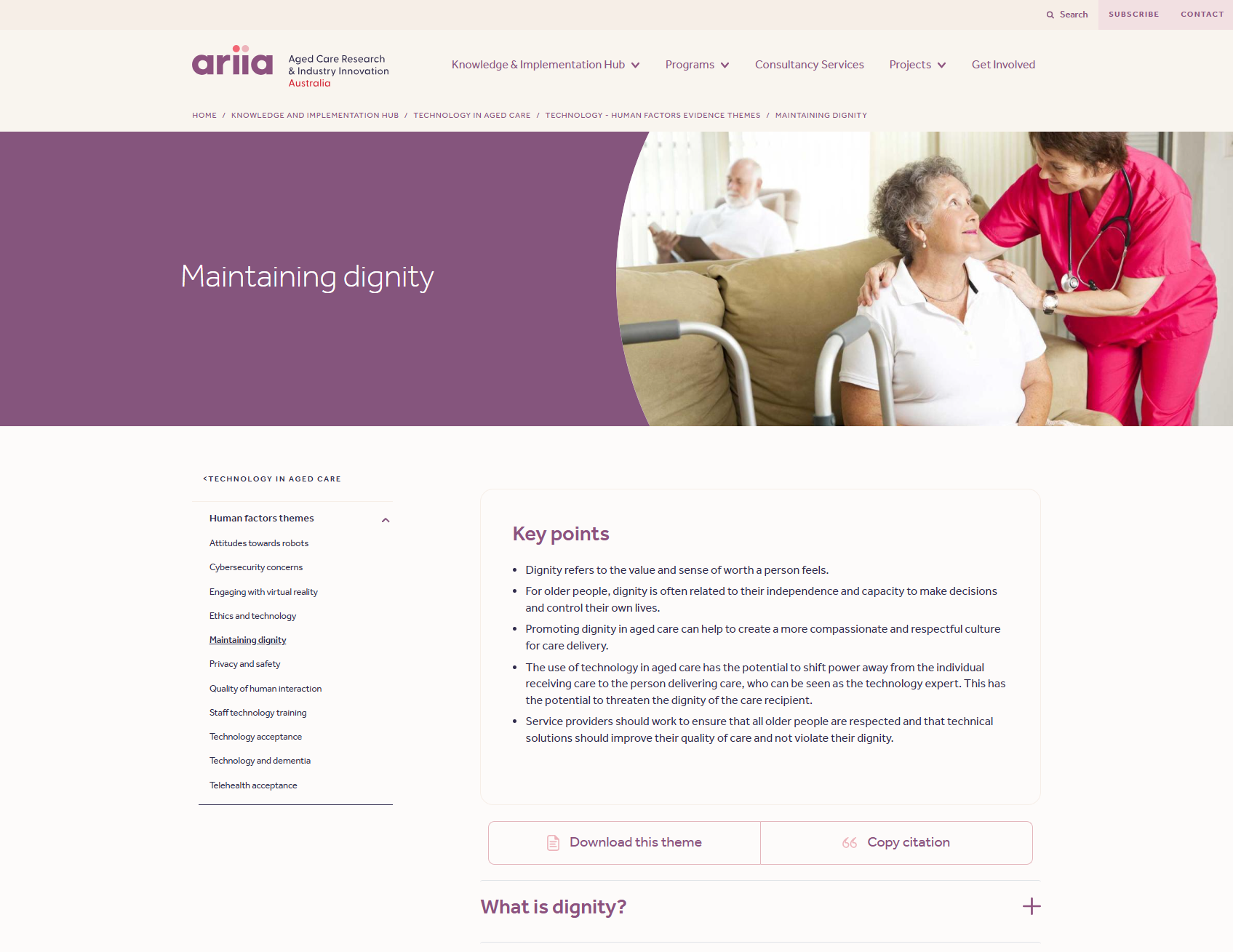
Maintaining dignity
This resource highlights the importance of maintaining dignity for older people in aged care, focusing on how technology use can impact their sense of autonomy and respect. It advises service providers to make sure technological solutions enhance care quality without compromising the dignity of those receiving care.
Work-related psychological health and safety: A systematic approach to meeting your duties
This guide offers a systematic approach to managing work-related psychological health and safety, particularly under work health and safety (WHS) and workers’ compensation laws. It provides businesses with a structured methodology for preventing psychological harm, intervening early when signs of stress appear, and supporting workers' recovery and return to work. Though the guide is an archived document, it can still offer useful background on managing psychosocial hazards but does not reflect recent changes in regulations.
Mental health tips for aged care workers and managers
This resource provides mental health tips for aged care workers and managers during the COVID-19 pandemic. It includes strategies to manage stress, anxiety, and overall mental wellbeing. The resource offers evidence-based advice on recognising when extra support is needed and how to maintain mental health, helping aged care staff navigate challenging times effectively.