The Quality Standards Resource Centre helps extend understanding of the strengthened Aged Care Quality Standards, which took effect from 1 November 2025. You can search for resources by using keywords, or filtering by standard, outcome and audience. Before using the Resource Centre, please read the terms of use.
National Strategic Framework for Rural and Remote Health
This framework addresses health service challenges in rural and remote areas, aiming to improve access, workforce sustainability, and care models through coordinated strategies. It guides policymakers and providers on adapting health services for rural contexts, fostering collaboration, and enhancing infrastructure, with a focus on equitable and culturally relevant care.
This resource may apply to healthcare contexts outside of aged care.
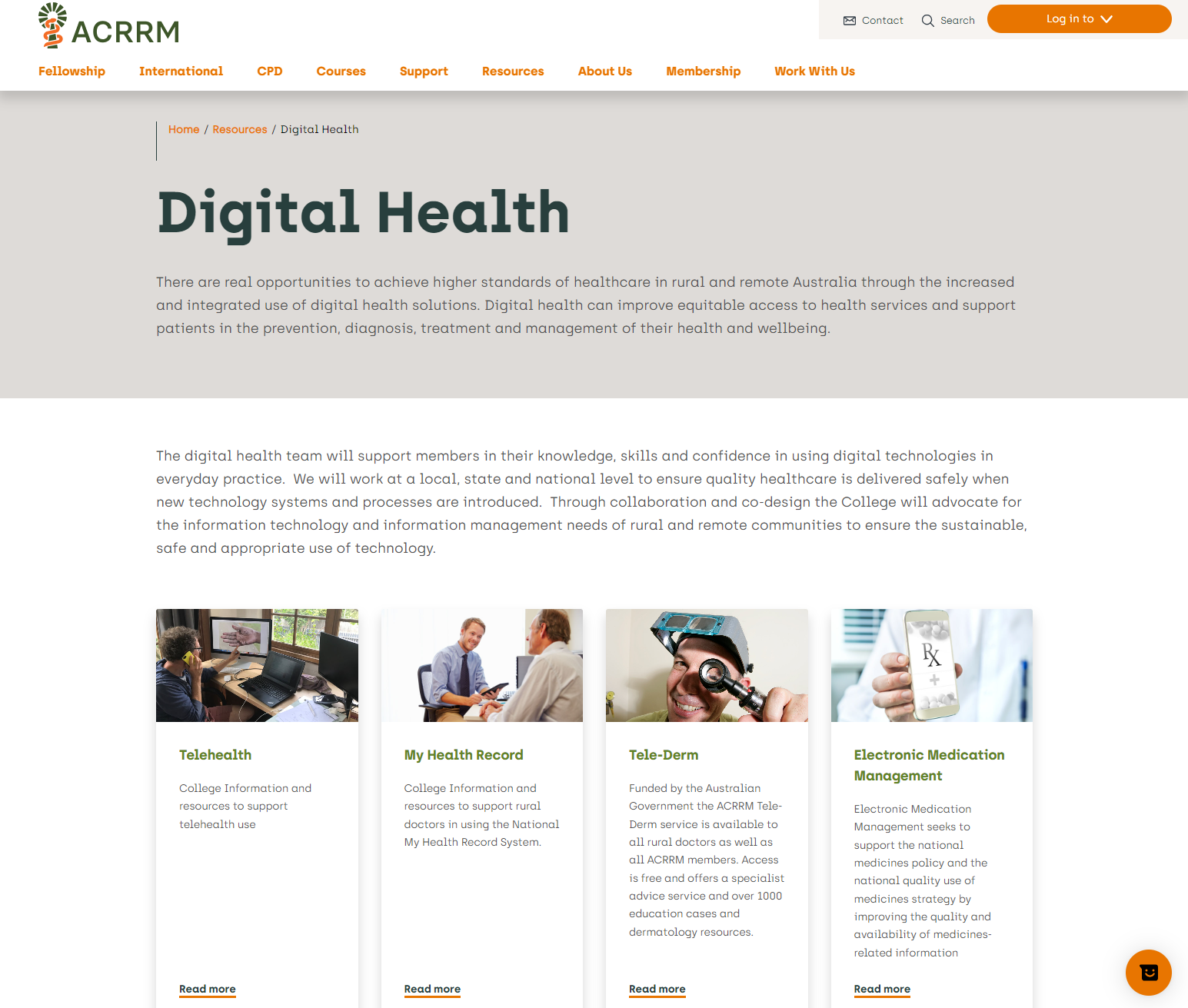
Digital Health
This resource outlines how digital health technologies, including telehealth, electronic medication management, and My Health Record, can improve healthcare delivery. It focuses on enhancing communication, reducing readmissions, and providing better access to care, especially in remote areas.
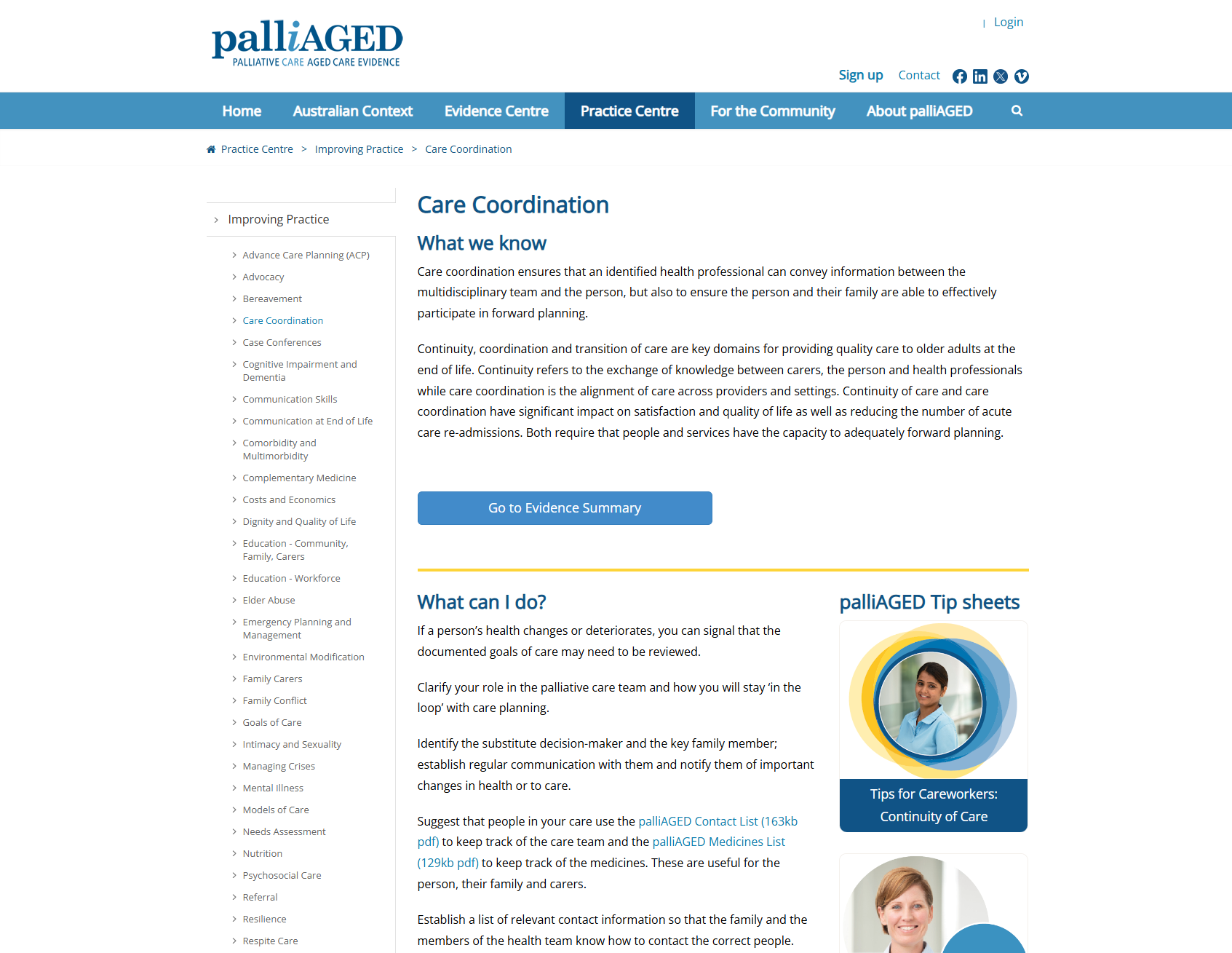
Care Coordination
This resource offers practical guidance on effective care coordination, focusing on communication within multidisciplinary teams, continuity of care, and transition management. It provides tools for involving families in care planning and supports strategies for optimising palliative care and improving outcomes for people in aged care settings.
Conformant clinical software products
This resource provides a register of conformant clinical software products that meet national digital health requirements, enabling functions like My Health Record access, health summary uploads, and prescription management. Organisations using the register should verify entries’ currency and accuracy as updates depend on software developers.
Informed consent
This resource provides guidance on ensuring informed consent in healthcare settings. It outlines legal, ethical, and professional requirements for obtaining consent, supports person-centred care, and ensures compliance with Australian healthcare standards. It highlights the importance of providing accurate information about interventions and alternatives, ensuring people have sufficient knowledge of potential risks and benefits.
Aged Care Data and Digital Strategy 2024–2029
The Aged Care Data and Digital Strategy 2024–2029 outlines a framework for leveraging data and digital innovation to improve aged care services. It focuses on enhancing care delivery, reducing administrative burdens, and empowering older people through better access to information and services. The strategy supports collaboration across the aged care sector and promotes continual improvement through digital transformation.
ELDAC Managing Risk Toolkit
This resource provides the Managing Risk Toolkit designed for health professionals and care staff involved in palliative care and advance care planning for older people in residential care. It offers guidance on managing risks in areas such as nutrition, hydration, medication management, and care transitions at the end of life. The toolkit includes fact sheets, practical tips, and downloadable materials to support safe, effective care.
How to navigate transitions in care
This resource offers tools and strategies for navigating care transitions for people living with dementia. It provides support to hospital, aged care staff, and family carers, ensuring that the unique needs of those with dementia are met during transitions, such as moving from hospital to aged care or home.
About health data in Australia
This resource explains the collection, use, and regulation of health data in Australia. It highlights the importance of health data in improving healthcare, policy-making, and research. The document details various data sources, including the National Health Data Hub, ensuring data privacy and security while maximising the benefits of health information for research and service improvement. This resource may refer to information that will be updated from 1 November 2025 to align with the new Aged Care Act and Quality Standards.
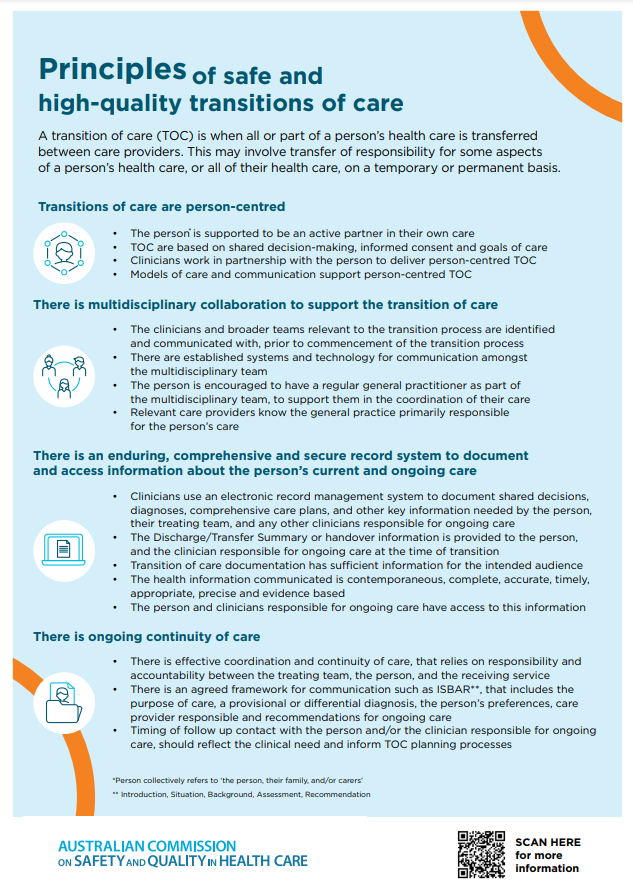
Fact sheet - Principles of safe and high-quality transitions of care
This resource outlines the principles for safe and high-quality transitions of care, emphasising person-centred care, multidisciplinary collaboration, and effective communication. It highlights the need for secure documentation, continuity of care, and coordination among healthcare teams to make sure smooth transitions and minimise risks during transfers between care providers.
This resource may refer to information that will be updated from 1 November 2025 to align with the new Aged Care Act and Quality Standards.
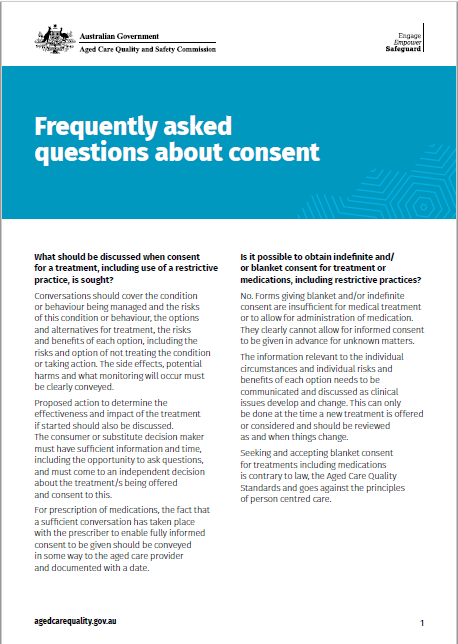
Frequently asked questions about consent
This fact sheet covers the frequently asked questions about consent in aged care.
 Frequently asked questions about consent (PDF 433.26 KB)
Communication at clinical handover
This resource focuses on structured clinical handover processes to improve communication during patient care transitions. It highlights the importance of standardising handover procedures to make sure relevant information is effectively communicated, reducing errors and enhancing patient safety, especially during care transfers in healthcare settings, including aged care.
This resource may refer to information that will be updated from 1 November 2025 to align with the new Aged Care Act and Quality Standards.
Communicating for Safety
This resource provides tools and guidance on improving clinical communication to enhance patient safety. It focuses on key communication touchpoints, such as handovers, decision-making, and care transitions. Designed to support healthcare providers, it offers practical strategies to reduce errors and improve outcomes in aged care and other healthcare settings.
This resource may refer to information that will be updated from 1 November 2025 to align with the new Aged Care Act and Quality Standards.
Governing for Reform in Aged Care - Practical tools
This resource provides practical tools for aged care governing bodies and executives to support governance processes. It includes templates for audit planning, risk management, performance reporting, and compliance monitoring, helping providers ensure effective oversight and decision-making aligned with the Aged Care Quality Standards.
This resource may refer to information that will be updated from 1 November 2025 to align with the new Aged Care Act and Quality Standards.
Transitioning to Residential Aged Care: Loss and Grief
This resource explores the emotional impact of transitioning into residential aged care, focusing on loss and grief experienced by older people and their families. It highlights the common emotional challenges, such as fear, loss of independence, and guilt, and provides strategies to support emotional well-being during this difficult transition.
This resource may refer to information that will be updated from 1 November 2025 to align with the new Aged Care Act and Quality Standards.
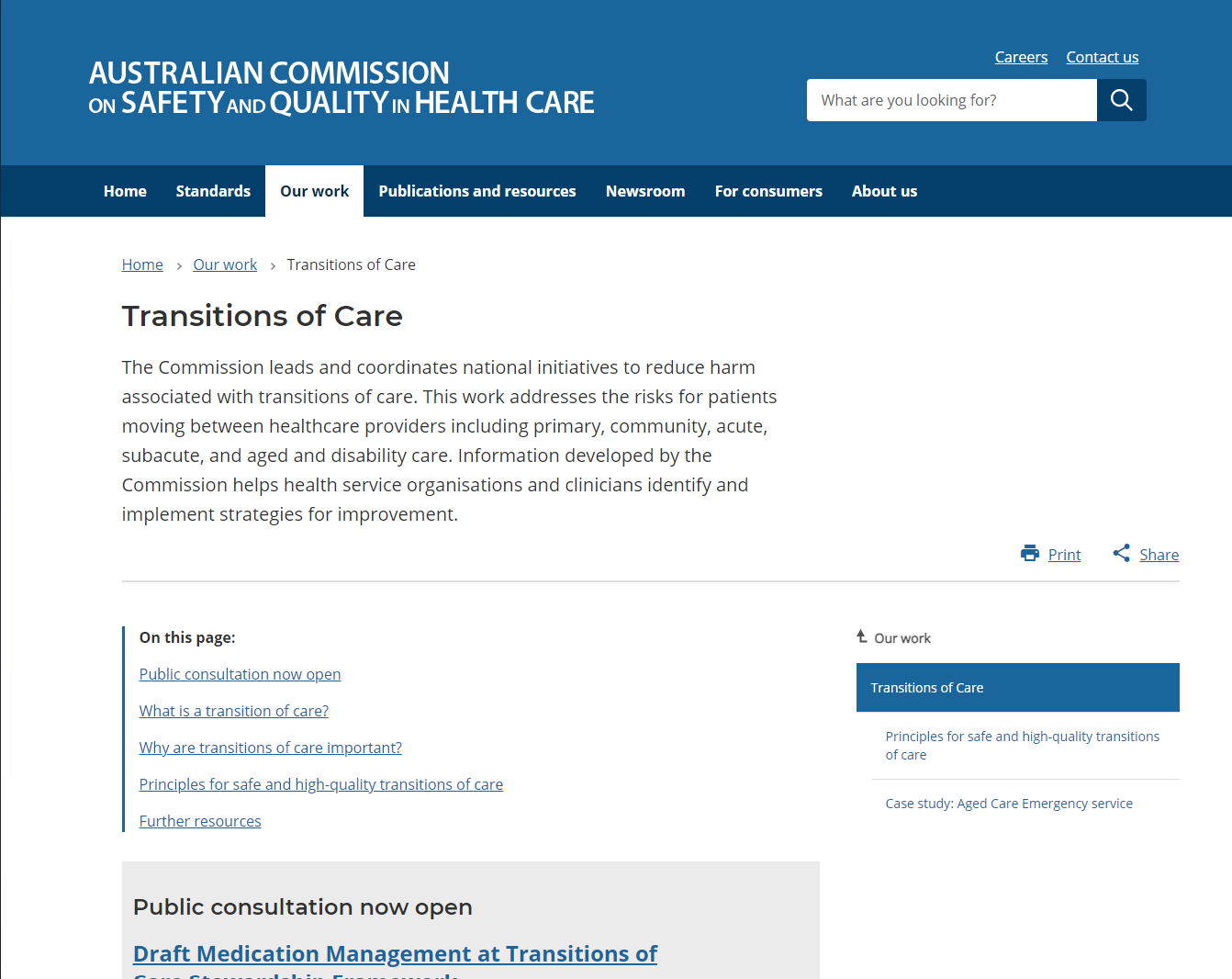
Transitions of Care
This resource explains transitions of care, when responsibility for a person’s health care is transferred between providers. It covers the risks involved, such as medication errors and readmissions, and offers principles for safe and high-quality transitions across care settings, including aged care, to reduce harm and improve outcomes. This resource may refer to information that will be updated from 1 November 2025 to align with the new Aged Care Act and Quality Standards.
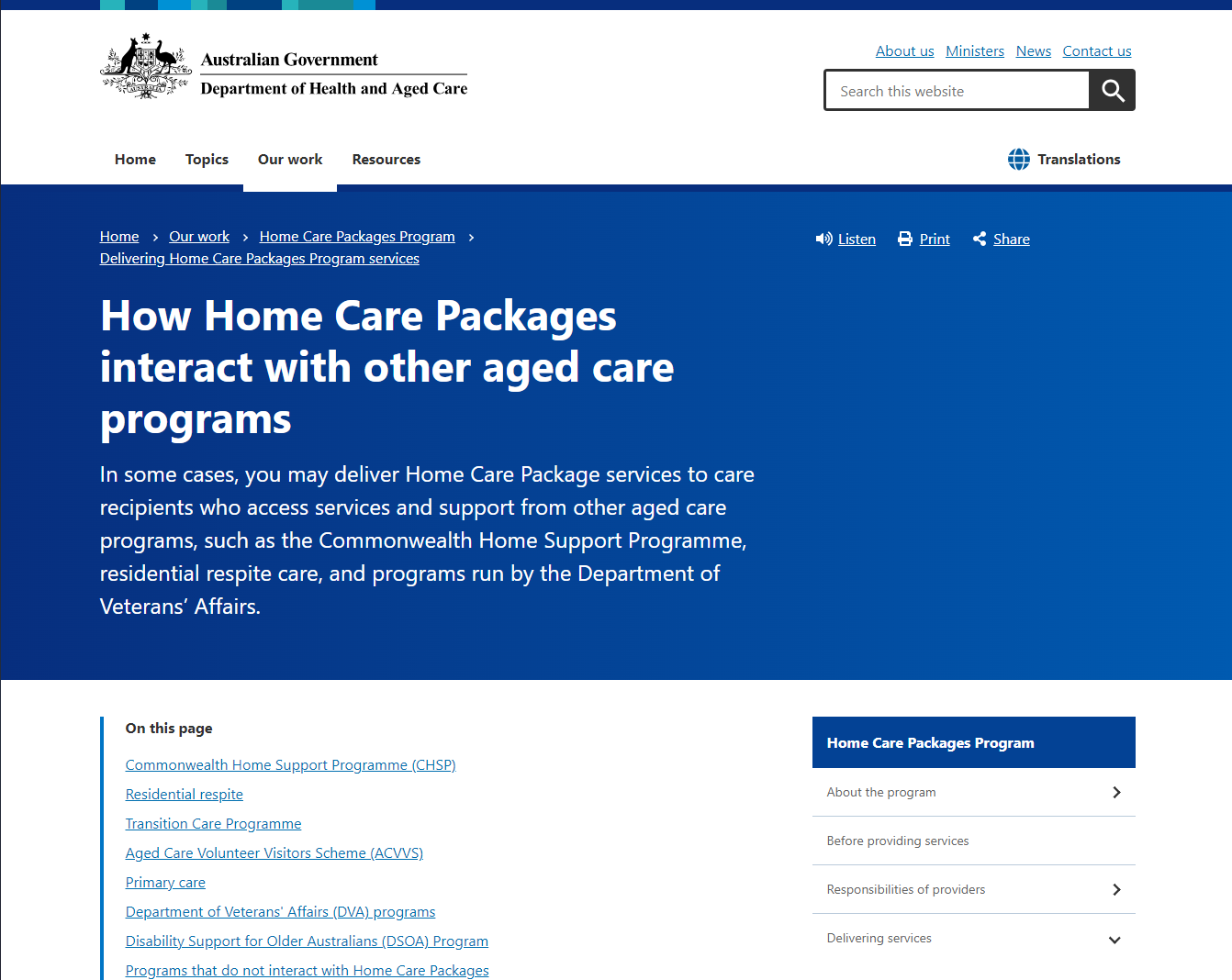
How Home Care Packages interact with other aged care programs
This resource explains how Home Care Packages interact with other aged care programs, such as the Commonwealth Home Support Programme, residential respite care, and the Transition Care Programme. It outlines how to coordinate services to avoid overlaps and provides guidance for accessing multiple programs without service duplication.
This resource may refer to information that will be updated from 1 November 2025 to align with the new Aged Care Act and Quality Standards.
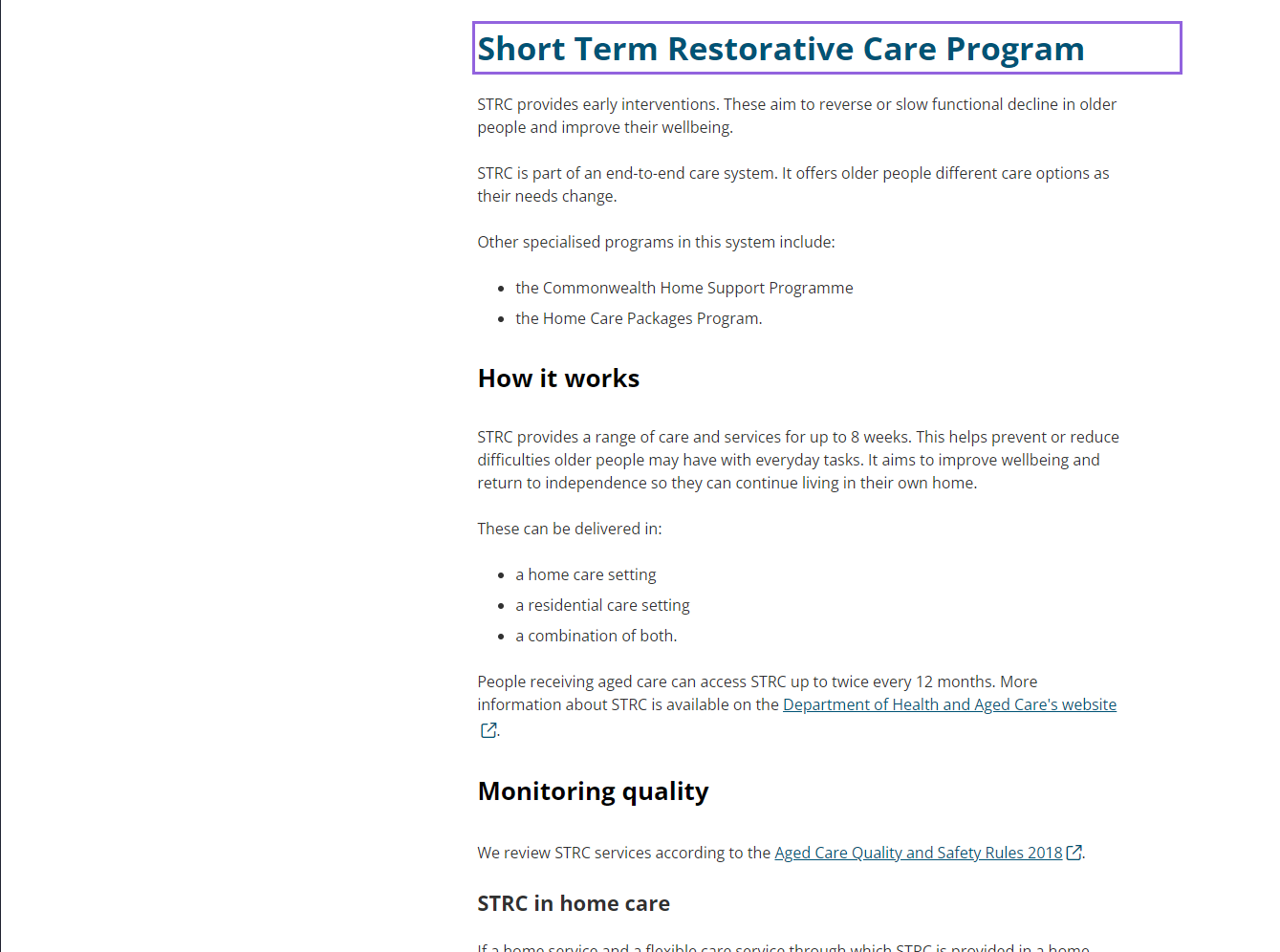
Short Term Restorative Care Program
This resource outlines the Short Term Restorative Care (STRC) Program which offers early interventions aimed at reversing or slowing functional decline in older people to enhance their wellbeing. It provides care for up to 8 weeks in home or residential settings, helping people regain independence. STRC is part of a broader care system, alongside other aged care services.
This resource may refer to information that will be updated from 1 November 2025 to align with the new Aged Care Act and Quality Standards.
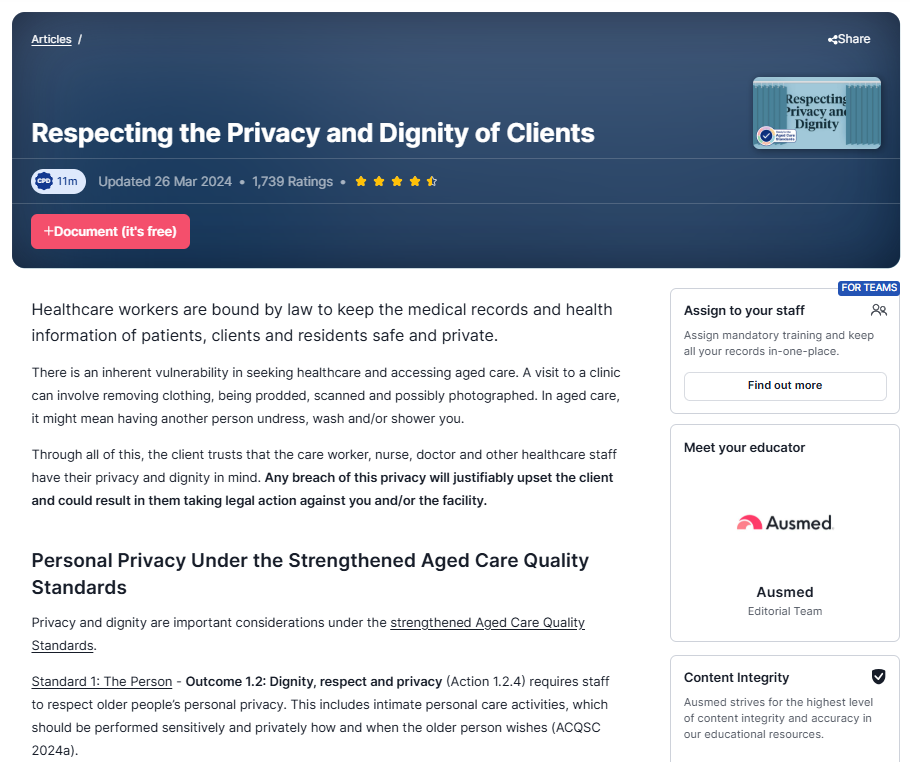
Respecting the privacy and dignity of clients
This resource provides guidance about respecting the privacy and dignity of clients. It includes information about personal privacy, the Privacy Act, what classifies as health information, consent and privacy of information. It also includes information about person-centred care and client dignity.
This resource may refer to information that will be updated from 1 November 2025 to align with the new Aged Care Act and Quality Standards.
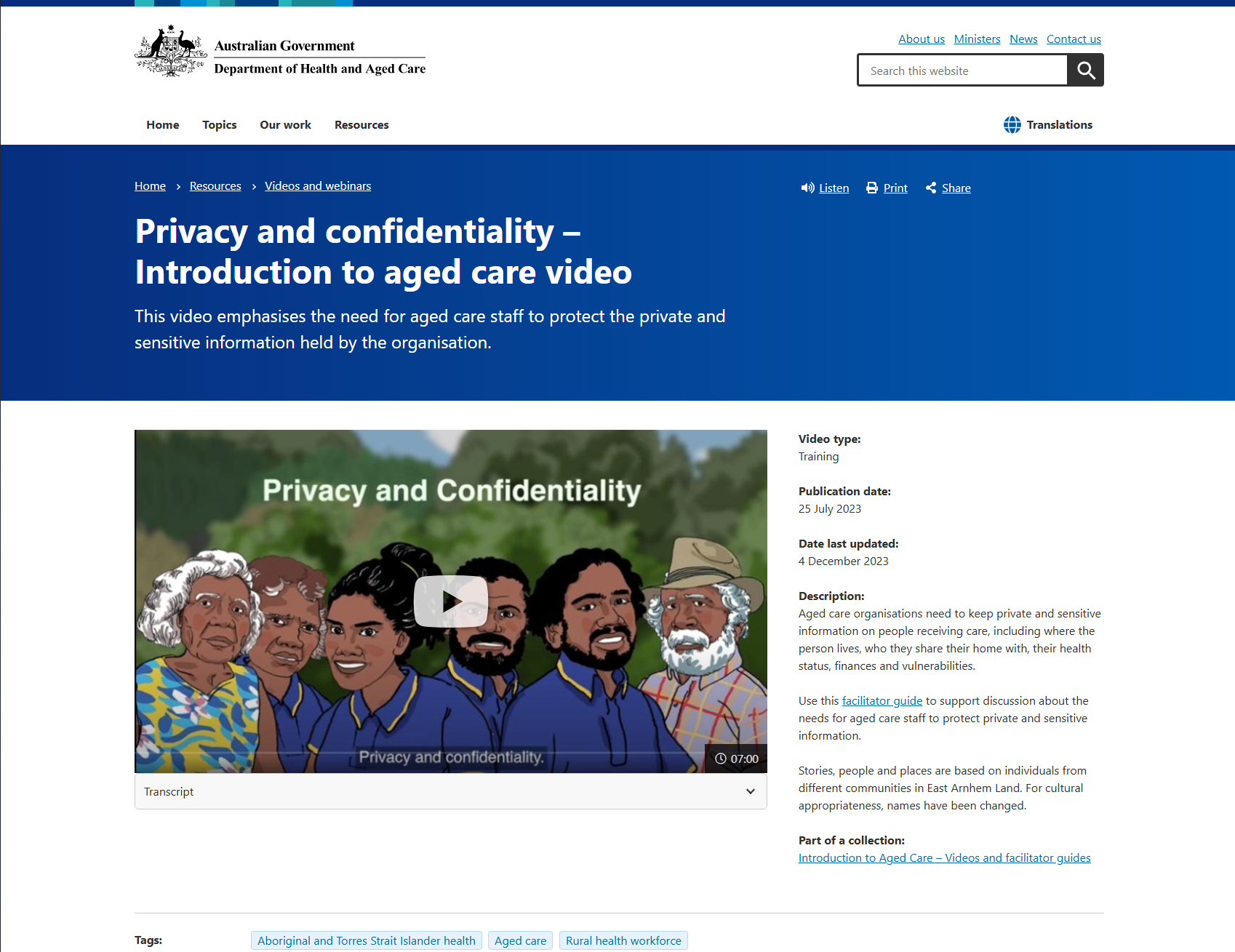
Privacy and confidentiality – Introduction to aged care video
This resource is a training video guiding aged care staff on the importance of maintaining privacy and confidentiality for people receiving care. It covers protecting personal information, proper handling of sensitive data, and safe sharing practices, aiming to make sure clients feel secure in sharing information.
This resource may refer to information that will be updated from 1 November 2025 to align with the new Aged Care Act and Quality Standards.